On a somber Sunday, February 21st, 1965, the world lost a powerful and transformative voice in the struggle for civil rights and Black self-determination: Malcolm X, born El-Hajj Malik El-Shabazz. His life was tragically cut short when he was assassinated while preparing to address the Organization of Afro-American Unity (OAAU) at the Audubon Ballroom in the Washington Heights neighborhood of Manhattan, New York City.
The events surrounding his death are steeped in controversy and tragedy. As Malcolm X, his pregnant wife Betty Shabazz, and his four daughters took their seats, three gunmen rushed the stage, fatally shooting him multiple times. He was pronounced dead shortly after arriving at Columbia Presbyterian Hospital.
The immediate aftermath led to the conviction of three men—Mujahid Abdul Halim (formerly Talmadge Hayer), Norman 3X Butler, and Thomas 15X Johnson—all members of the Nation of Islam (NOI), the organization Malcolm had explosively split from less than a year prior. However, doubts about the full involvement and identity of the true assassins, particularly Butler and Johnson, have persisted for decades, leading to their eventual exoneration in 2021 after a thorough reinvestigation.
His death at the age of 39 abruptly ended a remarkable personal and ideological evolution. Malcolm Little’s journey began in poverty and crime, leading to a prison sentence where he discovered the teachings of the Nation of Islam. As Malcolm X, he became the fiery, articulate, and uncompromising national spokesman for the NOI, advocating for Black separatism and criticizing the non-violent approach of the mainstream civil rights movement as ineffective.
Following his departure from the NOI in March 1964, his perspective broadened dramatically. His subsequent Hajj (pilgrimage) to Mecca and travels across Africa and the Middle East profoundly influenced his worldview, leading him to renounce the NOI’s rigid Black nationalist dogma and its racial essentialism. He adopted the name El-Hajj Malik El-Shabazz and founded two new organizations: the Muslim Mosque, Inc. (MMI) for religious outreach and the Organization of Afro-American Unity (OAAU) for political action. The OAAU aimed to connect the African-American struggle for human rights with the liberation movements across Africa, positioning the issue not merely as a domestic civil rights problem but as a global human rights crisis to be addressed by the United Nations.
This final, globally-minded phase of his life saw him emerge as an independent human rights activist, willing to work with leaders across the political spectrum, including those he had previously condemned. This evolution made him an even more dangerous and unpredictable figure to his former NOI colleagues, to the government surveillance agencies that monitored him, and to those who benefited from the existing racial hierarchy.
The day of his assassination remains a painful marker in American history. It serves as a powerful reminder of the high cost of radical activism and the deep, often violent, divisions within the movement for Black liberation. Malcolm X’s enduring legacy is one of self-education, ideological transformation, and uncompromising truth-telling. His ideas continue to shape discussions on race, identity, self-defense, and justice across the globe, ensuring that the voice silenced on that cold Sunday in 1965 still resonates powerfully today.
The Dual Mandate of Policing: Community Trust and the Corrosion of Corruption
The bedrock of effective law enforcement is fundamentally rooted in a dual mandate: community protection and trust-building. The vast majority of police officers diligently fulfill this mission, recognizing that positive community relations are not an optional extra but the essential foundation upon which safety is built. These dedicated professionals regularly engage in proactive outreach programs, including organizing local community events, conducting educational workshops, and participating in neighborhood watch initiatives. These efforts are crucial, serving to demystify police work, foster open dialogue, and educate citizens on vital topics like safety protocols and effective crime prevention strategies. The result is a mutual enhancement: police gain crucial intelligence and community cooperation, while citizens develop a greater understanding of and respect for the law enforcement role, strengthening the overall fabric of community ties.
The Shadow of Misconduct:
However, this vital foundation is perpetually at risk from the corrosive actions of a very small number of officers. When those sworn to uphold the law choose instead to misuse their power, engage in misconduct, or succumb to corruption, the damage is immediate and devastating. Such acts not only constitute a profound betrayal of public trust but also sow deep seeds of skepticism, fear, and hostility toward the entire institution. A single act of police criminality can undo years of positive community engagement, creating a hostile environment where citizens are hesitant to cooperate with law enforcement, ultimately hindering the ability of good officers to protect the public.
When the Badge Betrays: Stories of Police Corruption
The following is an unflinching look into the lives and crimes of individuals who crossed the line, becoming the very criminals they were sworn to combat. These are not isolated incidents but real-world cases that expose the vulnerability of the law enforcement system to exploitation and the devastating consequences that follow when power is abused for greed, violence, and personal gain.
This investigative focus seeks to pull back the curtain on how corruption can take root and thrive inside ostensibly disciplined law enforcement agencies.Featured Cases of Infamy and Betrayal:
Sgt. Wayne Jenkins – The Apex of Corruption
Wayne Jenkins served as the leader of the Baltimore Police Department’s infamous Gun Trace Task Force (GTTF). This specialized unit, intended to get illegal guns off the streets, morphed into a sophisticated criminal enterprise. Jenkins and his subordinates operated with impunity, routinely engaging in home invasions, robbing citizens and drug dealers, reselling confiscated drugs, filing fraudulent overtime, and even planting evidence. His leadership demonstrated a systematic betrayal of public trust, turning an elite police unit into a crew of organized criminals who used their badges as licenses for felony
.Daniel Hersl – Abuse of Authority and Criminal Misconduct
As a member of the GTTF under Jenkins, Daniel Hersl’s case epitomizes the abuse of power for personal enrichment. His actions involved the systematic theft of money and property from citizens, often targeting individuals they suspected of criminal activity, knowing their victims were less likely to report the crimes. His conviction, alongside his fellow GTTF members, sent a clear message about the federal commitment to prosecuting police criminality
.Marcus Taylor – The Betrayal of the Oath
Another key figure in the GTTF scandal, Marcus Taylor’s story is a profound example of the betrayal of the public’s implicit trust. The very oath taken to protect and serve was systematically violated through repeated acts of robbery and conspiracy. His participation solidified the public perception of the GTTF as a criminal organization disguised in uniform.
David Mack – From LAPD Officer to Convicted Criminal
David Mack’s career took a dark turn that shocked the nation. As an officer in the Los Angeles Police Department (LAPD), Mack used his position to facilitate a major bank robbery. His case was a central element in exposing broader issues of corruption and misconduct within the LAPD in the 1990s, particularly in the Rampart Division, highlighting how a respected officer could transition into a high-level criminal.
Jose Tejada – Corruption That Shocked the System
Jose Tejada represents cases where an officer’s corruption is so profound it reverberates across the entire system. While specific details vary by jurisdiction, cases like Tejada’s typically involve schemes like drug trafficking, accepting bribes to look the other way, or running protection rackets. Such deep-seated corruption damages the integrity of the courts and the investigative process, demanding systemic reform and external oversight.The Documentary-Style Breakdown
This in-depth, documentary-style exploration moves beyond simple reporting to dissect the anatomy of these crimes. It investigates the modus operandi of these corrupt officers—how they exploited loopholes, leveraged their authority to intimidate victims, and evaded internal affairs for as long as they did. Crucially, it details how they were ultimately caught, often through the painstaking work of federal investigators, internal whistleblowers, or the accumulation of evidence from marginalized communities. Finally, the analysis confronts the lasting impact of these betrayals on their communities, exploring the resulting civil litigation, policy changes, and the long, difficult road toward rebuilding a damaged trust. Viewer discretion is strongly advised due to the nature of the criminal activities and the emotional impact of the victims’ stories.—–For those seeking more true crime cases, detailed breakdowns of historical police corruption stories, and in-depth true crime documentaries, please subscribe to the channelhuman and crime.
The Friday Crime Report: Unpacking Systemic Injustice and the Fight for Equality
PROFESSOR BLACK TRUTH and “The Friday Crime Report”: An Essential Voice for Unflinching Justice
Every Friday morning, PROFESSOR BLACK TRUTH—a compelling and critical voice available on YouTube—unveils the latest installment of “The Friday Crime Report.” This program is far more than a simple digest of weekly events; it is an essential, powerful, and utterly unflinching deep dive into the complex web of systemic issues plaguing the Black community across the nation. It is a necessary and high-impact platform that dedicates itself not merely to documenting tragic events, but to fiercely dissecting the root causes and the widespread, devastating societal impacts of institutional failures.
The show confronts deeply entrenched and uncomfortable truths with academic rigor and moral clarity. These truths include the pervasive and persistent scourge of systemic racism, the crushing weight of structural economic inequality that stifles opportunity, and the critical, life-and-death issue of police brutality that continues to erode community trust and safety. Professor Black Truth forces viewers and listeners to look beyond the headlines and into the deeper machinery of injustice.
A Mission to Inform, Inspire, and Incite Action
“The Friday Crime Report” is meticulously designed to be far more than just a news broadcast or a simple commentary show; it operates as a profound call to sustained awareness and a resolute demand for corrective action.
Its core objective is singular and urgent: to spark an essential, often uncomfortable, yet ultimately productive public dialogue and inspire genuine, meaningful, boots-on-the-ground community engagement. The program’s foundational philosophy is the unwavering belief that informed discussion, backed by facts and analysis, is the indispensable precursor to meaningful, measurable, and enduring societal change.
Professor Black Truth expertly weaves together factual evidence, rigorous academic analysis, and relatable, often heartbreaking human experiences. This potent and accessible blend is crucial, as it makes the seemingly complex and often painful issues of racial and economic injustice accessible and profoundly understandable to a broad, diverse audience—from those in academic circles to everyday community members.
Ultimately, Professor Black Truth’s enduring mission is to move every single listener and viewer from the role of a passive observer into a passionate, educated, and effective advocate. The goal is to motivate individuals to fight for genuine equality and justice within their own neighborhoods, cities, and spheres of influence, transforming knowledge into power.This Week’s Focus: A Horrifying Incident and Unsettling Aftermath
The latest episode of “The Friday Crime Report” grapples with a particularly shocking and complex event that has shaken the nation: a recent mass murder at a school-related event in Rhode Island. The facts presented by the Professor are chilling, noting specifically that the perpetrator was unequivocally identified as a “mouth-frothing anti-black racist.”
However, the report makes it clear that the full story did not conclude with the initial tragedy and the identification of the killer. As the host states, following the initial horrific details, “then things got REALLY weird!” This evocative statement signals the show’s signature move: its commitment to investigating the strange, the overlooked, and the potentially conspiratorial elements that often surround acts of racially motivated violence. This approach prompts a deeper, more critical look into the societal reactions, the shifting media narratives, and the official handling of the case—all of which may, intentionally or unintentionally, obscure a full and honest accounting of the facts and motivations.
—–Support and Connect with Professor Black Truth:
To support the continuation of this essential and uncompromising work, you can connect with Professor Black Truth via the following platforms:
Argentine Tourist Learns Brazil Doesn’t Play About Racism
The recent arrest and subsequent legal action against an Argentine tourist in Brazil serves as a stark reminder that the South American nation has a zero-tolerance policy when it comes to acts of racial discrimination. The incident, which has garnered significant attention in both countries, highlights Brazil’s commitment to combating racism and holding perpetrators accountable, regardless of their nationality.
The case unfolded after a formal complaint was lodged against the tourist, who allegedly directed racist slurs and insults toward a Brazilian citizen in a public setting. Witnesses and available evidence supported the victim’s account, leading to the swift intervention of local law enforcement. In Brazil, racism is classified as a serious crime, subject to strict penalties, including imprisonment, with laws continually being strengthened to protect the dignity and rights of all citizens and residents.
This incident is not an isolated event; it reflects a broader, ongoing effort within Brazil to acknowledge and address its deep-seated history with racial inequality. Public awareness campaigns, educational initiatives, and vigorous prosecution of hate crimes demonstrate a societal commitment to ensuring that the country’s diverse population can live free from prejudice. The prompt and firm response by Brazilian authorities in this particular case sends a clear message internationally: visitors to Brazil are expected to adhere to its laws, and racist behavior will be met with the full force of the legal system.
For the Argentine tourist, the lesson is a harsh one, underscoring the crucial difference in legal frameworks and social attitudes toward racism between nations. The legal proceedings are set to continue, illustrating that in Brazil, the fight against racial discrimination is a matter of profound seriousness and justice, not simply a social issue to be ignored.
Godfrey DROPS BOMBS On His Nigerian Co Host About Black American History: A Response to Persistent Misconceptions and Ignorance
Once again, this conversation is necessitated for those of you out there who perpetuate and actually believe the damaging, utterly false, and historically illiterate stereotypes that black people are inherently lazy, lack initiative, or have no discernible culture beyond shallow, modern trends.
The recent exchange between Godfrey and his Nigerian co-host was a critical, unfiltered moment that shone a harsh light on a pervasive issue: the misunderstanding and often outright dismissal of the unique, complex, and profound history of Black Americans, not just by people of other races, but often, jarringly, by individuals from the African diaspora themselves.
Godfrey’s passionate “bombs” were directed at correcting the record, specifically challenging the notion that the struggles and achievements of Black Americans can be glossed over or equated simplistically with the experiences of recent African immigrants or those still on the continent. He meticulously laid out the foundational trauma of chattel slavery, the systematic dismantling of family structures, the enforced illiteracy, and the centuries of post-slavery oppression—Jim Crow, segregation, systemic redlining, and disenfranchisement—that fundamentally shaped the Black American experience.
To suggest that a community subjected to such profound, government-sanctioned oppression has “no culture” or is “lazy” is not only deeply insulting but ignores the monumental feats of resilience and creativity born out of that struggle. Black American culture—which birthed Rock and Roll, Jazz, Blues, Gospel, Hip-Hop, profoundly influenced global cuisine, shaped American English, and drove the most significant civil rights movements in the nation’s history—is one of the most dominant and influential cultural forces in the world.
This wasn’t just a simple disagreement; it was a necessary confrontation designed to educate and remind listeners that the legacy of Black America is not one of failure, but one of triumph over insurmountable odds, creating a civilization of unique richness and contribution under the most hostile conditions imaginable.
Welcome to “SPIRITUAL PRACTICES OF AFRICA, AND THE DIASPORA.” This series offers an in-depth exploration of the religious landscape across Sub-Saharan Africa and its subsequent influence on the global African diaspora. It delves into the rich tapestry of diverse indigenous belief systems, the widespread adoption and adaptation of Christianity and Islam, and, most critically, the profound and enduring role of ancestral worship. The study highlights how communal rituals, ceremonies, and gatherings serve as powerful mechanisms for expressing deep-seated cultural heritage, reinforcing a collective social and spiritual identity, and, most importantly, ensuring the seamless cultural transmission of wisdom from one generation to the next. The series further examines the ingenious adaptation and preservation of these traditions within the African diaspora, underscoring the vital function of oral tradition and storytelling in safeguarding histories, ethical life lessons, and essential cultural wisdom against the forces of erasure. Ultimately, the program is designed to foster a more nuanced and deeper understanding of the complex, dynamic interplay between faith, identity, and the remarkable cultural resilience demonstrated by the people of the region and their descendants worldwide.
Today, we’re gonna explore Kongo Spirituality – A Paradigm of Resilience and Cultural Transmission. This rich spiritual tradition, rooted in the ancient Kongo civilization, encompasses a vast array of beliefs, practices, and rituals that have been passed down through generations. It serves not only as a means of connecting with the divine but also as a source of strength and resilience for its practitioners, especially in the face of historical adversities such as colonization and forced migration. Kongo Spirituality emphasizes the importance of ancestors, nature, and community, weaving together a tapestry of cultural identity and shared experiences that continue to inspire and empower individuals. Through our exploration, we will delve into the symbols, ceremonies, and philosophies that make Kongo Spirituality a profound expression of human endurance and cultural heritage, highlighting its relevance in today’s world as a guiding light for those seeking a deeper understanding of their roots and spiritual path.
The Kongo Spiritual Paradigm: Rooted in Africa, Resilient in the Diaspora
Kongo spirituality, which has its genesis in the historical Kingdom of Kongo, situated in what is now West Central Africa, represents a profoundly sophisticated and intricate system of belief and practice. It is a worldview that has not only endured but actively evolved across many centuries. The onset of the transatlantic slave trade violently scattered this spiritual framework across the globe. Despite this forced dispersal and the systematic efforts aimed at cultural erasure, the Kongo spiritual paradigm managed to take deep root in various parts of the Americas and the Caribbean. This resilience resulted in the development of several distinct yet intrinsically interconnected spiritual branches, each representing a testament to the ingenious adaptation, synthesis, and preservation of the core Kongo worldview.
The enduring and holistic Kongo spiritual paradigm is fundamentally defined by four key, interconnected principles that have allowed it to persist and thrive:
Profound Veneration of Ancestors (Bakulu): This is the heart of the Kongo worldview. Ancestors are not relegated to the past or seen as mere departed figures; they are considered active, vital, and powerful members of the community, whose wisdom, influence, and energy continually shape and intervene in the world of the living. This reverence reinforces the core belief in the essential unity of the living and the dead.
Cyclical Relationship between Worlds: The Kongo cosmology posits a cyclical relationship where the physical world (Nza yayi) and the spiritual world (Ku mpemba) constantly overlap, interact, and influence one another. This holistic view dismantles the Western dichotomy between the sacred and the profane.
Power Inherent in the Natural World (Nkisi): The paradigm places immense significance on the intrinsic spiritual power that resides in the natural world. Every element—from specific ancient trees and flowing rivers to majestic mountains, and even particular mineral deposits and crossroads—is understood to possess a unique, concentrated form of spiritual energy or essence. This holistic integration of the human experience within the larger cosmos emphasizes respect for and interaction with nature.
Pragmatic Application of Spiritual Force (Nganga and Nkisi): Kongo spirituality is inherently pragmatic, focusing intently on the practical application and harnessing of spiritual force. This force is often channeled through ritual specialists, known as Nganga, and materialized in sacred bundles or objects, called Nkisi. The Nkisi functions as a spiritual technology—a vessel designed to contain, focus, and direct cosmic energy for tangible, real-world purposes such as healing, protection, ensuring justice, promoting fertility, or securing success in communal endeavors.
The Five Pillars of Kongo Spirituality in the Diaspora
The core Kongo principles are powerfully encapsulated and disseminated through five primary, identifiable spiritual systems that have flourished across the African Diaspora:
Haitian Vodou: A deeply syncretic religion developed in Haiti. Vodou weaves together elements of Kongo cosmology with the traditions of the Fon and other West African groups. Crucially, it was often masked by the superficial use of Catholic imagery to survive persecution. The Kongo influence is indelible, evident in:
Ancestor Veneration: The importance of the dead, where the term Kongo itself means ‘people of the dead’ or ‘ancestors’ in some dialects.
Specific Lwa (Deities): Certain spiritual entities (Lwa) clearly trace their origins back to Kongo beliefs.
Ritual Elements: The characteristic use of distinct Kongo drum rhythms and specific ritual objects.
Spirit Concepts: The significance of the Simbi, powerful water spirits, which is a key concept shared directly with Kongo traditional beliefs.
Palo Mayombe (also known as Las Reglas de Kongo): This system, prominently practiced in Cuba and also found in Puerto Rico, the Dominican Republic, and the United States, is arguably the most overtly Kongo-based spiritual system preserved in the Diaspora. Its core characteristics include:
The Nganga: The central practice revolves around the Nganga, a consecrated cauldron or vessel that holds sacred earth, sticks, bones, and concentrated spiritual forces. This vessel is directly analogous to the Kongo Nkunia or power packet.
Core Beliefs: It strictly adheres to the belief in the power of the Nkisi (spiritually charged objects or containers) and the forces of nature, which are governed by the Nfuri (spirits).
Linguistic Preservation: Palo maintains and utilizes the original Kongo language (often referred to as Kikongo or Boza) in many of its most sacred rituals and incantations, preserving a vital linguistic link to the ancestral homeland.
Santería (or Regla de Ocha) and Abakuá: While Santería is predominantly a Yoruba-derived tradition from Nigeria, its development in Cuba, often in parallel with Palo, resulted in a significant Kongo substratum.
Santería Influence: Kongo spiritual principles influence some of the lesser-known paths or caminos of the Orishas (Yoruba deities) and certain crucial funerary rites.
Abakuá Society: More specifically, the Abakuá society (also known as Ekpe or Ñáñigo) is an exclusive, all-male mutual aid society. Though its deepest roots lie in the Efik and Ejagham traditions of the Cross River region, its secretive structure, hierarchical organization, and socio-political role were significantly influenced by the various Kongo-Angola groups within Cuban society, leading to a distinct, Kongo-inflected presence within its overall structure and practice.
Candomblé de Angola: This constitutes one of the main, distinct branches of the Afro-Brazilian religion Candomblé. This form retains the strongest connection to the spiritual and linguistic heritage of the Bantu-speaking peoples, specifically those forcibly brought from the Kongo and Angola regions.
Deity Terminology: The deities are referred to as Inkices (a clear variation of the Kongo Nkisi).
Distinct Rituals: The entire liturgy and the unique, complex rhythm of the ritual music (toques) are distinctly different from the Ketu (Yoruba) and Jeje (Fon/Ewe) branches of Candomblé, placing particular emphasis on the ancestral realm and the power of nature spirits as understood within the specific Kongo-Angolan worldview.
Hoodoo/Rootwork/Conjure: Primarily established and practiced throughout the Southern United States, Hoodoo is accurately described as a folk magical system rather than a structured religion. However, it is deeply replete with practical techniques and foundational beliefs traceable directly to the Kongo and Angola regions. This diffused yet pervasive influence is seen in:
Working with the Dead: The emphasis on actively working with the power of the deceased (Minkisi).
Grave Dirt: The traditional and potent use of dirt collected from gravesites.
Power Bundles: The construction of “hands” or “mojo bags,” which are a direct functional and conceptual analog to the Nkisi power bundles.
Places of Power: The symbolic and practical use of crossroads as significant places of power and spiritual communication, all aligning with traditional Kongo magical and spiritual technologies.
The collective existence of these traditions illustrates a dynamic, actionable theology that has not only survived the trials of slavery and cultural oppression but has allowed the Kongo worldview to adapt, persist, and flourish across millennia and continents, demonstrating an unparalleled level of cultural and spiritual resilience.
A profound acknowledgment and warm appreciation are extended to Isis Moon, also known by her spiritual title, Janiqwa “Iya J.” Nganga—esteemed High Priestess, dedicated Wholistic Wellness Coach, and insightful spiritual guide—for the creation and public sharing of the aforementioned video content.
Elevate Your Spiritual Journey: Coaching and Development Programs
For those who are truly committed to making a substantive investment in their spiritual development and overall wellbeing, and who aspire to elevate their current spiritual practice and understanding, a personal invitation is extended to engage in direct, one-on-one learning and application through one of Iya J.’s structured Coaching Programs.
Ready to Commit to Your Growth?
Learn more and submit your application for one of these transformative coaching experiences by following the link below:
Support for Spiritual Entrepreneurs: Business Consultation
Are you running a Spiritual Business and seeking expert guidance, strategic insight, or personalized mentorship to expand your reach and impact? Iya J. offers specialized assistance to help you navigate the unique challenges and opportunities within the spiritual business landscape.
Receive a FREE Consultation:
Begin the journey toward optimizing your spiritual enterprise by signing up for a complimentary consultation:
For those who prefer a flexible learning environment, allowing them to integrate spiritual studies seamlessly into their personal schedule, you can choose to study at your own pace through an array of courses available via the online portal. Explore the diverse offerings designed for independent study.
Explore the Online Portal:
Access the full catalog of self-paced courses here:
Stay connected with Isis Moon/Iya J. across her social media platforms and support her mission by following, sharing her content, and liking her posts:
If you feel moved to support the mission and work of Isis Moon/Iya J. Nganga in fostering spiritual development and wholistic wellness, donations are graciously accepted:
This post is a repost of a piece I wrote approximately two years ago, but it’s a story worth revisiting.
247 years ago, on this day, the world lost one of its greatest explorers. Captain James Cook, FRS, RN, met his tragic end at Kealakekua Bay, Hawaii, at the age of 50.
Cook’s final confrontation arose from escalating tensions between his expedition and the local Hawaiian population. The conflict came to a head after a cutter was stolen from HMS Discovery. In an attempt to recover the stolen property and secure leverage, Captain Cook led a party ashore with the ill-fated plan to take Kalaniʻōpuʻu, the local high chief or ‘King,’ hostage.
As the British retreated towards their boats, the situation devolved into violence. During the melee, Captain Cook was reportedly struck on the head. In the ensuing chaos, and as the British attempt to withdraw failed, Cook was then stabbed to death. Four marines from his landing party were also killed, and two others sustained wounds in the desperate struggle.
Despite the circumstances of his death, Captain Cook was, by all accounts, highly regarded by the islanders, who saw him as an important and powerful figure, perhaps even a manifestation of the god Lono. In adherence to a local tradition reserved for individuals of high rank or spiritual significance, Cook’s body was treated with profound respect. It was prepared through a process of baking to facilitate the removal of the flesh, which allowed his bones to be preserved as sacred relics—a tribute to his perceived status, rather than a desecration.
I am reposting this account now because I enjoyed writing it the first time, and the story of Cook’s final moments is a compelling and complex piece of history. I wanted to share it with you once more. So, here is the full story again.
Hi everyone.
I hope you all have a wonderful Valentine’s Day. However, we at Jogo Corpo Fechado would like to celebrate and honor another event that happened on this day.
On this day, British navigator Captain James Cook was killed in Hawaii.
“On February 14, 1779 Captain James Cook of the british royal navy was killed by natives in Kealakekua Bay, on the Big Island of Hawaii. Cook was a true savage, who sailed across the world bringing murder, rape, disease, and colonialism to native peoples all over the Pacific.
When he was killed, Cook was trying to kidnap the Hawaiian Aliʻi (tribal chief) Kalaniʻōpuʻu in response to an unknown person stealing a small boat. In the process, he had threatened to open fire on the islanders.
At this point, the Hawaiians decided they had enough of Cook’s bs, threatened with mass murder and the kidnapping of one of their tribal leaders, the Hawaiian islanders gave him a beatdown on the beach, and a knife to the chest. This put an end to a lifetime of predatory behaviour and conquest of lands in the service to the British Empire.” – The Australian Holocaust
So today, we at Jogo Corpo Fechado would like all of our readers to join the Hawai’ians and the peoples of the Pacific, as we celebrate Hauʻoli Lā Hoʻomake iā Kapena Kuke, Happy Death of Captain Cook day!
The Friday Crime Report: Unpacking Systemic Injustice and the Fight for Equality
Every Friday morning,PROFESSOR BLACK TRUTH delivers “The Friday Crime Report,” a vital and unflinching program dedicated to dissecting the root causes and devastating impacts of systemic issues on the black community. The show operates as a crucial platform for addressing deeply entrenched problems such as systemic racism, pervasive economic inequality, and the critical issue of police brutality.
A Mission to Inform and Inspire
“The Friday Crime Report” goes beyond mere reporting; it is a call to awareness and action. By featuring candid expert interviews, deep-dive analysis, and compelling personal stories, the program illuminates the multifaceted challenges faced by marginalized individuals and communities. Its core objective is to spark essential public dialogue and inspire genuine community engagement, believing that informed discussion is the precursor to meaningful societal change. The show expertly blends factual evidence and rigorous analysis with relatable, human experiences, effectively making complex and often painful issues accessible to a broad audience. Ultimately, Professor Black Truth’s mission is to motivate every listener to become a passionate advocate for equality and justice within their own communities.
—–In Today’s Critical Installment: The Failure of Justice for a Middle School Assault
This week’s program focuses on a disturbing case that starkly illustrates the disparity and failures within the juvenile justice system.
The segment will investigate the shocking incident that took place last year, where a gang of middle school students carried out a sexual assault against a classmate. The gravity of the crime is compounded by the fact that the group was led by their very own class president, Vaughan Griffith, who not only participated but also recorded the entire attack on video.
The Pressing Questions for Justice
“The Friday Crime Report” seeks to answer the community’s most urgent questions surrounding the case:
Why has only one of the numerous assailants been officially charged? The lack of comprehensive legal action against all perpetrators raises serious concerns about accountability and the protection of victims.
Why have none of the involved individuals, including the ringleader Vaughan Griffith, been charged with the appropriate crime of sexual assault? The miscategorization or deliberate downplaying of the charges is a critical point of focus, suggesting a potential failure in applying justice equally, particularly when the accused come from backgrounds that may afford them certain protections or privileges within the system.
Professor Black Truth will use expert testimony and a detailed review of the case evidence to expose the mechanisms at play that allow such systemic failures to occur, ensuring that this victim’s story—and the broader implications for justice—are not erased.
—–Support the Pursuit of Truth and Justice
“The Friday Crime Report” is sustained by the community it serves. If you believe in the importance of exposing systemic injustices and advocating for the Black community, please consider supporting Professor Black Truth’s work:
Every Friday morning, PROFESSOR BLACK TRUTH hosts “The Friday Crime Report,” a program that addresses systemic racism, economic inequality, and police brutality impacting the black community. Through expert interviews and personal stories, it highlights the challenges faced by marginalized individuals, aiming to spark dialogue and inspire community engagement for meaningful change. The show combines factual evidence with relatable experiences to make these complex issues accessible, ultimately motivating its audience to advocate for equality and justice in their communities.
In Today’s installment…
The Loletha Hall Tragedy: A Microcosm of Systemic Inequity
The abhorrent murder of Loletha Hall in 2024 by William Brock, a self-identified racist armed with a firearm, did more than just end a life; it ripped open a deep fissure in the American justice system, exposing the institutionalized racial bias that continues to undermine the very concept of equal justice under the law. While the facts of the crime were clear—a heinous act motivated by racial hatred—the subsequent legal proceedings transformed a pursuit of justice into a disturbing spectacle of misplaced sympathy for the killer.An Unsettling Display of Judicial and Prosecutorial Empathy
The sentencing phase of William Brock’s trial became a flashpoint for national outrage and a powerful illustration of systemic inequity. In an extraordinary and profoundly unsettling moment, both the presiding judge and the prosecutor delivered apologies—not to the family of the victim, Loletha Hall, but to the convicted murderer. They expressed remorse for the necessity of imposing a prison sentence upon Brock, a man responsible for a racially-motivated homicide.
This performance of pity—directed at the white perpetrator of a crime against a Black victim—is not an isolated incident but a phenomenon frequently observed in the American judicial landscape. When the defendant is a white individual, especially one whose crime is rooted in racial animus, the mechanisms of the justice system sometimes appear to recalibrate, prioritizing the comfort and future of the offender over the gravity of the offense. This institutional reaction fundamentally trivializes the crime of murder and, by extension, the value of the victim’s life. The implication woven into these courtroom apologies is chillingly clear: the incarceration of a white racist is treated as a greater, more profound tragedy than the life he violently extinguished.Undermining Justice and Victimhood
The apologies extended to William Brock served to profoundly undermine the seriousness of his crime. By framing the killer as a sympathetic figure, burdened by the system’s mandate to punish, the court’s focus shifted dramatically away from Loletha Hall, her memory, and the irreparable loss suffered by her community and family. This imbalance suggests a foundational flaw in how racialized crimes are adjudicated, indicating a profound and unacceptable disparity in the levels of empathy and consideration extended to defendants based on their race.
The incident in the Brock sentencing serves as a stark, undeniable example of how systemic inequity operates in practice. The legal system, designed to be blind, instead demonstrated a clear prioritization: the comfort, freedom, and future well-being of the white offender were seemingly valued above the delivery of unequivocal justice for the Black victim. The court’s reaction codified a dangerous double standard, reinforcing the perception that justice is a commodity dispensed unevenly, often failing those who are most marginalized. The Loletha Hall tragedy, therefore, stands as a painful indictment of a system that often struggles to see the full humanity and worth of Black lives when weighed against the perceived tragedy of punishing white supremacy.
—–Support Independent Black Truth Media:
To support the ongoing work of uncovering and reporting on these issues and challenging the narrative of systemic racism in the justice system, consider contributing via the following platforms:
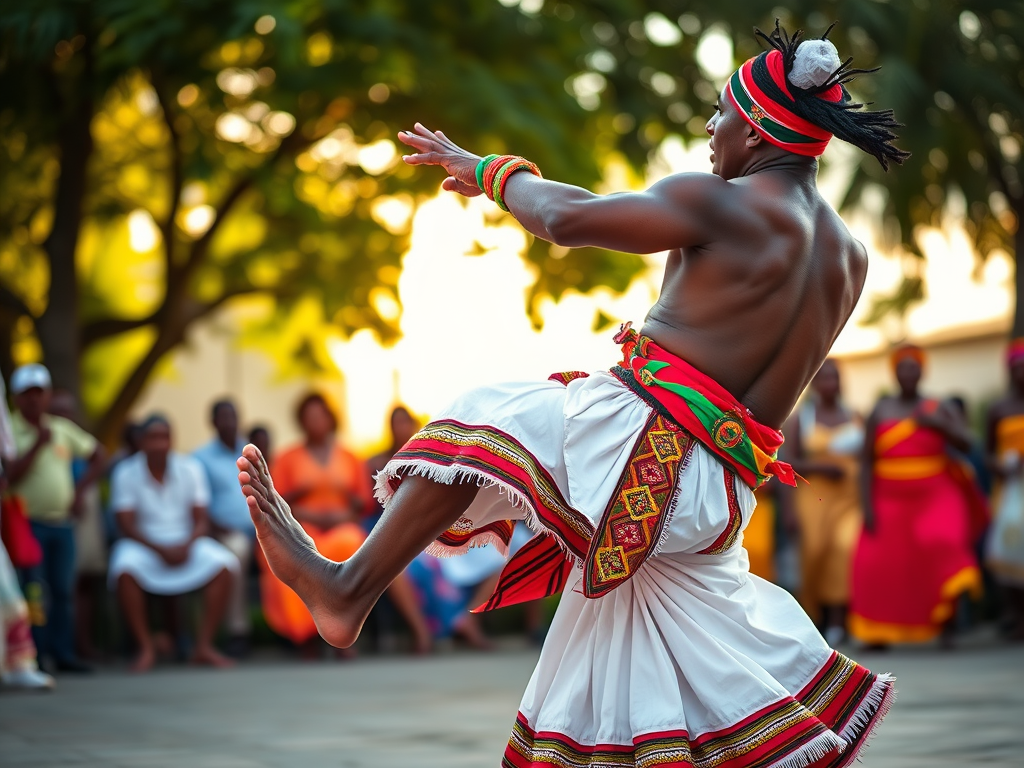
This exploration delves into the profound utility of Capoeira Angola principles as a framework for survival, resilience, and resistance against some of the most formidable social and political challenges of the contemporary era. It posits that the historical and philosophical underpinnings of this Afro-Brazilian art form—a unique blend of dance, fight, music, and philosophy—offer invaluable lessons for enduring and overcoming systemic oppression, governmental overreach, and deep-seated societal injustices.
Furthermore, Capoeira Angola embodies a rich cultural heritage that fosters community solidarity and encourages individuals to embrace their identity and strength in the face of adversity. By integrating movement, rhythm, and storytelling, practitioners not only cultivate physical prowess but also develop a deep sense of purpose and connection with their roots. This dynamic practice serves as a powerful tool for personal empowerment and collective action, emphasizing the importance of solidarity among marginalized groups striving for justice. In essence, the principles of Capoeira Angola can inspire new generations to navigate and challenge the complexities of modern life while promoting social change and cultural appreciation.
The Socio-Political Landscape of Resistance
This article specifically addresses the need for a survival strategy in the face of:
The Presidency of Donald Trump: This period is recognized for its polarizing rhetoric, challenges to democratic norms, rapid shifts in policy, and the political mobilization of extreme ideologies. The unpredictability and intensity of this political climate necessitated a strategy for both psychological and practical self-preservation, focusing on adaptability and maintaining core values amidst chaos.
Immigration and Customs Enforcement (ICE): ICE represents a powerful and often controversial manifestation of state control and repression, particularly impacting immigrant communities and people of color. Navigating this reality requires strategies for community defense, understanding the legal jogo (game), and maintaining emotional equilibrium while facing potential raids, detentions, and family separations.
Systemic Racism: This enduring challenge, woven into the fabric of institutions and society, demands a long-term, holistic approach. Capoeira Angola’s historical context—originating from enslaved Africans as a tool for physical and cultural liberation—provides a direct parallel and a philosophical blueprint for dismantling, resisting, and surviving the pervasive effects of racial bias, economic disparity, and racial violence.
Social Repression: Encompassing a broader spectrum of oppressive forces, social repression includes surveillance, censorship, police brutality, and the silencing of marginalized voices. Surviving this environment requires mastering the art of movement, camouflage (both physical and metaphorical), community solidarity (união), and the preservation of cultural identity as a form of protest.
Capoeira Angola as a Framework for Resilience: Historical perspectives
Capoeira Angola, a rich cultural and martial art form that originated in the African diaspora in Brazil, offers a profound framework for understanding and cultivating resilience. To fully appreciate its power in this capacity, one must delve into its tumultuous and transformative historical roots. Born out of the brutal realities of chattel slavery, Capoeira Angola served as a clandestine method of self-defense, resistance, and cultural preservation for enslaved Africans and their descendants.
The genesis of Capoeira Angola can be traced back to the senzalas (slave quarters) and the quilombos (runaway slave communities), where African traditions—music, dance, and fighting techniques—were secretly synthesized into a disguised form of combat. This disguise was crucial: by embedding powerful kicks, sweeps, and evasions within what appeared to be a recreational dance or ritual, practitioners could hone their fighting skills right under the noses of their oppressors. This very act of strategic concealment speaks volumes about the early practitioners’ ingenuity and psychological resilience—the ability to find strength and agency within an environment designed to crush their spirit.
Key historical perspectives that highlight Capoeira Angola’s link to resilience include:
Cultural Syncretism and Preservation: Faced with the systemic destruction of their heritage, enslaved Africans infused Capoeira Angola with elements from various African cultures, blending them with new Brazilian realities. The instruments—such as the berimbau, atabaque, and pandeiro—and the songs (quadras and chulas) acted as carriers of memory, history, and communal solidarity. Preserving these elements in the face of forced assimilation was an act of profound cultural resistance and an affirmation of identity, both critical components of collective resilience.
Physical and Mental Discipline: The rigorous training required to master Capoeira Angola—involving complex movements, acrobatic fluidity, and a deep understanding of rhythm and timing—provided practitioners with a powerful sense of self-mastery. The jogo (the “game” or sparring match) in the roda (the circle) is a demanding environment that requires constant adaptation, quick decision-making, and emotional control. This discipline was not merely for fighting; it was a way of fortifying the mind and body against the daily trauma of oppression, nurturing a foundational personal resilience.
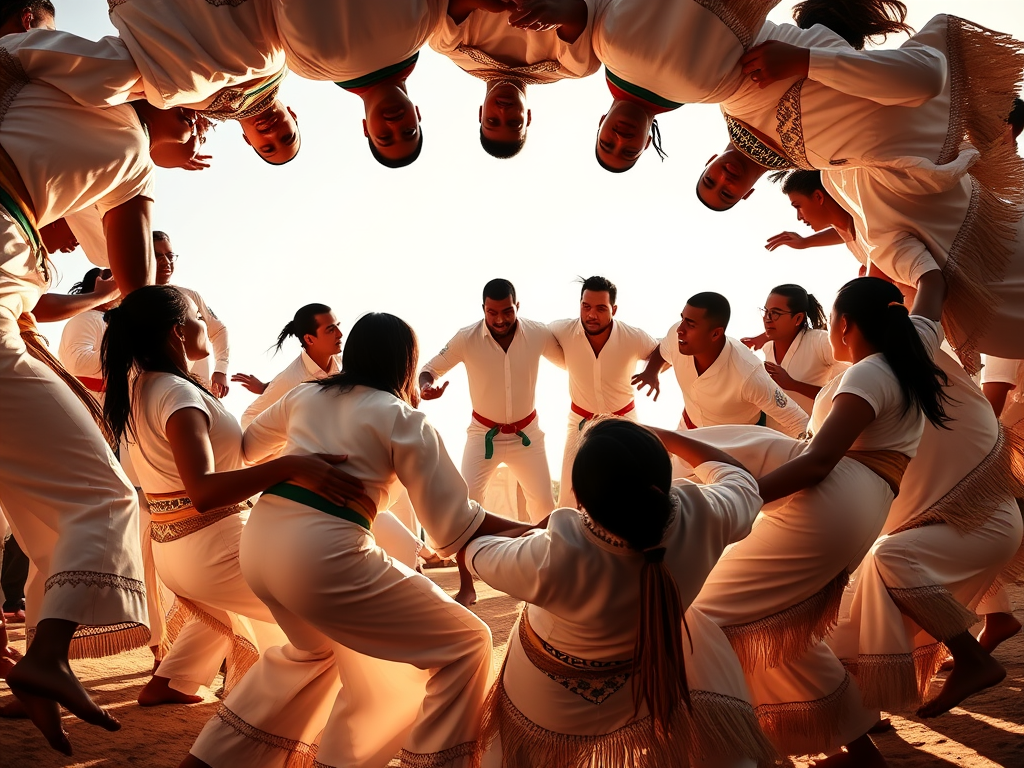
Community and Social Structure: The roda itself is a microcosm of a supportive community. It is a space where individuals are challenged, protected, and celebrated. The roles within the roda—from the mestre (master) who leads the music and determines the energy, to the players and the chorus—reinforce a structured, cooperative, and highly engaged social unit. This sense of belonging, mutual accountability, and shared purpose was, and remains, a vital historical source of collective resilience against external adversity.
In essence, the historical journey of Capoeira Angola—from the secrecy of the slave quarters to its development as a recognized cultural heritage—is a testament to human fortitude. It embodies a dynamic, embodied philosophy where physical agility, strategic thinking, musical dialogue, and communal support converge to foster a multi-layered resilience that transcends the physical realm, offering a timeless framework for navigating and overcoming modern-day challenges.
Capoeira Angola Principles: The Architecture of Survival
Capoeira Angola offers specific, actionable principles to confront these realities:
Malícia (Subtle Deception/Wile): In the face of powerful adversaries, direct confrontation is often suicidal. Malícia teaches the necessity of cunning, strategy, and misdirection. It is the ability to read the opponent’s (the system’s) intention, anticipate its moves, and use its own momentum against it. This translates to navigating bureaucratic systems, understanding political maneuvering, and protecting vulnerable communities through intelligent evasion rather than reckless aggression.
Mandinga (The Magic/Aura of the Game):Mandinga represents the intangible power, the spiritual conviction, and the confident, almost magical presence that commands respect and inspires fearlessness. It is the cultural armor that resists dehumanization. In the context of survival, this means maintaining cultural pride, spiritual resilience, and a powerful internal sense of self-worth that cannot be broken by repressive forces.
O Jogo de Dentro (The Inner Game): Capoeira Angola is as much an internal discipline as an external fight. O Jogo de Dentro emphasizes emotional control, patience (esperar), self-awareness, and the ability to maintain calm and focus during intense pressure (the roda). This principle is crucial for mental health, helping individuals survive the constant stress and anxiety induced by political turmoil and systemic threats.
A Ginga (The Swing/The Basic Movement): The Ginga is not merely a dance step; it is perpetual motion—a state of readiness, fluidity, and constant adaptation. It teaches that one must never be static or locked into a predictable position. In life, this means being flexible in one’s actions, prepared for policy changes, and constantly learning new ways to protect oneself and one’s community, maintaining a dynamic resistance posture.
Comunidade e União (Community and Unity): The roda (the circle where capoeira is played) is the ultimate symbol of community. Survival is never solitary. The principles of Capoeira Angola emphasize the collective responsibility of all participants to protect each other, maintain the energy of the roda, and ensure that everyone has the chance to jogar (play). This translates directly to building strong, resilient, and mutually supportive networks to withstand ICE raids, social isolation, and political attacks.
By adopting the philosophy and movement of Capoeira Angola, individuals embrace far more than a physical discipline; they participate in a profound cultural and psychological act of resistance. This intricate art form, born from the crucible of enslavement, functions as a holistic system for survival and self-determination. The practice is not simply a reaction to oppression, but an active, conscious engagement in the jogo—the game. This jogo is a life-long, dynamic contest demanding constant strategic thought, physical adaptation, and unwavering spiritual resilience. Capoeira Angola’s inherent deceptive nature—masking deadly martial arts techniques within a dance-like, ritualistic performance—served as a vital mechanism for preserving the knowledge and power of the enslaved people. Every fluid motion, every feigned retreat, and every sudden, powerful kick represents a lesson in strategy, turning the oppressor’s gaze from a tool of control into a blind spot for liberation. Through the jogo, practitioners cultivate a deep-seated understanding of timing, deception, and the critical importance of community support, symbolized by the surrounding roda and the guiding music. This collective participation ensures not only the physical survival of the individual but, more fundamentally, the endurance and vibrancy of their spirit, their history, and their threatened culture. The ultimate goal is liberation—a continuous state of being free from physical and psychological bondage.


 Jogo Corpo Fechado