BRUCE LEE on how to fight your greatest battle

I wanted to add this to the Kung Fu Theater series, because it is a “Bruce Lee video.” However, I ultimately decided not to, not just because it’s a unique piece of content, but also because this video transcends the traditional boundaries of a martial arts film. This is not merely about physical prowess or combat techniques; rather, it delves deep into the philosophy that underpins martial arts. It explores the intricate connection between the mind and the body, revealing how mental discipline, focus, and a profound understanding of oneself can elevate one’s martial arts practice to new heights.

In this powerful video, we unlock the hidden mental training Bruce Lee used to sharpen his focus, increase his speed, and develop unbreakable self-belief. This insightful perspective offers viewers not just an opportunity to learn about martial arts, but to engage with the very essence of what it means to be strong, both physically and mentally.

These techniques are not just for fighters—they are for anyone who wants to master their mind, push beyond limits, and achieve greatness in life.

Bruce Lee was more than just a martial artist—he was a master of the mind. His legendary speed, power, and wisdom came from something deeper than physical training; it came from a profound understanding of the self and the universe. This understanding was nurtured through rigorous discipline and exploration of philosophies that transcended the ordinary. He incorporated forbidden mind techniques that most people never learn, techniques that challenge conventional beliefs about what the mind is capable of achieving.

By embracing these practices, individuals can uncover the latent potential within themselves, harnessing the incredible power of their thoughts and intentions to transform their everyday realities into extraordinary experiences. As they delve deeper into mindfulness and self-awareness, a profound shift begins to occur, allowing them to break free from limiting beliefs and unlock a new level of consciousness.

Bruce Lee’s legacy continues to inspire countless individuals, reminding us that true mastery lies at the intersection of mental and physical prowess, where discipline and passion converge to create not only exceptional skills but also a deeper understanding of oneself. This journey toward self-discovery encourages people to push their boundaries and strive for excellence, fostering resilience and adaptability in the face of challenges. Ultimately, it is through this holistic approach that individuals can truly realize their fullest potential and lead more fulfilling lives.

SELF DEFENSE SERIES (3/5/25)

Welcome to the Self-Defense series, covering all aspects including physical, mental, spiritual, and legal, providing you with comprehensive insights and practical techniques to empower you in various situations. This series delves into the importance of self-defense training, emphasizing the need for not only physical readiness but also mental resilience, spiritual confidence, and legal knowledge, ensuring that you are fully equipped to protect yourself and navigate any encounter with wisdom and strength.

Today…

Most men lose fights due to poor body language, which significantly affects how they’re perceived in confrontations, ultimately leading to unfavorable outcomes. Criminals are particularly adept at sensing weakness, making it essential to maintain a commanding presence that radiates confidence and assertiveness. An improper stance not only betrays a lack of confidence but can also lead to defeat before the fight starts, as opponents may exploit the slightest signs of hesitation.

It is important to understand that in addition to physical postures, facial expressions, gestures, and overall demeanor play critical roles in communicating strength or vulnerability. Mastering these elements can create an aura that deters aggression and instills respect, giving individuals a psychological edge. By developing awareness around body language, one can engage in a form of non-verbal communication that reinforces their ability to navigate confrontations successfully.

This video meticulously outlines three key principles of fighting stance and posture that are crucial for anyone who wishes to project unwavering confidence in their everyday interactions and self-defense scenarios. By mastering these principles, individuals can establish an aura of authority that helps them take control of any situation they may encounter, allowing them to not only defend themselves effectively but also to deter potential aggressors who are attuned to the nuances of human behavior and body language. Understanding how to stand, move, and present oneself can make the difference between being perceived as a target or as someone who is prepared to face challenges.

Shout-out to FIGHT SCIENCE for their insightful video on elevating fight IQ through the intriguing blend of criminal psychology and martial arts for self-defense, presented by the knowledgeable Dr. Mark Phillips. This engaging video explores essential themes such as behavioral risk management, understanding criminal behavior, and effective self-defense techniques tailored for real-life scenarios. Additionally, it offers valuable street fighting tips designed to enhance your survival skills in unpredictable situations, as well as mindset preparation strategies that are crucial for maintaining composure during conflict.

Dr. Phillips also shares simple martial arts training tips that are easy to incorporate into your routine, ensuring that practitioners of all levels can benefit. These insightful videos are released every Sunday, providing viewers with fresh content and techniques to continuously improve their defensive skills. Please click HERE to check out their YouTube channel, where you can dive deeper into these topics and expand your knowledge on self-defense practices.

BASIC ELEMENTS OF CAPOEIRA: THE CHAPA DE FRENTE

“There are not more than five musical notes, yet the combinations of these five give rise to more melodies than can ever be heard. There are not more than five primary colours, yet in combination, they produce more hues than can ever been seen. There are not more than five cardinal tastes, yet combinations of
them yield more flavours than can ever be tasted.”
― Sun Tzu, The Art of War

Capoeira Angola is a defensive martial art known for its intricate trap-like defenses designed to catch opponents off guard and provide fluidity in movement. It encompasses 8 basic defenses, each with unique unexpected attacks and counter-attacks based on the opponent’s positioning, which are essential for creating opportunities during a confrontation. Mastery of these movements enables capoeiristas to defend against individuals carrying various weapons, including sticks, clubs, knives, and potentially even firearms with the appropriate skills; by understanding the principles of anatomy, timing, and rhythm, practitioners can enhance their ability to react swiftly and effectively. Furthermore, the art form emphasizes not only physical technique but also the mental aspects of strategy and awareness, allowing capoeiristas to anticipate an opponent’s actions and respond accordingly, making it a holistic approach to self-defense that integrates body and mind.

Chapa de frente (front plate), also called bênção (blessing) is one of the few fundamental kicks in capoeira. It is a front push kick with the sole of the foot. This traditional capoeira kick is direct, firm and fast.

Chapa de frente (front plate) refers to a type of push kick executed with the sole of the foot, known as chapa (plate), originating in the mid-20th century. This movement, characterized by its swift and powerful projection, not only demonstrates skill but also showcases an evolution of martial arts techniques influenced by various cultural practices.

The term Bênção (blessing) ironically relates to the bent starting position, recalling how slave owners in Brazil would ironically greet enslaved Africans with blessings on Sundays, forcing them to show gratitude despite their suffering. This historical context adds a layer of depth and poignancy to the technique, as it reflects the complex relationship between oppressor and oppressed. The benção kick symbolizes this contradiction, appearing as a blessing yet resulting in a kick to the opponent’s belly, thereby merging the evolving martial art with a narrative of resistance and resilience against historical injustices. As practitioners execute this kick, they embody not only physical prowess but also an awareness of the cultural and historical significance embedded within the movements.

The chapa de frente kick targets various body areas, primarily the chest, by lifting the knee and using hip motion to extend the leg, striking with the sole of the foot while keeping the supporting foot grounded. Typically, the capoeirista steps from the ginga into the kick, which can vary in impact from gentle to forceful, depending on the execution and intention behind the movement. This technique requires not only physical strength but also agility and precision, allowing practitioners to balance offense and defense effectively. The effective use of footwork and timing makes the chapa de frente versatile, enabling it to be incorporated into both initiating attacks and countering opponents’ moves. This kick is particularly dangerous due to its powerful application and the sensitivity of the targeted area, making it essential for any capoeirista to practice this technique diligently to ensure control while maximizing its potential. Additionally, the psychological impact of such a kick can unnerve opponents, giving the capoeirista a strategic advantage in both training and performance contexts.

In the capoeira Angola, when a player completes a chapa de frente, they usually promptly descends to the ground, seeking refuge against potential takedowns or counterattacks aimed at their face.

Defense against a front push kick can be practiced in several ways, including blocking the attacker’s leg with crossed forearms to create a solid barrier, effectively absorbing the impact while maintaining balance. Another technique involves rapidly descending by lowering one’s center of gravity to bring down the attacker by suspending their extended leg, thereby destabilizing them and creating an opportunity for further action. Additionally, executing a counterattack with a sweep (rasteira) can be highly effective; this involves using a well-timed movement to off-balance the opponent and redirect their momentum, often catching them off guard and allowing for a swift follow-up technique. Each of these methods not only enhances defensive capabilities but also cultivates a deeper understanding of timing and distance in combat situations.

The speed of movements and the flexibility of the body are essential for both attack and defense in the art of capoeira. A skilled capoeirista quickly discerns the intentions of the attacker, not wasting time in organizing their defense and counterattack. They rely on their refined senses and experience to anticipate the opponent’s next move, allowing them to remain agile and ready to adapt. The mere position of the attacker indicates how they might attack, triggering a cascade of potential responses based on the capoeirista’s knowledge of their craft. This dynamic exchange is not just a battle of strength but a dance of strategy and instinct, where each player must read the other’s body language, rhythm, and subtle cues in order to succeed. Mastery in capoeira requires extensive practice and an acute understanding of timing, space, and technique, ultimately transforming the fight into an engaging and fluid performance of skill.

MARTIAL ARTS THEATER (1/31/25)

Welcome to MARTIAL ARTS THEATER, a vibrant platform for martial arts enthusiasts where we explore various disciplines, including karate, taekwondo, Krav Maga, Muay Thai, etc. As we delve deeper into the rich history, intricate philosophy, and advanced techniques of these diverse arts, we celebrate the discipline, dedication, and cultural significance they embody. Through expert interviews, instructional videos, and community events, we aim to provide insightful resources and foster a supportive network for practitioners of all levels, from beginners to seasoned masters. Join us on this exciting journey through the world of martial arts, where you can cultivate your skills, share your experiences, and connect with like-minded individuals who share your passion for this empowering and transformative discipline.

Today, we are going to follow the life and times of Kung Fu pioneer, Grandmaster Chan Pui, a remarkable figure whose journey is a testament to resilience and determination.

Pui escapes the harshness of political oppression in his homeland, where the echoes of turmoil often stifled dreams and aspirations; he courageously embraces opportunity in the USA, a land that promised freedom and the chance to flourish.

In this new environment, he finds a rich tapestry of cultures and ideas that fuel his ambition, allowing him to reconnect with his long-buried passions and dreams. The diverse community around him inspires collaboration and innovation, as he navigates the challenges of adapting to a foreign lifestyle while holding tightly to his own heritage. With resilience and determination, Pui undertakes endeavors that not only shape his own future but also contribute to the vibrant mosaic of American society, affirming his belief that one can rise above adversity and ignite change.

Now highly recognized and celebrated, Pui Chan is not only one of the pioneers responsible for bringing traditional Kung Fu to America but also a passionate advocate for preserving its rich heritage. Through his dedication and teachings, he has inspired countless students to explore the depths of this ancient martial art, ensuring that its philosophy, discipline, and techniques continue to thrive in a new cultural landscape.

MARTIAL ARTS THEATER (1/24/25)

Welcome to MARTIAL ARTS THEATER, a vibrant platform for martial arts enthusiasts where we explore various disciplines, including karate, taekwondo, Krav Maga, Muay Thai, etc. As we delve deeper into the rich history, intricate philosophy, and advanced techniques of these diverse arts, we celebrate the discipline, dedication, and cultural significance they embody. Through expert interviews, instructional videos, and community events, we aim to provide insightful resources and foster a supportive network for practitioners of all levels, from beginners to seasoned masters. Join us on this exciting journey through the world of martial arts, where you can cultivate your skills, share your experiences, and connect with like-minded individuals who share your passion for this empowering and transformative discipline.

Today, a renowned Qi Gong master embarks on a transformative journey to his Chinese homeland with his young granddaughter, a spirited and eager learner. As they traverse the picturesque landscapes imbued with ancient traditions, she will not only learn the secrets of Kung Fu but also uncover the rich tapestry of her heritage.

Alongside her training, the master finds himself confronting the echoes of his tumultuous past, as memories of his childhood and the struggles he once faced resurface, vividly replaying in his mind like an old film. This journey becomes a profound exploration of their intertwined fates, a labyrinth of emotions and experiences that shape their identities, allowing them both to grow and heal in ways they never expected. Each step they take together not only strengthens their relationship but also unearths lessons from the past that resonate with the present, creating a harmonious symphony of growth and resilience.

WHY BLACK WOMEN & GIRLS ARE 4 TIMES MORE LIKELY TO GO MISSING AND WHAT WE CAN DO ABOUT IT

Why are Black girls and women four times more likely to go missing than their counterparts? This alarming statistic not only highlights the deep-rooted issues of systemic racism and discrimination in our society, but it also raises critical questions about the lack of attention and resources dedicated to their safety. Various factors contribute to this troubling trend, including socioeconomic disparities, vulnerabilities faced by marginalized communities, and insufficient media coverage when they do go missing. Additionally, the intersectionality of race and gender amplifies the risks that Black girls and women face, leading to a cycle of neglect and invisibility. The systemic barriers in accessing support systems, such as law enforcement and social services, further exacerbate their plight, often resulting in delayed investigations and a lack of urgency in finding those who are missing. Furthermore, cultural narratives and societal perceptions contribute to the dismissive attitudes towards their disappearances, making it imperative that we confront and challenge these biases in order to advocate for better protection and support for these vulnerable populations. Addressing these disparities is crucial not only for the safety of Black girls and women but also for the overall justice and equity in our society.

To protect marginalized communities, we must raise awareness of their unique challenges and hardships, advocate for comprehensive policies that address systemic inequalities affecting education, healthcare, and employment opportunities, and support organizations that are actively tackling these disparities through funding, outreach programs, and education on social justice initiatives. Additionally, fostering representation in decision-making processes is crucial, as it ensures that the voices of those impacted by these issues are heard and valued.

Engaging in community-building activities and promoting allyship among different societal groups can further strengthen our collective efforts to combat injustice. The videostream below offers additional options for understanding these important themes and how you can contribute to meaningful change.

Shout out to Rob Doggett for making this presentation.

Rob Doggett is the Founder of Ijakadi African Martial Arts and AfricanMartialArts.com for the liberation and restoration of our African cultural identity. Ijakadi is a combat science and a way of life for people of African descent. Rob has been teaching African Martial Arts every week at Brikhouse Boxing in Portsmouth, VA and now does workshops throughout the Hampton Roads Area. He is also a member of the Afrikan War College and the Amos Wilson Collective. A practitioner of both 52 Blocks and Afro-Brazilian Capoeira, Rob’s a certified Jeet Kune Do Instructor, certified Kickboxing Coach, and former certified USA Boxing Coach. He has fought as an amateur kickboxer and traveled all over the world from Japan to Korea, China, and Africa training with some of the best in the world. However, his proudest accomplishment is the daily inspiration he provides to our youth online and in his workshops.

If you want to know more about him and his work, please checkout his website, africanmartialarts.com

BASIC ELEMENTS OF CAPOEIRA: THE CABECADA

“There are not more than five musical notes, yet the combinations of these five give rise to more melodies than can ever be heard. There are not more than five primary colours, yet in combination, they produce more hues than can ever been seen. There are not more than five cardinal tastes, yet combinations of
them yield more flavours than can ever be tasted.”
― Sun Tzu, The Art of War

Capoeira Angola is a defensive martial art known for its intricate trap-like defenses designed to catch opponents off guard and provide fluidity in movement. It encompasses 8 basic defenses, each with unique unexpected attacks and counter-attacks based on the opponent’s positioning, which are essential for creating opportunities during a confrontation. Mastery of these movements enables capoeiristas to defend against individuals carrying various weapons, including sticks, clubs, knives, and potentially even firearms with the appropriate skills; by understanding the principles of anatomy, timing, and rhythm, practitioners can enhance their ability to react swiftly and effectively. Furthermore, the art form emphasizes not only physical technique but also the mental aspects of strategy and awareness, allowing capoeiristas to anticipate an opponent’s actions and respond accordingly, making it a holistic approach to self-defense that integrates body and mind.

The Cabeçada is a headbutt in capoeira, widely used and considered a fundamental technique. Though easy to perform, it is dangerous and historically deadly in 19th century capoeira carioca, but violent headbutts are now generally avoided in contemporary practice.

By the 19th century, head butts had evolved into the primary technique used by capoeiras, as documented in police records that highlighted the growing notoriety of capoeira in urban settings. This era saw a remarkable surge in interest and participation, prompting authorities to closely monitor the activities surrounding capoeira schools and the practitioners themselves.

In capoeira cariocacabeçada was a deadly technique. An English visitor to Rio de Janeiro wrote in 1826 on this lethal technique:

They need no stiletto, ferro de gaiola, or any other weapon. In lieu of all these, they use only the head; and with it, they butt like bulls at the chest of their victim. I saw a field officer who had been murdered in this manner and thrown over the wall into his garden, where his family found him in the morning: the upper part of the body had been flattened as if the implement of death had been a mallet.

Between 1822 and 1824, German painter Johann Moritz Rugendas characterized capoeira as a game centered around headbutting, emphasizing not only the physicality of the movement but also the cultural significance it held within the Brazilian landscape, serving as a form of resistance and identity for enslaved and marginalized communities.

Two contestants face each other, each trying to butt his adversary in the chest with his head and knock the opponent down. They turn cartwheels and pause as they launch into an attack. Sometimes they stand like he-goats, butting at each other. The game often turns into a wild brawl when knives are drawn and blood is shed.[6]

Johann Moritz Rugendas

Through Rugendas’ artwork, one can glimpse the vibrant energy and spiritedness of capoeira, which continues to resonate to this day, evolving while maintaining its historical roots in the struggle for freedom and self-expression.

Lethal headbutt techniques were also used in the 19th century Bahia.

On the night of February 22, 1883, the soldier José Raimundo de Souza, standing patrol in the Baixa dos Sapateiros, went to arrest the stevedore Celestino, author of a major conflict on that street, from whom he received a ‘cabeçada’ that caused him almost instant death.

Headbutts, once common in street-fighting capoeira for their effectiveness, are now used less frequently in the game, primarily as a defensive strategy against close opponents.

To execute a headbutt, the capoeirista bends down and strikes the opponent with their forehead, targeting various body regions such as the chest, jaw, or even the temple, depending on the opening and the intended impact. This technique not only serves as a powerful offensive move but also helps create space between the capoeirista and their adversary, allowing for a tactical retreat or a swift counterattack. Moreover, mastering the headbutt requires precise timing and body mechanics, as improper execution can lead to self-injury or ineffective blows. With the evolution of capoeira into a more dance-like performance art, the headbutt has become a less favored option, yet it remains a potent reminder of the martial roots from which this vibrant practice originated.

As long as there’s an opening in the defense, the possibility of a headbutt remains imminent. In this technique, the attacker rapidly approaches, gliding their head along the opponent’s chest with precision and agility, usually targeting sensitive areas like the chin, nose, or forehead upon contact. The speed and intent behind this maneuver can often catch an opponent off guard, making it a risky yet potentially effective tactic in certain situations. However, it’s crucial to emphasize that this technique should never be fully executed in a game situation due to its serious consequences. Not only can a headbutt lead to severe injuries for both the initiator and the target, but it can also result in disciplinary actions from officials, such as penalties or ejections. Understanding the gravity of this action is essential for athletes to maintain sportsmanship and ensure the safety of all players on the field.

According to mestre Pastinha and mestre Bimba, the headbutt, or cabeçada, is a dangerous technique in capoeira that can be effectively used at close range. It involves cunning application and can target the chest or face, often executed unexpectedly as opponents anticipate a withdrawal. Capoeiristas utilize various strategies to deliver headbutts, such as feigning dodges during ginga or dropping objects to surprise reckless opponents, and can also escape holds by using headbutts.

In capoeira carioca, different headbutts have specific names based on execution, such as caveira no espelho for a standing face strike and cocada for an upward jab under the chin. The cocada is performed by lowering the body to hit the opponent with the head, making it a deceptive move that can catch the adversary off guard. It can disorient and terrify the receiver, similar to the rabo de arraia, which is also known for its unexpected nature and effectiveness in combat situations.

The arpão de cabeça is a powerful headbutt that effectively utilizes the attacker’s body weight, initially shielding with crossed arms to create an illusion of vulnerability before delivering the strike with precision. This strikes not only aims to incapacitate but also serves to assert dominance in the rhythm of the game. Defense against a headbutt includes pulling back to hit the attacker’s head or quickly descending to kick upward, which requires agility and quick thinking. Learning to anticipate and react to these specific moves is crucial for any practitioner wishing to excel in capoeira, as each technique has its place in the fluid interplay of offense and defense that defines this dynamic martial art.

MARTIAL ARTS THEATER (12/27/24)

Welcome to MARTIAL ARTS THEATER, a vibrant platform for martial arts enthusiasts that offers diverse content on various disciplines, from traditional styles like karate and taekwondo to innovative techniques such as Krav Maga and Muay Thai, celebrating the rich history, profound philosophy, and unwavering dedication inherent in martial arts. Here, we delve into the nuances of each martial art, explore their unique techniques, engage with expert practitioners, and provide training tips for all skill levels, creating a community where passion for martial arts thrives. Whether you are a seasoned fighter or a curious beginner, our extensive resources aim to inspire and educate, fostering a deeper appreciation for the artistry and discipline that martial arts embody.

In this installment, we have this VERY SPECIAL episode of INSIDE FIGHTING.

In this eye-opening episode, Ilan from The Inside Fighting YouTube Channel discusses hidden issues that have long plagued the martial arts community, including abuse and manipulation, with valuable insights drawn from McDojo Life. They provide a deep dive into the important red flags that practitioners should recognize, stressing the crucial need for safety in training spaces.

By holding wrongdoers accountable, we as a united martial arts community can foster a culture of trust and respect, which is essential for maintaining the integrity of our beloved discipline. This responsibility extends to both seasoned practitioners and newcomers alike, making it vital for everyone to listen, engage, and learn from the experiences shared. It is important that we create an open dialogue where concerns can be expressed freely and without fear of retribution.

This includes mentoring programs that connect experienced martial artists with novices, ensuring that knowledge and principles are passed down effectively. Additionally, hosting regular workshops and seminars can serve as platforms for educating all members on the importance of ethics and accountability, further reinforcing our commitment to high standards. By building a solid foundation of mutual respect and understanding, we can ensure that our martial arts community remains a safe and supportive environment for all individuals involved.

This conversation is more than just discussing problems; it serves as a powerful call for the community to come together, to engage in open dialogues, and to actively take steps in protecting the core values and integrity of martial arts. In an age where the essence of martial arts can sometimes be overshadowed by external pressures and misconceptions, it is essential for practitioners, instructors, and enthusiasts alike to reaffirm their commitment to these foundational principles.

By collectively addressing these issues, we can create a supportive environment where all individuals feel safe and valued, ultimately allowing martial arts to thrive for future generations. Each voice matters, and through united efforts, we can foster a culture of respect, discipline, and growth that honors the traditions while embracing the evolution of martial arts as an integral part of our society. Together, we can forge pathways for learning and development that reflect not only the spirit of the practice but also the need for inclusiveness and resilience in our communities.

IT’S CHRISTMAS!!! Part 2

This post will be thoughtfully divided into two distinct parts, with the first part addressing the significant question of what Christmas should mean for Black Americans. In exploring this topic, I believe it’s essential to consider the historical and cultural context that shapes the Black American experience during this holiday.

To provide a deeper understanding, I have included insightful commentary from the professor, whose perspective can shed light on the complexities and unique traditions that enrich this celebration within the Black community. Through this exploration, we can better appreciate the values and meanings that Christmas holds for Black Americans today.

Or at least, what I think they SHOULD hold.

Black people should prioritize saving money and investing their overtime pay in local businesses, community initiatives, and educational opportunities to create a lasting impact. By doing so, they not only support the entrepreneurial spirit within their communities but also contribute to the development of a robust local economy that can withstand external pressures. This approach will enrich themselves and their communities by creating jobs that offer stable employment and generating a network of mutual support among local business owners and consumers.

Furthermore, investing in community initiatives not only addresses immediate needs but also fosters a sense of belonging and resilience. These initiatives, such as after-school programs or cultural events, can provide valuable resources and educational support to the youth, helping to instill confidence and ambition. As individuals acquire new skills through various educational opportunities, whether through traditional degree programs or hands-on vocational training, they enhance their economic prospects and better position themselves for career advancement. Ultimately, by strategically channeling their financial resources and engaging with their communities, individuals can break the cycle of dependency and foster sustainable success that reverberates through future generations.

Now for the second part, we have THIS.

Filmmaker and activist Peter Joseph created this segment for his thought-provoking movie, ZEITGEIST, which has sparked significant discussions around its themes. This particular segment presents a unique and often controversial view on the life of Jesus Christ, exploring not just his teachings and impact, but also delving into the historical and sociopolitical contexts surrounding his existence.

It discusses how religion, particularly Judeo-Christian beliefs, has been used for centuries as a powerful tool to control various aspects of the Western world, influencing everything from governance to social norms. Throughout history, this influence is evident in the establishment of laws and ethical systems that reflect religious tenets, which often dictate not only individual behavior but also societal expectations.

By analyzing these dynamics, Joseph encourages viewers to reflect critically on the role of religion in shaping cultural identities and power structures throughout history, prompting a deeper understanding of how these beliefs have not only unified communities but also created divisions, often serving as a justification for conflict and discrimination. He invites us to consider the implications of religious narratives on contemporary issues, urging a reassessment of the moral frameworks that guide modern governance and cultural interactions.

BASIC ELEMENTS OF CAPOEIRA: THE ROLE

“There are not more than five musical notes, yet the combinations of these five give rise to more melodies than can ever be heard. There are not more than five primary colours, yet in combination, they produce more hues than can ever been seen. There are not more than five cardinal tastes, yet combinations of
them yield more flavours than can ever be tasted.”
― Sun Tzu, The Art of War

Capoeira Angola is a defensive martial art that combines a rich cultural history with physical agility and mental discipline. It features 8 basic defenses, each designed with specific techniques that incorporate unique attacks and counters, empowering practitioners to effectively defend against various weapons. This dynamic art form not only emphasizes the importance of movement and rhythm but also teaches the value of strategy and adaptability in combat situations. By mastering these techniques, individuals can gain confidence in their ability to protect themselves while simultaneously enjoying the artistic expression that Capoeira Angola offers in its fluid and graceful movements.

And today, we’re gonna talk about the ROLE.

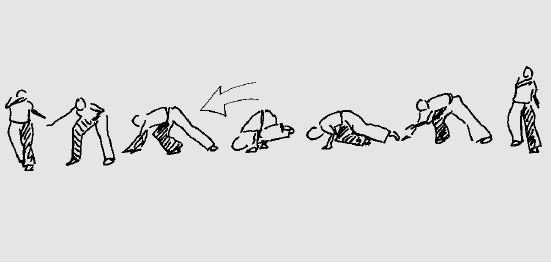
Rolê is a basic movement in the Roda, performed from Ginga or esquivas, where the capoeirista spins to the side, staying low and watchful of the opponent’s movements. During the rotation, he maintains eye contact with the adversary through his legs, which is crucial for anticipating their next actions and maintaining defensive readiness. This continuous visual connection not only enhances the capoeirista’s awareness of his surroundings but also establishes a psychological edge over the opponent.

The rolê can end in various positions such as roxana, Negativa, or other esquivas, each presenting unique defensive or offensive opportunities for countering or retreating, providing capoeiristas with a multitude of strategic options. Among its numerous variations, the Rolê de Cabeça stands out distinctly, as it involves placing the head on the ground, which not only enables smooth transitions into inverted techniques like the aú or even the macaco but also allows practitioners to execute dazzling aerial maneuvers that captivate audiences and instill fear in opponents. This versatility expands the repertoire of movements within the game, making it vital for practitioners to explore every facet of the rolê and its applications.

Moreover, mastery of the rolê and its various transitions is fundamental for any aspiring capoeirista, as it enhances agility and fluidity in their movements while simultaneously improving balance and spatial awareness. This foundational skill serves not only as a technical basis for performance but also as a gateway to deeper levels of expression within the art form. As practitioners become more skilled, the rolê allows them to experiment with different rhythms and styles, creating a unique signature in their practice. This expanded use of the rolê enables a dynamic and unpredictable style during combat, fostering an environment where creativity thrives and adaptability becomes key to overcoming challenges faced within the roda. Additionally, engaging in the rolê can cultivate a sense of camaraderie among capoeiristas, facilitating a shared journey of growth and mutual support as they explore the limitless possibilities inherent in capoeira.