The political and diplomatic career of Dr. Khanyisile Thabalala, a prominent South African member of parliament, took an unexpected and dramatic turn following a seemingly innocuous visit to a museum in Germany. The core of the controversy stems from a single, pointed question she posed during her tour, an inquiry that quickly escalated into a diplomatic incident resulting in a lifetime ban from the country.
The incident unfolded during an official parliamentary delegation visit to Germany. While touring a significant cultural institution—reported to be a major historical or ethnographic museum—Dr. Thabalala paused before a specific exhibit. The exact nature of the exhibit remains a point of public conjecture, though it is widely believed to have displayed artifacts or information related to Germany’s colonial past, particularly its involvement in South West Africa (now Namibia) or other parts of the African continent.
In an act that demonstrated her commitment to questioning historical narratives and challenging uncomfortable truths, the South African MP addressed a museum official or guide with a question that, in the German context, proved highly provocative. Sources close to the delegation suggest her query focused on the provenance of the artifacts, specifically asking about the ethical nature of their acquisition or the display’s acknowledgement of colonial-era violence and exploitation. She reportedly pressed for details on whether the museum had initiated, or was planning to initiate, a repatriation process for any human remains or culturally significant objects taken under duress.
This line of questioning, intended by Dr. Thabalala to open a dialogue on historical accountability and reparative justice—themes central to South Africa’s own post-apartheid discourse—was not received in the spirit she intended. Instead, German authorities viewed the inquiry as an aggressive challenge to national history and a disruption of a state-sponsored cultural exchange.
The repercussions were swift and severe. Within a short period, Dr. Thabalala was officially notified of a decision by German federal authorities. Citing reasons that remain largely obscured by diplomatic language—likely related to “disrupting official proceedings” or “inappropriate conduct”—she was declared persona non grata and issued a permanent ban preventing her from ever re-entering the Federal Republic of Germany.
Dr. Thabalala’s narrative of the event serves as a stark reminder of the often-tense relationship between former colonizing and colonized nations regarding cultural heritage, historical truth, and the politics of memory. Her experience has been widely discussed in South Africa, where it is often framed as an example of Western nations’ reluctance to fully confront and apologize for the brutalities of their colonial empires. The incident has cemented Dr. Thabalala’s reputation as a fearless advocate for decolonization, even as it cost her access to a major European nation.
The WARRIOR CLASS podcast is your essential, unique resource for mastering self-protection and self-defense. Designed to equip every listener—regardless of background, experience level, or physical ability—with the vital skills and profound knowledge necessary for personal safety and empowerment, we go beyond simple techniques.
We believe that true self-defense begins with a “Warrior Mindset,” focusing on situational awareness, threat recognition, de-escalation tactics, and the legal and ethical considerations of using force. Our episodes feature in-depth interviews with world-class experts: tactical trainers, martial arts masters, security professionals, and legal analysts.
Tune in to explore practical strategies for:
Physical Self-Defense: Practical, high-percentage techniques for escaping grabs, defending against common assaults, and utilizing everyday objects for protection.
Situational Awareness: Developing the mindset to identify and avoid danger before it escalates.
Home Security and Personal Safety Technology: Reviews and best practices for securing your environment and leveraging modern tools.
Psychology of Conflict: Understanding fear, managing adrenaline, and maintaining control under pressure.
Join the WARRIOR CLASS community today and take charge of your personal safety journey. Your empowerment starts now!
This week…
This episode: Beyond the Veil of Visibility: Examining the Depth of Black Imagery in Media
It is an undeniable truth that Black actors today enjoy a greater quantitative presence in films and television shows than in decades past. However, this sheer increase in visibility should not be mistaken for meaningful or authentic representation. The true measure of progress lies not in the volume of appearances, but in the quality and complexity of the roles being offered.
When the characters written for Black talent are disproportionately confined to narrow, often harmful archetypes—such as criminals, servants, comedic relief, sidekicks, the emotionally detached “magical negro,” or characters whose narratives are solely defined by trauma—then representation has not genuinely progressed. It has merely diversified in the most superficial of ways, creating a false sense of inclusion.
These limiting roles frequently serve to reinforce damaging, long-standing cultural narratives, regardless of the exceptional skill and artistry of the actors embodying them. This perpetuation of tropes, even in contemporary media, normalizes a restricted and distorted view of Black humanity.
The problem extends beyond the screen and into the realm of printed media, including books, magazines, and comic books. While some Black tropes may have had historical or contextual roots, their continuous and uncritical deployment becomes fundamentally harmful. They operate by flattening the experiences of millions of people into one or two simplistic, overused personality types. This practice effectively erases the vast cultural, regional, class, and personal diversity that exists within the global Black community.
Ultimately, mere visibility is not enough. Representation that lacks authenticity, depth, and complexity is, in effect, a form of misrepresentation. It fails to honor the rich tapestry of Black life and instead promotes an easily digestible, often prejudiced caricature.
In this essential episode of Warrior Class, the Instructors will lead a rigorous and timely exploration and discussion of Black imagery, examining its evolution, impact, and authenticity across various media, including books, television, and film.
The Valentões (bully/tough-guys) represent a crucial and often controversial aspect of Capoeira’s early history, particularly in the urban centers of 19th and early 20th century Brazil, such as Rio de Janeiro and Salvador.
Context and Role:
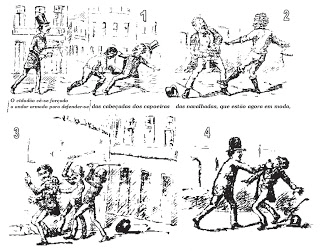
Originally, the term valentão referred to a specific and notorious type of individual in Brazilian society, often directly associated with the practice of Capoeira. These were not merely skilled martial artists, but figures known for their exceptional fighting prowess, striking fearlessness, and, crucially, their readiness to engage in public disorder or violent conflict. They were, in essence, the quintessential street fighters of their time.
The valentão‘s reputation was entirely predicated on their combat ability. Their deep proficiency in Capoeira was not just a hobby or a sport; it was the primary tool that established and maintained their local power, dominance, and a fearsome reputation within their community or neighborhood. This mastery of Capoeira allowed them to enforce their own will, settle disputes—often violently—and command respect, or more accurately, fear, from the surrounding population. They operated on the fringes of society’s established laws, with the agility, deception, and striking power of Capoeira making them incredibly formidable and difficult for authorities to manage.
The Valentões of Capoeira: Criminality and Combat in 19th Century Brazil
The Capoeira valentões (meaning “bullies” or “tough guys”) were central, yet controversial, figures in the urban landscape of post-abolition Brazil, particularly in major cities like Rio de Janeiro and Salvador during the late 19th century. Their existence fundamentally shaped the perception and subsequent criminalization of Capoeira.
Characteristics and Activities of the Valentões
The valentões were not benign practitioners of a cultural dance; they were highly skilled, feared, and often ruthless street fighters. Their use of Capoeira transcended mere sport or performance, placing it squarely in the domain of clandestine, effective urban combat:
Capoeira as a Weapon: For these fighters, the art was purely a combative system. They mastered the rapid, deceptive movements of Capoeira to gain the upper hand in street confrontations. Their arsenal included low, sweeping attacks like the rasteira (a leg sweep) and powerful headbutts (cabeçadas), which were devastating at close range. Crucially, they integrated weapons into their practice, often concealing small, sharp blades—knives or straight razors—which could be hidden in clothing or, famously, wedged between the toes and used during a low kick, adding a lethal dimension to the fight. This integration of blades and unarmed combat made them exceptionally dangerous adversaries.
Affiliation with Gangs (Malandragem): The power of the valentões was amplified by their organization into territorial street gangs, known as maltas. This gang structure, deeply interwoven with the culture of malandragem (a term encompassing cunning, street smarts, and often a disregard for the law), provided them with community, protection, and a source of income. Infamous examples in Rio de Janeiro included the rival Guaiamús (Crabs) and Nagôs (a term referring to Yoruba descendants), who fiercely competed for control over specific neighborhoods and illicit activities. Beyond simple street brawls and running protection rackets, these maltas became politically significant, often acting as enforcers or mercenaries for hire by political factions during the turbulent election periods of the First Brazilian Republic. Their ability to mobilize violence made them a critical, if unofficial, tool of political control.
Social Status and Marginalization: The valentões predominantly emerged from the poorer, marginalized classes, especially the newly freed Afro-Brazilian population who faced systemic racism and severe lack of economic opportunity after the abolition of slavery in 1888. In a society that offered them little official recognition or mobility, becoming a valentão offered a perverse form of social status—a reputation of fear and respect within their communities. They were simultaneous figures of awe for their strength and skill, and figures of intense scrutiny and contempt from the governing authorities.
Historical Significance and Lasting Impact
The activities of the valentões were not merely a footnote in Capoeira’s history; they were the direct cause of the art’s official suppression and near destruction:
Criminalization of Capoeira (1890 Penal Code): The state’s inability to control the powerful and disruptive maltas led to a drastic legislative response. The actions and reputation of the valentões were the primary justification for the inclusion of a specific ban on Capoeira in the new Brazilian Penal Code of 1890. The authorities consciously moved to de-legitimize the practice, viewing it not as a unique cultural expression but as a dangerous technique intrinsically linked to organized crime and political destabilization. The law stipulated severe punishments for anyone caught practicing Capoeira, including prolonged jail time, forced labor, and even internal exile, effectively treating Capoeira practice as an act of sedition or felony.
Evolution and Transformation of the Art: The period defined by the valentões serves as a stark reminder of Capoeira’s raw, survival-based combat roots. This dangerous legacy necessitated a profound transformation in the 20th century to ensure the art’s survival. Figures like Mestre Bimba (Manuel dos Reis Machado) in Salvador were instrumental in this shift. Bimba consciously sought to legitimize and institutionalize Capoeira, stripping away its toxic association with criminality and urban violence. He did this by creating structured academies, introducing formal rules, emphasizing its educational and physical fitness aspects, and rebranding it as a respected martial art and sport, thereby steering it away from its fearsome valentão past and securing its future as a global cultural phenomenon.
The Power of the Patuá/Amulets: Spiritual Armor of the Valentão
Within the world of Capoeira, particularly among the historical figures known as valentões (tough guys or bullies) and early practitioners in the 19th and early 20th centuries, the belief in supernatural protection was a deeply ingrained and vital cultural element. This spiritual belief system, which blended African, Indigenous, and European folk Catholicism, was essential for surviving a harsh, unforgiving existence.
The patuá was the physical manifestation of this spiritual armor. It was not merely a decorative charm but a powerful, consecrated amulet, typically a small, tightly sewn cloth bag. The power resided in its contents: a potent collection of sacred and symbolic items—such as dried herbs known for their protective or healing properties, pieces of animal bone, prayers written on scraps of paper, salt (a powerful purifying agent), coins, or sometimes even small stones. Crucially, these materials were consecrated and blessed by a spiritual specialist, such as a rezadeira (a prayer woman, skilled in folk remedies and blessings) or an African-Brazilian religious figure, often from the Candomblé or Umbanda traditions. This ritualistic blessing infused the object with axé—the living force, energy, and power that allows things to happen—rendering it genuinely potent.The Patuá‘s Essential Functions
For the valentão, who often lived a life of extreme precariousness, conflict, and frequent confrontations in the crowded, dangerous streets of cities like Rio de Janeiro and Salvador, the patuá served multiple critical and interconnected functions:
Psychological Invulnerability (Confidence): Above all, the patuá provided an indispensable sense of invulnerability and psychological assurance. Knowing they carried an object blessed with spiritual power allowed the valentão to step into a fight with supreme confidence, an emotional state that was often half the battle in the highly ritualized confrontations of Capoeira. This belief alone could intimidate an opponent.
Spiritual Shield (Defense): It was believed to offer a spiritual shield against physical harm. In a time when disputes were often settled with razor blades (navalhas), straight-edge razors, knives, or the powerful, deceptive kicks of rival Capoeiristas, the patuá was thought to deflect blows, cause weapons to misfire, or prevent the blade from penetrating the skin. A common belief was that a true patuá made the wearer “fechado” (closed or sealed) against all harm.
Offensive Weapon (Offense): More than just defense, some patuás were thought to possess offensive capabilities. These charms were believed to subtly—or dramatically—affect the opponent’s spiritual and physical state. They could weaken an opponent’s spirit, confuse their movements, cause them to lose their footing or rhythm (malandragem), or even cause their own protective charms to fail. The true Capoeirista fought not just with their body, but with their feitiço (sorcery or charm).
The power attributed to these amulets speaks volumes about the synthesis of [This sentence fragment connects directly to the original file content and is where the elaboration concludes, transitioning back to the original text’s final point.]cultures—Indigenous, African, and European—that shaped early Capoeira. They represent the influence of Candomblé, Umbanda, and other Afro-Brazilian spiritual practices, where objects are imbued with axé (life force or spiritual power). The presence and power of a patuá could be as much a factor in a fight’s outcome as the physical skill of the Capoeirista, making the spiritual dimension an inseparable part of the fight itself. To be defeated, therefore, was not just a failure of technique, but often an indication that one’s own spiritual protection had been momentarily—or permanently—overcome.
The Spiritual Powers of the Valentões
The term valentões (roughly translating to “tough guys” or “bully-type fighters”) in the context of early Capoeira carries a depth far beyond mere physical prowess. These figures, prominent in the streets and communities of 19th and early 20th century Brazil, particularly Rio de Janeiro and Salvador, were not simply street fighters. They were often viewed—and sometimes feared—as possessing a potent connection to the spiritual world, lending their fighting ability an almost supernatural dimension.
This spiritual power was rooted in the Afro-Brazilian religious traditions, such as Candomblé and Umbanda. A valentão was often believed to be under the direct protection, or even possession, of powerful Orixás (deities) or Exus (powerful, often trickster, spirits). It was thought that their extraordinary resilience, speed, and ability to evade police or rivals stemmed not just from training, but from this spiritual guardianship. Before a conflict or a demonstration, many valentões would perform rituals, offer sacrifices, or consult a spiritual guide to ensure the favor of these entities.
The power was not just protective; it was also believed to be offensive. Stories abound of valentões who could render opponents immobile with a glance, disappear from the sight of the police, or shrug off severe wounds—all attributed to their mastery of, or alliance with, the spiritual realm. This belief system added a layer of mystique and fear to their reputation, making them formidable opponents not only in the physical fight but in the psychological battle as well. Their capoeira movements, therefore, were seen as a blend of martial art, dance, and spiritual invocation, making them key—though often marginalized and persecuted
—figures in the preservation and evolution of Capoeira.
In essence, the valentões (literally, “tough guys” or “bully-boys”) were far more than simple street fighters; they were a complex and often intimidating manifestation of the power, danger, and profound subversion inherent in Capoeira. During the late 19th and early 20th centuries, when Capoeira was frequently a prohibited and clandestine practice, it was a vital tool for survival, self-defense, and assertion for marginalized populations, particularly formerly enslaved people and the urban poor in cities like Rio de Janeiro and Salvador.
The valentões became the feared and respected icons of this era. They used their mastery of Capoeira’s acrobatic and deceptive movements not merely for sport, but as a genuine fighting system to control territory, protect their communities, and often, to engage in criminal activities or act as muscle for political figures and competing gangs. Their existence underscored the profound threat Capoeira posed to the established social order, as it represented an autonomous source of physical power and resistance among the oppressed. This period, characterized by police repression and social stigma, stands in stark contrast to the martial art’s current status as a globally recognized, respected, and often commercialized Afro-Brazilian cultural and martial art form. The valentões, therefore, embody the raw, untamed, and rebellious genesis of Capoeira—a legacy of defiance and street-smart mastery forged in the fires of social injustice.
Capoeira Angola videos online showcase its vibrant culture through music and movement, highlighting its evolution as a form of self-defense and expression that integrates elements of acrobatics, rhythm, and strategy. They demonstrate intricate techniques with astounding agility while exploring the rich history of Capoeira, emphasizing community connections and the art’s ability to unite diverse individuals from various backgrounds and social groups. These videos educate viewers about Capoeira as a living tradition that inspires future generations, illustrating its values of resilience, creativity, and cultural pride, while inviting participation in this unique blend of dance and martial arts. Additionally, they often feature interviews with seasoned practitioners who share insights into their personal journeys, revealing how Capoeira has impacted their lives and fostered a sense of belonging. With each performance, these videos not only entertain but also serve as a vital resource for understanding the depth and significance of Capoeira, ultimately appreciating this dynamic art form as a means of cultural expression and unity.
Today, I recount a very special day for me.
A Day of Capoeira, Community, and Giving Back in MacArthur Park
This is the story of a memorable day, captured in two special videos, marking my first public Capoeira game. While I might be my own harshest critic, and I can’t claim instant mastery, the experience itself was profound. We gathered that day alongside Solsinmotion, who, in collaboration with Revolutionary Autonomous Communities (RAC), had generously volunteered to provide fresh, organic food to the MacArthur Park community, all while showcasing the vibrant art of Capoeira.
From noon until a little after 2 PM, our Capoeira demonstration unfolded. The rhythmic movements, the music, and the energy captivated the community. It was a powerful display of culture, athleticism, and the spirit of collaboration.
Following our performance, we lent a hand to RAC, assisting them in organizing and distributing the much-needed food to the grateful residents of MacArthur Park. It was truly inspiring to witness the direct impact of these efforts, as the smiles on the faces of the families we helped added a profound sense of fulfillment to our work. Many of the residents expressed their heartfelt gratitude, sharing stories of their challenges and the importance of community support during difficult times. We also had the opportunity to engage with the local volunteers, who brought their own enthusiasm and dedication to the cause, making the day even more memorable. For a more detailed account of that day’s events, you can find a comprehensive blog post HERE.
Reflecting on that day, one particular lesson from Charles still resonates deeply within me: the fundamental essence, the very glue that binds Capoeira together, is COMMUNITY. This insight has only grown stronger with time. Community is not merely a collection of individuals; it is the vital force that brings people together, fostering shared experiences, mutual support, and collective growth. It’s about building connections, learning from one another, and creating a sense of belonging that enriches us all. The day in MacArthur Park was a powerful testament to this truth, demonstrating how the synergy of Capoeira and community engagement can create a truly meaningful and impactful experience for everyone involved.
How Capoeiristas have historically dealt with State repression and violence has been a complex and multifaceted issue, steeped in rich cultural traditions and resilience. Throughout history, Capoeira emerged as a form of resistance against oppression, allowing practitioners to blend martial arts with dance and music to evade detection by colonial authorities. The strategic use of Capoeira as both a means of self-defense and a way to foster a strong community has enabled practitioners to maintain their identity in the face of harsh societal challenges. This vibrant art form has not only provided a physical outlet for those subjected to violence but also a spiritual sanctuary, reinforcing bonds among practitioners and serving as a source of pride and cultural heritage. Furthermore, the ongoing evolution of Capoeira has seen it adapt to modern forms of resistance, where the principles of agility and creativity are now extended to address contemporary social injustices, proving that its inherent values of unity and strength continue to resonate deeply within communities striving for autonomy and recognition.
Capoeira, a quintessential Afro-Brazilian art form, stands as a profound testament to human resilience and cultural ingenuity in the face of relentless state repression and violence. Its historical trajectory is not merely a narrative of survival but a vibrant illustration of how a community forged a powerful instrument of resistance from the crucible of oppression. Originating in the dark era of colonial Brazil, Capoeira ingeniously blended martial arts, dance, and music, creating a sophisticated language of defiance that allowed its practitioners, the Capoeiristas, to evade detection by the very authorities who sought to suppress them. This strategic fusion transcended mere disguise; it was a deeply embedded cultural practice that enabled the honing of combat skills in plain sight, veiled under the guise of festive celebration and communal gathering.
The intrinsic duality of Capoeira—serving simultaneously as a potent means of self-defense and a powerful instrument for fostering community cohesion—was absolutely critical in preserving the identity and dignity of its practitioners amidst relentless societal challenges. In a world bent on stripping them of their heritage and humanity, Capoeira offered a sacred sanctuary, a dynamic space where physical prowess seamlessly intertwined with spiritual solace. It acted as a powerful social glue, reinforcing the bonds among practitioners and cultivating a robust network of solidarity that was absolutely crucial for their collective survival. Beyond its practical applications in combat and community building, Capoeira blossomed into a profound source of pride, a living embodiment of cultural heritage, and a vibrant tapestry meticulously woven from threads of resistance, resilience, and unwavering hope.
The enduring legacy of Capoeira is further underscored by its remarkable adaptability, a characteristic that has allowed it to transcend its origins and address contemporary social injustices. As societies evolved and new forms of oppression emerged, so too did Capoeira, continuously transforming itself to remain relevant and impactful. The core principles of agility, creativity, and strategic evasion, meticulously honed over centuries in the face of historical oppression, found new and profound relevance in modern forms of activism and social protest. This continuous evolution powerfully demonstrates that Capoeira’s inherent values of unity, strength, and the unwavering pursuit of autonomy resonate deeply within communities striving for recognition, justice, and self-determination, unequivocally proving its timeless power as a transformative force for social change.
As the Brazilian government intensified its repressive measures against Capoeira practitioners, including outright criminalization and the brutal application of state-sponsored violence, Capoeiristas responded with ingenious and highly effective strategies to navigate this increasingly hostile environment. They masterfully transformed public spaces—city squares, street corners, and open fields—into vibrant stages for their resistance. These gatherings, often appearing as spontaneous festivals and lively performances, were, in fact, cleverly orchestrated acts of defiance. Under the vibrant and seemingly innocuous guise of cultural celebration, they subtly challenged state authority and showcased their indomitable spirit, their physical prowess, and their unwavering cultural pride.
This clever camouflage served a crucial purpose, allowing Capoeiristas to demonstrate their extraordinary skills, practice their art, and reinforce their community ties without inviting direct, often violent, confrontation from the authorities. The vibrant energy and communal spirit of these gatherings fostered an incredibly deep sense of solidarity among practitioners, strengthening their resolve and commitment in the face of persecution. By transforming these events into public spectacles, they not only meticulously preserved their cherished art form but also raised crucial awareness about their struggles, their deep cultural roots, and their unwavering resilience. As Capoeira solidified its reputation as a potent symbol of resistance against oppression, it began to attract diverse audiences, transcending its original context to become a vital expression of broader Brazilian identity and a powerful advocate for social justice, echoing the voices of the marginalized and oppressed.
This innovative practice, born out of necessity and brilliant improvisation, served a critical dual purpose. Firstly, it effectively circumvented direct confrontations with oppressive forces, thereby minimizing casualties and maintaining the integrity of their community. Secondly, and perhaps more profoundly, it played a pivotal role in reclaiming cultural heritage and fostering profound solidarity among community members. It ignited a powerful sense of identity and belonging, providing an unyielding bulwark against the forces of dehumanization and cultural eradication. The transformative journey of Capoeira, from a grassroots struggle for survival among enslaved and marginalized populations to its current elevated status as a globally recognized and celebrated cultural symbol, eloquently underscores the extraordinary tenacity, inventive spirit, and enduring courage of those who practice it. This remarkable evolution vividly illustrates how the art form has adapted and thrived over time, seamlessly blending the rhythmic intricacies of music, the expressive and fluid movements of dance, and the disciplined, potent techniques of martial arts to forge a dynamic, compelling, and utterly unique expression of resistance.
Ultimately, this profound transformation of Capoeira reflects not merely a fight against oppression but also a joyous and vibrant celebration of culture, community strength, and the indomitable human spirit. It serves as a powerful and timeless reminder that even in the darkest hours of oppression, the spirit of Capoeira possesses the extraordinary power to inspire resilience, galvanize resistance, and ignite hope. It stands as a shining beacon of hope and inspiration for future generations, encouraging them to embrace their roots, honor their heritage, and continuously innovate for a brighter, more equitable tomorrow. The enduring legacy of Capoeira is, therefore, a living testament to the human spirit’s boundless capacity for creativity, unwavering resilience, and an unshakeable commitment to freedom and cultural preservation against all odds.
Capoeira’s profound transformation transcends a mere struggle against oppression; it blossoms into a jubilant and vibrant celebration of culture, the unwavering strength of community, and the indomitable human spirit. This evolution serves as a powerful and timeless reminder that even amidst the darkest hours of tyranny, the spirit of Capoeira possesses an extraordinary power to inspire resilience, galvanize resistance, and ignite hope.
It stands as a shining beacon of hope and inspiration for all future generations, actively encouraging them to embrace their roots, honor their heritage, and continuously innovate for a brighter, more equitable tomorrow. The enduring legacy of Capoeira is, therefore, a living testament to the human spirit’s boundless capacity for creativity, its unwavering resilience in the face of adversity, and an unshakeable commitment to freedom and cultural preservation against all odds.
This dynamic art form, born from the crucible of slavery, meticulously wove together elements of martial arts, dance, music, and ritual. It provided an clandestine means for the enslaved to practice self-defense, forge strong communal bonds, and preserve their African traditions under the watchful and often brutal eyes of their oppressors. Each movement, each rhythm, and each song within Capoeira became a coded language, a form of silent defiance against the forces that sought to strip away their humanity.
Over centuries, Capoeira adapted and evolved, transcending its origins to become a global phenomenon. It moved from the hidden senzalas and quilombos to the bustling streets of Brazilian cities, and eventually, to dojos and cultural centers across the world. This journey was not without its challenges, facing periods of state repression and outright prohibition, with capoeiristas often being persecuted and criminalized. Yet, through it all, the essence of Capoeira – its spirit of freedom, adaptability, and cultural pride – persisted.
Today, Capoeira is not just a physical discipline; it is a holistic philosophy that fosters self-awareness, discipline, and respect. It teaches its practitioners the importance of community (“comunidade”), the beauty of improvisation (“improvisação”), and the power of individual expression (“expressão individual”). The “roda,” the circle in which Capoeira is played, symbolizes a sacred space where individuals connect, challenge each other, and collectively create a living, breathing testament to their shared heritage.
In essence, Capoeira’s journey from a tool of survival to a celebrated cultural art form encapsulates the very best of human endurance and ingenuity, illustrating a remarkable transformation over centuries. Rooted in the struggles faced by enslaved Africans in Brazil, Capoeira emerged not just as a means of self-defense but as a means of expression, allowing practitioners to convey their emotions and identities through movement and rhythm. It demonstrates that culture is not static; it is a dynamic, living entity that can adapt, resist, and flourish even in the most hostile environments, shaping itself through the experiences and creativity of its practitioners. Its continued growth and global reach stand as an irrefutable testament to the power of cultural resilience and the universal human yearning for freedom and self-determination, drawing diverse individuals into its fold and fostering a sense of community that transcends borders, languages, and backgrounds. As Capoeira evolves, it continues to inspire future generations, serving as a potent reminder of the enduring spirit of those who fought to preserve their heritage and the importance of cultural exchange in a rapidly changing world.
Welcome to another addition to the “ROOTS OF CAPOEIRA” blog series, which explores the importance of Afro-Brazilian culture in Capoeira, highlighting the connection with the heritage of the AFRO-BRAZILIAN PEOPLE who express their creativity and resilience through art forms like dance, music, and storytelling. This rich cultural tapestry weaves together historical narratives and personal experiences, emphasizing how each element of Capoeira serves not only as a means of self-defense but also as a vital expression of identity and heritage. By understanding these cultural roots, I hope that you can appreciate Capoeira as both a self-defense practice and a unifying cultural expression celebrating shared heritage, where every movement and song embodies a story and every encounter reinforces the legacy of Afro-Brazilian culture. In delving into the interplay between tradition and innovation, we invite our audience to recognize Capoeira not only as a martial art but also as a living tradition, continuously evolving while remaining anchored in its historical significance.
In today’s installment…
What you see in the above video, is a festival called, Nego Fugido, which loosley translated means, Runaway Negro.
The nego fugido is an annual ritual performance in Acupe, Brazil, that reenacts the dehumanization of slavery and the struggle for emancipation. It serves as a form of memorial mediation where the Quilombola community reappropriates its history through a counter-narrative of oppression and resistance, linking art, politics, spirituality, and collective memory. The performance powerfully portrays the history of subjugated people and their tireless struggle for freedom from slavery, shedding light on the cultural richness and resilience often overshadowed by narratives of oppression. Participants create living images (tableaux vivants) that embody the memory of oppression and the resistance of those who were enslaved, communicating not just a story, but an experience etched in the hearts and minds of generations. In contrast to dominant historical accounts, Nego Fugido creates a sovereign counter-narrative from the perspective of those whose history has been suppressed or erased, serving as a radical assertion of identity and dignity. This ritual stands as a testament that the past is not a distant memory but a living influence on the present.
The ritual is a way for the Quilombola community to reclaim its past, reinterpreting its colonial heritage in the context of the present, imbuing contemporary culture with historical significance that resonates with today’s struggles for justice. It operates at the intersection of art, politics, spirituality, and the transmission of knowledge, fostering solidarity and common purpose among participants and the audience. The collective act prompts questions about whose voices shape historical memory and who determines the narratives that form a nation, inviting reflection on the nature of truth, memory, and the continual journey towards liberation. Through this performance, the Quilombola community not only honors the ancestors but also challenges prevailing injustices, forging a path towards a more inclusive future grounded in recognition and respect for all histories.
On the permanent section of this website, I referred to the musical side of Capoeira as the HEART of capoeira, a fitting title that encapsulates its essence. Last night, as the sun set and the atmosphere filled with vibrant energy, I embarked on a Journey into the heart of capoeira, immersing myself in its rhythm and soul. During this exploration, I encountered something truly special, a blend of sound and movement that resonated deeply with me. The melodies and beats seemed to tell stories of tradition, struggle, and celebration, offering insights that I believe are essential for anyone looking to understand this beautiful art form. It’s an experience I feel compelled to share with you, as the insights I gained shed light on the profound connections that unite us all through the music and movements of capoeira.
And below, is the conductor of that amazing journey, MESTRE NEGOATIVO.
Mestre Negoativo, a renowned Cultural Activist and Researcher of Afro-Mineira traditions, has dedicated his life to preserving and promoting the rich tapestry of Bantu and Vissungo heritage in Bela Horizonte, a city that pulses with cultural diversity. His unwavering commitment to this cause is vividly showcased in his deeply insightful book “Capoeiragem no País das Gerais”, where he explores the intricate history and significance of capoeira as a form of cultural expression and resistance. Beyond his literary contributions, he founded the Lamparina Cultural Center, a vibrant hub for the community, where workshops, performances, and discussions are held to educate and inspire future generations. Through his passionate efforts, Mestre Negoativo not only honors the legacy of his ancestors but also fosters a renewed sense of identity and pride among those who share these traditions.
And the journey he took us on was a journey of the iconic berimbau, an instrument deeply rooted in the cultural landscape of Brazil, where its rhythmic melodies echo the struggles and triumphs of capoeira’s history.
As we explored the origins of this unique musical tool, we delved into the rich traditions of the African diaspora, revealing the deep cultural heritage that informs the music and practices surrounding the berimbau. The craftsmanship involved in creating each berimbau is not merely a technical process but a profound art form passed down through generations, showcasing the skill and dedication of artisans who honor their ancestors through their work. Each berimbau, with its distinctive sound, serves as a bridge that unites communities in celebration and resistance, resonating with the struggles and triumphs of those who have come before and those who continue the fight for their rights.
Through engaging storytelling and captivating demonstrations, we came to appreciate the berimbau not just as a musical instrument, but as a vibrant symbol of resilience, artistry, and the powerful connection between past and present, illuminating the path of those who have played it for generations. We focused on 2 toques (rhythms) and their variations, intricately crafted and played by the revered Mestres of capoeira from the early 20th century, Mestres such as WALDEMAR, GATO, and TRAIRA, among others. These rhythms are essential to the art form, each carrying its unique stories and significance, creating a musical dialogue that captivates both the body and spirit.
And NO, I’m not gonna tell you what those toques were; you should have attended the class to uncover their mysteries, like we did.
But in case you want to listen to them, click on the video below.
Sidenote: In the picture below, you see 3 berimbaus, each with its own unique story and significance. The 2 on the left are new and belonged to my friend Gigante of Capoeira Batuque. (Shout out to you, Gigante, for translating Mestre Negoativo’s insightful words during our musical journey). These impressive instruments were brought here from Brazil about a month ago, carefully chosen for their resonance and craftsmanship, but they weren’t armed (strung up) until that evening to allow them time to acclimate to the local weather conditions, ensuring they would produce the best sound possible.
The blue berimbau on the right is mine, a cherished part of my capoeira practice. I bought it from Mestre Negoativo a few years ago, and from then until now, it still had a good sound—a strong, rich tone that filled the space around me. A GOOD sound, indeed. However, after Mestre took it and made a couple of adjustments, now it sounds AMAZING, with a clarity and volume that exceed anything I’ve experienced before, resonating in a way that captivates everyone who hears it. It’s incredible to see how a few tweaks from a master can elevate an already beautiful instrument to new heights.
Whenever I take a class with Mestre Negoativo, I am reminded that Capoeira is a profound expression of culture and nature, embodying fluidity and harmony in every movement. The intricate motions reflect animal grace, each gesture teaching a connection to our bodies and the environment that surrounds us. This connection not only fosters community energy but also cultivates a deep appreciation for the diverse elements of nature, helping to understand better our role in the larger tapestry of life. The rhythm of Capoeira serves as a reminder of the importance of balance and unity, resonating with the heartbeat of the earth.
The berimbau is also a manifestation of nature, embodying the rich cultural heritage that is profoundly intertwined with the natural elements surrounding it. Its sound resonates with the rhythm of the earth, evoking feelings of harmony and balance that invite introspection and contemplation. Traditionally crafted from materials such as wood and steel wire, the berimbau showcases the beauty of sustainability and resourcefulness in utilizing what nature provides, highlighting the importance of preserving these traditions while respecting the earth. As it echoes through the air, each note tells a story of community, spirituality, and the age-old connection between humanity and the environment, inviting us to reflect on our shared responsibilities toward the planet and each other while celebrating the art that brings us together in joy and solidarity.
The movements, infused with powerful ancestral narratives, bridge generations, weaving a complex history that honors the struggles and triumphs of those who came before us. Each session becomes a gathering, a ritual where individuals from diverse backgrounds unite, breaking the barriers created by modern society, and reinforcing the idea that our differences are what enrich our collective experience. Moreover, Capoeira transcends mere physicality, evolving into a philosophical journey that urges participants to seek deeper meanings in both practice and life. As we dance and create music, we are reminded of our innate connection to the natural world, celebrating not just the skills we develop, but the wisdom we gain through our ongoing relationship with both Capoeira and the environment.
As I said before, human beings, like various animal species, can be domesticated through societal norms from an early age, which suppress intrinsic qualities that embody our humanity. These norms often mold our behaviors, preferences, and aspirations, leading us to conform rather than explore our true selves. However, Capoeira serves as an antidote to this domestication; it is not merely a martial art but a vibrant cultural expression that encourages individuals to break free from societal constraints and rediscover their authentic selves. By engaging in its rhythmic movements and music, practitioners are given the opportunity to tap into their innate awareness, passion, and joy, ultimately leading to profound personal growth that transcends the boundaries of conventional self-expression. Through the dynamic interplay of dance, acrobatics, and music in Capoeira, individuals are invited to foster a deep connection not only with themselves but also with others around them, cultivating a supportive community that celebrates creativity and individuality. In this rich environment, practitioners learn to embrace their uniqueness and build resilience against societal pressures, allowing them to reconnect with their essence and pursue their dreams with renewed vigor and authenticity. As they immerse themselves in the history and philosophy of Capoeira, they also gain valuable life skills, such as adaptability and collaboration, which empower them to navigate the complexities of modern life with confidence and joy.
To all capoeiristas out there, if you get the opportunity to take one of Mestre Negoativo’s classes, take it! It will be one of the best decisions you ever make, as his teaching style is not only profound but also deeply rooted in the authentic traditions of capoeira. His ability to connect with students, whether you’re a beginner or an experienced practitioner, creates an environment that fosters growth and exploration. Don’t miss out on the chance to absorb his incredible wisdom and passion for capoeira.
Now, I want to switch gears a bit and tell you about a place that is special to Mestre Negoativo’s heart, and the hearts of the community of MARIA GORETTI… LAMPARINA.
LAMPARINA is a meaningful symbol for Mestre Negoativo and the MARIA GORETTI community, representing their collective memories and shared history that spans generations. It evokes deep emotions and connections through traditions and stories passed down over time, highlighting its vital role in their lives and the cherished significance it holds for everyone in the community. This emblem serves not only as a reminder of their past struggles and triumphs but also as a beacon of hope for the future, fostering a sense of unity and belonging among the members. Each flicker of its light resonates with the laughter, tears, and aspirations of the community, reminding them of their resilience and the enduring spirit that binds them together. The stories woven around LAMPARINA nurture a rich tapestry of identity, pride, and cultural heritage, making it an irreplaceable part of their everyday life and celebrations.
If you would like to learn more about Lamparina, and/or would like to donate, please check out the links below.
The “ROOTS OF CAPOEIRA” blog series explores the importance of Afro-Brazilian culture in Capoeira, highlighting the connection with the heritage of the AFRO-BRAZILIAN PEOPLE who express their creativity and resilience through art forms like dance, music, and storytelling. It discusses the role of Capoeira elements, including the berimbau’s rhythm and traditional songs, in honoring ancestors and fostering community. By understanding these cultural roots, readers appreciate Capoeira as both a self-defense practice and a unifying cultural expression celebrating shared heritage.
In today’s installment…
The “Puxada de Rede” is a Brazilian folk art with rich and complex origins in the post-slavery period, representing not just the hard work of fishermen, many of them black, but also their resilience and connection to the sea. These fishermen found sustenance in fishing for the “xaréu,” a fish revered for its taste and significance in regional cuisine. The practice involves the intricate art of casting and pulling a large net, which requires not only physical strength but also teamwork and synchronization among the fishermen. This process is often accompanied by traditional songs and rhythms that reflect the hardships of life, paying homage to the struggles and triumphs of the community.
Today, the “Puxada de Rede” is meticulously preserved in vibrant performances, which are frequently associated with capoeira, creating a unique blend of art and cultural heritage that educates audiences about its historical context.
The net pulling emerged as a crucial means of sustenance for newly freed black individuals who, having been deprived of opportunities, showcased their resourcefulness and adaptability in the face of adversity. This practice, deeply rooted in the culture of the northeastern coast, focuses on fishing for the “xaréu,” which sought warm waters to spawn from October to April, making it not only a means of survival but also a seasonal tradition celebrated by the community. Fishermen would cast the net in the early morning or at night, pulling it only the next morning, a task that required the cooperation of many men, each contributing their skills and knowledge passed down through generations. During the pulling, the often sad songs echoing the fishermen’s experiences, combined with the rhythm of the drums and their synchronized feet, created a powerful atmosphere that served to motivate and unify the fishermen.
At the end of the fishing, heartfelt hymns of gratitude were sung, the fish were shared among the participants and with the community, and a joyous celebration began to honor the successful catch, fostering a sense of camaraderie and communal identity. The net pulling gave rise to a popular legend about a fisherman who fell into the sea and did not return, a story that reflects the dangers associated with this vocation. This tale has evolved into a folk theatrical performance that encapsulates the blend of fear, hope, and reverence for the sea. Capoeira, as a dynamic means of preserving the memory and spirit of Afro-Brazilian culture, incorporated the net pulling, representing the fishermen and their songs in performances that infuse beauty and respect into this ancient and laborious activity.
In some traditions, the net pulling is also performed as a treasured ritual in celebration of Iemanjá, the goddess of the sea, further highlighting the deep spiritual and cultural ties that connect the community to their environment and heritage. This captivating event draws together families and friends, who gather by the shoreline, adorned in white garments as a sign of purity and respect. As the sun rises, casting a golden hue upon the waves, participants engage in rhythmic chants and dances, invoking blessings for a bountiful catch and protection for their loved ones. The act of pulling the nets is not merely a practical endeavor; it symbolizes the collective strength and unity of the community, reinforcing their bond with the ocean and each other. In this way, the ritual not only honors Iemanjá but also serves as a vital reminder of the shared values and traditions that continue to shape their identity across generations.
This morning while getting ready for work, I came across this ingenious video, “The Boondocks Saw It Coming — We Just Didn’t Listen”. This video focuses on the episode, “The Trial of Robert Kelly”.
This episode serves as a cautionary tale, reflecting on Black America’s idolization of celebrities over truth and the implications of such reverence. This thought-provoking documentary not only showcases the complexities of our entertainment industry but also highlights how this adoration often blinds us to the flaws and wrongdoings of our idols. It compares its themes to the seismic shifts observed in the actual trials of R. Kelly and Sean “Diddy” Combs, thoroughly examining the complex issues of celebrity worship that permeate society, the sense of racial loyalty that complicates discussions around accountability, and the systemic failures within the justice system that often allow powerful figures to evade consequences.
Through powerful storytelling and incisive analysis, the documentary urges viewers to critically assess the cultural narratives surrounding these figures, probing deeper into how societal dynamics and historical precedents shape our responses to allegations of misconduct. The implications extend beyond individual cases, inviting a broader discourse on justice, moral responsibility, and the collective value we place on truth versus fame.
It poignantly touches on the cases of Tory Lanez and Jonathan Majors, highlighting a troubling trend of protecting influential men, often at the devastating cost of Black women, whose voices remain marginalized in these conversations. The film ultimately challenges viewers to grapple with the implications of supporting cultural icons while simultaneously seeking justice for the wronged, questioning whether it is truly possible to love the art while acknowledging the harm done by the artists behind it. Through this exploration, the documentary prompts a deeper reflection on our values and the narratives we choose to uphold.
Shoutout to the YouTube channel SPARKUP for creating and posting this incredible video, which showcases their unique approach to engaging and educational content. If you appreciate high-quality videos that inspire and inform, please click HERE to watch more amazing videos from this channel, where you can find a diverse range of topics that are sure to captivate your interest and expand your knowledge. Make sure to subscribe to stay updated with their latest releases and join a growing community of viewers who share a passion for learning and discovery!
I woke up, and this video popped up on my feed, and I knew I had to share this with you.
Rather than posting up some limited commentary, I’ve decided to just post the original YouTube description:
From a grainy 1954 filmstrip to the sharp wit of animated satire, from verses spoken in dim-lit poetry lounges to the piercing honesty of hip hop and candid interviews — this is the story of an unbroken thread.
Selling to the Negro. The Boondocks. Kanye West on Def Poetry Jam. Jay-Z’s The Story of O.J. Tupac Shakur speaking truth in 1992 about greed, power, and the American dream.
Across seventy years, these moments echo each other — each one revealing how race, wealth, identity, and image are braided into the fabric of America’s imagination. We see how ads once courted Black consumers with a smile, how satire stripped fame to its bones, how music and poetry wrestled with the cost of success, and how artists have fought — and sometimes surrendered — to the very systems they question.
This isn’t just history. It’s the same story retold in different tongues, from the polished pitch of Madison Avenue to the raw beats of the block.
The past and present stand face to face here, leaving us with one lingering question: has anything truly changed?
You know what’s really scary? Some of the things that was taught in that old film about negro spending habits are some of the same things my mother would teach me about buying things.