Why are Black girls and women four times more likely to go missing than their counterparts? This alarming statistic not only highlights the deep-rooted issues of systemic racism and discrimination in our society, but it also raises critical questions about the lack of attention and resources dedicated to their safety. Various factors contribute to this troubling trend, including socioeconomic disparities, vulnerabilities faced by marginalized communities, and insufficient media coverage when they do go missing. Additionally, the intersectionality of race and gender amplifies the risks that Black girls and women face, leading to a cycle of neglect and invisibility. The systemic barriers in accessing support systems, such as law enforcement and social services, further exacerbate their plight, often resulting in delayed investigations and a lack of urgency in finding those who are missing. Furthermore, cultural narratives and societal perceptions contribute to the dismissive attitudes towards their disappearances, making it imperative that we confront and challenge these biases in order to advocate for better protection and support for these vulnerable populations. Addressing these disparities is crucial not only for the safety of Black girls and women but also for the overall justice and equity in our society.
To protect marginalized communities, we must raise awareness of their unique challenges and hardships, advocate for comprehensive policies that address systemic inequalities affecting education, healthcare, and employment opportunities, and support organizations that are actively tackling these disparities through funding, outreach programs, and education on social justice initiatives. Additionally, fostering representation in decision-making processes is crucial, as it ensures that the voices of those impacted by these issues are heard and valued.
Engaging in community-building activities and promoting allyship among different societal groups can further strengthen our collective efforts to combat injustice. The videostream below offers additional options for understanding these important themes and how you can contribute to meaningful change.
Shout out to Rob Doggett for making this presentation.
Rob Doggett is the Founder of Ijakadi African Martial Arts and AfricanMartialArts.com for the liberation and restoration of our African cultural identity. Ijakadi is a combat science and a way of life for people of African descent. Rob has been teaching African Martial Arts every week at Brikhouse Boxing in Portsmouth, VA and now does workshops throughout the Hampton Roads Area. He is also a member of the Afrikan War College and the Amos Wilson Collective. A practitioner of both 52 Blocks and Afro-Brazilian Capoeira, Rob’s a certified Jeet Kune Do Instructor, certified Kickboxing Coach, and former certified USA Boxing Coach. He has fought as an amateur kickboxer and traveled all over the world from Japan to Korea, China, and Africa training with some of the best in the world. However, his proudest accomplishment is the daily inspiration he provides to our youth online and in his workshops.
If you want to know more about him and his work, please checkout his website, africanmartialarts.com
We need to Bring Awareness to this Topic because the alarming rates of missing Black girls have been largely overlooked in our society. It is essential for us to shine a light on this issue, not only to support the families affected but also to encourage action and accountability among authorities. By raising awareness, we can foster a community dialogue that emphasizes the importance of prioritizing the safety and well-being of all children, particularly those from marginalized groups.
Increased visibility through strategic social media campaigns, community partnerships, and dedicated educational initiatives can significantly help combat the prolonged silence surrounding this crisis, ensuring that the lives, experiences, and poignant stories of missing Black girls are not only acknowledged but also treated with the urgency and respect they deserve.
By engaging a wider audience through these platforms, we can foster a collective awareness and action that drives communities to confront the underlying issues contributing to this ongoing problem. Empowering local organizations and stakeholders to collaborate on awareness programs and utilizing creative storytelling methods can further amplify these narratives, inviting more individuals to participate in meaningful discussions and advocate for systemic change that protects these vulnerable populations.
Welcome to TODAY IN BLACK MEDIA, your source for news and cultural discussions from an African American perspective. We highlight diverse voices, celebrate global black achievements, and provide insightful commentary on issues affecting the African Diasporic community. Our goal is to amplify important stories, inspire change, and foster an inclusive dialogue that recognizes the contributions of black experiences and culture in society. Join us in exploring race, culture, identity, and the importance of representation in the media.
In this Installment, we have another take on a video I commented about THIS MORNING , this one from the AFRICA DIASPORa NEWS CHANNEL.
In this video, Demetra Kaye reports on the intriguing phenomenon of Asian women becoming the new “Karen,” drawing parallels to the well-documented behaviors outlined in the W.S. playbook. This term has evolved to encompass certain entitled behaviors that have sparked significant discourse in society.
Kaye delves into 2 examples that highlight how these women, often perceived as the quintessential model minority, are now navigating intersections of race and privilege in a manner that challenges stereotypes. Through interviews and social media analysis, she explores the motivations behind these actions and their implications on broader societal norms, ultimately inviting viewers to reconsider their perceptions and biases.
Woman did this to a BLACK MAN, showcasing a complex dynamic that reveals not only the intricacies of their interaction but also underlying societal issues that persist in today’s world. This incident highlights the powerful impact of their respective identities, raising questions about race, gender, and the historical context that shapes such relationships.
It serves as a reminder of the challenges faced by individuals in navigating their realities, often marked by prejudice and misunderstanding, as they strive for connection and recognition amidst societal pressures. These struggles can manifest in various ways, affecting their mental well-being and sense of self-worth, as they encounter barriers that hinder their ability to express their true identities.
Additionally, the journey towards acceptance is frequently complicated by societal norms that dictate what is considered “normal,” leading to feelings of isolation and despair. Yet, within this landscape of adversity, there lies a profound resilience that many exhibit, seeking to build communities that foster understanding and empathy, thereby promoting a culture of inclusivity and support for all who feel marginalized.
This paragraph discusses the “ROOTS OF CAPOEIRA” blog series, highlighting the significance of Afro-Brazilian culture as the foundation of Capoeira. It emphasizes the deep connection between Capoeira and the rich heritage of the Afro-Brazilian people, who express their struggles, creativity, and resilience through various forms of art, including dance, music, and storytelling. Additionally, it notes the importance of these art forms in celebrating identity and preserving history, showcasing the community’s innovation and resilience in the face of adversity. The series delves into various elements of Capoeira, such as the rhythm of the berimbau, the role of the roda, and the significance of traditional songs, all of which contribute to a collective narrative that honors ancestors and fosters a sense of belonging. By understanding these cultural roots, readers gain a deeper appreciation for how Capoeira not only serves as a form of self-defense and physical expression but also as a vital cultural practice that unites individuals in celebration of their shared heritage.
In today’s installment..
Join us on a culinary journey through Afro-Brazilian cuisine, highlighting its unique blend of African, Portuguese, and indigenous influences that have shaped the rich tapestry of Brazil’s food culture.
Discover iconic dishes like Feijoada, a hearty stew that combines black beans and various types of meat, and Moqueca, a flavorful fish stew made with coconut milk and spices that varies regionally in Brazil, showcasing the diversity of local ingredients and culinary techniques. Learn about key ingredients such as dendê oil, which imparts a distinctive flavor that is essential in many traditional recipes, and okra, often used to enhance the texture of many dishes, providing a unique twist to the overall experience.
Celebrate the vital role of women in preserving these traditions, as they pass down invaluable recipes and cooking techniques from generation to generation, ensuring that the heritage remains vibrant and alive, and fostering a deep connection to their roots. Share this video to spread appreciation for Afro-Brazilian cuisine, inviting others to explore and savor the diverse tastes and cultural stories embedded within each dish, while also recognizing the significance of these culinary practices in shaping community bonds and local identities.
“A WISE MAN CAN PLAY THE PART OF A FOOL, BUT A FOOL CAN NEVER PLAY THE PART OF A WISE MAN”
– MALCOLM X
I’m making a new blog series…
What’s it about? Well… just watch.
Godfrey C. Danchimah Jr. (born July 21, 1969), known as Godfrey, is a talented Nigerian-American comedian and actor with a diverse career that spans multiple entertainment platforms. He has captivated audiences with his unique sense of humor on channels like BET, VH1, and Comedy Central, showcasing his comedic prowess in various stand-up routines and specials. In addition to his television appearances, he has made notable contributions to film, starring in popular movies such as Soul Plane, which highlighted his comedic timing, and Zoolander, where he displayed his versatility as an actor. Beyond the screen, Godfrey gained recognition as a charismatic spokesperson for 7 Up, solidifying his presence in popular culture. He also made waves in reality television with his participation in the show The It Factor, which provided an insider’s view of aspiring performers navigating the entertainment industry. Currently, he showcases his talent and connects with fans by performing regularly at the iconic Comedy Cellar in New York, a venue renowned for hosting some of the best comedians in the business. Here, he shares some of his wisdom and insights on the WILLIE D Podcast, where he engages in thought-provoking discussions that often reflect his experiences and perspectives shaped by his rich cultural background and career journey.
“There are not more than five musical notes, yet the combinations of these five give rise to more melodies than can ever be heard. There are not more than five primary colours, yet in combination, they produce more hues than can ever been seen. There are not more than five cardinal tastes, yet combinations of them yield more flavours than can ever be tasted.” ― Sun Tzu, The Art of War“
Capoeira Angola is a defensive martial art known for its intricate trap-like defenses designed to catch opponents off guard and provide fluidity in movement. It encompasses 8 basic defenses, each with unique unexpected attacks and counter-attacks based on the opponent’s positioning, which are essential for creating opportunities during a confrontation. Mastery of these movements enables capoeiristas to defend against individuals carrying various weapons, including sticks, clubs, knives, and potentially even firearms with the appropriate skills; by understanding the principles of anatomy, timing, and rhythm, practitioners can enhance their ability to react swiftly and effectively. Furthermore, the art form emphasizes not only physical technique but also the mental aspects of strategy and awareness, allowing capoeiristas to anticipate an opponent’s actions and respond accordingly, making it a holistic approach to self-defense that integrates body and mind.
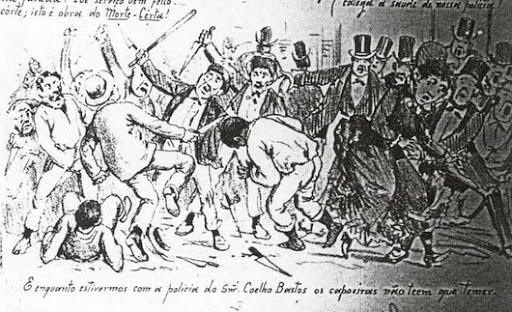
The Cabeçada is a headbutt in capoeira, widely used and considered a fundamental technique. Though easy to perform, it is dangerous and historically deadly in 19th century capoeira carioca, but violent headbutts are now generally avoided in contemporary practice.
By the 19th century, head butts had evolved into the primary technique used by capoeiras, as documented in police records that highlighted the growing notoriety of capoeira in urban settings. This era saw a remarkable surge in interest and participation, prompting authorities to closely monitor the activities surrounding capoeira schools and the practitioners themselves.
In capoeira carioca, cabeçada was a deadly technique. An English visitor to Rio de Janeiro wrote in 1826 on this lethal technique:
They need no stiletto, ferro de gaiola, or any other weapon. In lieu of all these, they use only the head; and with it, they butt like bulls at the chest of their victim. I saw a field officer who had been murdered in this manner and thrown over the wall into his garden, where his family found him in the morning: the upper part of the body had been flattened as if the implement of death had been a mallet.
Between 1822 and 1824, German painter Johann Moritz Rugendas characterized capoeira as a game centered around headbutting, emphasizing not only the physicality of the movement but also the cultural significance it held within the Brazilian landscape, serving as a form of resistance and identity for enslaved and marginalized communities.
Two contestants face each other, each trying to butt his adversary in the chest with his head and knock the opponent down. They turn cartwheels and pause as they launch into an attack. Sometimes they stand like he-goats, butting at each other. The game often turns into a wild brawl when knives are drawn and blood is shed.[6]
Through Rugendas’ artwork, one can glimpse the vibrant energy and spiritedness of capoeira, which continues to resonate to this day, evolving while maintaining its historical roots in the struggle for freedom and self-expression.
Lethal headbutt techniques were also used in the 19th century Bahia.
On the night of February 22, 1883, the soldier José Raimundo de Souza, standing patrol in the Baixa dos Sapateiros, went to arrest the stevedore Celestino, author of a major conflict on that street, from whom he received a ‘cabeçada’ that caused him almost instant death.
Headbutts, once common in street-fighting capoeira for their effectiveness, are now used less frequently in the game, primarily as a defensive strategy against close opponents.
To execute a headbutt, the capoeirista bends down and strikes the opponent with their forehead, targeting various body regions such as the chest, jaw, or even the temple, depending on the opening and the intended impact. This technique not only serves as a powerful offensive move but also helps create space between the capoeirista and their adversary, allowing for a tactical retreat or a swift counterattack. Moreover, mastering the headbutt requires precise timing and body mechanics, as improper execution can lead to self-injury or ineffective blows. With the evolution of capoeira into a more dance-like performance art, the headbutt has become a less favored option, yet it remains a potent reminder of the martial roots from which this vibrant practice originated.
solar plexus, where one firm headbutt can be enough to bring down the opponent.
As long as there’s an opening in the defense, the possibility of a headbutt remains imminent. In this technique, the attacker rapidly approaches, gliding their head along the opponent’s chest with precision and agility, usually targeting sensitive areas like the chin, nose, or forehead upon contact. The speed and intent behind this maneuver can often catch an opponent off guard, making it a risky yet potentially effective tactic in certain situations. However, it’s crucial to emphasize that this technique should never be fully executed in a game situation due to its serious consequences. Not only can a headbutt lead to severe injuries for both the initiator and the target, but it can also result in disciplinary actions from officials, such as penalties or ejections. Understanding the gravity of this action is essential for athletes to maintain sportsmanship and ensure the safety of all players on the field.
According to mestre Pastinha and mestre Bimba, the headbutt, or cabeçada, is a dangerous technique in capoeira that can be effectively used at close range. It involves cunning application and can target the chest or face, often executed unexpectedly as opponents anticipate a withdrawal. Capoeiristas utilize various strategies to deliver headbutts, such as feigning dodges during ginga or dropping objects to surprise reckless opponents, and can also escape holds by using headbutts.
In capoeira carioca, different headbutts have specific names based on execution, such as caveira no espelho for a standing face strike and cocada for an upward jab under the chin. The cocada is performed by lowering the body to hit the opponent with the head, making it a deceptive move that can catch the adversary off guard. It can disorient and terrify the receiver, similar to the rabo de arraia, which is also known for its unexpected nature and effectiveness in combat situations.
The arpão de cabeça is a powerful headbutt that effectively utilizes the attacker’s body weight, initially shielding with crossed arms to create an illusion of vulnerability before delivering the strike with precision. This strikes not only aims to incapacitate but also serves to assert dominance in the rhythm of the game. Defense against a headbutt includes pulling back to hit the attacker’s head or quickly descending to kick upward, which requires agility and quick thinking. Learning to anticipate and react to these specific moves is crucial for any practitioner wishing to excel in capoeira, as each technique has its place in the fluid interplay of offense and defense that defines this dynamic martial art.
Hello, I would like to introduce to you one of my teachers, and inspirations, Jelani Lateef.
Jelani Lateef is a dedicated teaching artist and capoeirista who actively engages in capoeira Angola and storytelling. He has recently lost his home in the Eaton Fire, which he was renovating for an art studio. His teachings emphasize not only the physical practice but also the cultural significance of the art form, exploring its rich history and the stories woven into each movement.
By integrating elements of personal narrative and cultural exchange, he has encouraged myself, as well as others, to appreciate capoeira Angola not just as a martial art but as a living, breathing tradition that connects people across generations.
Your support will help him continue his journey, enabling him to reach more individuals and cultivate a deeper appreciation for this vibrant cultural practice.
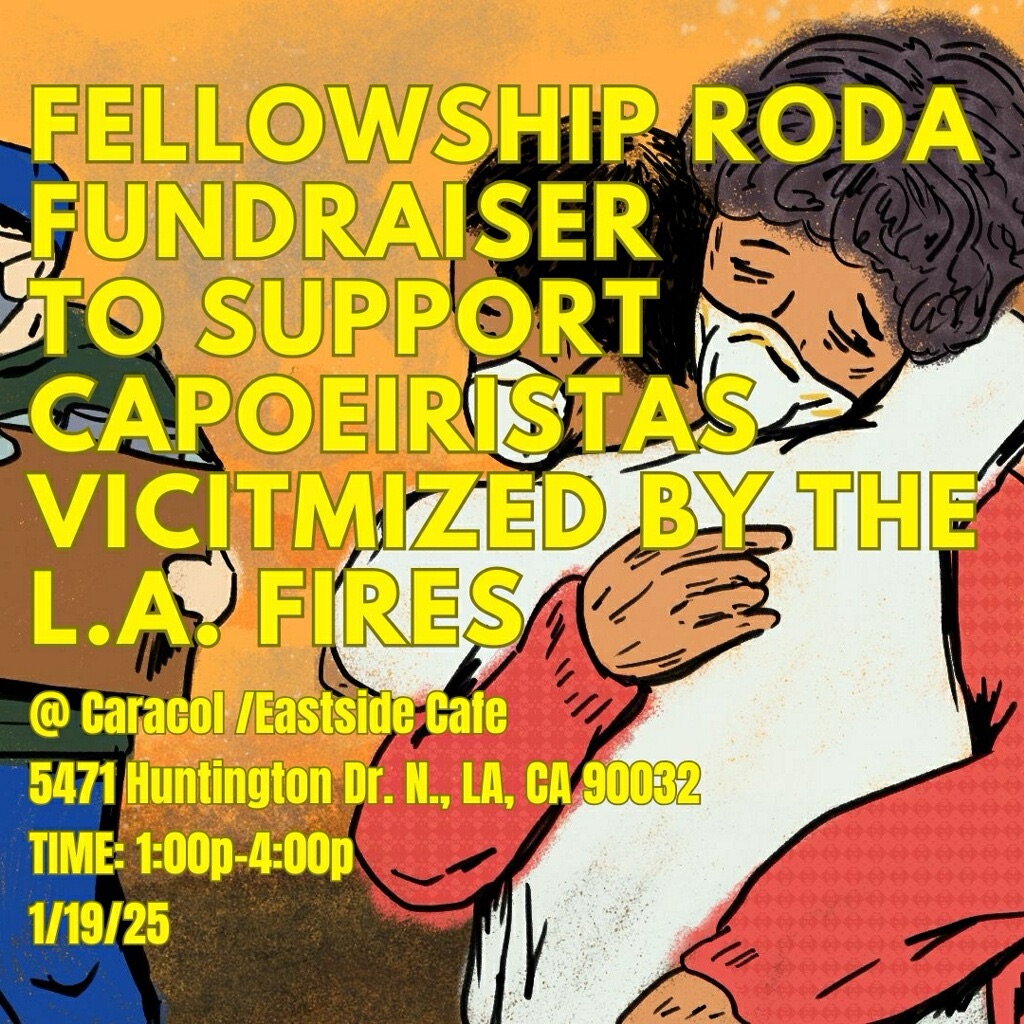
In light of the devastating impacts of the recent fires in Los Angeles, we are organizing a dedicated fundraiser aimed at providing assistance to the capoeiristas who have suffered significant losses. This event will not only help in the recovery of those affected but will also bring our community together to celebrate the spirit of resilience and support.
Join us for an afternoon filled with uplifting music, vibrant dance, and heartfelt camaraderie, as we come together to raise essential funds that will help our fellow capoeiristas rebuild their lives after recent hardships and preserve the rich cultural heritage of capoeira that we all cherish deeply. This event is not just a gathering; it’s an opportunity to bond with friends, make new connections, and show support for a cause that unites us all.
Each rhythm we dance to, every note we hear, contributes to a larger purpose, and we invite you to be a part of this beautiful journey. Your participation and generosity can truly make a profound difference in the lives of those impacted by this tragedy, ensuring that the spirit of capoeira continues to thrive for generations to come.
We need your support to help breathe new life into our community and uphold the traditions that define us.
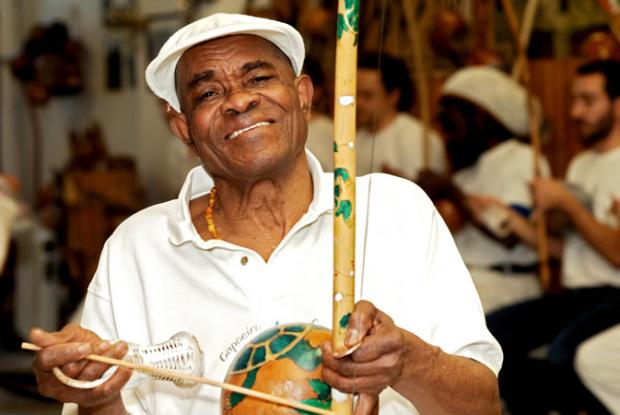
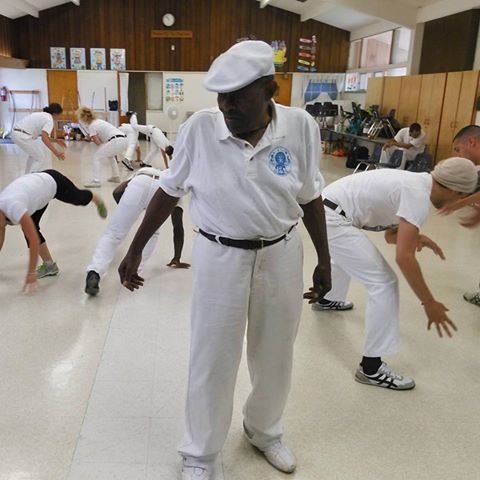
HAPPY BIRTHDAY, MESTRE JOAO GRANDE!!! May this special day be filled with joy, love, and laughter as we celebrate the incredible person you are. Your wisdom and guidance have touched the lives of many, and today we honor not only your birth but also the remarkable legacy you continue to build.
Here’s to many more years of health and happiness, surrounded by those who care deeply for you!
FELIZ ANIVERSÁRIO, MESTRE JOÃO GRANDE!!! Que este dia especial seja repleto de alegria, amor e risadas enquanto celebramos a pessoa incrível que você é. Sua sabedoria e orientação tocaram a vida de muitos, e hoje honramos não apenas seu nascimento, mas também o legado notável que você continua a construir.
Aqui está a muitos mais anos de saúde e felicidade, cercado por aqueles que se importam profundamente com você!


 Jogo Corpo Fechado