Every Friday morning, PROFESSOR BLACK TRUTH hosts “The Friday Crime Report,” a critically acclaimed program addressing systemic racism, economic inequality, and police brutality in the black community. Through thoughtful exploration and comprehensive discussions, the show features expert interviews, in-depth analysis, and moving personal narratives, all aimed at raising awareness and promoting advocacy for meaningful change. It delves into historical contexts and contemporary issues that illustrate the enduring impact of these societal problems, encouraging an informed dialogue among listeners. The program also emphasizes the importance of community engagement, empowering listeners to understand, confront, and address these pressing societal issues while fostering solidarity and collaboration for a more equitable society. Each episode serves as a call to action, inspiring individuals to mobilize in support of justice and equality, making it an essential resource for anyone seeking to contribute to the fight against systemic oppression.
In Today’s installment…
Tushar Atre, a self-described “tech bro” with ambitions in the burgeoning California cannabis industry, found himself at the center of a volatile employment dispute in 2019. The conflict reportedly stemmed from a significant disagreement over compensation with two of his employees, eventually leading to their termination or resignation.
This professional falling out, fueled by the contentious pay dispute, simmered for a couple of months. However, the matter was far from settled. In a dramatic and ultimately tragic escalation, the two former employees allegedly arrived at Atre’s Santa Cruz County home in the early hours, intent on a final, violent confrontation to “collect” what they believed they were owed. This confrontation marked the terrifying climax of the pay dispute, transforming a workplace disagreement into a deadly home invasion.
A big thanks to the professor for sharing this helpful video. Their commitment to spreading knowledge is admirable. If you want to learn more about the professor’s work, click HERE to visit their YouTube channel. It features a lot of valuable information that can deepen your understanding of social issues and history.
Capoeira Angola, often celebrated for its cultural richness, historical significance, and unique blend of movement, music, and ritual. However, a deeper, more ‘realistic’ examination reveals a complex and crucial duality in its practice: its direct applicability to both physical conflict (“violence”) and the cultivation of social harmony and personal well-being (“peace”). This dichotomy is not a contradiction but rather a reflection of the art form’s historical roots and its enduring relevance as a system of self-defense, resistance, and community building.
The Practical Reality of Capoeira Angola: From Clandestine Resistance to Modern Self-Defense
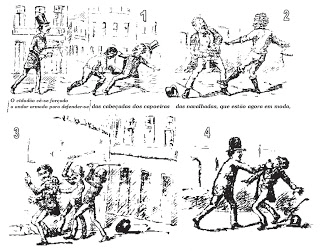
Historically, Capoeira was not merely a dance or an athletic pursuit; it was forged in the crucible of oppression. Developed as a clandestine form of combat by enslaved Africans in colonial Brazil, it served as an absolutely vital tool for survival and armed resistance against the brutal tyranny of their oppressors and the slave-catchers known as capitães do mato. The movements, cloaked in the guise of ritual and folklore, allowed practitioners to train lethal fighting techniques in plain sight, a masterful act of cultural and martial deception.
The Unflinching Reality: Capoeira Angola’s Combative Core
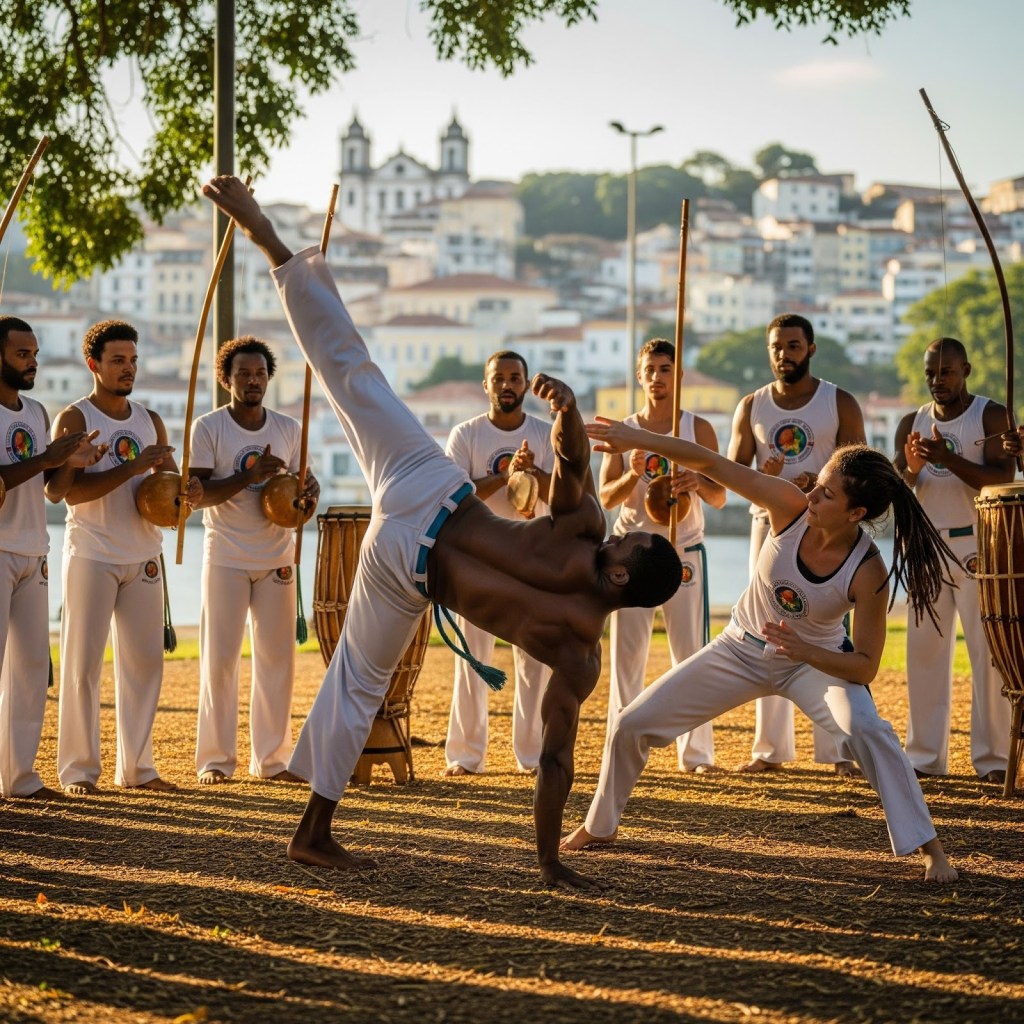
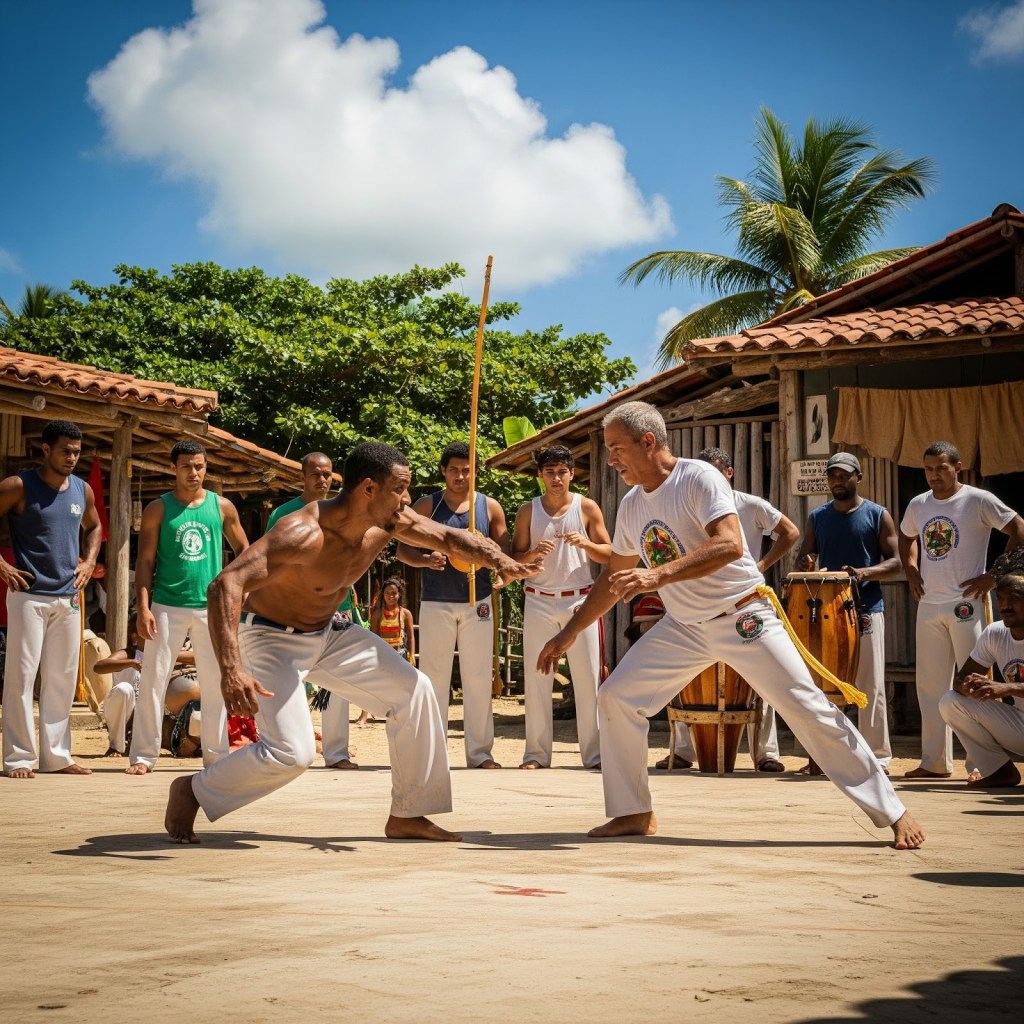
The designation of Capoeira Angola as “realistic” stems from its core philosophy: an unyielding recognition and dedicated mastery of its highly effective combative and tactical methodologies. This profound combat efficacy, however, is frequently veiled by the system’s characteristic, almost deceptive, aesthetics. At a superficial glance, a session of Capoeira Angola within the roda (the circle in which the art is performed) presents an image of fluid, low-to-the-ground grace, deliberate, almost near-meditative pacing, and an appearance that is often playful and non-contact. Yet, beneath this artistic facade, the fundamental movements and principles of the system are deeply rooted in practical, close-quarters fighting, strategically engineered to disable or effectively evade an opponent in a real-world confrontation.
The historical context of Capoeira Angola further cements its “realistic” dimension. Developed by enslaved Africans in Brazil, it was a necessary tool for survival, self-defense, and silent rebellion. It was designed to be inconspicuous—appearing as a dance or a ritualistic game to slave owners—while simultaneously functioning as a devastatingly effective martial art. This dual nature is the very essence of its deceptive power.
Combative Techniques and Strategic Deception
Key techniques within the Angola repertoire are explicitly and unapologetically combative, tailored for maximum disruption and force application.
Sweeps and Takedowns (Rasteiras and Chapas): The swift, often unexpected sweeps (rasteiras) are not merely for show; they are precision strikes targeting an opponent’s lower body and base. Their goal is to instantly dismantle stability, sending the opponent crashing to the ground and making them vulnerable to follow-up strikes or disengagement. Similarly, the bênção (blessing), often misinterpreted as a simple push, is a powerful, straight-leg thrust kick used to create distance, break an opponent’s posture, or deliver a jarring impact to the midsection.
Headbutts and Close-Range Strikes (Cabeçadas and Cotoveladas): The powerful headbutts (cabeçadas) are delivered with jarring, concussive force, often following a low dodge or a deceptive close-quarters movement. They are weapons of last resort or sudden opportunity, highly effective in clinching range. Various elbow strikes (cotoveladas) and knee strikes are integrated into the flow, exploiting openings created by the opponent’s overcommitment or momentary lapse in defense.
Deceptive Ground Maneuvers: The low, ground-based movements—the signature of Angola—are fundamentally strategic. They allow the practitioner to evade high attacks, manage the distance, and transition into clinching, trapping, and finishing maneuvers with explosive speed. These ground movements hide the practitioner’s intent and position the body for powerful, upward-delivered attacks that an opponent may not anticipate.
The Power of Deliberate Pacing
Crucially, the slow, strategic pacing of Angola is not a reflection of weakness or a simple aesthetic choice; rather, it is a highly sophisticated method of psychological and physiological warfare. It functions on multiple levels:
Energy Management: The slow movements conserve energy, allowing the practitioner to maintain a high level of physical engagement for an extended period, waiting for the perfect opportunity.
Lulling the Opponent: This deliberate tempo is used to lull an opponent into a false sense of security, encouraging them to be careless, overcommit, or mistake the art for a mere dance. This is the core of the art’s deception (mandinga).
Disguising Intent: The slow, fluid movements effectively mask the practitioner’s true intentions, making it nearly impossible for an adversary to predict the moment of attack. The transition from a graceful, low-speed motion to an attack is almost instantaneous.
This deliberate slowness allows for a split-second transition into the explosive power and surgical precision required to execute a disabling or fight-ending move. This capability—the seamless shift from passive deception to aggressive force—solidifies Capoeira Angola’s reputation not just as a cultural tradition, but as a formidably deceptive and profoundly effective fighting system.
A truly realistic approach to Capoeira Angola training emphasizes a deep, intuitive understanding of critical combative principles:
Timing: The ability to move and strike precisely when the opponent is committed or off-balance.
Distance Management (Jogo de Distância): The mastery of controlling the space between opponents, ensuring maximum defense and optimal offensive opportunity.
Body Mechanics: The efficient and powerful use of the body as an integrated weapon system, where every movement has the potential for attack or defense.
By focusing on these principles, practitioners understand that the skills learned are potent tools for self-defense and conflict resolution. This combative realism acknowledges that, while Capoeira Angola promotes community, culture, and peace, its foundation is a highly effective fighting art that can and must be deployed for survival in dangerous, real-world scenarios.
The Foundation for Peace:
Conversely, the practice of Capoeira Angola is intrinsically linked to the pursuit of peace, both internal and communal. This aspect is manifested through several key elements:
Ritual and Philosophy: The roda itself is a microcosm of society, where rules, respect, and mutual understanding are paramount. The art emphasizes malícia (cunning, street smarts) combined with mandinga (a mystical, almost magical quality of deception), which encourages outsmarting an opponent rather than simply overpowering them. This strategic, non-destructive engagement is a fundamental lesson in non-violent conflict resolution.
Community and Respect: The highly structured nature of the classes, the mandatory use of Portuguese, the singing, and the playing of instruments foster discipline, cross-cultural communication, and deep mutual respect among practitioners (known as capoeiristas). The hierarchy of the school, headed by a Mestre, instills values of mentorship and humility.
Physical and Mental Discipline: The rigorous training provides a positive outlet for aggression and frustration, channeling potential “violence” into constructive physical expression and artistic performance. The focus on rhythm, balance, and endurance cultivates inner peace, self-awareness, and mental fortitude.
In conclusion, the document titled “Realistic Capoeira Angola for violence and peace” argues compellingly that Capoeira Angola is far more than a mere dance or performance; it is a profound martial art that holds a unique, almost paradoxical, capacity for shaping its practitioners. It masterfully encapsulates the core duality of the human experience: the potential for effective violence and the aspiration for a peaceful existence.
The practice instills in its students the knowledge and physical skills necessary to defend themselves effectively, honoring its historical development as a clandestine, combative system created by enslaved Africans for survival and liberation. The realism of its application in a violent context is never dismissed but is instead embraced as a vital part of the art’s heritage and a foundation for personal security.
Simultaneously, however, Capoeira Angola transcends its combative roots by providing a comprehensive philosophical and cultural framework for living. Through its deeply embedded rituals, music, communal interaction, and respect for the Mestre (master), the art cultivates qualities essential for social harmony: discipline, which guides the relentless pursuit of skill; respect, which governs the relationship between players, the community, and the tradition; and an overarching commitment to a harmonious life, where conflict is minimized and human connection is valued.
Crucially, the art does not attempt to sanitize or ignore its violent lineage. Instead of repressing its potential for conflict, Capoeira Angola transmutes this raw energy—this potential for force—into a powerful, constructive, and culturally rich mechanism. The Roda (the circle in which Capoeira is played) becomes a controlled laboratory where the energies of conflict and cooperation are channeled through a dialogue of movement. This cultural mechanism ultimately promotes social cohesion, turning individual strength into collective resilience and self-defense into a tool for community building and peace. It is in this dynamic interplay—where the lessons of effective violence are used to frame a life dedicated to peace—that the art of Capoeira Angola truly finds its powerful and enduring significance.
Welcome to HIDDEN SPIRITUALITY – From Spirit Science, where we explore spiritual practices in movies and games, revealing profound wisdom in cinematic narratives that often go unnoticed. We diligently examine various cultures and their unique stories to illuminate lessons that resonate with our lived experiences and collective consciousness. Our community fosters deep reflection on the interconnectedness of all beings through storytelling and rich symbolism, encouraging members to share their insights and interpretations. By cultivating engaging discussions, we bridge spirituality and entertainment, uncovering hidden messages and themes that promote personal growth and broaden our understanding of their impact on our quest for meaning and purpose in life. Together, we embark on a journey to uncover the universal truths that unite us, inviting exploration and dialogue around the spiritual dimensions embedded in the art of storytelling.
In today’s installment…
Did you know that “The Matrix” is not merely a sci-fi action movie, but a profound documentary about real-life disguised with a high-tech veneer? Well, perhaps not completely a documentary—let’s say it’s about 90% accurate, give or take a philosophical debate or two. The film, released at the turn of the millennium, wasn’t just a cinematic achievement with groundbreaking special effects; it was a Trojan horse of spiritual and philosophical allegory delivered to a mass audience.
The Fabric of Illusion: A Deep Dive into the Spiritual and Philosophical Underpinnings of The Matrix
Join us as we embark on a profound, multi-layered deep dive into the spiritual, philosophical, and mythological allusions meticulously woven into the very fabric of The Matrix. This landmark film, released over two decades ago, has not merely entertained; it has captivated and fundamentally challenged global audiences, sparking an enduring, vibrant, and at times, intense debate on the fundamental nature of reality, the concept of predestination versus free will, and the profound illusion of choice presented to the unaware masses.
While many viewers may readily grasp the surface-level, overt references to world religions, Gnosticism, major Eastern philosophies, and Western existentialism—points often cited include Neo’s archetypal role as a Christ-like savior figure, the preparatory, messianic function of Morpheus as a modern-day John the Baptist, or the structural concept of Samsara (the endless cycle of suffering and rebirth) applying to the human battery farms—our exploration will venture significantly beyond the obvious. We aim to peel back the intellectual and narrative layers to uncover a hidden, far richer depth of meaning.
This includes dissecting the subtle, yet cornerstone, philosophical nods to classical thought, such as Plato’s canonical “Allegory of the Cave,” a powerful metaphor for the prisoner’s journey from a life of shadows to the harsh light of truth. We will also analyze the explicit integration of Eastern metaphysical concepts, most prominently the Buddhist concept of Maya, which denotes the powerful, pervasive, and ultimately deceptive illusion that shapes our perception of the phenomenal world.
Ultimately, this analysis circles back to the central, enduring, and radical question posed by the film: what does it truly mean to be “awake” and unequivocally free in a meticulously constructed, simulated, and architecturally controlled world? This journey is an investigation into not just a film, but into the potential structures of our own reality and the price—and glory—of genuine self-realization. We will explore the Oracle’s role as the Delphic priestess, the symbolism of the ubiquitous white rabbit, the alchemical significance of names (e.g., Trinity, Morpheus, Neo/The One), and the ultimate struggle to break the chains of a consensus reality designed to keep humanity perpetually asleep.
This is more than just a movie analysis; it’s an exploration into the very human journey of self-discovery, enlightenment, and the courage required to swallow the “red pill.” We will examine how the film acts as a modern-day myth, using technology as a metaphor for the societal, psychological, and spiritual chains that bind us. Don’t miss out on this thought-provoking and significantly expanded exploration of The Matrix’s deeper meanings. Discover how the story of Neo, Trinity, and Morpheus—their trials, their awakening, and their war against the machines—can serve as a powerful teaching tool, revealing profound truths about ourselves, the nature of consciousness, and the potentially illusory world around us. Prepare to have your perception of this iconic film, and perhaps your own reality, altered forever.
Welcome to the WARRIOR CLASS podcast, a unique self-protection and self-defense podcast that equips listeners with essential skills and knowledge for personal safety. Each episode features engaging discussions, expert interviews, and practical tips to boost your confidence and preparedness, along with analyses of martial arts techniques and inspiring stories of resilience from guests who have overcome adversity. Self-protection with Black Power!
Tune in every Saturday at 1pm EST and be empowered to become the strongest version of yourself, physically and mentally, while exploring the rich cultural heritage of martial arts and the importance of community resilience in everyday life. Don’t miss out on the journey to becoming a warrior!
Today, we have a older episode.
The Science of Self-Defense: An Interdisciplinary Exploration
This book, “The Science of Self-Defense,” delves into the multifaceted scientific principles that underpin our inherent capacity and fundamental desire to protect ourselves and those around us. It offers a comprehensive and accessible analysis, moving beyond mere techniques to explore the fundamental “why” and “how” of effective self-preservation.
A Holistic Approach to Protection:
“The Science of Self-Defense” is unique in its interdisciplinary approach, synthesizing knowledge from three crucial scientific domains:
Physics: This section investigates the mechanics of motion, force, leverage, and impact. It explores how understanding principles like momentum, kinetic energy, and center of gravity can optimize defensive maneuvers, striking power, and evasive actions. From the biomechanics of a powerful punch to the physics of deflecting an attack, readers will gain insights into maximizing their physical effectiveness.
Biology: Here, the focus shifts to the human body’s physiological responses to stress, threat, and injury. Topics include the “fight or flight” response, the role of adrenaline, pain thresholds, and the vulnerabilities and strengths of the human anatomy. Understanding these biological realities is crucial for both effective defense and responsible use of force.
Psychology: This dimension explores the mental aspects of self-defense, including threat perception, fear management, decision-making under pressure, and the psychological impact of conflict. It delves into the art of de-escalation, the power of situational awareness, and the psychological tactics that can be employed to “dupe” or mislead an aggressor, often avoiding physical confrontation altogether.
Mastering the Four Ds of Self-Defense:
Through this integrated scientific lens, the book systematically explores how individuals can effectively and efficiently achieve four critical objectives in a self-defense scenario:
Defend: This encompasses blocking, parrying, and maintaining a defensive posture to minimize harm and create opportunities.
Dodge: Understanding movement, footwork, and evasive maneuvers to avoid attacks and create distance.
Do Damage: When necessary, applying appropriate force to neutralize a threat, focusing on vulnerable points and efficient strikes.
Dupe: Employing psychological strategies, verbal de-escalation, and misdirection to avoid or mitigate conflict without physical engagement.
Learn from the Experts: Readers are invited to join a team of experienced instructors as they not only discuss the theoretical underpinnings of “The Science of Self-Defense” but also provide practical demonstrations. Through real-world applications and illustrative examples, these experts will illuminate how these scientific principles translate into actionable strategies that YOU can learn and utilize to enhance your personal safety and the safety of those you care about. This book is an essential resource for anyone seeking a deeper, more informed understanding of self-defense, empowering them with knowledge that goes beyond rote memorization of techniques.
Welcome to MALICIA AS A GAME OF POWER, a compelling blog series that delves deeply into the intricate strategies of human interactions, encompassing a wide range of topics such as effective communication, conflict resolution, negotiation techniques, and the subtle art of manipulation. This series not only addresses essential themes like leadership, personal branding, and online reputation management but also offers insightful and practical strategies designed to enhance influence and build meaningful relationships in both personal and professional contexts. Through thorough analysis, engaging discussions, and real-life examples, the series aims to empower readers to navigate the complexities of interpersonal dynamics, equipping them with the tools and knowledge necessary to strengthen their personal and professional lives. As we journey through various scenarios and strategies, expect to uncover the nuances of social influence, the importance of emotional intelligence, and the impact of strategic thinking in fostering successful interactions, ultimately helping you to thrive in a world where power dynamics are at play.
In this installment, we will explore the 40th law of power in the book, the 48 laws of power by Robert Greene. You can buy a copy by clicking HERE.
Law 40: Despise the free lunch
In a world increasingly driven by convenience and immediate gratification, it’s easy to fall into the trap of accepting what’s offered for free. However, a closer examination reveals a crucial principle: What’s offered for free is often dangerous. This isn’t to say all free things are inherently bad, but rather that true value, independence, and respect are rarely found without personal investment.
Consider the act of paying your own way to avoid guilt and gratitude. When you receive something for free, particularly from another individual, a subtle (or not-so-subtle) debt is incurred. This can manifest as an obligation, a feeling of being beholden, or a desire to reciprocate that may not always be convenient or desirable. By taking responsibility for your own expenses and contributions, you maintain your autonomy and freedom from such entanglements. This fosters genuine relationships built on mutual respect rather than a perceived imbalance of favors.
Furthermore, there’s a profound connection between investment and quality. No cutting corners with excellence is a principle that extends beyond financial outlays. When you commit your resources – be it time, effort, or money – to a pursuit, you are inherently striving for the highest possible standard. Conversely, seeking shortcuts or free alternatives often leads to compromised results, diminished quality, and ultimately, dissatisfaction. Excellence demands commitment, and that commitment is often reflected in the willingness to invest appropriately.
This commitment to investment isn’t about hoarding resources; quite the opposite. It’s about understanding the power of circulation. Be lavish with your money, keep it circulating. This isn’t an endorsement of reckless spending, but rather a recognition that money, like energy, gains power when it flows. Investing in quality products and services, supporting local businesses, and contributing to worthy causes all contribute to a vibrant economy and create opportunities for others. True wealth isn’t measured by what you accumulate, but by the positive impact your resources have when put into motion.
Ultimately, this philosophy culminates in a profound understanding of Generosity as a sign and magnet for power. This isn’t about transactional giving, where you expect something in return. Rather, it’s about a deep-seated belief in abundance and the understanding that true generosity, extended freely and without expectation, broadcasts a powerful message. It signals confidence, security, and a capacity to give beyond oneself. Such an attitude naturally attracts opportunities, alliances, and resources, making generosity a powerful force in both personal and professional life.
Example: Gypsies and Gifts offers a historical and cultural illustration of this principle. Traditionally, many Romani (Gypsy) communities have been known for their reluctance to accept gifts or favors without offering something in return, even if it’s a small token or a performance. This cultural practice, whether conscious or unconscious, serves to preserve their independence and prevent them from becoming indebted or perceived as reliant on others. It underscores the wisdom of maintaining a balance in exchanges, ensuring that dignity and autonomy are preserved. This example, while specific to a particular culture, highlights a universal truth: true power and freedom are often intertwined with self-sufficiency and the judicious management of exchanges, both material and immaterial.
How to use the 40th Law of Power ethically:
The 40th Law of Power, often summarized as “Despise the Free Lunch,” suggests that what is offered for free is often a trick or comes with a hidden cost, and that one should always pay one’s way, as it is a mark of respect, independence, and intelligence. While the law in its raw form is a tool for self-protection and maintaining power, its ethical application requires a nuanced understanding of its underlying principles. Applying this law ethically means using its wisdom to foster healthy, transparent, and mutually beneficial relationships, rather than simply as a defense mechanism against perceived exploitation.
Ethical Interpretation and Application:
Value Transparency over Suspicion: The ethical approach is to use the principle of “Despise the Free Lunch” as a prompt for inquiry and due diligence, not automatic rejection. Instead of assuming malice, inquire about the terms, costs, and expectations attached to any offer.
Ethical Action: When presented with something “free,” ask clear, respectful questions about the value exchange: “What is the expected outcome for you/your company?” or “What responsibilities are attached to this offer?”
Foster True Reciprocity, Not Debt: The law rightly warns against the psychological burden and manipulation inherent in one-sided transactions. Ethically, this translates to a commitment to genuine reciprocity. Instead of simply refusing a gift, seek a commensurate, non-monetary way to contribute or offer assistance in return, ensuring the balance of power remains equal.
Ethical Action: If a mentor offers time or resources, actively look for ways to pay their generosity forward, either by offering your unique skills in a small capacity or by committing to mentor others in the future. The focus is on balancing the exchange in a way that preserves the dignity and independence of both parties.
Invest in Relationships, Not Just Transactions: Applying the law ethically means recognizing that some “gifts” are sincere expressions of goodwill, friendship, or love. In these cases, to rigidly refuse them can be an insult. The ethical judgment lies in distinguishing a manipulative ploy from a genuine relationship-building gesture. The principle of paying your own way should be focused on professional or transactional settings where power dynamics are in play.
Ethical Action: In personal relationships, accept a genuine gift graciously, reciprocating with authentic appreciation and commitment to the friendship. In professional settings, insist on clear contractual terms and fair compensation, ensuring your contribution is valued and paid for.
Promote Self-Sufficiency and Dignity: The most ethical aspect of the 40th Law is its emphasis on self-reliance. Ethically, this means refusing to become dependent on charity or favors when one is capable of earning their own way. By paying the fair market value for services and goods, one supports a functioning, equitable economy and reinforces their own sense of capability.
Ethical Action: Always strive to pay your fair share in collaborative projects or social settings. If someone does a favor for you, offer to pay for their expenses or return the favor with something of equal effort, thereby respecting both their time and your own self-sufficiency.
Use the Insight for Altruism: Recognizing the subtle ways people can be manipulated by free offers allows you to protect others. An ethically powerful person can use their insight to warn others about predatory “free” schemes or ensure that when they themselves give, it is a clean, unconditional gift designed truly to help, not to indebt the recipient.
Ethical Action: If you choose to offer a service pro-bono or a gift, make the terms of its freeness explicitly clear—stating that there are no strings attached—to prevent the recipient from feeling the psychological burden of debt that the law warns about.
The 40th law of power, often summarized as “Despise the Free Lunch,” carries a unique and profound resonance when viewed through the lived experience of an angoleiro. An angoleiro, a practitioner of Capoeira Angola, understands that true mastery and respect are never simply given; they are earned through persistent effort, sweat, and a deep commitment to the tradition’s rigorous philosophy.
For the angoleiro, the “free lunch” is a seductive illusion—a shortcut that inevitably leads to weakness, dependence, and the stagnation of one’s jogo (the game/fight). The law is interpreted not just as financial prudence, but as a core principle of self-reliance and the necessity of personal investment:
1. The Price of the Axé (Energy/Life Force):
In Capoeira Angola, the axé is the spiritual and physical energy that vitalizes the roda. An angoleiro knows this energy must be constantly generated and renewed. If you receive a favor, a lesson, or even a moment of glory without paying for it—whether through dedicated practice, respect for the Mestre, or service to the community—the axé is unstable. The 40th law teaches that everything of value has a cost, and an unpaid debt (even a non-monetary one) leaves one vulnerable to control. The greatest masters demand investment, not compliance.
2. The Illusion of the Shortcut:
The journey of Capoeira Angola is defined by patience, repetition, and the slow, deep internalization of the movements, music, and philosophy. A beginner might seek “quick tips” or “easy moves.” The angoleiro understands that free, readily available knowledge (the “free lunch” of the internet tutorial or the lazy lesson) lacks the weight and foundation of hard-earned understanding. True power in the roda comes from the muscle memory forged in countless hours of disciplined training, which cannot be outsourced or acquired for free.
3. The Danger of Dependence:
When something is given freely, the receiver becomes indebted to the giver, consciously or unconsciously. In the context of power, this is a fatal flaw. The angoleiro must be sovereign, self-contained, and independent in their skill. To rely on the free generosity of a patron or the free advice of a rival is to surrender a measure of one’s autonomy. The 40th law demands that the angoleiro earn their place, their nickname, and their belt, ensuring that their standing is rooted in their own merit, not the unstable favor of others.
Conclusion:For the Capoeirista, “Despise the Free Lunch” is an affirmation of the principle that genuine power is internal. The angoleiro pays for their knowledge with sweat, their respect with sincerity, and their skill with dedication, thereby ensuring that the jogo they play is truly their own.
Welcome to HIDDEN SPIRITUALITY – From Spirit Science, where we explore global spiritual practices in movies and games. Our goal is to reveal the spiritual wisdom in cinematic narratives, enhancing our appreciation of film and spiritual journeys. By examining various cultures and their stories, we aim to illuminate valuable lessons and insights that resonate deeply with our individual experiences and collective consciousness. We invite you to discover how symbolism and storytelling influence our lives and spirituality, fostering reflection on the interconnectedness of all beings, regardless of their backgrounds or beliefs. Through thoughtful discussions and open dialogues, we seek to create a vibrant community passionate about the spiritual dimensions of art and life. Join us as we bridge spirituality and entertainment, uncovering hidden messages that resonate within us, and encouraging personal growth and transformation through the power of storytelling. Together, we can embark on a journey of discovery, seeking to understand the profound impact that these narratives can have on our perception of reality and our quest for meaning in a complex world.
In today’s installment…
“Obvious Spirituality”: The Dark Crystal and Its Enduring Legacy
As many discerning viewers and critics have observed, certain cinematic works wear their spiritual heart on their sleeve, inviting an immediate recognition of their deeper philosophical and existential themes. For these films, the term “Obvious Spirituality” feels not like a critique, but rather an apt description of their overt engagement with matters of the soul and the cosmos. The Dark Crystal stands as a quintessential example within this fascinating subgenre.
A Deep Dive into the Original Film:
It is crucial to clarify at the outset that this exploration will meticulously focus on the original 1982 Jim Henson and Frank Oz masterpiece, The Dark Crystal. While the recent Netflix prequel series offered a captivating expansion of the lore, our current discussion will not delve into its narrative or thematic elements. However, the allure of revisiting the world of Thra through the lens of the prequel remains a tempting prospect for future discourse.
Before we embark on this journey, a Spoiler Warning is in order. Given the film’s long-standing presence in cinematic history, many will undoubtedly be familiar with its plot developments. Nevertheless, for those who may be experiencing this profound narrative for the first time, or those who wish to revisit its intricacies with fresh eyes, this heads-up is provided as a courtesy.
Unveiling the Hidden Spirituality of Thra:
Join us, then, as we embark on an immersive journey through the mystical and richly imagined world of The Dark Crystal. Beyond its groundbreaking puppetry and enchanting visual design, this film offers a remarkably clear and resonant portrayal of spirituality and the archetypal journey of the soul. In this dedicated episode of “Hidden Spirituality,” we will meticulously unpack the layers of meaning woven throughout this enchanting movie.
Our analysis will illuminate the pervasive alchemical symbolism embedded within the narrative, exploring how the film’s characters and events mirror the transformative processes of spiritual refinement. We will also uncover the subtle yet impactful astrological references that provide an additional dimension to the characters’ destinies and the cyclical nature of Thra’s existence. Furthermore, we will delve into the overarching spiritual themes that underpin the entire saga, examining concepts such as duality, balance, sacrifice, and redemption.
While the film’s spiritual undercurrents are, as we’ve established, quite “obvious” to the attentive viewer, our mission is to dive beyond the surface. We aim to explore the profound subtle nuances that elevate The Dark Crystal from a mere fantasy film to a timeless classic. These intricate details, often overlooked, contribute significantly to its enduring power and its ability to resonate deeply with audiences across generations.
Welcome to HIDDEN SPIRITUALITY – From Spirit Science, where we explore global spiritual practices and philosophies reflected in movies and games. Our goal is to uncover the profound spiritual wisdom embedded within cinematic narratives, enhancing our appreciation of film while significantly enriching our spiritual journeys. By diving deep into various cultures and their narratives, we aim to illuminate the lessons and insights that these visual art forms can provide. We invite you to discover how these elements, deeply rooted in symbolism and storytelling, influence our lives and spiritual practices, fostering a deeper reflection on the interconnectedness of all beings and the universe. Through discussions, analyses, and open dialogues, we hope to create a vibrant community of seekers who share a passion for understanding the spiritual dimensions of art and life. Join us on this enlightening journey as we bridge the worlds of spirituality and entertainment, uncovering the hidden messages that resonate within our hearts and minds.
Today…
Prepare for an unparalleled intellectual and spiritual adventure as we embark on a profound exploration of “Lucy,” the cinematic masterpiece that transcends mere entertainment to offer a startling glimpse into the boundless frontiers of human consciousness. This film is far more than a thrilling narrative; it’s a meticulously crafted journey that challenges our most deeply held perceptions of reality, urging us to question the very fabric of existence.
Join us as we meticulously unravel the intricate tapestry of mystical and spiritual themes woven into the very heart of this gripping story. We will delve into the profound and often overlooked connections between psychedelics as tools for inner exploration, the concept of ascension as a path to higher states of being, and the ultimate evolution of human potential. These elements coalesce to form a rich and compelling existential inquiry, inviting viewers to ponder the deepest questions about purpose, meaning, and the nature of intelligence itself.
Discover the myriad secrets that “Lucy” holds, as we follow the titular character, brilliantly portrayed, on an extraordinary odyssey that defies the conventional boundaries of space and time. Her transformation becomes a metaphor for our own latent capabilities, unlocking not only the mysteries of the universe but also posing profoundly significant questions about the true nature of intelligence, the elusive concept of freedom, and the inherent responsibilities that accompany such power.
Each meticulously framed scene in “Lucy” serves as a potent portal, inviting us to step through into different levels of awareness and perception. The film masterfully urges us to contemplate the true and often underestimated limitations of the human mind and spirit in their current state, suggesting that there is so much more within us waiting to be awakened. It’s a cinematic call to action, inspiring introspection and a desire to transcend our perceived boundaries.
Get ready to significantly expand your mind and profoundly elevate your spirit with this special, in-depth episode of Hidden Spirituality. We extend an earnest invitation for you to engage in a contemplative journey, pondering the far-reaching implications of embracing our fullest, most authentic potential. Imagine a world brimming with wonders, insights, and uncharted territories of understanding, just waiting to be explored and integrated into our collective human experience. “Lucy” is not just a film; it is a catalyst for personal and collective awakening.
Why? Because although I haven’t had a busy weekend, it seems the “No Kings” protests were going on in LA, and I didn’t know.
The “No Kings” protests represent a significant nationwide movement in the United States, primarily aimed at opposing the actions and policies of the Trump administration. These demonstrations fundamentally frame President Trump’s behavior as authoritarian, drawing direct comparisons to a monarchical rule and expressing deep concern over what participants perceive as a serious erosion of democratic norms and institutions within the country. The movement’s core message revolves around the belief that no single individual, regardless of their elected office, should wield power unchecked, acting as a “king” above the law or the will of the people. This sentiment taps into a historical American distrust of concentrated power and a strong commitment to republican ideals, values that date back to the founding of the nation and have shaped democratic discourse for centuries. Amidst this backdrop, many activists argue that these protests are a necessary response to a perceived threat to civil liberties and social justice, emphasizing the importance of public engagement in safeguarding democratic integrity. Will these protests do any good? Who knows.
However, as a capoeirista, I feel the need to share with you why we Capoeiristas should support these protests—not only because we value freedom and autonomy, which are intrinsic to both Capoeira and the spirit of resistance, but also because standing together against oppression enriches our community, amplifies our voices, and aligns our values of respect, camaraderie, and resilience with the broader fight for justice in society.
The Interplay with Capoeira: A Dance of Defiance and Identity
The connection between the “No Kings” protests and Capoeira might not be immediately obvious. However, the “No Kings” protest signifies a broader movement against systemic oppression and social injustice, themes that resonate deeply within the Capoeira community. Capoeiristas often find their core values and historical struggles reflected in the fight for equality and freedom exemplified by the “No Kings” protest.
This profound connection serves multiple purposes. Firstly, it unites individuals under a common cause, bridging seemingly disparate cultural and political spheres. Capoeira, born from the resistance of enslaved Africans in Brazil, inherently carries a legacy of defiance against oppressive systems and a relentless pursuit of liberation. This historical context makes it a powerful symbol for those protesting against perceived authoritarianism and injustice in contemporary society.
Secondly, this connection highlights the inherent power of cultural expressions like Capoeira as more than just performance. Capoeira embodies a “dance of defiance,” where physical prowess, strategic thinking, and rhythmic expression coalesce to challenge established power structures. It is also a vibrant “celebration of identity,” affirming the dignity and resilience of marginalized communities. Through its movements, music, and philosophy, Capoeira implicitly advocates for a world where no one is ruled by the arbitrary power of kings or oppressive systems.
The interplay between the “No Kings” movement and the spirit of Capoeira illustrates how cultural practices transcend mere entertainment or athletic display. They become living, breathing embodiments of ongoing struggles for dignity, rights, and self-determination that many individuals and communities face today across various contexts and cultures. The rich history of Capoeira, rooted in resistance against oppression, serves as a powerful reminder of how marginalized groups have historically used art as a form of empowerment and expression. The shared commitment to challenging injustice, whether through political protest or the expressive movements of Capoeira, underscores a universal human desire for freedom and respect that resonates deeply within the collective consciousness of marginalized people worldwide.
This echo of resilience can be observed in urban spaces where Capoeira is practiced, creating havens of solidarity and communal strength. Moreover, this connection highlights how the physicality of Capoeira’s movements can serve as a metaphorical language of dissent, advocating for social change and raising awareness of systemic inequities. The synergy between art and activism in this context demonstrates how they can powerfully reinforce each other in the pursuit of a more just and equitable society, inspiring new generations to carry forward the legacy of resistance and to envision a future free from tyranny and oppression.
Every Friday morning, PROFESSOR BLACK TRUTH hosts “The Friday Crime Report,” a compelling program that delves deep into the critical issues surrounding systemic racism, economic inequality, and police brutality specifically affecting the black community. With an unwavering commitment to justice, the program serves not only as a platform for raising awareness but also as a catalyst for meaningful advocacy, fostering essential dialogue that paves the way for impactful policy change and community engagement. By spotlighting the stories and struggles of marginalized voices, it aims to empower listeners to take a stand and support social justice initiatives actively. Each episode features a diverse array of community members, activists, and experts who share their insights and experiences, inspiring actionable steps towards creating a fairer society. The combination of personal testimonies and expert analysis provides a rich, nuanced understanding of the systemic challenges at play, equipping audiences with the knowledge and motivation to drive change in their own communities and beyond.
In Today’s installment…
The initial accusation against Kyren Lacy, which portrayed him as the perpetrator in the death of a white motorist, now stands exposed as a calculated and deliberate campaign. This campaign was orchestrated not to uncover the truth, but to deflect blame, obfuscate facts, and ultimately suppress any information that might lead to an accurate understanding of the events. The very existence of such a misdirection raises profoundly disturbing questions about the underlying motives. Who stood to gain from framing Kyren Lacy, and to what extent were official channels—including law enforcement, the judiciary, and even elements of the media—corrupted or co-opted to achieve this nefarious outcome? The systematic nature of the false accusation, from the fabrication of evidence to the manipulation of witness testimonies, strongly suggests a concerted, well-resourced effort to manipulate public perception and pervert judicial processes. This was not merely an error in judgment but a sophisticated deception designed to secure a predetermined narrative, regardless of its devastating impact on an innocent individual.
As the undeniable truth inevitably surfaces, stripping away the layers of the elaborate deception that ensnared Kyren Lacy, the imperative now shifts with urgent force. The focus must pivot from the framed to the framers, to identifying, apprehending, and prosecuting every individual responsible for this egregious miscarriage of justice. This accountability extends far beyond those who directly fabricated evidence, coached false testimonies, or planted misleading information. It must encompass those in positions of authority—be they in government, law enforcement, or legal institutions—who sanctioned, facilitated, or, through deliberate inaction or turning a blind eye, enabled these illicit activities to proceed. Their complicity, whether active in orchestrating the deception or passive in allowing it to unfold, in what amounts to a state-sponsored killing through legal means, demands the highest level of rigorous accountability. No stone should be left unturned in exposing the networks of individuals and institutions that contributed to this monumental injustice.
The implications of this harrowing case extend far beyond the individual tragedy inflicted upon Kyren Lacy and his loved ones. It unmasks a profound and deeply concerning vulnerability within the legal system itself—a system that is supposed to be the bedrock of justice and protection for its citizens. This case starkly demonstrates how the lives of individuals can be unjustly terminated, either physically or through the destruction of their freedom and reputation, through an insidious web of lies, systemic abuse of power, and institutional corruption. To even begin to restore public faith in the integrity of justice, and crucially, to prevent future occurrences of such abhorrent acts, it is absolutely imperative that a full, transparent, and unsparing investigation be launched. This investigation must be independent, far-reaching, and empowered to uncover all layers of deception, identify every single individual involved in this conspiracy—regardless of their position or influence—and ensure that they face the full force of the law. Only through such a comprehensive and uncompromising pursuit of truth and justice can society begin the arduous process of healing from this grievous wound and reaffirm its foundational commitment to true justice, equality, and the unassailable rule of law for all.
I decided to create a series about modern-day slavery, a troubling issue that remains pervasive around the globe. Capoeira, an art form that developed in Brazil, emerged in part as a response to the trauma experienced by the enslaved Africans who were forced into labor and oppression. This beautiful cultural expression not only showcases their resilience and strength but also serves as a reminder of the deep scars left by slavery. We can’t turn a blind eye to the ongoing reality of slavery today, just because it may seem distant or disconnected from our lives. This injustice continues to affect millions, and it is our collective responsibility to confront it. So, I’m posting instances of slavery happening today, from human trafficking to forced labor, because recognizing and acknowledging these abhorrent acts when they occur is the most effective way to work towards ending them and advocating for those who suffer in silence. By raising awareness, we can contribute to a larger movement aimed at eradicating these violations of human rights and fostering a more equitable society for all.
In this 1st installment…
Brazil leads the world in the number of domestic workers, with official figures indicating nearly 6 million individuals employed in this sector. This workforce is predominantly female, with women constituting 91% of nannies, cooks, and cleaners. A significant demographic factor is the overrepresentation of Black women, who make up 67% of these workers, highlighting the enduring impact of historical and socio-economic disparities within Brazilian society.
Despite their crucial contributions, a majority of these women face precarious employment conditions. Many are paid by the day, lacking formal employment contracts and social security coverage. This vulnerability leaves them without a safety net, exposing them to exploitation and underscoring systemic inequalities in the labor market. This situation is particularly acute for those who become victims of modern slavery, a term that encompasses forced labor and other forms of severe exploitation.
The lack of legal protection and formal employment status exacerbates their vulnerability, making them susceptible to various abuses. In extreme and tragic cases, some domestic workers are trafficked into prostitution. This grim reality serves as a stark reminder of the hidden exploitation that can occur within this often-unseen workforce, where personal dignity and fundamental rights are frequently compromised in the struggle for survival. The challenges faced by these workers reflect not only the specific dynamics of the domestic labor market but also broader societal issues related to race, gender, and economic inequality in Brazil.