The Timeless Charm of How the Grinch Stole Christmas

I’m gonna deviate from Capoeira Angola, and post about one of my favorite Christmas cartoons, one I watched every Christmas for at least 21 years, “How the Grinch stole Christmas.”

The Enduring Magic of How the Grinch Stole Christmas!

This animated television special isn’t just a program; it’s a genuine holiday institution, a staple that has graced television screens every December since its initial broadcast in 1966. Year after year, it continues to capture the imaginations and hearts of new generations. Prepare to have your mind utterly blown with 20 spectacular facts about the enduring classic, How the Grinch Stole Christmas!

The depth of the production holds a treasure trove of surprising details. For instance, the iconic voice behind the song “You’re a Mean One, Mr. Grinch,” Thurl Ravenscroft—also famous as the voice of Tony the Tiger—was inexplicably and accidentally left out of the final credits, a startling oversight for such a key performance. Adding to the list of shocking revelations is the truth about the Grinch’s color: he was never intended to be green; the decision to use the now-signature color was a last-minute artistic choice by director Chuck Jones.

Perhaps the most astounding performance fact is that the legendary Boris Karloff, who served as both the narrator and the voice of the Grinch, managed to record the entire special in a single, flawless take. Viewers initially puzzled over the Whos’ exuberant carolling, with many genuinely believing the joyful townspeople were singing in Latin, adding an extra layer of mystery to the small-screen masterpiece.

The special’s production was anything but cheap. It’s a remarkable fact that this 26-minute cartoon cost more per minute to produce than many of the era’s big-budget, Oscar-winning live-action films. Adding to the special’s surprising post-production history, the year 2000 DVD release suffered a curious printing error that accidentally tinted the Grinch yellow, leading to a brief but memorable moment of visual confusion for fans.

Behind the scenes, the creative dynamic was

 full of tension. The special’s director, Chuck Jones, and the book’s author, Dr. Seuss (Theodor Geisel), were two titanic forces of animation and literature who nearly came to blows over almost every single design choice, from the Grinch’s appearance to the look of Whoville.

Ultimately, the special’s cinematic quality is a testament to painstaking, artisanal detail. A stunning 15,000 individual drawings were required to bring the story to life. This astonishing level of detail and hand-drawn labor is precisely what gave the 26-minute animated short such a rich, cinematic feel, elevating it far beyond a simple Saturday morning cartoon. Get ready to laugh, gasp, and fully rediscover the unbelievable, crazy details that transformed a beloved children’s book into an undisputed animated masterpiece.

MERRY CHRISTMAS FROM JOGO DE CORPO FECHADO!!!

HAPPY WINTER SOLSTICE!!!

In case you don’t know what the winter solstice is, Check it out:

The winter solstice, also known as the hibernal solstice, is a crucial astronomical event marking the moment when one of Earth’s poles achieves its maximum axial tilt away from the Sun. This phenomenon occurs annually, once in the Northern Hemisphere and once in the Southern Hemisphere. For the hemisphere experiencing the event, the winter solstice is characterized as the day with the shortest duration of daylight and, consequently, the longest night of the entire year. At this precise time, the Sun reaches its lowest daily maximum elevation in the sky, a point known as its culmination. In the immediate vicinity of the Earth’s polar regions—the areas within the Arctic or Antarctic Circles—the winter solstice is associated with a period of continuous darkness or extended twilight, a phenomenon known as the polar night.

Throughout human history, dating back to prehistory, the winter solstice has held profound cultural and spiritual significance, leading to its commemoration with widespread festivals and rituals. It symbolically represents the death and subsequent rebirth of the Sun. This is because the gradual, daily decrease in daylight hours that characterizes the approach of winter is dramatically reversed on the solstice, marking the moment when the daylight hours begin their slow, steady growth toward summer once more. The enduring importance of this event is physically manifested in various ancient monuments and megalithic structures. Sites such as Newgrange in Ireland, Stonehenge in England, and Cahokia Woodhenge in the United States were meticulously constructed and aligned to the precise rising or setting point of the Sun on the winter solstice, underscoring its pivotal role in early astronomical observation and cultural practices.

Now that we get THAT out of the way, Let’s talk about Christmas… And it’s true origins.

Now that we got THAT out of the way, I have a holiday message… but first, a little context.

The situation across the region remains acutely volatile, characterized by an extreme fragility that threatens to shatter the delicate, US-backed peace initiative. At the heart of this instability is the tenuous ceasefire in the Gaza Strip. Although intended to be a foundational step toward de-escalation, this pause in hostilities is under incessant pressure, with a consistent pattern of violations reported by both the Israeli military and various Palestinian militant factions. This pervasive inability to strictly adhere to the terms of the truce has created a significant impediment, effectively stalling the crucial transition into the second, more substantive phase of the peace plan, which was designed to tackle complex political negotiations and long-term security arrangements.

Simultaneously, the humanitarian crisis gripping the Gaza Strip has worsened, showing no sign of near-term relief. The scale of the catastrophe is unprecedented, marked by the systematic destruction of civil infrastructure, critically low reserves of essential commodities—including food, potable water, and medical supplies—and the mass displacement of hundreds of thousands of people who have been left homeless and vulnerable. International relief agencies are issuing increasingly dire warnings, emphasizing that the civilian population stands perilously close to widespread famine and a public health disaster of monumental proportions, as sanitation systems collapse and diseases spread unchecked.

Concurrently, the situation in the occupied West Bank is spiraling into an escalating crisis that dramatically compounds the regional instability. The territory has seen a devastating surge in violence. This includes an alarming increase in lethal confrontations between Israeli settlers and Palestinian residents, alongside a relentless tempo of Israeli military operations and arrests. This combustible security environment is systematically undermined by the persistent, unauthorized expansion of Israeli settlements. This continuous settlement activity is widely recognized as a fundamental obstacle that diminishes the geographical and political viability of a future two-state solution, thereby serving only to further inflame deeply held grievances and tensions throughout the entire West Bank. The stark reality is that the convergence of these separate, yet intricately linked, crises—the failing truce in Gaza and the surge in violence and illegal settlement growth in the West Bank—underscores the profound and multifaceted challenges that obstruct any path toward a durable and comprehensive resolution to the decades-long conflict.—–As the calendar year draws to a close, marked by the celestial significance of the winter solstice—the moment that heralds the promise of longer, returning daylight—I feel compelled to share a deeply personal and heartfelt holiday message. This message is specifically addressed to two extraordinary individuals whose work represents a beacon of hope amid the darkness. For the purpose of public acknowledgment and to protect their operational integrity, I will refer to them by the pseudonyms I have chosen to reflect the unique and precious nature of their respective assignments: “Ruby” and her essential, steadfast partner, “Sapphire.”

These two remarkable and resilient women are currently stationed in a region of unparalleled historical, spiritual, and geopolitical significance: the Holy Land. They are not present as casual observers or tourists, but rather as dedicated agents committed to enacting positive, ground-level change. They are devoting their time, expertise, and emotional energy to a mission that is as challenging as it is profoundly essential. While their work necessitates a high degree of discretion, its unwavering objective is clear: to foster deep understanding, to actively build bridges across seemingly impassable divides, and to do everything humanly possible to cultivate a more peaceful, compassionate, and hopeful future for all the diverse inhabitants of that complex and precious part of the world.

Therefore, from the quiet, reflective majesty of the winter solstice, extending all the way through to the dawning of the New Year on January 1st, 2026, my deepest and most sincere wish and message to them is: HAPPY HOLIDAYS!!!

May the powerful and resonant spirit of the season infuse you both with renewed strength and purpose. May you continue to freely and generously disseminate your inherent goodness, empathy, and love to every single soul you encounter, and may the enduring influence of your actions ripple outward, touching and transforming the lives of all those within your sphere. Please know that we hold you continually in our thoughts and prayers as you navigate the intricate and often dangerous complexities of your assignment. We wish you not only resounding success in your mission but, most critically, absolute safety. Complete this vital work with the same grace, resilience, and indomitable strength that we know you possess, and, above all else, please understand that we are eagerly, anxiously anticipating your safe and complete return home. May you both come back in one piece. The world is in desperate need of the light and moral clarity that is uniquely brought by Ruby and Sapphire.

Happy Thanksgiving, Part 1

The arrival of the fourth Thursday of November ushers in a distinctly American celebration—Thanksgiving. Today, the holiday is instantly recognizable by its modern-day trappings: the centerpiece of a magnificent turkey dinner, the spectacle of professional football games broadcast nationwide, and the grandeur of elaborate, televised parades. Yet, Thanksgiving is far more than just a fleeting day of food and festivity; it is a deep-rooted historical and cultural event.

Today, let’s explore the rich and complex history of this uniquely American holiday. Its narrative begins with the holiday’s earliest conceptual origins in the American colonies—a period of precarious survival and the genesis of formalized days of gratitude. The special then follows the evolution of Thanksgiving, exploring its journey from a sporadic regional observance to a federally mandated national holiday. It culminates with a look at the deeply personal, family feasts Americans cherish today, showcasing the diverse ways modern households embrace this tradition.

Join us as we explore how this much-loved holiday has transformed over the centuries, reflecting the changing landscape, values, and traditions of the United States, ultimately revealing the enduring meaning of gratitude and coming together.The arrival of the fourth Thursday of November ushers in a distinctly American celebration—Thanksgiving. Today, the holiday is instantly recognizable by its modern-day trappings: the centerpiece of a magnificent, often-brined and perfectly roasted turkey dinner, the spectacle of high-stakes professional football games broadcast nationwide from stadiums across the country, and the grandeur of elaborate, televised parades, most notably the annual Macy’s parade in New York City, which signals the unofficial start of the winter holiday season. Yet, Thanksgiving is far more than just a fleeting day of food and festivity; it is a deep-rooted historical and cultural event that serves as a powerful expression of gratitude, a moment of national reflection, and a deeply personal family tradition.

Its enduring significance lies in its complex narrative, which weaves together themes of colonial-era hardship, national unity, and evolving American values.

Today, let’s explore the rich and complex history of this uniquely American holiday. Its narrative begins with the holiday’s earliest conceptual origins in the American colonies—a period defined by precarious survival, stark hardship, and the genesis of formalized “days of gratitude.” These early observances, often religious in nature, were spontaneous events called to give thanks for a successful harvest, a military victory, or the end of a devastating drought or plague. The most famous of these, the 1621 harvest feast shared by the Plymouth colonists and the Wampanoag people, has become the foundational myth, though it was not considered a “Thanksgiving” in the modern sense.

The special then follows the gradual evolution of Thanksgiving, exploring its journey from a sporadic, regional observance to a federally mandated national holiday. For well over a century, the celebration remained inconsistent, with various states adopting different dates and traditions. The crucial push for national recognition came in the mid-19th century, spearheaded by figures like writer and editor Sarah Josepha Hale, who tirelessly campaigned for decades to establish a uniform national day of thanks. Her efforts finally bore fruit during the Civil War, when President Abraham Lincoln, in 1863, proclaimed a national day of Thanksgiving, seeing it as a way to unify a fractured nation by focusing on common blessings. The holiday was officially set for the last Thursday of November.

It culminates with a look at the deeply personal, family feasts Americans cherish today, showcasing the diverse ways modern households embrace this tradition. The modern Thanksgiving table, while often featuring the iconic turkey, stuffing, cranberry sauce, and pumpkin pie, has become a melting pot that reflects the country’s diverse demographics. Immigrant families and different regions incorporate their own heritage—be it tamales in the Southwest, seafood dressing in the coastal South, or unique desserts—into the core American menu. This focus on family and gathering provides a powerful, emotional anchor for the holiday, transcending its historical and commercial aspects.

Join us as we explore how this much-loved holiday has transformed over the centuries, reflecting the changing landscape, values, and traditions of the United States. From the meager, uncertain feast of the 17th-century settlers to the lavish, televised spectacle of the 21st century, the story of Thanksgiving ultimately reveals the enduring meaning of gratitude, resilience, and the essential act of coming together as a community and a family.

Yes, Thanksgiving is one of the best days of the year… unless you’re Cliff Huxtable.

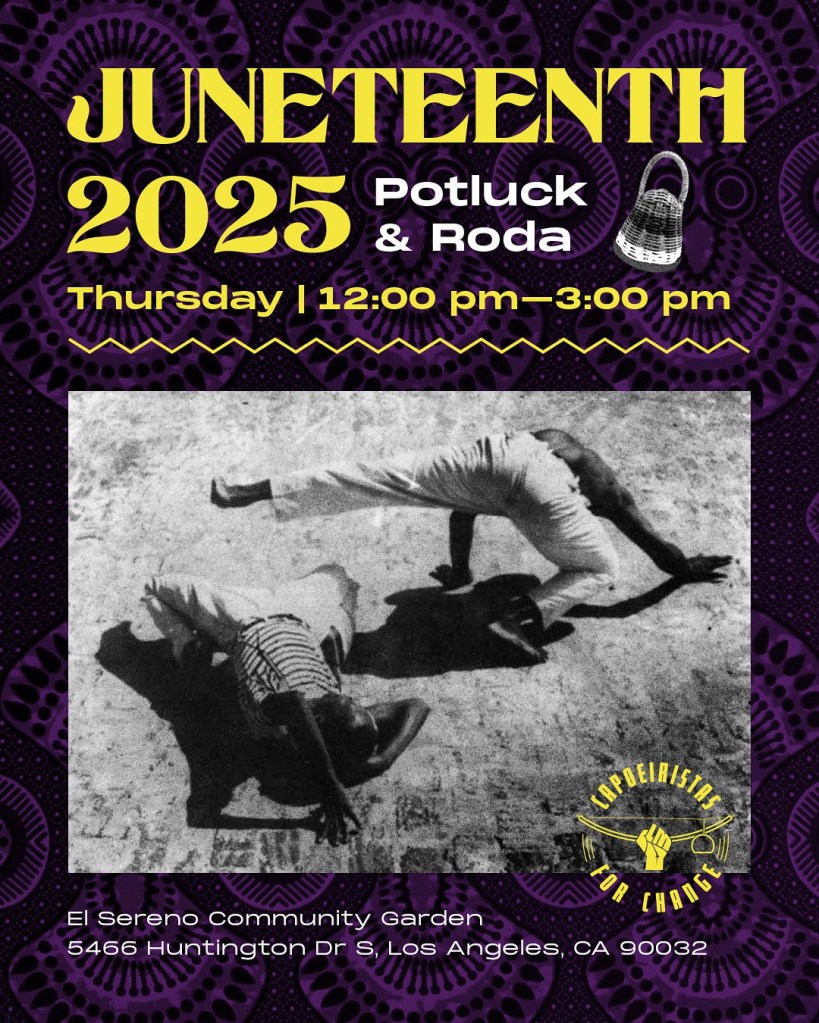
Guess where I’m going in 3 days!?

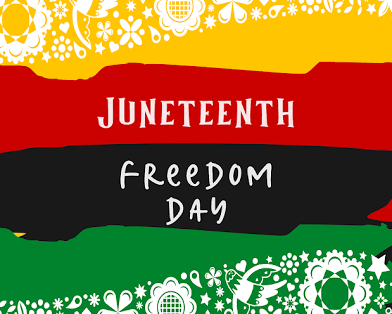
Juneteenth, celebrated on June 19th, marks the emancipation of enslaved African Americans, originating in 1865 when Union soldiers announced freedom in Texas, signaling a monumental shift in the fabric of American society. Initially a local celebration rooted in deep community spirit, it has grown into a nationwide observance of resilience and the ongoing struggle for racial equality, featuring vibrant parades, cultural events, and family gatherings that bring people together in solidarity.

This year, we at CAPOEIRISTAS FOR CHANGE are excited to host a Capoeira Roda and Potluck to commemorate the day, inviting the community to enjoy the rhythmic music, dynamic movement, and shared homemade dishes that reflect our diverse heritage.

The event will serve as a dynamic platform for fostering connection among individuals from diverse backgrounds, encouraging meaningful conversations about freedom, cultural expression, and the importance of unity, while honoring the rich and complex history that has shaped us into who we are today. We hope to create an inclusive atmosphere where everyone can actively participate, gain insights, learn from one another, and celebrate the vibrant and diverse traditions that Juneteenth represents.

This gathering aims not only to recognize the past struggles and triumphs associated with this significant day but also to ensure that the legacy of Juneteenth continues to inspire future generations, instilling a sense of pride and responsibility in preserving and sharing these vital stories. By highlighting the empowerment and resilience that stem from our collective history, we aspire to ignite a renewed commitment to justice, equality, and cultural appreciation that transcends this momentous occasion.

Bring your favorite dish to share and enjoy a diverse array of food while experiencing the vibrant rhythms of Capoeira Angola. Note: If you DO bring food, make sure it’s covered, and no nuts, unless it’s coconuts.

Whether you’re a seasoned practitioner or just curious to learn more about this fascinating cultural art form, this event promises to be a fun and inclusive gathering for everyone! As you sample delicious homemade dishes from various cuisines, you’ll have the chance to connect with fellow attendees, share stories, and immerse yourself in the lively atmosphere filled with energy and excitement. Don’t miss out on the opportunity to learn some moves, enjoy captivating performances, and perhaps discover a new passion in the world of Capoeira!

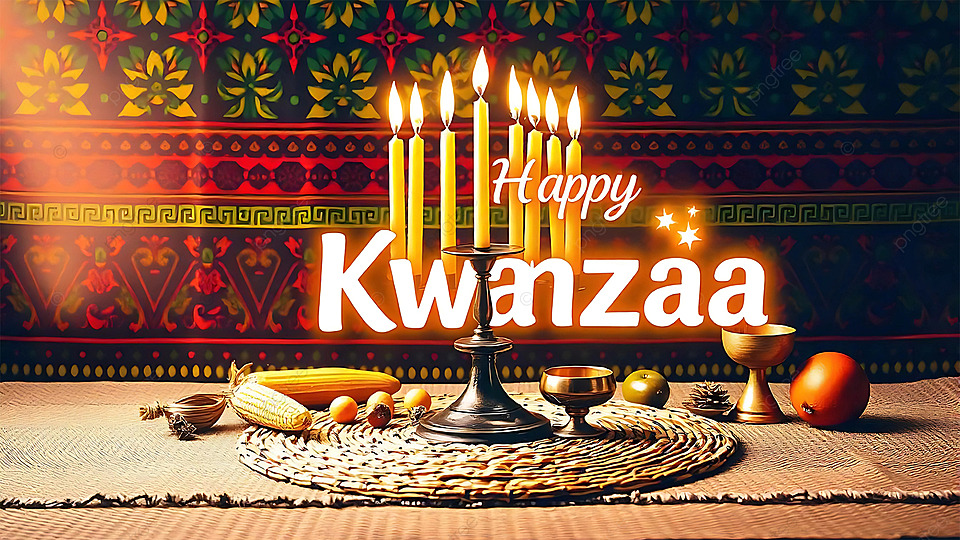
HAPPY KWANZAA!

Yes, Kwanzaa begins today.

December 26, 1966 Kwanzaa, a week-long celebration honoring universal African heritage and culture, was first practiced in the United States with the intent of promoting a deeper understanding and appreciation of African traditions and values. Kwanzaa was created by Maulana Karenga, who envisioned it as a means to reconnect African Americans with their cultural roots and foster a sense of community and empowerment.

This vibrant festival is observed annually from December 26 to January 1, featuring daily rituals that reflect on the seven guiding principles known as the Nguzo Saba, which include unity, self-determination, collective work and responsibility, cooperative economics, purpose, creativity, and faith. Through family gatherings, storytelling, traditional foods, music, and dance, Kwanzaa serves as a platform for individuals and families to celebrate their heritage, cultivate cultural pride, and strengthen community bonds.

Each of the seven days of Kwanzaa is dedicated to one of the following seven principles:

Umoja (unity), which emphasizes the importance of togetherness and collective strength within the community;

Kujichagulia (self-determination), encouraging individuals to define their own identity and shape their own future;

Ujima (collective work and responsibility), reminding us of the necessity of working together to uplift one another and ensuring the well-being of the community;

Ujamaa (cooperative economics), promoting the idea of supporting one another through shared economic goals and initiatives;

Nia (purpose), inspiring individuals to reflect on and pursue their purpose in life while contributing positively to society;

Kuumba (creativity) in our actions and environments empowers us to unleash our imagination, leading to innovative solutions and vibrant expressions that elevate individual experiences and foster a collective atmosphere of inspiration and artistic collaboration.

and finally, Imani (faith), which calls for a deep belief in ourselves, our people, and our potential to create a brighter future.

Each principle carries profound meaning and serves as a guiding light for individuals and families during this celebration, fostering a deeper connection to heritage and community values. This celebration not only brings people together but also encourages reflection on shared traditions and collective memories that define the very essence of who we are. As families gather to honor these principles, they strengthen their bonds, passing down stories and values from one generation to the next, ensuring that the rich tapestry of their culture remains vibrant and alive. In doing so, individuals are reminded of their roots and the importance of unity, creating a space where diverse voices intersect and new traditions can emerge, all while holding onto the foundational beliefs that have shaped their community’s identity.

Now that we know what Kwanzaa is, let’s talk about the 1st day of Kwanzaa.

Today’s Kwanzaa Principle, Umoja, emphasizes unity among members of the African descent community, highlighting the vital importance of togetherness in family, community, nation, and race. It encourages individuals to support one another, strengthen relationships, and work collaboratively to overcome challenges, cultivating a sense of belonging and camaraderie among all. Umoja inspires gatherings, fostering dialogues that promote understanding and respect, and serves as a reminder of the shared struggles and triumphs that have shaped the African diaspora. Ultimately, this principle aims to create a cohesive society that honors the collective history of the African diaspora, while promoting greater prosperity, resilience, and a future built on mutual respect and cooperation, ensuring that each member of the community feels valued and empowered to contribute to the collective good.

Tomorrow, we will talk about Day 2 of Kwanzaa, and present the next principle, Kujichagulia (self-determination)

IT’S CHRISTMAS!!! Part 2

This post will be thoughtfully divided into two distinct parts, with the first part addressing the significant question of what Christmas should mean for Black Americans. In exploring this topic, I believe it’s essential to consider the historical and cultural context that shapes the Black American experience during this holiday.

To provide a deeper understanding, I have included insightful commentary from the professor, whose perspective can shed light on the complexities and unique traditions that enrich this celebration within the Black community. Through this exploration, we can better appreciate the values and meanings that Christmas holds for Black Americans today.

Or at least, what I think they SHOULD hold.

Black people should prioritize saving money and investing their overtime pay in local businesses, community initiatives, and educational opportunities to create a lasting impact. By doing so, they not only support the entrepreneurial spirit within their communities but also contribute to the development of a robust local economy that can withstand external pressures. This approach will enrich themselves and their communities by creating jobs that offer stable employment and generating a network of mutual support among local business owners and consumers.

Furthermore, investing in community initiatives not only addresses immediate needs but also fosters a sense of belonging and resilience. These initiatives, such as after-school programs or cultural events, can provide valuable resources and educational support to the youth, helping to instill confidence and ambition. As individuals acquire new skills through various educational opportunities, whether through traditional degree programs or hands-on vocational training, they enhance their economic prospects and better position themselves for career advancement. Ultimately, by strategically channeling their financial resources and engaging with their communities, individuals can break the cycle of dependency and foster sustainable success that reverberates through future generations.

Now for the second part, we have THIS.

Filmmaker and activist Peter Joseph created this segment for his thought-provoking movie, ZEITGEIST, which has sparked significant discussions around its themes. This particular segment presents a unique and often controversial view on the life of Jesus Christ, exploring not just his teachings and impact, but also delving into the historical and sociopolitical contexts surrounding his existence.

It discusses how religion, particularly Judeo-Christian beliefs, has been used for centuries as a powerful tool to control various aspects of the Western world, influencing everything from governance to social norms. Throughout history, this influence is evident in the establishment of laws and ethical systems that reflect religious tenets, which often dictate not only individual behavior but also societal expectations.

By analyzing these dynamics, Joseph encourages viewers to reflect critically on the role of religion in shaping cultural identities and power structures throughout history, prompting a deeper understanding of how these beliefs have not only unified communities but also created divisions, often serving as a justification for conflict and discrimination. He invites us to consider the implications of religious narratives on contemporary issues, urging a reassessment of the moral frameworks that guide modern governance and cultural interactions.

TODAY IN BLACK MEDIA (10/16/24)

Welcome to TODAY IN BLACK MEDIA, the go-to source for news, cultural events, and thought-provoking discussions from an African American perspective. Our platform is dedicated to shedding light on the rich tapestry of black experiences, amplifying diverse voices, and celebrating the achievements of the black community worldwide.

Join us as we explore the latest developments, delve into thought-provoking analyses, and showcase the vibrant cultural manifestations that shape our collective identity. Whether you’re passionate about current affairs, arts and entertainment, or social justice issues, you’ll find compelling content that resonates with you.

In today’s installment…


The Million-Man March was held in Washington D.C. on this date in 1995. Minister Louis Farrakhan of the Nation of Islam organized this march, which was meant as a powerful symbol of African-American solidarity and a call for unity among Black men across the nation. This historic event aimed not only to address the pressing issues faced by the African-American community, such as social injustice, economic disparity, and political disenfranchisement, but also to encourage a renewed commitment to family and community values. The autumn chill of that day was barely noticeable to the one million people who gathered, as they wrapped themselves in a deep sense of racial pride and an unwavering commitment to community strength. Many attendees expressed feelings of hope and purpose, believing that their actions could ignite change and inspire future generations to continue the fight for equality and justice. The speeches delivered that day echoed through the crowd, emphasizing the importance of education, self-reliance, and empowerment, creating an unforgettable atmosphere of camaraderie and determination that resonates to this day.

Participants included individuals from all walks of life, reflecting the rich diversity of our country; both white collar and blue collar workers stood side by side, united in their quest for justice and equality. They carried banners and wore shirts showcasing their heritage, emphasizing that their collective voice could not be ignored, a powerful cacophony of cultures blending into one harmonious plea for rights that have too long been denied. This monumental gathering served not only as a rallying point for civil rights but also as an inspiring reminder of the importance of uplifting one another in the pursuit of opportunity and respect for all people. Each chant echoed through the crowd, creating a deep resonance among the participants, who moved forward with unwavering determination, fueled by stories of struggle and triumph. The atmosphere buzzed with hope, resolve, and a shared desire for a brighter future that would resonate for generations to come, igniting a flame of solidarity that would continue to burn brightly in the hearts of those who dared to dream of a better tomorrow.

HAPPY KWANZAA! Day 7

Kwanzaa is a seven-day celebration observed from December 26 to January 1, promoting Pan-African culture and community. It can serve as an alternative or an addition to other winter holidays, focusing on seven key principles applicable throughout the year.

Today’s Kwanzaa principle, Imani (Faith), emphasizes the significance of family and community traditions as a spiritual center, fostering belief in community leaders, elders, and loved ones, both past and present. This principle encourages individuals to cultivate a deep-seated trust and confidence in one another, reinforcing the bonds that unite families and communities. By honoring the lessons and experiences passed down through generations, Imani nourishes a collective identity that celebrates shared heritage and values.

It inspires people to actively participate in the growth and development of their communities, reinforcing the idea that faith in one another is essential for resilience and harmony. This collective engagement not only fosters a sense of belonging but also cultivates a dynamic environment where innovative ideas can flourish, allowing individuals to harness their unique strengths for the greater good. In acknowledging the sacrifices and triumphs of those who came before us, we not only pay tribute to their legacy but also empower ourselves to envision a brighter future for the generations yet to come, embracing a commitment to uplift and support each other through life’s challenges.

By remembering our shared history, we are reminded of the power of unity, instilling a deeper sense of responsibility to carry forward the lessons learned and to strive for a more inclusive and compassionate world. It is through these shared experiences and the bonds we create that we can build a foundation of hope, ensuring that every voice is heard and valued in our collective pursuit of growth.