The insidious, pervasive narrative often whispered, sometimes shouted, within and about Black communities—the “Ghetto Lie”—is not merely a social construct; it is a complex, multi-generational affliction actively undermining progress and leading to catastrophic outcomes. This “lie” is the toxic amalgamation of historical trauma, systemic disenfranchisement, and a dangerous cycle of self-fulfilling prophecy, tragically masquerading as an unavoidable, innate cultural reality. It is the sophisticated mechanism by which external oppression is converted into internal surrender.
This destructive ideology posits that the pathology associated with deeply impoverished, inner-city neighborhoods—characterized by high rates of single-parent households, poor educational outcomes, joblessness, and violence—is an inherent part of Black identity, rather than the symptom of socio-economic and structural oppression. By internalizing this lie, the focus shifts disastrously from demanding systemic change and equitable resources to merely managing the “symptoms” or, worse, accepting them as the natural order. The structural architects of disadvantage are thus absolved, and the victims are made to blame themselves for the conditions imposed upon them.
Before I go on with this post, we at Jogo de Corpo Fechado would like to to take a moment to give a huge, well-deserved shoutout to Black Stories Untold. They are the incredible creators and dedicated historians responsible for the powerful and insightful video that we’ve featured or linked to within this post. Their commitment to uncovering, documenting, and sharing marginalized narratives is truly invaluable.
Their work, and the specific video you’ve just engaged with, provides essential context and a critical perspective that often goes overlooked. We strongly encourage you to explore their channel further.
If you found the video as compelling and necessary as we did, we know that your support would mean a great deal to the team at Black Stories Untold. Producing high-quality, deeply researched content takes a considerable amount of time, effort, and resources.
There are many ways to show your appreciation and help them continue this vital work:
Contribute Directly:If you are in a position to do so, a direct financial contribution to their efforts is the most impactful way to support their production and research costs.
Engage with Their Content:If contributing financially isn’t possible right now, your engagement is still incredibly valuable. A simple “Like” on their videos and hitting the “Subscribe” button on their channel are crucial ways to support them. It helps increase their visibility, ensures their content reaches a wider audience, and provides them with the motivation to keep producing excellent material.
Thank you for watching and thank you for considering supporting Black Stories Untold!
Now, let’s continue.
The Core Components of the Ghetto Lie: An Anatomy of Deception
The Ghetto Lie is not a monolithic myth; it is composed of several reinforcing pillars, each designed to chip away at Black agency and potential:
1. The Myth of Innate Pathology: The Denial of Historical Context
This component falsely asserts that issues like academic disengagement, casual violence, and disdain for authority are cultural norms passed down through generations, rather than coping mechanisms developed in hostile, resource-starved environments. This fatalistic view systematically ignores the robust history of Black intellectualism, family structure, and community resilience that existed prior to and outside of concentrated poverty created by redlining, discriminatory housing covenants, and the brutal economic shock of deindustrialization.
The truth is that concentrated urban poverty—the geographical space the “ghetto” describes—was engineered through policy and prejudice. By framing the resulting behaviors as inherent “pathology,” the Lie distracts from the poverty and lack of opportunity that are the true root causes. This intellectual sleight of hand transforms a political and economic problem into a cultural and moral failing.
2. The Attack on the Black Family: Normalizing Instability
The most damaging facet is the normalization of fractured family units. While acknowledging the historical impact of slavery and Jim Crow on family separation, the Ghetto Lie elevates the single-parent, often matriarchal, structure from a necessity born of economic struggle and male incarceration to the accepted standard. This minimizes the critical, measurable role of present fathers and stable nuclear or extended families in providing economic stability, emotional security, and effective socialization for children. The consequence is a vicious cycle of poverty replication, where the very structure needed to escape generational poverty is systematically undermined and pathologized. The message becomes: your family is broken by design, not by external pressure.
3. The Culture of Anti-Intellectualism and Anti-Achievement: The Internal Censor
This lie creates a crushing societal pressure that often labels educational excellence, articulate speech, and professional ambition as “acting white.” This phenomenon, deeply rooted in the historical reality that Black success was often met with white violence, economic exclusion, or institutional sabotage, now functions as an internal mechanism of suppression. The fear of social ostracization or the desire to maintain community credibility limits educational attainment and upward mobility, creating a self-imposed ceiling on ambition. It is a defense mechanism turned destructive, leading to the tragic waste of millions of bright minds whose potential is sacrificed on the altar of manufactured authenticity.
4. The Normalization of Interpersonal Violence: Absolving External Responsibility
By accepting the high murder and crime rates within concentrated Black communities as simply “how things are,” the Ghetto Lie drains the collective will to fight for safer streets, better policing, and adequate mental health resources. It frames the violence exclusively as Black-on-Black crime—a self-inflicted wound—thereby absolving external institutions (government, education, law enforcement, healthcare) of their foundational responsibility to protect and serve these citizens equitably. This narrative weaponizes tragedy, using the symptoms of systemic neglect as justification for further neglect and punitive control (e.g., mass incarceration), rather than investment and restoration.
The Killing Mechanism: The Slow, Systemic Loss of Potential
The consequence of this internalized narrative is nothing less than the slow, systemic killing of potential. The Ghetto Lie kills:
Educational Opportunity: By lowering expectations in schools, fostering environments where academic rigor is mocked, and pushing students out of the classroom and into the school-to-prison pipeline.
Economic Mobility: By discouraging the disciplined effort, networking, and cultural code-switching often required to navigate professional, largely white-dominated, corporate spaces.
Physical Safety and Well-being: By allowing endemic violence and unchecked mental health crises to persist without the unified community and political action needed to stop them.
The Black Soul: By convincing individuals that their highest aspiration should be to merely survive their hostile environment, rather than to master it, transform their world, and realize their full, inherent brilliance.
The Economy of Dysfunction: Profit and Perception
Today, we are ripping the mask off the lie that has been insidiously poisoning our community’s soul for decades—the systemic fiction that has defined our struggle and obscured our brilliance. This is the harrowing story of how power structures meticulously convinced the world, and disturbingly, segments of our own people, that the term “ghetto” is synonymous with “Black.” This dangerous conflation is a masterful piece of social engineering, designed to erase the rich, complex tapestry of our culture and replace it with a single, devastating stereotype of deprivation and despair.
This narrative of pathology is not organic; it is meticulously cultivated because it is profitable. We must confront the uncomfortable truth: billion-dollar corporations and entrenched institutions are not merely observing our dysfunction—they are actively feeding off it. From predatory lending practices, exploitative housing markets, and the booming private prison and surveillance industries to the targeted marketing of harmful, addictive products (alcohol, tobacco, high-fat foods), a vast, complex economy thrives on keeping our communities marginalized, fragmented, and in a state of perpetual crisis. Our perceived dysfunction is their quarterly dividend; our instability is their investment opportunity.
The ultimate tragedy is the internal toll this constant assault has taken. We have, consciously or unconsciously, allowed the relentless, sensationalized media focus on our worst moments—the crime, the poverty, the division—to drown out the soaring symphony of our greatest achievements. The brilliance of our scientists, the passion of our artists, the resilience of our families, the political victories won through generations of struggle—these foundational truths are constantly obscured by a spotlight fixed only on our failures. We are allowing their narrative, the one that defines us by our deficits rather than our potential, to become the loudest voice in the room, threatening to silence the historical chorus of Black excellence and achievement forever.
The Path Forward: Refuting the Lie with Truth and Action
To save Black America and truly unlock its potential, the Ghetto Lie must be confronted and refuted with a forceful and uncompromising embrace of high standards, educational rigor, family stability, and an insistence on equitable societal investment in these communities.
The path forward requires replacing the lie of innate pathology with the truth of unfulfilled potential. This demands a dual approach: demanding external structural reform while simultaneously fostering internal cultural strength. We must aggressively dismantle the systems of inequity (housing, education, justice) while nurturing the values of excellence, scholarship, entrepreneurship, and stable family formation within our own communities, not as an appeal to external validation, but as the inherent, historical standard of Black life. The lie has been told long enough. The time for truth, potential, and collective action is now.
The apprehension and hostility often displayed by certain segments of “nerd culture” toward Black people is a complex phenomenon, rooted not merely in isolated prejudice but in systemic anxieties over ownership, narrative control, and accountability. This fear is multifaceted and manifests across various subcultures, from gaming and comics to fantasy and anime.
1. The Perceived Threat to Ownership and Exclusivity
For decades, many core pillars of nerd culture—including tabletop role-playing games, superhero comic books, and high fantasy epics—were overwhelmingly marketed to and consumed by white, often male, audiences. This created a powerful, albeit artificial, sense of cultural ownership and exclusivity. The established “old guard” came to view themselves as the authentic inheritors and exclusive guardians of the lore, traditions, and community spaces.
When Black people enter these spaces in visible numbers—as successful creators, influential interpreters, central protagonists, or vocal fans—it is often defensively interpreted by these gatekeepers as an intrusion or a challenge to their established hierarchy and comfortable racial default. This defensive posture is fueled by the fear of “losing” what they believe is their exclusive property. The reaction is frequently aggressive, manifesting in toxic gatekeeping and harassment campaigns intended to maintain the perception of a white-dominated community. The perceived “dilution” of the cultural space is a deep-seated anxiety, revealing a desire to keep the community insular and homogeneous.
2. A Historical Pattern of Whitewashing and Exclusion
The root of this discomfort lies in a history where Black characters were systematically marginalized. They were often:
Nonexistent: Absent from narratives entirely.
Tokenized: Relegated to single, minor, or often stereotypical roles.
Erased: Actively minimized or had their importance stripped through practices like whitewashing.
As major media franchises begin to intentionally embrace substantive diversity—introducing well-developed Black protagonists, adapting established white characters as Black, or centering Black experiences—a vocal minority of the fandom reacts with vitriol. This resistance is frequently masked by arguments about “fidelity to the source material” or “historical accuracy,” even when discussing fictional worlds containing magic, dragons, or faster-than-light travel. This reveals a fundamental discomfort with seeing Black people centered in imaginative narratives that were long presumed to be white by default. The deeper fear is the loss of a perpetually white imaginative landscape, where the comfort of racial homogeneity in fantasy and escapism is unchallenged.
3. Resistance to Change and Aversion to Systemic Confrontation
Nerd culture is not immune to the broader societal issues of racism, misogyny, and prejudice. Yet, it has often cultivated a resistant environment where critical analysis of these issues is aggressively dismissed. Any attempt to point out tokenism, harmful tropes, or a lack of representation is typically framed as “bringing politics” into a space supposedly reserved purely for “escapism.”
Black fans, critics, and creators who challenge the status quo are frequently labeled as aggressors, “social justice warriors,” or “ruiners of fun.” The defensive reaction is a profound fear of introspection and accountability. By maintaining a facade of neutrality or political apathy, the community effectively preserves the status quo of white dominance, prioritizing the comfort of the dominant group over the inclusion and safety of marginalized fans. The resistance is not just to change in the media itself, but to the necessary self-examination and dismantling of systemic bias within the community structure.
4. A Pervasive, Year-Round Reality
From the highly visible spectacle of Cosplay competitions and the widespread global media of Anime and Video Games to the often-anonymous realms of online forums and V-Tubers, overt and insidious forms of racism are a deeply entrenched and exhausting reality. This pervasive negativity extends beyond isolated incidents; it is manifested through systemic underrepresentation, coded prejudice in narrative arcs, and actively hostile environments for Black creators and fans.
This cultural dynamic is particularly disappointing given that these subcultures often self-identify as havens for the marginalized and outsiders. Yet, they frequently reproduce the very same oppressive societal structures they claim to reject. In a period of heightened global reckoning with race and identity, the commitment to substantive change within these fan-driven worlds remains tepid. Conversations about inclusion are often met with aggressive, immediate backlash—a clear, powerful indicator of the deeply guarded, often racially-charged status quo.
The “scared” is, ultimately, a multilayered anxiety: the fear of losing exclusive ownership, the fear of a historically white narrative center shifting, and the fear of being forced to acknowledge and dismantle systemic racism within a community beloved for its perceived sanctuary. This defensive, toxic posture manifests as a chilling effect on the participation and creative expression of Black fans and creators, revealing far more about the fragility and insecurity of the established, dominant elements of nerd culture than it does about the Black people who simply seek to exist within the worlds they love.
The issues of Black representation, Black excellence, and Black criticism are not seasonal; they are fundamental, continuous, and demand sustained, year-round attention and action. The struggle is not for a temporary acknowledgment but for permanent, equitable space.
The Quilombos represent one of the most remarkable and enduring examples of self-liberation and societal reconstruction in the history of the Americas. Born from the brutal reality of the transatlantic slave trade, these communities were not merely temporary hideouts but fully functioning, complex societies established by enslaved and marginalized people, primarily of African descent, who had escaped the Portuguese colonial plantations. Their existence was a direct and powerful act of resistance against the institution of slavery and the entire colonial system.
Origins and Formation
The term “quilombo” is derived from the Kimbundu word kilombo, which originally referred to a youth war-camp or settlement in Angola. In Brazil, it became the umbrella term for any settlement founded by escaped slaves (escravos fugidos), though Indigenous peoples and marginalized Europeans were also sometimes included.
Quilombos began to appear shortly after the large-scale introduction of African slavery into Brazil in the 16th century. Life on the sugar, tobacco, and gold plantations was extraordinarily harsh, characterized by relentless labor, violence, and systematic dehumanization.
These settlements were strategically located in remote, difficult-to-access areas: deep in the dense Mata Atlântica (Atlantic Forest), in mountainous terrain, or in the vast, arid interior (sertão). This geographical isolation was crucial for defense and survival, making it difficult for colonial capitães do mato (bush captains or slave hunters) to find and destroy them.
Societal Structure and Culture
Quilombos were pioneering examples of a new social order, blending various African cultural traditions with Indigenous knowledge and the necessities of their unique situation.
Political Structure: Many Quilombos developed complex political systems, often led by a king or queen (Zumbi being the most famous leader) or a council of elders. Decisions were made communally, reflecting a strong emphasis on egalitarianism, though military organization and clear lines of command were also vital for defense.
Economic Life: Self-sufficiency was the cornerstone of the Quilombo economy. They practiced subsistence agriculture, growing essential crops like manioc, beans, corn, and sweet potatoes, often employing techniques learned from local Indigenous groups. They also engaged in hunting, fishing, and foraging. Furthermore, many Quilombos engaged in commerce with neighboring colonial towns, trading surplus goods, and sometimes even raiding plantations for tools, weapons, and to free more enslaved people.
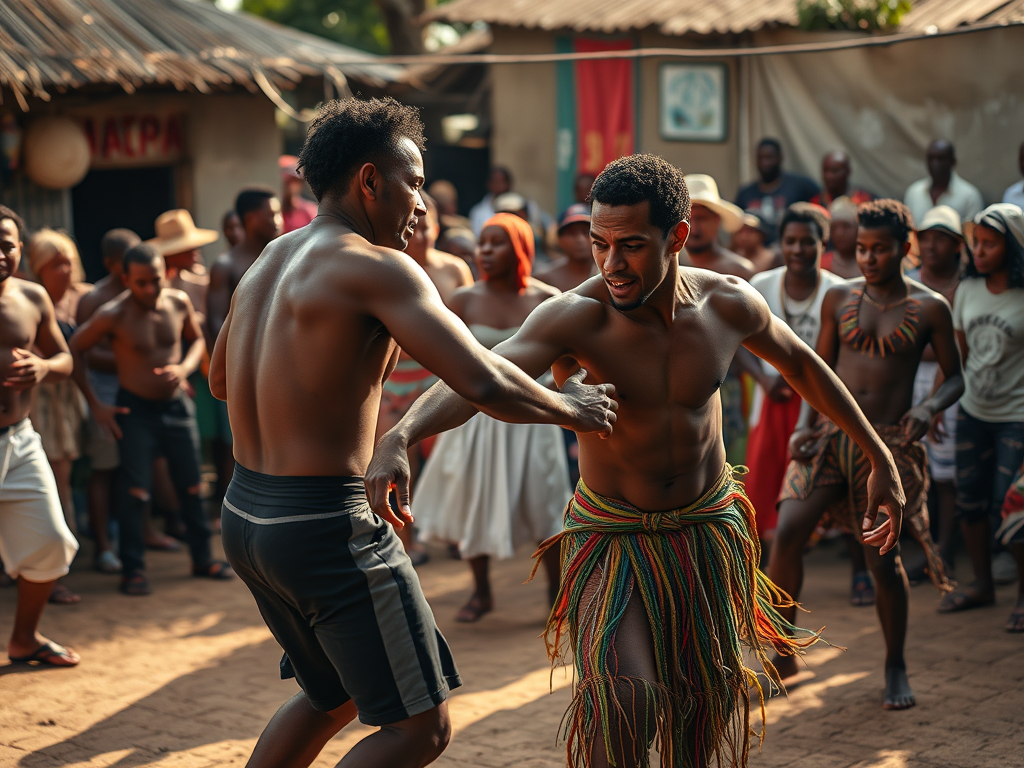
Culture and Spirituality: Quilombos were vital reservoirs of African culture, preserving languages, religions, music, and art that were systematically suppressed on the plantations. Candomblé, Capoeira (a dance-fight form), and a rich oral tradition flourished within these free spaces, serving as a source of identity, community cohesion, and spiritual resilience.
Palmares: The Most Famous Quilombo
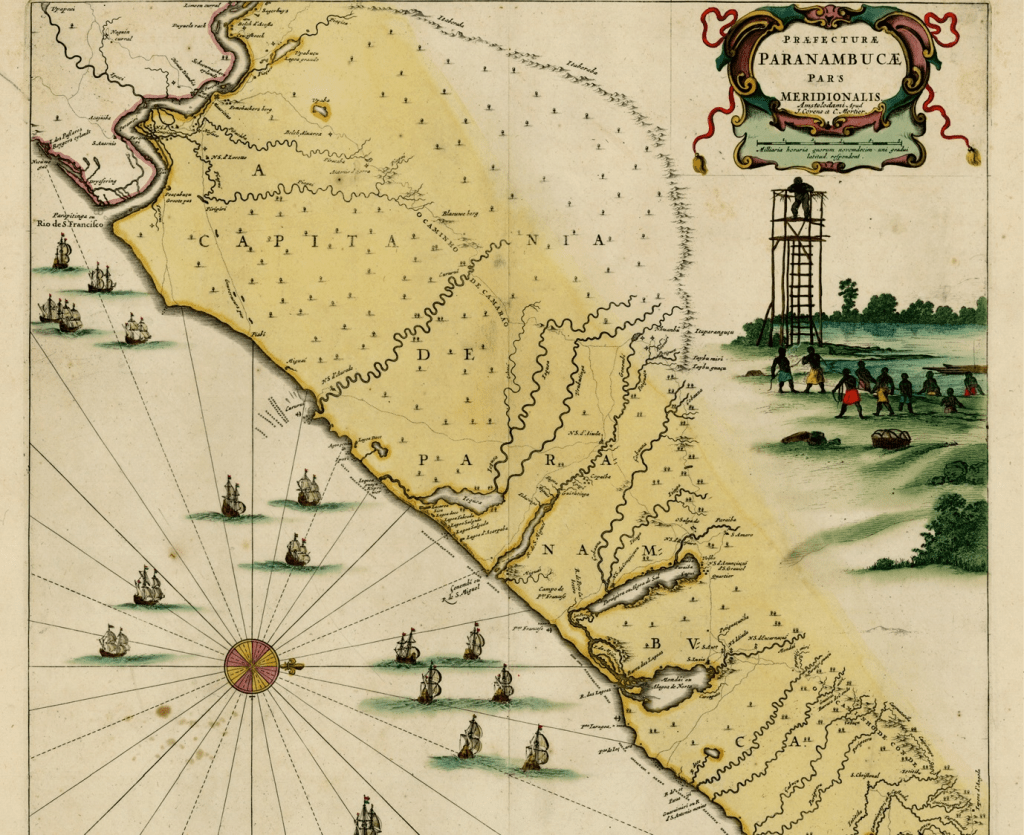
The historical phenomenon of the Quilombo—a community established by formerly enslaved and marginalized people, often in remote, difficult-to-reach areas—is best exemplified by the magnificent and enduring Quilombo dos Palmares. This self-governing republic, often referred to simply as Palmares, was not a temporary refuge but a genuine new society that thrived for nearly a century, roughly from 1594 to 1694. It was situated strategically in the rugged, forested terrain of the Serra da Barriga region, which lies in the interior of what is now the Brazilian state of Alagoas.
Click HERE to watch a movie about Palmares, And click HERE to check out some Capoeira videos, and some Afro-Brazilian cinema.
At its zenith, Palmares was far more than a single village. It functioned as a sophisticated confederation of autonomous settlements, known as mocambos (a term derived from the Bantu language, signifying a hideout or settlement). This network of communities boasted an impressive population that, according to various estimates, ranged from 10,000 to as many as 30,000 residents. This population base was comprised primarily of escaped slaves (known as quilombolas), but also included Indigenous peoples and even poor white settlers who sought refuge and freedom within its borders. Its size and organization rendered Palmares a power comparable to—and in some cases, even larger than—the colonial towns established by the Portuguese along the coast.
Palmares was a genuine proto-state forged by people who had been stripped of their freedom. It developed a complex political and social structure, led by a succession of formidable figures. The early leadership included Ganga Zumba, an imposing king or chief who oversaw the confederation’s diplomatic and military affairs. Following his reign, his nephew, Zumbi (meaning ‘immortal’ or ‘ghost’), rose to prominence. Zumbi rejected attempts at a negotiated peace with the Portuguese, insisting on absolute freedom for all Palmarinos and for any enslaved person who reached the Quilombo. Under his charismatic and uncompromising leadership, Palmares became the definitive symbol of Black autonomy and resistance in the Americas.
The very existence of Palmares was a direct challenge to the economic and social foundation of the Portuguese colony—the institution of slavery. Its continued survival was an intolerable affront to colonial authority. Consequently, Palmares faced repeated, brutal military assaults over its history. Its final, tragic end came in 1694, when the Portuguese Crown—tired of the constant threat Palmares posed—funded a massive military expedition. This force was led by the notorious bandeirante Domingos Jorge Velho, a ruthless frontiersman and professional slave hunter.
Though Palmares itself was ultimately conquered, the profound spirit of resistance that it embodied did not immediately extinguish. Following the final, overwhelming assault by Portuguese forces, Zumbi, the last and most iconic leader of the quilombo, managed to evade capture. For nearly a year, he continued a desperate and arduous guerrilla war, utilizing the familiar, dense terrain of the Serra da Barriga to strike against the colonial power. This final, heroic struggle demonstrated an unwavering commitment to the ideals of freedom Palmares represented.
However, the immense resources of the Portuguese crown were not to be denied. Zumbi was eventually captured and, in a brutal act of public terror intended to utterly crush the morale of the enslaved population, he was executed in 1695. His head was severed and displayed in the town of Recife. This gruesome end, far from diminishing his impact, cemented his place not merely as a historical figure, but as a legendary and enduring icon. Zumbi has become the ultimate symbol of Black resistance, the struggle for freedom, and the fight against oppression in Brazil—a figure whose name echoes across centuries as a call to defiance.
Crucially, the government forces, despite their victory over the main settlement, were never truly able to claim a complete and total destruction of the Palmares movement. The deeply ingrained culture of resistance and the decentralized nature of the quilombo meant that the fight simply morphed and persisted. Other courageous warriors took Zumbi’s place, continuing the difficult struggle. A notable example is Camuanga, who carried on the resistance until his death in 1709. The ongoing presence of former Palmares residents and their descendants, coupled with the constant influx of new fugitives, ensured that the region remained a hotbed of anti-colonial activity.
In fact, the last recorded instance of organized resistance in the area that was once Palmares did not occur until 1797—over a century after Zumbi’s execution—underscoring the extraordinary longevity and deep-rooted legacy of this revolutionary settlement. The resilience displayed by the communities in and around Palmares serves as a powerful testament to their unwavering spirit and determination to seek freedom in the face of oppression. Palmares, therefore, was not a failure but a spark that continued to ignite resistance for generations, inspiring countless individuals to rise up against the injustices they faced, fostering a continuous struggle for liberation that echoed through the ages and laid the groundwork for future movements against tyranny and inequality.
Legacy and Modern Significance
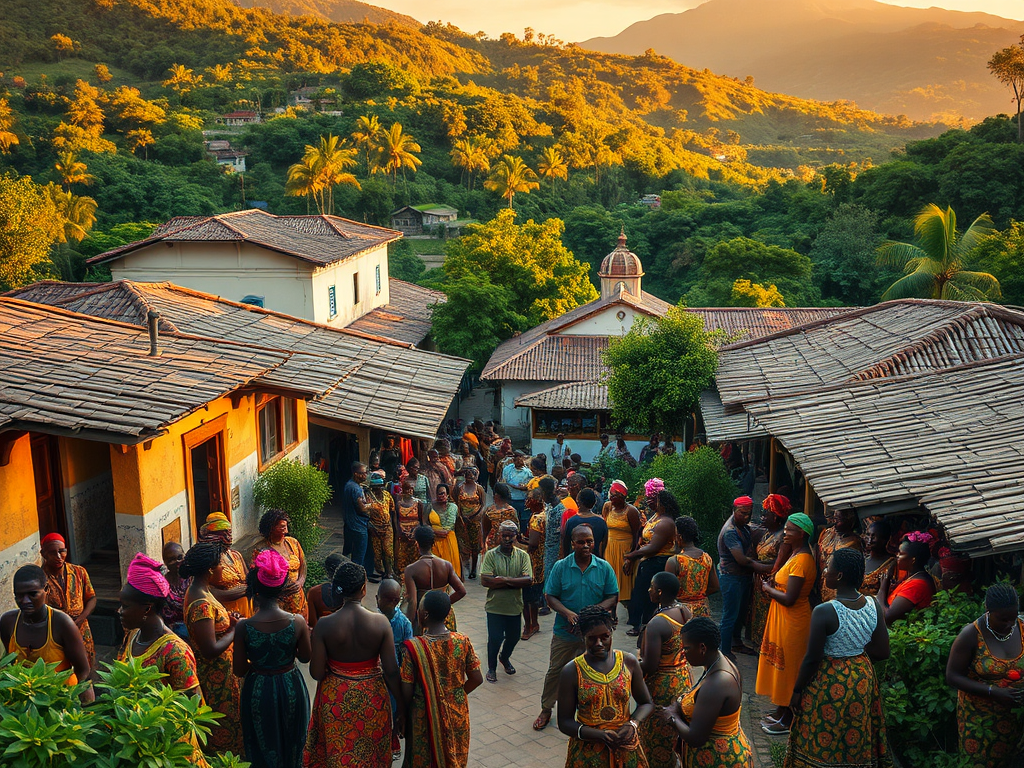
Although thousands of Quilombos were eventually destroyed by colonial forces, their spirit and legacy survived. Today, the descendants of these communities, known as Quilombolas, live in officially recognized QuilomboCommunities (Comunidades Quilombolas) across Brazil.
The struggle of the modern Quilombola movement is centered on land rights, cultural preservation, and recognition of their unique historical and social contributions. Article 68 of the 1988 Brazilian Constitution grants these communities the right to the definitive ownership of the lands they historically occupied, transforming the Quilombo from a historical phenomenon of resistance into a contemporary legal and political reality. The Quilombo, therefore, remains the essential blueprint for self-determination and the creation of a just society in the face of systemic adversity.
How do you create a quilombo village or group of villages?
The question of “How do you create a quilombo village or group of villages?” delves into a complex historical, social, and political process rooted in the resistance of enslaved and marginalized people in Brazil, primarily during the colonial and imperial periods, but with enduring relevance today.
A quilombo was fundamentally a settlement, often hidden and fortified, founded by self-liberated (runaway) slaves (escravos fugidos), but also including indigenous peoples, poor whites, and other social outcasts seeking autonomy and freedom from the oppressive plantation system (latifúndio) and the broader colonial society.
The creation of a quilombo involved several critical, interlinked stages and factors:
I. The Initial Act of Resistance and Escape (The Genesis)
The Decision to Flee: The primary catalyst was the intolerable brutality, dehumanization, and exploitation of the slave regime. The decision to flee was a high-risk, often communal, act of radical self-determination.
Formation of Escape Groups: Escapes were organized either individually, in small family units, or, most effectively, in pre-planned, larger groups. These groups needed leaders, often those with practical knowledge (e.g., survival skills, navigation, or martial training).
Routes and Resources: Escapees utilized detailed local knowledge—often provided by indigenous allies, sympathetic individuals, or their own labor experience—to navigate dense forests (Mata Atlântica), swamps, and rugged terrain, avoiding capitães do mato (slave hunters). They carried minimal supplies, relying on foraging and survival skills.
II. Site Selection and Initial Settlement
Strategic Location: The chosen site was paramount for survival. It needed:
Isolation and Concealment: Deep in remote, inaccessible areas (mountaintops, dense jungles, hidden valleys, or river islands) to deter discovery and attack.
Defensibility: Natural barriers (cliffs, rivers, thick undergrowth) that could be augmented with man-made fortifications like palisades, traps, and strategically cleared lines of fire.
Resource Access: Proximity to potable water, fertile land for subsistence farming, and materials for construction.
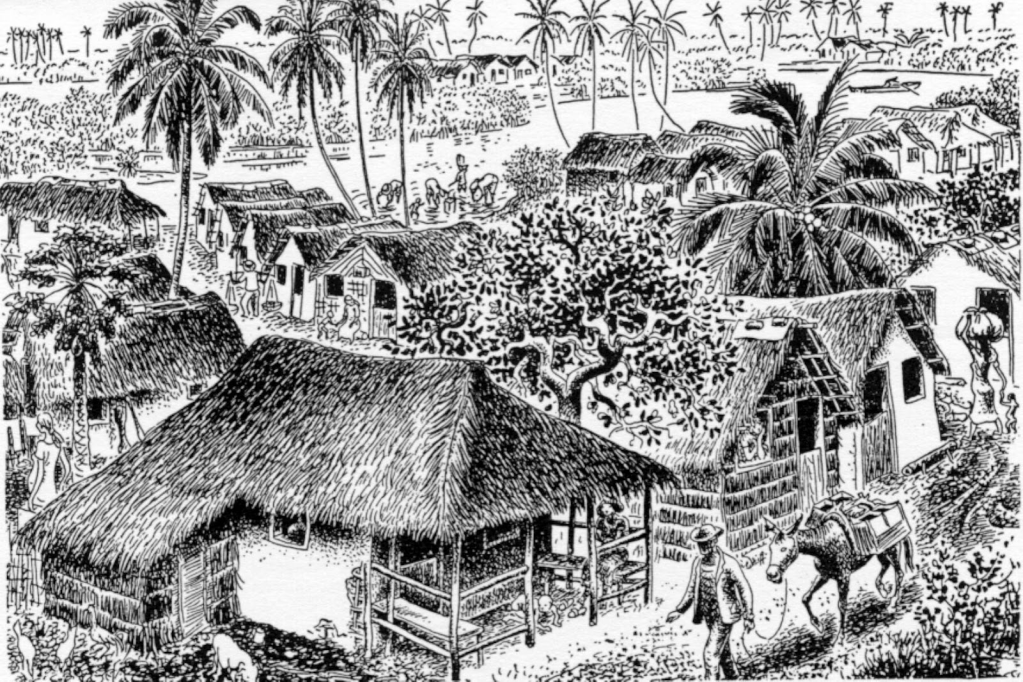
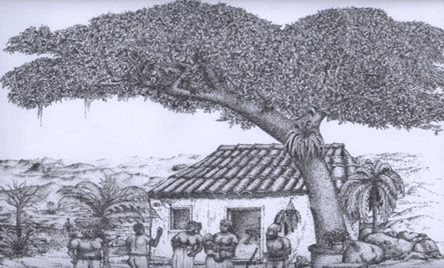
Construction of the Mocambo (Huts): The initial settlement often consisted of simple huts (mocambos) built quickly from local materials. Over time, these settlements would become more structured, sometimes developing a central meeting area, larger community structures, and specialized areas for crafting and storage.
III. Establishing Social and Economic Autonomy
Subsistence Agriculture: Immediate focus was on securing a food supply. Quilombolas cleared land using slash-and-burn techniques (roça) to plant staple crops such as manioc (cassava), corn, beans, and sweet potatoes. This farming was often diversified and hidden among the natural vegetation to make aerial or distant observation difficult.
Internal Governance:Quilombos developed their own internal systems of governance and social order, often blending African political traditions, indigenous practices, and responses to the new environment. Leadership could be hereditary, military, or based on religious or moral authority, with figures like the legendary Zumbi of Palmares.
Defense and Security: A standing defense force was critical. Quilombolas employed guerilla warfare tactics, utilizing their knowledge of the terrain, bows and arrows, spears, and eventually, stolen or bartered firearms. They established extensive watch systems and maintained high vigilance against incursions.
IV. Expansion and Maintenance (The Quilombo Network)
Inter-Quilombo Relations: To increase security and resilience, individual quilombos often formed alliances, creating networks or “groups of villages.” These networks shared intelligence, provided mutual aid, facilitated trade, and coordinated defense against major expeditions launched by colonial forces. The Republic of Palmares (Quilombo dos Palmares) stands as the most famous example of such a large, organized polity.
Maintaining Population: New members arrived continuously through ongoing escapes from plantations. The quilombos also grew through births within the community and, in some cases, through the capture or voluntary inclusion of indigenous people or other marginalized groups.
External Relations and Trade: While aiming for self-sufficiency, quilombos often needed goods (metal tools, salt, ammunition) that they couldn’t produce. They engaged in clandestine trade with poor settlers, small farmers, or even corrupt officials, exchanging agricultural surplus, crafts, or items stolen from plantations. Raids on plantations were also conducted to liberate others, acquire tools, and disrupt the slave economy.
V. Endurance and Legacy (Modern Quilombos)
The historical model of quilombo creation has evolved into the modern context. Today, Comunidades Quilombolas are recognized as ethnic and racial groups with their own specific historical trajectory, territorial relations, and presumption of Black ancestry related to resistance to historical oppression.
The modern “creation” of a quilombo focuses less on physical escape and more on territorial recognition and cultural preservation:
Self-Recognition: A community must self-identify as a quilombo based on its history and relationship to the land.
Legal Process: In Brazil, communities must undergo a complex legal and anthropological process—certified by the Palmares Cultural Foundation (FCP)—to gain official recognition and, crucially, to secure communal land titles (titulação), protecting them from eviction and guaranteeing their collective rights as mandated by the 1988 Brazilian Constitution.
Thus, creating a quilombo historically involved a radical, military, and social transformation from enslaved status to autonomous community; in the contemporary sense, it involves the political assertion of identity and the legal struggle for territory and cultural rights.
The Quilombo and the Roots of Capoeira
Was Capoeira created and/or practiced in the quilombos?
The relationship between the quilombos—the independent settlements formed by runaway enslaved people in Brazil—and the creation and practice of Capoeira is one of the most debated and essential topics in the study of Afro-Brazilian culture and martial arts. While definitive written records from the quilombos themselves are scarce, the overwhelming historical and cultural consensus supports the idea that the quilombos, particularly the largest and most famous, Palmares, were the fertile ground where Capoeira as a distinct art form was forged.
The Quilombo as a Cultural Crucible
The quilombos were not merely places of refuge; they were sovereign, self-governing societies created from scratch, designed to sustain life, resist capture, and preserve an African-rooted identity. This required the development of sophisticated means of self-defense.
Necessity of Self-Defense: Every resident of a quilombo was a potential soldier. The settlements were under constant threat of attack by the capitães-do-mato (bush captains) and organized military expeditions. A fighting system that was both highly effective and capable of being practiced secretly was not a luxury but a fundamental requirement for survival.
Cultural Synthesis: The populations of the quilombos were drawn from various African ethnic groups (Kongo, Angolan, Yoruba, etc.) and often included indigenous peoples and impoverished Europeans. The fighting forms, dances, music, and religious practices of these diverse groups were brought together and synthesized into new, distinctly Brazilian forms. Capoeira is believed to be the ultimate expression of this synthesis—blending African circle dances and fighting techniques with Brazilian necessity.
The Element of Deception: One of the most powerful arguments for Capoeira’s quilombo origin is its characteristic use of deception. The fighting movements are often masked within the movements of a dance or a ritualistic game (jogo). This technique of dissimulation was vital: practicing an overt martial art would have immediately exposed the quilombo’s inhabitants to greater danger and confirmed their military threat to the Portuguese. By disguising fighting as brincadeira (play) or dance, the practitioners could train in the open without giving away their true capabilities.
Historical Evidence and Scholarly Debate
While direct documentary proof (a diary entry reading, “Today, we invented Capoeira”) is absent, several lines of evidence point to the quilombo thesis:
Oral Tradition: The oral history passed down through generations of Capoeira masters (Mestres) consistently traces the art’s origins to the communities of resistance.
The Mandinga Connection: Early descriptions of the fighting style often refer to it as “Mandinga,” “Jogo de Mandinga,” or “brincadeira de Angola”—all terms that strongly connect the art to Central West African traditions prevalent among those taken to Brazil, particularly those who formed the core of Palmares.
Location and Early Practice: The earliest documented evidence of Capoeira being practiced openly appears in the major urban centers, such as Rio de Janeiro and Salvador, in the 18th and 19th centuries, often associated with the communities of libertos (freedmen) and the urban poor, many of whom were descendants of those who had passed through or been influenced by the quilombos. They brought the fighting tradition with them as they migrated or were resettled.
The evidence overwhelmingly supports the conclusion that Capoeira was indeed forged and developed within the quilombos. These independent, self-governing communities—established by formerly enslaved people in remote, often inhospitable areas of colonial Brazil—were not merely settlements; they were crucible environments perfectly suited for the gestation of a sophisticated and clandestine martial art.
The existence of quilombos provided a unique confluence of factors necessary for Capoeira’s emergence:
1. Intense External Pressure and the Need for Secrecy
The paramount factor was the relentless, existential threat posed by colonial authorities and the capitães-do-mato (bush captains) tasked with their destruction. Survival depended on the ability to repel armed incursions. This intense external pressure demanded an effective, highly adaptable fighting system. However, openly practicing a martial art would have been suicidal, immediately drawing the full wrath of the Portuguese crown. This necessity for concealment drove the innovation of integrating combat techniques into seemingly innocuous cultural forms. The fluid, dance-like movements, the music, and the songs could have served as a brilliant camouflage, allowing practitioners to hone deadly skills in plain sight. The roda (circle) itself became a laboratory of resistance disguised as a festival.
2. A Diverse and Concentrated Cultural Foundation
The quilombos drew people from a multitude of African ethnic groups, each bringing their own distinct cultural, religious, and combative traditions. From the wrestling styles of Angola (such as Engolo) and the ritual dances of various Central and West African cultures, the quilombo synthesized a rich tapestry of movement and knowledge. This diverse cultural foundation was essential. Rather than simply preserving one tradition, the quilombo environment fostered a dynamic exchange and refinement process, transforming disparate African fighting games and dances into the uniquely deceptive and sophisticated martial art we recognize today. The integration of music, particularly the berimbau, was crucial, acting as both an auditory guide and a code for signaling danger or the intensity of the fight, further masking its martial purpose.
3. The Quilombo as a Laboratory of Resistance
The isolation of the quilombos granted a critical measure of autonomy and the necessary time and space for this cultural synthesis and evolution. They were, in essence, independent “laboratories of resistance.” Within their borders, practitioners could experiment with, develop, and perfect the movements, strikes, sweeps, and feints that define Capoeira, passing the knowledge down in a concentrated environment free from direct colonial observation. This extended period of development, driven by a clear need for self-defense and community cohesion, solidified Capoeira’s dual nature: an elusive, powerful, embodied testament to human resilience and the unrelenting fight for freedom, inextricably linked to the quilombo’s legacy.
In conclusion, the path to establishing and sustaining a successful Quilombo—a free territory and new society born out of resistance—is fraught with peril and demands an unyielding commitment to both internal cohesion and external vigilance. The very act of creating a new social order when surrounded by those who view your existence as a threat requires a complete paradigm shift, moving from a mindset of individual survival to one of collective, revolutionary self-determination.
The essential facts borne out by historical precedent and the foundational principles of this guide can be summarized thus:
Unity is the Ultimate Defense: A Quilombo’s primary strength is the absolute solidarity of its members. Every individual must internalize the understanding that a threat to one is a threat to the whole. Internal dissension, rivalry, or a failure to adhere to the core tenets of the new society—equitable distribution of resources, mutual aid, and democratic self-governance—will prove more fatal than any external attack. Trust must be earned, maintained, and constantly reinforced through transparent decision-making and shared sacrifice.
Resource Independence is Non-Negotiable: A society dependent on its enemies for food, water, or material goods is a society living on borrowed time. The immediate and sustained focus must be on achieving complete self-sufficiency. This includes the development of resilient, diversified agriculture; secure and managed water sources; and localized production of essential tools, medicines, and defensive materials. Dependence is a vulnerability that will inevitably be exploited.
The Environment is a Strategic Ally: The founders of a Quilombo must intimately understand and utilize the surrounding terrain for both camouflage and defense. The land is not merely a place to live, but a living partner in resistance. This involves mastering natural defenses, establishing complex and deceptive travel routes, and using the landscape to monitor and thwart enemy movements.
Constant Vigilance and Intelligence Gathering: Because everyone outside the boundary is a potential enemy, the community cannot afford complacency. A robust, layered, and disciplined security system—including a rapid-response defensive force and an intelligence network dedicated to identifying infiltrators, anticipating attacks, and tracking external political and military developments—is indispensable. The enemy will probe for weaknesses, and the Quilombo must be prepared to respond immediately and decisively to maintain the integrity of its borders and its internal order.
A New Culture of Resilience: More than just a fortress, a Quilombo is a cultural experiment. Its survival depends on cultivating a new social fabric that actively replaces the corrosive values of the old world (hierarchy, exploitation, selfishness) with a regenerative ethos of community, equality, and shared purpose. This requires constant educational efforts, the establishment of rituals that reinforce communal identity, and a commitment to justice that resolves conflicts internally without resorting to the oppressive methods of the outside world.
In essence, creating a new society from the ground up, under continuous pressure, is the ultimate act of defiant creation. It requires not just the courage to fight, but the wisdom to build, and the relentless discipline to maintain the essential balance between freedom and security. The Quilombo is the living proof that a better world is possible, provided its members never lose sight of the fact that their collective survival is a daily, revolutionary undertaking.
“Never interrupt your enemy when they are making a mistake” is a profound and enduring piece of strategic wisdom, most famously attributed to Napoleon Bonaparte. This maxim underscores the immense value of patience and observation in any competitive environment, whether military, political, or business-related.
The Core Principle: Capitalizing on Self-Inflicted Error
The fundamental idea is simple: an opponent’s error is often the most potent weapon one can possess, and interrupting that process risks alerting them to their blunder, thereby giving them a chance to correct it. When an adversary is acting based on flawed information, poor judgment, or an incorrect assessment of the situation, their actions are inherently self-destructive. By allowing the mistake to fully unfold and compound, the observing party ensures the maximum possible negative impact on the enemy’s position.
Strategic Implications:
Magnification of Damage: Every step taken based on the initial error deepens the trap. An interruption might merely negate the first mistake, but silent observation allows the opponent to commit successive, reinforcing mistakes (the “snowball effect”). The goal is not just to see an error, but to see it leveraged into a significant strategic or tactical disadvantage.
Information Advantage: The act of observing an ongoing mistake yields critical intelligence. It reveals the opponent’s underlying assumptions, their current mental model, and their operational weaknesses. This knowledge is far more valuable than the temporary tactical gain of an immediate counter-move, as it can be used to plan future, more decisive attacks.
Preserving Resources: Reacting prematurely to an error may force the observer to commit resources unnecessarily. By waiting, the observer can conserve their strength until the optimal moment to strike, which is typically after the opponent has fully committed to their flawed course of action and is too deeply entangled to easily withdraw.
Maintaining Concealment: A well-timed interruption may expose the observer’s own intentions or tactical position. Silence and patience maintain the element of surprise, ensuring the eventual counter-move is both unexpected and devastating.
Application Across Domains:
Military Strategy: Allowing a poorly executed flanking maneuver to continue, or permitting an enemy to commit forces to a terrain they have misjudged, only to cut them off once they are fully engaged.
Negotiations and Politics: Remaining quiet while a rival makes an unreasonable or overconfident demand, thereby exposing their true bargaining floor or alienating their potential allies.
Business and Competition: Watching a competitor sink massive capital into a product or market based on faulty research, and only then launching a superior, well-timed alternative, knowing the competitor is now financially and operationally overextended.
In essence, this maxim is a call for disciplined restraint. It is a caution against the impulsive satisfaction of immediate engagement, arguing instead for the strategic patience required to secure a decisive, long-term victory by letting the enemy orchestrate their own downfall.
“The Friday Crime Report,” an essential and consistently powerful program usually broadcast every Friday morning (with the understanding that profound truth is worth the wait), is expertly hosted by the respected voice ofPROFESSOR BLACK TRUTH. This program stands as a critical platform dedicated to a deep and unflinching exploration of the societal forces that disproportionately impact the Black community.
The show meticulously dissects the complex and intertwined issues of systemic racism, pervasive economic inequality, and the reality of police brutality. It moves far beyond surface-level reporting to offer a robust, thought-provoking examination of how these structural injustices manifest in daily life and in the legal system.
A Commitment to Comprehensive Dialogue and Authentic Voices:
Compelling Expert Interviews: Each episode features leading sociologists, legal scholars, activists, and community leaders whose insights provide a structured, evidence-based understanding of the issues at hand.
Heartfelt Personal Narratives: Crucially, the program is anchored by the lived experiences of those directly affected. These narratives are integrated to provide depth and emotional resonance, transforming cold data into relatable human stories that resonate profoundly with the audience.
Fostering Vibrant Dialogue: By presenting both rigorous facts and personal accounts, “The Friday Crime Report” seeks not just to inform but to actively stimulate open and honest public conversation aimed at inspiring and driving meaningful, sustainable change.
Beyond Awareness: A Call to Collective Action:
The program’s ultimate goal extends beyond raising awareness; it is a catalyst for engagement and reform. It meticulously presents the cold, hard facts while simultaneously fostering active community engagement. Listeners are encouraged to collectively confront societal challenges and understand their role in challenging the status quo.
Furthermore, “The Friday Crime Report” goes the vital step further by highlighting actionable steps—practical, tangible measures that individuals and communities can implement in their daily lives. This focus on grassroots advocacy is designed to inspire local reform efforts and empower listeners to become agents of positive change in their own neighborhoods. By addressing the complexities of these social justice topics, the program seeks to empower its audience, motivating a united front against injustices and equipping them with the necessary tools to impact their communities positively.
In Today’s Critical Installment: Confronting Domestic Extremism
Today’s episode brings to light a profoundly disturbing case that underscores the media’s often-selective coverage of violent extremism. The program discusses the heinous actions of a domestic extremist who utilized the social media platform Discord to groom a child, starting when she was just 12 years old. This grooming culminated in him luring her to a hotel, where he committed acts of unspeakable violence: mutilation, rape, and choking her near unconsciousness, with a stated plan to ultimately commit murder-suicide.
The gravity of this case is amplified by the fact that Federal authorities have officially identified the perpetrator as a member of a recognized extremist movement. However, the host points out a significant pattern of media failure: the lack of comprehensive coverage from the mainstream, or “white media,” which consistently downplays or ignores the threat posed by domestic, ideologically-driven violence when the perpetrators fit a certain profile. This selective omission prevents a crucial public discussion about the nature of this particular extremist threat.
A Word of Appreciation and Support for the Mission:
Shoutout to the professor for his courage in creating and sharing this essential, often difficult, content. His dedication to uncovering ignored truths is a vital service to the public.
Support the Work of Professor Black Truth:
The continued operation of this critical platform relies on community support. If you value the integrity and depth of this reporting, you can contribute through:
The Viral Controversy: A Rebuttal to Anti-Black American Sentiments
The discourse surrounding Black Americans and the diaspora recently intensified following a highly controversial podcast episode. The episode featured guests whose comments disparaged the culture and character of Black Americans, leading to significant backlash and a crucial need for a comprehensive public rebuttal.
The Core Allegations and Their Impact
The controversy was ignited by two specific and inflammatory claims made by guests of Haitian descent on the platform:
The “Dirty” Accusation: A Haitian woman on the podcast made headlines when she publicly labeled Black Americans as “dirty.” This term is not only a gross generalization but also perpetuates harmful, classist, and anti-Black stereotypes that have historically been weaponized against the community. Such a statement demonstrates a profound lack of respect and a willingness to adopt derogatory language rooted in colorism and internalized oppression.
The “No Culture” Claim: A separate guest, also Haitian, asserted that Black Americans possess “no culture.” This claim is demonstrably false and erases centuries of foundational cultural contributions. African Americans have indelibly shaped global culture through innovations in music (Jazz, Blues, Hip-Hop, Rock and Roll), art, literature, dance, and distinct culinary traditions. To deny this rich, complex, and influential cultural heritage is an act of historical revisionism and intellectual dishonesty.
The Failure of the Hosts: Token Pushback
The most troubling aspect of the entire episode was not merely the offensive content itself, but the deeply concerning failure of responsibility demonstrated by the podcast’s hosts. The platform, which provides a powerful and broad-reaching vehicle for the dissemination of ideas, was leveraged to broadcast divisive, historically inaccurate, and overtly offensive remarks. In such a scenario, the role of the hosts is critical: they must act as ethical gatekeepers, ensuring that the dialogue remains productive, factual, and respectful.
Instead, what transpired was a regrettable display of inaction, characterized only by what can be accurately described as “token pushback.” This minimal, insincere, or entirely half-hearted challenge to the guests’ assertions was wholly insufficient. It failed on multiple, crucial fronts:
A Failure of Advocacy: The hosts failed to adequately defend the Black American community, which was the direct target of the hurtful and bigoted rhetoric. Their silence, or weak challenge, created an environment where harmful stereotypes were normalized.
A Failure of Accountability: The guests were never truly held accountable for their assertions. A strong, substantive rebuke—rooted in facts and ethical consideration—was absent. This lack of confrontation essentially allowed the rhetoric to stand unchallenged, implying legitimacy.
A Failure of Editorial Judgement: A responsible media platform operates under a fundamental obligation to moderate discussions. This is not censorship, but an ethical requirement to ensure that harmful misinformation, dangerous narratives, and bigotry are not given an uninhibited, unchallenged avenue for dissemination to a mass audience.
The hosts’ inability or unwillingness to provide a strong, fact-based, and ethical rebuke suggests two deeply unsettling possibilities. It implies either a tacit endorsement of the offensive and divisive views expressed, or a cynical prioritization of sensationalism and controversial engagement—the pursuit of “clicks” and viewership—over the far more important values of communal respect, historical accuracy, and truth. This negligence compromises the integrity of the platform and deeply injures the communities it fails to protect.
Our Rebuttal and Call to Action
We must unequivocally rebuke these slanderous, factually incorrect, and utterly destructive statements. The persistent and baseless attempt to divide Black people along narrow national, ethnic, or diasporic lines is a pernicious strategy that benefits no one within the Black community. Such fragmentation serves only the insidious interests of white supremacy, which actively seeks to keep marginalized and oppressed groups fractured, disorganized, and incapable of unified political and cultural power.
It is absolutely imperative to address and celebrate the complex, multifaceted, and vibrant reality of Black American culture, a culture forged in the crucible of enslavement and resistance. This culture is not monolithic; rather, it is a dynamic tapestry characterized by extraordinary resilience, groundbreaking creativity across all art forms, intellectual profoundness, and an unparalleled influence on global culture, music, language, and social justice movements. To flatten this reality into a caricature is an act of historical and cultural vandalism.
Furthermore, we must categorically reject the use of derogatory and dehumanizing language. The use of terms like “dirty,” or any similar slur, is a calculated attempt to dehumanize, stigmatize, and moralistically condemn an entire population or subset of the Black community. This language is a tool of oppression, designed to inflict psychological damage and justify systemic neglect and discrimination. Our focus must be on unity, mutual respect, and the collective struggle for liberation, rejecting all internal and external forces that seek to diminish the inherent dignity of Black people worldwide.
Engagement and Support
This rebuttal serves as a necessary intervention against narratives that seek to degrade and divide the Black community. We are committed to fostering unity and promoting accurate, respectful dialogue about the global Black experience.
Support the Professor: To support the continued production of content that challenges harmful narratives and promotes Black truth, you can contribute through the following channels:
CashApp: $ProfessorBlacktruth
Patreon: [Link to Patreon / ProfessorBlacktruth]
PayPal: [Link to PayPal / ProfBlackTruth]
Follow for More Insight: Stay connected with our analysis and commentary on these crucial social issues.
This is a blog series dedicated to exploring the multifaceted spiritual landscape of Sub-Saharan Africa and its profound, lasting influence across the globe. The series goes beyond a superficial examination to delve into the intricate systems of indigenous beliefs, which form the bedrock of countless cultural traditions. It meticulously traces the historical trajectory and enduring impact of major monotheistic religions—namely, the widespread adoption of both Christianity and Islam—within the African context.
A central theme of this comprehensive study is the paramount and enduring role of ancestral worship. It emphasizes that these practices are not merely historical relics but living, breathing components of contemporary African and diasporic life. The communal rituals associated with these spiritual systems are examined as powerful mechanisms that:
Express Cultural Heritage: They serve as dynamic theaters for the performance and preservation of unique cultural identities.
Reinforce Collective Identity: They forge strong bonds between community members, linking them through a shared spiritual lineage.
Ensure the Transmission of Wisdom: They are the primary vehicles through which ethical codes, historical knowledge, and practical life wisdom are passed seamlessly across generations.
The series further highlights the ingenious and resilient preservation of these traditions among the descendants of Africa scattered throughout the diaspora. This preservation was often achieved against incredible odds, relying heavily on the power of oral tradition and the artistry of storytelling, which acted as covert but durable means of cultural continuity.
Ultimately, this program is designed to foster a sophisticated and nuanced understanding of the dynamic interplay between faith, identity, and the extraordinary cultural resilience demonstrated by the region’s people and their descendants worldwide.
Featured Exploration: BuKongo and Palo Mayombe
Today, we embark on an illuminating journey to discover the profound connections and unique distinctions that exist between BuKongo and Palo Mayombe. These are two powerful, yet often misunderstood, spiritual traditions, both deeply rooted in the foundational cosmology and spiritual heritage of the Kongo people of Central Africa.
In this dedicated video segment, the respected spiritual practitioner Iya J. guides viewers through this comparative exploration. She meticulously uncovers the shared sacred symbols, the pantheon of interconnected spirits and forces, and the fundamental ritualistic practices that unite these two traditions.
Crucially, the exploration is conducted with a deep sense of reverence, consistently honoring the rich histories, complex ethical frameworks, and immense cultural significance of both BuKongo and Palo Mayombe. This commitment to respect is evident in every aspect, ensuring that the customs and practices are depicted authentically and with the utmost integrity. Through careful consideration of the symbols, rituals, and narratives, the journey becomes not merely an observation but a profound dialogue with the ancestral voices that still resonate today. This is presented as a respectful, enlightening, and deeply informative journey into the enduring spirit of Kongo, offering a unique opportunity for viewers to gain deeper awareness and appreciation for these vibrant religious pathways. By engaging with the traditions and philosophies that underpin these practices, observers are invited to reflect on their own spiritual journeys, creating a bridge between cultures that fosters understanding and empathy.
Acknowledgements and Resources
A special acknowledgement is extended to Isis Moon for the creation and publication of this insightful video content on the YouTube platform.
On a somber Sunday, February 21st, 1965, the world lost a powerful and transformative voice in the struggle for civil rights and Black self-determination: Malcolm X, born El-Hajj Malik El-Shabazz. His life was tragically cut short when he was assassinated while preparing to address the Organization of Afro-American Unity (OAAU) at the Audubon Ballroom in the Washington Heights neighborhood of Manhattan, New York City.
The events surrounding his death are steeped in controversy and tragedy. As Malcolm X, his pregnant wife Betty Shabazz, and his four daughters took their seats, three gunmen rushed the stage, fatally shooting him multiple times. He was pronounced dead shortly after arriving at Columbia Presbyterian Hospital.
The immediate aftermath led to the conviction of three men—Mujahid Abdul Halim (formerly Talmadge Hayer), Norman 3X Butler, and Thomas 15X Johnson—all members of the Nation of Islam (NOI), the organization Malcolm had explosively split from less than a year prior. However, doubts about the full involvement and identity of the true assassins, particularly Butler and Johnson, have persisted for decades, leading to their eventual exoneration in 2021 after a thorough reinvestigation.
His death at the age of 39 abruptly ended a remarkable personal and ideological evolution. Malcolm Little’s journey began in poverty and crime, leading to a prison sentence where he discovered the teachings of the Nation of Islam. As Malcolm X, he became the fiery, articulate, and uncompromising national spokesman for the NOI, advocating for Black separatism and criticizing the non-violent approach of the mainstream civil rights movement as ineffective.
Following his departure from the NOI in March 1964, his perspective broadened dramatically. His subsequent Hajj (pilgrimage) to Mecca and travels across Africa and the Middle East profoundly influenced his worldview, leading him to renounce the NOI’s rigid Black nationalist dogma and its racial essentialism. He adopted the name El-Hajj Malik El-Shabazz and founded two new organizations: the Muslim Mosque, Inc. (MMI) for religious outreach and the Organization of Afro-American Unity (OAAU) for political action. The OAAU aimed to connect the African-American struggle for human rights with the liberation movements across Africa, positioning the issue not merely as a domestic civil rights problem but as a global human rights crisis to be addressed by the United Nations.
This final, globally-minded phase of his life saw him emerge as an independent human rights activist, willing to work with leaders across the political spectrum, including those he had previously condemned. This evolution made him an even more dangerous and unpredictable figure to his former NOI colleagues, to the government surveillance agencies that monitored him, and to those who benefited from the existing racial hierarchy.
The day of his assassination remains a painful marker in American history. It serves as a powerful reminder of the high cost of radical activism and the deep, often violent, divisions within the movement for Black liberation. Malcolm X’s enduring legacy is one of self-education, ideological transformation, and uncompromising truth-telling. His ideas continue to shape discussions on race, identity, self-defense, and justice across the globe, ensuring that the voice silenced on that cold Sunday in 1965 still resonates powerfully today.
The Dual Mandate of Policing: Community Trust and the Corrosion of Corruption
The bedrock of effective law enforcement is fundamentally rooted in a dual mandate: community protection and trust-building. The vast majority of police officers diligently fulfill this mission, recognizing that positive community relations are not an optional extra but the essential foundation upon which safety is built. These dedicated professionals regularly engage in proactive outreach programs, including organizing local community events, conducting educational workshops, and participating in neighborhood watch initiatives. These efforts are crucial, serving to demystify police work, foster open dialogue, and educate citizens on vital topics like safety protocols and effective crime prevention strategies. The result is a mutual enhancement: police gain crucial intelligence and community cooperation, while citizens develop a greater understanding of and respect for the law enforcement role, strengthening the overall fabric of community ties.
The Shadow of Misconduct:
However, this vital foundation is perpetually at risk from the corrosive actions of a very small number of officers. When those sworn to uphold the law choose instead to misuse their power, engage in misconduct, or succumb to corruption, the damage is immediate and devastating. Such acts not only constitute a profound betrayal of public trust but also sow deep seeds of skepticism, fear, and hostility toward the entire institution. A single act of police criminality can undo years of positive community engagement, creating a hostile environment where citizens are hesitant to cooperate with law enforcement, ultimately hindering the ability of good officers to protect the public.
When the Badge Betrays: Stories of Police Corruption
The following is an unflinching look into the lives and crimes of individuals who crossed the line, becoming the very criminals they were sworn to combat. These are not isolated incidents but real-world cases that expose the vulnerability of the law enforcement system to exploitation and the devastating consequences that follow when power is abused for greed, violence, and personal gain.
This investigative focus seeks to pull back the curtain on how corruption can take root and thrive inside ostensibly disciplined law enforcement agencies.Featured Cases of Infamy and Betrayal:
Sgt. Wayne Jenkins – The Apex of Corruption
Wayne Jenkins served as the leader of the Baltimore Police Department’s infamous Gun Trace Task Force (GTTF). This specialized unit, intended to get illegal guns off the streets, morphed into a sophisticated criminal enterprise. Jenkins and his subordinates operated with impunity, routinely engaging in home invasions, robbing citizens and drug dealers, reselling confiscated drugs, filing fraudulent overtime, and even planting evidence. His leadership demonstrated a systematic betrayal of public trust, turning an elite police unit into a crew of organized criminals who used their badges as licenses for felony
.Daniel Hersl – Abuse of Authority and Criminal Misconduct
As a member of the GTTF under Jenkins, Daniel Hersl’s case epitomizes the abuse of power for personal enrichment. His actions involved the systematic theft of money and property from citizens, often targeting individuals they suspected of criminal activity, knowing their victims were less likely to report the crimes. His conviction, alongside his fellow GTTF members, sent a clear message about the federal commitment to prosecuting police criminality
.Marcus Taylor – The Betrayal of the Oath
Another key figure in the GTTF scandal, Marcus Taylor’s story is a profound example of the betrayal of the public’s implicit trust. The very oath taken to protect and serve was systematically violated through repeated acts of robbery and conspiracy. His participation solidified the public perception of the GTTF as a criminal organization disguised in uniform.
David Mack – From LAPD Officer to Convicted Criminal
David Mack’s career took a dark turn that shocked the nation. As an officer in the Los Angeles Police Department (LAPD), Mack used his position to facilitate a major bank robbery. His case was a central element in exposing broader issues of corruption and misconduct within the LAPD in the 1990s, particularly in the Rampart Division, highlighting how a respected officer could transition into a high-level criminal.
Jose Tejada – Corruption That Shocked the System
Jose Tejada represents cases where an officer’s corruption is so profound it reverberates across the entire system. While specific details vary by jurisdiction, cases like Tejada’s typically involve schemes like drug trafficking, accepting bribes to look the other way, or running protection rackets. Such deep-seated corruption damages the integrity of the courts and the investigative process, demanding systemic reform and external oversight.The Documentary-Style Breakdown
This in-depth, documentary-style exploration moves beyond simple reporting to dissect the anatomy of these crimes. It investigates the modus operandi of these corrupt officers—how they exploited loopholes, leveraged their authority to intimidate victims, and evaded internal affairs for as long as they did. Crucially, it details how they were ultimately caught, often through the painstaking work of federal investigators, internal whistleblowers, or the accumulation of evidence from marginalized communities. Finally, the analysis confronts the lasting impact of these betrayals on their communities, exploring the resulting civil litigation, policy changes, and the long, difficult road toward rebuilding a damaged trust. Viewer discretion is strongly advised due to the nature of the criminal activities and the emotional impact of the victims’ stories.—–For those seeking more true crime cases, detailed breakdowns of historical police corruption stories, and in-depth true crime documentaries, please subscribe to the channelhuman and crime.
The Friday Crime Report: Unpacking Systemic Injustice and the Fight for Equality
PROFESSOR BLACK TRUTH and “The Friday Crime Report”: An Essential Voice for Unflinching Justice
Every Friday morning, PROFESSOR BLACK TRUTH—a compelling and critical voice available on YouTube—unveils the latest installment of “The Friday Crime Report.” This program is far more than a simple digest of weekly events; it is an essential, powerful, and utterly unflinching deep dive into the complex web of systemic issues plaguing the Black community across the nation. It is a necessary and high-impact platform that dedicates itself not merely to documenting tragic events, but to fiercely dissecting the root causes and the widespread, devastating societal impacts of institutional failures.
The show confronts deeply entrenched and uncomfortable truths with academic rigor and moral clarity. These truths include the pervasive and persistent scourge of systemic racism, the crushing weight of structural economic inequality that stifles opportunity, and the critical, life-and-death issue of police brutality that continues to erode community trust and safety. Professor Black Truth forces viewers and listeners to look beyond the headlines and into the deeper machinery of injustice.
A Mission to Inform, Inspire, and Incite Action
“The Friday Crime Report” is meticulously designed to be far more than just a news broadcast or a simple commentary show; it operates as a profound call to sustained awareness and a resolute demand for corrective action.
Its core objective is singular and urgent: to spark an essential, often uncomfortable, yet ultimately productive public dialogue and inspire genuine, meaningful, boots-on-the-ground community engagement. The program’s foundational philosophy is the unwavering belief that informed discussion, backed by facts and analysis, is the indispensable precursor to meaningful, measurable, and enduring societal change.
Professor Black Truth expertly weaves together factual evidence, rigorous academic analysis, and relatable, often heartbreaking human experiences. This potent and accessible blend is crucial, as it makes the seemingly complex and often painful issues of racial and economic injustice accessible and profoundly understandable to a broad, diverse audience—from those in academic circles to everyday community members.
Ultimately, Professor Black Truth’s enduring mission is to move every single listener and viewer from the role of a passive observer into a passionate, educated, and effective advocate. The goal is to motivate individuals to fight for genuine equality and justice within their own neighborhoods, cities, and spheres of influence, transforming knowledge into power.This Week’s Focus: A Horrifying Incident and Unsettling Aftermath
The latest episode of “The Friday Crime Report” grapples with a particularly shocking and complex event that has shaken the nation: a recent mass murder at a school-related event in Rhode Island. The facts presented by the Professor are chilling, noting specifically that the perpetrator was unequivocally identified as a “mouth-frothing anti-black racist.”
However, the report makes it clear that the full story did not conclude with the initial tragedy and the identification of the killer. As the host states, following the initial horrific details, “then things got REALLY weird!” This evocative statement signals the show’s signature move: its commitment to investigating the strange, the overlooked, and the potentially conspiratorial elements that often surround acts of racially motivated violence. This approach prompts a deeper, more critical look into the societal reactions, the shifting media narratives, and the official handling of the case—all of which may, intentionally or unintentionally, obscure a full and honest accounting of the facts and motivations.
—–Support and Connect with Professor Black Truth:
To support the continuation of this essential and uncompromising work, you can connect with Professor Black Truth via the following platforms:


 Jogo Corpo Fechado