ROOTS OF CAPOEIRA: PUXADA DE REDE

The “ROOTS OF CAPOEIRA” blog series explores the importance of Afro-Brazilian culture in Capoeira, highlighting the connection with the heritage of the AFRO-BRAZILIAN PEOPLE who express their creativity and resilience through art forms like dance, music, and storytelling. It discusses the role of Capoeira elements, including the berimbau’s rhythm and traditional songs, in honoring ancestors and fostering community. By understanding these cultural roots, readers appreciate Capoeira as both a self-defense practice and a unifying cultural expression celebrating shared heritage.

In today’s installment…

The “Puxada de Rede” is a Brazilian folk art with rich and complex origins in the post-slavery period, representing not just the hard work of fishermen, many of them black, but also their resilience and connection to the sea. These fishermen found sustenance in fishing for the “xaréu,” a fish revered for its taste and significance in regional cuisine. The practice involves the intricate art of casting and pulling a large net, which requires not only physical strength but also teamwork and synchronization among the fishermen. This process is often accompanied by traditional songs and rhythms that reflect the hardships of life, paying homage to the struggles and triumphs of the community.

Today, the “Puxada de Rede” is meticulously preserved in vibrant performances, which are frequently associated with capoeira, creating a unique blend of art and cultural heritage that educates audiences about its historical context.

The net pulling emerged as a crucial means of sustenance for newly freed black individuals who, having been deprived of opportunities, showcased their resourcefulness and adaptability in the face of adversity. This practice, deeply rooted in the culture of the northeastern coast, focuses on fishing for the “xaréu,” which sought warm waters to spawn from October to April, making it not only a means of survival but also a seasonal tradition celebrated by the community. Fishermen would cast the net in the early morning or at night, pulling it only the next morning, a task that required the cooperation of many men, each contributing their skills and knowledge passed down through generations. During the pulling, the often sad songs echoing the fishermen’s experiences, combined with the rhythm of the drums and their synchronized feet, created a powerful atmosphere that served to motivate and unify the fishermen.

At the end of the fishing, heartfelt hymns of gratitude were sung, the fish were shared among the participants and with the community, and a joyous celebration began to honor the successful catch, fostering a sense of camaraderie and communal identity. The net pulling gave rise to a popular legend about a fisherman who fell into the sea and did not return, a story that reflects the dangers associated with this vocation. This tale has evolved into a folk theatrical performance that encapsulates the blend of fear, hope, and reverence for the sea. Capoeira, as a dynamic means of preserving the memory and spirit of Afro-Brazilian culture, incorporated the net pulling, representing the fishermen and their songs in performances that infuse beauty and respect into this ancient and laborious activity.

In some traditions, the net pulling is also performed as a treasured ritual in celebration of Iemanjá, the goddess of the sea, further highlighting the deep spiritual and cultural ties that connect the community to their environment and heritage. This captivating event draws together families and friends, who gather by the shoreline, adorned in white garments as a sign of purity and respect. As the sun rises, casting a golden hue upon the waves, participants engage in rhythmic chants and dances, invoking blessings for a bountiful catch and protection for their loved ones. The act of pulling the nets is not merely a practical endeavor; it symbolizes the collective strength and unity of the community, reinforcing their bond with the ocean and each other. In this way, the ritual not only honors Iemanjá but also serves as a vital reminder of the shared values and traditions that continue to shape their identity across generations.

O VÍDEO DO DIA DA CAPOEIRA ANGOLA (7/18/25)

GREETINGS!!!

Capoeira Angola videos available online showcase its vibrant culture through music and movement, highlighting intricate footwork and acrobatics while celebrating Brazilian heritage and its historical context. These performances reveal the art form’s evolution as both self-defense and expression, emphasizing its legacy of beauty and resilience. They illustrate communal aspects, fostering connections among diverse individuals and demonstrating the power of art to unite across cultural barriers. Ultimately, these videos educate audiences about Capoeira as a living tradition, inspiring future generations to embrace its spirit.

In today’s installment, we have this game between Mestre Negoativo and Guaxini do Mar.

However, as good as that game is, Mestre Negoativo is more renowned for his musicality, which transcends mere entertainment to touch the depths of cultural expression. His unique blend of rhythms and melodies captivates audiences, often transforming traditional sounds into a modern masterpiece.

The intricacy of his compositions reflects a deep respect for his heritage, as he weaves together influences from various genres, creating an auditory experience that resonates with people of all ages. As he performs, it’s not just music that fills the air, but a rich narrative that tells stories of resilience and joy, which further enhances the emotional connection between the performer and his listeners.

This dynamic transformation serves as a bridge, linking generations and reminding us of the powerful role music plays in shaping community and identity. In every note and beat, Mestre Negoativo showcases not only his talent but also his passion for cultural storytelling, thereby leaving an indelible mark on the hearts of those fortunate enough to witness his artistry.

I JUST HAD THE BEST WEEKEND EVER!

Greetings!

Last Friday morning (5/30/25), I arrived in Oakland for the long-awaited 10th anniversary celebration of Grupo No balanco D’Angola, a prestigious Capoeira Angola group that has made significant contributions to the community, which I previously wrote about in detail (Click HERE). The atmosphere was charged with anticipation as friends, families, and Capoeira enthusiasts gathered to honor a decade of dedication to this unique art form. The weekend was filled with excitement and learning, featuring a series of fascinating workshops led by the renowned Mestre Moraes and his talented student Mestre Kenji, who hails from Japan. Master Moraes’s deep knowledge and passion for Capoeira Angola shone through as he expertly guided us through various drills and practices. These workshops focused on fundamental movements, intricate techniques, principles, and the essential music of Capoeira Angola, immersing participants in the rich cultural heritage of this beautiful art form. As we practiced, the energy of the group soared, fostering a spirit of camaraderie that transcended borders and backgrounds. On the last day, there was a roda and a barbecue in the host Sergio’s backyard, where laughter and celebration echoed, allowing all to connect, share stories, and reflect on their journey within the world of Capoeira. The warmth of the community and the joy of movement created lasting memories that would resonate long after the event concluded.

Hence, this blog post.

A highlight of the event was undoubtedly Mestre Moraes taking the time to share his personal insights about his transformative journey in Capoeira, including anecdotes that resonate deeply with both seasoned practitioners and novices alike. He emphasized what it truly means to be a dedicated and authentic angoleiro, offering wisdom that is both inspiring and enlightening for everyone involved. Additionally, the sense of community and camaraderie that blossomed throughout the weekend made the experience even more memorable and impactful for all who attended.

And it’s always great to see some of the Capoeira Angola fam from SoCal…

In case you’re wondering, the guy next to me is Brian Shields, a dedicated student of Capoeira Angola with Ngolo Preto Velho, based in the San Bernadino area.

You’re not gonna see pictures or videos of this event on this blog, basically because I went there to celebrate and to LEARN, not for some photo ops. However, I will show you some photos of the individuals below.

Of course, the man to the far left in this picture needs no introduction, but I’m gonna do it anyway.

MESTRE MORAES, who began training in Capoeira de Angola at age 7, founded Grupo Capoeira Angola Pelourinho (GCAP) in 1980 to preserve traditional teachings and return to capoeira’s philosophical and African roots, particularly from Angola. He aimed to create a space free from commercial influences, honoring his mentors’ legacy while preserving capoeira’s authenticity. GCAP serves as a guardian of capoeira’s history and as a platform for education and cultural exchange, promoting understanding among practitioners through workshops and community events, thereby reinforcing cultural identity in a changing world.

Yes the video is in Portuguese, but like I always say, if you’re in Capoeira and you don’t know Portuguese, then you should learn.

The man between me and Mestre Moraes is Contra Mestre Sergio Bittencort Ferreira, founder of Grupo No Balanco D’Angola and main host of the event. He grew up in Belo Horizonte, a city rich in culture and tradition, where he began practicing Capoeira Angola with GCAP at a young age. His early experiences in this vibrant environment ignited a deep passion for the art form, and he quickly became an accomplished capoeirista. Over the years, he has dedicated himself to not only mastering the techniques of Capoeira Angola but also to preserving its rich history and cultural significance. Through his teaching, he aims to inspire the next generation and ensure that the traditional elements of Capoeira Angola are transmitted and appreciated by all, thus fostering a vibrant legacy that celebrates its roots while embracing the future.

Here he is in action:

Now, the man standing next to me is Kenji Shibata, known as MESTRE KENJI.

He has dedicated over 20 years to promoting Capoeira angola in Japan through GCAP. His commitment to the art includes not only mastering its skills but also teaching and nurturing new practitioners, instilling values of discipline, respect, and community. He actively organizes workshops and cultural events that enhance understanding of Capoeira angola, bridging cultural gaps and ensuring its traditions are preserved. Kenji inspires students to embrace Capoeira as a means of personal growth, creating a supportive environment that fosters self-expression and cultural pride.

Now, my weekend cannot be complete by talking about this man here with me, Daniel Mattar, a very skilled Angoleiro, totally dedicated to Capoeira Angola, not to mention a great father and gentleman. His passion for Capoeira Angola is truly inspiring; it’s evident in the way he moves, blending agility and grace with resilience and strength.

Once again, I wish I knew more about his story in Capoeira Angola. I’m not even sure of what title he holds (I think it’s treinel, but I could be wrong). Man, I gotta learn to start interviewing people.

However, I do know that he hails from the vibrant city of Rio de Janeiro, a hub of cultural richness and diversity. Before he joined the respected Grupo No Balanco D’Angola, he was with the renowned Group Fundacao Internacional Capoeira Angola (FICA for short), where he honed his skills and embraced the deep philosophical roots of this beautiful art form. Daniel’s journey not only embodies the essence of Capoeira but also reflects his commitment to nurturing the next generation, as he often shares his knowledge and experiences with young practitioners, instilling in them the same love and respect for the traditions of Capoeira Angola that he holds dear.

Before I left Oakland to come back home, I took a moment to pay my respects to MESTRE THEMBA and the good people at Grupo Ngolo Preto Velho, who have also played significant roles in my journey and the community I cherish. Their wisdom and guidance have been invaluable, and visiting them always fills me with a sense of peace and gratitude.

What you’re seeing below is the sun rising in the early morning, casting a beautiful golden hue across the sky at Union Station in Downtown Los Angeles, an hour and a half before I made it home. The quiet of the early morning blended seamlessly with the hustle and bustle that awaited as the city began to wake, reminding me of the contrasting energies that exist in life.

Once again, I want to extend my heartfelt gratitude to Mestres Moraes and Kenji, CM Sergio, Alma (HAPPY BIRTHDAY TO THE BOTH OF YOU!!!), Daniel, Kofi, Jeff, and all of you at Grupo No Balanco D’Angola for all of the love and camaraderie you’ve shown us guests. Your warm hospitality has truly made our experience unforgettable, allowing us to feel like part of your vibrant community.

The passion you have for capoeira Angola is palpable and inspiring, igniting a shared enthusiasm that resonates deeply within all of us. It’s in the smiles we exchanged during practice, and the incredible connections we’ve made that showcase the essence of what you embody as a group. We deeply appreciate the dedication and effort you put into nurturing both your craft and your visitors, creating an atmosphere where everyone feels welcome and valued. Thank you for making our time together so enriching and memorable; we look forward to many more moments shared in the spirit of capoeira.

Axe!

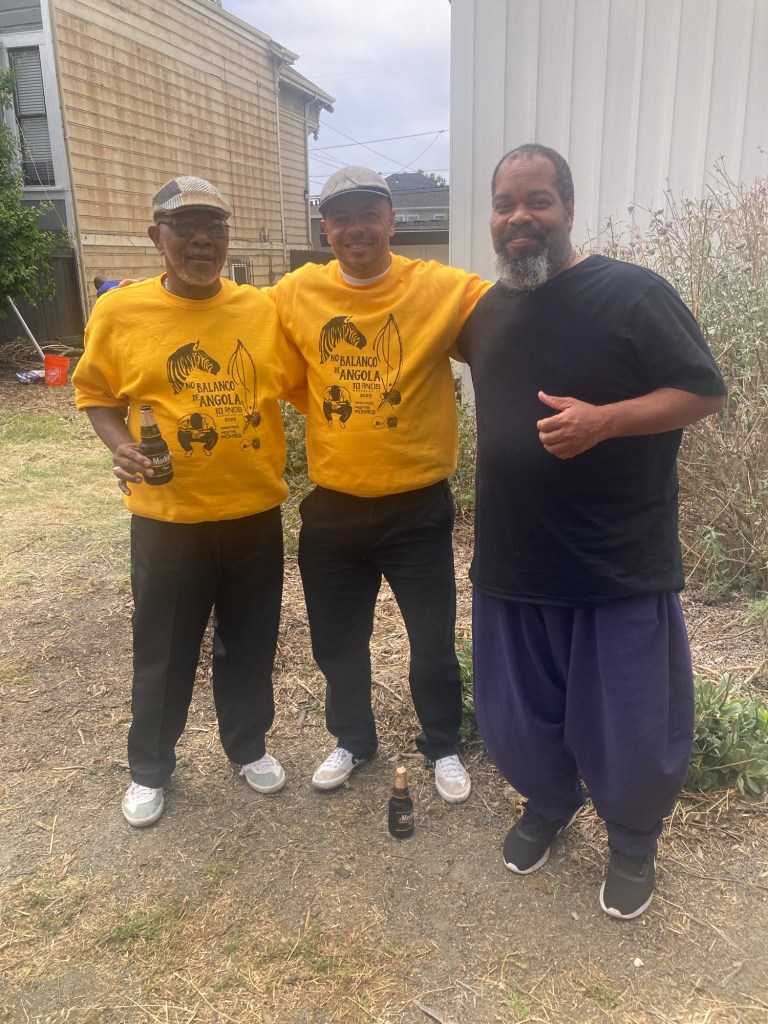
Oh, and one more thing. Thank you Sergio for the beautiful event shirt:

Well it was beautiful until it took a 8 hour bus ride in my luggage. And I promise I’ll be wearing it in STYLE one day… After I lose some weight.

SELF-DEFENSE SERIES (4/11/25)

Welcome to the Self-Defense series, which empowers you through essential physical, mental, spiritual, and legal skills for personal safety. The program emphasizes readiness, resilience, and confidence, covering practical techniques that are designed to be effective in real-life situations, as well as situational awareness that sharpens your ability to identify potential threats before they escalate. Psychological components are integrated to foster a strong mindset, enabling you to confront fear and anxiety with courage and clarity. It also incorporates spiritual practices, such as mindfulness and meditation, for inner strength and balance, helping you cultivate a peaceful yet alert state of mind. Furthermore, the series discusses legal frameworks that promote informed actions and community responsibility, ensuring that you are not only prepared to protect yourself but also to act within the bounds of the law. By the end of this comprehensive program, you will find that this series not only promotes personal growth and empowerment for facing challenges in various aspects of life but also builds a sense of community and support among participants, encouraging a collective commitment to safety and well-being.

In today’s installment, we present to you this episode of Fight Science.

In this episode of FIGHT SCIENCE, titled “Why Fake Tough Guys Always Get Humbled,” we delve into the intricate dynamics of masculinity and perception. Some men believe they possess a certain dangerous edge—confidently swaggering through life, exhibiting bravado until the harsh light of reality proves otherwise. They act tough, talk big, and flex in front of their friends, often driven by a deep-seated need for validation and recognition. Yet when a real fight occurs, when the stakes are high and the adrenaline is pumping, they tend to fold under pressure, revealing their true insecurities.

In this eye-opening video, we break down the psychology of fake tough guys, exploring why they consistently overestimate their capabilities and the role of social pressure in compelling men to present a version of toughness that frequently mismatches their actual abilities. By examining real-life examples and expert commentary, we aim to shed light on the consequences of this facade, questioning the very essence of what it means to be truly tough in today’s society. Furthermore, we delve into the cultural narratives that glorify aggression and bravado, often overshadowing the importance of vulnerability and emotional intelligence.

This exploration not only highlights the pitfalls of projecting an artificial image of toughness but also encourages viewers to redefine strength on their own terms, fostering a healthier dialogue around masculinity.