Those of you who frequently read this blog may be wondering why I don’t write too much about Afro-Brazilians or the intricate dynamics of race in Brazil. It’s a question I’ve been meaning to address, but the fact is, race in Brazil is a confusing, loaded topic.
This complexity is the “elephant in the room” for any outsider—and often for Brazilians themselves—trying to understand the nation’s social fabric. Unlike the often more rigid, binary racial classifications found in countries like the United States, Brazil operates on a nuanced spectrum, a legacy of centuries of miscegenation and a cultural mythology of “racial democracy.” This mythology suggests that racial harmony prevails and that class, not color, is the primary divider. While appealing on the surface, this concept obscures deep, systemic inequalities.
Why is it so complicated? Well…
The confusion often begins at the level of the individual and the family. Consider the striking example of a single family, where perception is fluid and self-identification is not uniform. As seen in the work of journalists like Stephanie Nolen, you might find a sister, like Jessica, who says she is preta (Black), while her cousin, perhaps with only slightly lighter skin or different hair texture, insists she is branca (white) or, more commonly, parda (brown or mixed).
This fluidity stems from a historical continuum of classification. The Brazilian Institute of Geography and Statistics (IBGE) officially recognizes five categories: branca (white), preta (black), parda (brown/mixed), amarela (yellow/Asian), and indígena (Indigenous). However, social practice is far more granular, encompassing hundreds of informal terms, such as morena (dark-haired, often a polite euphemism for mixed race), sarará (light-skinned with red or blond curls), and cabra (a very dark mixed person). These terms are context-dependent and often influenced by factors like education, wealth, and social standing. A person considered “Black” in a primarily white neighborhood might be categorized as “brown” in a predominantly Black community. This complex, subjective system makes any discussion of race immediately fraught with personal and political implications.
So… What is it like to be Black in Brazil?
As a Black man born and raised in the United States, I’m looking from the outside in when it comes to the daily reality of race in Brazil. My understanding is necessarily filtered through videos, articles, and the powerful personal accounts that people choose to share with me.
What becomes abundantly clear is that despite the official narrative of a colorblind society, an underlying, pervasive racism shapes the lives of Afro-Brazilians. The acclaimed actor Douglas Silva, in his poignant Ted Talk, asks a question that resonates with the experience of millions:
Does my skin color automatically make me a bandit?
Unfortunately, in Brazil, the data and lived experience often suggest this is the tragic reality. Afro-Brazilians, who constitute more than half of the nation’s population when combining pretos and pardos, face disproportionate social exclusion and violence, with systemic barriers that persist across various facets of society. They are grossly underrepresented in higher education, in positions of corporate or political power, and on the covers of major magazines that typically highlight the successes of others. Conversely, they are overrepresented in the country’s favelas, prisons, and among the victims of police brutality, highlighting a stark and painful contrast to the prevailing narrative of progress and equality.
The color of one’s skin often becomes a proxy for presumed criminality, particularly for Black men, who find themselves at the intersection of stigma and bias in their daily lives. The pervasive prejudice means that a young Black man walking in a middle-class neighborhood is far more likely to be stopped and searched by police than a white peer, leading to an ongoing cycle of mistrust and fear. This systemic suspicion and prejudice is the harsh counterpoint to the romanticized ideal of mestiçagem (racial mixing), which tends to overshadow the reality of ongoing inequalities. It confirms that the “elephant in the room” is not just about confusion over labels, but about the enduring, painful legacy of slavery and a society that has yet to truly reckon with racial inequality, requiring urgent and meaningful discussions and actions to address these centuries-old injustices.
The apprehension and hostility often displayed by certain segments of “nerd culture” toward Black people is a complex phenomenon, rooted not merely in isolated prejudice but in systemic anxieties over ownership, narrative control, and accountability. This fear is multifaceted and manifests across various subcultures, from gaming and comics to fantasy and anime.
1. The Perceived Threat to Ownership and Exclusivity
For decades, many core pillars of nerd culture—including tabletop role-playing games, superhero comic books, and high fantasy epics—were overwhelmingly marketed to and consumed by white, often male, audiences. This created a powerful, albeit artificial, sense of cultural ownership and exclusivity. The established “old guard” came to view themselves as the authentic inheritors and exclusive guardians of the lore, traditions, and community spaces.
When Black people enter these spaces in visible numbers—as successful creators, influential interpreters, central protagonists, or vocal fans—it is often defensively interpreted by these gatekeepers as an intrusion or a challenge to their established hierarchy and comfortable racial default. This defensive posture is fueled by the fear of “losing” what they believe is their exclusive property. The reaction is frequently aggressive, manifesting in toxic gatekeeping and harassment campaigns intended to maintain the perception of a white-dominated community. The perceived “dilution” of the cultural space is a deep-seated anxiety, revealing a desire to keep the community insular and homogeneous.
2. A Historical Pattern of Whitewashing and Exclusion
The root of this discomfort lies in a history where Black characters were systematically marginalized. They were often:
Nonexistent: Absent from narratives entirely.
Tokenized: Relegated to single, minor, or often stereotypical roles.
Erased: Actively minimized or had their importance stripped through practices like whitewashing.
As major media franchises begin to intentionally embrace substantive diversity—introducing well-developed Black protagonists, adapting established white characters as Black, or centering Black experiences—a vocal minority of the fandom reacts with vitriol. This resistance is frequently masked by arguments about “fidelity to the source material” or “historical accuracy,” even when discussing fictional worlds containing magic, dragons, or faster-than-light travel. This reveals a fundamental discomfort with seeing Black people centered in imaginative narratives that were long presumed to be white by default. The deeper fear is the loss of a perpetually white imaginative landscape, where the comfort of racial homogeneity in fantasy and escapism is unchallenged.
3. Resistance to Change and Aversion to Systemic Confrontation
Nerd culture is not immune to the broader societal issues of racism, misogyny, and prejudice. Yet, it has often cultivated a resistant environment where critical analysis of these issues is aggressively dismissed. Any attempt to point out tokenism, harmful tropes, or a lack of representation is typically framed as “bringing politics” into a space supposedly reserved purely for “escapism.”
Black fans, critics, and creators who challenge the status quo are frequently labeled as aggressors, “social justice warriors,” or “ruiners of fun.” The defensive reaction is a profound fear of introspection and accountability. By maintaining a facade of neutrality or political apathy, the community effectively preserves the status quo of white dominance, prioritizing the comfort of the dominant group over the inclusion and safety of marginalized fans. The resistance is not just to change in the media itself, but to the necessary self-examination and dismantling of systemic bias within the community structure.
4. A Pervasive, Year-Round Reality
From the highly visible spectacle of Cosplay competitions and the widespread global media of Anime and Video Games to the often-anonymous realms of online forums and V-Tubers, overt and insidious forms of racism are a deeply entrenched and exhausting reality. This pervasive negativity extends beyond isolated incidents; it is manifested through systemic underrepresentation, coded prejudice in narrative arcs, and actively hostile environments for Black creators and fans.
This cultural dynamic is particularly disappointing given that these subcultures often self-identify as havens for the marginalized and outsiders. Yet, they frequently reproduce the very same oppressive societal structures they claim to reject. In a period of heightened global reckoning with race and identity, the commitment to substantive change within these fan-driven worlds remains tepid. Conversations about inclusion are often met with aggressive, immediate backlash—a clear, powerful indicator of the deeply guarded, often racially-charged status quo.
The “scared” is, ultimately, a multilayered anxiety: the fear of losing exclusive ownership, the fear of a historically white narrative center shifting, and the fear of being forced to acknowledge and dismantle systemic racism within a community beloved for its perceived sanctuary. This defensive, toxic posture manifests as a chilling effect on the participation and creative expression of Black fans and creators, revealing far more about the fragility and insecurity of the established, dominant elements of nerd culture than it does about the Black people who simply seek to exist within the worlds they love.
The issues of Black representation, Black excellence, and Black criticism are not seasonal; they are fundamental, continuous, and demand sustained, year-round attention and action. The struggle is not for a temporary acknowledgment but for permanent, equitable space.
The Quilombos represent one of the most remarkable and enduring examples of self-liberation and societal reconstruction in the history of the Americas. Born from the brutal reality of the transatlantic slave trade, these communities were not merely temporary hideouts but fully functioning, complex societies established by enslaved and marginalized people, primarily of African descent, who had escaped the Portuguese colonial plantations. Their existence was a direct and powerful act of resistance against the institution of slavery and the entire colonial system.
Origins and Formation
The term “quilombo” is derived from the Kimbundu word kilombo, which originally referred to a youth war-camp or settlement in Angola. In Brazil, it became the umbrella term for any settlement founded by escaped slaves (escravos fugidos), though Indigenous peoples and marginalized Europeans were also sometimes included.
Quilombos began to appear shortly after the large-scale introduction of African slavery into Brazil in the 16th century. Life on the sugar, tobacco, and gold plantations was extraordinarily harsh, characterized by relentless labor, violence, and systematic dehumanization.
These settlements were strategically located in remote, difficult-to-access areas: deep in the dense Mata Atlântica (Atlantic Forest), in mountainous terrain, or in the vast, arid interior (sertão). This geographical isolation was crucial for defense and survival, making it difficult for colonial capitães do mato (bush captains or slave hunters) to find and destroy them.
Societal Structure and Culture
Quilombos were pioneering examples of a new social order, blending various African cultural traditions with Indigenous knowledge and the necessities of their unique situation.
Political Structure: Many Quilombos developed complex political systems, often led by a king or queen (Zumbi being the most famous leader) or a council of elders. Decisions were made communally, reflecting a strong emphasis on egalitarianism, though military organization and clear lines of command were also vital for defense.
Economic Life: Self-sufficiency was the cornerstone of the Quilombo economy. They practiced subsistence agriculture, growing essential crops like manioc, beans, corn, and sweet potatoes, often employing techniques learned from local Indigenous groups. They also engaged in hunting, fishing, and foraging. Furthermore, many Quilombos engaged in commerce with neighboring colonial towns, trading surplus goods, and sometimes even raiding plantations for tools, weapons, and to free more enslaved people.
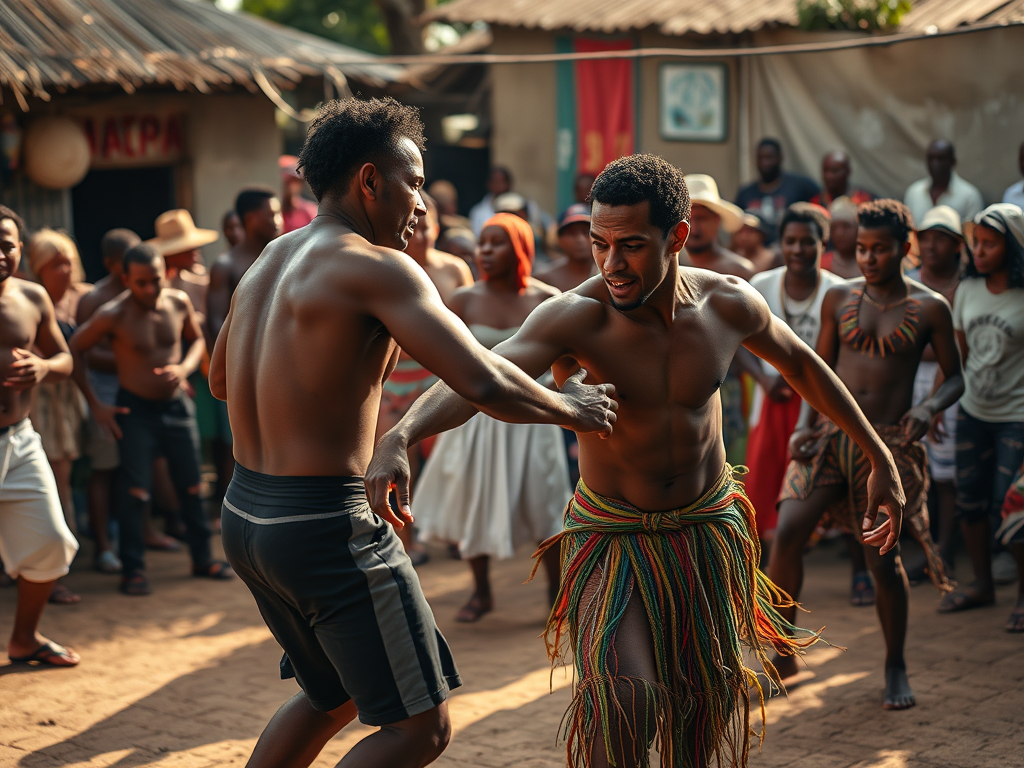
Culture and Spirituality: Quilombos were vital reservoirs of African culture, preserving languages, religions, music, and art that were systematically suppressed on the plantations. Candomblé, Capoeira (a dance-fight form), and a rich oral tradition flourished within these free spaces, serving as a source of identity, community cohesion, and spiritual resilience.
Palmares: The Most Famous Quilombo
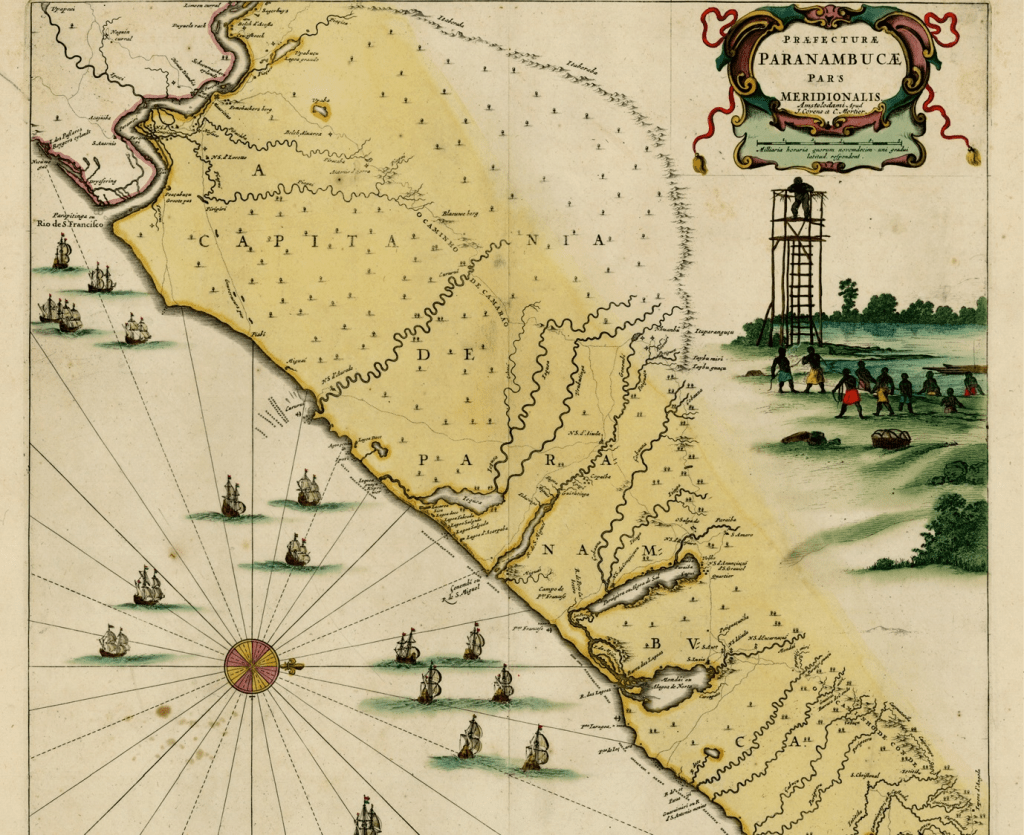
The historical phenomenon of the Quilombo—a community established by formerly enslaved and marginalized people, often in remote, difficult-to-reach areas—is best exemplified by the magnificent and enduring Quilombo dos Palmares. This self-governing republic, often referred to simply as Palmares, was not a temporary refuge but a genuine new society that thrived for nearly a century, roughly from 1594 to 1694. It was situated strategically in the rugged, forested terrain of the Serra da Barriga region, which lies in the interior of what is now the Brazilian state of Alagoas.
Click HERE to watch a movie about Palmares, And click HERE to check out some Capoeira videos, and some Afro-Brazilian cinema.
At its zenith, Palmares was far more than a single village. It functioned as a sophisticated confederation of autonomous settlements, known as mocambos (a term derived from the Bantu language, signifying a hideout or settlement). This network of communities boasted an impressive population that, according to various estimates, ranged from 10,000 to as many as 30,000 residents. This population base was comprised primarily of escaped slaves (known as quilombolas), but also included Indigenous peoples and even poor white settlers who sought refuge and freedom within its borders. Its size and organization rendered Palmares a power comparable to—and in some cases, even larger than—the colonial towns established by the Portuguese along the coast.
Palmares was a genuine proto-state forged by people who had been stripped of their freedom. It developed a complex political and social structure, led by a succession of formidable figures. The early leadership included Ganga Zumba, an imposing king or chief who oversaw the confederation’s diplomatic and military affairs. Following his reign, his nephew, Zumbi (meaning ‘immortal’ or ‘ghost’), rose to prominence. Zumbi rejected attempts at a negotiated peace with the Portuguese, insisting on absolute freedom for all Palmarinos and for any enslaved person who reached the Quilombo. Under his charismatic and uncompromising leadership, Palmares became the definitive symbol of Black autonomy and resistance in the Americas.
The very existence of Palmares was a direct challenge to the economic and social foundation of the Portuguese colony—the institution of slavery. Its continued survival was an intolerable affront to colonial authority. Consequently, Palmares faced repeated, brutal military assaults over its history. Its final, tragic end came in 1694, when the Portuguese Crown—tired of the constant threat Palmares posed—funded a massive military expedition. This force was led by the notorious bandeirante Domingos Jorge Velho, a ruthless frontiersman and professional slave hunter.
Though Palmares itself was ultimately conquered, the profound spirit of resistance that it embodied did not immediately extinguish. Following the final, overwhelming assault by Portuguese forces, Zumbi, the last and most iconic leader of the quilombo, managed to evade capture. For nearly a year, he continued a desperate and arduous guerrilla war, utilizing the familiar, dense terrain of the Serra da Barriga to strike against the colonial power. This final, heroic struggle demonstrated an unwavering commitment to the ideals of freedom Palmares represented.
However, the immense resources of the Portuguese crown were not to be denied. Zumbi was eventually captured and, in a brutal act of public terror intended to utterly crush the morale of the enslaved population, he was executed in 1695. His head was severed and displayed in the town of Recife. This gruesome end, far from diminishing his impact, cemented his place not merely as a historical figure, but as a legendary and enduring icon. Zumbi has become the ultimate symbol of Black resistance, the struggle for freedom, and the fight against oppression in Brazil—a figure whose name echoes across centuries as a call to defiance.
Crucially, the government forces, despite their victory over the main settlement, were never truly able to claim a complete and total destruction of the Palmares movement. The deeply ingrained culture of resistance and the decentralized nature of the quilombo meant that the fight simply morphed and persisted. Other courageous warriors took Zumbi’s place, continuing the difficult struggle. A notable example is Camuanga, who carried on the resistance until his death in 1709. The ongoing presence of former Palmares residents and their descendants, coupled with the constant influx of new fugitives, ensured that the region remained a hotbed of anti-colonial activity.
In fact, the last recorded instance of organized resistance in the area that was once Palmares did not occur until 1797—over a century after Zumbi’s execution—underscoring the extraordinary longevity and deep-rooted legacy of this revolutionary settlement. The resilience displayed by the communities in and around Palmares serves as a powerful testament to their unwavering spirit and determination to seek freedom in the face of oppression. Palmares, therefore, was not a failure but a spark that continued to ignite resistance for generations, inspiring countless individuals to rise up against the injustices they faced, fostering a continuous struggle for liberation that echoed through the ages and laid the groundwork for future movements against tyranny and inequality.
Legacy and Modern Significance
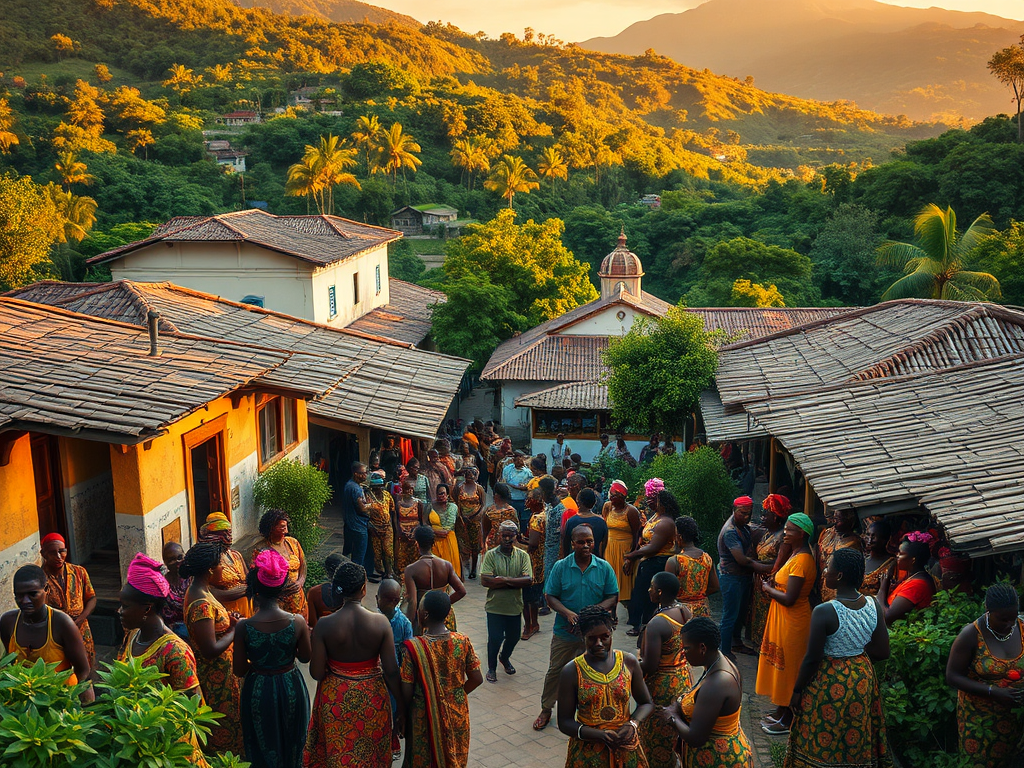
Although thousands of Quilombos were eventually destroyed by colonial forces, their spirit and legacy survived. Today, the descendants of these communities, known as Quilombolas, live in officially recognized QuilomboCommunities (Comunidades Quilombolas) across Brazil.
The struggle of the modern Quilombola movement is centered on land rights, cultural preservation, and recognition of their unique historical and social contributions. Article 68 of the 1988 Brazilian Constitution grants these communities the right to the definitive ownership of the lands they historically occupied, transforming the Quilombo from a historical phenomenon of resistance into a contemporary legal and political reality. The Quilombo, therefore, remains the essential blueprint for self-determination and the creation of a just society in the face of systemic adversity.
How do you create a quilombo village or group of villages?
The question of “How do you create a quilombo village or group of villages?” delves into a complex historical, social, and political process rooted in the resistance of enslaved and marginalized people in Brazil, primarily during the colonial and imperial periods, but with enduring relevance today.
A quilombo was fundamentally a settlement, often hidden and fortified, founded by self-liberated (runaway) slaves (escravos fugidos), but also including indigenous peoples, poor whites, and other social outcasts seeking autonomy and freedom from the oppressive plantation system (latifúndio) and the broader colonial society.
The creation of a quilombo involved several critical, interlinked stages and factors:
I. The Initial Act of Resistance and Escape (The Genesis)
The Decision to Flee: The primary catalyst was the intolerable brutality, dehumanization, and exploitation of the slave regime. The decision to flee was a high-risk, often communal, act of radical self-determination.
Formation of Escape Groups: Escapes were organized either individually, in small family units, or, most effectively, in pre-planned, larger groups. These groups needed leaders, often those with practical knowledge (e.g., survival skills, navigation, or martial training).
Routes and Resources: Escapees utilized detailed local knowledge—often provided by indigenous allies, sympathetic individuals, or their own labor experience—to navigate dense forests (Mata Atlântica), swamps, and rugged terrain, avoiding capitães do mato (slave hunters). They carried minimal supplies, relying on foraging and survival skills.
II. Site Selection and Initial Settlement
Strategic Location: The chosen site was paramount for survival. It needed:
Isolation and Concealment: Deep in remote, inaccessible areas (mountaintops, dense jungles, hidden valleys, or river islands) to deter discovery and attack.
Defensibility: Natural barriers (cliffs, rivers, thick undergrowth) that could be augmented with man-made fortifications like palisades, traps, and strategically cleared lines of fire.
Resource Access: Proximity to potable water, fertile land for subsistence farming, and materials for construction.
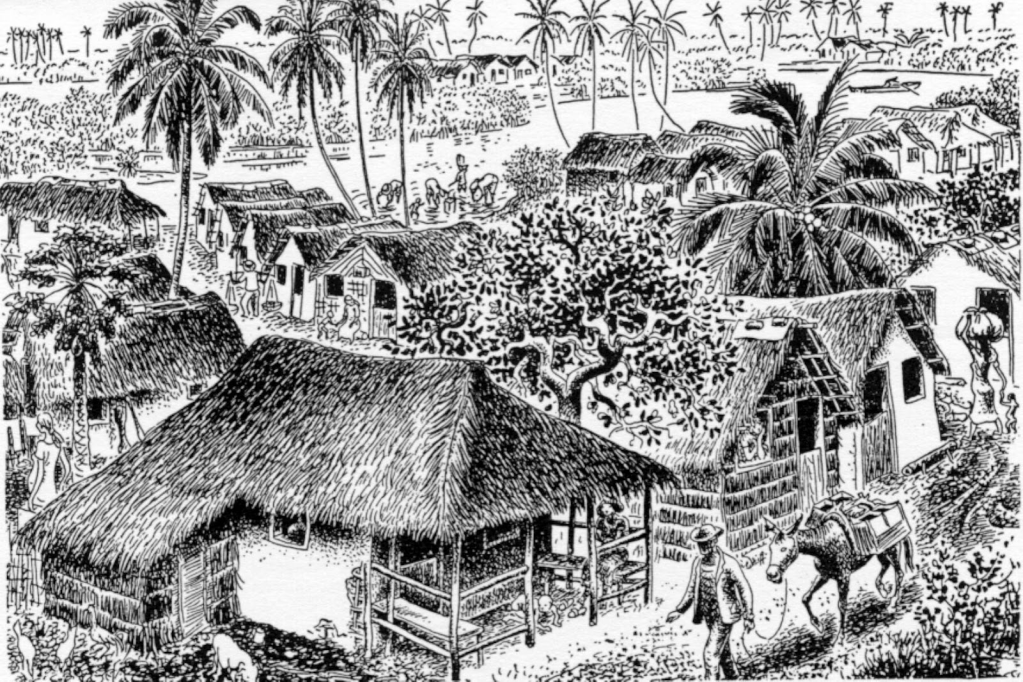
Construction of the Mocambo (Huts): The initial settlement often consisted of simple huts (mocambos) built quickly from local materials. Over time, these settlements would become more structured, sometimes developing a central meeting area, larger community structures, and specialized areas for crafting and storage.
III. Establishing Social and Economic Autonomy
Subsistence Agriculture: Immediate focus was on securing a food supply. Quilombolas cleared land using slash-and-burn techniques (roça) to plant staple crops such as manioc (cassava), corn, beans, and sweet potatoes. This farming was often diversified and hidden among the natural vegetation to make aerial or distant observation difficult.
Internal Governance:Quilombos developed their own internal systems of governance and social order, often blending African political traditions, indigenous practices, and responses to the new environment. Leadership could be hereditary, military, or based on religious or moral authority, with figures like the legendary Zumbi of Palmares.
Defense and Security: A standing defense force was critical. Quilombolas employed guerilla warfare tactics, utilizing their knowledge of the terrain, bows and arrows, spears, and eventually, stolen or bartered firearms. They established extensive watch systems and maintained high vigilance against incursions.
IV. Expansion and Maintenance (The Quilombo Network)
Inter-Quilombo Relations: To increase security and resilience, individual quilombos often formed alliances, creating networks or “groups of villages.” These networks shared intelligence, provided mutual aid, facilitated trade, and coordinated defense against major expeditions launched by colonial forces. The Republic of Palmares (Quilombo dos Palmares) stands as the most famous example of such a large, organized polity.
Maintaining Population: New members arrived continuously through ongoing escapes from plantations. The quilombos also grew through births within the community and, in some cases, through the capture or voluntary inclusion of indigenous people or other marginalized groups.
External Relations and Trade: While aiming for self-sufficiency, quilombos often needed goods (metal tools, salt, ammunition) that they couldn’t produce. They engaged in clandestine trade with poor settlers, small farmers, or even corrupt officials, exchanging agricultural surplus, crafts, or items stolen from plantations. Raids on plantations were also conducted to liberate others, acquire tools, and disrupt the slave economy.
V. Endurance and Legacy (Modern Quilombos)
The historical model of quilombo creation has evolved into the modern context. Today, Comunidades Quilombolas are recognized as ethnic and racial groups with their own specific historical trajectory, territorial relations, and presumption of Black ancestry related to resistance to historical oppression.
The modern “creation” of a quilombo focuses less on physical escape and more on territorial recognition and cultural preservation:
Self-Recognition: A community must self-identify as a quilombo based on its history and relationship to the land.
Legal Process: In Brazil, communities must undergo a complex legal and anthropological process—certified by the Palmares Cultural Foundation (FCP)—to gain official recognition and, crucially, to secure communal land titles (titulação), protecting them from eviction and guaranteeing their collective rights as mandated by the 1988 Brazilian Constitution.
Thus, creating a quilombo historically involved a radical, military, and social transformation from enslaved status to autonomous community; in the contemporary sense, it involves the political assertion of identity and the legal struggle for territory and cultural rights.
The Quilombo and the Roots of Capoeira
Was Capoeira created and/or practiced in the quilombos?
The relationship between the quilombos—the independent settlements formed by runaway enslaved people in Brazil—and the creation and practice of Capoeira is one of the most debated and essential topics in the study of Afro-Brazilian culture and martial arts. While definitive written records from the quilombos themselves are scarce, the overwhelming historical and cultural consensus supports the idea that the quilombos, particularly the largest and most famous, Palmares, were the fertile ground where Capoeira as a distinct art form was forged.
The Quilombo as a Cultural Crucible
The quilombos were not merely places of refuge; they were sovereign, self-governing societies created from scratch, designed to sustain life, resist capture, and preserve an African-rooted identity. This required the development of sophisticated means of self-defense.
Necessity of Self-Defense: Every resident of a quilombo was a potential soldier. The settlements were under constant threat of attack by the capitães-do-mato (bush captains) and organized military expeditions. A fighting system that was both highly effective and capable of being practiced secretly was not a luxury but a fundamental requirement for survival.
Cultural Synthesis: The populations of the quilombos were drawn from various African ethnic groups (Kongo, Angolan, Yoruba, etc.) and often included indigenous peoples and impoverished Europeans. The fighting forms, dances, music, and religious practices of these diverse groups were brought together and synthesized into new, distinctly Brazilian forms. Capoeira is believed to be the ultimate expression of this synthesis—blending African circle dances and fighting techniques with Brazilian necessity.
The Element of Deception: One of the most powerful arguments for Capoeira’s quilombo origin is its characteristic use of deception. The fighting movements are often masked within the movements of a dance or a ritualistic game (jogo). This technique of dissimulation was vital: practicing an overt martial art would have immediately exposed the quilombo’s inhabitants to greater danger and confirmed their military threat to the Portuguese. By disguising fighting as brincadeira (play) or dance, the practitioners could train in the open without giving away their true capabilities.
Historical Evidence and Scholarly Debate
While direct documentary proof (a diary entry reading, “Today, we invented Capoeira”) is absent, several lines of evidence point to the quilombo thesis:
Oral Tradition: The oral history passed down through generations of Capoeira masters (Mestres) consistently traces the art’s origins to the communities of resistance.
The Mandinga Connection: Early descriptions of the fighting style often refer to it as “Mandinga,” “Jogo de Mandinga,” or “brincadeira de Angola”—all terms that strongly connect the art to Central West African traditions prevalent among those taken to Brazil, particularly those who formed the core of Palmares.
Location and Early Practice: The earliest documented evidence of Capoeira being practiced openly appears in the major urban centers, such as Rio de Janeiro and Salvador, in the 18th and 19th centuries, often associated with the communities of libertos (freedmen) and the urban poor, many of whom were descendants of those who had passed through or been influenced by the quilombos. They brought the fighting tradition with them as they migrated or were resettled.
The evidence overwhelmingly supports the conclusion that Capoeira was indeed forged and developed within the quilombos. These independent, self-governing communities—established by formerly enslaved people in remote, often inhospitable areas of colonial Brazil—were not merely settlements; they were crucible environments perfectly suited for the gestation of a sophisticated and clandestine martial art.
The existence of quilombos provided a unique confluence of factors necessary for Capoeira’s emergence:
1. Intense External Pressure and the Need for Secrecy
The paramount factor was the relentless, existential threat posed by colonial authorities and the capitães-do-mato (bush captains) tasked with their destruction. Survival depended on the ability to repel armed incursions. This intense external pressure demanded an effective, highly adaptable fighting system. However, openly practicing a martial art would have been suicidal, immediately drawing the full wrath of the Portuguese crown. This necessity for concealment drove the innovation of integrating combat techniques into seemingly innocuous cultural forms. The fluid, dance-like movements, the music, and the songs could have served as a brilliant camouflage, allowing practitioners to hone deadly skills in plain sight. The roda (circle) itself became a laboratory of resistance disguised as a festival.
2. A Diverse and Concentrated Cultural Foundation
The quilombos drew people from a multitude of African ethnic groups, each bringing their own distinct cultural, religious, and combative traditions. From the wrestling styles of Angola (such as Engolo) and the ritual dances of various Central and West African cultures, the quilombo synthesized a rich tapestry of movement and knowledge. This diverse cultural foundation was essential. Rather than simply preserving one tradition, the quilombo environment fostered a dynamic exchange and refinement process, transforming disparate African fighting games and dances into the uniquely deceptive and sophisticated martial art we recognize today. The integration of music, particularly the berimbau, was crucial, acting as both an auditory guide and a code for signaling danger or the intensity of the fight, further masking its martial purpose.
3. The Quilombo as a Laboratory of Resistance
The isolation of the quilombos granted a critical measure of autonomy and the necessary time and space for this cultural synthesis and evolution. They were, in essence, independent “laboratories of resistance.” Within their borders, practitioners could experiment with, develop, and perfect the movements, strikes, sweeps, and feints that define Capoeira, passing the knowledge down in a concentrated environment free from direct colonial observation. This extended period of development, driven by a clear need for self-defense and community cohesion, solidified Capoeira’s dual nature: an elusive, powerful, embodied testament to human resilience and the unrelenting fight for freedom, inextricably linked to the quilombo’s legacy.
In conclusion, the path to establishing and sustaining a successful Quilombo—a free territory and new society born out of resistance—is fraught with peril and demands an unyielding commitment to both internal cohesion and external vigilance. The very act of creating a new social order when surrounded by those who view your existence as a threat requires a complete paradigm shift, moving from a mindset of individual survival to one of collective, revolutionary self-determination.
The essential facts borne out by historical precedent and the foundational principles of this guide can be summarized thus:
Unity is the Ultimate Defense: A Quilombo’s primary strength is the absolute solidarity of its members. Every individual must internalize the understanding that a threat to one is a threat to the whole. Internal dissension, rivalry, or a failure to adhere to the core tenets of the new society—equitable distribution of resources, mutual aid, and democratic self-governance—will prove more fatal than any external attack. Trust must be earned, maintained, and constantly reinforced through transparent decision-making and shared sacrifice.
Resource Independence is Non-Negotiable: A society dependent on its enemies for food, water, or material goods is a society living on borrowed time. The immediate and sustained focus must be on achieving complete self-sufficiency. This includes the development of resilient, diversified agriculture; secure and managed water sources; and localized production of essential tools, medicines, and defensive materials. Dependence is a vulnerability that will inevitably be exploited.
The Environment is a Strategic Ally: The founders of a Quilombo must intimately understand and utilize the surrounding terrain for both camouflage and defense. The land is not merely a place to live, but a living partner in resistance. This involves mastering natural defenses, establishing complex and deceptive travel routes, and using the landscape to monitor and thwart enemy movements.
Constant Vigilance and Intelligence Gathering: Because everyone outside the boundary is a potential enemy, the community cannot afford complacency. A robust, layered, and disciplined security system—including a rapid-response defensive force and an intelligence network dedicated to identifying infiltrators, anticipating attacks, and tracking external political and military developments—is indispensable. The enemy will probe for weaknesses, and the Quilombo must be prepared to respond immediately and decisively to maintain the integrity of its borders and its internal order.
A New Culture of Resilience: More than just a fortress, a Quilombo is a cultural experiment. Its survival depends on cultivating a new social fabric that actively replaces the corrosive values of the old world (hierarchy, exploitation, selfishness) with a regenerative ethos of community, equality, and shared purpose. This requires constant educational efforts, the establishment of rituals that reinforce communal identity, and a commitment to justice that resolves conflicts internally without resorting to the oppressive methods of the outside world.
In essence, creating a new society from the ground up, under continuous pressure, is the ultimate act of defiant creation. It requires not just the courage to fight, but the wisdom to build, and the relentless discipline to maintain the essential balance between freedom and security. The Quilombo is the living proof that a better world is possible, provided its members never lose sight of the fact that their collective survival is a daily, revolutionary undertaking.
On a somber Sunday, February 21st, 1965, the world lost a powerful and transformative voice in the struggle for civil rights and Black self-determination: Malcolm X, born El-Hajj Malik El-Shabazz. His life was tragically cut short when he was assassinated while preparing to address the Organization of Afro-American Unity (OAAU) at the Audubon Ballroom in the Washington Heights neighborhood of Manhattan, New York City.
The events surrounding his death are steeped in controversy and tragedy. As Malcolm X, his pregnant wife Betty Shabazz, and his four daughters took their seats, three gunmen rushed the stage, fatally shooting him multiple times. He was pronounced dead shortly after arriving at Columbia Presbyterian Hospital.
The immediate aftermath led to the conviction of three men—Mujahid Abdul Halim (formerly Talmadge Hayer), Norman 3X Butler, and Thomas 15X Johnson—all members of the Nation of Islam (NOI), the organization Malcolm had explosively split from less than a year prior. However, doubts about the full involvement and identity of the true assassins, particularly Butler and Johnson, have persisted for decades, leading to their eventual exoneration in 2021 after a thorough reinvestigation.
His death at the age of 39 abruptly ended a remarkable personal and ideological evolution. Malcolm Little’s journey began in poverty and crime, leading to a prison sentence where he discovered the teachings of the Nation of Islam. As Malcolm X, he became the fiery, articulate, and uncompromising national spokesman for the NOI, advocating for Black separatism and criticizing the non-violent approach of the mainstream civil rights movement as ineffective.
Following his departure from the NOI in March 1964, his perspective broadened dramatically. His subsequent Hajj (pilgrimage) to Mecca and travels across Africa and the Middle East profoundly influenced his worldview, leading him to renounce the NOI’s rigid Black nationalist dogma and its racial essentialism. He adopted the name El-Hajj Malik El-Shabazz and founded two new organizations: the Muslim Mosque, Inc. (MMI) for religious outreach and the Organization of Afro-American Unity (OAAU) for political action. The OAAU aimed to connect the African-American struggle for human rights with the liberation movements across Africa, positioning the issue not merely as a domestic civil rights problem but as a global human rights crisis to be addressed by the United Nations.
This final, globally-minded phase of his life saw him emerge as an independent human rights activist, willing to work with leaders across the political spectrum, including those he had previously condemned. This evolution made him an even more dangerous and unpredictable figure to his former NOI colleagues, to the government surveillance agencies that monitored him, and to those who benefited from the existing racial hierarchy.
The day of his assassination remains a painful marker in American history. It serves as a powerful reminder of the high cost of radical activism and the deep, often violent, divisions within the movement for Black liberation. Malcolm X’s enduring legacy is one of self-education, ideological transformation, and uncompromising truth-telling. His ideas continue to shape discussions on race, identity, self-defense, and justice across the globe, ensuring that the voice silenced on that cold Sunday in 1965 still resonates powerfully today.
Godfrey DROPS BOMBS On His Nigerian Co Host About Black American History: A Response to Persistent Misconceptions and Ignorance
Once again, this conversation is necessitated for those of you out there who perpetuate and actually believe the damaging, utterly false, and historically illiterate stereotypes that black people are inherently lazy, lack initiative, or have no discernible culture beyond shallow, modern trends.
The recent exchange between Godfrey and his Nigerian co-host was a critical, unfiltered moment that shone a harsh light on a pervasive issue: the misunderstanding and often outright dismissal of the unique, complex, and profound history of Black Americans, not just by people of other races, but often, jarringly, by individuals from the African diaspora themselves.
Godfrey’s passionate “bombs” were directed at correcting the record, specifically challenging the notion that the struggles and achievements of Black Americans can be glossed over or equated simplistically with the experiences of recent African immigrants or those still on the continent. He meticulously laid out the foundational trauma of chattel slavery, the systematic dismantling of family structures, the enforced illiteracy, and the centuries of post-slavery oppression—Jim Crow, segregation, systemic redlining, and disenfranchisement—that fundamentally shaped the Black American experience.
To suggest that a community subjected to such profound, government-sanctioned oppression has “no culture” or is “lazy” is not only deeply insulting but ignores the monumental feats of resilience and creativity born out of that struggle. Black American culture—which birthed Rock and Roll, Jazz, Blues, Gospel, Hip-Hop, profoundly influenced global cuisine, shaped American English, and drove the most significant civil rights movements in the nation’s history—is one of the most dominant and influential cultural forces in the world.
This wasn’t just a simple disagreement; it was a necessary confrontation designed to educate and remind listeners that the legacy of Black America is not one of failure, but one of triumph over insurmountable odds, creating a civilization of unique richness and contribution under the most hostile conditions imaginable.
Once again, February arrives, marking Black History Month in the United States—a time dedicated to celebrating the profound history, rich culture, and invaluable contributions of Black people across America. It is a period of national recognition where people of all racial backgrounds and communities come together to reflect on the past, acknowledge the struggles, and honor the enduring legacy that has shaped the nation.
This annual observance serves as a vital reminder to delve deeper into the stories, achievements, and continuing journey of Black Americans. It is a moment to amplify voices that have historically been marginalized and to appreciate the indelible mark Black culture has left on every facet of American life, from science and arts to politics and social justice.
Here at Jogo de Corpo Fechado, our commitment to the celebration of Black history, culture, and excellence transcends a single month, extending far beyond the traditional confines of February. This post serves as a firm, year-round reminder of our unwavering dedication to acknowledging, honoring, and promoting the profound and dynamic heritage of the Black diaspora. We believe that true recognition is not a seasonal observance but an ongoing process requiring continuous learning, active engagement, and persistent elevation.
This daily commitment is fundamentally intertwined with the very essence of Capoeira Angola, a living, breathing testament to Black resilience, ingenuity, and cultural synthesis. We see our practice as a direct continuation of a cultural tradition forged in resistance and steeped in history. Therefore, every roda (capoeira circle), every toque (musical rhythm), and every lesson on the art’s historical roots is an act of honoring Black excellence. We are dedicated to exploring and illuminating the intricate social, political, and spiritual context from which Capoeira Angola emerged, ensuring its legacy as a powerful force for freedom and cultural preservation is never diminished.
We strive to create an environment where the achievements of Black ancestors, artists, leaders, and thinkers are not just mentioned but are central to our shared educational experience. By adopting this year-round perspective, we ensure that the narratives of struggle, triumph, and cultural richness become an integral part of our community’s identity. Our goal is to move beyond passive acknowledgment to active advocacy, supporting initiatives, artists, and scholars who champion Black culture, both within the global Capoeira community and the wider world. This is our promise: to celebrate Black history, culture, and excellence not just during one month, but profoundly and actively, every single day of the year.
Every Friday morning, PROFESSOR BLACK TRUTH hosts “The Friday Crime Report,” which examines systemic racism, economic inequality, and police brutality in the black community through expert interviews and personal stories. The show aims to raise awareness and foster dialogue that leads to meaningful change, presenting facts alongside relatable experiences. It emphasizes active community engagement and proposes actionable steps for grassroots advocacy, ultimately motivating the audience to unite against injustices and positively impact their communities.
In Today’s installment…
The appalling actions of David McPartlan, a man whose blatant racism led him to believe he held dominion over a public lake, have been brought to light, exposing a disturbing act of racial violence and harassment. This egregious incident began when McPartlan encountered a Black father and his young daughter enjoying a peaceful day of fishing at the lake, a public space meant for all citizens to enjoy.
Rather than simply minding his own business and respecting the rights of others, McPartlan aggressively confronted them. Driven by a sense of racial superiority and entitlement, he spewed a torrent of vicious racial slurs, immediately transforming a serene outing into a nightmare of verbal abuse. As the confrontation escalated, McPartlan moved beyond mere hateful speech and committed an act of physical assault, violently attacking the father and daughter by throwing rocks at them. This cowardly and unprovoked assault was a clear manifestation of his deep-seated prejudice and determination to intimidate and drive the Black family away from the public lake.
However, the initial confrontation, as horrifying and racially motivated as it was, was only the precursor to a more shocking and consequential development that speaks volumes about McPartlan’s audacity and the systemic issues that sometimes embolden such behavior. The full scope of what transpired next highlights the severe injustice of McPartlan’s actions and reveals the extent of his contempt for law, order, and the basic human rights of his victims. His unrepentant behavior following the assault and the subsequent legal or community response further cemented the outrage surrounding the incident, drawing attention to the urgent need for accountability in cases of racial violence.
Support the channel covering this story:
To help support the work of the creator reporting on this and similar injustices, consider contributing through the following platforms:
January 15th marks the revered birthday of the foundational figure in the struggle for Foundational Black Americans (FBA) empowerment, the iconic Rev. Dr. Martin Luther King Jr. On this profoundly significant day, we are compelled to redirect the national discourse and emphatically remind the public of the true, uncompromised tenets of his mission—specifically, his unwavering commitment to securing tangible economic and political resources for the Black community. This focus on “black tangibles and empowerment” is the core of his legacy that has been systemically obscured, deliberately replaced by a sanitized, easily digestible, and ultimately toothless narrative.
Dr. King’s final years were defined by a radical shift in focus from the fight for legal desegregation to a deep, systemic critique of American capitalism and white supremacy. He understood that the mere right to sit at a lunch counter or cast a ballot was meaningless without the corresponding economic power to purchase a home, secure a stable income, and build generational wealth. The “Dream” he spoke of evolved from a vision of integration into a demand for restitution and redistribution. His mission was not simply to integrate Black people into a flawed system, but to fundamentally reconstruct that system to ensure justice, equity, and material prosperity for the descendants of American chattel slavery.
We at jogo corpo fechado are committed to unveiling the actual words and arguments of Dr. King, providing the essential context and compelling quotations that have been intentionally marginalized or outright suppressed by what we define as the white-dominated mainstream media. These are the truths that illuminate his later, more radicalized focus on economic justice, reparations, and the need for structural change that would deliver concrete, material benefits to Black Americans, moving beyond the often-simplified narrative of mere racial integration. He called for a Poor People’s Campaign, demanding an Economic Bill of Rights for all disadvantaged Americans, with a clear focus on the specific plight and historical debt owed to Black Americans. His critique of the Vietnam War was inextricably linked to his condemnation of domestic economic neglect, arguing that the resources squandered overseas should be invested in rectifying the endemic poverty faced by the FBA community. This later, powerful, and challenging Dr. King—the one who spoke of a “guaranteed annual income” and the “radical restructuring of the whole of American society”—is the one whose legacy must be centered on his birthday, ensuring that the commemoration serves as a call to action for economic equity, not just a celebration of a historical figure stripped of his radical demands.
Shoutout to the professor for making and posting this video.
Support the Movement for Truth and Empowerment:
To continue this vital work of historical correction, disseminating authentic information, and advocating for the tangible empowerment of Foundational Black Americans, your financial support is invaluable.
Viola Ford Fletcher, affectionately known as “Mother Fletcher,” was a true icon and a powerful voice for justice, known globally as the oldest living survivor of the horrific Tulsa Race Massacre of 1921. Her life spanned over a century, a period during which she bore witness to immense change and persistent struggle for civil rights in America.
The devastating two-day massacre, which saw the destruction of the prosperous Black neighborhood of Greenwood—often called “Black Wall Street”—was a trauma etched into her memory from the time she was a young girl. For decades, the tragedy was largely absent from history books, and survivors like Mother Fletcher carried their pain in silence.
However, in the later years of her extraordinary life, she chose to break that silence, stepping into the national and international spotlight as an unwavering advocate for recognition and reparations. At the remarkable age of 107, she made international headlines when she testified before the U.S. Congress on May 19, 2021, just weeks before the massacre’s 100th anniversary.
Her testimony, delivered with clarity and profound emotional weight, was a stark reminder of the atrocity. “I have lived through the massacre every day,” she stated, recounting the terror of watching her community burn and her family flee for their lives. She stood as the human embodiment of the historical injustice, asserting, “We are asking for justice. We are asking you to help us.”
Mother Fletcher, alongside her younger brother Hughes Van Ellis and fellow survivor Lessie Benningfield Randle, became a leading plaintiff in a historic lawsuit seeking reparations from the city of Tulsa and other entities for the wealth, lives, and property lost during the attack.
Upon her passing, Viola Ford Fletcher transitioned to take her rightful place among the ancestors—a title of profound respect in African and African American culture. Her death is a call to action, reminding the world that the fight she so courageously waged for accountability, historical accuracy, and economic justice is far from over. Her legacy compels the current and future generations to take up the torch and continue the pursuit of the justice and healing she so desperately sought for her community.
We extend our sincere and deepest gratitude to the professor for generously sharing this exceptionally helpful and insightful video. The quality of the content is truly outstanding, and it serves as a testament to their profound expertise and dedication.
The professor’s unwavering commitment to the noble cause of education—specifically, the free and open dissemination of knowledge to a broad public audience—is truly admirable and sets a high standard for academic outreach.
For those who found this video valuable and wish to explore the full breadth of the professor’s important work, we strongly encourage you to visit their official YouTube channel. You can easily access it by clicking on the link provided HERE.
The channel is a rich repository of valuable information, featuring a diverse collection of videos that go into great depth on complex social issues and critical historical contexts. Engaging with this material is an excellent way to continue your learning journey and significantly deepen your comprehensive understanding of these essential topics.
This is for those of you who actually think we Black Americans don’t have a culture… You know who you are!
Now family, if you don’t want to read this long article, just watch the video below from the YouTube Channel Foundational Black American History. It basically says the same thing.
Click HERE if you want to watch a longer version of this video.
The video is an excellent visual resource that summarizes the key concepts discussed in this article, providing a more engaging and easily digestible format. Watching it can offer valuable insights and a deeper understanding of the historical context, and it allows you to absorb the information while multitasking or relaxing.
Black American culture, alternatively recognized as African American culture, is an extraordinarily rich, dynamic, and fundamental component of the broader American society, and an immense force in shaping global culture. It is a profound cultural tradition that emerged from the unique and often brutal experiences of African descendants in the United States, representing a powerful synthesis of ancestral African heritage—preserved and adapted under duress—and the transformative, often oppositional, American environment. This culture is deeply forged by the historical crucible of chattel slavery, the persistent, multi-generational reality of systemic oppression, and the enduring, monumental struggle for fundamental freedom, equality, and dignity. This historical context has fostered an unparalleled collective spirit characterized by resilience, unbreakable community bonds, deep pride, and a constantly evolving, distinctive identity that finds creative expression across every facet of human endeavor.
—–Core Elements and Enduring Contributions: Transformative Influence
The contributions of Black American culture are not merely additive; they are transformative, profoundly shaping the core character of the nation and influencing global trends across numerous domains.Music: The Global Soundtrack and Revolutionary Art Forms
African American culture has exerted a pervasive, revolutionary, and foundational influence on global musical forms. Genres born from the Black experience are the undisputed bedrock of much of modern popular music, driving innovation in melody, rhythm, harmony, and performance worldwide:
Blues: Originating in the Deep South post-emancipation, the Blues served as a vital emotional and narrative outlet, utilizing a distinct 12-bar structure and “call-and-response” patterns to express the existential hardships, hopes, and spiritual strength of the community. It is the direct ancestor of multiple subsequent genres, carrying a foundational emotional gravitas.
Jazz: A uniquely American art form that developed in the vibrant, multicultural setting of New Orleans at the turn of the 20th century. Jazz—with its complexity, polyrhythms, improvisation, and syncopated rhythms—swiftly became recognized as America’s classical music, demanding high artistry and influencing musicians and composers across all continents.
Gospel: Evolving from spirituals—the coded songs of enslaved people—Gospel music is the uplifting, powerful, and deeply emotional voice of the Black church. It provides both profound religious inspiration and a crucial, technical foundation for R&B, Soul, and eventually, Pop music, emphasizing vocal dexterity and powerful, communal harmony.
R&B (Rhythm and Blues), Rock and Roll, and Funk: These genres further expanded the landscape, bridging the gap between sacred and secular music. R&B and Rock and Roll pioneers synthesized the structures of Blues and the energy of Gospel, while Funk, rooted in deep, syncopated basslines and percussive horns, utilized infectious rhythms and raw, passionate delivery to create a distinct sound that influenced disco, pop, and dance music globally.
Hip-Hop and Rap: Emerging from the urban centers of the late 20th century, particularly the Bronx, New York, Hip-Hop culture is a potent, multifaceted global phenomenon. Encompassing MCing (rapping), DJing, breakdancing (B-Boying), and graffiti art, it serves as a powerful and unfiltered medium for storytelling, political commentary, social critique, linguistic innovation, and entrepreneurship, constantly redefining the global popular music landscape.
Oral Tradition and Language: The Spoken Legacy
The maintenance of a strong oral tradition was critically important for cultural and historical preservation during the era of slavery, when literacy was often forbidden by law. This tradition continues to thrive, shaping communication and artistic expression:
Storytelling and Proverbs: These were and remain vital tools for teaching history, preserving cultural memory, communicating ethical principles, and transmitting cultural values across generations, often through stylized and highly dramatic performance.
African American Vernacular English (AAVE): Far from being mere slang, AAVE is a complex, structured, and linguistically rich form of English with its own consistent grammar, syntax, vocabulary, and expressive nuances. It is a powerful cultural identifier and a source of continuous linguistic innovation that profoundly shapes not only literature but also mainstream American speech and global communication via music and media.
Spoken-Word Poetry and Rap: These modern forms are direct and powerful descendants of the traditional oral legacy, emphasizing rhythmic language, sophisticated wordplay, rhetorical flourish, and often containing piercing social and political commentary.
Family, Church, and Community: The Social and Political Foundation
In the face of systemic adversity and the systematic destruction of biological family units during slavery, the Black community built robust, resourceful institutions that served as vital centers of survival, support, and activism:
The Black Church: Historically and contemporarily, the church has been more than a spiritual sanctuary; it has been the single most central social, educational, economic, and political hub for the community. It provided essential leadership, organized the monumental Civil Rights Movement, and continues to foster a critical sense of collective purpose and hope.
Extended Family and Kinship Networks: Strong, often non-biological, extended family structures and “fictive kinship” (treating close friends as relatives) have been essential. This network ensures the care of children, the support of the vulnerable, and the preservation of values, creating a safety net where traditional institutional support was lacking.
Core Values: Central values emphasize deep respect for elders as carriers of history and wisdom, a high degree of community inter-dependency (often summarized by the concept of Ubuntu—”I am because we are”), and a commitment to “giving back” for the collective upliftment of the race.
Cuisine: Soul, Sustenance, and Cultural Ingenuity
The development of “Soul food” and distinct Southern Black cooking traditions is a profound testament to cultural creativity and ingenuity, transforming limited, often poor-quality resources into flavorful, communal, and spiritually resonant meals.
Origins: These food ways were developed by enslaved Africans, blending West African staples (like rice, okra, and black-eyed peas) and traditional cooking techniques (like deep frying and long stewing) with the ingredients available in the Americas, often using overlooked or discarded animal parts and vegetables.
Key Dishes: Signature dishes include staples like fried chicken, richly seasoned macaroni and cheese, collard and other seasoned greens, black-eyed peas, candied yams, and red beans and rice. Soul food is a vital, symbolic part of celebrations, weekly family gatherings, and the preservation of cultural memory.
Art and Literature: Resistance, Identity, and A Declaration of Self
African American art, literature, and performance arts have consistently served as both a detailed record of struggle and a powerful declaration of self-worth, identity, and beauty in a society that often denied all three.
The Harlem Renaissance (1920s-1930s): This period marked an explosive cultural flowering in which writers (like Langston Hughes and Zora Neale Hurston), artists, and musicians celebrated Black life, asserted their intellectual and creative identity, and powerfully challenged racist narratives both domestically and internationally.
Themes: Contemporary expressions continue to explore universal themes—love, loss, morality—through the highly nuanced lens of the Black experience: identity formation, the persistent struggle for justice, the celebration of Black joy, and the complex, intersectional nature of Black American life.
Fashion and Aesthetics: Style, Statement, and Global Influence
Black American fashion is a dynamic force that constantly innovates and influences global trends, often turning necessity into high style:
African Aesthetics: Traditional African elements, such as the use of vibrant, expressive colors, intricate textiles (like kente cloth), and symbolic motifs (like Adinkra), are frequently incorporated and adapted into contemporary styles.
Modern Trends: Modern styles, exemplified by hip-hop fashion (e.g., oversized clothing, high-top fades, visible luxury branding) and the global impact of athletic wear (like iconic Air Jordan sneakers), not only originated in but were fiercely driven and popularized by Black American culture.
Cultural Practices: The tradition of elaborate, highly decorative “Sunday hats” worn by women in Black churches is a notable sartorial expression of dignity, status, and artistry that connects back to African head-wrapping traditions.
Holidays and Commemorations: Honoring History and Collective Memory
Several observances are central to acknowledging and celebrating the history, endurance, and achievements of the culture, ensuring collective memory is maintained:
Black History Month (February): Founded as “Negro History Week” by historian Carter G. Woodson, this month is dedicated to honoring the monumental contributions, history, and achievements of African Americans throughout U.S. and global history.
Juneteenth (June 19): Now a federal holiday, Juneteenth commemorates the day in 1865 when enslaved people in Galveston, Texas, finally received the news of their freedom, marking the effective, though delayed, end of slavery in the United States. It is a celebration of freedom and persistence.
Kwanzaa (December 26 – January 1): A cultural, non-religious holiday established in 1966 that celebrates African heritage, unity, and culture, based on seven core principles known as the Nguzo Saba (The Seven Principles).
Resilience and Activism: The Ongoing Fight for Justice
A shared history of enduring extreme circumstances—from chattel slavery to Jim Crow segregation and modern systemic inequality—has cultivated an extraordinary, deep-seated sense of resilience, collective pride, and unwavering hope against all odds.
Social and Political Engagement: This foundation is the engine for ongoing social and political activism, most famously embodied by the Civil Rights Movement and continuing through modern movements for social justice. This commitment ensures the culture remains active, engaged, and focused on collective advancement, constantly demanding that America live up to its stated ideals.
—–The Profound Diversity and Non-Monolithic Nature of Black American Culture
Black American culture is an extraordinarily complex, dynamic, and fundamentally diverse phenomenon that defies a single, simple definition. It is emphatically non-monolithic, meaning it cannot be treated as a uniform entity but rather as a vast, rich tapestry woven from countless threads of heritage, environment, class, region, and religious experience.
This immense richness is manifested through a broad spectrum of variations, including:
Regional Specificity: Distinct cultural ecosystems have emerged across different American landscapes.
Gullah/Geechee Culture: The unique, isolated culture of the Sea Islands (South Carolina, Georgia, Florida), which has preserved a deep linguistic, artisanal (e.g., basket weaving), and spiritual connection to West Africa that is unparalleled in the continental U.S.
Louisiana Creole and Cajun Traditions: Vibrant, syncretic cultures that blend African, French, Spanish, and Native American influences, giving rise to unique music (Zydeco) and cuisine.
Urban Cultures: The diverse, fast-paced urban cultures of Northern and Midwestern cities like New York, Chicago, and Detroit, which fostered landmark movements in Jazz, Blues, Motown, and Hip-Hop, and developed distinct local dialects and style.
Socioeconomic and Class Stratifications: Experiences within the Black community are also shaped by economic status and social class. Different socioeconomic groups often have distinct cultural markers, traditions, educational priorities, and leisure activities, further fragmenting the idea of a singular “Black experience” while still sharing the overarching legacy of the struggle for racial equality.
Religious and Spiritual Practices: A wide array of spiritual traditions contribute to the culture, from the historically central Black Christian denominations (Baptist, AME, CME) that served as cultural and political anchors, to the significant presence of Islam (including the Nation of Islam and Sunni communities), African indigenous religions, and non-theistic belief systems.
Crucially, the dynamism of Black American culture is continuously enhanced by the growing population of Black immigrants from the Caribbean and the continent of Africa. This ongoing infusion acts as a profound catalyst for cultural evolution, deepening and broadening the overall Black experience in the United States. Each incoming group contributes invaluable, unique elements:
Caribbean Contributions: Immigrants from nations like Jamaica, Haiti, Trinidad, and Barbados introduce distinct English, French, and Spanish-based creole languages, influential musical forms (e.g., Reggae, Soca, Zouk), rich political traditions, and diverse culinary staples (e.g., jerk seasoning, roti, patties).
African Contributions: New arrivals from West, East, and South Africa bring a multitude of national languages (e.g., Yoruba, Amharic, Swahili), diverse cuisines, and specific cultural practices, enriching the community’s connection to the global African diaspora.
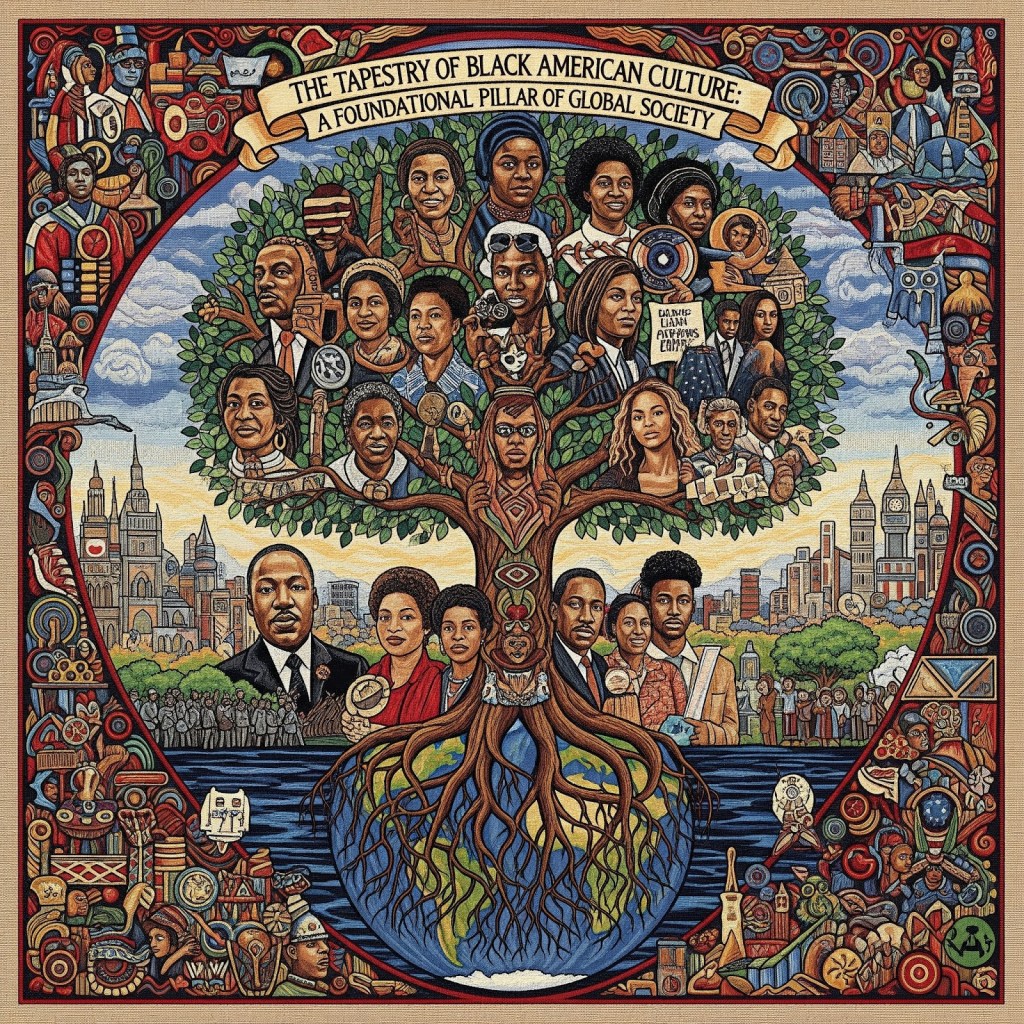
The rich tapestry of Black American culture is a dynamic and ever-evolving mosaic, continuously enriched by a multitude of influences. These influences, particularly the recent cultural contributions from the African diaspora—including immigrants from the Caribbean, various African nations, and elsewhere—interact with and often hybridize established Black American traditions. This makes the culture a living, breathing entity that is perpetually redefining itself.
This continuous process of synthesis and cross-pollination is visible across all facets of Black American life. In music, the sounds of Afrobeats and Caribbean dancehall blend seamlessly with the foundational genres of jazz, hip-hop, R&B, and gospel, creating new, globally infectious rhythms and styles. In cuisine, new spices, cooking techniques, and ingredients from West Africa and the islands are being incorporated into and expanding the scope of traditional Southern and soul food, leading to a culinary renaissance. Fashion, language, and artistic expression also reflect this vibrant fusion, with distinctive accents, sartorial choices, and narrative perspectives adding layers of complexity to the broader cultural narrative.
The vibrant tapestry of Black American culture is a dynamic and ever-evolving phenomenon, rooted in the profound history of the descendants of enslaved Africans, whose resilience, ingenuity, and cultural contributions form the indispensable bedrock of the American experience. This deep historical foundation, marked by both struggle and triumph, acts as the primary source of its unique character, artistic forms, and community structures.
Yet, this culture is not a static relic of the past; it is a constantly shifting, self-renewing mosaic, significantly enriched by the ongoing cultural dialogue with recent Black immigrants from the Caribbean, Africa, and other parts of the global Black diaspora. The interplay between these two powerful streams—the established Black American heritage and the expansive, diverse traditions brought by new arrivals—creates a cultural entity that is more complex, resilient, inventive, and globally connected than ever before. This convergence is a powerful demonstration that Black culture in the United States is fundamentally not monolithic. Instead, it is an integrated network of local, national, and transnational identities, each drawing strength from its deep historical roots while simultaneously expanding its scope through global connections.
This ongoing cultural dialogue manifests across every facet of American life. In music, for example, the foundational genres of jazz, blues, gospel, and hip-hop, created by the descendants of the enslaved, continually absorb and integrate new rhythms and sonic textures from Afrobeats, Dancehall, and Zouk, propelling Black music to the forefront of global innovation. In cuisine, new spices, cooking techniques, and ingredients from West Africa and the Caribbean blend with established soul food and Creole traditions, creating a fusion that is both nostalgic and avant-garde. In language and fashion, the infusion of global Black perspectives keeps the culture at the cutting edge of identity expression.
This continual cross-pollination ensures that Black American culture remains a potent engine of American creativity and global soft power. It is an enduring testament to the power of cultural synthesis, demonstrating how the retention of a painful, yet ultimately powerful, heritage can coexist and thrive alongside a radical, expansive embrace of the new. It is this unique ability to draw strength from both deep history and expansive global input that guarantees Black American culture will remain at the very forefront of global innovation, social discourse, and identity formation for generations to come.




 Jogo Corpo Fechado