Randall Fung: A Lifetime of Fitness and the Legacy of Northern Shaolin
Every year, as the calendar turns to his birthday, Randall Fung shares a deeply personal video chronicling his extraordinary, decades-long commitment to fitness and vitality as he embraces older age. These annual video updates have become an inspiration to many, serving as a testament to the power of consistent dedication and the wisdom of ancient martial arts disciplines.
This year’s feature is an expansive, two-part presentation offering an intimate look at the practices that have maintained his remarkable physical condition.
The first part meticulously details his current training routine. This segment goes beyond a simple list of exercises, delving into the philosophy behind his regimen—the balance of strength, endurance, and recuperative practices tailored to his age. Viewers are guided through a typical week of training, showcasing his modern, functional fitness exercises, which include dynamic stretching, calibrated weight training for muscle maintenance, and cardiovascular work designed to ensure optimal heart health and stamina. The emphasis is placed not just on the intensity, but on the intelligence and longevity built into every session.
The second, and arguably most crucial, portion of the video documents the profound, sustaining role that Master Kuo Lien Ying’s Northern Shaolin kung fu has played in his life. Fung credits this specific, demanding lineage of martial arts for his enduring agility, flexibility, and robust health. He explains that Northern Shaolin, renowned for its wide stances, high kicks, and complex, continuous movements, demands a stringent level of physical output and full-body coordination. It is this inherent stringency, the relentless pursuit of precision and power in every form, that has acted as a perpetual, high-bar benchmark for his physical capabilities. Fung illustrates how the core requirements of Northern Shaolin—the deep knee bends, the explosive jumping techniques, and the complex sequencing of blocks and strikes—have consistently challenged and preserved his joint health, balance, and overall physical competence throughout his life, far surpassing what conventional exercise alone might achieve. This segment serves as both a demonstration of his continued mastery and a powerful tribute to the enduring principles of traditional Chinese martial arts.
Every Friday morning, PROFESSOR BLACK TRUTH hosts “The Friday Crime Report,” a program addressing systemic racism, economic inequality, and police brutality in the black community. The show features expert interviews, analysis, and personal narratives to raise awareness and promote advocacy for change. It encourages dialogue and community engagement, empowering listeners to understand and address these societal issues while fostering solidarity for a more equitable society.
In Today’s installment…
The disturbing pattern of racially motivated incidents in Florida found another reprehensible example this week. The latest incident involved a man at a local club whose aggressive and hateful behavior escalated to the point where law enforcement intervention was required. Witnesses reported that the individual began repeatedly and loudly using the racial slur, the n-word, targeting multiple patrons within the establishment. This unprovoked barrage of hate speech created a hostile and volatile environment, leaving the police with no choice but to physically subdue the man to bring the situation under control and ensure public safety.
However, the full extent of this individual’s prejudice became alarmingly clear upon examining his online presence. His various social media accounts reveal a deeply entrenched pattern of racist and extremist viewpoints, extending far beyond a singular incident of intoxication or poor judgment. The content discovered online adds a much more sinister layer to the event, suggesting the club outburst was not an isolated occurrence but rather a public manifestation of his underlying white supremacist ideology. The details uncovered through his digital footprint emphasize the persistent and systemic nature of such bigotry, making the entire situation considerably worse than a simple public disturbance.
For a deeper and more comprehensive understanding of this complex issue, which touches upon crucial theoretical and practical aspects, we highly recommend consulting a particularly insightful and thorough critical analysis. This valuable resource was produced by a leading professor in the field who has created an extensive video dedicated to exploring the nuances of the subject matter.
The professor’s work provides a detailed examination, offering expert commentary and presenting various perspectives that are essential for a complete grasp of the topic. We credit the professor for this exceptional contribution to the scholarly discourse. To directly access their official YouTube channel and view this important, comprehensive video and other related works, please click HERE. This resource is invaluable for students, researchers, and anyone seeking a well-informed, critical perspective on the challenges and implications inherent in this area.
This series examines the modern malandro in urban society, emphasizing their charm, resourcefulness, and resilience amid economic disparity and social justice challenges. Through a comprehensive lens, it explores the multifaceted identities of these individuals, showcasing their ability to navigate complex social dynamics while maintaining a distinct sense of individuality. It highlights their influential role in discussions of equity and social change, inviting viewers to reconsider notions of success and morality while celebrating their contributions to urban culture. By weaving personal stories with broader societal themes, the series fosters a deeper understanding of the malandro’s impact, urging audiences to reflect on the common threads of humanity that connect us all, despite differing backgrounds and circumstances.
In Today’s installment, We follow Conor Woodman in a show named scam city, a series where he gets scammed, so we don’t have to.
Paris, the city of light and romance, will never appear quite the same after an eye-opening journey guided by writer and investigator Conor Woodman. He strips back the veneer of postcard perfection to reveal a hidden, gritty, and often fraudulent underworld thriving just beneath the elegant surface.
Woodman’s exploration delves deep into the unexpected realities of the French capital, introducing readers to the bizarre and sometimes unsettling characters and industries that operate in the shadows of its most famous landmarks.
The World of Pick-Up Artists: He navigates the controversial and complex community of “pick-up artists” (PUAs), examining their methods, their philosophies, and the societal implications of their efforts to master the art of seduction on the Parisian streets.
Artistic Forgery and Deception: The narrative exposes a fascinating network of artistic deception, specifically focusing on the mass production of “French paintings” by artists based in China. This practice raises intriguing questions about authenticity, global commerce, and the true value of art sold to unsuspecting tourists.
The Masters of the Street Scam: Woodman offers a chilling look at the pervasive and highly-skilled craft of the Parisian street criminal. He vividly recounts encounters with professional pick-pockets who operate with seamless efficiency in crowded areas like the Metro and popular tourist sites.
Sleight-of-Hand Scams and Con Artists: Perhaps most captivating are the intricate sleight-of-hand scams—the classic three-card monte or shell games—that are executed with breathtaking speed and precision by seasoned con artists. These operations are designed to fleece tourists through carefully orchestrated psychological manipulation and misdirection, turning a moment of curiosity into a costly lesson in urban vigilance.
Through Woodman’s lens, Paris transforms from a simple tourist destination into a multi-layered, intricate stage. It is a city where the polished veneer of high culture and iconic landmarks is peeled back to reveal a complex underworld of shadows and human enterprise. Culture, in this context, is not just found in the Louvre or along the Seine, but in the unspoken rules of the street. Crime is not sensationalized, but presented as a thread in the daily tapestry—a necessary evil or a byproduct of desperate existence. Commerce, too, is redefined; it moves beyond luxury boutiques to encompass the less-advertised economies that thrive in the city’s hidden corners.
Finally, cunning, in its most resourceful and sometimes ruthless form, becomes the essential currency for survival. Woodman’s perspective provides a compelling and essential guide, illuminating these less-advertised realities and equipping the reader to navigate Paris with a deeper, more informed, and ultimately more authentic understanding of its true, multifaceted character. The text acts as a vital counter-narrative to the standard travel brochure, offering insight into the machinery that truly makes the city operate.
The traditional code of martial arts, often rooted in historical and cultural imperatives, places an undeniable emphasis on the loyalty of the student to the teacher, or sensei, sifu, or master. This foundational pillar of the student-teacher relationship is essential for preserving the art’s integrity, ensuring safe and disciplined practice, and maintaining the lineage of knowledge. The student, by submitting to the teacher’s guidance, demonstrates a necessary humility and commitment required for genuine mastery.
However, the question of whether this loyalty is a two-way street—should a teacher have loyalty to his students?—is a profound ethical inquiry that moves beyond mere tradition into the realm of true mentorship and responsibility. A teacher’s loyalty to their students is not manifested as simple obedience, but rather as a solemn, active commitment to their well-being, growth, and moral development. This loyalty should encompass several critical dimensions:
Commitment to Truth and Quality of Instruction: The teacher owes the student loyalty by ensuring the instruction is authentic, thorough, and safe. This means teaching the techniques as they were inherited, not diluting the art for convenience, and prioritizing the student’s safety above all else, especially during sparring or high-intensity practice.
Investment in Personal Growth: True loyalty means seeing the student’s potential and actively working to help them achieve it, even if it means challenging them or delivering difficult truths. It is a commitment to fostering not just a skilled fighter, but a disciplined, ethical, and productive person. This requires a teacher to invest time, personal attention, and emotional energy beyond the scheduled class time.
Ethical Advocacy and Protection: A loyal teacher defends their students from injustice within the dojo/school and protects their reputation outside of it. This includes setting a strong moral example and ensuring the training environment remains respectful and free from exploitation. The teacher acts as a guardian of the student’s physical and psychological well-being.
Succession and Legacy Planning: In the long term, a teacher’s loyalty is demonstrated by their willingness to pass on the complete knowledge of the art, empowering the most dedicated students to eventually become teachers themselves. This selfless act of sharing power and knowledge ensures the art’s survival and is the ultimate expression of faith in the student.
A couple of recent, deeply resonant events have inspired me to write this post about the complex and profound concept of discipleship, particularly as it manifests within the structured, often ancient, world of martial arts training. It is a relationship dynamic that transcends mere instruction, becoming a crucible for character development, moral fortitude, and the transmission of a living, breathing tradition.
Specifically, I’ve been reflecting intensely on two distinct and highly contrasting situations that unfolded this past week, both involving two of my teachers. These situations brought the nature of the student-teacher relationship, and the personal sacrifices required on both sides, into sharp, unforgettable focus.
The first instance involved one of my teachers who found himself in an ethical quandary—a situation where the institutional framework, the organizational politics, or perhaps the compromised actions of those around him ran directly contrary to his core principles and the authentic teachings he upholds. For this master, the art is not a commodity or a social club; it is a sacred trust. To maintain his integrity and to protect the purity of the art he teaches, he made the incredibly difficult and painful decision to cut himself off entirely from us, his students, and from the wider organization that housed the training. This act, I believe, was not one of abandonment but one of profound responsibility—a necessary, surgical severance to exit a systemic situation he was fundamentally not in agreement with. In his mind, to continue participating would have meant endorsing a deviation from the truth of the tradition. His retreat served as a stark and powerful lesson on the importance of moral conviction, the absolute necessity of ethical congruence, and the immense personal cost of adherence to a higher standard, proving that true martial spirit is sometimes expressed through strategic withdrawal rather than aggressive engagement.
Conversely, the second situation involved my other teacher who undertook a journey of intense self-improvement and steadfast dedication to the lineage. He traveled back to the wellspring of our specific tradition, to the original source, to learn directly from HIS teacher, his own master. This pilgrimage was not motivated by ego or simple curiosity; it was a mission purely dedicated to deepening his knowledge, mastering more advanced, perhaps esoteric techniques, and absorbing essential, often forgotten, teachings that can only be transmitted in person. His intention was not self-serving; it was a palpable commitment to the longevity of the lineage and the purity of the transmission. He went, metaphorically, to fill his cup to its brim so that he could pass on these elevated and refined teachings to us, his students, when he returned here to the U.S.A. This teacher’s action highlighted the exquisite beauty of the never-ending cycle of learning and teaching—the selfless act of bridging the gap between the ancestral source and the students on the periphery, ensuring the river of knowledge continues to flow strong and untainted.
These two events—the noble retreat for integrity and the devoted journey for knowledge—form the perfect, complete illustration of the two indispensable poles of true discipleship: knowing when to stand apart for the truth, even if it means solitude, and knowing when to immerse yourself fully to bring the truth back to your community. They underscore the critical point that the path of a martial arts student is not just about physical technique, strength, or competitive achievement but is fundamentally about moral growth, unwavering loyalty, and the continuous, often arduous, search for authentic wisdom. The lessons learned outside the dojo’s walls ultimately define the character within them.
Therefore, while student loyalty, or shitei kankei, is undoubtedly a prerequisite for absorbing and internalizing the complex lessons of the art, teacher loyalty is the non-negotiable ethical prerequisite for true mentorship. Without the master’s reciprocal commitment—a profound, non-transactional dedication to the student’s holistic well-being, growth, and moral development—the entire relationship risks becoming purely transactional, self-serving, or even exploitative. The martial arts code, at its highest level, demands not just obedience, diligence, and respect from the student, but it mandates a profound, responsible, and ethical loyalty from the master to the student. It is this reciprocal bond, forged in mutual respect and commitment to truth, that defines the authenticity and power of the martial arts lineage.
A couple of recent events have deeply inspired me to write this post about the complex and profound concept of discipleship, particularly as it manifests within the structured world of martial arts training. Discipleship, in this context, goes beyond mere instruction; it embodies a journey of transformation, where students cultivate not only physical skills and techniques but also mental resilience and emotional growth. As practitioners engage with their instructors and peers, a rich tapestry of relationships is woven, characterized by mutual respect, shared challenges, and the pursuit of mastery. This dynamic environment fosters a deep sense of commitment, encouraging individuals to delve into philosophical discussions around discipline, ethics, and the core principles that underpin their martial practice. Through this lens, discipleship emerges as a vital avenue for personal development, allowing individuals to explore their own identities while forging a meaningful connection with the martial arts community.
Specifically, I’ve been reflecting intensely on two distinct and highly contrasting situations that unfolded this past week, both involving two of my teachers. These situations brought the nature of the student-teacher relationship, and the personal sacrifices required on both sides, into sharp focus.
One teacher found himself in an ethical quandary, a situation where the institutional framework or the actions of those around him ran contrary to his core principles and the authentic teachings he upholds. To maintain his integrity and to protect the purity of the art he teaches, he made the difficult and painful decision to cut himself off entirely from us, his students, and from the wider organization. I think he felt that this act was not one of abandonment but one of profound responsibility—a necessary severance to get out of a situation he was fundamentally not in agreement with. It served as a stark lesson on the importance of moral conviction and the personal cost of adherence to a higher standard.
Conversely, my other teacher undertook a journey of self-improvement and dedication. He traveled back the wellspring of our specific tradition, to learn directly from HIS teacher, his own master. This pilgrimage was purely dedicated to deepening his knowledge, mastering more advanced techniques, and absorbing essential, perhaps forgotten, teachings. His intention was not self-serving; it was a commitment to the lineage. He went to fill his cup so that he could pass on these elevated teachings to US, his students, when he returned here to the U.S.A. This teacher’s action highlighted the beauty of the never-ending cycle of learning and teaching—the selfless act of bridging the gap between the source and the students on the periphery.
These two events—the noble retreat for integrity and the devoted journey for knowledge—form the perfect illustration of the two poles of discipleship: knowing when to stand apart for the truth, and knowing when to immerse yourself fully to bring the truth back. They underscore that the path of a martial arts student is not just about physical technique but also about moral growth, unwavering loyalty, and the continuous search for authentic wisdom.
Although the idea doesn’t seem to be popular these days, the journey through the Martial Arts can be profoundly understood as an apprenticeship—a structured, long-term educational process centered on mentorship, practical skill acquisition, and the cultivation of disciplined character. Unlike typical modern fitness classes or quick-fix courses, traditional martial arts disciplines, whether they be Karate, Kung Fu, Judo, Taekwondo, or others, necessitate a deep, personal commitment akin to learning a classical trade. This perspective elevates the practice from a mere hobby or sport to a comprehensive way of life and a method of deep personal transformation.
The Martial Arts as a Classical Apprenticeship
Viewing the study of martial arts through the lens of an apprenticeship brings into focus the crucial roles of time, repetition, and the Sensei or Master. In a traditional apprenticeship, the novice commits to years of patient, hands-on learning under the direct supervision of an expert. Similarly, the martial arts require the student to submit to a long-term curriculum that cannot be rushed. Mastery is not achieved through a series of weekend workshops, but through thousands of hours of deliberate practice.
This structure emphasizes several key elements inherent in the apprenticeship model:
The Master-Student Relationship (Mentorship): The core of the apprenticeship is the deep, almost familial bond between the Master (Sensei, Sifu, Sabomnim) and the student. The Master’s role extends far beyond merely teaching techniques; they are the living embodiment of the art’s philosophy and a guide for the student’s personal conduct. This mentorship instills patience, humility, and respect—values that are often secondary in modern, commercialized settings.
Practical Skill Acquisition and Repetition (The Craft): Just as a blacksmith repeatedly works the forge, the martial artist must drill forms (kata), sparring sequences (kumite), and fundamental movements hundreds of times until they become instinctive, reflexive actions. The doing is the learning. This tangible, practical focus separates the training from purely academic pursuits, rooting the knowledge in the body.
The Cultivation of Disciplined Character (The Way of Life): An apprenticeship is as much about character development as it is about skill. The rigorous physical demands, the necessity of absolute focus, and the requirement to constantly confront one’s own limitations force the student to build a durable inner strength. Qualities such as perseverance (Osu), mental fortitude, integrity, and ethical conduct are implicitly woven into the fabric of the training.
By reclaiming this historical and philosophical understanding, the martial arts are recognized not just as a means of self-defense or physical fitness, but as a profound educational path—a Dō or Tao—that shapes the individual into a more capable, disciplined, and complete human being.
This profound apprenticeship is characterized by several indispensable elements:
1. The Master-Apprentice Relationship (Sensei/Sifu and Student): The Crucible of Transmission
The relationship between the experienced instructor and the student is the foundational core of traditional martial arts, serving as the essential conduit for the art’s transmission. This is an inherently direct, often intimate, dynamic, wherein the instructor—variously known as Sensei (Japanese), Sifu (Chinese), or Sabomnim (Korean)—acts as the primary master, guiding the apprentice student. This master-apprentice paradigm is the very heart of how these ancient traditions are passed down.
The master’s role transcends simple academic teaching; they are a living repository of the art’s accumulated wisdom and history. Knowledge is not transmitted primarily through lectures or static books, but through an immediate, visceral process: direct demonstration, physical correction that fine-tunes the student’s body mechanics, subtle non-verbal cues that communicate intent and timing, and countless hours of shared, rigorous, and often grueling practice. This constant, physical proximity allows for the transfer of deep, subtle knowledge that cannot be captured in written form.
This master-apprentice relationship within the martial arts tradition is a foundational element, one that far exceeds the transactional nature of a typical modern student-teacher dynamic. The posture required of the apprentice is one defined by deep, unconditional respect, which is a philosophical and ethical cornerstone of the practice. This reverence is known as Rei in Japanese or Li in Chinese, a formal and essential acknowledgment of the master’s wisdom, profound experience, and established position within the lineage.
This reverence is not passive; it is actively manifested through diligent observation and the unwavering, disciplined application of instruction. The process necessitates a complete, though temporary and focused, submission to the master’s guidance. This submission is crucial because the master, having traversed the full path of the art, sees the student’s errors and potential more clearly than the student can themselves. The apprentice must willingly cede control over their learning process to absorb the instruction without the interference of ego or prior assumptions.
Ultimately, this dynamic is not merely about the mastery of physical instruction; it is a sacred conduit for the transmission of the art’s entire, holistic essence. The master, or Sensei (Shi-fu), is entrusted with the sacred duty of passing down the direct lineage, a responsibility that ensures the purity, integrity, and authenticity of the system remain intact across generations.
This transmission encompasses several interlocking components:
Intricate Physical Techniques: The obvious element, including forms, strikes, blocks, throws, and joint locks, all requiring precise execution.
The Underlying Philosophy: More profoundly, the master imparts the ethical codes (Bushidō in Japanese, Wude in Chinese), the stringent mental discipline required for true mastery, and the very way of life that the art embodies.
Historical Context and Lineage: The instruction must encompass the art’s historical context, rooting the student firmly in the tradition’s past, giving their practice meaning beyond mere self-defense.
The Transmission of Spirit: Crucially, the master transmits the very spirit, or vital energy—Ki in Japanese, Chi in Chinese. This is the internal focus, the spiritual or energetic power that is the wellspring of all techniques and the defining characteristic of a truly potent practitioner’s presence. Without this internal transmission, the techniques remain hollow movements.
In this surrogate familial structure, the master takes on a multifaceted role: they are a technical guide, meticulously correcting form and substance; a harsh but necessary critic, demanding continuous improvement and self-honesty; and often a surrogate elder or parent. Their responsibility extends well beyond the dojo or training hall, focusing on shaping not just the student’s physical abilities and technical proficiency but, more critically, their ethical foundation, moral compass, and character. The ultimate goal is to cultivate a complete human being—one who is disciplined, humble, capable, and prepared to carry the tradition forward.
2. Repetitive, Foundational Practice: The Forging of Muscle Memory and Mind
The initial phase of martial arts training, often characterized as an apprenticeship, is a rigorous and protracted endeavor focused overwhelmingly on the mastery of fundamental mechanics. This core curriculum encompasses essential elements such as fundamental stances (kamae), defensive movements or blocks (uke), offensive strikes (tsuki or da), various kicking techniques, and the critical skill of falling safely (ukemi). This is a crucible for the aspiring student, a demanding period that tests the limits of their discipline. It is defined by the severe, yet absolutely indispensable, exercise in cultivating patience, achieving unwavering precision, and developing profound humility, as the apprentice is mandated to drill the same core movements not just dozens, but literally hundreds or even thousands of times.
This pervasive and sometimes tedious repetition is far from a mindless exercise; it is, in fact, a deeply deliberate and sophisticated process engineered to achieve specific physiological and cognitive goals. Its primary function is the forging of indelible muscle memory, a subconscious, automatic recall of movement patterns that bypasses conscious thought. Through this constant drilling, the mechanics of each technique are systematically internalized, transforming complex physical actions into innate motor programs. Crucially, this period also develops the deep, intrinsic, and structural strength—the connective tissue and core stability—required to execute techniques with flawless power and endurance, preventing breakdown under stress.
The ultimate objective of this intensive physical conditioning is to render the body’s physical response automatic and utterly spontaneous—a true reflex rather than a deliberate, multi-step thought process. This transformation is vital because it allows for the instantaneous and highly effective application of technique in dynamic, unpredictable, and high-stakes situations. Only once the foundational movements are truly “owned” by the body—meaning they can be executed perfectly without conscious deliberation—can the apprentice move beyond mere technique and begin the true exploration of the art. This higher level of training involves delving into the subtle, advanced principles of martial timing (ma-ai), judging and controlling distance, reading an opponent’s intention, and manipulating energy (kiai or chi), which represent the true philosophical and strategic depth of the martial discipline.
3. The Progression of Belts/Ranks (The ‘Journeyman’ Path): A Codified Roadmap
The structured progression of a student through the martial arts is concretized by the belt or ranking system, which, in Japanese disciplines, is famously known as the Kyu (student) and Dan (master) grades. This system is not merely a formality; it serves as a visible, codified roadmap for the entire journey of apprenticeship, charting the student’s development from absolute beginner to seasoned instructor. Each successive rank represents a distinct, achieved stage of competence, technical proficiency, and, perhaps most fundamentally, a deepening commitment to the art.
Advancement within this structure is never arbitrary. It demands the complete and demonstrable mastery of a specific, rigorous syllabus. This curriculum typically includes a complex array of practical techniques, the precise execution of fixed forms (kata in Japanese, t’ao lu in Chinese), and a thorough assimilation of theoretical and philosophical knowledge underpinning the physical movements. Only after the instructor deems the student has met these exacting standards is the student permitted to participate in the formal testing or examination for the next level.
The transition from the kyu grades (the apprentice or novice levels, often marked by colored belts) to the dan grades (the master or “journeyman” levels, traditionally marked by the black belt) signifies a fundamental and profound shift in the practitioner’s understanding. At the kyu level, the student’s primary focus is external: learning what a technique is, and drilling how to perform the sequence of movements with correct form. It is the phase of imitation and absorption, focusing on volume and repetition to build muscle memory and basic competency.
The dan level, however, marks a true conceptual and practical transformation. The practitioner moves decisively from merely performing techniques—a reliance on rote memory and physical drilling—to truly embodying and understanding the underlying principles. This includes recognizing the physics of the movement, the efficiency of energy and movement economy, and the deep strategic application of force and timing. The black belt is not the end of learning, but rather the recognized beginning of mastery, a commitment to a lifetime of refinement. The advanced dan ranks eventually identify those highest-ranking students who are deemed capable of preserving the art’s integrity, teaching its complex lessons, and passing on the tradition to the next generation. These individuals complete the cycle of apprenticeship and assume the ultimate responsibility of the master (sensei or shifu), ensuring the art’s continued survival and evolution.
4. Character and Ethical Development: The Holistic Training of the Self
The martial arts apprenticeship is crucially and fundamentally a holistic endeavor. Its scope extends far beyond mere physical conditioning and combative technique, focusing with equal, if not greater, intensity on the moral and ethical maturation of the student. This dimension is often encapsulated by concepts such as Dō (The Way) in Japanese and Korean systems, signifying the path of life and self-cultivation, or Li (Propriety/Ritual) in Chinese traditions, emphasizing correct conduct and social harmony.
The specific training environment—whether the Japanese Dojo (Place of the Way), the Chinese Kwoon (Training Hall), or the Korean Do Jang (Place of the Way)—functions as a unique, controlled laboratory for life itself. Within its walls, abstract virtues are rendered concrete and are drilled and tested alongside physical techniques. Lessons in humility, which must supplant ego; resilience, which demands persistence through physical pain and failure; perseverance, which solidifies commitment over years; self-control, which must master the body’s movements and the mind’s impulses; and respect, which is demonstrated through formal bows and careful observance of hierarchy and tradition, are not merely discussed. They are embodied through the rigorous demands of practice, the high-pressure environment of sparring (kumite or sanda), and the strict adherence to the formal etiquette and rituals of the training hall.
Furthermore, the master (Sensei, Sifu, or Sabomnim) serves as an explicit and essential moral and philosophical guide. Their role is to ensure that the formidable physical skills acquired are perpetually tempered by an unshakeable ethical code. They emphasize the philosophical tenets central to the art—such as the austere tenets of the Bushido code (Rectitude, Courage, Benevolence, Respect, Honesty, Honor, Loyalty) or the Five Tenets of Taekwondo (Courtesy, Integrity, Perseverance, Self-Control, Indomitable Spirit). This guidance reinforces the central, ancient idea that the formidable power learned is fundamentally meant for self-improvement, the cultivation of robust physical health, and the ethical, measured defense of self and others. It is emphatically and universally forbidden for aggression, boastfulness, or malice. The ultimate, overarching goal is not merely the creation of a capable fighter, but the creation of a refined and powerful human character, one capable of great discipline, profound wisdom, and ethical leadership in the broader world. This journey ensures that physical prowess remains subservient to moral integrity.
The philosophy of the Martial Arts, when approached through the lens of an apprenticeship, reveals a comprehensive system of personal development that extends far beyond mere physical combat training. This perspective fundamentally acknowledges the essential prerequisites for true mastery: the necessary time commitment, which demands patience and sustained effort over years, rather than seeking instantaneous results; the profound discipline, encompassing rigorous physical training, unwavering mental focus, and the consistent adherence to a demanding code of conduct both inside and outside the training hall; and the vital submission to expert guidance. This submission is not passive surrender, but a proactive trust in the knowledge and experience of the Master (Sensei or Sifu), recognizing that their wisdom shortens the path and safely guides the student through technical complexities and internal challenges.
The ultimate goal of this apprenticeship is the comprehensive personal transformation required to truly embody and master the art. This transformation is holistic, forging a deep connection between mind, body, and spirit. Through constant repetition and pressure, the practitioner confronts and overcomes personal limitations, fear, and ego. The physical techniques—the striking, blocking, throwing, and grappling—become merely the outward expression of a deeper, internal mastery.
The demanding process of martial arts training is, fundamentally, a crucible for character development. Consequently, the practitioner graduates from this apprenticeship not merely with a collection of formidable physical skills—such as the ability to execute effective defensive techniques or compete at a high level—but with a far more valuable asset: a deeply refined character. The relentless, often repetitive discipline ingrained through years of commitment in the dojo or training hall has transformative effects that extend far beyond physical competence.
This internal discipline directly translates into tangible virtues in daily life. It cultivates resilience in the face of adversity, enabling the individual to face professional setbacks or personal crises not with panic, but with a trained steadiness and an analytic mindset. It fosters unwavering integrity in professional and personal dealings, as the commitment to an ethical code of conduct is a core pillar of most martial arts philosophies. Furthermore, the reality check that comes with consistent training, understanding one’s own limits, and learning from opponents instills a profound humility in success. The accomplished martial artist knows that true mastery is a continuous journey, not a destination. This refined character is what truly prepares the individual to be ready to navigate the complexities of life with equanimity and power. The ‘power’ derived from martial training is often misunderstood; it is less about physical domination and more about self-control, mental clarity, and the quiet confidence to act decisively and ethically. The practitioner gains the ability to remain calm under pressure, to analyze a situation dispassionately, and to choose the most constructive and morally sound course of action. Thus, the martial arts apprenticeship transcends a mere physical education; it becomes a profound, lifelong study in the art of living, shaping a capable, ethical, and self-possessed human being.
Welcome to HIDDEN SPIRITUALITY – From Spirit Science, where we explore spiritual practices in movies and games, highlighting profound wisdom in narratives. We examine various cultures and their stories to illuminate lessons that resonate with our experiences. Our community fosters reflection on the interconnectedness of all beings through storytelling and symbolism, encouraging insights and discussions that bridge spirituality and entertainment. Together, we uncover universal truths and explore the spiritual dimensions of storytelling.
In today’s installment…
Uncovering the Hidden Depths of Star Wars: The Rise of Skywalker
Get ready for a truly special Star Wars Day treat! In this in-depth exploration, we go beyond the surface-level narrative of The Rise of Skywalker (Episode IX) to uncover the rich, hidden spiritual secrets and esoteric wisdom intricately woven into the very fabric of the story.
While the sequel trilogy, and arguably The Rise of Skywalker in particular, has faced criticism regarding its overall plot cohesion, it is undeniably a treasure trove of profound spiritual symbolism, ancient philosophical concepts, and perennial wisdom that echoes throughout the Star Wars saga. This video essay invites you to join us on an intellectual and spiritual journey, viewing the final installment of the Skywalker saga through an enlightened, esoteric lens.The Lore and Language of the Jedi
Our exploration begins with the very essence of the galaxy’s spiritual warriors: the Jedi. We will meticulously explore the etymological meaning behind the name “Jedi” itself and its fascinating connection to the historical and mythological figure of Djedi. This ancient Egyptian magician, known from the Westcar Papyrus, was famed for his wisdom and alleged power to reattach severed heads and control animals—a figure whose name carries connotations of profound magical knowledge and spiritual power, mirroring the mystique surrounding the Jedi Order.The Force: A Cosmic Tao
Next, we delve into the core metaphysical concept that defines the Star Wars universe: the Force. Far more than just a power source for telekinesis, we examine the Force as a reflection of the ancient Chinese philosophical concept of Tao (or Dao). Taoism emphasizes living in harmony with the Tao, the fundamental principle, the natural order of the universe, which is both the source and the pattern of everything that exists. The Force, described as “an energy field created by all living things,” that “surrounds us and penetrates us,” and “binds the galaxy together,” is a direct echo of the all-encompassing, dualistic, yet unifying nature of the Tao. We’ll discuss how the Light Side and the Dark Side can be seen as manifestations of the Yin and Yang—opposing yet interdependent forces necessary for cosmic balance.The Spiritual Crucible of Rey and Kylo Ren
The heart of The Rise of Skywalker rests on the intertwined, tumultuous spiritual journeys of its two central figures: Rey and Kylo Ren (Ben Solo). Their connection—a powerful Force Dyad—represents a modern mythological exploration of the Anima and Animus, or the integration of spiritual opposites. We will analyze how Rey’s path is one of self-discovery, confronting the shadows of her lineage (Palpatine), and achieving self-acceptance and spiritual mastery, ultimately embodying the Light. Conversely, Kylo Ren’s struggle is a classic heroic arc of redemption, a descent into the darkness that eventually leads to a return to the Light, sacrificing his self to save another and restore balance—a narrative deeply rooted in archetypal tales of the wounded healer and the prodigal son. Their climactic battle, both physical and psychic, is not merely a clash of laser swords, but a cosmic confrontation between the forces of creation and destruction, good and pure evil, culminating in the triumph of compassion and selflessness.
So, grab your imaginary lightsaber, prepare your mind for a deep dive, and join us for an enlightening, mythic exploration of The Rise of Skywalker that transcends its cinematic shortcomings. This is a journey into the spiritual and philosophical bedrock that makes Star Wars endure. May the Force—and true wisdom—be with you.
If you enjoyed this insightful and mind-expanding video, which was expertly produced by the creators at The Spirit Science YouTube Channel, we encourage you to explore more of their captivating work.
To delve further into the world of consciousness, spirituality, ancient wisdom, and metaphysical concepts, simply click HERE to visit The Spirit Science channel.
In addition to their main channel, you might also find the following related resources and content streams enjoyable:
Other Spirit Science Series: Look for specific playlists or documentary series that piqued your interest within their main library.
Spirit Science Social Media: Follow their official accounts on platforms like Instagram, Facebook, or Twitter for daily inspiration, announcements, and shorter-form content.
The Spirit Science Website/Community: Check out any associated websites or forums where the community discusses the topics presented in the videos, often providing a space for deeper conversation and resource sharing.
Similar Independent Creators: Explore other channels and creators focusing on complementary subjects such as quantum physics, meditation, energy healing, and alternative history, as recommended by The Spirit Science community.
By clicking the link, you are taking the next step on your journey of discovery and learning. We hope you find more content that resonates with your personal quest for knowledge and spiritual growth!
Welcome to MALICIA AS A GAME OF POWER, a blog series that explores human interactions through communication, conflict resolution, and negotiation. It provides strategies for leadership, personal branding, and reputation management while emphasizing social influence and emotional intelligence. Readers will discover techniques for navigating social dynamics, resolving conflicts, and building a strong personal brand. The blog offers insights and advice to help individuals effectively harness communication for success in life.
In this installment, we will explore the 45th law of power in the book, the 48 laws of power by Robert Greene. You can buy a copy by clicking HERE.
LAW 45 PREACH THE NEED FOR CHANGE BUT NEVER REFORM TOO MUCH AT ONCE
The delicate art of governance and leadership often hinges on successfully navigating the turbulent waters of change. While stagnation is a sure path to decline, a sudden, radical upheaval can be equally fatal. This law dictates a strategy of measured transformation: Preach the necessity of change, but execute the reforms gradually.
The initial step is to cultivate the desire for change. You must clearly articulate the current system’s failings and demonstrate how the proposed adjustments will alleviate suffering, increase prosperity, or restore order. This involves a sustained campaign of rhetorical persuasion, highlighting the gap between the present reality and a glorious future. The people must be made to feel that your vision is their salvation, that the old ways are no longer sustainable, and that a new direction is inevitable and desirable. This preaching of the need for change is essential for creating a supportive climate and neutralizing early opposition.
However, once the groundwork is laid, the execution of the reform must be tempered by caution. Human beings are creatures of habit; deep-seated customs, traditions, and ways of operating provide comfort and stability. To strip these away all at once is to provoke fear, resentment, and a powerful counter-reaction. A sweeping, revolutionary restructuring generates confusion and often paralyzes the very system it intends to improve. It gives your enemies a unified target and turns moderate supporters into apprehensive opponents.
Therefore, the wise leader implements change incrementally. Introduce reforms one by one, allowing people time to adapt to each new reality before presenting the next. The appearance of continuity must be maintained, even as the substance is quietly altered. Present the changes not as a radical departure, but as a “return” to original, purer principles, or as a natural “evolution” of the existing structure. In this way, you achieve your ultimate objective—a thorough transformation—without triggering the destructive backlash that massive, immediate reform inevitably invites. The slow, steady drip of change is often more corrosive and effective than a sudden flood. You retain the psychological advantage by being the acknowledged champion of a necessary movement, while simultaneously avoiding the practical pitfalls of reckless, overwhelming upheaval.
How to Use the 45th Law of Power Ethically
The 45th Law of Power, often interpreted as “Preach the need for change, but never reform too much at once,” comes from Robert Greene’s The 48 Laws of Power. In its original context, the law advises those in positions of authority to speak constantly of the need for reform and improvement—to signal dynamism and foresight—while simultaneously ensuring that actual change is slow, measured, and non-threatening to the established order or to the ruler’s own power base. The cynical application is to create the illusion of progress without undertaking the difficult or risky work of genuine transformation, thereby maintaining stability and control.
To use this law ethically requires a fundamental shift in motivation from self-preservation of power to genuine, constructive progress for the greater good. The focus is no longer on deception, but on strategic, humane, and sustainable implementation of necessary change.Ethical Principles for Applying the 45th Law
1. Genuine Intent vs. Illusory Reform:
Ethical Use: The “preaching” of change must stem from a sincere commitment to solving real problems, improving systems, and creating positive impact for stakeholders (employees, customers, citizens, etc.). The goal is to move toward a specific, beneficial vision, not merely to placate critics or distract from failure.
Unethical Contrast: Using the rhetoric of change solely to appear progressive, quell unrest, or buy time while secretly intending to maintain the status quo or consolidate personal power.
2. Phased, Sustainable Implementation (The “Never Reform Too Much At Once” Component):
Ethical Use: This part of the law becomes a crucial tool for responsible leadership. Ethical change is introduced in manageable, digestible phases to minimize disruption, reduce fear, and ensure long-term adoption. This strategic pacing:
Respects Stakeholders: It allows people time to understand, adapt, and acquire new skills, preventing burnout and resistance.
Ensures Stability: It avoids the chaos and organizational collapse that often result from radical, abrupt overhauls. Change is stabilized before the next phase is introduced.
Promotes Buy-In: Small, visible wins build momentum and credibility, encouraging greater support for subsequent, larger reforms.
3. Clear and Transparent Communication:
Ethical Use: Leaders must clearly articulate why the change is necessary, what the end goal is, and how the phased approach will work.
Honesty about Pace: Be transparent that the full reform will take time, explaining that the slow pace is a deliberate strategy for stability and thoroughness, rather than a lack of commitment.
Acknowledge Difficulty: Do not pretend the transition will be easy. Address the pain points and sacrifices involved in the initial small changes.
4. Focus on Systemic Improvement over Personal Gain:
Ethical Use: Every phase of reform must be clearly tied to a measurable, external benefit—whether it’s increased efficiency, better service, enhanced well-being, or improved organizational culture. The changes should not primarily benefit the leader’s standing, wealth, or influence.
Accountability: Establish metrics to evaluate the success of each small reform step. If a phase fails to deliver the promised benefit, the ethical leader must adjust the strategy, admitting the error rather than doubling down on a flawed path.
Practical Ethical Applications
Context
Ethical Application of Law 45
Corporate Leadership
Announce a long-term vision for a complete digital transformation (preach change), but roll out the new software or processes department by department, allowing for training and feedback loops (never reform too much at once).
Government/Public Policy
Champion a major shift toward sustainable infrastructure (preach change), but fund the projects incrementally, starting with pilot programs in a few key sectors to test the model and secure public trust before a national rollout (never reform too much at once).
Organizational Culture
Proclaim the need for a more inclusive and psychologically safe workplace (preach change), but begin with a mandatory, focused training session on active listening, followed months later by a new anonymous reporting system, and then later by revised promotion criteria (never reform too much at once).
By adopting this ethical framework, the 45th Law transforms from a manipulative tactic into a strategy for wise, compassionate, and effective transformational leadership. It ensures that the desire for progress is balanced by the need for human and organizational stability.
Through the eyes of an Angoleiro
The world is a constantly shifting roda (circle) of forces, and a master strategist, much like a seasoned Angoleiro (practitioner of Capoeira Angola), understands the delicate balance between momentum and stability. This law is not a call for stagnation, but a warning against the hubris of radical, immediate transformation. The goal is to survive the fight, not to burn out in a single, spectacular, yet ultimately destabilizing move.The Rationale: The Illusion of Immediate Utopia
The desire for change is a powerful lever. People—whether citizens, subordinates, or followers—will naturally gravitate toward a leader who clearly articulates the current system’s failings and paints a compelling picture of a better future. This is the “preach the need for change” component. It’s the initial ginga—the continuous, swaying base movement of Capoeira—that establishes rhythm and intention. It builds the psychological foundation for the shifts to come.
However, the human psyche is deeply resistant to too much sudden disruption. Radical, top-to-bottom reform, executed too quickly, breeds panic, resentment, and a desire to retreat to the familiar past, no matter how flawed that past was. It dismantles the existing framework of power, routine, and comfort before a new one can solidify. It’s the equivalent of replacing every fundamental move in Capoeira with something entirely new overnight; the student loses their grounding, their confidence, and ultimately, their fight.
The Angoleiro’s Lesson: The Slow and Low Game
In Capoeira Angola, the game is played “slow and low” (devagar e baixinho). The movements are deceptive, powerful, and executed with an economy of motion that makes them appear effortless. This is the precise mindset for Law 45:
Preach the Need (The Ladainha): Before a roda begins, the mestre (master) or lead singer often sings a ladainha (a historical narrative or lament). This song sets the tone, recounts the oppression or struggle, and subtly prepares the players for the serious nature of the game. Similarly, the leader must constantly sing the ladainha of the necessary change. This establishes the why and makes the inevitable shifts feel like a response to a crisis, not an arbitrary imposition.
The Step-by-Step Reform (The Ginga): The ginga is the key to Angola—it’s continuous motion that disguises attacks and defenses. An Angoleiro doesn’t stand still. They are always moving, but never with a sudden, full-force leap. Reforms must be introduced like this: small, strategic, and seemingly incremental movements. Each reform should address a specific, visible problem and, once implemented and accepted, serve as the new platform for the next small reform. This allows the system to absorb the shock.
The Danger of the Sweeping Kick (The Rabo de Arraia): A powerful, sweeping kick like the rabo de arraia can end a match, but if timed poorly, it leaves the attacker completely exposed. Radical reforms are the political equivalent of this high-risk move. They look impressive on paper, but they often leave the reformer vulnerable to coordinated counter-attacks from vested interests who have been given no time to adapt or compromise.
Implementation and Application
A leader who masters this law becomes a revolutionary in slow motion. They harvest the energy of popular discontent (the need for change) without activating the deeper, reactionary forces of chaos (too much reform at once).
Focus on Symbolism First: Change the names, the symbols, the rhetoric, and the personnel that represent the old order before you change the underlying economic or social structures. This gives people the feeling of a new era while the foundation remains solid.
Isolate the Target: Never attempt to reform all areas simultaneously. Pick one system—the least popular one—and dismantle it completely, using its collapse as proof of concept. Everyone else is too busy watching that small war to notice the preparation for the next.
The Appearance of Continuity: Always frame a reform as a necessary “correction” or “return to true principles,” not a complete break. By cloaking revolutionary change in the language of tradition, you soothe the fears of conservatives who might otherwise resist.
The Ultimate Goal: The Angoleiro seeks to control the rhythm and pace of the roda. A reformist must control the rhythm and pace of change. By preaching the need for fundamental transformation while only executing small, digestible steps, the leader ensures their power base remains intact, the opposition is constantly off-balance, and the long-term objective is secured without ever risking a self-destructive cataclysm. The revolution is completed not in a single, fiery stroke, but over a slow, deliberate campaign of strategic adjustments.
This series examines the modern malandro in urban society, emphasizing their charm, resourcefulness, and resilience amid economic disparity and social justice challenges. It delves deeply into the complexities of their lives, revealing how the malandro navigates a world often marked by systemic inequalities and barriers. Through compelling storytelling and rich character development, the series highlights their influential role in discussions of equity, showcasing how they become unlikely heroes and advocates for change in their communities. Furthermore, it invites viewers to reconsider notions of success and morality while celebrating their contributions to urban culture, illustrating that their ingenuity and survival instincts often lead to innovative solutions that benefit not only themselves but also those around them. By exploring their narratives, the series fosters a greater understanding of the human spirit’s capacity to thrive in adversity, ultimately challenging stereotypes and fostering empathy among audiences.
In Today’s installment, We follow Conor Woodman in a show named scam city, a series where he gets scammed, so we don’t have to.
In this episode,host Conor Woodman ventures into the vibrant heart of Catalonia, Spain: Barcelona. Celebrated globally as a premier tourist destination, drawing millions each year to its stunning architecture, sun-drenched beaches, and world-class cuisine, Barcelona holds a darker distinction. Woodman investigates the city’s notorious underworld, revealing it as the self-proclaimed pickpocket capital of the globe.
Beneath the veneer of a beautiful, cosmopolitan metropolis, Barcelona harbors a sophisticated network of highly skilled con men and thieves. These criminal elements are masters of deception and distraction, utilizing a variety of clever, often theatrical, schemes to target unsuspecting tourists. This pervasive criminal activity presents a stark contrast to the city’s celebrated culture and architecture.
Woodman delves into the operational tactics of these criminal gangs, providing an in-depth examination of their methods and organization. These are not opportunistic petty criminals, but often highly organized groups with clearly defined roles—from the “staller” who creates a diversion to the “cutter” who swiftly removes the wallet or bag, and the “passer” who immediately carries the stolen goods away. The sheer professionalism of their execution is what makes them so successful and difficult to apprehend.
He explores the geographical hotspots where these thieves operate with brazen efficiency. The crowded Las Ramblas, a world-famous pedestrian boulevard, serves as a primary hunting ground where the sheer density of foot traffic allows for easy anonymity and the perfect cover for ‘bump and steal’ techniques. The labyrinthine streets of the bustling Gothic Quarter offer countless narrow escape routes after a successful snatch. Moreover, the packed metro lines, especially during rush hour, are exploited for the “bottleneck” technique, where thieves use the press of people entering or exiting a train to mask their movements.
Woodman’s investigation uncovers the harsh reality that for many visitors, a dream vacation can quickly turn into a nightmare of loss and vulnerability. The emotional and financial toll of having passports, cash, and personal items stolen is profound. Visitors are left feeling violated and helpless at the hands of some of the most proficient and relentless pickpockets in the world, whose operational success is built on an intimate knowledge of crowd psychology and a calculated lack of remorse. The narrative serves as a vital warning, exposing the shadow economy of crime that flourishes amidst the city’s vibrant tourist economy.
I wanted to follow up on a PREVIOUS POST with some exciting news regarding one of our own. A close friend and fellow Capoeirista is preparing for an incredible journey: she will soon be traveling with a friend to Palestine to dedicate her time and energy to helping uplift lives in the region.
Out of respect for her privacy and since I’m not entirely sure if she is comfortable with me using her real name on this public blog, I’ve decided to give her a nickname for the purpose of this story. I’m going to call her RUBY.
I chose this name for a very specific reason: she truly IS a Ruby. She is a rare gem amongst us—a person whose light shines with an uncommon brilliance and dedication. She is choosing to use a significant part of her life journey to embark on this challenging and noble mission. Her motivation is simple yet profound: to help make the world a better, more equitable, and more compassionate place.
This selflessness places her among the countless humanitarians, activists, and aid workers who have come before her, dedicating themselves to service in difficult environments. We send her off with our deepest respect and admiration, knowing that she is contributing to a legacy of hope and assistance. And, god willing, her example will inspire many more after her to follow in the footsteps of service and global citizenship. We will be following her journey closely and sharing updates as she is able to provide them. Please keep Ruby in your thoughts as she prepares for this meaningful work.
Dear Ruby,
I’m writing to you today, as you embark on this journey to Israel and Palestine, with a heart full of mixed emotions that I know are shared by everyone who cares about you. I can truly speak for all of us when I say that a deep and pervasive sense of worry accompanies your departure, primarily because of the well-documented volatility and ongoing conflict in that region. We are acutely aware of the historical and current tension that makes that part of the world an exceptionally dangerous area.
Indeed, it’s a place steeped in so much history and prophecy, even near the Valley of Megiddo, which features so prominently in ancient texts as the predicted site of Armageddon. The awareness of the continuous cycle of conflict there weighs heavily on all of our minds. This isn’t just a concern for an abstract conflict; it’s a deep fear for your personal safety, knowing that even areas considered “safe” can quickly become unpredictable in a region with such deeply rooted geopolitical instability. We follow the news closely, and every report serves as a fresh reminder of the complexity and risk you are willingly stepping into.
However, mixed with this apprehension is an enormous sense of pride and admiration for your courage. Your decision to go, despite the risks, speaks volumes about your commitment to understanding the world and your dedication to the principles you hold dear—principles, I know, that drive you to seek out truth and connection in even the most challenging environments.
We know you are not going lightly or without preparation. The Angoleira in you—the warrior, the seeker, the one who moves with grace and intention through the world—gives us some comfort. Yet, please, let that same spirit guide you to be vigilant, to be cautious, and to prioritize your well-being above all else. Remember that your personal safety is paramount. Keep us updated, check in often, and know that our thoughts are constantly with you as you navigate this powerful, volatile, and profoundly significant part of the world. We wish you an experience that is as safe as it is meaningful.
However, amidst this concern, there is also an immense and undeniable pride that swells within me—a feeling that completely eclipses any passing apprehension. I am genuinely, profoundly happy and immensely supportive to see you embark on this next chapter of your journey, not just because it represents a major life step, but because I know, intimately and without a shadow of a doubt, the kind of person you are.
I have witnessed, firsthand, the strength of the spirit you carry—a resilience that has overcome every obstacle placed in your path and a fierce determination that never allows you to settle for less than your best. It is this unwavering conviction that guides your steps, ensuring that you approach every challenge with integrity, empathy, and a clear sense of purpose.
Because of all this, I have absolute, unshakable faith that you possess everything needed to not only navigate the challenging and complex environment you are heading into but also to thrive within it. More than just surviving, I believe you will contribute profoundly, making a significant, positive, and lasting impact on everyone you meet and everything you touch. You have a unique ability to see the good, foster collaboration, and tackle essential work with a dedication that is truly inspiring, and I know you will achieve so many essential good things while you are there. This journey is a testament to your character, and I am already looking forward to hearing about the incredible successes you will undoubtedly achieve..
This deep confidence comes from knowing the authentic you, Ruby—from knowing you as a Capoeirista, an Angoleira, and a warrior. These are not merely casual titles to be worn lightly; they are a deep and undeniable reflection of your inherent discipline, your fierce resilience, your deep-seated commitment to justice, and your unyielding dedication to community. The philosophy, the strength, and the unique wisdom you have cultivated through years of intense practice and deep study within Capoeira Angola are not external skills; they are now intrinsic, foundational parts of your character.
They have forged an inner compass that points true north, regardless of the surrounding chaos. Wherever you may go—to any corner of the world, and especially to a place where true strength of character, moral clarity, and personal fortitude are paramount—you take that powerful, uplifting, and protective energy with you. It is a presence that will serve as both your shield and your light, ensuring that you remain grounded, focused, and effective in your mission. Your training has prepared you not just for the roda, but for the world. Go forth and shine your light brightly.
Your presence there is a beacon, fueled by a deeply personal and profound desire to make a tangible difference in the lives of others. This commitment, this willingness to step into a challenging environment, will undoubtedly make you a continuous source of light, hope, and steady reassurance for those you encounter. You are embarking on a truly meaningful journey.
Embrace this entire experience—the challenges, the triumphs, and the quiet moments of connection. Let it shape you and enrich your understanding of the world. Commit yourself fully, heart and soul, to the core mission of uplifting lives, one interaction at a time. Work diligently to bring a measurable degree of peace and positivity wherever your path leads you, whether through direct action, compassionate listening, or simply by maintaining a calm and encouraging demeanor. Never underestimate the impact of sharing the unique perspective, profound empathy, and defining compassion that you carry within you. These qualities are your greatest assets and will leave an indelible mark on the community you serve.
May the both of you have a truly wonderful and deeply impactful time during your journey to Palestine. Please know that we are all immensely proud of the work you are undertaking and the commitment you are showing. Go forth and do the good work that I know you are destined to do, bringing your unique compassion and powerful energy to those you meet and the causes you serve.
As you dedicate your whole heart and considerable energy to this important and vital endeavor, please carry with you the knowledge of our support, our admiration, and our most heartfelt wish for your eventual, safe return. We know you will encounter profound challenges and moments of deep inspiration. Embrace these experiences; let them shape and guide you. Come back to us stronger in spirit, enriched by the invaluable understanding and empathy you will have gained, and better for the profound experiences you will have had in contributing to such meaningful work.
And, most importantly of all, we pray that you return safe and sound. Your well-being is our greatest concern, overshadowing all other worries. Every day that you are away, we send our hopes and positive energy across the miles, wishing you protection and peace. Take the utmost care of yourself, be mindful and acutely aware of your surroundings at all times, and know that you are a constant, cherished presence in our thoughts and prayers. This absence, while a necessary part of your journey, feels like a long, quiet pause in our lives.
We will be meticulously counting the days, marking the weeks off the calendar with a dedicated attention, and anticipating the glorious moment until we can finally welcome you home. That day will be a true celebration—we long to hear every detail of your stories, share in your experiences, and celebrate all that you have accomplished during this time. Your return will complete our circle. Until then, travel well, our dear sister Angoleira, and know that a warm, loving home awaits you.

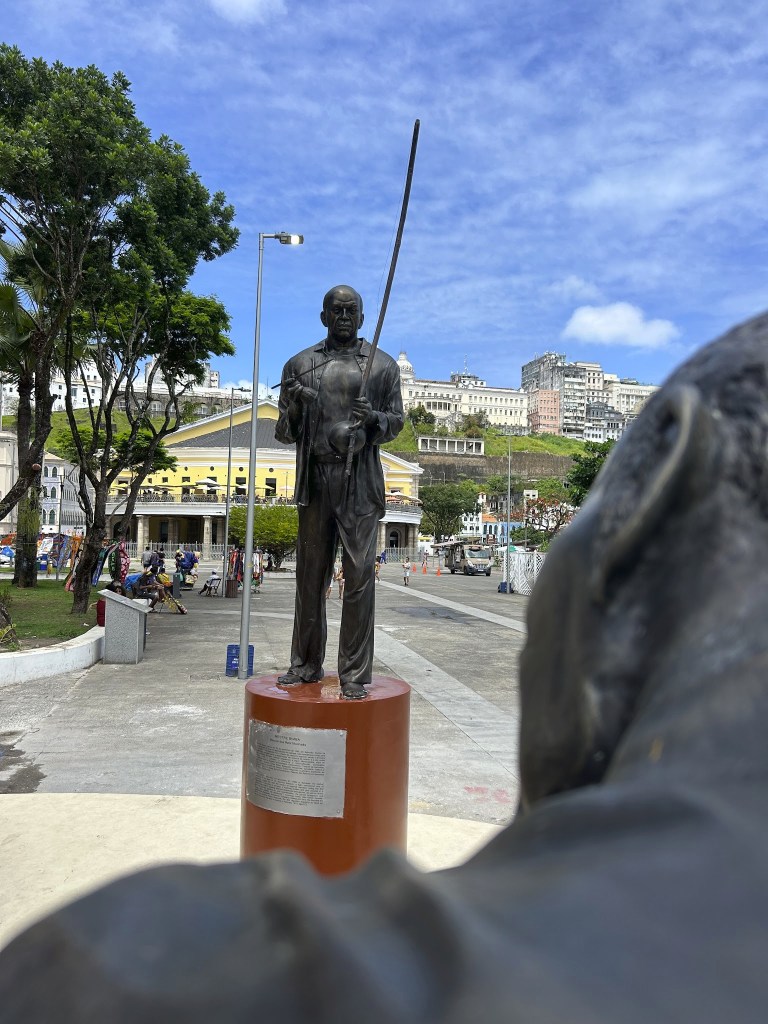
 Jogo Corpo Fechado