
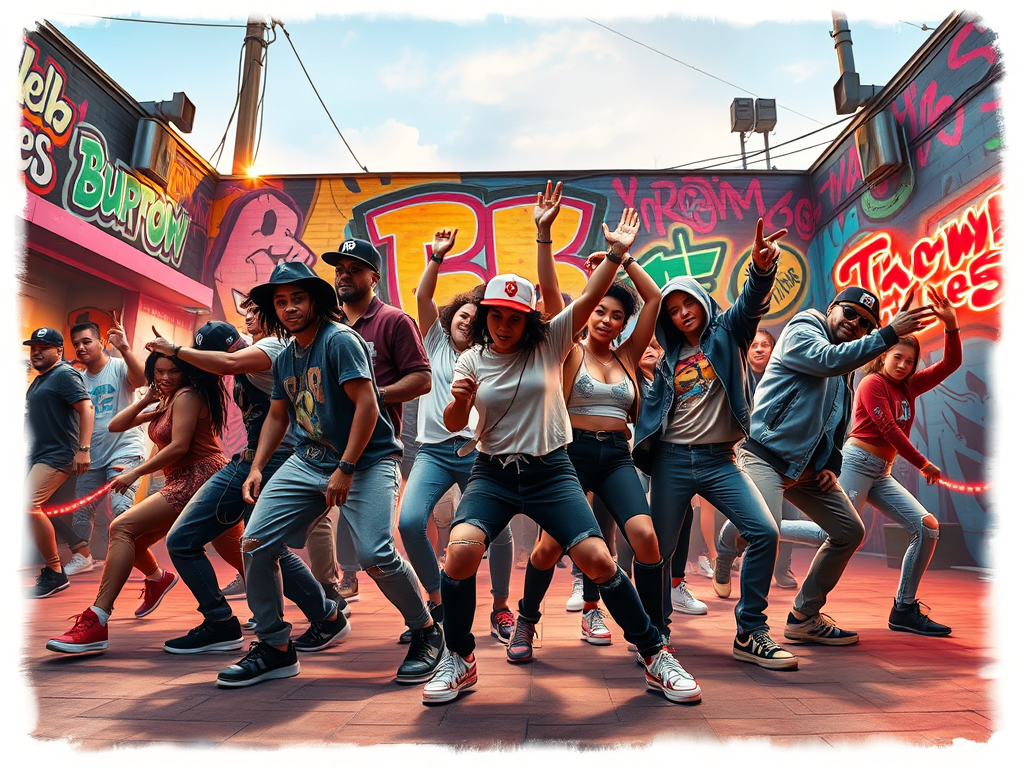
Understanding African American Culture Through Hip Hop

Greetings!

This post springs from a truly inspiring conversation I had recently. It unfolded between myself, a fellow student named Tre, and our exceptional ESGRIMA DE MACHETE Y BORDON teacher, Sonny Batata, after a class. We found ourselves discussing certain fundamental aspects of African American culture, diving deep into its rich complexities and historical context. During this insightful discussion, Sonny shared a thought-provoking video with us that focused on the systemic factors explaining how and why Black America has been historically held back.

Here at Jogo Corpo e Fechado, our core mission is to honor, study, and celebrate all aspects of African and African diasporic cultures, recognizing their profound global impact and resilience. In keeping with that commitment, today I want to dedicate this post to elaborating on a specific, vibrant, and transformative aspect of Afro-American culture: Hip Hop. This cultural movement, which began over five decades ago, has not only defined generations but has irrevocably taken the world by storm, influencing music, fashion, language, art, and social commentary across every continent. Its fifty-plus years of existence mark it as one of the most significant cultural exports in modern history.

Rap, R&B, and Hip Hop Culture:

Emerging from the urban centers of the late 20th century, particularly the Bronx, New York, Hip-Hop culture is a potent, multifaceted global phenomenon that has profoundly reshaped modern music, fashion, language, and art. Born out of marginalized communities, it served as a creative and expressive response to socio-economic challenges and a lack of resources, giving a voice to the voiceless.

The culture is fundamentally defined by its four core elements, often referred to as the “four pillars”:

  1. MCing (Rapping): This is the rhythmic, rhyming, and often poetic delivery of lyrical narratives over a beat. It serves as a powerful and unfiltered medium for storytelling, political commentary, social critique, philosophy, and linguistic innovation. The MC is the orator, channeling personal and communal struggles, triumphs, and observations into complex verse structures.
  2. DJing: The original foundation of the sound, DJing involves the manipulation of music using turntables and a mixer. Pioneers developed innovative techniques like scratching, beat-juggling, and looping breaks (the most rhythmic, instrumental parts of records) to create continuous, danceable music, laying the sonic groundwork for both Hip-Hop and Rap.
  3. B-Boying/B-Girling (Breakdancing): This dynamic, athletic form of street dance emerged as a visual component of the culture. Characterized by intricate footwork, power moves (such as headspins and windmills), freezes, and stylistic flair, B-Boying is a form of competitive physical artistry and self-expression.
  4. Graffiti Art (Writing): As a visual language, graffiti art involves stylized, often large-scale murals and tags executed in public spaces. It functions as a declaration of identity and territory, a form of artistic reclamation, and a vibrant, if sometimes controversial, commentary on the urban landscape.

Rap, R&B, and Hip Hop Culture: A Global Phenomenon

Beyond the foundational and celebrated “four elements”—MCing (rapping), DJing (turntablism and beat production), breakdancing (B-boying/B-girling), and graffiti art (aerosol art)—Hip-Hop has organically grown into a sprawling, multi-faceted cultural ecosystem. This powerful influence now seamlessly encompasses global fashion trends, specialized linguistic innovation and slang, a strong spirit of entrepreneurship, and a complex philosophy. From its raw genesis in community parks, Hip-Hop has consistently and aggressively redefined the global popular music landscape, demonstrating an unmatched capacity for artistic and commercial evolution. It has transformed dramatically from its initial community-driven block party roots—born out of necessity and serving as a creative, non-violent response to social and economic neglect—into the single most commercially dominant and culturally influential music genre worldwide. Despite this massive commercial success, Hip-Hop has remarkably maintained its foundational ethos as a potent, authentic platform for critical social commentary, storytelling, and a powerful catalyst for profound social change and youth empowerment.

History: The Birth of a Movement

Hip-Hop, a global cultural phenomenon, was not born in a boardroom or a recording studio but emerged organically from the neglected and economically challenged streets of the South Bronx, New York, in the early 1970s. This revolutionary movement was pioneered by resourceful Black and Puerto Rican youth who ingeniously fused their disparate cultural heritages and musical interests into a potent new form of expression and community building.

The bedrock of this cultural edifice was built by key visionary figures, each contributing an indispensable element to what would become the four pillars of Hip-Hop: DJing, MCing, B-boying/B-girling (breakdancing), and Graffiti Art.

  • DJ Kool Herc (Clive Campbell): Widely regarded as the founding father, this Jamaican-born pioneer introduced the rhythmic and organizational principles of Jamaican sound system culture to the Bronx. His most significant innovation was the “Merry-Go-Round” technique—the isolation and continuous looping of the most rhythmic, percussive sections of records, known as the “breakbeats.” By using two turntables, Herc could extend these instrumental “breaks” indefinitely, providing a sustained, energetic platform for dancers (B-boys and B-girls) to showcase their most intricate moves.
  • Grandmaster Flash (Joseph Saddler): A technical virtuoso, Flash refined and elevated the art of DJing to an unprecedented level. He innovated advanced, essential techniques such as scratching (creating rhythmic sounds by moving the record back and forth under the needle), punch-phrasing (manipulating records to create new rhythmic patterns), and cutting (seamlessly transitioning between two records). His mastery transformed the DJ from a simple selector of music into a creative, instrumental performer.
  • Afrika Bambaataa (Lance Taylor): Often called the “Godfather” of Hip-Hop Culture, Bambaataa was instrumental in articulating the culture’s foundational philosophical principles and promoting a positive, unifying message. As the founder of the Zulu Nation, he championed the culture as a conscious alternative to the destructive cycle of gang violence that plagued the borough. Bambaataa blended the electronic rhythmic foundations of Kraftwerk with the funk and soul of classic records, emphasizing cultural awareness, artistic mastery, and non-violent, competitive expression.

These visionary artists seamlessly blended the rhythmic intensity of funk and soul records, the repetitive, propulsive four-on-the-floor beat of disco, and the structural creativity of the sound system aesthetic. This foundational period laid the essential groundwork for an entire global culture, prioritizing community expression, artistic mastery, and non-violent competition as a powerful social mechanism for self-determination and empowerment. The extended instrumental break sections they created soon became the ultimate stage for the MCs (Masters of Ceremony) to develop their vocal skills, evolving from mere hype men into the lyrical storytellers of the emerging genre.

Philosophy: Peace, Authenticity, and the Challenge to the Status Quo

The foundational philosophical framework of Hip-Hop, initially articulated and widely promulgated by Afrika Bambaataa and the Universal Zulu Nation, is centered on the core tenets of “Peace, Love, Unity, and Having Fun.” This original maxim provided a positive, unifying structure intended to divert inner-city youth away from gang violence and destructive behaviors toward creative expression and community building.

However, the culture simultaneously embodies a far more complex and nuanced set of internal ideas that directly reflect its origin as an expressive voice for the marginalized, the dispossessed, and the systematically oppressed. Central to this lived philosophy is the concept of “Keepin’ It Real”—a powerful, non-negotiable demand for unvarnished authenticity, genuine self-representation, and fidelity to one’s own lived experience and communal history. This value rejects artifice and performative posturing, insisting on truth in lyrics, attitude, and lifestyle.

Masterful storytelling is not merely an artistic preference but a critical tool for survival and social documentation. Through vivid narrative and lyrical dexterity, Hip-Hop artists chronicle the realities of urban life, systemic inequalities, personal triumphs, and internal struggles, thereby giving form and weight to narratives often ignored or misrepresented by mainstream institutions.

Furthermore, the culture carries a perpetual, inherent dedication to challenging the status quo and relentlessly questioning authority. Born from a context of socio-economic disparity and political neglect, Hip-Hop acts as an active form of counter-culture, criticizing governmental policies, exposing hypocrisy, and advocating for social justice. It is inherently a voice for the voiceless, prioritizing the distinct, highly individualized narrative and agency within the broader context of collective empowerment.

Finally, Hip-Hop places an extremely high value on artistic mastery, linguistic innovation, and technical skill (known as “flow” and “mic control”). These attributes are not sought for aesthetic reasons alone; they are viewed as essential, powerful tools for achieving social mobility, economic independence, and establishing intellectual authority. Superior skill is recognized as a legitimate pathway to transcend prescribed social and economic boundaries.

Culture: A Dynamic, Entrepreneurial Aesthetic – The Global Impact of Hip-Hop

Hip-Hop culture is not merely a genre of music; it is a profound, globally-adopted aesthetic and a self-referential cultural phenomenon characterized by its restless dynamism and ever-evolving field of creative expression. Its influence has transcended artistic boundaries, establishing itself as a dominant force in popular culture and commerce worldwide.

The foundational pillars of Hip-Hop—often cited as DJing, MCing, breakdancing, and graffiti art—created a complex, active interplay of sound, visual art, movement, and a unique vernacular. This vernacular constantly injects new vocabulary, slang, and idiomatic expressions into the mainstream lexicon, demonstrating the culture’s power to shape communication globally.

Furthermore, Hip-Hop has been an unparalleled engine for fashion and style. This influence has spanned decades, starting with the early adoption of oversized silhouettes, brand-driven sportswear, and gold jewelry in the 1980s and 90s, which signaled both identity and status. Today, this sartorial legacy has matured into a sophisticated, multi-billion-dollar market, evidenced by the ubiquitous presence of luxury streetwear. Major artists now routinely engage in high-end collaborations, securing creative director roles at esteemed fashion houses, thereby validating Hip-Hop’s place at the pinnacle of global style and design.

Crucially, the success of Hip-Hop is underpinned by a robust and aggressive entrepreneurial spirit. Driven by artists and creators who recognized the immense commercial power of their aesthetic and voice, the culture fostered a powerful DIY (Do-It-Yourself) ethos. This self-determination has led to the creation of hugely successful, independent record labels (such as Def Jam, Bad Boy, and Roc-A-Fella in their early days), global clothing lines, innovative marketing agencies, and diversified media empires. This vertical integration of creativity and commerce, often bypassing traditional industry gatekeepers, has solidified Hip-Hop’s standing not just as an artistic movement, but as a significant, enduring global economic force that empowers its participants to own and control their creative output and commercial destiny.

Intertwining with R&B: The Symbiotic Sonic Bedrock

Rhythm and Blues (R&B), while a venerable and distinct genre with its own long and foundational history rooted in gospel, blues, and jazz traditions, is profoundly and inextricably intertwined with Hip-Hop. The relationship is fundamentally symbiotic and mutually beneficial. R&B often provides the soulful samples, sophisticated chord progressions, and lush melodic structures that serve as the harmonic and emotional bedrock for countless Hip-Hop tracks, injecting a necessary element of warmth and musical complexity. Furthermore, the genres frequently and successfully collaborate on vocal performances, with R&B artists lending their smooth, often intricate hooks and complex harmonies that significantly enrich and diversify the overall soundscape of modern urban and popular music. This collaborative history is not merely incidental; it is absolutely essential to understanding the sonic richness, commercial versatility, and mainstream dominance of contemporary Hip-Hop and R&B music.

So… What does rap and Hip Hop have to do with Capoeira Angola?

This connection, while not always immediately apparent, is deeply rooted in the shared history, cultural aesthetics, and political consciousness of the African diaspora. Both are powerful, multi-faceted cultural expressions that emerged from marginalized communities and serve as vehicles for communication, resistance, and self-expression.

Capoeira Angola, with its origins in enslaved Africans in Brazil, is a complex blend of martial art, dance, and music. It was a tool for both physical defense and cultural preservation, disguised as a dance to evade colonial authorities. The roda (the circle in which Capoeira is played) is a space for communal storytelling, history, and improvisation, powered by the rhythmic instruments like the berimbau and the call-and-response songs.

Similarly, Hip Hop—encompassing rap, DJing, breaking (breakdancing), and graffiti—arose from the economically disenfranchised, predominantly Black and Latino communities of the Bronx in the 1970s. It was a creative response to urban decay, social inequality, and police violence. Rap music, in particular, became the lyrical voice of the movement, using complex rhythm and rhyme schemes to articulate social commentary, personal narratives, and cultural pride.

The essential ties lie in several key areas:

  1. Improvisation and Flow: Both demand high levels of physical and verbal improvisation. In Capoeira, the jogo (the game) is a constant, spontaneous dialogue between the two players. In rap, “flow” is the rapper’s ability to manipulate rhythm and meter, creating a spontaneous, dynamic, and unique lyrical style.
  2. Rhythm and Call-and-Response: The musical backbone of both is based on African rhythmic traditions. Capoeira Angola is entirely dictated by the beat of the berimbau. Hip Hop’s foundation is the breakbeat, often looped and manipulated by a DJ, and the vocal style frequently employs the African-derived call-and-response pattern that fosters community participation.
  3. The Cypher/Roda as Sacred Space: The roda in Capoeira and the cypher (the circle formed by B-boys/B-girls, rappers, or beatboxers) in Hip Hop are structurally and functionally similar. They are defined, enclosed spaces where participants engage in a competitive yet supportive display of skill, respect, and cultural knowledge. They are stages for performative identity and mastery.
  4. Aesthetics of Resistance and Subversion: Both forms embody a spirit of resistance. Capoeira hid martial skill in dance. Hip Hop culture, especially through graffiti and lyrical content, often subverts mainstream narratives and challenges the status quo, transforming overlooked, marginalized spaces and voices into platforms of power.
  5. Physicality and Acrobatics: The dynamic, often floor-based acrobatics of Capoeira Angola find a clear echo in the power moves and footwork of breaking. Both emphasize a mastery of body control, balance, and gravity-defying maneuvers that are central to the performance.

The deep connection between rap, Hip Hop culture, and Capoeira Angola is ultimately revealed by recognizing them as parallel and profound movements of cultural survival and creative ingenuity born from the global African diaspora. These cultural forms are not merely entertainment; they are dynamic, living archives of shared history, enduring resistance, and vibrant community, expressed through a powerful synthesis of movement, music, and voice.

Rap and Hip Hop, emerging from the socio-economic crucible of the Bronx in the 1970s, provided a voice for disenfranchised youth, transforming urban blight into a space for artistic expression. The four core elements—rapping (MCing), DJing, B-boying/B-girling (breakdancing), and graffiti art—each represent a unique form of cultural literacy and historical reclamation. The rhythmic complexity of the music and the verbal dexterity of the MCs echo the call-and-response traditions and the griot storytelling heritage of West Africa. B-boying, with its intricate footwork, freezes, and power moves, draws a kinetic parallel to the circular dance and strategic play of Capoeira.

Capoeira Angola, conversely, is an Afro-Brazilian martial art and a dance, created by enslaved Africans as a means of physical self-defense, community bonding, and resistance against colonial oppression. Its structure—the roda (the circle), the berimbau (the lead instrument), the songs, and the fluid, low-to-the-ground movements—is a meticulously preserved system of coded communication and historical memory. The mandinga (the trickery, cunning, and soul of the game) is the philosophical core that ties strategy to rhythm.

The shared essence lies in their functionality as tools for empowerment. Both Capoeira Angola and Hip Hop culture provided a non-violent, yet intensely powerful, means for marginalized populations to establish identity, assert dignity, and create a self-determined space outside of the dominant culture’s control. They utilize the body as an instrument of cultural preservation and the circle (the roda or the cypher) as a sacred, democratic space where skill, respect, and dialogue are paramount. The improvisational nature of both forms—the freestyle rap, the breakdance battle, the Capoeira game—underscores a shared commitment to spontaneity, personal narrative, and an ongoing, competitive yet collaborative, dialogue with history and the present moment.
The WARRIOR CLASS (1/17/26)

The WARRIOR CLASS podcast stands as your premier, indispensable, and utterly unique resource for comprehensively mastering the principles of self-protection and self-defense. This dynamic platform goes beyond traditional teachings, engaging listeners in an exploration of the mental, emotional, and physical aspects of personal safety. The instructors here have meticulously designed every episode to equip every single listener—regardless of background or current skill level—with the vital, practical skills and the deep, profound knowledge base absolutely necessary for achieving and maintaining personal safety, holistic empowerment, and unshakeable confidence in an unpredictable world. By integrating real-life scenarios, and actionable strategies, each episode serves not only as a guide but as an inspiring journey towards a state of readiness and resilience, emphasizing the empowerment that comes from knowledge and the ability to respond decisively in times of need.

In today’s episode…

Warrior Class: The Essential Guide to Bug Out Bags and Get Home Bags

In this critical episode of Warrior Class, our seasoned Instructors deliver an in-depth, comprehensive masterclass on two of the most vital components of personal readiness: the Bug Out Bag (BOB) and the Get Home Bag (GHB). We explore not just the “what,” but the strategic “why” and “how” behind these essential survival kits, including a specialized focus on crucial herbal inclusions for maximum preparedness.

The Purpose: Preparedness for Any Contingency

Life is unpredictable. Whether you’re planning for large-scale emergencies, the fallout from natural disasters, or unexpected, localized situations that force you to rapidly evacuate or seek shelter away from home, these specialized bags are your non-negotiable insurance policy. The core principle is simple: to ensure you remain prepared, capable, and mobile. The BOB and GHB are engineered to empower you to move with intention, sustain yourself during transit, and ultimately reach your designated safe location or primary shelter safely and efficiently.

Understanding the Difference: BOB vs. GHB

While both serve the purpose of survival readiness, their contents, size, and function are distinct and tailored to specific scenarios:

  • The Get Home Bag (GHB): This is designed for the scenario where you are at work, running errands, or otherwise away from home when a crisis strikes. The GHB is focused on rapid transit and short-term survival (typically 24 hours or less) to bridge the distance between your current location and the safety of your primary residence or Bug Out location. It must be compact, discreet, and optimized for speed and mobility in an urban or suburban environment.
  • The Bug Out Bag (BOB): This is a comprehensive, self-contained system designed to sustain an individual for a minimum of 72 hours (and ideally longer) after a forced evacuation from home. It contains the essentials for shelter, water purification, food, first aid, navigation, and defense, enabling you to “bug out” to a pre-determined, safer location outside of the immediate crisis zone.

Mindset, Strategy, and Practical Considerations

This episode goes far beyond a simple gear checklist, breaking down the three pillars of real-world readiness:

  1. Mindset: The Warrior’s Edge: Survival is 90% mental. We discuss cultivating resilience, maintaining situational awareness, controlling fear and panic, and making high-stakes decisions under duress. The most well-stocked bag is useless without the right mental fortitude.
  2. Strategy: Route Planning and Threat Assessment: We delve into creating primary, secondary, and tertiary Bug Out and Get Home routes, analyzing potential chokepoints, assessing environmental and human threats, and establishing rally points with family members. A well-planned route is as important as the gear you carry.
  3. Practical Considerations: Gear Selection and Customization: Learn the critical distinction between needs and wants. Our Instructors offer expert advice on selecting durable, multi-use gear, proper packing techniques for balance and efficiency, waterproofing strategies, and how to customize your bag based on your unique geography, climate, and personal physical capabilities.

Herbal Essentials: Nature’s Pharmacy for the Prepared

A unique focus of this episode is the often-overlooked yet critical inclusion of specific medicinal and utilitarian herbs in your BOB and GHB. We provide guidance on selecting lightweight, potent, and shelf-stable herbal allies that can address common ailments and survival needs, including:

  • Antiseptics and Wound Care: Herbs for natural disinfection of minor cuts and scrapes.
  • Digestive Support: Remedies for water-borne pathogens or unfamiliar food sources.
  • Energy and Focus: Natural stimulants to aid in long-distance travel or sleep deprivation.
  • Immune Boosting: Botanicals to maintain health in stressful, exposed conditions.

Tune in to gain the knowledge and confidence necessary to build the perfect Bug Out Bag and Get Home Bag—tools that embody the true spirit of self-reliance and the Warrior Class commitment to proactive preparedness.

HAPPY BELATED BIRTHDAY, MLK!!!

January 15th marks the revered birthday of the foundational figure in the struggle for Foundational Black Americans (FBA) empowerment, the iconic Rev. Dr. Martin Luther King Jr. On this profoundly significant day, we are compelled to redirect the national discourse and emphatically remind the public of the true, uncompromised tenets of his mission—specifically, his unwavering commitment to securing tangible economic and political resources for the Black community. This focus on “black tangibles and empowerment” is the core of his legacy that has been systemically obscured, deliberately replaced by a sanitized, easily digestible, and ultimately toothless narrative.

Dr. King’s final years were defined by a radical shift in focus from the fight for legal desegregation to a deep, systemic critique of American capitalism and white supremacy. He understood that the mere right to sit at a lunch counter or cast a ballot was meaningless without the corresponding economic power to purchase a home, secure a stable income, and build generational wealth. The “Dream” he spoke of evolved from a vision of integration into a demand for restitution and redistribution. His mission was not simply to integrate Black people into a flawed system, but to fundamentally reconstruct that system to ensure justice, equity, and material prosperity for the descendants of American chattel slavery.

We at jogo corpo fechado are committed to unveiling the actual words and arguments of Dr. King, providing the essential context and compelling quotations that have been intentionally marginalized or outright suppressed by what we define as the white-dominated mainstream media. These are the truths that illuminate his later, more radicalized focus on economic justice, reparations, and the need for structural change that would deliver concrete, material benefits to Black Americans, moving beyond the often-simplified narrative of mere racial integration. He called for a Poor People’s Campaign, demanding an Economic Bill of Rights for all disadvantaged Americans, with a clear focus on the specific plight and historical debt owed to Black Americans. His critique of the Vietnam War was inextricably linked to his condemnation of domestic economic neglect, arguing that the resources squandered overseas should be invested in rectifying the endemic poverty faced by the FBA community. This later, powerful, and challenging Dr. King—the one who spoke of a “guaranteed annual income” and the “radical restructuring of the whole of American society”—is the one whose legacy must be centered on his birthday, ensuring that the commemoration serves as a call to action for economic equity, not just a celebration of a historical figure stripped of his radical demands.

Shoutout to the professor for making and posting this video.

Support the Movement for Truth and Empowerment:

To continue this vital work of historical correction, disseminating authentic information, and advocating for the tangible empowerment of Foundational Black Americans, your financial support is invaluable.

Twitter: [ / profblacktruth ]

THE MOMENT OF TRUTH FRIDAY CRIME REPORT (1/16/26)

Every Friday morning, PROFESSOR BLACK TRUTH hosts “The Friday Crime Report,” a thought-provoking program that deeply explores the intertwined issues of systemic racism, economic inequality, and police brutality affecting the black community. Through a series of compelling expert interviews and heartfelt personal narratives, the show not only raises awareness of these critical social issues but also fosters vibrant dialogue aimed at driving meaningful change. Each episode meticulously presents not just cold, hard facts but also integrates lived experiences that resonate with the audience, encouraging listeners to engage with and confront societal challenges collectively while promoting active community engagement. Moreover, the program goes further by highlighting actionable steps that individuals and communities can take in their daily lives, inspiring grassroots advocacy for reform in local neighborhoods. By addressing the complexities of these social justice topics, “The Friday Crime Report” seeks to empower its audience, motivating a united front against injustices and equipping them with the tools needed to impact their communities positively.

In Today’s installment…

The horrifying details of a child abuse case in Missouri have shocked the nation this week. A couple, exhibiting what can only be described as profound depravity, was arrested for the systematic imprisonment and torture of six of their own children. The shocking reality of their victims’ lives included being locked away in a makeshift chicken coop, subjected to cruel and arbitrary violence such as having rocks thrown at them, and, perhaps most disturbingly, being forced to engage in fights with one another for the perverse entertainment of their captors.

This grim case serves as another stark and troubling illustration of severe human depravity unfolding in a rural setting, often hidden in plain sight. The very nature of this crime—its secrecy and duration—highlights a recurring issue: the invisible suffering in remote areas that goes unnoticed by neighbors, community members, and authorities. The question remains: how could such extreme abuse continue without anyone having any idea of the horrors taking place?

For those seeking more context, insight, and discussion on this and similar troubling societal issues, Professor Blacktruth offers extensive coverage and analysis.

A huge shoutout is extended to the professor for producing such an informative and crucial video detailing this event. To delve deeper into a range of compelling topics, enhance your understanding, and find inspiration for your own academic or intellectual journey, click HERE to visit Professor Blacktruth’s YouTube channel. The channel is a valuable resource, packed with unique insights, effective teaching methods, and thought-provoking discussions.

Support Professor Blacktruth’s Work:

A Celebration of Capoeira Angola’s Living Legend

Happy Birthday, Mestre João Grande!!!

Today, January 15th, 2026, marks the birthday of a true global icon in the world of martial arts and culture: João Oliveira dos Santos, universally revered and affectionately known as Mestre João Grande.

Born on January 15, 1933, Mestre João Grande is one of the world’s most distinguished and respected Grão-Mestres (Grand Masters) of Capoeira Angola. As he celebrates his 93rd year, he remains an absolutely critical and profound living link to the fundamental, traditional roots of this beautiful, powerful, and historic Afro-Brazilian art form.

Mestre João Grande’s life is a testament to the enduring spirit and rich heritage of Capoeira Angola. His journey began in Bahia, Brazil, the heartland of Capoeira, where he trained under the legendary Mestre Pastinha, often referred to as the “father of modern Capoeira Angola.” Mestre Pastinha instilled in him the deep philosophical, cultural, and spiritual dimensions of the art—elements that Mestre João Grande has tirelessly championed throughout his career.

Unlike the faster, more acrobatic style known as Capoeira Regional, Mestre João Grande preserves the slower, strategic, and ritualistic elegance of Capoeira Angola. His movements, though seemingly subtle, are filled with deceptive power, deep respect for tradition, and a profound connection to the art’s African origins. He is recognized worldwide not just for his skill in the roda (the Capoeira circle), but for his role as a preserver and global disseminator of Capoeira Angola’s cultural integrity.

His establishment of the Foundation for Capoeira Angola in New York City in the 1990s marked a pivotal moment in the recognition and appreciation of this traditional art, bringing it to a major international stage and ensuring its continuity for generations of non-Brazilian practitioners eager to learn its rich history and intricate movements.

Through his dedicated teaching, captivating performances, and humble demeanor, Mestre João Grande has touched thousands of lives, fostering an inclusive community that transcends cultural barriers, promoting not just a martial art, but a profound philosophy of life rooted in community, respect, cultural pride, and the spirit of collaboration that defines capoeira. His efforts have inspired numerous students to embrace this vibrant form of expression, creating a legacy that celebrates both the traditions of Brazil and the diverse tapestry of cultures represented in the capoeira community worldwide.

May Mestre João Grande have a very Happy Birthday! We celebrate his enduring legacy and his invaluable contribution to global culture!

Capoeira Angola and Tai Chi Chuan: A Comparative Analysis

Introduction

This analysis will explore the profound similarities and distinct differences between two rich and complex martial “sciences”: Capoeira Angola from Brazil and Tai Chi Chuan (Taijiquan) from China. While geographically disparate—Capoeira Angola born of Afro-Brazilian resistance in the sugar plantations and senzalas of Bahia, and Tai Chi Chuan rooted in classical Chinese Daoist and Confucian philosophy, traditionally attributed to the Wudang Mountains—both practices represent highly refined systems that deeply integrate physical movement, philosophical depth, spiritual discipline, and cultural history into a cohesive and living art form.

Far beyond mere fighting techniques, they offer comprehensive frameworks for approaching life, fostering holistic health, and ensuring cultural preservation. Both are characterized by a commitment to non-linear movement, the cultivation of internal energy (the Tai Chi Qi and the Capoeira Axé), and a deep connection to their historical contexts—Tai Chi as a path to harmonizing with the natural flow of the Tao, and Capoeira as a dynamic expression of resilience, community, and freedom forged in the crucible of oppression. Their study is not just a mastery of physical skills but a lifelong journey into cultural understanding and personal development.

Structure and Core Comparative Principles

The comparison will be structured around foundational elements to provide a clear, comprehensive analysis:

CategoryCapoeira AngolaTai Chi Chuan (Taijiquan)
Core PrinciplesFocus on malícia (deception/guile), jogo de dentro (internal game/flow), resistance, and continuous, non-linear movement. Emphasis on the group (roda) and the Mestre.Focus on Yin/Yang balance, (life energy) cultivation, ting (listening), hua (neutralizing), rootedness, and yielding. Emphasis on stillness in motion.
Movement and FlowKinetic qualities are fluid, evasive, low to the ground, acrobatic (though less so than Regional), and characterized by ginga (the fundamental rocking movement/rhythm). Force is applied explosively after evasion.Kinetic qualities are slow, deliberate, circular, soft, and continuous. Force (jìn) is developed internally and issued with subtle, penetrating power.
Internal vs. ExternalWhile rooted in physical conditioning and agility, its internal quality lies in malícia, rhythm, and the psychological “game” played with the opponent. The physical is a vehicle for the intellectual and rhythmic flow.Primarily an internal (Nèijiā) art, focused entirely on cultivating and directing (internal energy) through focused breath control (dao yin) and mental intention (yi).

Historical Context and Cultural Significance

  • Capoeira Angola: Tracing its profound and complex origins from the enslaved African population in 16th-century colonial Brazil, Capoeira was ingeniously developed as a clandestine form of self-defense disguised within a rhythmic dance—a crucial means of physical, spiritual, and cultural resistance against the brutal oppression of slavery. Its evolution was necessarily secret and decentralized, passed down orally and through practice in the senzalas (slave quarters) and quilombos (fugitive settlements), making its very survival a powerful testament to the ingenuity, resilience, and unbreakable spirit of its practitioners. Following the abolition of slavery in 1888, it was criminalized but persisted in the urban centers. Its formal codification and institutional preservation in the 20th century were championed by influential masters, most notably Mestre Pastinha (Vicente Ferreira Pastinha), who dedicated his life to stressing the traditional roots, philosophical depth, and vital cultural importance of the art. He emphasized the low, slow movements, the strategic malice (mandinga), and the cultural rituals, thereby ensuring its legacy as a quintessential symbol of Afro-Brazilian identity, historical memory, and the enduring fight for freedom. The roda (the circle) is its essential cultural and social framework—the space where the game (jogo), music, and community converge to create the art’s complete expression.
  • Tai Chi Chuan (Tàijíquán): Examining its historical development in China reveals a highly complex and often mythologized lineage, tracing its philosophical roots deep into the Taoist principles of Yin and Yang, as well as the societal emphasis of Confucianism. These traditions, emphasizing harmony with nature, balance, and self-cultivation through internal practice (neigong), provided the conceptual framework for its development. While the precise historical narrative regarding its founder (often attributed to the legendary Taoist immortal Zhang Sanfeng) is subject to historical debate, its popular rise and formal structure are firmly tied to key family lineages: the Chen, Yang, Wu, Sun, and Wu/Hao styles, which emerged primarily during the 18th and 19th centuries. Each lineage developed distinct forms, principles, and training methodologies, adapting the core concepts of softness overcoming hardness and cultivating qi (life energy). Today, it is globally recognized as a sophisticated exercise and therapeutic system renowned for its profound health benefits, though its original function was as a highly effective, internal martial art based on practical combat principles.as a highly effective martial art, using softness to overcome hardness.

Capoeira Angola and Tai Chi Chuan: An In-Depth Comparative Analysis

The disciplines of Capoeira Angola, originating from the Afro-Brazilian cultural matrix, and Tai Chi Chuan (T’ai Chi Ch’üan), rooted in classical Chinese philosophy and martial tradition, though separated by vast geographical and cultural chasms, represent two extraordinarily profound approaches to human movement, combat, philosophy, and holistic wellness. This analysis undertakes a comprehensive comparison of these two sophisticated arts, meticulously revealing their distinct historical trajectories, foundational principles, tactical methodologies, and philosophical underpinnings, while simultaneously highlighting their shared transcendence of mere martial application to achieve a higher state of self-cultivation and expression.

Historical and Cultural Context: A Deep Dive

Capoeira Angola is a profound manifestation of cultural survival and resistance, born from the crucible of the trans-Atlantic slave trade and the oppressive conditions of senzalas (slave quarters) and quilombos (runaway slave settlements) in colonial Brazil. It is significantly more than a mere fight; it is a holistic cultural expression, a sophisticated game, a dynamic dance, and an indispensable oral tradition. Developed by enslaved Africans, it was ingeniously crafted as a clandestine martial practice, its combative core artfully masked beneath the veil of a celebratory, acrobatic performance. This historical necessity for disguise is the key to understanding its flowing, low-to-the-ground movements, which often mimic animals or the motions of a disabled person to evade the suspicion of slave masters and overseers.

Its history is a narrative of profound resilience, rapid adaptation, and meticulous, clandestine preservation across centuries. The practice is fundamentally inseparable from its communal, spiritual, and musical components. The vibrant music, the call-and-response songs (corridos and ladainhas), and the percussion instruments—most notably the berimbau (the single-string musical bow that dictates the rhythm and speed of the game)—are not merely accompaniment; they are the heart, the energy, and the very structure of the practice. The roda (the circle in which it is played) is the communal context, a sacred and protective space where the jogo (the game) unfolds, a dialogue between two players that is simultaneously combative, playful, and spiritual. The oral tradition ensures the transmission of history, philosophy, and technique, reinforcing Capoeira Angola’s identity as a legacy of freedom fighters and cultural keepers.

Tai Chi Chuan: The Harmonization of Philosophy and Combat

Tai Chi Chuan (often simply Tai Chi or T’ai Chi Ch’uan), by stark contrast, emerged from a deeply intellectual and philosophical environment within Imperial China. Its genesis is interwoven with the foundational principles of Taoism (Daoism) and Confucianism, placing it firmly within a tradition of internal cultivation and scholarly martial arts. The art’s conceptual framework is intrinsically tied to the classic Chinese texts, particularly the I Ching (Book of Changes) and the Taoist concept of Wuji evolving into Taiji (Supreme Ultimate).

Its development is generally attributed to generations of martial arts masters who sought to move beyond purely muscular, external (or waijia) combat styles. Their goal was to integrate the principles of internal cultivation—specifically the mobilization and refinement of qi (or ch’i), the body’s vital energy—with sophisticated combat efficiency. This emphasis on internal power is what defines Tai Chi’s characteristic soft, slow, and continuous movements, which are designed to teach rootedness, balance, and the ability to redirect an opponent’s force rather than meeting it head-on.

While originally a highly effective martial art, its modern character is most commonly defined by its focus on health, longevity, and meditation in motion. This evolution reflects a later-stage refinement, where the rigorous self-defense applications were often sublimated in favor of cultivating physical and mental well-being. Its lineage is deeply intellectual and systematic, tied to complex philosophical concepts like the dynamic interplay of Yin (soft, passive, yielding) and Yang (hard, active, forceful)—a duality that is physically expressed in every posture, transition, and application of force within its forms. The intellectual rigor and philosophical depth distinguish Tai Chi Chuan as an internal martial art rooted in classical Chinese cosmology.

Foundational Principles and Movement Philosophy

The core principles of these two arts showcase a fascinating divergence in expressive form yet a subtle convergence in internal focus:

Capoeira Angola emphasizes malícia (cunning, deception), mandinga (mystical or psychological influence), and the ginga (the continuous, rocking, preparatory movement). The movements are low to the ground, fluid, and often acrobatic, utilizing momentum and gravity to generate power. The primary aim is to disrupt the opponent’s balance and flow, often through feints and sweeping attacks. The energy is explosive yet contained within a constant state of readiness.

Tai Chi Chuan operates on principles of softness overcoming hardness, yielding to redirect force, and central equilibrium. Its movements are characterized by slow, deliberate, connected forms that emphasize proper skeletal alignment, deep abdominal breathing, and the cultivation of internal energy (jing or neijin). The power, when applied in combat, is issued as fa jing (issuing power), which is explosive but originates from the coordinated movement of the whole body, not brute muscle force. The ultimate goal is rooted in finding stillness within motion and maximizing efficiency.Tactical Methodologies and Combat Application

While both are effective martial arts, their tactical methodologies reflect their differing origins and philosophies:

  • Capoeira Angola’s application is characterized by continuous flow, unpredictability, and reliance on rhythm. The jogo (game) is highly improvisational, utilizing sweeps (rasteiras), headbutts (cabeçadas), and specialized kicks delivered from unusual angles. The defense is active, often involving evasive rolls (rolês) that immediately transition into counter-attacks, blurring the line between offense and defense. The emphasis is on maintaining the dynamic relationship within the roda and exploiting psychological advantage.
  • Tai Chi Chuan’s tactical approach, primarily practiced through “push hands” (tui shou) and forms, focuses on sensing the opponent’s intention and neutralizing their power at its root. It relies heavily on leverage, joint locks, throws, and specialized strikes delivered from close range. The key strategy is adherence (nian), sticking to the opponent to maintain contact, and listening (ting) to understand the direction and magnitude of their force. The ideal defensive posture is passive yet attentive, drawing the opponent’s force inward before releasing a counter-force.

Capoeira Angola and Tai Chi Chuan: A Comparative AnalysisI. Philosophical and Spiritual Dimensions

Both Capoeira Angola and Tai Chi Chuan (T’ai Chi Ch’üan) are profound systems that transcend their designation as mere martial arts; they serve as comprehensive paths of personal, cultural, and spiritual development.Capoeira Angola: The Roda as a Microcosm of Life

Capoeira Angola is intrinsically linked to community, cultural memory, and the expressive release of emotion. Its philosophy is a testament to the resilience and ingenuity born from adversity, centering on the pursuit of freedom, mutual respect, and the absolute necessity of finding creative solutions when under physical or psychological pressure. The entire practice unfolds within the roda (the circle), which functions as a sacred space and a microcosm of life itself. Within the roda, the player (capoeirista) is continually challenged, demanding profound adaptability, genuine humility in both victory and defeat, and the sober acceptance of mutual risk. The spiritual dimension of Capoeira is deeply tied to African cosmology, the veneration of ancestors, and the palpable, collective energy (axé) generated by the synergy of the music, the singing, and the players’ fluid, deceptive movements. The ultimate spiritual aim is to embody the spirit of the ancestors and Mestre (Master), bringing forth an unbroken tradition through contemporary expression.Tai Chi Chuan: The Living Embodiment of Tao

Tai Chi Chuan is fundamentally a living meditation, a sophisticated, moving embodiment of classical Taoist principles. It posits that human well-being and spiritual realization are achieved through the relentless pursuit of harmony between the practitioner (the micro-universe) and the surrounding cosmos (the macro-universe). This is cultivated internally by balancing the energetic and structural dichotomy of Yin (soft, passive, yielding, internal, darkness) and Yang (hard, active, external, light, aggressive). The practice is rigorously focused on self-mastery, specifically the conscious cultivation and control over the life force, or Qi (Ch’i). By harmonizing Yin and Yang and refining Qi circulation, the practitioner aims for the complete realization of their physical, mental, and spiritual potential, leading to optimal health, longevity, and profound awareness.—–II. Core Strategy, Tactics, and Power Generation

While one system is kinetic, rhythmic, and overtly dramatic, and the other is meditative, subtle, and internally focused, both share an advanced understanding of energy manipulation and psychological dominance.

AspectCapoeira AngolaTai Chi Chuan (T’ai Chi Ch’üan)
Core Strategy & PhilosophyThe heart of Capoeira Angola lies in deception (malícia), continuous flow (jogo de dentro), and non-linear, unpredictable movement (o jogo). Success is not measured by injury inflicted, but by the aesthetic quality, cleverness, and psychological depth of the exchange. The strategy prioritizes evasion, mimicry, feints, and psychological dominance over brute force. The goal is to control the opponent’s perception of reality, often making them attack shadows.Founded firmly on Taoist principles: yielding (ting), the immediate neutralization of incoming force (hua), seamless adherence to the opponent’s structure (lian), and cultivating an unwavering rooting into the earth. The core goal is to redirect and neutralize the opponent’s force to off-balance their fundamental structure. This is achieved through impeccable skeletal alignment and the subtle, cultivated internal energy () used to generate devastating power (jìn). The ultimate strategic ideal is the principle: “employ four ounces to deflect a thousand pounds.”
Tactics and EngagementTechniques involve deep, low, sweeping, circular movements (rasteiras), explosive, snapping kicks, and highly acrobatic evasion (e.g., or cartwheel, queda de rins or falling on the back of the neck). The fighter must maintain a perpetual state of readiness and deceptive calm within the ginga (the fundamental rocking movement), using the opponent’s aggressive momentum against them through circular, evasive, and deceptive maneuvers. The emphasis is on continuous, unbroken motion and the creation of strategic openings through sophisticated feints and mimicry, rather than isolated, discrete techniques.A practitioner must remain relaxed, centered, and structurally aligned, using and refined body mechanics to sense (or “listen”), neutralize, and subtly adhere to the opponent’s center of gravity and lines of force. The systematic practice of tui shou (push hands) is the essential laboratory for developing acute sensitivity (“listening energy,” ting jin), whole-body coordination, and the ability to seamlessly transition from yielding (Yin) to issuing devastating, yet internally-driven, power (Yang). The focus is on the micro-adjustments of the internal, connective structure.
Power GenerationPower is derived from leveraging the natural speed, agility, and dynamic momentum of the body. Force is often generated from the physics of rapid shifts in elevation, deep squats, and the spring-like action of the legs and hips, relying on explosive, kinetic, and elastic energy. The rhythmic and energetic structure of the roda and the accompanying music amplifies this kinetic output, turning simple movements into powerful strikes and evasions.Power utilizes the sophisticated mechanism of internal energy () and integrated, proper skeletal alignment. The devastating power (jìn) is generated from the ground, rooted deeply through the legs, coordinated and amplified by the core (specifically the dantian center and waist rotation), and then expressed through the extremities. This creates a wave-like, penetrating, and often delayed force that attacks the opponent’s internal structure and balance rather than merely their surface muscle. This whole-body, coordinated power is distinct from mere muscular strength.

—–III. Conclusion

In conclusion, while Capoeira Angola is a spirited, rhythmic dance of freedom, communal expression, and psychological warfare, and Tai Chi Chuan is a meditative, flowing expression of internal harmony, structural integrity, and Taoist philosophy, both stand as powerful testaments to the depth and sophistication achievable through dedicated physical and philosophical practice. They both offer a pathway not just to fight effectively, but to live fully and with a profound, integrated awareness of the self, the environment, and the energy that connects them.

Weapons Training: A Deep Dive into Application and Philosophy

AspectCapoeira AngolaTai Chi Chuan
Primary FocusThe fundamental premise of Capoeira Angola is that the body itself is the definitive primary weapon. The art is a sophisticated system of leveraging speed, agility, deceptive motion, and unpredictable angles within the confined space of the jogo (the game/interaction). The core combat philosophy revolves around evasion, feinting, and counter-attack using the hands, feet, and head. Consequently, traditional weapon use in formal training is almost entirely symbolic and musical, serving primarily as a profound cultural heritage and ritualistic element rather than a core component of combat proficiency. The emphasis is on disarmament and escape, not armed engagement.Tai Chi Chuan (Taijiquan) includes a detailed, systemic study of classical Chinese weapons as an advanced, integral training method. The philosophy views the weapon not as a separate tool, but as a direct extension of the body’s internal energy () and structural integrity. Weapon forms are deliberately structured to function as moving meditations and advanced applications, acting as a crucial training module that reinforces the core principles of the empty-hand system, such as rooting, connection, and yielding power. The weapon forces the practitioner to maintain whole-body unity and internal alignment at all times.
Tools and InstrumentsThe berimbau is the undisputed central instrument of Capoeira Angola. It is not a combat weapon but the essential musical and directional tool that dictates the rhythm (toque), speed, energy level, and even the type of movements permitted within the jogo. Control of the berimbau is vital to controlling the flow and emotional tenor of the art. While the formal curriculum is empty-hand, historical context acknowledges that bladed weapons (e.g., a facão or knife) were sometimes employed for practical self-protection or in early, desperate contexts of conflict and resistance. However, these are not integral to the modern, formal training curriculum of the art, which prioritizes the unarmed body.Tai Chi Chuan training typically incorporates three primary classical weapons, each designed to develop a distinct set of martial skills and internal qualities. The straight sword (jian) is practiced through fluid, subtle, and piercing movements that demand extreme precision, sensitivity, and internal coordination, often likened to calligraphy in motion. The saber (dao) is characterized by powerful, wrapping cuts and a more robust, aggressive quality, emphasizing waist rotation and whole-body power projection. The spear/staff (qiang/gun) develops long-range power, full-body extension, and deep structural coordination, forcing the practitioner to connect the weapon’s tip back to their central axis (dantian).
Application of PrinciplesIn the rare instances where weapon use is present—whether in a historical re-enactment or a ritual context—it strictly adheres to the core Capoeira principles: deception, surprise, and leveraging a close-quarter opportunity. The underlying movement is always ginga-based, ensuring the practitioner maintains the characteristic fluidity, evasiveness, and constant shifting of weight. The weapon, if used, is employed to create a momentary breach or threat, enabling a quick, decisive action or, more typically, a successful escape. The emphasis remains on the body’s superior ability to evade and maneuver the opponent.The core martial and philosophical principles developed in empty-hand forms—including neutralizing, adherence (ting), centering (zhong), and absolute rootedness—are directly and meticulously applied to the handling and extension of these diverse weapons. The practice is intended to refine the internal skill (gongfu), not just the external technique. Through consistent training, the weapon’s tip becomes a sensitive, living extension of the practitioner’s dantian (the body’s energetic core). The ultimate goal is to move the weapon using (internal energy) and intention (), making the weapon and the wielder an inseparable, unified whole.

Philosophical and Cultural Underpinnings: A Deep Dive

The martial arts of Capoeira Angola and Tai Chi Chuan are more than mere physical disciplines; they are profound cultural repositories, each holding a unique philosophical mirror to its originating society. A comparative analysis reveals deep structural differences in their aims, methods, and spiritual foundations.

AspectCapoeira AngolaTai Chi Chuan (T’ai Chi Ch’üan)
Root CultureA Synthesis of Resistance, Community, and Theatricality. Capoeira Angola is deeply embedded in the historical trauma and triumph of enslaved Africans in Brazil, forging an art of survival. It is a profound, living repository of Afro-Brazilian history, spiritual expression, and cultural memory. Crucially, it functioned as a clandestine fight—a powerful, practical combat system—artfully disguised as a dance and a game to deceive the enslavers. Its cultural memory is rooted in the quilombos (runaway slave communities) and the retention of African cosmology and martial techniques.A System Grounded in Classical Chinese Cosmology and Philosophy. Intrinsically grounded in Taoist cosmology and the philosophical traditions of China, Tai Chi often integrates principles from Confucian thought (emphasizing social harmony and moral conduct) and Buddhist concepts (particularly in meditation and mind-body unity). Its practices are directly linked to classical Chinese medicine, the study of energy meridians (jingluo), and the pursuit of longevity, vitality, or transcendence, often referred to as achieving the state of the Zhenren (True Person).
Core ConceptsThe Subversion of Power through Play and Theater. The art is a playful, yet potent, subversion of power dynamics. The central element, the jogo (the game), allows participants to invert the roles of the dominator and the dominated. This inversion offers a psychic and spiritual escape, transforming a potential violent confrontation into a highly stylized, performative dialogue. **The Mestre (Master) represents the living history, philosophical continuity, and spiritual authority of the art, commanding profound spiritual and martial respect. The roda (the circle) is the communal, sacred, and spiritual center of practice. It is where the music, the song, the narrative, and the fight coalesce, manifesting the entire ethos of the art as a communal, spiritual event. The concept of malícia (cunning or malice) is central, representing the deceptive intelligence required to win the jogo without obvious aggression.The Dynamic Unity of Yin and Yang. Centered on the intrinsic and dynamic balance of Yin (soft, yielding, passive, internal, dark) and Yang (hard, aggressive, active, external, light). The entire practice revolves around the flow and cultivation of (life energy or vital breath) through coordinated breath and slow, deliberate motion. The pursuit is to achieve “stillness within motion” and “motion like a coiled spring,” aiming for ultimate harmony with nature and the universal Tao. The techniques focus on yielding to force and redirecting it, often expressed through the core concepts of peng, lü, ji, an (ward off, roll back, press, push).
PurposeCultural Preservation, Spiritual and Physical Liberation. Capoeira Angola’s primary purpose is to preserve cultural identity, foster a deep sense of community and kinship, provide a powerful means of spiritual and physical liberation from historical oppression, and maintain an unbreakable historical connection to African heritage through its unique artistic, musical, and martial expression. It is a form of embodied history and self-determination.Self-Mastery, Longevity, and Alignment with the Tao. The purpose of Tai Chi is multifaceted: to achieve ultimate internal balance, secure physical longevity and health (especially through improved circulation and musculoskeletal alignment), foster profound mental clarity and emotional regulation, and ultimately, achieve spiritual enlightenment or deep internal peace by aligning the internal self (xīn, mind/heart) with the rhythm and structure of the universal Tao. It functions simultaneously as a highly sophisticated combat art and a path to holistic self-mastery.

Health and Healing Benefits: A Deep Dive into Capoeira Angola and Tai Chi Chuan

The fundamental approaches to health, well-being, and internal cultivation inherent in Capoeira Angola and Tai Chi Chuan offer a compelling contrast, yet share the goal of maximizing human potential and longevity.

AspectCapoeira AngolaTai Chi Chuan
Physical BenefitsOffers multifaceted and exceptionally rigorous physical conditioning. The training develops exceptional agility, explosive strength, and whole-body coordination, derived from complex, dynamic movements, including inversions, sweeps, and acrobatic escapes. The constant shifting of the center of gravity and sustained, high-intensity effort within the roda (the circle where the game is played) produces significant cardiovascular fitness (both aerobic and anaerobic capacity), remarkable muscular endurance, and highly responsive reflexes. It demands and cultivates a unique kind of physical intelligence, blending power with fluidity.Widely recognized globally for its substantial, cumulative, and remarkably low-impact health benefits, making it accessible across all age groups and physical conditions. The slow, deep, and mindful movements, synchronized with breath, significantly improve static and dynamic balance by strengthening core stabilizers and refining proprioception. Consistent practice enhances flexibility, joint health (by promoting synovial fluid circulation and reducing impact stress), range of motion, and overall musculoskeletal integrity, often serving as a highly effective intervention for managing and alleviating chronic pain and symptoms related to arthritis and fibromyalgia.
Internal/Mental BenefitsProvides profound psychological and communal healing through its deeply cultural and expressive nature. The inherent call-and-response structure, the communal singing, and the shared rhythm of the roda forge a strong sense of identity, belonging, and community, acting as a powerful antidote to isolation and alienation. It is a powerful outlet for creativity, non-verbal self-expression, and the processing of complex, often challenging, emotions. The training fosters self-confidence, emotional resilience, and the ability to navigate conflict and uncertainty with grace and strategic thinking.The focused breath control (dao yin) and the inherently meditative, moving-form nature of the practice promote deep mental clarity and focused attention. The consistent cultivation of the mind-body connection dramatically regulates the autonomic nervous system, shifting the body from a state of ‘fight-or-flight’ (sympathetic dominance) to one of ‘rest-and-digest’ (parasympathetic dominance). This functions as a powerful, scientifically proven tool for reducing stress, managing anxiety, and fundamentally improving the quality and depth of sleep. It is considered a complete system of preventive and restorative internal health cultivation, working to harmonize the body’s Qi (vital energy).
Focus and CultivationThe primary focus is on dynamic fitness, explosive agility, artistic expression, and the cultivation of communal/cultural well-being. The practice emphasizes the ability to transition instantly from stillness to explosive motion, always maintaining awareness of the environment and the partner’s intent.The primary focus is on static and dynamic balance, refined internal energy cultivation, whole-body structural integrity, and the promotion of longevity. The practice emphasizes rooting, postural alignment, the seamless flow of Qi, and the ability to generate power from the body’s center (dantian).

A Synthesis of Earth and Heaven: The Holistic Practice of Capoeira Angola and Tai Chi Chuan

While seemingly disparate in origin and execution, Capoeira Angola and Tai Chi Chuan are profound systems of practice that far exceed the conventional definition of martial arts. A comparative analysis reveals them not merely as forms of fighting, but as comprehensive disciplines integrating physical, philosophical, and cultural education, each providing a unique yet equally powerful path to self-mastery and holistic well-being.

Capoeira Angola, often characterized as an art of the Earth, embodies a deep-seated connection to the physical world and a history rooted in resistance and survival. Its movements are intrinsically grounded, featuring low postures, deceptive sweeps, and explosive bursts of energy that draw power from the floor. This earthiness is a direct reflection of its origins among enslaved Africans in Brazil, where the art served as a concealed form of combat, cultural expression, and community building. The inherent fluidity and strategic cunning—the malícia—are not just combat techniques but philosophical tools for navigating a world of oppression. The practice demands an acute awareness of one’s center, a constant readiness for change, and a powerful, resilient spirit. It is a vibrant, living history articulated through the body, celebrating the strength found in rootedness and the power of collective cultural memory.

In striking contrast, Tai Chi Chuan (Taijiquan) is often perceived as an art of the Heavens, focusing on subtle energy manipulation, universal harmony, and the principle of yielding. Its movements are characterized by a soft, flowing continuity, utilizing internal qi (life force) rather than sheer muscular strength. The practice is an embodied exploration of Taoist and Confucian principles, particularly the balance of Yin and Yang. Practitioners seek to align themselves with the fundamental rhythms of nature and the cosmos, cultivating a stillness within motion and a mind that is calm yet acutely aware. The gentle, circular motions develop a profound internal structure, fostering the ability to absorb, neutralize, and redirect force. It is a pursuit of effortless action (wu wei), where the focus shifts from winning a physical confrontation to achieving internal equilibrium and longevity.

Yet, despite these distinct metaphorical foundations—Earth and Heaven—both Capoeira Angola and Tai Chi Chuan transcend the boundaries of mere physical combat. They are comprehensive, integrated systems that offer a rigorous, multifaceted path for their adherents:

  1. Physical Mastery and Internal Cultivation: Both disciplines offer specialized pathways to physical excellence. Capoeira Angola builds unparalleled agility, strength, proprioception, and explosive power, training the body to move with a deceptive grace and cat-like quickness. Tai Chi Chuan, meanwhile, develops deep internal strength, impeccable balance, relaxed alignment, and a profound sensitivity to force and pressure. Both, crucially, treat the body not as a collection of parts, but as a unified, integrated system.
  2. Profound Philosophical Understanding: The practice serves as a moving meditation on life’s core dilemmas. Capoeira’s jogo (game) teaches the philosophical necessity of adaptation, deception, and the cycle of attack and defense—lessons directly applicable to personal and social challenges. Tai Chi’s emphasis on yielding, rootedness, and the eternal flow of the Tao provides a framework for understanding conflict resolution, emotional regulation, and the pursuit of inner harmony.
  3. Deep-Seated Cultural Rootedness and Community: Both arts are inseparable from their cultural contexts. Capoeira Angola is sustained by the roda (the circle), a communal space of music, ritual, and performance that reinforces identity and shared heritage. Tai Chi Chuan is tied to a tradition of Chinese medicine, philosophy, and longevity practices, connecting the individual practitioner to a centuries-old lineage of scholarship and personal refinement.

Holistic Well-being and Self-Discovery: Ultimately, their enduring value lies in their capacity to enrich the lives of their practitioners on multiple levels—physical, mental, and spiritual. They provide the practical tools necessary for self-defense while simultaneously serving as powerful mediums for introspection and self-discovery. Through disciplined and sustained practice, the practitioner is offered a complete methodology for mastering the external world through the mastery of the self.

Capoeira Angola: Empowering Change Through Movement

I want to introduce you to an organization that I have the pleasure to be a part of. It’s called, “Capoeiristas for Change”.

This movement is founded on the principles of Capoeira Angola, a sophisticated Afro-Brazilian martial art, dance, and philosophical system that was born from the struggle for freedom and resistance against oppression.

The Embodied Pedagogy of Capoeira Angola: A Path to Personal and Collective Liberation

The practice of Capoeira Angola is not merely a martial art; it is a profound philosophy and a living, embodied pedagogy of self-determination and cultural memory. At its core, it represents a spiritual and physical return to the principles of freedom, born from the crucible of slavery and resistance.

Liberation Through Movement: The Jogo as Dialogue and Decolonization

Capoeira Angola is fundamentally a practice of embodied liberation. The **jogo** (game), played within the circle of the roda, transcends mere physical exercise. It is a complex, non-verbal dialogue in motion—a conversation between two practitioners that requires deep listening, spontaneous creativity, and absolute presence. In this sacred space, the **capoeiristas** (practitioners) engage in an act of shedding the constraints of societal expectations, internalized oppressions, and the psychological chains of historical trauma. The jogo becomes a laboratory for self-reclamation.

The fluid, often deceptive, and low-to-the-ground movements are deeply symbolic. The **ginga** (the characteristic rocking, swaying step) is the foundational matrix—it is not an attack or a defense, but a state of perpetual readiness and strategic mobility. It symbolizes the continuous, resourceful, and resilient nature required to navigate and overcome adversity, mirroring the survival strategies of the enslaved ancestors. Evasions, sweeping maneuvers, and sudden accelerations are not just techniques; they are metaphors for the intelligence, cunning, and resourcefulness necessary to outmaneuver a more powerful opponent.

Through the demanding physical and mental discipline inherent in the art, individuals cultivate not just physical strength and agility, but a profound and integrated sense of personal power. The practice forces practitioners to confront and move beyond perceived physical limitations and, more importantly, internalized mental chains, leading to a palpable sense of self-mastery and self-determination.

Culture as a Catalyst for Consciousness: The Holistic Ecosystem of the Roda

Capoeira is far more than its movements; it is a holistic cultural ecosystem. The **roda** (the circle in which Capoeira is played) is the complete world of the art, a communal space where music, movement, and history converge.

The Orchestral Heartbeat: The music is the undisputed heartbeat of the roda, acting as the conductor and the soul of the game. Instruments such as the **berimbau** (the single-stringed musical bow, which is the most vital instrument, determining the speed and style of the jogo), the **atabaque** (a tall, wooden hand drum providing the deep rhythm), and the **pandeiro** (a Brazilian tambourine) create a rhythmic tapestry that dictates the pace, energy, and, critically, the intention of the game.

The Oral Tradition: The call-and-response songs (**corridos**) are the living archive of the art. They are not mere accompaniments but transmitters of historical narratives, complex philosophical teachings, ethical principles, and ancestral wisdom. They recount tales of legendary capoeiristas, lament the hardships of the past, and offer spiritual guidance for the present. By immersing themselves in this tradition—by singing the songs and understanding their context—capoeiristas engage in a critical process of historical retrieval and cultural affirmation. This immersion connects them directly to the legacy of enslaved Africans who brilliantly forged this art as a veiled form of self-defense, resistance, and community preservation—a practice hidden in plain sight.

This resulting cultural consciousness is arguably the most powerful element of the practice. It transforms the physical discipline into a framework for historical and sociological analysis, providing a powerful foundation for understanding, confronting, and ultimately addressing contemporary forms of social and systemic injustice. The roda thus serves as a model for an equitable and resilient community, rooted in respect, history, and collective strength.

Capoeira Angola: A Framework for Community-Driven Social Action

The initiative “Capoeiristas for Change” is fundamentally rooted in the philosophy and practice of Capoeira Angola. It is an intentional effort to translate the profound, embodied lessons learned within the musical circle, the roda, into effective and ethical community engagement and social action. This translation process is not accidental; it is a direct application of the art form’s underlying humanistic principles.

The core principles of this Afro-Brazilian art form—namely respect (respeito), unity (união), discipline (disciplina), and responsibility (responsabilidade)—do not merely serve as static guidelines for the physical game or the musical performance. Instead, they form a comprehensive, dynamic moral and ethical compass that guides all external social endeavors undertaken by the initiative.

  • Respect (Respeito): This principle extends beyond acknowledging the skill of an opponent in the roda. In community work, respeito mandates deep listening, valuing local knowledge, and honoring the autonomy of the communities being served. It ensures that interventions are collaborative, not prescriptive, and are based on genuine partnership rather than a top-down model.
  • Unity (União): The collective energy and seamless interaction required for a successful roda are mirrored in the social mission. União emphasizes the necessity of coalition-building, the power of collective action, and the commitment to inclusivity. It is the understanding that shared goals are achieved through the strength of a diverse and interconnected network of individuals.
  • Discipline (Disciplina): The rigorous training, patience, and commitment to mastering the movements and music of Capoeira Angola translate into the diligence required for sustainable social change. Disciplina ensures that actions are strategic, well-planned, and consistently executed, focusing on long-term impact rather than short-lived, superficial efforts. It fosters the resilience needed to overcome inevitable obstacles.
  • ****Responsibility (Responsabilidade): The inherent accountability each player has to the safety, rhythm, and flow of the roda is expanded into a civic duty. Responsabilidade compels the Capoeiristas to critically assess their impact, hold themselves accountable to the community’s needs, and ensure that their actions contribute positively to the broader social fabric.

This approach ensures that every social action undertaken by “Capoeiristas for Change” is not only impactful and strategically sound but is also deeply grounded in humanistic, ethical, and collaborative values, forging a path for sustainable change through embodied philosophy.

—–Translating the Principles of the Roda into Social Strategy

The roda is the crucible where these principles are forged and tested, offering direct, applicable models for collective action:

  • Unity (União) and the Collective Effort: In the Capoeira Angola roda, success is indivisible. The energy, rhythm, and safety of the game rely on the seamless contribution of every participant—the two players (jogadores), the instrumentalists at the bateria, and the choir of singers (coro). A single discordant instrument or a lack of participation weakens the entire structure. “Capoeiristas for Change” adopts this model of collective effort (mutirão), emphasizing that complex social issues—such as poverty, inequality, or lack of resources—cannot be solved by isolated individuals. It necessitates mutual support, shared ownership, and a harmonious synthesis of diverse skills and perspectives within the community being served.
  • The Ginga as a Social and Strategic Posture: The ginga, the foundational, continuous movement of Capoeira Angola, is often misunderstood as a simple dance or warm-up. In reality, it is a sophisticated, deceptive, and highly adaptable posture—a moving state of readiness. In the context of social strategy, the ginga teaches advocates to adopt a flexible, non-linear approach to problem-solving. Systemic obstacles are rarely straightforward; rigid plans often fail. The ginga encourages the initiative to:
    • Adapt and Evolve: Be ready to shift strategies immediately when faced with unexpected resistance or new community needs.
    • Utilize Deception (Non-Confrontation): Often, the most effective path forward is one that avoids direct, power-draining confrontation, instead utilizing indirect, creative, and strategic means to achieve long-term goals.

Historical Resilience and Modern Empowerment: The Legacy of Capoeira Angola

The history of Capoeira Angola is not merely an interesting footnote; it is a powerful, living testament to human resilience and cultural preservation, and it remains the single most profound source of inspiration for modern practitioners and community action initiatives. Born from the crucible of brutal chattel slavery in Brazil, Capoeira was ingeniously crafted by enslaved Africans as a covert martial art, cleverly disguised as a dance. This dual nature allowed them to simultaneously retain physical prowess, sharpen their mental acuity, and, critically, preserve their African cultural identity—all while under the watchful, oppressive gaze of the slave masters. It was a secret language of movement, a practical tool for self-defense, and a spiritual mechanism for asserting their inherent humanity.

This deep historical root of resistance and liberation is the foundational philosophy that drives organizations like Capoeiristas for Change today. The mission is to channel this powerful legacy into contemporary social justice efforts. The goal transcends simple charity or mere assistance; it is a dedicated effort to actively advocate for marginalized communities by focusing on building genuine, deeply embedded resilience and empowerment programs. By sharing the rigorous training, philosophical framework, and community structure of Capoeira Angola, these programs aim to equip community members with tangible tools for transformation:

  1. Reclaim Narrative and Personal Agency: Just as enslaved people utilized Capoeira to assert their worth and covertly prepare for freedom, modern programs facilitate a journey for participants to reclaim their own self-worth and powerfully challenge the negative, limiting narratives and systemic biases imposed by society. This reclamation of self-definition is the first step toward collective liberation.
  2. Develop Integrated Physical and Mental Acuity: The intense discipline, strategic thinking, and demanding physical movements inherent in the art instill far more than just physical fitness. They cultivate deep-seated confidence, unwavering focus, and practical problem-solving skills. Participants gain a tangible, internal understanding of their own strength and capability, which translates directly into other aspects of their lives, including educational and professional pursuits.

Foster a Profound Sense of Belonging and Safety (A Roda como Santuário): The central element of Capoeira—the roda (the circle or ring where the game is played)—is more than just a performance space. It provides an immediate, profoundly inclusive, and disciplined social environment. Within the roda, individuals feel physically and emotionally safe to explore their limits, make mistakes, test their personal boundaries, and form deep, authentic bonds with others. It functions as a microcosm of an ideal community, built on mutual respect, trust, and shared purpose, thereby combating the isolation and alienation often experienced by marginalized groups.

    Capoeiristas for Change: Embodying Liberation Through Movement, Culture, and Community Action

    Ultimately, “Capoeiristas for Change” is far more than an organization; it is a dynamic movement and a profound philosophy that transcends the boundaries of mere physical training, acting as an essential and potent vehicle for individual and communal transformation. At its core, it harnesses the vibrant, complex, and historically subversive power of Capoeira Angola, interpreting the practice not only as a sophisticated martial art and an expressive dance but as a deep-rooted cultural and philosophical practice fundamentally dedicated to the concept of liberation.

    This initiative’s mission begins at the personal level, fostering transformative individual growth in every practitioner. By rigorously engaging with the demanding physical and mental disciplines of Capoeira, the movement instills a deep sense of discipline, cultivates unwavering resilience in the face of adversity, and builds a profound sense of self-worth and inner strength. Practitioners learn to move with grace, think strategically, and endure challenges, enabling them to navigate personal, professional, and societal hurdles with composure and potent efficacy. The jogo (game) of Capoeira becomes a direct, kinetic metaphor for the challenges of life, and mastering it translates into a powerful personal mastery that sustains practitioners outside the roda.

    Beyond the sphere of personal development, the organization acts as a powerful catalyst for collective social progress. It deliberately channels the profound historical and political legacy of Capoeira—a tradition born from the ingenious resistance of enslaved Africans against systemic oppression in Brazil—into targeted, meaningful modern community action. “Capoeiristas for Change” actively translates this legacy of resistance into tangible impact. They engage in comprehensive outreach programs, develop and deliver educational workshops focused on cultural awareness and empowerment, and forge collaborative projects that directly address systemic inequalities, advocate for human rights, and work to dismantle structural barriers that perpetuate injustice.

    Through these consistent, tangible results and the unwavering, dedicated effort of its members, the movement powerfully demonstrates that liberation is not an abstract, utopian ideal to be achieved in some distant future. Instead, it is framed as a continuous, deliberate, and daily practice—a state of being that must be embodied and fought for every moment. This continuous practice of liberation is fundamentally manifest and embodied in several interconnected elements: the fluid, complex, and strategic movement of the roda (the circle where Capoeira is played), which demands cooperation and respect; the rich cultural traditions—including music, history, and language—that sustain the practice and ground it in a collective heritage of resilience; and the absolute, unwavering dedication of its members to genuine, impactful, and sustainable community action.

    Through this deeply integrated approach—merging mind, body, history, and activism—the initiative not only preserves the art of Capoeira but also demonstrates its enduring and powerful relevance as an essential tool for building a more just, equitable, and liberated society for all.

    To learn more about how to join the movement, or support our vital community initiatives, we invite you to visit our comprehensive website: www.capoeiristasforchange.com.

    HIDDEN SPIRITUALITY – From Spirit Science (1/14/26)

    Welcome to HIDDEN SPIRITUALITY – From Spirit Science, a unique platform dedicated to the profound exploration of spiritual practices, wisdom, and philosophies as they are subtly or explicitly woven into the fabric of popular culture, particularly in movies, video games, and other compelling narratives. Here, we delve deeper into how these spiritual themes resonate with audiences, unlocking layers of meaning that enhance the experience of storytelling. By examining iconic films and beloved games, we aim to illuminate the connections between entertainment and the age-old quest for knowledge and understanding, fostering a community that embraces diverse perspectives and encourages reflective dialogue about the spiritual dimensions of our shared cultural experiences. Through articles, discussions, and multimedia content, we invite you to journey with us as we reveal the hidden threads that link spirituality to the art that shapes our lives.

    Our mission is to move beyond the surface level of entertainment, highlighting the deep, often profound spiritual and philosophical wisdom embedded within these diverse narratives. We believe that modern storytelling, from epic fantasy sagas to complex sci-fi worlds, serves as a powerful mirror reflecting universal truths and ancient teachings. By delving into the intricacies of character development and intricate plotlines, we uncover layers of meaning that resonate with the human experience. Through this exploration, we aim to connect with audiences on a deeper level, igniting reflections on their own journeys and encouraging them to seek and understand the deeper lessons that these stories impart. In doing so, we hope to foster a greater appreciation for the art of storytelling and its potential to inspire transformative change in both individual lives and society as a whole.

    In today’s installment…

    Unveiling the Deeper Meaning: A Spiritual Exploration of The Two Towers

    Join us as we continue our profound exploration of the enduring spiritual themes and hidden messages woven into the fabric of J.R.R. Tolkien’s epic masterpiece, The Lord of the Rings. Our journey now takes us deeper into the curious and pivotal second chapter of the saga: The Two Towers. Far from being a mere transitional narrative, this middle-chapter is packed with powerful insights and timeless lessons concerning the nature of our ego, the complexities of the human psyche, and the fundamental ways we navigate through the relentless challenges and trials of life.

    In this dedicated video exploration, we will meticulously dissect the rich symbolism and profound meaning underpinning the central characters, significant events, and interconnected landscapes of The Two Towers. Our goal is to uncover the universal truths and profound wisdom that resonate beneath the captivating surface of this epic tale of conflict and companionship.

    The narrative splits into distinct yet spiritually interconnected paths, each offering a unique lens into the human condition:

    The Path of Inner Struggle and Redemption: We will follow the grueling, isolated journey of Frodo Baggins and Samwise Gamgee as they press into the shadow of Mordor. Their burden—the One Ring—is a powerful symbol of the corrupting influence of desire and attachment, mirroring the heavy burdens we carry in our own lives. We will analyze their unwavering friendship and loyalty as the essential spiritual anchors that prevent their complete descent into despair. Their odyssey is a powerful meditation on sacrifice, demonstrating that true spiritual progress often requires the relinquishing of comfort and self-interest for a greater good, ultimately pointing toward the themes of redemption from the dark influence of the ego.

    The Shadow of the Inner Demon: Central to this exploration is the tragic and complex figure of Gollum/Sméagol. He serves as a potent, harrowing representation of the darker, shadow aspects of the human psyche—the internal division between the higher self and the utterly corrupted ego. We will examine the psychological and spiritual implications of his addiction to the Ring, illustrating the challenges we all face in overcoming our own inner demons, those deep-seated habits and destructive voices that threaten to hijack our authentic self. Gollum’s presence acts as a cautionary tale about the irreversible damage caused by prolonged obsession and isolation.

    The Path of Action and External Conflict: Simultaneously, we track the struggles and evolution of the remaining Fellowship—Aragorn, Legolas, and Gimli. Their epic chase across Middle-earth and their involvement in the great war for Rohan symbolize the external battles we must fight to defend what is pure, good, and worth preserving in the world. Aragorn’s journey is an unfolding of destiny, a lesson in embracing one’s true, noble identity and leadership potential despite fear and doubt. The deepening bond between the Elf Legolas and the Dwarf Gimli becomes a powerful allegory for transcending superficial differences and tribal prejudices, demonstrating that unity and mutual respect are essential for collective spiritual survival and victory over powerful external forces.
    By delving into these parallel storylines, we gain a comprehensive view of the spiritual battles fought both within the heart of the individual and on the grand stage of the world. So, come along with us on this illuminating journey, as we peel back the layers of adventure and fantasy to uncover the profound, hidden spirituality of The Two Towers—a timeless guide for navigating the challenges of self-discovery and destiny.

    Enhance Capoeira with Qigong and Neigong Principles

    The seemingly disparate martial arts of Capoeira Angola, the Afro-Brazilian art form rooted in resistance and cultural expression, and the traditional Chinese practices of Qigong (Chi Kung) and Neigong (Nei Kung), dedicated to self-cultivation, share profound, yet often unexamined, connections. These connections are particularly salient concerning the principles of internal energy management, the achievement of movement efficiency, and the development of deep mind-body unity.

    This exploration delves into how the core principles and methodologies of Qigong and Neigong can inform, deepen, and significantly expand the understanding and practice of Capoeira Angola. Qigong, broadly translated as “skill with Qi,” and Neigong, referring to “internal skill” or the deeper, often static, internal practices, both center on a meticulous focus on breath control, the maintenance of precise static postures (similar to the foundational or Negativa in Capoeira), the execution of slow, mindful movements, and the conscious circulation of Qi (life energy).

    In Capoeira Angola, this internal cultivation manifests as the characteristic fluidity, resilience, and deceptive power—often referred to as malícia or the ‘hidden danger’—that belies the relaxed external appearance. By integrating the internal focus of Chinese practices, Capoeiristas can move beyond mere physical technique to tap into a wellspring of sustainable energy, enhance their balance and stability, and achieve a deeper state of Jogo (the game), where spontaneous, efficient movement flows directly from a calm, unified mind and body. This integration offers a powerful lens through which to re-examine the core movements and philosophy of Capoeira Angola, bridging geographical and cultural divides through the universal language of embodied internal energy.

    Capoeira Angola: Movement as Dynamic Meditation: The Internal Matrix of Capoeira Angola

    Capoeira Angola, when observed from an external perspective, presents itself as a captivating, complex, and profound synthesis of movement, rhythm, and strategic engagement. Characterized distinctively by its low, deeply grounded stances and movements, the nuanced, often deceptive strategic dialogue of the jogo (the game), and the absolutely integral, guiding role of its musicality, the art form is frequently viewed through lenses that prioritize its highly physical, acrobatic, or purely dance-like aesthetic. This common external perception, while undeniably capturing the immediate visual poetry and kinetic beauty of the art, often overlooks, and sometimes entirely obscures, the profound and sophisticated internal mechanisms that are the true definers of mastery, longevity, and deep effectiveness within the practice.

    The superficial observation tends to categorize Capoeira Angola merely as a demanding physical discipline—a strenuous workout or a cultural performance. Such a view misses the transformative core: the internalization of energy, strategy, and presence. While the physical conditioning is certainly rigorous, it is a byproduct of the practice, not its primary goal. The focus on low, stable postures, for instance, is not simply a stylistic choice; it is a fundamental engineering decision designed to root the practitioner to the earth, cultivating a profound sense of grounded power that is energetically efficient and structurally sound.

    However, at its most advanced and refined level, Capoeira Angola fundamentally transcends the domain of mere physical skill acquisition and rote technique performance. It operates instead on a sophisticated, deeply integrated internal matrix—a system of energetic and consciousness cultivation. This internal matrix is what allows a master to execute movements that defy conventional biomechanics, to maintain unwavering composure under pressure, and to play a jogo that feels less like a competition of speed and more like a fluid, intellectual, and energetic conversation.

    The defining elements that give the art its unique character and power—specifically, the continuous, fluid, and often hypnotic swaying of the Ginga (the foundational and connecting movement), the profoundly deceptive nature and impeccable timing of attacks and defenses, and the remarkable, almost counter-intuitive endurance required for prolonged, intense, and emotionally charged games—are not simply the eventual products of brute muscular strength, elite cardiovascular fitness, or the exhaustive, uninspired memorization of isolated techniques. Instead, they are the direct, inevitable results of cultivating a deep, systemic energetic efficiency and internal equilibrium.

    The Ginga, often misunderstood as a simple shifting of weight, is the primary vehicle for this energetic cultivation. Functionally, it is a moving meditation—a continuous, low-impact exercise that prevents stagnation and cultivates flow (fluxo). By maintaining this perpetual motion, the practitioner is continuously cycling and generating energy, remaining elusive, centered, and ready to explode into action without the tell-tale preparatory movements that betray an intention. The effectiveness of the ginga is directly correlated to the practitioner’s ability to remain internally relaxed and outwardly dynamic.

    Furthermore, the “deceptive nature” of the game is not based on feints alone; it is born from an internal stillness that allows for the perfect synthesis of malícia (cunning) and presence. An advanced capoeirista does not think about what to do; they feel the energetic shifts of their opponent and respond instinctively from a place of deep, cultivated intuition. This capability is the essence of internal work—moving from the center of gravity (the dantian in internal martial arts terminology) rather than relying on peripheral muscular effort.

    This concept of energetic refinement is not an ancillary benefit; it is a core structural principle. Mastery in Capoeira Angola is defined by the ability to move with grace and power for extended periods while appearing almost effortless—a tell-tale sign of highly developed internal energy management. This makes Capoeira Angola’s internal function closely and meaningfully aligned with the highest principles found within traditional internal martial arts, such as Qigong and Neigong, where the focus is similarly placed on the cultivation, circulation, and explosive utilization of intrinsic energy (or axé in the Capoeira context) over mere external physical force. The art is thus transformed from a physical practice into a dynamic form of internal cultivation, where the jogo itself becomes a mirror for the practitioner’s inner state.

    The Ginga, for instance, must not be mischaracterized as a simple placeholder shuffle or a neutral transitional step. It is, in essence, a moving meditation—a continuous, active, and dynamic practice that serves simultaneously as the energetic engine, the psychological shield, and the core principle of evasion and unpredictability. It is the continuous, figure-eight or circular momentum that permits the practitioner to transition seamlessly and instantly between attack, defense, and escape without any perceptible break in flow, loss of postural integrity, or, crucially, loss of deep connection to the ground. This constant, low-center-of-gravity motion is meticulously designed to facilitate the preservation, storage, and smooth circulation of Axé or vital energy (similar to Qi or Chi), thereby making the practitioner a dynamic, constantly moving, yet fundamentally stable and rooted force. True mastery of the Ginga dictates that the fluidity, speed, and deceptive power of movement are powered significantly less by overt, metabolically expensive muscular effort and more by the efficient generation, storage, and recycling of kinetic and potential energy. This reflects the foundational principle of all internal practice: that minimal, intelligent effort should yield maximum, sustainable output. The Ginga teaches the body to move from the deep core, utilizing the fascial slings and skeletal alignment, rather than superficial muscle groups.

    The strategic depth, complexity, and psychological intensity of the jogo further highlight and substantiate this deep internal focus. The deceptive nature inherent in the movements—where a seemingly passive, relaxed, or even vulnerable posture can instantly, and with no telegraphing, coil into a powerful, decisive strike (chapa) or an unexpected, gravity-defying escape ( or rolê)—demands not just elite physical coordination and motor control, but a refined, hyper-vigilant internal awareness. This is a cultivated state that involves a heightened sense of presence, a calm mind amidst chaos, and a finely tuned peripheral and psychological focus that registers the opponent’s intent rather than just their movements. The remarkable capacity for prolonged, high-intensity engagement, often lasting many continuous minutes under immense physical pressure and emotional scrutiny, is sustained not by the sheer, finite limits of muscular stamina alone, but by a masterful ability to manage, economize, and replenish one’s energetic and respiratory resources. This allows the body and mind to function consistently in a state of controlled, relaxed power (dengue). This precise energetic and psychological efficiency is the essential cornerstone that functionally and philosophically connects the external, physical expression of Capoeira Angola to the deep, mindful, and transformative practices of internal arts like Qigong (energy cultivation) and Neigong (internal skill/body refinement), thereby unequivocally affirming the art’s true identity as a dynamic, potent, and profound form of movement meditation. The jogo, in this light, is not a fight, but a shared, high-stakes meditative dialogue.

    Qigong and Neigong: The Internal Foundation for Martial Arts and Health

    The disciplines of Qigong and Neigong represent the core internal training systems fundamental to achieving mastery in many traditional Asian martial arts, offering profound benefits for both physical vitality and mental clarity.

    Qigong (Working with Qi – Vital Energy):

    • Definition and Practice: Qigong translates literally as “skill of cultivating vital energy.” These practices are systematic methods for managing and circulating Qi (life-force energy) throughout the body’s intricate network of meridians, or energy pathways. A typical practice involves the tripartite coordination of three elements:
      1. Breathing Patterns: Specific, deliberate respiratory techniques—often slow, deep, and abdominal—are used to gather, purify, and propel Qi.
      2. Physical Postures and Movements (Dantian focus): Gentle, flowing movements, static postures (like Zhan Zhuang or ‘standing like a tree’), or focused stretches are employed to open energy channels, relax fascia, and root the body. The focus of this energy work is frequently the lower Dantian (a major energetic center in the lower abdomen).
      3. Focused Intention (Yi): The mind’s intent is crucial. Yi acts as the guide, directing the Qi through the meridians, ensuring it flows smoothly and concentrates where needed.
    • Core Goal: The primary objective of Qigong is to optimize health, increase physical vitality, enhance the immune system, and cultivate internal stillness and emotional calm (Jing). It serves as a preventative medicine and a foundational practice for regulating the mind and body.

    Neigong (Internal Skill):

    • Definition and Intensity: Neigong, meaning “internal skill,” is a far more rigorous, intensive, and often historically secretive set of training methodologies. While Qigong focuses on circulating and managing Qi, Neigong concentrates on generating and storing immense internal power and making tangible structural changes to the body itself.
    • Refining Internal Structure: The practices target the deep internal architecture of the body, focusing on:
      1. Tendons and Fascia: Training aims to increase the tensile strength and elasticity of the tendons, connecting the whole body into a unified, spring-like structure.
      2. Bone and Marrow: Advanced practices seek to “wash the marrow” and strengthen the bones, making the skeletal structure denser and capable of withstanding and transmitting powerful internal forces.
    • Generating Internal Power: The ultimate outcome of Neigong is the generation and storage of significant internal power, often discussed in terms of:
      1. Jing (Essence): Refined raw energy and physical vitality, which is conserved and transformed through training.
      2. Shen (Spirit/Mind): The clarity, focus, and expressive power of consciousness, refined through intense meditative and energetic work.
    • Foundation for Martial Arts: Neigong is unequivocally considered the internal training foundation for many high-level Chinese martial arts (e.g., Taijiquan, Baguazhang, Xingyiquan). It provides the practitioner with the ability to issue force from the body’s deep core, rather than just relying on superficial muscle strength, enabling techniques that are deceptively powerful and deeply rooted.

    Bridging the Gap: Shared Principles

    The profound connection between the internal martial arts of Qigong and Neigong and the practice of Capoeira Angola is not merely theoretical; it rests upon several core, actionable principles that, when understood and integrated, significantly deepen the practitioner’s skill and energetic efficiency.1. Groundedness and Rooting (Dantian / Centro de Gravidade)

    The concept of a stable, deeply connected base is paramount in both Eastern internal arts and the Afro-Brazilian art of Capoeira Angola.

    • Qigong/Neigong: The Power of the Dantian and the Earth Root
      Internal arts emphasize the descent of Qi (life force) to the Dantian (literally “cinnabar field”), a major energetic storage and distribution center located approximately two inches below the navel and deep inside the core. This action is critical for establishing a solid “root” that extends conceptually into the earth. This rooting is not a rigid lock, but a dynamic connection that allows the practitioner to generate substantial, whole-body power—often referred to as Jing or internal strength—that emanates from the structural core rather than relying on isolated, superficial muscular force. A deep root allows for massive power generation without sacrificing balance or mobility.
    • Capoeira Angola: Lowering the Centro de Gravidade
      Capoeira Angola’s characteristic low positions—from the foundational Ginga to evasive movements like the Queda de Quatro or the sweeping actions of an Rasteira—are physical expressions of the energetic rooting sought in Qigong. By constantly lowering their centro de gravidade (center of gravity), the Angoleiro achieves enhanced stability, reduces the target profile, and ensures that all movements and counter-movements are launched from a powerful, resilient core. This physical requirement inherently mirrors the energetic discipline of dropping the Qi to the Dantian, ensuring that the power underpinning the movement is stable, agile, and readily accessible for sudden changes in direction or intensity. The lower the root, the more deceptive and grounded the movement becomes.

    2. Breath Control and Energy Management (Respiração / Qi)

    Breath is the vehicle of Qi and the primary mechanism for regulating the internal state, making it a critical bridge between the energetic and physical practices.

    • Qigong/Neigong: Guiding the Qi with Diaphragmatic Breath
      In internal training, conscious, deep, and quiet diaphragmatic breathing is the indispensable tool for circulating and focusing Qi. The pace of movement is inextricably linked to the rhythm of the breath; slow, deliberate inhales and exhales govern the flow and timing of every posture. This type of controlled respiration ensures a constant, smooth supply of oxygen and life force, transforming the body’s energy system from a reactive machine into a well-tuned, efficient generator. Specific breathing techniques are used not just for relaxation but for actively condensing and releasing power.
    • Capoeira Angola: The Master’s Steady Rhythm and Explosive Power
      While the jogo (game) of Capoeira Angola is characterized by dynamic, often explosive, movement, the truly masterful Angoleiro maintains a calm, steady breath even during high-pressure exchanges. Integrating Qigong principles transforms the Capoeirista’s breath from a mere automatic function into a sophisticated tool for endurance, emotional regulation (managing the adrenaline surge), and synchronizing physical movement with internal rhythm and the external beat of the Berimbau. The sudden, explosive power seen in advanced moves like the Rabo de Arraia (stingray tail) or the powerful kick of a Bênção (blessing) can be dramatically amplified by a controlled, focused expulsion of breath—a technique directly analogous to the internal martial arts practice of Fa Jing (issuing or releasing focused, explosive energy). This breath-work allows for peak physical output with minimal energy expenditure.

    3. Mind-Body Unity (Intenção / Malandragem)

    The ultimate refinement in both systems is the synchronization of the mind, energy, and body, transforming mere technique into an act of focused consciousness.

    • Qigong/Neigong: The Intentional Guidance of Yi
      The concept of Yi (intent, focused mind, or creative imagination) guiding the Qi is foundational to internal arts. The maxim “The mind leads the energy, and the energy leads the body” encapsulates this principle. The disciplined focus of the Yi is what distinguishes a mere physical exercise from a true energetic practice. It is the mental focus that ensures the power generated from the Dantian is correctly channeled to the periphery for maximum effect. This internal discipline cultivates a singular, unwavering presence.
    • Capoeira Angola: The Art of Malandragem and Focused Intentionality
      In Capoeira Angola, the psychological game, famously known as Malandragem (a combination of cunning, street-smarts, and sophisticated deception), demands an intense degree of presence and intentionality. Malandragem is the art of controlling the space, anticipating the opponent’s moves, and effectively hiding one’s true strategy. This is not simply a physical or intellectual skill; it is an act of focused mental energy. The internal training provided by Qigong and Neigong helps refine this focus, turning vague, reactive intention into a palpable energetic focus that directs and governs the flow of the entire jogo. This energetic focus allows the Capoeirista to project presence, manipulate the opponent’s perception, and act with a clarity that appears deceptively simple, creating the deep, strategic complexity for which Capoeira Angola is known.

    By intentionally integrating the internal arts of Qigong and Neigong into a Capoeira Angola regimen, the practitioner gains a profound, holistic curriculum for cultivating inner strength, energetic efficiency, structural integrity, and psychological presence that extends far beyond the limits of mere physical conditioning. This blend introduces a powerful, foundational, and continuous dimension to the Capoeirista’s lifelong development.

    Application in Capoeira Angola Training

    The principles of internal cultivation offer Capoeiristas a powerful, nuanced internal curriculum that complements the external forms and movements:

    • Static Postures (Isometria) for Structural Alignment and Qi Cultivation:
      • The Practice: This involves holding challenging, static Capoeira positions—such as the deep Cadeira (chair stance), the preparation (cartwheel loading), or the Queda de Quatro—for extended durations. The key distinction from conventional isometric training is the internal focus.
      • Internal Focus: The practitioner must consciously relax all unnecessary musculature, allowing the bones and connective tissues to bear the load, while maintaining deep, slow, diaphragmatic breathing. The focus shifts to sinking the weight into the earth and internally monitoring the feeling of Qi flow throughout the body, particularly in the Dantian (energy center below the navel).
      • The Result: This method builds profound, foundational structural strength and whole-body unity, developing a resilient internal framework rather than simply increasing surface muscle mass. It transforms a physical posture into a meditative, energetic alignment exercise.
    • Slow Movement (Movimento Lento) for Energetic Efficiency and Connection:
      • The Practice: The core movements of Capoeira—primarily the Ginga and fundamental techniques like the Cocorinha, Rolê, and Esquiva—are executed at an extremely slow, almost meditative pace. This speed allows for minute adjustments and deep somatic awareness.
      • The Emphasis: The practitioner emphasizes the transitions between movements, ensuring that there is never a “dead spot” or a break in the continuous flow. The focus is on finding the path of least resistance for every limb and joint, eliminating habitual tension and waste motion.
      • The Result: By moving slowly, the Capoeirista learns to maximize energetic efficiency. They cultivate a continuous, connected feeling throughout the entire body, allowing the movement to be guided by the internal connection and the Qi rather than muscular force alone. This translates to an effortless, powerful, and fluid Ginga and attack/defense in the Roda.
    • The Spine and the Core: The Engine of Unified Power (Neigong):
      • Neigong Principle: Neigong places heavy emphasis on the precise manipulation and integration of the spine and waist (or Kua) as the central engine for all power generation. The goal is to move the limbs from the center, ensuring the power originates from the earth and travels through the core before being expressed.
      • Capoeira Translation: This internal approach directly translates to maximizing the whip and snap found in Capoeira’s most explosive movements. This applies to the quick retreat and re-launch of the Meia Lua de Compasso, the sudden force of a Rasteira sweep, or the sharp evasiveness of an Esquiva.
      • The Result: Instead of relying on isolated leg or arm muscles, the Capoeirista learns to execute a movement where the whole body is contributing power—the subtle rotation and undulation of the spine, driven by the core, acts like a powerful chain, multiplying the force and speed far beyond what the limbs could generate alone. This makes their attacks more penetrating and their escapes more complete and integrated.

    Connecting Qigong and Neigong to Capoeira Angola: An Internal Perspective

    Although I do not recommend a syncretic combination of Capoeira Angola and Qigong/Neigong (Capoeira Angola is a singular, rich, and complete practice, and Qigong/Neigong constitutes a separate, profound discipline), I firmly believe that practitioners can unlock a deeper dimension of their Capoeira study by viewing it through an internal lens.

    By viewing Capoeira Angola not merely as an external physical dialogue—a series of movements, attacks, and evasions—but as a sophisticated internal practice, practitioners can utilize Qigong and Neigong as invaluable methods for deepening their roots, mastering their breath, and transforming external force into internal skill.

    The traditional training methods of Qigong (Breath/Energy Work) and Neigong (Internal Skill Development) offer profound methodologies for cultivating the essential qualities that elevate a Capoeira Angoleiro’s game:

    1. Deepening the Root and Center (Dantien): Qigong practices emphasize grounding, cultivating the connection between the feet and the earth. This directly enhances the stability of the ginga and the power generation from the lower body—the essence of a strong root in Capoeira. Neigong focuses on concentrating energy in the dantien (the body’s internal center of gravity and power), which translates into a more stable, powerful, and fluid execution of movements like cabeçadas (headbutts) and low sweeps.
    2. Mastering the Breath (Prana/Qi): Both practices place breath at the core of movement. Learning to coordinate movement with deep, slow, abdominal breathing (reverse or natural) allows the Capoeirista to maintain composure, conserve energy, and execute powerful, sustained movements without becoming winded. This breath mastery is essential for the extended roda and for maintaining a calm, focused mind amid the dynamic challenge of the game.
    3. Transforming External Force (Yielding and Absorbing): Neigong specifically trains the body to be pliable yet resilient. Techniques focused on internal relaxation and tensile strength allow the practitioner to absorb incoming force, neutralize it by yielding, and then redirect it with minimal external effort. This principle is directly applicable to escaping holds, absorbing strikes, and maintaining balance during dynamic exchanges, enhancing the Capoeira Angoleiro’s ability to play with malandragem (cunning and subtlety).
    4. Cultivating Intent and Awareness: Internal arts emphasize the power of Yi (mind/intent) to guide Qi (energy). This heightens the practitioner’s body awareness, proprioception, and ability to act from a place of deep, intuitive understanding. In the roda, this translates to improved anticipation, better control over one’s own tempo, and a more profound connection to the rhythm and energy of the opposing player.

    While Capoeira Angola is respected as a complete art form on its own, utilizing the principles and exercises of Qigong and Neigong offers a powerful supplementary pathway to enhance the internal foundation of the Capoeirista, ensuring that the physical expression is supported by a robust, well-regulated internal landscape.