Tune in every Saturday at 1pm EST for “Warrior Class,” a dynamic weekly broadcast designed to empower you to become the strongest version of yourself, both physically and mentally. This isn’t just about fighting; it’s a profound exploration of the rich cultural heritage and timeless wisdom embedded within various martial arts disciplines. Here, the hosts delve deep into the philosophies that foster personal growth, self-discipline, and an unshakeable inner resilience.
Each week, the expert instructors Balogun, Bile and Ominiki unpack the unique techniques and core tenets of different martial arts, revealing how these ancient practices translate into powerful life skills for the modern world. More than just technical instruction, “Warrior Class” is deeply committed to the importance of community resilience. We actively work to foster connections and build a supportive network, empowering individuals to face life’s challenges together, drawing strength from collective effort and shared purpose. Don’t miss out on this transformative journey! Let the hosts unlock the boundless potential within you and inspire a collective strength that transcends the individual.
—–Featured Archive Episode: Vehicle Safety and Self-Defense
A Critical Lesson from APRIL 26, 2025
Today, we revisit a particularly vital older episode of “Warrior Class” that addresses a common yet highly dangerous scenario: attacks related to your vehicle.
Whether you are traveling alone, with children, or simply moving through a parking lot, the confined space of a car, truck, or even a Hummer is one of the most vulnerable locations you can be in if an attack occurs. Assailants often target individuals in or near their vehicles for various motives—be it your money, the vehicle itself, or, tragically, your children.
This essential episode provides crucial, life-saving knowledge by asking direct questions:
Do you know the critical steps to take before an attack?
Do you know how to safely approach your car in any parking lot, day or night?
Are you prepared to avoid or defend against unarmed or armed attacks while you are inside your vehicle?
In this intense broadcast, the instructors meticulously deal with practical, real-world scenarios, covering attacks that happen both before you enter and once you are inside your vehicle. They focus on identifying and correcting the common, often fatal mistakes that people unknowingly make every single day when interacting with their cars. This is an indispensable guide to enhancing your situational awareness and personal security.—–Our Gratitude to Black Power Media
We extend a profound shoutout and deepest gratitude to BLACK POWER MEDIA for their invaluable and unwavering contributions to the critical discourse on Black empowerment.
Their dedication to creating consistently insightful, impactful, and high-quality content—including this podcast and a vast array of other programs—serves as an essential and vital resource for individuals across the globe. BLACK POWER MEDIA provides knowledge, inspiration, and a deeper, nuanced understanding of the complex issues, challenges, and triumphs facing the Black community.
BLACK POWER MEDIA consistently delivers content that not only educates and informs but also uplifts, motivates, and galvanizes its audience toward positive action and critical thought. Their steadfast commitment to amplifying voices and narratives that are often marginalized or unheard is profoundly commendable, fostering a robust and necessary space for critical thinking, collective growth, and community action.
Explore Their Extensive Library: For those eager to delve further into their extensive and ever-growing library of empowering content, we strongly encourage you to clickHERE. This direct link will grant you immediate access to a wealth of resources meticulously designed to inform, inspire, and empower. Join the movement today and explore the rich, diverse, and powerful perspectives offered by BLACK POWER MEDIA.
Every Friday morning, PROFESSOR BLACK TRUTH hosts “The Friday Crime Report,” a program addressing systemic racism, economic inequality, and police brutality in the black community. The show features expert interviews, analysis, and personal narratives to raise awareness and promote advocacy for change. It encourages dialogue and community engagement, empowering listeners to understand and address these societal issues while fostering solidarity for a more equitable society.
In Today’s installment…
The state of Florida, under the administration of Governor Ron DeSantis, has once again become the Racist Attack on Black Solar Salesman in Florida Ignites National Scrutiny
A deeply disturbing incident involving blatant racial hostility has brought the underlying tensions in Florida’s social and political climate into sharp focus. The incident centers on a Black solar panel salesman who, while simply attempting to perform his job, was subjected to a torrent of menacing language and explicit racial slurs by white residents. Crucially, the salesman’s quick thinking in documenting the encounter on video has provided stark, undeniable evidence of the bigotry and aggression he faced, transforming a private act of hate into a matter of public accountability.
The viral video, which circulated rapidly across major social media platforms, captured the salesman performing routine door-to-door sales calls when he was confronted by a group of white individuals. The footage records their use of egregious racial epithets and menacing, intimidating language, creating an environment of palpable fear and hostility. This public documentation serves as a grim and potent reminder of the challenges and outright dangers Black Americans continue to face in their daily lives, even when engaging in legitimate and routine commercial activity. The fact that an individual performing a service could be met with such virulent hatred has shocked many and spurred widespread outrage.
Systemic Issues Under the Microscope
The fierce public reaction following the video’s release has renewed intense scrutiny of Florida’s political and social environment concerning race relations. Critics argue that the state’s leadership and its adoption of policies and rhetoric—which opponents contend often minimizes or dismisses systemic racism—may inadvertently embolden far-right, racially motivated individuals. This incident, for many, is not an isolated anomaly but a symptomatic manifestation of a broader, persistent climate of racial tension and aggression. It highlights an uncomfortable societal tolerance for hate speech and racially charged intimidation that allows such public displays of bigotry to occur.
Authorities are expected to launch a thorough investigation into the matter, potentially bringing charges against the perpetrators based on the compelling video evidence. However, many commentators and civil rights advocates maintain that legal action against the individuals is merely a superficial response. They argue that the underlying issues are deeply systemic, requiring a more profound societal reckoning with the roots of racial hatred and the policies that seem to enable it.
The Courage of Documentation as a Tool for Accountability
The courage and presence of mind displayed by the salesman in capturing the encounter on video are essential to the case and its public impact. In a legal and social landscape where the word of a victim of color is often doubted or minimized, the video evidence acts as an unimpeachable witness, ensuring accountability and forcing a public confrontation with this ugly reality. The footage bypasses the potential for obfuscation or denial, creating a clear record that demands justice and highlights the ongoing need for vigilance against racial discrimination and violence in all its forms.
—–A Note on Further Context and Analysis: A heartfelt shoutout and immense gratitude goes to the professor who generously uploaded this insightful video. Their dedication to sharing knowledge and fostering understanding is truly commendable. For those eager to delve deeper into the professor’s work and explore their extensive collection of educational content, you are invited to click HERE to access their YouTube channel. The channel offers a wealth of information, providing further context and analysis that can enrich one’s understanding of complex social issues and historical narratives.
Welcome to the Survivor Series, where we focus on Urban and Wilderness Survival skills to prepare you for various challenges. The series includes shelter-building techniques, food sourcing methods such as foraging, trapping, and fishing, along with self-defense strategies to boost your confidence in assessing threats. We also highlight the significance of mental resilience and situational awareness in overcoming adversity. This program aims to enhance your survival skills and empower you to face challenges confidently, whether you’re a beginner or looking to refine your skills.
In today’s installment…
How Did Ancient Africans Sleep Safely Without Being Eaten?
The East African savanna, 800 years before the present day, was a primordial and utterly unforgiving landscape. Here, the concept of darkness was not an absence, but a dense, palpable presence, alive with the movement and menace of apex predators. The night was a theatre of survival, played out against a backdrop of ancient, indifferent stars.
A bone-crushing, earth-shaking roar suddenly split the silence—the sound of 400 pounds of sinew, claw, and crushing jaw asserting dominion. A magnificent male lion, his stomach hollow and his instincts emboldened by hunger, was testing the perimeter of the acacia thorn barriers. That deep, guttural sound, vibrating in the chests of all who heard it, was a promise of violence. Yet, the lion was not the only threat. From three separate directions, the maniacal laughter and haunting whoop of hyena calls began to echo. These pack hunters, silent and relentless, were circling, coordinating their efforts to probe the compound for any exploitable weakness. They were the scavengers of the night, ready to turn any lapse in defense into a bloody feast.
Inside the boma, the thorned enclosure that served as a fortress against the wilds, the air was thick with the twin scents of moist earth and the ever-present, metallic tang of fear. A mother pulled her infant impossibly closer, her own frantic heartbeat syncing with the terrified, huddled rhythm of the livestock—the goats, the cattle, the very reason for the predator’s persistence. Every soul inside understood the calculus of their existence: one broken branch, one moment of laxity in the watch, one unheeded gap in the defenses, and the light of the coming dawn would reveal nothing but scattered bones, matted fur, and bloodstains soaking into the dust. Survival was measured in millimeters of stacked thorn and seconds of vigilance.—–Yet, against the overwhelming, constant pressure of this volatile wilderness, the family inside the boma slept peacefully.
The depth of this secure slumber was no mere happenstance, no temporary stroke of luck in a savage world. This profound peace, achieved night after harrowing night, was the result of four millennia of relentless architectural evolution. The boma was not just a fence; it was the final, distilled product of a school of design where the consequence of a single flaw was not inconvenience, not a costly repair, but the certain death for every single soul inside.
This unbroken success story, repeated over countless generations, stood as an indelible testament to human ingenuity. It was a victory forged in countless lessons learned from the sharp end of survival, transforming simple thorns and sticks into an impenetrable fortress that defied the raw, primal power of the savanna itself.
The Apex Predator Challenge
Drop a modern person—equipped with all their contemporary comforts and assumptions—into ancient Africa, and they would become prey within hours. The challenge faced by ancient African communities was absolute: how to survive, and not just survive but thrive, in environments where lions, leopards, crocodiles, and packs of hyenas often outnumbered the human population. They possessed none of the materials we consider essential for modern defense—no steel, no concrete, no razor wire, and certainly no electric fencing.
The answer lies in humanity’s most ingenious and overlooked legacy: predator-proof architecture—solutions so profoundly effective, so attuned to the natural world, that modern wildlife experts, conservationists, and defense strategists still study and adapt them today.
Ancient African civilizations did not conquer nature with brute force; they mastered it through sophisticated understanding and respectful adaptation.Innovations in Defensive Architecture
This history is written in stone, earth, and living wood, detailing how ancient Africans mastered predator psychology, materials science, and strategic defensive architecture to conquer the world’s deadliest landscape. Their solutions were diverse, tailored to the unique ecosystems they inhabited:1. The Living Fortresses of the Maasai
For the nomadic and semi-nomadic peoples like the Maasai of East Africa, defense had to be portable and organic. Their solution was the enkang (or boma): a sophisticated, living fortress.
Materials Science: The enkang is an impenetrable circular enclosure surrounded by a dense, living hedge of acacia thorns. They utilized the most hostile plant in the environment, creating a barrier several feet thick. The long, sharp spines were not just a physical deterrent; they were strategically woven to create a tangle so frustratingly dense that a lion would give up rather than risk blinding or severe laceration.
Predator Psychology: The circular shape eliminates sharp corners where a predator could corner livestock or gain momentum. Crucially, the entire compound is also permeated by the smell of human habitation, a scent that, when coupled with a seemingly impassable barrier, often discourages all but the most desperate of nocturnal hunters.
2. The Impenetrable Stone of Great Zimbabwe
In Southern Africa, the Shona people constructed Great Zimbabwe, a massive medieval city (c. 11th–15th century) whose core defensive structures remain a marvel.
The Stone Enclosures: The Great Enclosure and the Hill Complex utilized dry-stone walling—massive granite blocks precisely stacked without mortar. These walls, reaching up to 36 feet high and 16 feet thick, created an utterly unscalable and unbreachable barrier. The engineering was so advanced that the structures have withstood centuries of erosion.
Defensive Strategy: While primarily defensive against human invaders, the sheer scale and smooth, convex curvature of the walls rendered the city impervious to any animal threat, providing a vast, safe haven for people and thousands of heads of cattle within its boundaries.
3. The Terrifying Grandeur of the Walls of Benin
In West Africa, the Edo people created a defensive system on a scale that dwarfs other famous barriers.
The Walls and Moats: The Walls of Benin (pre-dating European contact) were not single walls, but a vast network of moats and ramparts that created a colossal perimeter encompassing thousands of square miles. The main defensive structure was a towering earthen rampart, reinforced with timber, immediately fronted by a deep, sharp-sided ditch. The total length of this system has been estimated at 16,000 kilometers, often called the largest earthwork in the world.
Depth of Defense: This system was designed to control movement and channel threats. A pack of predators approaching the city would first encounter the psychological barrier of the sheer height and then struggle with the steep, slippery sides of the moat, effectively cutting off their access to the community.
4. The Sky Cities of the Dogon
The Dogon people of Mali offered a masterclass in utilizing the natural landscape for defense.
Cliffside Habitation: The Dogon carved and built their homes into the sheer face of the Bandiagara Escarpment, a sandstone cliff rising hundreds of feet from the plain below.
Inaccessibility: By living in villages accessible only via narrow, steep, and easily defended paths, they placed themselves entirely out of the reach of terrestrial predators. The elevation offered an unparalleled view of the plains, making them safe from surprise attack and turning the formidable geography into their ultimate protector.
These structures—from the temporary, living defenses of the enkang to the eternal stone fortifications of Great Zimbabwe—tell the true story of how ancient Africans not only survived but flourished. They mastered the environment by understanding it, turning the landscape, its flora, and its geology into the ultimate allies in a world where a single night’s lapse meant eradication.
Welcome to HIDDEN SPIRITUALITY – From Spirit Science, where we explore spiritual practices in movies and games, revealing profound wisdom in cinematic narratives that often go unnoticed. We diligently examine various cultures and their unique stories to illuminate lessons that resonate with our lived experiences and collective consciousness. Our community fosters deep reflection on the interconnectedness of all beings through storytelling and rich symbolism, encouraging members to share their insights and interpretations. By cultivating engaging discussions, we bridge spirituality and entertainment, uncovering hidden messages and themes that promote personal growth and broaden our understanding of their impact on our quest for meaning and purpose in life. Together, we embark on a journey to uncover the universal truths that unite us, inviting exploration and dialogue around the spiritual dimensions embedded in the art of storytelling.
In today’s installment…
Did you know that “The Matrix” is not merely a sci-fi action movie, but a profound documentary about real-life disguised with a high-tech veneer? Well, perhaps not completely a documentary—let’s say it’s about 90% accurate, give or take a philosophical debate or two. The film, released at the turn of the millennium, wasn’t just a cinematic achievement with groundbreaking special effects; it was a Trojan horse of spiritual and philosophical allegory delivered to a mass audience.
The Fabric of Illusion: A Deep Dive into the Spiritual and Philosophical Underpinnings of The Matrix
Join us as we embark on a profound, multi-layered deep dive into the spiritual, philosophical, and mythological allusions meticulously woven into the very fabric of The Matrix. This landmark film, released over two decades ago, has not merely entertained; it has captivated and fundamentally challenged global audiences, sparking an enduring, vibrant, and at times, intense debate on the fundamental nature of reality, the concept of predestination versus free will, and the profound illusion of choice presented to the unaware masses.
While many viewers may readily grasp the surface-level, overt references to world religions, Gnosticism, major Eastern philosophies, and Western existentialism—points often cited include Neo’s archetypal role as a Christ-like savior figure, the preparatory, messianic function of Morpheus as a modern-day John the Baptist, or the structural concept of Samsara (the endless cycle of suffering and rebirth) applying to the human battery farms—our exploration will venture significantly beyond the obvious. We aim to peel back the intellectual and narrative layers to uncover a hidden, far richer depth of meaning.
This includes dissecting the subtle, yet cornerstone, philosophical nods to classical thought, such as Plato’s canonical “Allegory of the Cave,” a powerful metaphor for the prisoner’s journey from a life of shadows to the harsh light of truth. We will also analyze the explicit integration of Eastern metaphysical concepts, most prominently the Buddhist concept of Maya, which denotes the powerful, pervasive, and ultimately deceptive illusion that shapes our perception of the phenomenal world.
Ultimately, this analysis circles back to the central, enduring, and radical question posed by the film: what does it truly mean to be “awake” and unequivocally free in a meticulously constructed, simulated, and architecturally controlled world? This journey is an investigation into not just a film, but into the potential structures of our own reality and the price—and glory—of genuine self-realization. We will explore the Oracle’s role as the Delphic priestess, the symbolism of the ubiquitous white rabbit, the alchemical significance of names (e.g., Trinity, Morpheus, Neo/The One), and the ultimate struggle to break the chains of a consensus reality designed to keep humanity perpetually asleep.
This is more than just a movie analysis; it’s an exploration into the very human journey of self-discovery, enlightenment, and the courage required to swallow the “red pill.” We will examine how the film acts as a modern-day myth, using technology as a metaphor for the societal, psychological, and spiritual chains that bind us. Don’t miss out on this thought-provoking and significantly expanded exploration of The Matrix’s deeper meanings. Discover how the story of Neo, Trinity, and Morpheus—their trials, their awakening, and their war against the machines—can serve as a powerful teaching tool, revealing profound truths about ourselves, the nature of consciousness, and the potentially illusory world around us. Prepare to have your perception of this iconic film, and perhaps your own reality, altered forever.
This is for those of you who actually think we Black Americans don’t have a culture… You know who you are!
Now family, if you don’t want to read this long article, just watch the video below from the YouTube Channel Foundational Black American History. It basically says the same thing.
Click HERE if you want to watch a longer version of this video.
The video is an excellent visual resource that summarizes the key concepts discussed in this article, providing a more engaging and easily digestible format. Watching it can offer valuable insights and a deeper understanding of the historical context, and it allows you to absorb the information while multitasking or relaxing.
Black American culture, alternatively recognized as African American culture, is an extraordinarily rich, dynamic, and fundamental component of the broader American society, and an immense force in shaping global culture. It is a profound cultural tradition that emerged from the unique and often brutal experiences of African descendants in the United States, representing a powerful synthesis of ancestral African heritage—preserved and adapted under duress—and the transformative, often oppositional, American environment. This culture is deeply forged by the historical crucible of chattel slavery, the persistent, multi-generational reality of systemic oppression, and the enduring, monumental struggle for fundamental freedom, equality, and dignity. This historical context has fostered an unparalleled collective spirit characterized by resilience, unbreakable community bonds, deep pride, and a constantly evolving, distinctive identity that finds creative expression across every facet of human endeavor.
—–Core Elements and Enduring Contributions: Transformative Influence
The contributions of Black American culture are not merely additive; they are transformative, profoundly shaping the core character of the nation and influencing global trends across numerous domains.Music: The Global Soundtrack and Revolutionary Art Forms
African American culture has exerted a pervasive, revolutionary, and foundational influence on global musical forms. Genres born from the Black experience are the undisputed bedrock of much of modern popular music, driving innovation in melody, rhythm, harmony, and performance worldwide:
Blues: Originating in the Deep South post-emancipation, the Blues served as a vital emotional and narrative outlet, utilizing a distinct 12-bar structure and “call-and-response” patterns to express the existential hardships, hopes, and spiritual strength of the community. It is the direct ancestor of multiple subsequent genres, carrying a foundational emotional gravitas.
Jazz: A uniquely American art form that developed in the vibrant, multicultural setting of New Orleans at the turn of the 20th century. Jazz—with its complexity, polyrhythms, improvisation, and syncopated rhythms—swiftly became recognized as America’s classical music, demanding high artistry and influencing musicians and composers across all continents.
Gospel: Evolving from spirituals—the coded songs of enslaved people—Gospel music is the uplifting, powerful, and deeply emotional voice of the Black church. It provides both profound religious inspiration and a crucial, technical foundation for R&B, Soul, and eventually, Pop music, emphasizing vocal dexterity and powerful, communal harmony.
R&B (Rhythm and Blues), Rock and Roll, and Funk: These genres further expanded the landscape, bridging the gap between sacred and secular music. R&B and Rock and Roll pioneers synthesized the structures of Blues and the energy of Gospel, while Funk, rooted in deep, syncopated basslines and percussive horns, utilized infectious rhythms and raw, passionate delivery to create a distinct sound that influenced disco, pop, and dance music globally.
Hip-Hop and Rap: Emerging from the urban centers of the late 20th century, particularly the Bronx, New York, Hip-Hop culture is a potent, multifaceted global phenomenon. Encompassing MCing (rapping), DJing, breakdancing (B-Boying), and graffiti art, it serves as a powerful and unfiltered medium for storytelling, political commentary, social critique, linguistic innovation, and entrepreneurship, constantly redefining the global popular music landscape.
Oral Tradition and Language: The Spoken Legacy
The maintenance of a strong oral tradition was critically important for cultural and historical preservation during the era of slavery, when literacy was often forbidden by law. This tradition continues to thrive, shaping communication and artistic expression:
Storytelling and Proverbs: These were and remain vital tools for teaching history, preserving cultural memory, communicating ethical principles, and transmitting cultural values across generations, often through stylized and highly dramatic performance.
African American Vernacular English (AAVE): Far from being mere slang, AAVE is a complex, structured, and linguistically rich form of English with its own consistent grammar, syntax, vocabulary, and expressive nuances. It is a powerful cultural identifier and a source of continuous linguistic innovation that profoundly shapes not only literature but also mainstream American speech and global communication via music and media.
Spoken-Word Poetry and Rap: These modern forms are direct and powerful descendants of the traditional oral legacy, emphasizing rhythmic language, sophisticated wordplay, rhetorical flourish, and often containing piercing social and political commentary.
Family, Church, and Community: The Social and Political Foundation
In the face of systemic adversity and the systematic destruction of biological family units during slavery, the Black community built robust, resourceful institutions that served as vital centers of survival, support, and activism:
The Black Church: Historically and contemporarily, the church has been more than a spiritual sanctuary; it has been the single most central social, educational, economic, and political hub for the community. It provided essential leadership, organized the monumental Civil Rights Movement, and continues to foster a critical sense of collective purpose and hope.
Extended Family and Kinship Networks: Strong, often non-biological, extended family structures and “fictive kinship” (treating close friends as relatives) have been essential. This network ensures the care of children, the support of the vulnerable, and the preservation of values, creating a safety net where traditional institutional support was lacking.
Core Values: Central values emphasize deep respect for elders as carriers of history and wisdom, a high degree of community inter-dependency (often summarized by the concept of Ubuntu—”I am because we are”), and a commitment to “giving back” for the collective upliftment of the race.
Cuisine: Soul, Sustenance, and Cultural Ingenuity
The development of “Soul food” and distinct Southern Black cooking traditions is a profound testament to cultural creativity and ingenuity, transforming limited, often poor-quality resources into flavorful, communal, and spiritually resonant meals.
Origins: These food ways were developed by enslaved Africans, blending West African staples (like rice, okra, and black-eyed peas) and traditional cooking techniques (like deep frying and long stewing) with the ingredients available in the Americas, often using overlooked or discarded animal parts and vegetables.
Key Dishes: Signature dishes include staples like fried chicken, richly seasoned macaroni and cheese, collard and other seasoned greens, black-eyed peas, candied yams, and red beans and rice. Soul food is a vital, symbolic part of celebrations, weekly family gatherings, and the preservation of cultural memory.
Art and Literature: Resistance, Identity, and A Declaration of Self
African American art, literature, and performance arts have consistently served as both a detailed record of struggle and a powerful declaration of self-worth, identity, and beauty in a society that often denied all three.
The Harlem Renaissance (1920s-1930s): This period marked an explosive cultural flowering in which writers (like Langston Hughes and Zora Neale Hurston), artists, and musicians celebrated Black life, asserted their intellectual and creative identity, and powerfully challenged racist narratives both domestically and internationally.
Themes: Contemporary expressions continue to explore universal themes—love, loss, morality—through the highly nuanced lens of the Black experience: identity formation, the persistent struggle for justice, the celebration of Black joy, and the complex, intersectional nature of Black American life.
Fashion and Aesthetics: Style, Statement, and Global Influence
Black American fashion is a dynamic force that constantly innovates and influences global trends, often turning necessity into high style:
African Aesthetics: Traditional African elements, such as the use of vibrant, expressive colors, intricate textiles (like kente cloth), and symbolic motifs (like Adinkra), are frequently incorporated and adapted into contemporary styles.
Modern Trends: Modern styles, exemplified by hip-hop fashion (e.g., oversized clothing, high-top fades, visible luxury branding) and the global impact of athletic wear (like iconic Air Jordan sneakers), not only originated in but were fiercely driven and popularized by Black American culture.
Cultural Practices: The tradition of elaborate, highly decorative “Sunday hats” worn by women in Black churches is a notable sartorial expression of dignity, status, and artistry that connects back to African head-wrapping traditions.
Holidays and Commemorations: Honoring History and Collective Memory
Several observances are central to acknowledging and celebrating the history, endurance, and achievements of the culture, ensuring collective memory is maintained:
Black History Month (February): Founded as “Negro History Week” by historian Carter G. Woodson, this month is dedicated to honoring the monumental contributions, history, and achievements of African Americans throughout U.S. and global history.
Juneteenth (June 19): Now a federal holiday, Juneteenth commemorates the day in 1865 when enslaved people in Galveston, Texas, finally received the news of their freedom, marking the effective, though delayed, end of slavery in the United States. It is a celebration of freedom and persistence.
Kwanzaa (December 26 – January 1): A cultural, non-religious holiday established in 1966 that celebrates African heritage, unity, and culture, based on seven core principles known as the Nguzo Saba (The Seven Principles).
Resilience and Activism: The Ongoing Fight for Justice
A shared history of enduring extreme circumstances—from chattel slavery to Jim Crow segregation and modern systemic inequality—has cultivated an extraordinary, deep-seated sense of resilience, collective pride, and unwavering hope against all odds.
Social and Political Engagement: This foundation is the engine for ongoing social and political activism, most famously embodied by the Civil Rights Movement and continuing through modern movements for social justice. This commitment ensures the culture remains active, engaged, and focused on collective advancement, constantly demanding that America live up to its stated ideals.
—–The Profound Diversity and Non-Monolithic Nature of Black American Culture
Black American culture is an extraordinarily complex, dynamic, and fundamentally diverse phenomenon that defies a single, simple definition. It is emphatically non-monolithic, meaning it cannot be treated as a uniform entity but rather as a vast, rich tapestry woven from countless threads of heritage, environment, class, region, and religious experience.
This immense richness is manifested through a broad spectrum of variations, including:
Regional Specificity: Distinct cultural ecosystems have emerged across different American landscapes.
Gullah/Geechee Culture: The unique, isolated culture of the Sea Islands (South Carolina, Georgia, Florida), which has preserved a deep linguistic, artisanal (e.g., basket weaving), and spiritual connection to West Africa that is unparalleled in the continental U.S.
Louisiana Creole and Cajun Traditions: Vibrant, syncretic cultures that blend African, French, Spanish, and Native American influences, giving rise to unique music (Zydeco) and cuisine.
Urban Cultures: The diverse, fast-paced urban cultures of Northern and Midwestern cities like New York, Chicago, and Detroit, which fostered landmark movements in Jazz, Blues, Motown, and Hip-Hop, and developed distinct local dialects and style.
Socioeconomic and Class Stratifications: Experiences within the Black community are also shaped by economic status and social class. Different socioeconomic groups often have distinct cultural markers, traditions, educational priorities, and leisure activities, further fragmenting the idea of a singular “Black experience” while still sharing the overarching legacy of the struggle for racial equality.
Religious and Spiritual Practices: A wide array of spiritual traditions contribute to the culture, from the historically central Black Christian denominations (Baptist, AME, CME) that served as cultural and political anchors, to the significant presence of Islam (including the Nation of Islam and Sunni communities), African indigenous religions, and non-theistic belief systems.
Crucially, the dynamism of Black American culture is continuously enhanced by the growing population of Black immigrants from the Caribbean and the continent of Africa. This ongoing infusion acts as a profound catalyst for cultural evolution, deepening and broadening the overall Black experience in the United States. Each incoming group contributes invaluable, unique elements:
Caribbean Contributions: Immigrants from nations like Jamaica, Haiti, Trinidad, and Barbados introduce distinct English, French, and Spanish-based creole languages, influential musical forms (e.g., Reggae, Soca, Zouk), rich political traditions, and diverse culinary staples (e.g., jerk seasoning, roti, patties).
African Contributions: New arrivals from West, East, and South Africa bring a multitude of national languages (e.g., Yoruba, Amharic, Swahili), diverse cuisines, and specific cultural practices, enriching the community’s connection to the global African diaspora.
The rich tapestry of Black American culture is a dynamic and ever-evolving mosaic, continuously enriched by a multitude of influences. These influences, particularly the recent cultural contributions from the African diaspora—including immigrants from the Caribbean, various African nations, and elsewhere—interact with and often hybridize established Black American traditions. This makes the culture a living, breathing entity that is perpetually redefining itself.
This continuous process of synthesis and cross-pollination is visible across all facets of Black American life. In music, the sounds of Afrobeats and Caribbean dancehall blend seamlessly with the foundational genres of jazz, hip-hop, R&B, and gospel, creating new, globally infectious rhythms and styles. In cuisine, new spices, cooking techniques, and ingredients from West Africa and the islands are being incorporated into and expanding the scope of traditional Southern and soul food, leading to a culinary renaissance. Fashion, language, and artistic expression also reflect this vibrant fusion, with distinctive accents, sartorial choices, and narrative perspectives adding layers of complexity to the broader cultural narrative.
The vibrant tapestry of Black American culture is a dynamic and ever-evolving phenomenon, rooted in the profound history of the descendants of enslaved Africans, whose resilience, ingenuity, and cultural contributions form the indispensable bedrock of the American experience. This deep historical foundation, marked by both struggle and triumph, acts as the primary source of its unique character, artistic forms, and community structures.
Yet, this culture is not a static relic of the past; it is a constantly shifting, self-renewing mosaic, significantly enriched by the ongoing cultural dialogue with recent Black immigrants from the Caribbean, Africa, and other parts of the global Black diaspora. The interplay between these two powerful streams—the established Black American heritage and the expansive, diverse traditions brought by new arrivals—creates a cultural entity that is more complex, resilient, inventive, and globally connected than ever before. This convergence is a powerful demonstration that Black culture in the United States is fundamentally not monolithic. Instead, it is an integrated network of local, national, and transnational identities, each drawing strength from its deep historical roots while simultaneously expanding its scope through global connections.
This ongoing cultural dialogue manifests across every facet of American life. In music, for example, the foundational genres of jazz, blues, gospel, and hip-hop, created by the descendants of the enslaved, continually absorb and integrate new rhythms and sonic textures from Afrobeats, Dancehall, and Zouk, propelling Black music to the forefront of global innovation. In cuisine, new spices, cooking techniques, and ingredients from West Africa and the Caribbean blend with established soul food and Creole traditions, creating a fusion that is both nostalgic and avant-garde. In language and fashion, the infusion of global Black perspectives keeps the culture at the cutting edge of identity expression.
This continual cross-pollination ensures that Black American culture remains a potent engine of American creativity and global soft power. It is an enduring testament to the power of cultural synthesis, demonstrating how the retention of a painful, yet ultimately powerful, heritage can coexist and thrive alongside a radical, expansive embrace of the new. It is this unique ability to draw strength from both deep history and expansive global input that guarantees Black American culture will remain at the very forefront of global innovation, social discourse, and identity formation for generations to come.
Set against the brutal, unforgiving landscapes of antebellum Tennessee, the epic historical narrative, The Runaway Slave Who Became the Most Feared Mountain Man in the South (1852), plunges into the extraordinary life of Moses Cain. Born into the dehumanizing shackles of Cedar Ridge Plantation, Moses begins his journey as a field hand, toiling under the relentless sun and the cruel lash. Yet, within him burns a spirit unbowed, a yearning for liberty that transcends the suffering of his daily existence.
His desperate, daring escape from the confines of Cedar Ridge is not merely an act of defiance, but the spark that ignites a seven-year guerrilla war, a period of sustained rebellion that sends shivers of terror through the slave-holding South. Moses Cain, once a silent victim, transforms into a formidable warrior, a symbol of resistance in a world designed to crush such hope.
Hunted relentlessly by heavily armed militias and their bloodhounds, Moses is forced to navigate the treacherous wilderness of the Smoky Mountains. Every shadow seems to hold a threat, every rustle of leaves a potential pursuer. But it is not just the living who pursue him; he is haunted by the spectral presence of those lost to slavery’s brutality, their cries echoing in the deep hollows of his memory. This constant peril and the raw, unyielding nature of the wilderness harden him, forging his body and spirit into an instrument of retribution.
The fugitive, Moses Cain, sheds his former identity, becoming “freedom’s weapon.” He leads audacious raids, striking at the very heart of the slave system. His actions are not random acts of violence; they are strategic blows aimed at liberating the enslaved and dismantling the symbols of power that once bound him. Plantations that once represented his bondage now crumble under his fiery vengeance, their structures consumed by flames, their oppressors left trembling in his wake.
Through the unforgiving seasons – the biting frost of winter, the scorching heat of summer – and amidst the ever-present threat of betrayal, Moses Cain carves his legend into the ancient, unyielding rock of the Smoky Mountains. His name, once synonymous with a slave’s chattel, becomes a whispered oath of defiance, a beacon of hope for those yearning for freedom. He embodies the ultimate sacrifice, choosing to die on his feet, battling for the dignity and liberty of his people, rather than enduring a life of subservience on his knees.
For generations, his story is passed down, a powerful oral tradition among the enslaved and their descendants. Moses Cain, the runaway slave who became the most feared mountain man, stands as a testament to the indomitable human spirit. His life’s work proved, unequivocally, that liberty, even in bondage’s darkest and most desperate hour, could be claimed—not through passive acceptance, but through an unwavering combination of courage, cunning, and the cleansing fire of rebellion. The ancient mountains, silent witnesses to his struggle and triumph, remember him still, their peaks echoing the legend of a man who dared to be free.
Welcome to the Survivor Series, focusing on essential Urban and Wilderness Survival skills and strategies to prepare for life’s challenges. This series covers shelter-building techniques for diverse settings, effective food sourcing methods, self-defense strategies, and emphasizes the importance of mental resilience and situational awareness in overcoming adversity.
Join us as we dive deeper into these subjects, providing you with the knowledge and skills needed to navigate both familiar and unfamiliar environments, ultimately enhancing your survival skills and empowering yourself to face any situation with confidence.
In today’s installment…
Today, we embark on an immersive journey into the authentic world of the 1800s mountain man, a figure often romanticized but rarely understood in their true grit and resourcefulness. This exploration delves deep into the very tools these frontiersmen carried, not through the lens of Hollywood embellishment, but directly from primary sources – the journals, accounts, and artifacts left by the men who lived this challenging life. We seek to understand “the real thing”: the essential implements that were not merely possessions but extensions of their will to survive, the very tools that, one frozen step at a time, contributed to the building of a nation.
This in-depth analysis will uncover the practical and often ingenious solutions these mountain men devised to confront the unforgiving realities of the Rocky Mountains. A forthcoming Wild America video will meticulously detail each item’s specific function and paramount importance for survival. From the indispensable rifle, their primary means of sustenance and defense, to the humble yet vital fire kit, we will discover how these tools formed the bedrock of daily life and enabled navigation through an immense and often hostile wilderness. We will examine how these seemingly simple objects were, in fact, sophisticated instruments of survival, reflecting a profound understanding of their environment and an unwavering commitment to self-reliance.
The Indispensable Rifle: More than just a weapon, the rifle was an extension of the mountain man’s will to survive. It secured food, offering protection from dangerous wildlife, and occasionally served as a tool for signaling or even as a makeshift splint in emergencies. The choice of rifle, often a Hawken percussion rifle, spoke to its reliability and accuracy, crucial qualities in a world where a missed shot could mean starvation. Proficiency with this tool was not merely a skill; it was a matter of life and death, honed through countless hours of practice and experience.
The Humble Yet Vital Fire Kit: While seemingly simple, the fire kit held the power to transform a brutal night into a tolerable one. Flint and steel, a tinderbox filled with char cloth or dried fungus, and the knowledge to coax a flame from the most stubborn materials were essential. Fire provided warmth against the biting cold, cooked food, boiled water to make it safe for drinking, and offered a psychological comfort in the vast, dark wilderness. It was a beacon of hope and a symbol of human ingenuity against the elements.
Other Essential Tools:
Traps: Crucial for fur trapping, the primary economic driver for many mountain men. Various sizes and designs allowed for the capture of beavers, muskrats, and other valuable animals.
Knives and Axes: Versatile tools for everything from skinning game and preparing food to felling small trees and shaping wood for repairs or shelter. A good knife was an ever-present companion, its sharpness a testament to its owner’s preparedness.
Powder Horn and Shot Pouch: Essential for reloading the rifle, these items were carefully crafted and maintained to protect the precious gunpowder and lead shot from moisture and loss.
Leather and Awl: For repairing clothing, moccasins, and equipment. The ability to mend and maintain gear prolonged its life and reduced reliance on external supplies.
Blankets and Furs: Protection from the elements, offering warmth and a rudimentary bed. Often made from buffalo hide or other animal skins, they were both durable and insulating.
Cooking Utensils: A simple tin cup, a small pot, and a frying pan were often all that was needed to prepare a meal over an open fire.
Navigation Tools (and Knowledge): While not always a physical object, an intimate understanding of the landscape, celestial bodies, and natural markers was paramount for navigating the vast and often unmarked territories. Maps, when available, were prized possessions, but often, the mountain man’s mind was the most reliable navigational tool.
The humble tools of the mountain man, often appearing rudimentary to the casual observer, were in reality sophisticated instruments of survival, each meticulously chosen and expertly wielded. They were not simply possessions, but vital extensions of the mountain men themselves, embodying a profound understanding of their rugged environment and an unwavering commitment to self-reliance. Every axe, knife, trap, and rifle served a critical purpose, meticulously designed to enable these pioneers to not only endure the harsh realities of the American West but to thrive within them. From the crafting of shelter to the procurement of sustenance, these objects facilitated every aspect of their existence, allowing them to forge new paths into uncharted territories and, in doing so, irrevocably shape the history of the American West.
The forthcoming Wild America video will delve deeper into this intricate dance between man and wilderness, offering a compelling glimpse into the lives of these early frontiersmen. It will showcase, in vivid detail, how these resourceful individuals, armed with their essential tools and an indomitable spirit, transformed the formidable Rocky Mountains from an imposing barrier into a landscape of boundless opportunity. Their story is a testament to human resilience, an exploration of ingenuity in the face of adversity, and a powerful reminder of the deep connection between early American pioneers and the untamed natural world they bravely embraced. The video will illuminate how these seemingly simple objects, when placed in the hands of skilled and determined individuals, became the very instruments that allowed them to conquer the wilderness and leave an indelible mark on the tapestry of American history.
I dedicate this post to my good friend and Capoeira brother, Cheyenne Amen. He is a true warrior, not only having studied many martial arts, but has seamlessly incorporated many ancient and modern weapons in his practice. His dedication extends beyond the physical, delving into the philosophical and historical aspects of combat. Cheyenne’s mastery is evident in his fluid transitions between empty-hand techniques and the use of various implements, including the very subject of this article: firearms. His unique ability to integrate these seemingly disparate disciplines offers invaluable insights into the holistic understanding of self-defense and martial prowess.
Martial Arts and the Acquisition, Learning, and Use of Firearms: A Deeper Look
This exploration will delve into the diverse and interconnected world of martial arts, examining a fascinating spectrum of disciplines that range from the rhythmic and deceptive movements of Capoeira Angola to the practical and combative applications of Kali, Arnis, and Escrima. We will also encompass the historical and cultural significance of Esgrima de Machete Y Bordon, and crucially, address the critical considerations surrounding the acquisition, learning, and responsible use of firearms. This journey aims to foster a deeper understanding of the intricacies, philosophies, and practical applications of these unique and powerful systems, highlighting the human capacity for skill, discipline, and responsible action in both historical and contemporary contexts.
Capoeira Angola: The Art of Deception, Flow, and Cultural Resilience
Capoeira Angola, an art deeply embedded in Afro-Brazilian culture, transcends the simple definition of a fighting style. It is a profound and complex tapestry woven from acrobatics, dance, music, and ritual, often ingeniously disguised as playful interaction. Its movements are characterized by a remarkable fluidity, low, grounded stances, and an unwavering emphasis on deception. Practitioners master the art of feints, unexpected shifts, and a dynamic interplay of evasion and attack designed to unbalance and disorient opponents.
The very heart of Capoeira Angola beats within the roda, or circle, where practitioners engage in a vibrant, improvisational dialogue of movement. This dialogue is not merely physical; it is guided and inspired by the evocative rhythms of the berimbau – a single-string percussion instrument – alongside other traditional instruments such as the atabaque (drum), pandiero (tambourine), and agogô (bell). The music dictates the speed, intensity, and style of the game, creating an almost hypnotic atmosphere that allows for both fierce combat and profound artistic expression.
Beyond its demanding physical requirements, Capoeira Angola cultivates a comprehensive set of virtues. It instills rigorous discipline, enhances self-awareness through constant introspection and adaptation, and fosters a profound appreciation for its rich cultural heritage. Originating as a means of resistance and self-preservation among enslaved Africans in Brazil, Capoeira Angola embodies a powerful legacy of resilience, creativity, and the enduring spirit of human freedom. Its philosophy emphasizes adaptability, cunning, and the ability to find strength in subtlety, making it not only a martial art but also a vibrant living history and a celebration of Afro-Brazilian identity.
Kali, Arnis, and Escrima: The Filipino Martial Arts – Adaptability in Combat
The Filipino Martial Arts (FMA), often referred to collectively as Kali, Arnis, or Escrima, represent highly effective and remarkably adaptable combat systems renowned globally for their sophisticated weapon-based techniques. These arts prioritize close-quarters combat, adeptly utilizing a diverse arsenal of tools, including single and double sticks (olisi), various types of knives (baraw or daga), and readily improvised weapons. The particular style that I’m learning is called, “Didya Kabwaranan“.
Didya Kabarwánan (more commonly spelled Didya ‘Kabarwánan) is a distinctive combat style within the vast realm of escrima, the indigenous martial arts of the Philippines. This particular system is deeply founded on the “Cinco Teros” (literally “five strikes”) principles, a fundamental concept originating from the Northern Luzon region of the Philippines, particularly the Ilocos and Pangasinan provinces.
Didya Kabarwánan is taught by my teacher, the esteemed martial artist and healer Virgil Mayor Apostol. His lineage and deep understanding of the Northern Luzon fighting traditions allowed him to systematize and preserve these invaluable techniques for future generations. Through his teachings, Didya Kabarwánan continues to embody the rich cultural heritage and profound combat wisdom of the Philippines.
A defining characteristic of Filipino Martial Arts (FMA) is their seamless and fluid transition between weapon-based and empty-hand applications. This exemplifies a holistic philosophy of self-defense, where the fundamental principles and mechanics learned through the mastery of various weapons—such as sticks, knives, and swords—are directly and effortlessly transferable to unarmed combat. This interconnectedness means that a practitioner’s understanding of a bladed weapon’s trajectory, for instance, immediately informs their ability to defend against or deliver an empty-hand strike with precision and power.
The core principles underpinning Kali, Arnis, and Escrima are rooted in a sophisticated understanding of combat dynamics. These revolve around:
Angles of Attack: Practitioners develop an intuitive grasp of an opponent’s potential lines of attack, enabling them to anticipate and counter effectively. This involves not only recognizing the direct approach but also understanding oblique and deceptive angles.
Efficient Deflections: Rather than brute force, FMA emphasizes economy of motion and strategic deflections that redirect an opponent’s energy, creating openings for counter-offensives. This often involves techniques like parrying, trapping, and disengaging.
Swift Disarming Techniques: A critical aspect of FMA training is the development of rapid and effective methods to disarm an armed assailant, turning their weapon against them or neutralizing the threat entirely. This requires acute sensitivity and precise timing.
Beyond these foundational elements, FMA training rigorously cultivates a range of essential attributes:
Distance Management: Practitioners develop an innate sense of their own reach and an opponent’s, allowing them to control the engagement range. This mastery of distance is crucial for maintaining safety, setting up attacks, and avoiding incoming strikes.
Impeccable Timing: The ability to execute strikes, blocks, and counters at the precise moment is paramount in FMA. This involves not only reacting quickly but also anticipating an opponent’s movements and exploiting fleeting opportunities.
Exceptional Hand-Eye Coordination: The intricate movements and rapid exchanges characteristic of FMA demand highly developed hand-eye coordination, enabling practitioners to track movements, target effectively, and react with precision.
Ambidexterity: A hallmark of advanced FMA practitioners is the ability to use both hands with equal skill and proficiency. This eliminates weaknesses and doubles the options available for defense and offense, making the practitioner unpredictable and highly adaptable.
Instantaneous Adaptability: Perhaps most critically, FMA training instills the capacity to adapt instantaneously to ever-changing combat scenarios and the unpredictable actions of an opponent. This involves quick decision-making, improvisation, and the ability to seamlessly transition between techniques and strategies.
The historical context of Filipino Martial Arts is inextricably linked to their combative efficacy and evolution. These systems were not developed in a vacuum but were forged over centuries in the crucible of real-world conflict. They emerged as vital tools for self-defense against a multitude of invading forces, from the Spanish conquistadors who colonized the Philippines for over 300 years to the Japanese occupiers during World War II. This brutal history underscores their practical, often devastating, effectiveness, with an unwavering emphasis on survival and decisive action in life-or-death situations.
Beyond the physical techniques, the study of FMA also imparts invaluable lessons that extend far beyond the dojo or training hall. These include:
Strategy: Practitioners learn to think several steps ahead, developing the ability to plan and execute complex sequences of movements and anticipate an opponent’s reactions.
Tactical Thinking: This involves the on-the-spot application of strategic principles, adapting to immediate threats and opportunities within a dynamic combat environment.
Psychological Aspects of Confrontation: FMA training often involves understanding the mental game of combat, including managing fear, maintaining composure under pressure, and reading an opponent’s intentions.
In essence, Filipino Martial Arts are comprehensive systems for personal protection and development, offering not just a means of physical defense but also a pathway to enhanced mental acuity, discipline, and a deeper understanding of oneself and the dynamics of conflict. Their enduring legacy lies in their practicality, adaptability, and the profound lessons they offer for navigating both physical and metaphorical battles.
Esgrima de Machete Y Bordon: A Legacy of Practical Skill and Historical Context
Esgrima de Machete Y Bordon, a historical Afro-Colombian martial art, offers a fascinating window into the realities of self-defense and combat in past eras. This system specifically focuses on the masterful use of two common implements: the machete, a versatile cutting tool, and the bordon, which could be a simple walking stick, staff, or even a heavy cane. In the historical periods when this art flourished, these tools were not merely weapons but essential parts of daily life, used for agriculture, travel, and personal security.
The techniques within Esgrima de Machete Y Bordon are characterized by precise cuts, forceful thrusts, and intricate parries with the machete, executed with a sophisticated understanding of leverage and body mechanics. These offensive capabilities are expertly complemented by the defensive and offensive versatility of the bordon, which can be used for blocking, striking, trapping, and even disarming. The synergy between the two tools creates a formidable and highly adaptable combat system.
Beyond its physical techniques, Esgrima de Machete Y Bordon provides a rich glimpse into the martial culture and societal norms of its time. It highlights the profound importance placed on personal protection and the necessity of mastering everyday tools for defense in an often-unpredictable world. The art demonstrates how practical skills were integrated into the fabric of daily life, transforming common implements into effective means of self-preservation. Studying this system is not just about learning historical combat; it is about understanding the resourcefulness and martial traditions of a bygone era.
Firearms: Responsible Acquisition, Learning, and Use – A Modern Responsibility
The comprehensive discussion of martial arts, which emphasizes discipline, skill, and ethical considerations, would be incomplete without directly addressing the critical considerations surrounding firearms in contemporary society. Unlike traditional martial arts that develop the individual’s physical and mental capabilities, firearms are tools that amplify destructive potential, demanding an even greater degree of responsibility and caution.
The acquisition of firearms is subject to a complex and often stringent web of legal regulations. These vary significantly by local, state, and federal jurisdictions, requiring any prospective firearm owner to undertake thorough research and demonstrate unwavering adherence to all applicable laws. This includes understanding licensing requirements, background checks, waiting periods, and prohibited person classifications. Ignorance of the law is not an excuse, and responsible ownership begins with complete legal compliance.
Beyond legal prerequisites, responsible gun ownership fundamentally demands an unwavering commitment to extensive and ongoing training. This encompasses a wide range of critical skills:
Proper Handling: Learning the safe grip, stance, and presentation of the firearm, ensuring the muzzle is always pointed in a safe direction.
Safe Storage: Implementing secure storage methods that prevent unauthorized access, particularly by children, and reduce the risk of theft. This often involves safes, lockboxes, and trigger locks.
Marksmanship: Developing accuracy and proficiency through consistent practice, understanding sight alignment, trigger control, and breathing techniques.
Deep Understanding of Ballistics and Firearm Mechanics: Comprehending how different ammunition types behave, the internal workings of the firearm, and how to safely clear malfunctions.
Situational Awareness and Threat Assessment: Training to recognize and de-escalate potential threats before they necessitate the use of a firearm.
Crucially, the ethical and moral implications of firearm use are paramount. Responsible firearm owners must possess profound self-control, prioritizing de-escalation tactics and understanding that lethal force is an irreversible action. The use of a firearm must always be a last resort, reserved only for genuine self-defense scenarios where an immediate and credible threat to life or grievous bodily harm exists. This segment specifically explores the principles of responsible firearm ownership, outlines effective training methodologies, and draws a crucial distinction: while martial arts primarily serve as systems for personal development, discipline, and physical mastery, firearms are powerful tools that carry immense responsibility and should be approached with the utmost gravity and respect for life.
Conclusion: Skill, Discipline, and Responsible Action
This comprehensive exploration has aimed to illuminate the rich tapestry of martial arts, tracing their profound historical and cultural origins to their practical applications in self-defense, personal development, and even spiritual growth. By delving into the intricate techniques, underlying philosophies, and diverse practical applications of distinct martial traditions such as Capoeira Angola, Kali/Arnis/Escrima, and Esgrima de Machete Y Bordon, we gain a deeper and more nuanced appreciation for the remarkable human capacity for skill, discipline, adaptability, and strategic thinking. Each art form, with its unique lineage and methodology, offers a window into different facets of human combat and self-expression.
Capoeira Angola, with its roots in Afro-Brazilian culture, embodies a dynamic blend of martial arts, dance, music, and ritual. Its fluid movements, evasive techniques, and emphasis on rhythm and improvisation highlight a philosophy of resilience, community, and cunning. Kali/Arnis/Escrima, the indigenous martial arts of the Philippines, emphasizes weapon-based combat with sticks, knives, and other implements, alongside empty-hand techniques. Its focus on efficiency, angles, and continuous motion underscores a highly practical and adaptable approach to self-defense, often reflecting the need for survival in challenging environments. Esgrima de Machete Y Bordon, a less widely known but equally compelling art form, likely involves the skilled use of the machete and staff, demonstrating the universal principles of leverage, timing, and precision in weapon handling, possibly with origins in specific cultural or historical contexts. Through the study of these diverse systems, we observe not only the evolution of physical combat but also the cultural narratives and societal values they embody.
Furthermore, by integrating the critical discussion of firearms, we underscore the ever-present need for responsible action and ethical considerations in a modern context. The acquisition, learning, and use of firearms introduce a distinct set of responsibilities that parallel, yet profoundly differ from, the challenges presented by traditional martial arts. While martial arts often focus on the development of the individual’s physical and mental prowess to overcome an adversary, firearms introduce an exponential increase in destructive potential, demanding an even greater degree of self-control, legal understanding, and moral awareness. Whether through the mastery of ancient combat forms or the careful and lawful handling of contemporary tools, the core tenets remain fundamentally the same: cultivate skill, embrace discipline, and act with profound responsibility. This holistic understanding allows us to appreciate the enduring human quest for personal mastery – the continuous refinement of one’s capabilities and character – and the ethical obligations that inherently accompany any form of power, capability, or knowledge. Ultimately, the integration of these perspectives compels us to reflect on the broader implications of force, the importance of training, and the paramount necessity of responsible decision-making in an increasingly complex world.
In an evolving world where self-defense and personal security are paramount, the intersection of traditional martial arts and modern firearm proficiency presents a compelling, often overlooked, area of study. For practitioners of Capoeira Angola, Kali, Arnis, Escrima, or Esgrima de Machete y Bordon, the question arises: why should one incorporate firearms into their training and practice, as opposed to solely relying on traditional martial arts weapons such as sticks or knives? This query delves into the practicalities of self-preservation in contemporary society, the limitations of historical weaponry in modern contexts, and the philosophical underpinnings of adapting martial traditions to new realities.
Traditional martial arts weapons, while steeped in history, culture, and profound practical applications, were developed in eras vastly different from our own. The stick, or baston, is an incredibly versatile tool for defense and offense, effective at various ranges, and serves as a natural extension of the body. Knives, too, hold a significant place in many martial traditions, offering swift, decisive action in close quarters. However, the operational range and defensive capabilities of these tools are inherently limited. In a confrontational scenario involving multiple assailants, or an opponent armed with a firearm, the efficacy of a stick or knife diminishes rapidly with increased distance.
This is where the integration of firearms into a martial artist’s repertoire becomes not just an advantage, but arguably a necessity. A firearm offers significant standoff distance, allowing a practitioner to neutralize threats from a range that traditional weapons cannot match. It shifts the dynamics of an engagement, providing a deterrent and a means of defense that can equalize disparities in strength, numbers, or the nature of an assailant’s own weaponry. For a Capoeira Angola practitioner, known for fluid movement and evasive maneuvers, the addition of a firearm could mean the difference between evading and decisively ending a threat. For those in Kali, Arnis, or Escrima, arts predicated on weapon-based combat and disarming techniques, understanding the mechanics, limitations, and effective use of firearms enriches their existing knowledge base, transforming their understanding of weapon dynamics in a modern context. It’s not merely about “shooting a gun,” but about integrating firearm manipulation, tactical movement, and situational awareness into an existing, highly refined system of combat.
Furthermore, incorporating firearms training fosters a deeper understanding of threat assessment and defensive strategy. It compels the martial artist to consider scenarios where traditional techniques might be insufficient, thereby enhancing their overall preparedness. It also bridges the gap between historical martial principles and contemporary self-defense needs, ensuring that these rich traditions remain relevant and applicable in the 21st century. The objective is not to replace the profound wisdom and physical mastery gained through traditional training, but to augment it, making the practitioner more versatile, adaptable, and ultimately, safer in a world where the nature of threats continues to evolve.
So, how does a practitioner of Capoeira Angola, Kali, Arnis, Escrima, or Esgrima de Machete y Bordon incorporate firearms into their training and practice? This question delves into a fascinating intersection of traditional martial arts and modern self-defense, exploring how disciplines deeply rooted in close-quarters combat and edged/impact weapons can adapt to the realities of firearm usage.
At first glance, these martial arts might seem incompatible with firearms. Their emphasis on body mechanics, footwork, and weapon manipulation often focuses on distances where a gun might be seen as secondary or even a hindrance. However, a deeper examination reveals numerous points of synergy and areas where these traditional arts can profoundly enhance a practitioner’s understanding and effective use of firearms.
Capoeira Angola: With its fluid movements, evasive footwork, and emphasis on deceptive attacks, Capoeira Angola offers a unique perspective. A Capoeirista’s ability to maintain balance in dynamic situations, control distance, and transition between various stances could be invaluable in a firearm engagement. Imagine using a ginga to create angles of attack or evasion, or incorporating a quick queda to gain a positional advantage while drawing or reloading. The focus on rhythm and improvisation could also translate to an ability to adapt quickly to changing tactical situations. Furthermore, the understanding of body mechanics and the ability to generate power from the ground up could improve recoil management and shot placement.
Kali, Arnis, Escrima, and Esgrima de Machete y Bordon: These Filipino and Afro-Columbian martial arts, often grouped together due to their shared principles, are already highly adaptable. Their core tenets revolve around:
Weapon Familiarity: Practitioners are already accustomed to handling and manipulating weapons, understanding their range, weight, and impact. While a firearm is different, the underlying principles of control, targeting, and retention remain relevant.
Flow and Angle Awareness: These arts emphasize continuous movement, defensive and offensive angles, and the ability to transition seamlessly between weapon and empty-hand techniques. This “flow” can be directly applied to firearm deployment, allowing for smooth drawing, aiming, and reholstering, even under pressure.
Disarming and Retention: A significant portion of these arts is dedicated to disarming opponents and retaining one’s own weapon. These skills are highly transferable to firearm retention scenarios, both against an attacker attempting to take your gun and in defending against an opponent armed with a firearm. The intricate footwork and body manipulations used to control an opponent’s weapon hand can be adapted to secure or disarm a firearm.
Environmental Awareness: Training often incorporates improvised weapons and environmental obstacles. This fosters an adaptive mindset that is crucial in a real-world firearm encounter, where cover, concealment, and situational awareness are paramount.
Blade-to-Gun Transitions: A practitioner trained in these arts understands the critical distances where a blade is effective versus when a firearm is advantageous. This knowledge is vital for making informed tactical decisions and seamlessly transitioning between different tools if the situation demands it. The ability to close distance rapidly from a firearm threat to a bladed or empty-hand engagement, or vice-versa, is a powerful advantage.
“Alive” Training: The emphasis on live, unscripted drills with protective gear helps practitioners develop an intuitive understanding of timing, distance, and pressure. This kind of training is invaluable for building the mental fortitude and reactive skills necessary for effective firearm use in high-stress situations.
Integration Strategies:
To effectively incorporate firearms, practitioners might consider:
Dry Fire Practice: Applying the footwork, body mechanics, and targeting principles of their art to dry fire drills, focusing on smooth draws, sight alignment, and trigger control.
Live Fire Drills: Adapting their existing movement patterns and defensive tactics to live-fire scenarios, emphasizing shooting on the move, engaging multiple targets, and using cover effectively.
Retention and Disarming Drills: Integrating firearm retention and disarming techniques into their existing empty-hand and weapon-based drills, making them realistic and dynamic.
Contextual Training: Understanding the legal and ethical implications of firearm use, as well as the psychological impact of using deadly force.
Cross-Training with Firearm Instructors: Collaborating with experienced firearm instructors who understand the nuances of martial arts to bridge the gap between traditional training and modern firearm application.
Ultimately, the integration of firearms into martial arts is not about supplanting established, traditional techniques, but rather about broadening the practitioner’s repertoire and adapting their deeply rooted foundational skills to the demands of a modern environment. This approach recognizes that the core principles of martial arts – such as situational awareness, precision, discipline, and efficient movement – are universally applicable and can be powerfully leveraged in the context of firearm use.
The Synergy of Martial Arts and Firearm Proficiency: A Holistic Approach to Self-Defense
In this compelling scene, Cheyenne, a seasoned practitioner and instructor, is demonstrating the intricate integration of firearm usage within the traditional framework of Capoeira Angola. His attentive audience includes his partner, Rachel, and two other respected members of their capoeira family, Nico Zuluaga and his wife, Nata.
The demonstration is not merely about handling a weapon, but rather about illustrating how the principles, movements, and philosophy of Capoeira Angola can be adapted and applied to the acquisition, learning, and responsible use of firearms. This exploration delves into the unexpected yet profound connections between these seemingly disparate disciplines, highlighting how martial arts training can enhance an individual’s spatial awareness, discipline, and controlled movement, all of which are crucial for safe and effective firearm handling. The session aims to foster a deeper understanding among the participants, encouraging them to consider the broader implications of their martial arts training in diverse contexts.
By meticulously understanding the underlying principles that define their specific martial art, practitioners can unlock entirely new dimensions of self-defense, extending far beyond traditional unarmed combat or blade work. This involves a comprehensive analysis of how core concepts such as stance, balance, breath control, and focus, which are rigorously trained and refined in traditional martial disciplines, translate directly to the effective and safe manipulation of a firearm. The ultimate goal is to cultivate a seamless and intuitive integration, where the fluidity of motion, heightened awareness of surroundings, and overall effectiveness developed through years of rigorous traditional training actively enhance, rather than detract from, the responsible and proficient use of firearms. This integrated approach fosters a deeper, more profound connection between the practitioner and their tools, regardless of the specific nature of those tools.
This expanded perspective recognizes that a true martial artist is not limited by the tools at hand, but rather by their profound understanding of combative principles. A practitioner who can fluidly transition between unarmed techniques, edged weapons, and firearms becomes a far more versatile, adaptable, and ultimately, a more capable individual in a wider and more unpredictable range of self-defense scenarios. This holistic approach fosters a deeper appreciation for the interconnectedness of all combat disciplines, from the ancient art of empty-hand fighting to the modern application of a firearm. By understanding the universal principles that govern effective self-defense, the practitioner is empowered to navigate complex and rapidly evolving threats with significantly greater confidence and competence. This integration moves beyond simply “using” a tool; it transforms the tool into an extension of the practitioner’s inherent skill and awareness, reflecting a truly comprehensive mastery of self-protection.
In the profound art form of Capoeira Angola, a rich and multifaceted tapestry of philosophical inquiry and practical application emerges from the intricate interplay of life, death, and trauma. This exploration seeks to delve deeply into how the core principles and established practices of Capoeira Angola can serve as an exceptionally powerful and transformative guide for its practitioners. By engaging with this dynamic Afro-Brazilian martial art, individuals are empowered to not only confront but also to skillfully navigate the inherent complexities of human existence, the undeniable and universal inevitability of death, and the often-hidden, yet deeply impactful, wounds of psychological and emotional trauma.
Capoeira Angola, more than just a physical discipline, is a living philosophy that offers a unique framework for understanding and engaging with the most fundamental aspects of the human condition. Its emphasis on fluidity, adaptability, and the constant negotiation of power dynamics within the roda—the circle where the game is played—mirrors the unpredictable nature of life itself. Practitioners learn to anticipate, react, and improvise, developing a resilience that transcends the physical realm and extends into their mental and emotional landscapes. This constant engagement with uncertainty fosters a heightened awareness, allowing individuals to approach life’s challenges with greater presence and equanimity.
Capoeira Angola, at its core, presents a profound and often overlooked engagement with the concept of death. Unlike many societal constructs that relegate discussions of mortality to the periphery, Capoeira Angola implicitly integrates this fundamental aspect of existence into its very fabric. The jogo, the game itself, with its fluid and unpredictable movements, its ebb and flow between connection and separation, harmony and conflict, mirrors the transient nature of life. This constant state of flux within the roda serves as a powerful metaphor, inviting practitioners to confront their own impermanence and the fleeting quality of all things. This heightened awareness of mortality is not intended to instill fear, but rather to cultivate a deeper appreciation for the preciousness of the present moment. By acknowledging the inevitable conclusion of life, individuals are encouraged to re-evaluate their priorities, shedding superficial concerns and embracing a more authentic and purposeful way of living. The discipline acts as a crucible, encouraging the practitioner to shed their fears, particularly the fear of the unknown, and to embrace the full spectrum of human experience, including its ultimate, inescapable conclusion. This acceptance, rather than denial, fosters a sense of liberation and a more profound connection to life itself.
Beyond its philosophical engagement with death, Capoeira Angola also offers a potent and holistic avenue for addressing and healing the often-unseen wounds of psychological and emotional trauma. The physical expression inherent in the art form—the dynamic movements, the resonant rhythms, and the evocative songs—provides an incredibly cathartic outlet. Individuals can externalize internalized anger, fear, and sadness, transforming these powerful emotions into expressive movements rather than allowing them to fester internally. The supportive and communal environment of the roda is paramount in this healing process. It offers a safe and non-judgmental space where individuals can openly process their experiences, find solidarity with others who may have faced similar struggles, and feel a profound sense of belonging. The act of moving, singing, and playing together transcends individual isolation, building trust within the community and fostering a renewed sense of self-esteem. This collective engagement can help to reintegrate fractured aspects of the self, allowing individuals to reclaim a sense of wholeness and inner harmony. The historical context of Capoeira Angola further amplifies its healing potential. Born from the crucible of oppression and resistance among enslaved Africans, it is inherently imbued with a profound sense of resilience, strength, and empowerment. This powerful narrative of triumph over adversity deeply resonates with those who have experienced trauma, offering a beacon of hope and a tangible pathway towards overcoming personal struggles. Through its multifaceted and holistic approach—encompassing physical expression, emotional release, communal support, and a rich historical legacy—Capoeira Angola transcends mere physical development. It emerges as a profound tool for personal growth, deep psychological and emotional healing, and a more nuanced understanding of the intricate and inseparable dance between life, death, and the extraordinary journey of human experience..
The path of a capoeirista, particularly one dedicated to Capoeira Angola, extends far beyond the physical movements and musical rhythms of the roda. It is a philosophy, a way of life that, ideally, equips its practitioners with tools to navigate not only the joys and challenges within the art form itself but also the profound and often traumatic experiences that life outside the roda can present. A critical, yet frequently underexplored, aspect of this journey is how a capoeirista grapples with the long-term effects of violence inflicted upon them – experiences such as a mugging, a physical assault, or even an attempted murder.
These deeply disturbing events leave indelible marks, not just physically, but emotionally, psychologically, and even spiritually. For someone dedicated to Capoeira Angola, with its emphasis on resilience, self-awareness, and the interplay of vulnerability and strength, these experiences present a unique set of challenges and opportunities for integration and healing.
Immediate and Lingering Impacts of Violence:
Physical Manifestations: Beyond the initial injuries, chronic pain, heightened startle responses, and a general sense of physical unease can persist. The body, which in capoeira is a vessel of expression and defense, can become a source of discomfort and a reminder of the trauma.
Emotional and Psychological Scars: Fear, anxiety, hypervigilance, depression, anger, and a sense of betrayal are common emotional responses. Post-traumatic stress disorder (PTSD) can develop, leading to flashbacks, nightmares, and avoidance behaviors. Trust can be shattered, making it difficult to form or maintain relationships.
Spiritual and Existential Questions: Such experiences can force a re-evaluation of one’s understanding of safety, justice, and the inherent goodness of humanity. For a capoeirista, who often draws strength from community and ancestral wisdom, a sense of isolation or a questioning of one’s own internal resilience can emerge.
How Capoeira Angola Principles Can Aid in Healing:
Despite the profound challenges, the very principles and practices of Capoeira Angola can offer a framework for healing and reintegration:
Ginga as a Metaphor for Life’s Fluctuations: The constant, fluid movement of the ginga is not merely a warm-up or a defensive stance; it embodies the dynamic nature of life itself. Learning to ginga through the emotional and psychological aftermath of trauma – moving with the fear, adapting to the anxiety, and finding moments of respite – can be a powerful coping mechanism. It teaches adaptation, balance, and the importance of continuous, albeit sometimes slow, progress.
Malandragem and Navigating Deception: While often associated with trickery in the roda, malandragem in a broader sense involves cunning, adaptability, and the ability to read situations and intentions. In the context of trauma, it can translate to developing a heightened awareness of one’s surroundings without succumbing to paranoia, understanding potential threats, and re-establishing personal boundaries with a discerning eye.
Community (A Roda as a Support System): The roda is a microcosm of society, a space of shared experience and mutual support. A strong capoeira community can be an invaluable resource for a capoeirista dealing with trauma. The shared struggle, the non-judgmental acceptance, and the collective rhythm can provide a sense of belonging and safety that helps counteract feelings of isolation. Mentors and fellow students can offer empathy, guidance, and a space to simply “be.”
Ritual and Expression (Music, Song, and Dance): The music, songs (cantigas), and dance in Capoeira Angola are powerful outlets for emotional expression. The rhythmic drumming can be grounding, the singing can release pent-up emotions, and the physical movements, when performed intentionally, can help reconnect the mind and body. This ritualistic aspect can provide a safe container for processing difficult feelings without the need for verbal articulation.
Resilience and Self-Defense (Both Physical and Mental): While the physical self-defense aspects of capoeira are evident, the training also cultivates mental resilience. The ability to fall and get back up, to endure discomfort, and to face challenges within the game can translate to a greater capacity to navigate the emotional “falls” and “hits” of life. Re-engaging with physical training, under careful guidance, can also help survivors reclaim a sense of agency and control over their bodies, which may have felt violated or out of their control during the traumatic event.
Paciência and the Long Road to Healing: Healing from trauma is not linear; it is a process that demands immense patience. Capoeira Angola, with its emphasis on respecting the journey and understanding that mastery is a lifelong pursuit, reinforces the idea that healing takes time, effort, and self-compassion.
The Role of the Mestre/Teacher:
The mestre or teacher plays a crucial role in supporting a student through such a crisis. Their guidance extends beyond teaching movements to encompassing a holistic understanding of the student’s well-being. A sensitive mestre can:
Create a safe and understanding environment within the academy.
Encourage open communication, if the student chooses to share.
Adapt training to accommodate physical or emotional limitations.
Emphasize the therapeutic aspects of capoeira without pathologizing the student.
Recognize when professional psychological help is needed and encourage the student to seek it.
While Capoeira Angola does not offer a magical cure for the long-term effects of violence and trauma, its rich tapestry of philosophy, movement, music, and community provides a unique and powerful framework for coping, healing, and ultimately, thriving. By embracing the fluidity of the ginga, the resilience of the body, the support of the roda, and the wisdom embedded in its traditions, a capoeirista can find strength to navigate life’s most profound challenges and transform experiences of vulnerability into sources of profound personal growth and wisdom. It is a testament to the depth of this art form that it can not only teach us to play and fight but also to heal and rebuild, even after facing the darkest aspects of human experience.
How does a Capoeirista live a good life, and accept his or her own death at the end of their time?
A Capoeirista’s journey toward a “good life” is deeply and inextricably intertwined with the discipline’s profound emphasis on balance, resilience, and connection. Through the constant and dynamic interplay of attack and defense within the jogo (the game or dance), the fluid and improvisational movements that define it, and the rhythmic call and response of the roda (the circle in which Capoeira is played), a Capoeirista learns to adeptly navigate uncertainty, gracefully adapt to constant change, and ultimately find harmony even amidst chaos. This continuous and rigorous engagement with physical and emotional challenges fosters a profound sense of self-awareness and an acute presence in the moment, actively encouraging the practitioner to live fully and authentically in each passing second.
The acceptance of one’s own death, while a universal human struggle that transcends cultures and beliefs, is approached in Capoeira Angola through the lens of impermanence and the cyclical nature of all life. The very movements of Capoeira—its evasions, escapes, and feints—can be seen as powerful metaphors for confronting the inevitable and moving with it gracefully, rather than resisting it. The historical context of Capoeira, born from oppression, resistance, and the fight for freedom, also imbues it with a visceral sense of the fragility of life and the profound importance of leaving a meaningful and lasting legacy. For a Capoeirista, living a good life might therefore mean living authentically, contributing actively and positively to their community, upholding the rich traditions of Capoeira, and ultimately, facing the end of their time with a spirit of equanimity and acceptance. This understanding comes from the deep knowledge that their energy, influence, and spirit will continue to resonate within the roda and ripple out into the world beyond. The legacy is not just in physical actions, but in the transmission of knowledge, spirit, and the communal bond.
The Capoeirista’s Journey Through Life’s Ultimate Challenges
Capoeira is far more than just a martial art; it is a comprehensive philosophy, a holistic way of life that instills unwavering discipline, profound resilience, and a deep, intuitive understanding of the human spirit. But how does this intricate dance-fight, with its layers of physical, mental, and spiritual training, truly prepare an individual for the most profound and traumatic experiences life can inevitably throw their way? The constant negotiation of physical threats, the emotional control required to maintain composure in the roda, and the collective support of the community all build a formidable inner strength that can be leveraged when confronting life’s deepest wounds. It is in the roda that one learns to fall and rise again, to be struck and to recover, mirroring the resilience needed to face the blows of life itself. The music, the camaraderie, and the historical struggle embedded in every movement provide a framework for processing pain and finding solace in shared experience.
Coping with Loss: The Capoeirista and Grief
The death of a loved one – a parent, a child, a spouse, a close friend – is an inevitable part of the human experience, a profound rupture that can shake the very foundations of one’s being and leave an indelible mark on the soul. It is a universal truth that grief, in its myriad forms, will touch every individual, forcing a confrontation with loss, vulnerability, and the often-unsettling impermanence of life. This journey through sorrow is rarely linear, characterized instead by a complex interplay of emotions: denial, anger, bargaining, depression, and ultimately, acceptance. Each person’s path is unique, shaped by their relationship with the deceased, their personal history, cultural background, and individual coping mechanisms.
For a Capoeirista, however, the deep-seated principles of adaptability, rhythm, and community, so central to their dynamic art form, might offer a unique and powerful framework for processing the intricate and often overwhelming emotions of grief. Capoeira, more than just a martial art or a dance, is a philosophy in motion, a way of life that instills resilience and fosters a profound connection to oneself and others.
Adaptability (Ginga and Fluidity): The fundamental movement of Capoeira, the ginga, is a constant, rhythmic sway that allows the practitioner to maintain balance, evade attacks, and prepare for new movements. It embodies the essence of adaptability – a continuous state of readiness to respond to changing circumstances. In the context of grief, this principle can translate into a conscious effort to flow with the unpredictable waves of emotion, rather than resisting them. Just as a Capoeirista learns to adjust their body to the rhythm of the game, a grieving individual might learn to adapt to the shifting landscape of their feelings, understanding that some days will be more challenging than others, and that progress is not always linear. The fluidity of Capoeira also encourages letting go of rigid expectations and embracing the organic, often messy, nature of healing.
Rhythm (Music and Movement): Music is the heart and soul of Capoeira, dictating the pace, energy, and mood of the roda (the circle where Capoeira is played). The call-and-response songs, the pulsating beat of the berimbau, and the rhythmic clapping create a powerful, immersive experience. In grief, engaging with rhythm, whether through music, dance, or even repetitive, meditative movements, can be deeply therapeutic. The structured yet expressive nature of Capoeira’s rhythm can provide an outlet for emotions that words cannot always capture. It offers a way to externalize internal turmoil, to channel sorrow and frustration into a physical expression, and to find a sense of grounding amidst the chaos of loss. The communal aspect of the music also reinforces connection, reminding the grieving individual that they are not alone in their experience.
Community (Roda and Support): The roda itself is a powerful symbol of community and mutual support. Within the circle, Capoeiristas challenge each other, learn from each other, and protect each other. It is a space of trust, respect, and shared experience. For someone grappling with grief, the presence of a strong, supportive community is invaluable. The Capoeira community, with its emphasis on camaraderie and collective spirit, can offer a safe haven where vulnerability is accepted and emotional support is readily available. Sharing stories, participating in rituals, or simply being present with others who understand the complexities of human connection can alleviate feelings of isolation and provide a sense of belonging during a time when one might feel utterly alone. The shared journey of Capoeira, with its ups and downs, mirrors the shared human experience of navigating loss, fostering empathy and collective resilience.
Ultimately, while Capoeira cannot erase the pain of loss, its embedded principles offer a powerful lens through which to approach grief. By fostering adaptability in the face of change, embracing the cathartic power of rhythm, and leaning on the unwavering support of community, a Capoeirista might find a unique and profound pathway towards healing, transforming their profound rupture into a testament of their enduring spirit.
Finding Solace in the Familiar Rhythm of Change:
Capoeira, at its core, is a constant and intricate ebb and flow, a captivating dance between attack and defense, creation and destruction, challenge and response. This ingrained understanding of cycles, transitions, and the impermanence of all things could provide a Capoeirista with a profound perspective, allowing them to acknowledge and even accept the natural order of life and death. While the searing pain of loss is undeniably profound and deeply personal, the rhythmic pulse of life continues its relentless progression. The Capoeirista, through years of training, is adept at finding their balance and their place within this ongoing rhythm, even when it feels discordant. This inherent resilience, born from the constant negotiation o
movement and stillness can be a surprising source of strength during times of mourning.
The Roda as a Sacred Space and Support System:
The roda (the circle in which capoeira is played) is far more than just a performance space; it is a vibrant community, a sacred space of shared energy, mutual respect, and unwavering support. In times of intense grief, this communal aspect of the roda can provide immense solace and a vital lifeline. Within the protective embrace of the circle, sharing stories, singing evocative corridos (songs that often speak of hardship and resilience), and moving together – even in a subdued, contemplative way – can offer a powerful and much-needed outlet for raw emotions. This collective experience fosters a profound sense of belonging that actively counters the isolating nature of grief, reminding the individual that they are not alone in their suffering. The shared physical and emotional energy of the roda can become a conduit for healing, allowing emotions to be expressed and acknowledged without judgment.
Discipline and the Imperative of Self-Care:
The rigorous and demanding training of a Capoeirista instills a formidable sense of discipline and self-awareness. This cultivated discipline can prove invaluable in translating into practical self-care routines during the disorienting haze of grief. It can provide the structure necessary to ensure that basic needs – nourishment, rest, hydration – are met, even when emotional pain feels utterly overwhelming and all motivation seems to dissipate. Furthermore, the physical outlet of training, when approached with sensitivity and self-compassion, can be a remarkably powerful tool for releasing pent-up emotions, alleviating stress, and restoring a sense of agency. The structured movements and the focus required in capoeira can offer a temporary respite from intrusive thoughts, allowing for a healthy release of tension and a reconnection with one’s physical self.
Beyond Personal Loss: Reflecting on the Death of an Adversary:
Dealing with the death of an enemy, while perhaps not carrying the same intimate emotional weight as the loss of a loved one, still prompts a profound opportunity for reflection on the transient nature of all life and the intricate complexities of human relationships. The Capoeirista’s perspective, which often emphasizes respect, even for an opponent within the roda, can lead to a surprising sense of closure or a deeper, more nuanced understanding of the shared human condition. This philosophy encourages a move beyond animosity, fostering a recognition of the inherent humanity in all individuals. In facing the death of an adversary, a Capoeirista might find an unexpected path towards forgiveness, a release from past conflicts, and a renewed appreciation for the precious and fleeting nature of every life.
The Unthinkable Act: When a Capoeirista Takes a Life
The idea of a Capoeirista taking a life, especially outside the context of self-defense or war, presents a profound moral and psychological challenge. Capoeira, at its core, is not about killing, but about movement, deception, and control.
The Weight of Intent: A Capoeirista’s training emphasizes precise control and the ability to incapacitate without necessarily inflicting lethal harm. If a life is taken, the circumstances and intent would be paramount. Was it an act of last resort in self-preservation? Was it accidental? The internal struggle would likely be immense.
Philosophical Reckoning: Capoeira’s roots are steeped in resistance and liberation. Taking a life, even in defense, would force a deep philosophical reckoning with the values and ethics of the art form. The individual would likely grapple with concepts of justice, consequence, and their own moral compass.
Isolation and Guilt: Unlike the shared experience of grief, the act of killing is often a solitary burden. The Capoeirista might experience profound guilt, isolation, and a shattering of their self-identity. The physical and mental discipline honed through capoeira might be turned inward, used to cope with the immense psychological stress.
War, Combat, and Post-Traumatic Stress Disorder (PTSD)
When a Capoeirista is forced to take up arms in a conflict, they are confronted with an environment diametrically opposed to the playful yet disciplined nature of the roda. This is where the deeper elements of capoeira’s resilience are truly tested.
Adapting to a New “Game”: The “game” of capoeira is about outsmarting, anticipating, and reacting. In combat, these instincts become amplified and deadly. The Capoeirista’s ability to read an opponent, move with agility, and exploit weaknesses could be invaluable in a combat situation. However, the stakes are immeasurably higher, and the rules of engagement are brutal.
The Physical and Mental Toll: Prolonged exposure to combat can lead to significant physical and psychological trauma. The intense physical conditioning of a Capoeirista could offer some resilience, but it cannot prevent the mental scarring. The constant state of hyper-vigilance, the witnessing of violence, and the acts of violence committed can all contribute to PTSD.
The Aftermath: Battling PTSD: PTSD can manifest in flashbacks, nightmares, anxiety, and emotional numbness. For a Capoeirista, the coping mechanisms might include:
The Healing Power of Movement: Returning to the roda could be a form of therapy. The structured movement, the focus required, and the release of energy can help to process trauma and re-regulate the nervous system. The familiar rhythms and music could offer a sense of grounding and safety.
Community and Connection: Re-engaging with their Capoeira community can provide vital social support and a sense of belonging. Sharing experiences (when ready), or simply being present in a supportive environment, can aid in the healing process.
Mindfulness and Focus: The meditative aspects of Capoeira, the focus on breath and body awareness, can be powerful tools for managing anxiety and intrusive thoughts associated with PTSD. The discipline of training can help to re-establish a sense of control and purpose.
Redefining Purpose: After experiencing the horrors of war, a Capoeirista might find renewed purpose in their art, perhaps teaching, mentoring, or using their experiences to advocate for peace or support other veterans.
Capoeira, far more than just a martial art or a dance, embodies a philosophy of life that offers a profound framework for confronting the multifaceted challenges of the human experience. At its essence, the core principles woven into the very fabric of capoeira—adaptability, resilience, community, discipline, and a deep understanding of self—coalesce into a potent, though not infallible, arsenal. This comprehensive toolkit equips individuals to navigate the most profound and challenging aspects of the human condition, from the pervasive sorrow of loss and the gnawing anxiety of uncertainty to the acute trauma of combat and the complex struggles of everyday life.
Adaptability is perhaps the most immediate and visible principle. In the roda (the circle where capoeira is played), practitioners constantly adjust to their partner’s movements, anticipating, reacting, and flowing seamlessly between attack and defense. This physical fluidity translates directly to mental agility, fostering a mindset capable of embracing change and finding innovative solutions in the face of unexpected obstacles. When confronted with personal setbacks or professional shifts, the capoeirista’s trained adaptability allows for a quicker reorientation, minimizing the paralysis of surprise and maximizing the potential for forward momentum.
Resilience, closely intertwined with adaptability, is forged through the continuous practice of overcoming physical and mental challenges. The falls, the near misses, the moments of exhaustion—all contribute to building an inner fortitude that enables individuals to bounce back from adversity. Capoeira teaches that setbacks are not failures but opportunities for growth, pushing practitioners to persist, learn from their experiences, and emerge stronger. This mental toughness is invaluable when confronting grief, disappointment, or any situation that demands sustained effort and an unwavering spirit.
The concept of community is central to capoeira’s identity. The roda itself is a collective endeavor, where each participant, from the musicians to the players and the observers, contributes to the energy and rhythm. This emphasis on mutual support, shared purpose, and collective encouragement extends beyond the training space. It cultivates a sense of belonging and interdependence, highlighting the importance of human connection in times of struggle. In moments of profound loneliness or despair, the lessons of capoeira remind us that we are not alone and that strength can be found in the embrace of a supportive community.
Discipline underpins every aspect of capoeira practice. From the rigorous training of movements and acrobatics to the consistent dedication required to learn songs and rhythms, discipline instills a sense of order and commitment. This self-mastery extends beyond the physical, fostering mental focus, emotional regulation, and the ability to set and achieve goals. Such discipline is crucial for navigating long-term challenges, whether it’s the sustained effort needed to overcome an illness, the methodical approach required to achieve personal growth, or the unwavering resolve to pursue a difficult path.
Finally, a deep understanding of self emerges from the introspective nature of capoeira. Through the demanding physical and mental engagement, practitioners gain a heightened awareness of their own strengths, weaknesses, and emotional responses. The art form encourages self-reflection, pushing individuals to confront their fears, limitations, and aspirations. This profound self-knowledge becomes a compass, guiding individuals through moments of confusion and empowering them to make choices aligned with their authentic selves. It is this inner clarity that can illuminate the path forward even in the darkest of times, allowing individuals to process complex emotions like loss and trauma with greater self-compassion and resilience.
Capoeira Angola, at its core, presents a comprehensive and profound methodology for engaging with the multifaceted aspects of human existence. It’s more than just a martial art or a dance; it’s a philosophy in motion, a living embodiment of resilience and adaptation. While it would be a disservice to suggest that capoeira can entirely eradicate suffering or provide an unbreachable defense against the inevitable hardships of life, it meticulously cultivates a powerful internal scaffolding.
This robust framework empowers individuals to develop an array of critical inner resources. Through its intricate movements, its communal singing, and its rich historical and cultural tapestry, capoeira fosters self-awareness, discipline, and a deep understanding of one’s own capabilities and limitations. It challenges practitioners to confront fear, embrace discomfort, and find strength in vulnerability.
Ultimately, the interwoven principles of capoeira, from the fluid dance of the ginga to the strategic counter-attacks and the unifying rhythm of the roda, equip individuals to:
Confront: To face challenges directly, without avoidance or denial, recognizing that acknowledging difficulty is the first step towards overcoming it.
Adapt: To adjust to changing circumstances, demonstrating flexibility in thought and action, understanding that rigidity can lead to breakage.
Ultimately Transcend: To move beyond the immediate pain or obstacle, transforming adversity into growth, finding new perspectives, and emerging stronger and more integrated.
In essence, Capoeira Angola does not promise an easy path, but rather provides the tools and the spirit to navigate life’s most formidable challenges with grace, strength, and an unwavering belief in one’s own capacity for transformation. It’s a journey of continuous learning and profound self-discovery, preparing its adherents not just to survive, but to thrive amidst the complexities of the human condition.



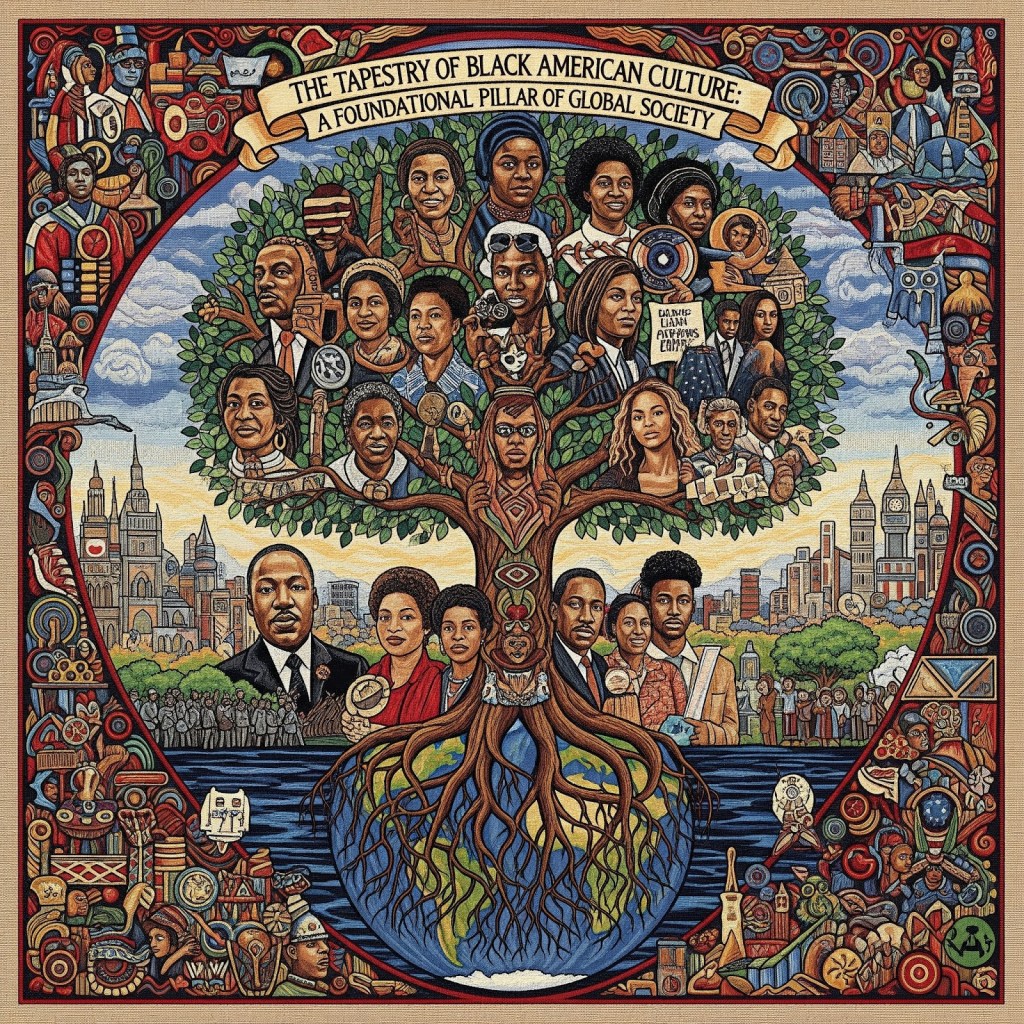


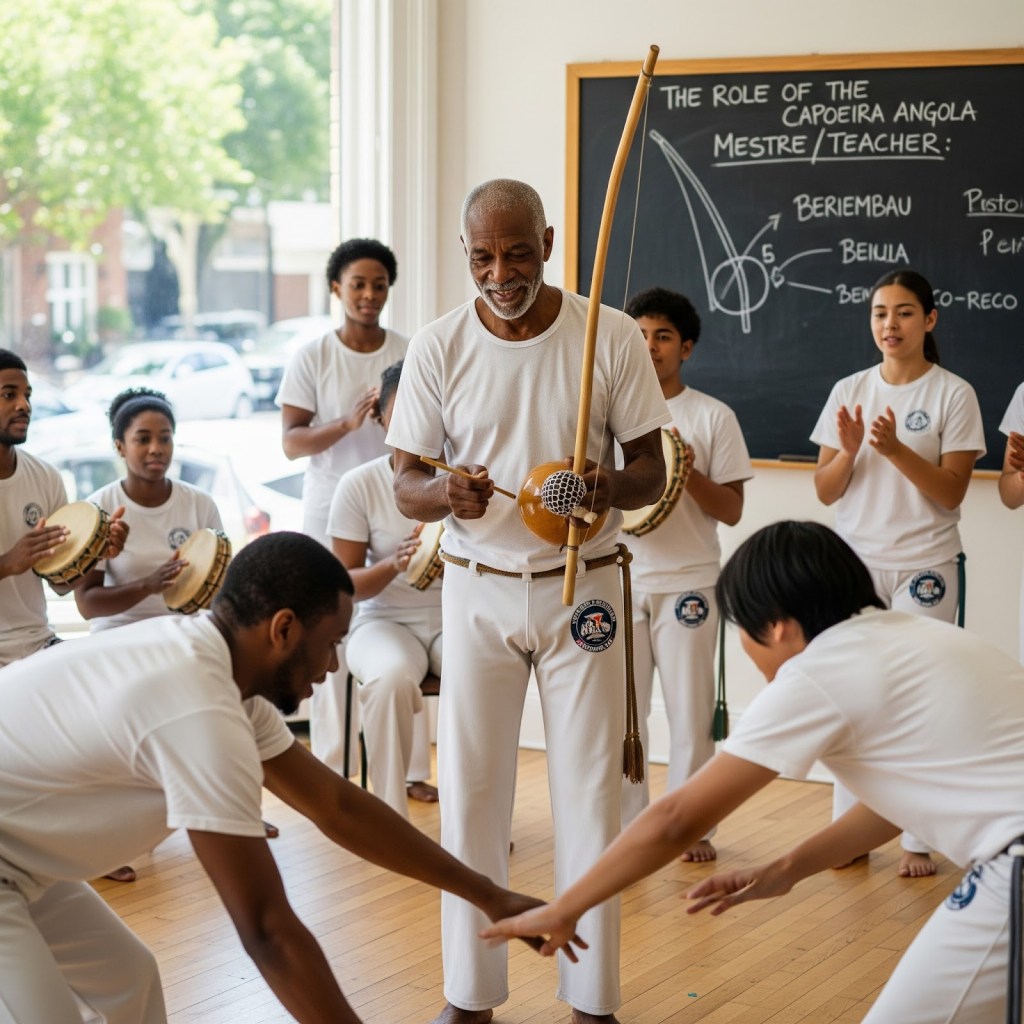


 Jogo Corpo Fechado