The Friday Crime Report: Unpacking Systemic Injustice and the Fight for Equality
Every Friday morning,PROFESSOR BLACK TRUTH delivers “The Friday Crime Report,” a vital and unflinching program dedicated to dissecting the root causes and devastating impacts of systemic issues on the black community. The show operates as a crucial platform for addressing deeply entrenched problems such as systemic racism, pervasive economic inequality, and the critical issue of police brutality.
A Mission to Inform and Inspire
“The Friday Crime Report” goes beyond mere reporting; it is a call to awareness and action. By featuring candid expert interviews, deep-dive analysis, and compelling personal stories, the program illuminates the multifaceted challenges faced by marginalized individuals and communities. Its core objective is to spark essential public dialogue and inspire genuine community engagement, believing that informed discussion is the precursor to meaningful societal change. The show expertly blends factual evidence and rigorous analysis with relatable, human experiences, effectively making complex and often painful issues accessible to a broad audience. Ultimately, Professor Black Truth’s mission is to motivate every listener to become a passionate advocate for equality and justice within their own communities.
—–In Today’s Critical Installment: The Failure of Justice for a Middle School Assault
This week’s program focuses on a disturbing case that starkly illustrates the disparity and failures within the juvenile justice system.
The segment will investigate the shocking incident that took place last year, where a gang of middle school students carried out a sexual assault against a classmate. The gravity of the crime is compounded by the fact that the group was led by their very own class president, Vaughan Griffith, who not only participated but also recorded the entire attack on video.
The Pressing Questions for Justice
“The Friday Crime Report” seeks to answer the community’s most urgent questions surrounding the case:
Why has only one of the numerous assailants been officially charged? The lack of comprehensive legal action against all perpetrators raises serious concerns about accountability and the protection of victims.
Why have none of the involved individuals, including the ringleader Vaughan Griffith, been charged with the appropriate crime of sexual assault? The miscategorization or deliberate downplaying of the charges is a critical point of focus, suggesting a potential failure in applying justice equally, particularly when the accused come from backgrounds that may afford them certain protections or privileges within the system.
Professor Black Truth will use expert testimony and a detailed review of the case evidence to expose the mechanisms at play that allow such systemic failures to occur, ensuring that this victim’s story—and the broader implications for justice—are not erased.
—–Support the Pursuit of Truth and Justice
“The Friday Crime Report” is sustained by the community it serves. If you believe in the importance of exposing systemic injustices and advocating for the Black community, please consider supporting Professor Black Truth’s work:
Welcome to MARTIAL ARTS THEATER, a vibrant community hub for martial arts enthusiasts that focuses on personal growth, discipline, and camaraderie. Here, you can access a wealth of resources, including expert interviews that delve into the philosophies behind various martial arts, instructional videos tailored for all skill levels, and engaging events that bring people together in the spirit of collaboration. Explore a diverse array of styles such as karate, judo, taekwondo, and Brazilian jiu-jitsu in an inclusive and supportive environment designed to cultivate both skill and character. Whether you’re a seasoned practitioner with years of experience or a curious beginner taking your first steps into the world of martial arts, you will find a welcoming community that fosters meaningful connections and encourages self-discovery, resilience, and empowerment through martial arts. Join us in this journey of transformation where each kick and kata not only builds physical strength but also instills confidence and fortitude to face life’s challenges.
In today’s installment…
Michael Jai White: The Action Star Hollywood Couldn’t Handle
Before the current era of superhero blockbusters, where meticulously rendered CGI and wirework often eclipse genuine physical performance, Michael Jai White was operating on an altogether different echelon of action stardom. He was not merely an actor portraying a martial artist; he was, and remains, a legitimate, high-level master of multiple fighting disciplines. His credentials are staggering: black belts in seven different styles, including Shotokan, Taekwondo, Kobudo, Kyokushin, Wushu, Tang Soo Do, and Goju-Ryu. This depth of authentic martial arts mastery provided the foundation for his screen presence, translating into fight choreography that was leagues ahead of the often-staged, overtly telegraphed combat sequences common in Hollywood films of the time.
White’s cinematic fighting style was characterized by its blinding speed, surgical precision, and a brutal, yet elegant, authenticity. His on-screen persona was a powerful, magnetic synthesis of physical grace, an imposing physical stature, and the easy charisma that defines a true leading man. Crucially, White rarely, if ever, required a stunt double for his most complex and demanding martial arts sequences. This unparalleled self-sufficiency and dedication to his craft made him the complete package: the skill, the look, and the commanding screen presence.
The logical, almost inevitable, trajectory for an actor with such a unique and formidable skill set should have been a clear path to major A-list superstardom. He possessed the raw material for a career in the mold of an Arnold Schwarzenegger or a Sylvester Stallone, yet with a layer of authentic martial arts credibility and skill that neither of those action giants could genuinely claim. Yet, this destiny of global franchise lead status never fully materialized, leading to one of the industry’s most frustrating case studies.The Problem of Being “Too Real”
The central, and perhaps tragic, irony of Michael Jai White’s career is that the very authenticity and superior skill that set him apart from his peers became, paradoxically, his greatest professional obstacle. In a profound sense, he was “too real” for a Hollywood studio system that historically prefers control, easily marketed archetypes, and actors who are content to rely heavily on special effects, camera tricks, and dedicated stunt teams to manufacture action credibility. White was a self-contained action powerhouse, a characteristic the system seemed ill-equipped to handle.
The Gentrification of Black Slang: A Cycle of Criticism, Co-option, and Cultural Theft
The phenomenon of Black slang being gentrified is a recurring and deeply troubling pattern within American culture. Time and time again, a clear and disheartening cycle unfolds: Black individuals innovate and popularize a form of cultural expression, usually through language. This expression is then met with initial criticism, dismissal, or outright ridicule from the mainstream—often framed as “uneducated” or “ghetto” speech. Subsequently, it is co-opted and imitated by non-Black communities, stripped of its original context and meaning, and finally, completely absorbed and rebranded as general internet slang or mainstream vernacular, effectively erasing its Black origins. The cultural originators are then often criticized for their own language once it has been deemed “cool” by others, or they are forced to innovate new terms to maintain cultural distinction.
A stark example of this cultural theft is the trajectory of the term “woke.” Originating within the Black community, particularly in the context of political awareness and social justice in the 20th century, “woke” meant being acutely aware of systemic racism and injustice. It was a call to consciousness. As it crossed over into broader usage, its meaning was first diluted and then weaponized. Now, it is often used dismissively by critics to mock social progressivism, a complete perversion of its intended, serious purpose.
This process is now visibly occurring with other elements of AAVE (African American Vernacular English).Understanding AAVE: Beyond “Slang”
It is crucial to understand that AAVE is not merely “internet slang,” “broken English,” or a collection of fleeting phrases. AAVE is a systematic, rule-governed dialect of American English, primarily spoken by Black Americans. It possesses its own distinct grammar, vocabulary, and phonology. Its roots are deep, complex, and historical, potentially linked to creole languages and Southern US dialects, evolving under unique historical and sociological conditions. For instance, AAVE often uses tense and aspect markers (such as the invariant be, as in “She be working”) in ways that precisely convey continuous or habitual actions, features distinct from Standard American English, demonstrating its internal logic and sophistication.
When elements of AAVE are extracted, sensationalized, and then misused by non-speakers—often without acknowledging the source—it constitutes a form of cultural appropriation. It reduces a rich, historically-rooted linguistic system to a mere trend, overlooking the very real social and professional penalties Black Americans often face for speaking the dialect in formal settings, penalties that non-Black speakers of the gentrified slang rarely encounter. The underlying sentiment is: when we do it, it’s wrong; when you do it, it’s cool.
Enough is enough. The cultural innovation of Black communities deserves respect, recognition, and protection from this repetitive cycle of theft and misrepresentation. Recognizing the origins and resisting the impulse to co-opt and mainstream AAVE terms without context is a necessary step in correcting this imbalance.
—–Support the Conversation and the Creator
Please support and amplify voices that are speaking directly to these issues and advocating for cultural respect and intellectual property.
This post springs from a truly inspiring conversation I had recently. It unfolded between myself, a fellow student named Tre, and our exceptional ESGRIMA DE MACHETE Y BORDON teacher, Sonny Batata, after a class. We found ourselves discussing certain fundamental aspects of African American culture, diving deep into its rich complexities and historical context. During this insightful discussion, Sonny shared a thought-provoking video with us that focused on the systemic factors explaining how and why Black America has been historically held back.
Here at Jogo Corpo e Fechado, our core mission is to honor, study, and celebrate all aspects of African and African diasporic cultures, recognizing their profound global impact and resilience. In keeping with that commitment, today I want to dedicate this post to elaborating on a specific, vibrant, and transformative aspect of Afro-American culture: Hip Hop. This cultural movement, which began over five decades ago, has not only defined generations but has irrevocably taken the world by storm, influencing music, fashion, language, art, and social commentary across every continent. Its fifty-plus years of existence mark it as one of the most significant cultural exports in modern history.
Rap, R&B, and Hip Hop Culture:
Emerging from the urban centers of the late 20th century, particularly the Bronx, New York, Hip-Hop culture is a potent, multifaceted global phenomenon that has profoundly reshaped modern music, fashion, language, and art. Born out of marginalized communities, it served as a creative and expressive response to socio-economic challenges and a lack of resources, giving a voice to the voiceless.
The culture is fundamentally defined by its four core elements, often referred to as the “four pillars”:
MCing (Rapping): This is the rhythmic, rhyming, and often poetic delivery of lyrical narratives over a beat. It serves as a powerful and unfiltered medium for storytelling, political commentary, social critique, philosophy, and linguistic innovation. The MC is the orator, channeling personal and communal struggles, triumphs, and observations into complex verse structures.
DJing: The original foundation of the sound, DJing involves the manipulation of music using turntables and a mixer. Pioneers developed innovative techniques like scratching, beat-juggling, and looping breaks (the most rhythmic, instrumental parts of records) to create continuous, danceable music, laying the sonic groundwork for both Hip-Hop and Rap.
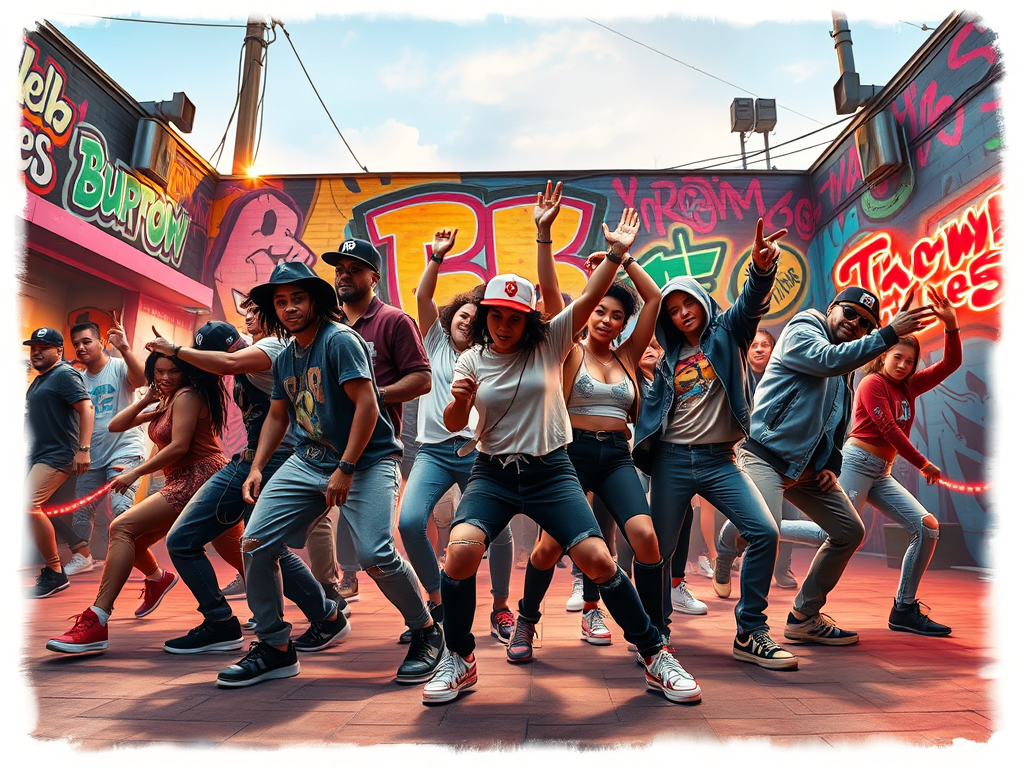
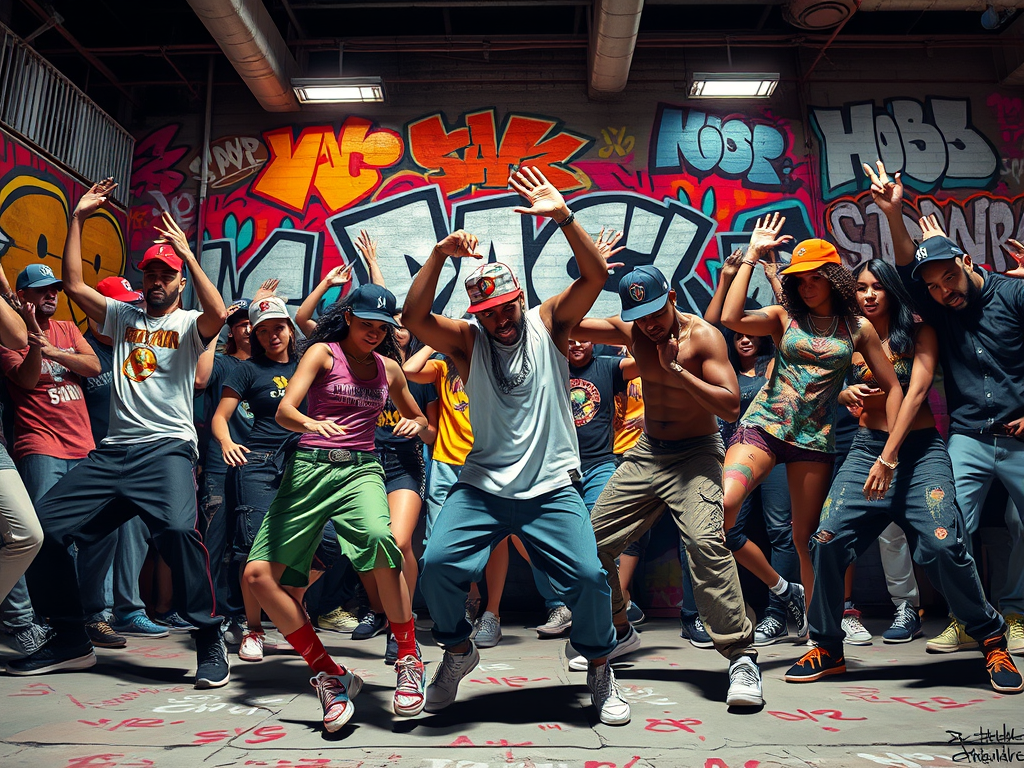
B-Boying/B-Girling (Breakdancing): This dynamic, athletic form of street dance emerged as a visual component of the culture. Characterized by intricate footwork, power moves (such as headspins and windmills), freezes, and stylistic flair, B-Boying is a form of competitive physical artistry and self-expression.
Graffiti Art (Writing): As a visual language, graffiti art involves stylized, often large-scale murals and tags executed in public spaces. It functions as a declaration of identity and territory, a form of artistic reclamation, and a vibrant, if sometimes controversial, commentary on the urban landscape.
Rap, R&B, and Hip Hop Culture: A Global Phenomenon
Beyond the foundational and celebrated “four elements”—MCing (rapping), DJing (turntablism and beat production), breakdancing (B-boying/B-girling), and graffiti art (aerosol art)—Hip-Hop has organically grown into a sprawling, multi-faceted cultural ecosystem. This powerful influence now seamlessly encompasses global fashion trends, specialized linguistic innovation and slang, a strong spirit of entrepreneurship, and a complex philosophy. From its raw genesis in community parks, Hip-Hop has consistently and aggressively redefined the global popular music landscape, demonstrating an unmatched capacity for artistic and commercial evolution. It has transformed dramatically from its initial community-driven block party roots—born out of necessity and serving as a creative, non-violent response to social and economic neglect—into the single most commercially dominant and culturally influential music genre worldwide. Despite this massive commercial success, Hip-Hop has remarkably maintained its foundational ethos as a potent, authentic platform for critical social commentary, storytelling, and a powerful catalyst for profound social change and youth empowerment.
History: The Birth of a Movement
Hip-Hop, a global cultural phenomenon, was not born in a boardroom or a recording studio but emerged organically from the neglected and economically challenged streets of the South Bronx, New York, in the early 1970s. This revolutionary movement was pioneered by resourceful Black and Puerto Rican youth who ingeniously fused their disparate cultural heritages and musical interests into a potent new form of expression and community building.
The bedrock of this cultural edifice was built by key visionary figures, each contributing an indispensable element to what would become the four pillars of Hip-Hop: DJing, MCing, B-boying/B-girling (breakdancing), and Graffiti Art.
DJ Kool Herc (Clive Campbell): Widely regarded as the founding father, this Jamaican-born pioneer introduced the rhythmic and organizational principles of Jamaican sound system culture to the Bronx. His most significant innovation was the “Merry-Go-Round” technique—the isolation and continuous looping of the most rhythmic, percussive sections of records, known as the “breakbeats.” By using two turntables, Herc could extend these instrumental “breaks” indefinitely, providing a sustained, energetic platform for dancers (B-boys and B-girls) to showcase their most intricate moves.
Grandmaster Flash (Joseph Saddler): A technical virtuoso, Flash refined and elevated the art of DJing to an unprecedented level. He innovated advanced, essential techniques such as scratching (creating rhythmic sounds by moving the record back and forth under the needle), punch-phrasing (manipulating records to create new rhythmic patterns), and cutting (seamlessly transitioning between two records). His mastery transformed the DJ from a simple selector of music into a creative, instrumental performer.
Afrika Bambaataa (Lance Taylor): Often called the “Godfather” of Hip-Hop Culture, Bambaataa was instrumental in articulating the culture’s foundational philosophical principles and promoting a positive, unifying message. As the founder of the Zulu Nation, he championed the culture as a conscious alternative to the destructive cycle of gang violence that plagued the borough. Bambaataa blended the electronic rhythmic foundations of Kraftwerk with the funk and soul of classic records, emphasizing cultural awareness, artistic mastery, and non-violent, competitive expression.
These visionary artists seamlessly blended the rhythmic intensity of funk and soul records, the repetitive, propulsive four-on-the-floor beat of disco, and the structural creativity of the sound system aesthetic. This foundational period laid the essential groundwork for an entire global culture, prioritizing community expression, artistic mastery, and non-violent competition as a powerful social mechanism for self-determination and empowerment. The extended instrumental break sections they created soon became the ultimate stage for the MCs (Masters of Ceremony) to develop their vocal skills, evolving from mere hype men into the lyrical storytellers of the emerging genre.
Philosophy: Peace, Authenticity, and the Challenge to the Status Quo
The foundational philosophical framework of Hip-Hop, initially articulated and widely promulgated by Afrika Bambaataa and the Universal Zulu Nation, is centered on the core tenets of “Peace, Love, Unity, and Having Fun.” This original maxim provided a positive, unifying structure intended to divert inner-city youth away from gang violence and destructive behaviors toward creative expression and community building.
However, the culture simultaneously embodies a far more complex and nuanced set of internal ideas that directly reflect its origin as an expressive voice for the marginalized, the dispossessed, and the systematically oppressed. Central to this lived philosophy is the concept of “Keepin’ It Real”—a powerful, non-negotiable demand for unvarnished authenticity, genuine self-representation, and fidelity to one’s own lived experience and communal history. This value rejects artifice and performative posturing, insisting on truth in lyrics, attitude, and lifestyle.
Masterful storytelling is not merely an artistic preference but a critical tool for survival and social documentation. Through vivid narrative and lyrical dexterity, Hip-Hop artists chronicle the realities of urban life, systemic inequalities, personal triumphs, and internal struggles, thereby giving form and weight to narratives often ignored or misrepresented by mainstream institutions.
Furthermore, the culture carries a perpetual, inherent dedication to challenging the status quo and relentlessly questioning authority. Born from a context of socio-economic disparity and political neglect, Hip-Hop acts as an active form of counter-culture, criticizing governmental policies, exposing hypocrisy, and advocating for social justice. It is inherently a voice for the voiceless, prioritizing the distinct, highly individualized narrative and agency within the broader context of collective empowerment.
Finally, Hip-Hop places an extremely high value on artistic mastery, linguistic innovation, and technical skill (known as “flow” and “mic control”). These attributes are not sought for aesthetic reasons alone; they are viewed as essential, powerful tools for achieving social mobility, economic independence, and establishing intellectual authority. Superior skill is recognized as a legitimate pathway to transcend prescribed social and economic boundaries.
Culture: A Dynamic, Entrepreneurial Aesthetic – The Global Impact of Hip-Hop
Hip-Hop culture is not merely a genre of music; it is a profound, globally-adopted aesthetic and a self-referential cultural phenomenon characterized by its restless dynamism and ever-evolving field of creative expression. Its influence has transcended artistic boundaries, establishing itself as a dominant force in popular culture and commerce worldwide.
The foundational pillars of Hip-Hop—often cited as DJing, MCing, breakdancing, and graffiti art—created a complex, active interplay of sound, visual art, movement, and a unique vernacular. This vernacular constantly injects new vocabulary, slang, and idiomatic expressions into the mainstream lexicon, demonstrating the culture’s power to shape communication globally.
Furthermore, Hip-Hop has been an unparalleled engine for fashion and style. This influence has spanned decades, starting with the early adoption of oversized silhouettes, brand-driven sportswear, and gold jewelry in the 1980s and 90s, which signaled both identity and status. Today, this sartorial legacy has matured into a sophisticated, multi-billion-dollar market, evidenced by the ubiquitous presence of luxury streetwear. Major artists now routinely engage in high-end collaborations, securing creative director roles at esteemed fashion houses, thereby validating Hip-Hop’s place at the pinnacle of global style and design.
Crucially, the success of Hip-Hop is underpinned by a robust and aggressive entrepreneurial spirit. Driven by artists and creators who recognized the immense commercial power of their aesthetic and voice, the culture fostered a powerful DIY (Do-It-Yourself) ethos. This self-determination has led to the creation of hugely successful, independent record labels (such as Def Jam, Bad Boy, and Roc-A-Fella in their early days), global clothing lines, innovative marketing agencies, and diversified media empires. This vertical integration of creativity and commerce, often bypassing traditional industry gatekeepers, has solidified Hip-Hop’s standing not just as an artistic movement, but as a significant, enduring global economic force that empowers its participants to own and control their creative output and commercial destiny.
Intertwining with R&B: The Symbiotic Sonic Bedrock
Rhythm and Blues (R&B), while a venerable and distinct genre with its own long and foundational history rooted in gospel, blues, and jazz traditions, is profoundly and inextricably intertwined with Hip-Hop. The relationship is fundamentally symbiotic and mutually beneficial. R&B often provides the soulful samples, sophisticated chord progressions, and lush melodic structures that serve as the harmonic and emotional bedrock for countless Hip-Hop tracks, injecting a necessary element of warmth and musical complexity. Furthermore, the genres frequently and successfully collaborate on vocal performances, with R&B artists lending their smooth, often intricate hooks and complex harmonies that significantly enrich and diversify the overall soundscape of modern urban and popular music. This collaborative history is not merely incidental; it is absolutely essential to understanding the sonic richness, commercial versatility, and mainstream dominance of contemporary Hip-Hop and R&B music.
So… What does rap and Hip Hop have to do with Capoeira Angola?
This connection, while not always immediately apparent, is deeply rooted in the shared history, cultural aesthetics, and political consciousness of the African diaspora. Both are powerful, multi-faceted cultural expressions that emerged from marginalized communities and serve as vehicles for communication, resistance, and self-expression.
Capoeira Angola, with its origins in enslaved Africans in Brazil, is a complex blend of martial art, dance, and music. It was a tool for both physical defense and cultural preservation, disguised as a dance to evade colonial authorities. The roda (the circle in which Capoeira is played) is a space for communal storytelling, history, and improvisation, powered by the rhythmic instruments like the berimbau and the call-and-response songs.
Similarly, Hip Hop—encompassing rap, DJing, breaking (breakdancing), and graffiti—arose from the economically disenfranchised, predominantly Black and Latino communities of the Bronx in the 1970s. It was a creative response to urban decay, social inequality, and police violence. Rap music, in particular, became the lyrical voice of the movement, using complex rhythm and rhyme schemes to articulate social commentary, personal narratives, and cultural pride.
The essential ties lie in several key areas:
Improvisation and Flow: Both demand high levels of physical and verbal improvisation. In Capoeira, the jogo (the game) is a constant, spontaneous dialogue between the two players. In rap, “flow” is the rapper’s ability to manipulate rhythm and meter, creating a spontaneous, dynamic, and unique lyrical style.
Rhythm and Call-and-Response: The musical backbone of both is based on African rhythmic traditions. Capoeira Angola is entirely dictated by the beat of the berimbau. Hip Hop’s foundation is the breakbeat, often looped and manipulated by a DJ, and the vocal style frequently employs the African-derived call-and-response pattern that fosters community participation.
The Cypher/Roda as Sacred Space: The roda in Capoeira and the cypher (the circle formed by B-boys/B-girls, rappers, or beatboxers) in Hip Hop are structurally and functionally similar. They are defined, enclosed spaces where participants engage in a competitive yet supportive display of skill, respect, and cultural knowledge. They are stages for performative identity and mastery.
Aesthetics of Resistance and Subversion: Both forms embody a spirit of resistance. Capoeira hid martial skill in dance. Hip Hop culture, especially through graffiti and lyrical content, often subverts mainstream narratives and challenges the status quo, transforming overlooked, marginalized spaces and voices into platforms of power.
Physicality and Acrobatics: The dynamic, often floor-based acrobatics of Capoeira Angola find a clear echo in the power moves and footwork of breaking. Both emphasize a mastery of body control, balance, and gravity-defying maneuvers that are central to the performance.
The deep connection between rap, Hip Hop culture, and Capoeira Angola is ultimately revealed by recognizing them as parallel and profound movements of cultural survival and creative ingenuity born from the global African diaspora. These cultural forms are not merely entertainment; they are dynamic, living archives of shared history, enduring resistance, and vibrant community, expressed through a powerful synthesis of movement, music, and voice.
Rap and Hip Hop, emerging from the socio-economic crucible of the Bronx in the 1970s, provided a voice for disenfranchised youth, transforming urban blight into a space for artistic expression. The four core elements—rapping (MCing), DJing, B-boying/B-girling (breakdancing), and graffiti art—each represent a unique form of cultural literacy and historical reclamation. The rhythmic complexity of the music and the verbal dexterity of the MCs echo the call-and-response traditions and the griot storytelling heritage of West Africa. B-boying, with its intricate footwork, freezes, and power moves, draws a kinetic parallel to the circular dance and strategic play of Capoeira.
Capoeira Angola, conversely, is an Afro-Brazilian martial art and a dance, created by enslaved Africans as a means of physical self-defense, community bonding, and resistance against colonial oppression. Its structure—the roda (the circle), the berimbau (the lead instrument), the songs, and the fluid, low-to-the-ground movements—is a meticulously preserved system of coded communication and historical memory. The mandinga (the trickery, cunning, and soul of the game) is the philosophical core that ties strategy to rhythm.
The shared essence lies in their functionality as tools for empowerment. Both Capoeira Angola and Hip Hop culture provided a non-violent, yet intensely powerful, means for marginalized populations to establish identity, assert dignity, and create a self-determined space outside of the dominant culture’s control. They utilize the body as an instrument of cultural preservation and the circle (the roda or the cypher) as a sacred, democratic space where skill, respect, and dialogue are paramount. The improvisational nature of both forms—the freestyle rap, the breakdance battle, the Capoeira game—underscores a shared commitment to spontaneity, personal narrative, and an ongoing, competitive yet collaborative, dialogue with history and the present moment.
The WARRIOR CLASS podcast stands as your premier, indispensable, and utterly unique resource for comprehensively mastering the principles of self-protection and self-defense. We have meticulously designed every episode to equip every single listener—regardless of background or current skill level—with the vital, practical skills and the deep, profound knowledge base absolutely necessary for achieving and maintaining personal safety, holistic empowerment, and unshakeable confidence in an unpredictable world.
—–Tune In and Transform Your Life
Commit to your personal evolution and don’t miss a single, transformative episode! The WARRIOR CLASS podcast broadcasts new content every Saturday precisely at 1:00 PM Eastern Standard Time (EST).
By making the simple but active choice to tune in each week, you are taking a decisive and critical step to empower yourself. Our goal is to help you cultivate and become the absolute strongest, most capable, and most resilient version of yourself possible. This transformation extends far beyond mere physical preparedness; we hone your mental sharpness, fortify your emotional resilience, and develop your situational awareness—the complete package of a modern warrior.
What We Explore
Join us every week as we dive deeply into the dynamic intersection of:
Martial Arts Philosophy and Practical Application: Moving beyond sport, we analyze the core tactics and strategies from various disciplines that are most effective in real-world self-defense scenarios.
Community Resilience and Preparedness: Understanding the role of an aware and capable individual within their family and community structure to collectively navigate crises.
The Psychology of Conflict and De-escalation: Learning to recognize threats early, manage fear, and, when possible, use verbal skills to avoid physical confrontation entirely.
Essential Role in Navigating Everyday Challenges: We apply the warrior mindset to all aspects of life, fostering discipline, focus, and the ability to overcome adversity, both big and small.
—–Your Journey to Becoming a Warrior Starts Now
The path to true self-mastery requires dedication, but the rewards are immeasurable. Don’t miss out on this crucial, life-changing journey. We invite you to join our community of listeners dedicated to moving through the world informed, confident, and meticulously prepared for anything and everything life may present. Embrace the warrior within you today.
In today’s episode…
The Anatomy of the Killer Instinct: Absolute Power Under Absolute Control
The true killer instinct is a psychological and physical phenomenon that stands in direct opposition to reckless, uncontrolled aggression. It is not a primitive, constant emotional state, but rather the ultimate and most refined manifestation of focused power wielded with absolute control. This instinct is the product of meticulous self-mastery, honed through years of deliberate training, unwavering discipline, and profound self-awareness.
It functions as a highly refined, surgical tool, available to be summoned precisely when a situation escalates to a critical, “make-or-break” moment demanding peak performance and a decisive, non-negotiable outcome. When triggered, it unleashes a sudden, explosive, and synergistic surge of all human faculties:
Physical Vitality: An immediate, comprehensive mobilization of the body’s latent energy reserves, translating into superior speed, strength, and endurance.
Acute Mental Clarity: A state of supreme, hyper-focused attention where peripheral distractions vanish, time appears to slow down, and complex variables are processed instantaneously. The mind achieves perfect operational clarity.
Formidable Emotional Force: The conversion of fear, doubt, or external pressure into cold, unwavering resolve and a fierce determination to execute the task flawlessly.
Crucially, this potent energy is never wasted. It is not discharged in fits of temper or meaningless posturing. Instead, it is unleashed with the surgical precision of a master craftsman, directed solely at the specific point of opposition or challenge. This precise, controlled application of overwhelming force grants the individual an undeniable, overwhelming, and often psychologically devastating edge over any competitor or adversity.
The Transformative Mechanism
When this profound instinct is meticulously mastered and applied with strategic timing—at the apex of the competitive or crisis curve—it transcends the boundaries of mere human effort and standard execution. It is the core mechanism of transformation that elevates:
The ordinary effort into the extraordinary feat.
The standard performance into undeniable and epoch-making achievement.
The participant into the champion.
The good into the great.
It is the intangible, yet most powerful, variable in the equation of success—the internal switch that turns potential energy into victorious action. It is the quiet confidence that, regardless of the challenge’s magnitude, one possesses the inner capacity for a decisive, controlled application of force that guarantees the result.
This comprehensive and critical concept will form the core discussion for the latest episode of Warrior Class. The Instructors will not only define and deconstruct the elements of this killer instinct but will provide a detailed analysis of its necessity in high-stakes environments, practical methods for its cultivation, and the ethical, highly controlled manner in which it must be applied to secure success without compromising principles.
When first considering the art forms of Capoeira and Vogue, it is understandable that one might struggle to find common ground. On the surface, they appear to exist in completely different cultural, historical, and geographical spheres. Capoeira, the Afro-Brazilian martial art that blends fighting, acrobatics, music, and dance, evokes images of sun-drenched rodas and centuries of resistance. Vogue, the highly stylized, modern house dance originating from the Harlem ballroom scene, suggests the vibrant, assertive self-expression of marginalized communities in urban America.
I must admit, my initial reaction was one of skepticism; I simply couldn’t quite see how a historical, ritualized martial art and a contemporary, high-fashion dance form could have anything meaningful in common.
However, the deeper I delved into the philosophy, movement vocabulary, and cultural significance of both practices, a powerful and undeniable connection began to emerge—a kinship rooted in resilience, improvisation, theatricality, and a profound commitment to self-assertion. This exploration has been a journey of discovery, forcing me to challenge preconceived notions about movement and cultural dialogue.
I am more than happy to be proven wrong in my initial assessment. The intersections of Capoeira and Vogue offer a compelling case study in how seemingly disparate forms of embodied expression can share a common DNA of survival and spectacular creativity. The following article details the unexpected and beautiful resonances between these two dynamic, powerful, and deeply significant cultural practices. Enjoy the exploration of this fascinating dialogue.eped in a rich and sometimes painful history, yet they share a surprising and profound number of parallels. Both are sophisticated languages of the body, particularly in their emphasis on complex movement, dramatic self-expression, the channeling of competitive energy, and the creation of a defined, protected community space for performance. Exploring the connection between these two forms offers a fascinating and critical lens through which to examine global artistic currents, the power of marginalized communities to create and preserve culture, and the universal human desire for radical self-definition.
Capoeira: A Dance-Fight of Resistance, Flow, and Cunning
Capoeira originated in Brazil, ingeniously developed by enslaved Africans primarily from West and Central Africa. To evade detection and the severe punishment of their oppressors, they creatively disguised a sophisticated and deadly martial art as an innocent-looking, rhythmic dance. This duality—the art of masking aggression with grace—is the very soul of Capoeira. It is characterized by fluid, acrobatic movements, high-velocity kicks, powerful sweeps, and the continuous, swaying motion known as the ginga.
The practice is inseparable from its musical foundation. Every jogo (game) is always accompanied by the potent, driving rhythm from the berimbau (a single-string percussion instrument that dictates the pace and intensity), the atabaque (a hand drum), and traditional songs, which often tell stories of history, struggle, and resistance.
Key Characteristics and Cultural Function:
Ginga (The Flow and Deception): The foundational, rhythmic, swaying movement. The ginga is not merely a warm-up; it serves as both a posture of perpetual readiness and a mesmerizing rhythmic dance. It embodies the constant state of motion, misdirection, and deception crucial to the art, protecting the player while creating openings for attack. It is the heart of Capoeira’s flow state.
The Roda (The Sacred Circle): The circle formed by participants where capoeiristas “play.” The roda is a multi-functional space: a performance stage, a dynamic battleground, a communal gathering, and a ceremonial arena. It is rigorously governed by rituals, respect for the music, and deference to the Mestre (Master) or senior players, ensuring the integrity and lineage of the art form are maintained.
Acrobatics and Expressiveness: While fundamentally a fighting technique, Capoeira is intensely aesthetic and theatrical. It incorporates impressive, often gravity-defying acrobatics (aú – cartwheel, macaco – monkey jump) and a theatrical element where players communicate, challenge, and spar with each other non-verbally, often with a sense of playful cunning or malícia.
Vogue: Striking a Pose, Finding the Spotlight, and Self-Definition
Vogue, or Voguing, emerged as a brilliant cultural explosion from the African American and Latino LGBTQ+ Ballroom scene in Harlem, New York, starting in the 1960s and dramatically evolving through the 80s. Born out of necessity, it was an art form and a competitive culture centered on self-definition, fierce competition, and the radical celebration of marginalized identities that were aggressively rejected by mainstream American society. It evolved into a highly stylized, modern house dance characterized by striking angular and linear poses that mimic the dramatic artistry of fashion models in Vogue magazine, interwoven with complex hand movements, dramatic dips, spins, and drops.
Essential Elements and Historical Context:
Posing and Hand Performance: The core element involves sharp, angular, and often gravity-defying poses (the “snap”), connected by intricate, graceful, and articulate hand movements (“Hand Performance”) that can tell a complex, non-verbal story or convey an attitude. The three major styles—”Old Way,” “New Way,” and “Vogue Femme”—each emphasize different aspects of line, precision, and femininity.
Walks and Battles (The Ballroom Culture): Participants “walk” in hyper-competitive events known as Balls. These categories are judged not just on technical execution and complexity, but also on costume, attitude, and the elusive concept of “realness” (the ability to convincingly portray a particular identity, especially one denied to them). The “battle” structure is the central, electric engine of the Ballroom scene’s energy and innovation.
Attitude and Radical Self-Affirmation: Vogue is a potent tool for confidence, catharsis, and radical self-expression. In the Ballroom, performers can temporarily become the aspirational, powerful, and aspirational figures often denied to them in the external world. It is an art of claiming space, demanding respect, and affirming existence.
—–The Overlapping Aesthetics: Flow, Drama, and the Circle of Life
The conceptual and physical overlap between Capoeira and Vogue, despite their geographic and historical distance, is strikingly cohesive. Both are manifestations of genius created under duress.
The Element of Flow and Deception (The Ginga/The Illusion):
Capoeira: The ginga is a rhythmic, constant flow designed specifically to confuse an opponent, masking a sudden, powerful offensive move as a mere step or sway. The goal is to move so fluidly that the attack is obscured until the last possible moment.
Vogue: Similarly, Vogue, particularly “New Way” with its intricate locks, “clicks,” and illusions, utilizes a constant, controlled flow of transition to create mesmerizing visual effects that fool the eye. Both practices prioritize continuous, deceptive motion over static, exposed form, leveraging the element of surprise.
Performance, Theatricality, and Emotional Intensity:
Both forms are inherently dramatic, theatrical, and performative. Capoeira is a ritualized “game” played to the pulsing sound of music, where flair, humor, malícia (cunning), and misdirection are valued as highly as power.
Vogue is performance perfected—a dramatic art form built on fierce attitude, the communication of confidence, and the ability to command and hold the entire room’s attention. Both create an atmosphere of intense, almost electric energy and non-verbal dialogue between participants and the audience.
The Community Circle (The Roda/The Ball):
The Roda in Capoeira and the Ball in Vogue serve as sacred, delimited, and intensely focused spaces where the art is performed, judged, and celebrated by a close-knit, self-selected community.
These circles are more than just venues; they are safe havens that allow for maximum, uninhibited self-expression and cultural perpetuation. Functioning as cultural centers of resistance, they offer a powerful counter-narrative and protection against external societal pressures, judgment, and historical marginalization.
Improvisation, Dialogue, and Call-and-Response:
A capoeira game is a continuous, improvised, and highly responsive dialogue between two players. Each player’s move is a comment on, a challenge to, or a deflection of their opponent’s previous action.
Vogue battles also rely heavily on improvisation, with performers dynamically responding to the driving music, the commentator (MC), and directly challenging their opponent’s moves. The entire process creates a kinetic, competitive conversation that pushes the boundaries of innovation in real-time.
By recognizing the shared vocabulary of fluid movement, dramatic expression, communal ritual, and the defiant spirit ingrained in their structure, a comparative study of Capoeira and Vogue reveals a universal human necessity: the desire for creative freedom, self-definition, the preservation of culture, and the power of resistance articulated through the spectacular art of the body.
Now, I would like to introduce you to someone who embodies a profound dialogue between two powerful forms of movement and cultural resistance. Her name is Puma Camillê.
Puma Camillê is a prominent Brazilian multidisciplinary artist, capoeirista, and performer who has pioneered a captivating hybrid performance style that has garnered attention both nationally and internationally. Her work is a fluid and powerful convergence of the traditional Afro-Brazilian martial art of capoeira, known for its intricate movements and rhythmic footwork, with the fierce, expressive dance style of voguing, which celebrates individuality and self-expression. This unique synthesis of movement forms is not merely an artistic experiment but a profound statement on cultural continuity, self-expression, and resilience, as it bridges the gap between historical traditions and contemporary manifestations of identity. Through her performances, Puma invites audiences to reflect on the rich tapestries of their heritage while simultaneously challenging societal norms, making her artistry a vital force in the ongoing dialogue about culture, race, and empowerment in the modern world.
About Puma Camillê: A Profile in Art and Activism
Identity and Roots: Born in São Paulo, Puma Camillê is a black trans woman and a leading figure in the Brazilian ballroom community. Her personal journey and identity are inseparable from her artistic practice, grounding her work in the lived experience of marginalized communities.
The Hybrid Artistry of Resistance: Puma’s artistic signature is the seamless blending of capoeira and voguing. She identified deep parallels between these two seemingly disparate movement traditions, recognizing a shared philosophical foundation built on resistance and rebellion. Capoeira, born from the enslaved African people in Brazil, served as a disguised form of martial arts and cultural preservation. Voguing, originating in the LGBTQIA+ ballroom scene of 1980s Harlem, emerged as a celebration of queer identities, a defiant, creative response to a hostile social landscape. For Puma, both art forms are born from a foundational search for freedom and a refusal to be suppressed.
Artivism and Community Building: Beyond the stage, Puma Camillê uses her art as a form of “artivism”—a conscious integration of artistic practice with social and political activism. This commitment is exemplified by her founding of the collective Capoeira Para Todes (Capoeira For Everyone). This initiative actively promotes and ensures a visible, affirmed presence for queer and transfeminine individuals within these historically significant art forms, challenging heteronormative and patriarchal structures.
Global Impact and Pedagogy: Puma Camillê is an internationally recognized figure, traveling extensively to host workshops and deliver breathtaking performances. Her pedagogy focuses on much more than technique; it is centered on promoting body diversity, fostering ancestral connection, and empowering participants through the transformative experience of movement. She connects the spiritual lineage of capoeira’s roda (the circle in which capoeira is played) with the community and defiance of the ballroom kiki (social gathering/mini-ball).
Critical Recognition: Her singular practice has garnered significant attention, including being the subject of the short film PUMA by director JDiscovering (J. Molinari). This evocative film casts a dreamlike, intimate lens on the vibrant creative landscape that birthed her unique fusion style, following the seamless synergy between the two performance styles as they elegantly intertwine and are interpreted as one cohesive whole. By delving into the intricacies of her artistic process, the film showcases not only the transformative nature of her performances but also the emotional depth and authenticity that captivates audiences. It provides a rare glimpse into her inspirations, the challenges she has faced, and her unwavering commitment to pushing artistic boundaries, making her work not just a performance but a profound exploration of identity and expression that resonates on multiple levels.
PUMA explores the spiritual connection and sense of identity that Puma finds through these distinct yet connected forms of movement—both created by, and for, marginalized communities. The film successfully documents her singular practice through the connectedness it brings, highlighting the influential forces behind her pursuit of unexplored ground and establishing her art form as one for which the personal is the driving, revolutionary principle. Her work consistently finds fluidity and new meaning in experimental movements that honor tradition while blazing a trail for future generations. By intertwining personal narratives with collective histories, she crafts a tapestry of experiences that resonate deeply within the heart of her audience, inviting them to engage with the transformative power of dance as a means of expression. The vibrant choreography not only serves as a reflection of her own journey but also embodies the struggles and triumphs of the communities she represents, making each performance a powerful statement about resilience and hope. Through this lens, Puma not only challenges the conventional boundaries of art but also paves the way for dialogue about cultural identity and the importance of preserving heritage in an ever-evolving world.
Year-End Reflection: A Look Back at the Developments, Highlights, and Lowlifes
This is it. Today, the professor dedicate his morning briefing to an expansive discussion on the year that was—the tumultuous, transformative, and occasionally transcendent twelve months that now lie in our collective rearview mirror. The professor will be meticulously dissecting the key developments that reshaped our world, celebrating the highlights that provided moments of inspiration and progress, and, yes, calling out the “lowlifes” whose actions defined the negative context of the year. This annual tradition is more than just a summary; it’s a critical examination of where we’ve been, setting the stage for where we must go.
A Major Milestone: 1000 Morning Briefings
Before we dive into the year’s analysis, we must take a significant moment for reflection. With today’s broadcast, we officially post our 1000th Morning Briefing. A thousand mornings—a thousand opportunities to deliver the truth, context, and critical perspective you deserve. It’s a heavy mantle, and they are profoundly grateful for the community we’ve built together. This achievement underscores our unwavering commitment to being a primary source for the analysis that the mainstream media often refuses to provide.
Supporting The Black Media Movement
Our ability to produce this consistent, independent content—now a thousand episodes strong—relies entirely on the support of this community. We are #WeAreTheBlackMedia, and your contributions are what keep this essential platform running. If our work has informed, challenged, or empowered you over the past year, we encourage you to support our efforts through the following channels:
You can also find and follow our movement on X (formerly Twitter) at @profblacktruth.—–In-Depth Analysis: The Year That Defined UsDevelopments:The Shifting Sands of Power
The past year was characterized by several major structural developments that will have lasting impacts. We saw unprecedented economic volatility, with global markets reacting violently to geopolitical shifts and domestic policy decisions. A significant development was the ongoing, fundamental re-evaluation of digital privacy and data ownership, spurred by major legislative battles and technological breakthroughs (and breakdowns). Politically, the most defining development was the continued splintering of traditional alliances and the rise of new, grassroots movements demanding structural change and accountability. We’ll explore how these movements have fundamentally altered the landscape of public discourse and political viability, particularly within the Black community
(#B1).Highlights:Moments of Progress and Resilience
Amidst the chaos, there were genuine highlights that deserve recognition. We saw crucial legislative victories at the local level that directly addressed systemic injustices. The year was marked by exceptional achievements in the arts, sciences, and entrepreneurship by individuals from the diaspora, demonstrating incredible resilience and innovation. These highlights serve as powerful counter-narratives to the pervasive negativity, proving that progress, though hard-won, is always within reach. We will detail the most impactful successes that offer a blueprint for future collective action.
Lowlifes:Accountability for the Underminers
No year-end summary would be complete without a frank discussion of the individuals and institutions we define as “lowlifes”—those who actively worked to undermine progress, sow discord, and prioritize self-interest over the well-being of the community. This category includes public figures, corporate entities, and political actors whose actions caused demonstrable harm. We will name names and detail the specific actions—from unethical corporate practices and exploitative policies to overt acts of intellectual dishonesty—that defined the nadir of the year. Accountability is not an act of vengeance; it is a prerequisite for change.
Join us as we take this critical, comprehensive, and unfiltered look at the last twelve months, preparing ourselves with the knowledge and context needed to face the year ahead.
Okay, before I get into this post, I need to post this.
⚠️ Disclaimer: This video is a dramatized documentary-style story inspired by real events, created for educational, informational, and entertainment purposes. Any resemblance to actual persons or events is coincidental unless explicitly stated. Viewer discretion is advised due to potentially sensitive themes. The use of public figure imagery is representational only and does not imply endorsement or affiliation. The video is for informational and commentary purposes only. The use of public figure imagery is purely representational and does not imply endorsement or affiliation.
Now, I can deeply relate to the sentiment expressed in this story, as I am personally immersed in the study of Capoeira Angola, a martial art that frequently encounters skepticism, often leading to dismissal or outright ridicule when the topic of its combat practicality arises. It’s a common misconception that its flowing, dance-like movements equate to ineffectiveness in a real confrontation. However, to truly understand Capoeira, one must appreciate its historical context as a disguised fight and resistance art developed by enslaved Africans. Its deceptive nature is its strength.
Furthermore, I am also a devoted student of FMA, the Filipino Martial Arts, which is a vast and intricate system encompassing a wide array of skills, including stick fighting (Eskrima/Arnis/Kali), blade work, empty-hand techniques, and grappling. From my personal experience and training, I can emphatically attest that to label FMA as “basic” is a profound understatement. FMA is anything but simple; it is a complex, principles-based martial system that demands deep understanding, adaptability, and high-level motor skills, often transitioning seamlessly between weapons and unarmed combat. The depth, speed, and sophistication of its techniques—especially its footwork and angles of attack—are testaments to its sophistication and combat provenience.
Anyway, enjoy the story.
The martial arts hall in Beijing fell silent, the oppressive weight of expectation settling over the gathered masters. It was September 2017, and the air was thick with palpable tension and the scent of polished wood. China’s most respected and highly decorated Kung Fu master, Liu Chen, stood opposite his challenger, his expression a mixture of amusement and arrogance. The challenger was Rafael Cortez, a Filipino martial artist who had traveled thousands of miles for this very confrontation.
Liu Chen’s laughter, sharp and dismissive, echoed in the vast space as he addressed Cortez and the assembly of esteemed martial arts experts. “Filipino martial arts?” he scoffed, waving a hand with casual disdain. “Just basic weapon techniques, not true martial arts. It’s a crude system for street brawlers, useful perhaps for farmers protecting their chickens, but hardly a sophisticated fighting discipline.” His gaze was condescending, fixed on the simple rattan sticks Cortez carried. “Kung Fu has three thousand years of history, a profound philosophy, and countless intricate forms passed down through generations of disciplined study. We have depth, tradition, and spiritual enlightenment woven into every movement. What do you have? Stick patterns. No sophistication. No inner truth.”
The insult, delivered with such open contempt for an entire cultural fighting heritage, hung heavy in the air. The other Chinese masters in the room, initially polite but skeptical of the foreign art, now nodded in agreement, their faces mirroring Liu Chen’s haughty confidence. This was a spectacle of cultural supremacy, and they expected nothing less than a quick, embarrassing defeat for the upstart Filipino.
Unfazed by the ridicule and the hostile atmosphere, Rafael Cortez remained calm, his eyes holding a quiet intensity. He stepped forward and, with unhurried precision, began to demonstrate the core principles of Filipino martial arts—specifically, the concepts of flow, economy of motion, and simultaneous attack and defense. He didn’t execute flashy forms but showcased practical applications. He used the “live hand” to check, trap, and manipulate an opponent’s body while the weapon hand delivered strikes. He demonstrated how a stick, blade, or even an empty hand worked on the same fundamental framework of angles and footwork.
What followed shocked every master in the room. Cortez didn’t just show techniques; he demonstrated principles that transcended the weapon itself. His movements were fluid, deceptively simple, yet devastatingly efficient. When he invited one of Liu Chen’s top students to engage him in a mock exchange, Cortez adapted instantly, effortlessly countering a powerful Kung Fu block with a simultaneous disarm and joint lock, transitioning from a long-range stick strike to a close-range elbow attack in the blink of an eye. The speed, practicality, and seamless integration of defense and offense—often using the opponent’s own force against them—was breathtaking. It was martial artistry stripped down to its brutal, elegant essence. The masters, witnessing a system that valued immediate combat effectiveness over stylized form, exchanged looks of bewildered respect. The silence returned, but this time, it was the respectful hush of profound revelation.
This story is a powerful tribute to the rich and sophisticated heritage of Filipino martial arts, a tradition often underappreciated on the global stage. It is a chronicle that elevates the concept of principle-based fighting systems, illustrating their profound, timeless efficacy beyond mere complex choreography or brute force. The narrative centers on a singular, pivotal demonstration—a moment where the essence of this ancient art was distilled and put on stark display.
Every Friday morning, PROFESSOR BLACK TRUTH hosts “The Friday Crime Report,” a compelling program that delves into the complex issues of systemic racism, economic inequality, and police brutality that persist in the black community. Through a combination of expert interviews, insightful analysis, and powerful personal narratives, the show aims to raise awareness and promote advocacy for meaningful change. Each episode serves as a platform where not only are the facts presented, but also where the lived experiences of individuals are shared, ultimately fostering a deeper understanding of these critical societal challenges. It encourages dialogue and community engagement, empowering listeners to recognize, confront, and address these societal issues with a collective mindset while fostering solidarity for a more equitable society. The program also highlights actionable steps that can be taken by individuals and communities alike, inspiring listeners to become advocates for reform and change in their own neighborhoods.
In Today’s installment…
The highly contentious trial of Gary Edwards has reached its dramatic conclusion, resulting in a full acquittal by a Portland jury. Mr. Edwards was on trial for the stabbing of Gregory Howard, an act he steadfastly maintained was carried out entirely in self-defense. Despite this core claim, prosecutors mounted an aggressive campaign, with many observers suggesting their approach was designed to “railroad” Mr. Edwards into a conviction and a lengthy prison sentence.
However, the jury, composed entirely of white Portland residents, ultimately sided with Mr. Edwards’s narrative. Their decision to acquit has sent shockwaves through the local media landscape, particularly among outlets that had characterized the case in a specific light.
Following the verdict, the “white privilege press,” as critics are now labeling it, has erupted in fury. Editorials and opinion pieces are seething with outrage, questioning the jury’s judgment and implying that the verdict itself is a travesty of justice. The intensity of the media’s reaction suggests that they are profoundly unhappy with an outcome that defied their expected narrative, implying a significant double standard in how such cases are reported and adjudicated based on the parties involved. The palpable anger emanating from these established media voices highlights a deep, ongoing rift concerning issues of justice, self-defense, and racial dynamics within the city of Portland.
Shoutout to the professor for creating and posting this video.
The meticulous and groundbreaking work conducted by the professor constitutes a foundational resource for anyone seeking a true mastery of this complex subject. Their contribution is not merely a summary but a detailed and rigorous examination, offering incisive expert commentary that illuminates the nuances and subtleties of the topic. Crucially, the professor has ensured the presentation of a broad spectrum of scholarly perspectives, which is absolutely essential for a complete and unbiased grasp of the material and its implications. We extend our highest commendation and credit the professor for this exceptional, indispensable contribution to the ongoing scholarly discourse.
For those dedicated to a comprehensive understanding, we have provided direct access to the professor’s official digital platform. We strongly encourage you to click HERE to be taken to their official YouTube channel. This link will allow you to view the primary, comprehensive video, which serves as a cornerstone of their research, along with other related academic works that further expand on these critical themes. This multimedia resource is invaluable, not just as a supplementary tool, but as a core component of study for undergraduate and graduate students, seasoned researchers who are deepening their knowledge in the field, and any professional or inquisitive individual seeking a well-informed, critical, and authoritative perspective on the inherent challenges, ethical dilemmas, and practical implications that define this essential area of study. The depth of analysis offered provides a critical lens through which to evaluate current practices and future directions.
Every Friday morning, PROFESSOR BLACK TRUTH hosts “The Friday Crime Report,” a program addressing systemic racism, economic inequality, and police brutality in the black community. The show features expert interviews, analysis, and personal narratives to raise awareness and promote advocacy for change. It encourages dialogue and community engagement, empowering listeners to understand and address these societal issues while fostering solidarity for a more equitable society.
In Today’s installment…
The disturbing pattern of racially motivated incidents in Florida found another reprehensible example this week. The latest incident involved a man at a local club whose aggressive and hateful behavior escalated to the point where law enforcement intervention was required. Witnesses reported that the individual began repeatedly and loudly using the racial slur, the n-word, targeting multiple patrons within the establishment. This unprovoked barrage of hate speech created a hostile and volatile environment, leaving the police with no choice but to physically subdue the man to bring the situation under control and ensure public safety.
However, the full extent of this individual’s prejudice became alarmingly clear upon examining his online presence. His various social media accounts reveal a deeply entrenched pattern of racist and extremist viewpoints, extending far beyond a singular incident of intoxication or poor judgment. The content discovered online adds a much more sinister layer to the event, suggesting the club outburst was not an isolated occurrence but rather a public manifestation of his underlying white supremacist ideology. The details uncovered through his digital footprint emphasize the persistent and systemic nature of such bigotry, making the entire situation considerably worse than a simple public disturbance.
For a deeper and more comprehensive understanding of this complex issue, which touches upon crucial theoretical and practical aspects, we highly recommend consulting a particularly insightful and thorough critical analysis. This valuable resource was produced by a leading professor in the field who has created an extensive video dedicated to exploring the nuances of the subject matter.
The professor’s work provides a detailed examination, offering expert commentary and presenting various perspectives that are essential for a complete grasp of the topic. We credit the professor for this exceptional contribution to the scholarly discourse. To directly access their official YouTube channel and view this important, comprehensive video and other related works, please click HERE. This resource is invaluable for students, researchers, and anyone seeking a well-informed, critical perspective on the challenges and implications inherent in this area.

 Jogo Corpo Fechado