Okay, this blog title is clickbait, so… If you’re looking for some kind of showdown, you will be SORELY MISTAKEN.
But anyway, I found this cool video clip on YouTube, and I thought I’d share it with you.
What you’re actually looking at is a friendly sparring match between two dedicated Martial Artists from each of the two styles mentioned in the title of this blog. Of course, I always say that videos like these, where one style is pitted against another, are for the most part pointless.
Why?
Because although some styles are better than others for fighting, it really depends on the training and skill of the FIGHTERS, as well as the unique experiences that each brings to the mat.
Each practitioner carries with them a wealth of knowledge and personal techniques, honed over countless hours of training and real-world application, which not only shape their physical abilities but also inform their mindset and approach to challenges. What truly matters is how effectively they can leverage their respective skill sets, whether the scenario involves a friendly contest, a simulation of deadly combat, or everything in-between, as each situation presents unique variables that require quick thinking and adaptability. In essence, the outcome is not solely determined by the style itself but rather by the adaptability, strategy, and mental fortitude of the individuals involved, showcasing that the art of fighting transcends mere techniques and delves deep into the heart of each fighter’s spirit and determination.
This interplay of skills and psychological resilience is what elevates a simple competition into a profound expression of personal growth and mastery, ultimately highlighting that the journey of a martial artist is as significant as their victories in the ring.
Now having said or rather, “Typed” about that, there’s another important thing that I would like to type about.
In that video, the narrator mentioned that many of our young sisters have been coming up missing in the USA, in particular the state of Virginia, where the numbers have been rising alarmingly over the past few years. This heartbreaking issue affects families and communities deeply, leaving unanswered questions and a sense of fear in the hearts of many. I for one, URGE you to check out missingkids.org, a vital resource dedicated to finding missing children and raising awareness about this pressing crisis.
Together, we can take proactive steps to help locate these vulnerable children and work towards ensuring their safety and well-being. By leveraging community resources, collaborating with local organizations, and raising awareness through various platforms, we can significantly increase our reach and effectiveness in this critical mission. Let’s unite our efforts and spread the word far and wide so that we can find these missing children and bring them back home, safe and sound, to their loved ones who are desperately waiting for their return. Every shared story, every posted photo, and every conversation can contribute to a greater chance of recovery, reminding us that together, our collective impact can bring hope and healing to families who are suffering in silence.
I will be posting more about this particular subject n the near future.
Welcome to MARTIAL ARTS THEATER, a vibrant platform for martial arts enthusiasts that offers diverse content on various disciplines, from traditional styles like karate and taekwondo to innovative techniques such as Krav Maga and Muay Thai, celebrating the rich history, profound philosophy, and unwavering dedication inherent in martial arts. Here, we delve into the nuances of each martial art, explore their unique techniques, engage with expert practitioners, and provide training tips for all skill levels, creating a community where passion for martial arts thrives. Whether you are a seasoned fighter or a curious beginner, our extensive resources aim to inspire and educate, fostering a deeper appreciation for the artistry and discipline that martial arts embody.
In this installment, we have this VERY SPECIAL episode of INSIDE FIGHTING.
In this eye-opening episode, Ilan from The Inside Fighting YouTube Channel discusses hidden issues that have long plagued the martial arts community, including abuse and manipulation, with valuable insights drawn from McDojo Life. They provide a deep dive into the important red flags that practitioners should recognize, stressing the crucial need for safety in training spaces.
By holding wrongdoers accountable, we as a united martial arts community can foster a culture of trust and respect, which is essential for maintaining the integrity of our beloved discipline. This responsibility extends to both seasoned practitioners and newcomers alike, making it vital for everyone to listen, engage, and learn from the experiences shared. It is important that we create an open dialogue where concerns can be expressed freely and without fear of retribution.
This includes mentoring programs that connect experienced martial artists with novices, ensuring that knowledge and principles are passed down effectively. Additionally, hosting regular workshops and seminars can serve as platforms for educating all members on the importance of ethics and accountability, further reinforcing our commitment to high standards. By building a solid foundation of mutual respect and understanding, we can ensure that our martial arts community remains a safe and supportive environment for all individuals involved.
This conversation is more than just discussing problems; it serves as a powerful call for the community to come together, to engage in open dialogues, and to actively take steps in protecting the core values and integrity of martial arts. In an age where the essence of martial arts can sometimes be overshadowed by external pressures and misconceptions, it is essential for practitioners, instructors, and enthusiasts alike to reaffirm their commitment to these foundational principles.
By collectively addressing these issues, we can create a supportive environment where all individuals feel safe and valued, ultimately allowing martial arts to thrive for future generations. Each voice matters, and through united efforts, we can foster a culture of respect, discipline, and growth that honors the traditions while embracing the evolution of martial arts as an integral part of our society. Together, we can forge pathways for learning and development that reflect not only the spirit of the practice but also the need for inclusiveness and resilience in our communities.
Welcome to the Self Defense series, where we discuss the importance of self-defense in empowering individuals and enhancing personal safety awareness. With rising safety concerns, it is crucial to have the knowledge and skills for protection. We will cover various techniques, strategies, and mental aspects of self-defense to provide valuable insights for real-life situations, ensuring you feel confident and prepared for challenges.
Today, we will once again explore the world of knives and knife DEFENSE.
In this video, Michael Donvito and Former Green Beret Jack Nevils discuss the significance of mindset and situational awareness in carrying a knife for self-defense, emphasizing that an effective self-defense strategy extends far beyond merely wielding a blade. They delve into the psychological aspects that accompany self-defense, explaining how a proper mental approach can dramatically influence outcomes in high-stress situations. Furthermore, they offer valuable insights on the effectiveness of knives in personal protection, detailing the various scenarios in which a knife can serve as a crucial tool for safety, including unexpected encounters and how one might react in tense moments. The discussion also touches on the importance of training and practice, underscoring that knowledge and skill in using a knife can make a significant difference in ensuring personal safety, as well as the necessity of understanding the legal implications associated with weapon carry.
Additionally, they delve into the psychological aspects of self-defense, highlighting the importance of confidence, preparedness, and understanding one’s environment, which are vital components in effectively responding to threats. This discussion also covers what to consider before carrying a knife, such as local laws, personal training, and the ethical implications of using such a tool. Moreover, they emphasize the need to evaluate one’s personal circumstances and the potential consequences of carrying a knife, both legally and morally. The video is strongly recommended for those contemplating knife carry for self-defense, as it provides essential insights and practical advice that can aid in making informed decisions about personal safety and the responsibilities that come with carrying a potentially lethal instrument.
Police Lieutenant Todd Ory shares a personal account of a violent encounter with multiple assailants that affected him both physically and emotionally, altering his views on knives and self-defense. He emphasizes the importance of preparedness and the broader concept of self-defense, which includes awareness and mental resilience beyond physical confrontations.
He delves into the psychological turmoil he faced during the event, exploring the immediate reactions of fear and adrenaline that coursed through him, which starkly contrast with the cautious reflection that followed in the days and weeks thereafter. In his narrative, he shares powerful insights into his mindset both before the incident, characterized by a somewhat naive understanding of personal safety, and after, when he came to realize the stark realities of violence and its unpredictable nature.
Throughout the video, he answers audience questions candidly, addressing common misconceptions about self-defense strategies and the importance of mental preparedness. By providing invaluable lessons drawn from his lived experience, he equips viewers with practical knowledge and encourages a proactive approach to personal safety, making it a significant resource for those interested in self-defense and the psychological effects of violence, as well as fostering a deeper understanding of the challenges faced by individuals in high-stress situations.
Shoutout to Skallawag Tactical for producing both videos, which showcase their exceptional skills and insights into tactical training and gear evaluations. Their high-quality content not only entertains but also educates viewers on the latest techniques and equipment available in the market. If you’re interested in enhancing your knowledge in this field, click HERE to go to their YouTube channel and explore a variety of engaging and informative videos that cater to both beginners and experienced enthusiasts alike.
Welcome to MARTIAL ARTS THEATER, a platform for martial arts enthusiasts to explore a wide range of disciplines. From traditional styles like karate and taekwondo to lesser-known techniques such as Krav Maga and Muay Thai, we offer diverse content for seasoned martial artists and those intrigued by combat. Delving into the history, philosophy, and techniques of each martial art, we celebrate the discipline, dedication, and diversity embodied in these practices. Join us on this captivating journey through the world of martial arts.
In this installment, we have this noble attempt to answer a question that I’m sure a lot of people out there are pondering…
Capoeira vs. Karate… WHICH IS DEADLIEST???!!!
Now personally I think the most effective style is the one that fits your personality. There are strengths and weaknesses to each style, and if you can fit the strengths of your chosen style to suit you, then you will be practicing the most deadly style… for you. It’s essential to explore various techniques and approaches, taking the time to reflect on what resonates with your individual character. By embracing a style that aligns closely with your natural inclinations and preferences, you not only enhance your effectiveness but also enjoy the journey of mastery.
This personalized approach allows for greater creativity and expression, enabling you to tap into your innate abilities while overcoming the potential pitfalls associated with less compatible styles. Ultimately, the key is to adapt and refine your practice continuously, ensuring that it evolves alongside your personal growth and understanding.
However, that’s not what this video is about. so…
Join us in “Capoeira vs Karate – Dance-Like Flow Meets Precise Strikes!” as we dive deep into the vibrant world of martial arts, meticulously comparing the acrobatic Brazilian Capoeira, famed for its expressive movements and musical elements, with the precise and disciplined techniques of Japanese Karate, known for its powerful strikes and traditional forms.
This exploration will not only highlight the historical context and cultural significance of each discipline but also showcase the unique benefits they offer to practitioners. Capoeira, with its roots in Afro-Brazilian culture, is a fascinating blend of dance, rhythm, and martial prowess, emphasizing fluidity and creativity. In contrast, Karate’s structured approach focuses on mastery of techniques, discipline, and mental toughness, offering practitioners a path to self-improvement and resilience. Through detailed analysis and vivid illustrations of techniques, we aim to celebrate the rich diversity within the martial arts community, encouraging enthusiasts and newcomers alike to appreciate the artistry and effectiveness of both Capoeira and Karate.
In this engaging analysis, we will explore the unique strengths and challenges each martial art presents in a hypothetical fight scenario, breaking down their distinctive styles and strategies in detail. From the disciplined precision of traditional martial arts to the fluid adaptability of modern combat systems, each style offers specific techniques that can be advantageous in different contexts. Through a series of rounds, we will uncover the intricacies of both disciplines, shedding light on their effectiveness in various controlled settings as well as in unpredictable, real-life situations. We will also examine the psychological aspects, training regimens, and historical backgrounds that contribute to each martial art’s philosophy and application in combat.
Join us to discover which style may ultimately hold the upper hand, enhancing your understanding of these two dynamic martial arts and perhaps inspiring you to delve deeper into the world of martial arts training for personal growth and self-defense!
“There are not more than five musical notes, yet the combinations of these five give rise to more melodies than can ever be heard. There are not more than five primary colours, yet in combination, they produce more hues than can ever been seen. There are not more than five cardinal tastes, yet combinations of them yield more flavours than can ever be tasted.” ― Sun Tzu, The Art of War“
Capoeira Angola is a defensive martial art that combines a rich cultural history with physical agility and mental discipline. It features 8 basic defenses, each designed with specific techniques that incorporate unique attacks and counters, empowering practitioners to effectively defend against various weapons. This dynamic art form not only emphasizes the importance of movement and rhythm but also teaches the value of strategy and adaptability in combat situations. By mastering these techniques, individuals can gain confidence in their ability to protect themselves while simultaneously enjoying the artistic expression that Capoeira Angola offers in its fluid and graceful movements.
And today, we’re gonna talk about the ROLE.
Rolê is a basic movement in the Roda, performed from Ginga or esquivas, where the capoeirista spins to the side, staying low and watchful of the opponent’s movements. During the rotation, he maintains eye contact with the adversary through his legs, which is crucial for anticipating their next actions and maintaining defensive readiness. This continuous visual connection not only enhances the capoeirista’s awareness of his surroundings but also establishes a psychological edge over the opponent.
The rolê can end in various positions such as roxana, Negativa, or other esquivas, each presenting unique defensive or offensive opportunities for countering or retreating, providing capoeiristas with a multitude of strategic options. Among its numerous variations, the Rolê de Cabeça stands out distinctly, as it involves placing the head on the ground, which not only enables smooth transitions into inverted techniques like the aú or even the macaco but also allows practitioners to execute dazzling aerial maneuvers that captivate audiences and instill fear in opponents. This versatility expands the repertoire of movements within the game, making it vital for practitioners to explore every facet of the rolê and its applications.
Moreover, mastery of the rolê and its various transitions is fundamental for any aspiring capoeirista, as it enhances agility and fluidity in their movements while simultaneously improving balance and spatial awareness. This foundational skill serves not only as a technical basis for performance but also as a gateway to deeper levels of expression within the art form. As practitioners become more skilled, the rolê allows them to experiment with different rhythms and styles, creating a unique signature in their practice. This expanded use of the rolê enables a dynamic and unpredictable style during combat, fostering an environment where creativity thrives and adaptability becomes key to overcoming challenges faced within the roda. Additionally, engaging in the rolê can cultivate a sense of camaraderie among capoeiristas, facilitating a shared journey of growth and mutual support as they explore the limitless possibilities inherent in capoeira.
TODAY, The Legendary Mestre Bimba would have been 124 years old today, a remarkable milestone that signifies not only his age but the profound impact he had on the world of capoeira. His innovative techniques and dedication to preserving the cultural heritage of this Brazilian martial art have influenced countless practitioners around the globe, ensuring that his legacy continues to inspire new generations. As we reflect on his contributions, we also recognize the importance of his teachings that emphasized not only the physical aspects of capoeira but also the values of respect, community, and resilience, which remain crucial to its practice today.
So we at Jogo de Corpo Fechado would like to celebrate by showing you this vintage video of his life and his school from the 1960’s, a period of rich development in the art form, presented by the CAPOEIRA MUSEUM OFFICIAL YouTube channel. This video, which captures the essence of Mestre Bimba’s innovative teaching methods and the vibrant culture of capoeira during that era, serves as a fantastic insight into how he shaped the contemporary practice of this martial art. Along with the video, we encourage you to read the detailed description below, which provides additional context and translations in both English and Portuguese for a deeper understanding of his legacy.
The Bimba group!! This historic video has undergone image and sound treatment, and as in many of our videos, we have added identification of the characters present and information about the material. Of course, it might require further additions, but we leave that to the comments on the videos, as that enriches each of our videos. The date is 1968 (finalization of editing), but the filming may have occurred in 1967; this is an excerpt from a documentary from the French TV INA.fr, which goes to Pelourinho to capture this historical gem for our study of capoeira. Master Bimba sits on the bench and begins to play the cavalaria while the camera captures the scenes of the graduating classes of Capoeira Regional, with photographs likely from performances and capoeira games. In addition to the famous, albeit inappropriate, posters normalized for the time, we can also see captured by the camera several painted berimbaus hanging on the wall. With only a single berimbau present, without accompaniment from pandeiros, the rhythm of the beginning of the roda is in São Bento Grande da Regional. It is noteworthy to observe the attire (clothing) worn by the capoeiristas, with or without shirts and wearing everyday trousers and shoes. We see the entrance of Atelino, the lightning of Capoeira (there is a book released by Master Itapoan featuring a long interview with him). Atelino enters the academy and crosses the roda, and we notice his significance when we see Master Saci promptly rising and conceding his place to him, who from that moment will stand next to Master Bimba (Do we notice hierarchy?). The chant “Oi sim, sim, sim, oi não, não, não” follows.
move to the foot of the Berimbau, Saci and Prada; I had heard today that in Regional, there was no squatting to enter the game, which is not what the video shows. However, we will wait for someone to explain this “contradiction” to us in the comments on the video. In the academy, we see two circles painted on the ground, a smaller one in the center and a larger one around it, both in the same colors. Sitting in the back to the right of the Master, we see Master Gigante wearing sunglasses and smoking. In the second round, we see a game accompanied only by the berimbau without the palmeado. The player is Baiano Anzol (wearing black pants, who takes a header) with…? – Master Baiano Anzol states: “In this recording, they gave a meia lua that hit the camera, and it took two months to bring another lens and continue the recording work” (Text from the Master on his YouTube). When the third round begins, Atelino enters with the “bode” (pandeiro) to accompany the berimbau, starting off-cross so that the Master can accompany him with the berimbau, resulting in only one berimbau and one pandeiro. Master Bimba begins his chant, “Oi, Sim, Sim, Sim, Oi Não, Não, Não”… now with participation in the chorus from his “pastoras,” including his wife Dona Alice. The palmeado happens in Ijexá’s rite (1, 2, 3) and in the palm of terreiro. The chant changes to “Vou dizer a meu senhor, que a manteiga derramô” and we see the third pair at the foot of the berimbau, Camisa Roxa and Saci. In the background, behind the Master, standing, we see Master Piloto, and nearby, sitting on the bench in a white shirt, is Dr. Decanio. I “believe” the source of research was Grupo de Estudo Regional Baiana (WhatsApp) – ADM – Leco/Laecio Souza.
A turma de Bimba!! Esse vídeo histórico recebeu tratamento de imagem e som e ainda acrescentamos como em muitos vídeos nossos a identificação dos personagens presentes e informações sobre o material, claro que pode carecer de mais acréscimos, mas isso deixamos por conta dos comentários aos vídeos, pois é o que deixa mais rico cada vídeo nosso. A data é 1968 (finalização da edição) porém as filmagens possam ter ocorrido em 1967, esse é um trecho de um documentário da TV francesa INA.fr e que vai até ao Pelourinho registrar essa preciosidade histórica para nosso estudo da capoeira. Mestre Bimba senta no banco e inicia o toque de cavalaria em quanto a Câmara registra os quadros das turmas de formados da Capoeira Regional, fotografias provavelmente de apresentações e jogos de capoeira, para além dos famosos cartazes menos próprios, mas normalizados para a época, podemos ver captados pela câmara ainda, alguns berimbaus pintados pendurados na parede. Com a presença apenas de um único berimbau, sem acompanhamento de pandeiros o ritmo do início da roda é em São bento Grande da Regional, é de se notar a indumentária (roupas) que os capoeira utilizam, com ou sem camisa e utilizando caças e calçados do dia a dia, notamos a entrada de Atelino, o relâmpago da Capoeira (Existe um livro lançado pelo Mestre Itapoan com uma longa entrevista com o mesmo), Atelino adentra a academia e atravessa a roda, nota-se seu grau de importância quando vemos o Mestre saci prontamente levantando-se e cedendo o lugar para ele, que desse momento em diante seguirá ao lado do Mestre Bimba (Notamos hierarquia? ) Segue-se o corrido “Oi sim, sim, sim, oi não, não, não”…
Seguem para o pé do Berimbau Saci e Prada, eu já havia ouvido nos dias de hoje, falarem que na Regional não existia agachamento para sair para o jogo, não é o que o vídeo mostra, no entretanto vamos esperar que alguém nos explique essa “contradição” aqui nos comentários ao vídeo. Na academia vemos dois círculos pintados no chão, um menor no centro e um maior em volta, os dois nas mesmas cores. Sentado ao fundo no lado direito do Mestre vemos o Mestre Gigante de óculos escuro e fumando. Na segunda volta vemos um jogo acompanhado somente pelo berimbau sem o palmeado. Quem está jogando é Baiano Anzol (calça preta, que leva uma cabeçada) com ..? – Mestre Baiano Anzol afirma que: ” Nessa gravação deram uma meia lua que acertou a câmara e levaram dois meses pra trazer outra lente e continuar o trabalho de gravação” (Texto do Mestre em seu Youtube). Quando começa a terceira volta, Atelino entra com o “bode” (pandeiro) para acompanhar o berimbau, começando atravessado fazendo com o que o Mestre o acompanhe com o berimbau, ficando unicamente um berimbau e um pandeiro. O Mestre Bimba começa seu corrido, “Oi, Sim, Sim, Sim, Oi Não, Não, Não”… e agora já com participação no coro, das suas “pastoras”, entre elas sua mulher Dona Alice. O palmeado se dar no rito Ijexá (1, 2, 3) e na palma de terreiro. O corrido muda para “Vou dizer a meu senhor, que a manteiga derramô” e vê a terceira dupla para o pé do berimbau, Camisa Roxa e Saci. Ao fundo, atrás do Mestre, em pé, vemos o Mestre Piloto, e próximo a eles sentado no banco com uma camisa branca o Dr. Decanio. “acredito” que a fonte de pesquisa foi Grupo de Estudo Regional Baiana (Whatsapp) – ADM – Leco/Laecio Souza.
Welcome to the Self Defense series, where we talk about self-defense. The subject of Self-defense is very important, as it not only empowers individuals but also enhances their awareness of personal safety. In today’s world, being equipped with the knowledge and skills to protect oneself is essential, given the increasing concerns regarding safety in various environments. We will explore different techniques, strategies, and the mental aspects of self-defense, aiming to provide you with valuable insights that can be applied in real-life situations. Join us as we delve deeper into this vital topic, ensuring you feel confident and prepared to face any potential challenges.
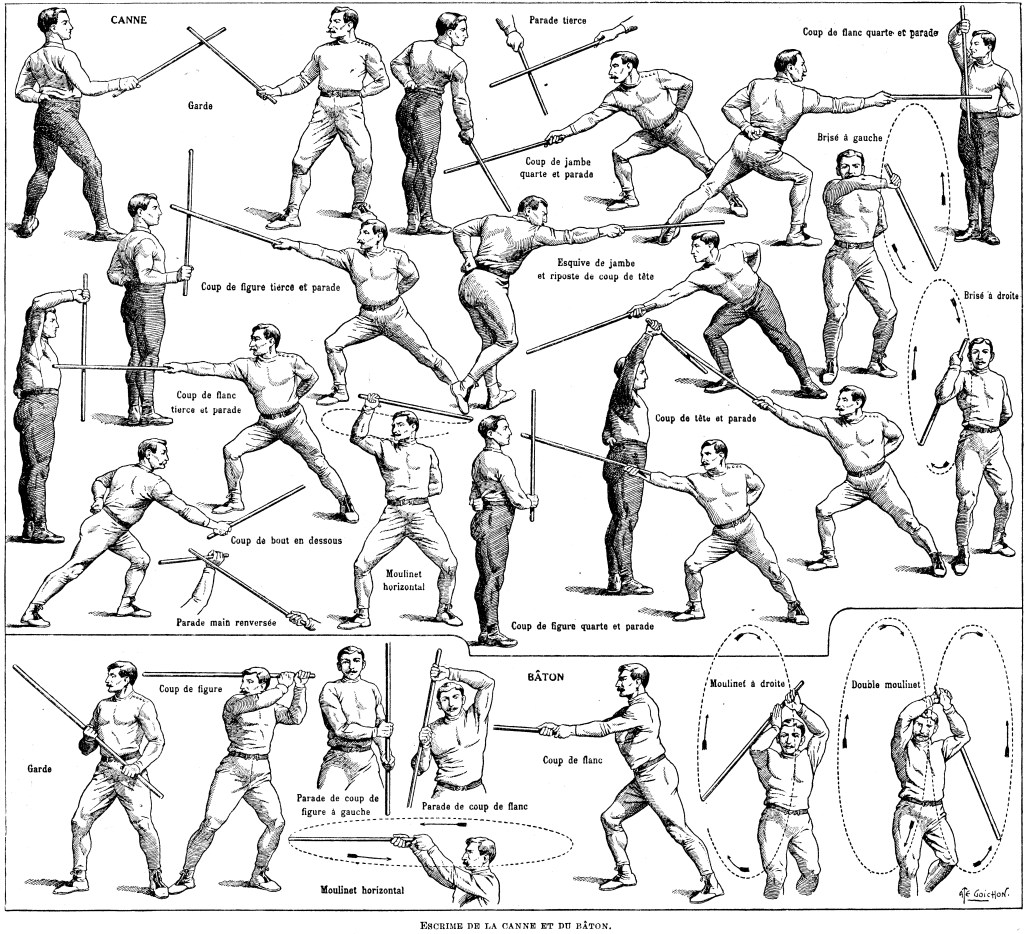
So, as the title says, “why should we learn stick fighting?” Well, we’re gonna try to answer that question with this article.
Let’s do this.
Studying stick fighting remains relevant despite the prevalence of firearms, as it offers practical benefits such as using a cane for support and self-defense. This ancient art form not only enhances physical fitness, agility, and reflexes, but also promotes mental discipline and strategic thinking, which are crucial in both combat and daily life. Additionally, stick fighting allows practitioners to connect with their cultural roots, providing valuable insights into historical combat techniques and the evolution of martial arts. This deeper understanding fosters a sense of respect for traditions and heritage that many modern disciplines lack. Moreover, the discipline fostered through martial arts can positively impact personal and professional life; skills such as focus, perseverance, and respect learned during training can enhance performance in various aspects of life, making the knowledge gained from studying stick fighting empowering and enriching. Embracing this practice can therefore lead not only to improved self-defense capabilities but also a more balanced and fulfilling life overall, encouraging individuals to build resilience and confidence in the face of challenges.
The study of the stick establishes foundational skills and dexterity for using various weapons, as sticks are commonly available in our environment compared to firearms and other weaponry. This accessibility not only encourages individuals to engage in training with an object that is both versatile and familiar, but also fosters creativity in weapon handling. Practicing with sticks allows for the development of core motor skills, balance, and coordination, which are transferable to a wide range of combat techniques.
Moreover, the simplicity of the stick serves as an accessible and versatile platform for experimentation, allowing practitioners to engage in a broad spectrum of techniques while fostering their creativity. This adaptability enables individuals to explore diverse styles and applications, whether they are focusing on traditional martial arts forms or innovative approaches that incorporate elements from various disciplines. As a result, the continuous practice and exploration not only lead to a nuanced understanding of fundamental movements but also cultivate a sense of mastery over the stick as a weapon. Ultimately, this process enhances their overall martial proficiency, equipping them with the skills needed to effectively respond to dynamic combat situations while encouraging personal growth and confidence in their abilities.
The stick serves as a versatile defensive tool for individuals who may be uncomfortable carrying more lethal options like firearms or knives due to the associated violence and potential legal ramifications; it provides them with a sense of security that is crucial in uncertain situations without crossing their personal psychological boundaries or ethical concerns. This simple yet effective instrument can empower people by allowing them to feel more prepared and confident, enabling them to navigate their environments with a degree of assurance. Furthermore, the stick is often seen as a less aggressive option, which can facilitate a non-confrontational approach to self-defense, thereby reducing the likelihood of escalating a situation into violence. By opting for a blunt weapon, individuals can maintain a sense of responsibility and control while still being ready to protect themselves if necessary.
Walking sticks are invaluable tools that provide essential stability and support, particularly for those navigating the often challenging and unpredictable conditions of uneven terrain. These instruments are especially beneficial for elderly individuals or those with mobility issues, as they help prevent falls and enhance overall confidence during movement. In addition to their primary function of assisting with balance, walking sticks can also act as a deterrent against aggressive animals. Their presence alone may discourage potential threats, and with a simple gesture, they can signal a protective stance. Beyond their defensive capabilities, walking sticks serve various practical uses, such as aiding in the clearing of paths overgrown with brush or even functioning as makeshift tent poles during outdoor adventures, showcasing their versatility in nature.
The stick serves various defensive purposes, including smashing, stabbing, binding, and tripping, and may be combined with hand and elbow techniques for enhanced effectiveness in close combat situations. Its versatility allows it to be employed in multiple ways, adapting to the unique dynamics of each encounter. The effectiveness of the stick depends significantly on its characteristics, such as length, weight, and type of wood, as these factors contribute to the force and control exerted during defensive maneuvers. While some strikes can be lethal if applied with sufficient force and precision, targeting non-lethal areas such as elbows, shins, and knees enables practitioners to engage in self-defense without inflicting fatal consequences. This approach prioritizes de-escalation and minimizing harm, thereby allowing individuals to protect themselves effectively while adhering to moral and ethical standards. Training and proper targeting play critical roles in influencing the lethality of its use, as a well-trained user is able to exploit the stick’s attributes to deliver precise and effective defensive actions. Legally, it can be viewed as a dangerous weapon, necessitating careful judgment and responsibility before use, as well as an understanding of the legal implications surrounding its application in various situations, ensuring that self-defense remains within the bounds of the law and societal norms.
The stick is a useful yet imperfect self-defense weapon that relies on the user’s skill and situational awareness. It can enhance defensive strategies, whether by creating distance from an aggressor or deflecting strikes. With proper training, individuals can learn techniques to maximize the stick’s potential, making it a versatile tool that complements other self-defense methods.
Welcome to the Self Defense series, where we talk about it. The subject of Self-defense is very important, as it not only empowers individuals but also enhances their awareness of personal safety. In today’s world, being equipped with the knowledge and skills to protect oneself is essential, given the increasing concerns regarding safety in various environments. We will explore different techniques, strategies, and the mental aspects of self-defense, aiming to provide you with valuable insights that can be applied in real-life situations. Join us as we delve deeper into this vital topic, ensuring you feel confident and prepared to face any potential challenges.
Knife defense. Yes, we’re revisiting this topic because it holds significant relevance in today’s world. With incidents of knife attacks unfortunately becoming more common, understanding the techniques and strategies for self-defense is extremely important. Everyone should be equipped with the knowledge to protect themselves and their loved ones in potentially dangerous situations. Proper training can enhance awareness, improve reflexes, and provide the mental fortitude needed to react effectively under pressure. Additionally, exploring various defensive maneuvers and the psychology behind confrontations can empower individuals to respond wisely and safely.
I posted some videos to serve as resources for practical skills to handle a knife attack, covering self-defense techniques, situational awareness, and escape methods. By practicing these skills, you can enhance your confidence and preparedness for dangerous encounters, and I encourage sharing these resources with others to promote community safety awareness.
In this 1st video, special forces instructor Paulo GN Rubio of FUNKER TACTICAL, in a moment of reckless aggression, attempted to stab a United States Marine and 20-year Law Enforcement Officer with full intent and energy, wielding the knife like it was an extension of his own being. No warning! This was an impulsive action carried out with alarming fervor, full of intention and power! Each movement was raw, unrefined, and dangerously unrehearsed. Did he survive the attack? Watch and see as the events unfold!
After enduring this harrowing and humbling experience, he left Paul with 20 invaluable life-saving lessons about the complex nature of knife defense. It never looks as pretty as some would have you believe; the reality is often gritty and chaotic. Here is a no-nonsense approach to dealing with a bladed opponent, emphasizing the importance of preparation, awareness, and the mental fortitude required to endure such encounters.
These life-saving lesions are listed below:
DO NOT COLLECT FANCY TECHNIQUES!
SIMPLIFY KNIFE ATTACKS AS ABOVE OR BELOW 90 DEGREE ANGLES.
INCORPORATE “CONSEQUENCES” IN YOUR KNIFE TRAINING.
IN A FIGHT, EXPECT THAT YOU’RE GONNA GET HURT SOMEHOW.
GROSS MOTOR MOVEMENTS OVER FINE MOTOR MOVEMENTS.
BOTH THUMBS DOWN, CREATES INCIDENTAL DEFENSE FROM FOREARMS.
TECHNIQUES FAIL, FOCUS ON PRINCIPLES & KEEP GOING!
PUSHING FORWARD PREVENTS RECOIL AND RE-STAB!
WHAT IFS EXIST ONLY IN DEMOS. THEY DISAPPEAR WITH LIVE ENERGY.
FIGHTS MOVE, WE MOVE. REMEMBER THIS!
REMEMBER, YOU’RE GONNA GET CUT!
JUJITSU PRINCIPLE: STAY TIGHT!
IT’S NOT EASY TO SWITCH KNIFE HANDS! I’S JUST NOT.
SUPPORT HANDS KEEP WORKING! STRIKE OR ENFORCE CONTROL.
PROTECT YOUR VITALS.
RUN AWAY OR CRASH IN! ALL IN OR ALL OUT.
ISOLATE SOMETHING SMALL WITH SOMETHING BIG.
IMPACT WITH INTENT & AGGRESSION AT EVERY OPPORTUNITY.
USE ALL AVAILABLE TOOLS TO END THE FIGHT.
If you appreciated this free lesson, please say thanks to Sal by clicking on his Instagram account and giving him a follow. It means a lot to him to see support from learners like you, and by following his account, you’ll gain access to more valuable insights and resources that can enhance your knowledge even further. Here it is: / ido_consulting
Now in this 2nd video, Paulo Rubio is himself being interviewed by Jesse Enkamp, aka THE KARATE NERD, as he shares some of his extensive experience and knowledge about this subject.
He emphasizes what truly works in self-defense scenarios and, just as importantly, what doesn’t work, helping you to avoid common pitfalls that many individuals face when confronted with threatening situations. By providing clear demonstrations, the training allows you to understand not only the actions to take but also the mindset needed for effective self-defense.
Thanks to FMJ Shooting Range, a hub for firearms training and self-defense courses: https://www.fmjskytte.se/english/, you have the opportunity to train in a supportive environment that prioritizes real-world self-defense. Train with Paulo GN Rubio: https://www.trainwithgn.com/, where you can refine your skills further and gain confidence in your ability to respond effectively in high-stress situations. Reinforce your knowledge through hands-on experience, supported by expert insights and drills that prepare you for the realities of knife encounters.
Knives, as well as other weapons, have been developed and used extensively by Capoeiristas for centuries, playing a significant role in various combat styles and self-defense techniques within the practice.
Although they may have fallen out of use in recent years due to the modern emphasis on unarmed techniques, some schools still place a strong focus on developing and refining these skills. The integration of weapon training not only enhances a practitioner’s overall proficiency but also helps them understand the principles of movement, timing, and distance in a more comprehensive way. Moreover, this traditional aspect of Capoeira helps preserve the cultural heritage and history associated with the art, ensuring that future generations remain connected to its rich legacy.
Knife defense is more than just the simplistic notions of “run away” or “expect to get cut”; it involves a comprehensive understanding of situational awareness, risk assessment, and techniques to either de-escalate a confrontation or effectively protect oneself should an attack occur. It requires training in recognizing potential threats before they escalate, as well as developing reflexes and strategies to respond swiftly and efficiently to an assailant’s movements.
Furthermore, awareness of the environment, the use of improvised barriers, and maintaining a calm demeanor play crucial roles in surviving such confrontations, making knife defense a multifaceted discipline that goes well beyond mere survival instincts. It involves a deep understanding of the surroundings, allowing individuals to identify potential escape routes and obstacles that can be utilized to their advantage. Additionally, the ability to create improvised barriers—from everyday objects like chairs to more substantial obstacles—can provide essential protection during a potentially life-threatening encounter. Coupled with this, cultivating a calm demeanor can significantly enhance one’s decision-making process, enabling the individual to react with clarity instead of panic, ultimately transforming a desperate situation into a more manageable challenge. It is this blend of mental preparedness, environmental awareness, and tactical response that elevates knife defense into an art form, requiring both psychological fortitude and physical dexterity.
Well, the impact of Trump’s second presidency, I believe, is a clear and present threat to all of us, as it undermines the very foundations of democracy and civil liberties that we hold dear. This alarming rise of authoritarianism not only endangers the diverse fabric of our society but also promotes an atmosphere of fear and division among communities.
However, I’m a Capoeirista, and historically, the Capoeirista has always not only survived, but THRIVED no matter how oppressive the system of government in place. This resilience can be traced back to the heart of Brazil’s colonial past, where enslaved Africans, stripped of their freedom and dignity, ingeniously adapted their traditions and cultures into a unique form of expression and resistance. Through the art of capoeira, they forged a powerful connection not only among themselves but also created a legacy that would inspire future generations to stand against injustice and fight for their freedom.
Capoeira became more than just a means of combat; it evolved into a symbol of cultural identity, unity, and an indomitable spirit that resonated with those who practiced it. This vibrant tradition of ours has allowed practitioners to navigate through adversity while celebrating their heritage, fostering community and solidarity in the face of oppression, and advocating for our rights in a challenging world. To this day, it serves as a testament to their enduring strength, turning pain into power and transforming struggle into a profound expression of joy and resilience.
One thing is certain. With democratic institutions weakening and the voices of dissent being stifled, we must remain vigilant, united, and proactive in safeguarding our rights. This involves not only standing up for our beliefs in the face of oppression but also fostering an environment where open dialogue and diverse perspectives are encouraged and respected. By actively participating in civic duties, such as voting and community organizing, we can reclaim our agency and influence the trajectory of our society.
It is our collective responsibility to educate ourselves and others about the importance of democracy, and to challenge any attempts to undermine it, Ensuring that future generations inherit a society where freedom and justice prevail requires our unwavering commitment and continuous effort to champion equality, inclusivity, and accountability in all spheres of public life.
Welcome to MARTIAL ARTS THEATER, a platform for martial arts enthusiasts to explore a wide range of disciplines. From traditional styles like karate and taekwondo to lesser-known techniques such as Krav Maga and Muay Thai, we offer diverse content for seasoned martial artists and those intrigued by combat. Delving into the history, philosophy, and techniques of each martial art, we celebrate the discipline, dedication, and diversity embodied in these practices. Join us on this captivating journey through the world of martial arts.
In this installment, we have this short biopic about the legendary Jack Johnson.
Jack Johnson, the first ever black boxing champion, became a legendary figure not only for his prowess in the ring but also for his unyielding spirit in the face of racism. As he fought his way to the top, he faced immense challenges and hostility, both inside and outside the boxing arena. His journey was marked by a series of hard-fought battles against not just his opponents but also the societal prejudices of the early 20th century. Johnson’s remarkable speed, power, and tactical skill made him a formidable force among his contemporaries, yet it was his bold personality and refusal to conform to the racial stereotypes of his time that truly set him apart. He often found himself at the center of heated public debates, as many white boxers and promoters sought to undermine his accomplishments, viewing his success as a direct threat to the status quo. Despite the relentless racism directed at him, Johnson maintained a defiant attitude, proudly embracing his identity and using his fame to challenge racial injustices.
Johnson’s story is one of being fearless and bold; he shattered racial barriers and defied societal norms, becoming a symbol of resilience that resonates with many. His triumphs inspired countless individuals to stand up against oppression, emboldening them to express their voices and demand change. Through his unwavering commitment to justice, he not only paved the way for future generations but also ignited a movement that emphasized the importance of equality and human rights. His legacy continues to influence activists around the world, making him an enduring icon in the ongoing fight for justice, demonstrating that with courage and determination, obstacles can be overcome.




 Jogo Corpo Fechado