Mother Nature, Survival, And Capoeira: Where They Connect

Introduction

The dynamic art of Capoeira, with its graceful yet powerful movements, its infectious rhythms, and its deep-seated philosophy, is most frequently appreciated solely through the established frameworks of cultural expression, historical resistance, and martial prowess. However, to truly grasp the essence of Capoeira is to look beyond its surface as a mere performance or a fighting style. A deeper, more insightful examination reveals profound, essential, and often-overlooked connections that bind Capoeira to the raw, untamed forces of Mother Nature and the fundamental, unyielding instinct for human survival.

This article posits and explores a symbiotic, almost elemental, relationship where the intrinsic adaptability and perpetual motion of the natural world, the ruthless necessity of self-preservation in the face of conflict, and the fluid, deceptive, and ground-hugging movements of Capoeira converge. It illustrates how this unique Afro-Brazilian art form is, at its core, a sophisticated distillation of natural principles—such as the sudden strike of a snake, the rooted balance of a tree in a storm, or the continuous, flowing energy of a river—meticulously applied to the human experiences of conflict, existence, and freedom. The movements, the strategies, and even the music of the roda echo the primal lessons learned from the environment, making Capoeira a living, breathing testament to survival coded in movement.

Mother Nature, Survival, And Capoeira

The philosophy and movement of Capoeira are deeply rooted in the primal wisdom of the natural world, offering more than just a fighting system—it is a codified language of survival learned from observing the intricate, relentless dance of nature. The synergy between Capoeira and the wild is evident in every movement, every strategy, and every principle, a profound connection that transcends mere physical technique.

Capoeira masters, often drawing from an ancestry that lived in close communion with the earth, codified the fluid and unpredictable motions of animals and the elements into their art. The defensive esquivas (escapes) mirror the sudden, agile dodge of a jungle cat avoiding a predator, utilizing minimal energy for maximum evasion. The powerful, sweeping rasteiras (takedowns) emulate the irresistible force of a falling tree or a sudden, unexpected flood, designed to unbalance an opponent using the ground as a leveraged ally. Even the seemingly playful yet deceptive jogo (game) of Capoeira reflects the complex survival strategies of the animal kingdom—a constant, rhythmic probing and testing of an adversary’s boundaries, always prepared to transition from peaceable movement to decisive action in a heartbeat.

This connection to the natural world imbues Capoeira with its essential characteristics: resilience, adaptability, and the fundamental wisdom of using momentum and environment to one’s advantage. It teaches its practitioners not to fight against force, but to flow with it, much like a reed bending in the wind to avoid snapping. Ultimately, Capoeira becomes a physical metaphor for navigating life’s challenges, embodying the ancient principle that true strength lies not in rigidity, but in the intelligent, harmonious interaction with the world around us.

The Natural Rhythms and Movements

Capoeira’s foundational stance, the Ginga, is far from a static readiness posture; it is a continuous, flowing rhythm—an eternal motion that mirrors the fundamental, ceaseless cycles of the natural world. It is the human embodiment of inherent energy and constant flux. Like the shifting tides that never truly rest, the swaying of trees adapting to the wind’s pressure, or the perpetual, self-cleaning motion of water in a stream, the Ginga is a testament to natural efficiency and continuous readiness. This rhythmic movement ensures that no part of the body remains a fixed target for long, distributing weight and maintaining an omnipresent potential energy ready to spring into defense or attack.

  • Adaptability and Flow: The Lesson of the Willow: In the wild, rigidity is a prescription for breakage. A magnificent, unbending oak is vulnerable to snapping during a violent storm, whereas the more supple willow bends deeply and survives the tempest. Similarly, Capoeira’s movements prioritize absolute fluidity. The escapes, known as Esquivas, are not merely defensive blocks but teachings in philosophical resignation—how to “go with the flow.” Practitioners learn to yield to and redirect the opponent’s force rather than resisting it head-on, much like water adapting instantaneously to the shape of any container or obstacle, eventually eroding what it cannot immediately penetrate. This principle of non-resistance conserves vital energy, turning the aggressor’s momentum into an aid for one’s own evasion or counter-attack.
  • Camouflage and Deception: The Art of Disguise: Nature’s most effective defense often lies not in overt power but in the subtle art of blending in, feigning weakness, or outright deceiving the aggressor. Think of the chameleon or the harmless snake that mimics a venomous one. Many of Capoeira’s lower, ground-based movements, spins, and subtle feints—the Rasteiras (sweeps) and Cadeiras (resting or defensive postures)—originated as profoundly disguised self-defense techniques. They were brilliantly hidden within what appeared to be an engaging dance, playful acrobatics, or even a moment of rest. This speaks directly to the core survival strategy of oppressed peoples: the necessity of not revealing one’s full power until the absolutely opportune moment. It is the essential tactic when faced with a morally or physically superior adversary or an oppressive, watchful force, allowing the Capoeirista to turn perceived vulnerability into devastating surprise.
  • The Ground Connection: Earth as Ally: The Capoeirista constantly interacts with the ground, maintaining a low center of gravity and utilizing movements that sweep, roll, and transition along the earth. This physical connection mirrors the rooted stability of nature. The ground is not just a surface but an ally—a platform for power generation, a means of safe retreat, and an endless source of leverage. This deep-seated reliance on the earth ensures stability and provides an often-overlooked dimension to the fight, contrasting sharply with standing, upright martial arts.
  • Rhythm and Timing: The Pulse of the Jungle: The musical accompaniment of Capoeira, driven by the Berimbau, dictates the tempo and intensity of the Roda (the circle where the game is played). This external, natural rhythm is a survival tool itself. In the jungle, survival hinges on recognizing and operating within the natural pulse of the environment—when to hunt, when to hide, and when the danger has passed. The Berimbau enforces perfect timing, teaching the Capoeirista to synchronize their attacks and defenses with the flow of the game, ensuring movements are executed with maximal impact and minimal exposure, much like a predator’s perfectly timed pounce.

Mother Nature, Survival, And Capoeira—–Capoeira as a Tool for Survival

Historically, Capoeira was developed by enslaved Africans in Brazil as a clandestine form of fighting, self-defense, and a powerful symbol of self-liberation. Forbidden by the Portuguese colonizers, its martial nature was artfully concealed within the framework of a dance, music, and ritual. Its very existence is a profound testament to the indomitable human spirit’s drive to survive, resist oppression, and ultimately thrive against seemingly overwhelming odds. The practice itself is a codified system for life preservation.

Core Survival Attributes Cultivated by Capoeira:

  • Physical Endurance and Resilience: The rigorous and multifaceted training demands of Capoeira—including continuous movement, acrobatics, and sustained sparring—build not just foundational strength, flexibility, and agility, but unparalleled cardiovascular and muscular endurance. This physical resilience is a universal requirement for survival in any challenging or harsh environment. The ability to maintain explosive power and continuous, fluid movement over extended periods directly correlates to the stamina needed to evade a persistent threat, execute a high-stakes escape, or simply endure a long and difficult journey. The constant need to recover quickly from demanding (cartwheels) or queda de rins (headstand sweeps) trains the body to rapidly metabolize energy and prepare for the next action.
  • Mental Fortitude (Malícia): Beyond the tangible physical skills, Capoeira’s most sophisticated and arguably most crucial survival attribute is the cultivation of Malícia. This term translates imperfectly, encompassing a sophisticated cunning, street-smart intuition, and heightened situational awareness. This mental sharpness is the ability to read a situation, anticipate threats before they fully materialize, and use psychological warfare (deception, feints, and unexpected attacks) to gain a crucial advantage over an opponent. It is the wisdom to know when to strike and, more importantly, when to yield or escape. This intuitive awareness developed in the Roda is a perfect parallel to the acute senses, predictive behavior, and calculated risk assessment required for survival in a natural, predator-prey environment. A player with Malícia doesn’t just react; they orchestrate the entire encounter, using their opponent’s momentum against them.

—–The Capoeira Roda as an Ecosystem

The Roda, or the circle where Capoeira is played, is far more than a simple arena; it serves as a contained, dynamic, and complex ecosystem. It functions as a living microcosm of nature where the fundamental principles of competition, cooperation, adaptation, and balance are on constant and immediate display. The energy and rules of the Roda mirror the necessary dynamics for a healthy, thriving natural world.

Ecosystemic Principles within the Roda:

  • Balance of Forces: The entire Roda contributes to the life of the game. The two players inside are the central competitors, but their interaction is governed by the music, especially the tempo set by the Berimbau (the main instrument), the narrative and emotional tone provided by the singers, and the rhythmic energy of the clapping spectators. When the game is well-played, there is a perfect, dynamic balance of attack and defense, risk and reward, push and pull. This delicate equilibrium reflects the harmony found in a healthy natural ecosystem, where no single species dominates for long. An imbalance—such as overly aggressive play without respect for the music, or a lack of engagement from the players—leads to a chaotic, sterile, or premature end to the game, much like an environmental catastrophe can disrupt a natural habitat.
  • Natural Selection and Adaptation: While the consequences are not literally life-or-death, the Roda is a space for the immediate, high-pressure “testing” of skills, strategy, and character. Only the techniques that are fluid, adaptable, well-timed, and appropriate for the current musical tempo are effective. The Roda, in a powerful figurative sense, encourages the “natural selection” of movement. Techniques that are clumsy, predictable, or poorly executed are instantly punished or neutralized by the partner. This process reinforces the clever, efficient, and adaptable movements, ensuring that the student’s jogo (game) is constantly evolving and becoming more finely tuned for survival and effectiveness, mirroring how species must adapt or perish within their environment.

Conclusion: The Capoeirista as an Embodiment of Natural Selection

Capoeira is far more than a complex martial art; it is a profound philosophical and physical exploration of survival drawn directly from the wellspring of Mother Nature. Its entire methodology serves as a living metaphor for the forces of natural selection, codifying the ancient, timeless strategies that have allowed life to persist, adapt, and ultimately flourish on Earth. The art’s inherent emphasis on flow, deception, adaptability, and resilience mirrors the biological imperative to endure and overcome environmental pressures.

The foundational movement of Capoeira, the Ginga, is not merely a rhythmic shuffle; it is the ultimate expression of perpetual readiness and fluid change. In nature, a stationary target is a vulnerable one. The Ginga ensures the Capoeirista is never fixed, constantly shifting their center of gravity, maintaining a dynamic instability that makes them elusive and unpredictable—a living, breathing embodiment of kinetic energy waiting for the precise moment to act. This unbroken flow is the same principle that governs a river carving a path through stone or a predator silently stalking its prey; it is the efficiency of constant, adaptive motion.

Furthermore, the concept of Malícia—the essential blend of cunning, guile, and intuitive strategy—is the psychological analogue to survival. It is the art of seeing the hidden intention, of using feint and illusion to create opportunity. A master Capoeirista employs deception as effectively as a chameleon changes its color or an orchid mimics an insect to ensure pollination. This ability to read an opponent, to manipulate their expectations, and to strike where they least anticipate, is the intellectual cornerstone of survival: not brute strength, but superior, deceptive strategy.

By meticulously learning the Ginga and deeply practicing Malícia, Capoeiristas are not just perfecting a dance or mastering the mechanics of a fight. They are internalizing and physically expressing the very laws of the natural world. They are training the body and mind to be intrinsically linked to the cycles of pressure and release, of stillness and explosive action. In doing so, they ensure that the spirit of survival—the indomitable will to endure, the wisdom to adapt instantly, and the physical capacity to ultimately overcome any challenge—is not merely studied, but is embodied and continues to thrive within a unique and enduring cultural practice.

THE WARRIOR CLASS (12/07/25)

Welcome to the WARRIOR CLASS Podcast

The WARRIOR CLASS podcast is your essential, unique resource for mastering self-protection and self-defense. Designed to equip every listener—regardless of background, experience level, or physical ability—with the vital skills and profound knowledge necessary for personal safety and empowerment, we go beyond simple techniques.

We believe that true self-defense begins with a “Warrior Mindset,” focusing on situational awareness, threat recognition, de-escalation tactics, and the legal and ethical considerations of using force. Our episodes feature in-depth interviews with world-class experts: tactical trainers, martial arts masters, security professionals, and legal analysts.

Tune in to explore practical strategies for:

  • Physical Self-Defense: Practical, high-percentage techniques for escaping grabs, defending against common assaults, and utilizing everyday objects for protection.
  • Situational Awareness: Developing the mindset to identify and avoid danger before it escalates.
  • Home Security and Personal Safety Technology: Reviews and best practices for securing your environment and leveraging modern tools.
  • Psychology of Conflict: Understanding fear, managing adrenaline, and maintaining control under pressure.

Join the WARRIOR CLASS community today and take charge of your personal safety journey. Your empowerment starts now!

This week…

This episode: Beyond the Veil of Visibility: Examining the Depth of Black Imagery in Media

It is an undeniable truth that Black actors today enjoy a greater quantitative presence in films and television shows than in decades past. However, this sheer increase in visibility should not be mistaken for meaningful or authentic representation. The true measure of progress lies not in the volume of appearances, but in the quality and complexity of the roles being offered.

When the characters written for Black talent are disproportionately confined to narrow, often harmful archetypes—such as criminals, servants, comedic relief, sidekicks, the emotionally detached “magical negro,” or characters whose narratives are solely defined by trauma—then representation has not genuinely progressed. It has merely diversified in the most superficial of ways, creating a false sense of inclusion.

These limiting roles frequently serve to reinforce damaging, long-standing cultural narratives, regardless of the exceptional skill and artistry of the actors embodying them. This perpetuation of tropes, even in contemporary media, normalizes a restricted and distorted view of Black humanity.

The problem extends beyond the screen and into the realm of printed media, including books, magazines, and comic books. While some Black tropes may have had historical or contextual roots, their continuous and uncritical deployment becomes fundamentally harmful. They operate by flattening the experiences of millions of people into one or two simplistic, overused personality types. This practice effectively erases the vast cultural, regional, class, and personal diversity that exists within the global Black community.

Ultimately, mere visibility is not enough. Representation that lacks authenticity, depth, and complexity is, in effect, a form of misrepresentation. It fails to honor the rich tapestry of Black life and instead promotes an easily digestible, often prejudiced caricature.


In this essential episode of Warrior Class, the Instructors will lead a rigorous and timely exploration and discussion of Black imagery, examining its evolution, impact, and authenticity across various media, including books, television, and film.

The Valentões of Capoeira

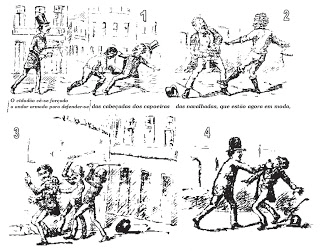
The Valentões (bully/tough-guys) represent a crucial and often controversial aspect of Capoeira’s early history, particularly in the urban centers of 19th and early 20th century Brazil, such as Rio de Janeiro and Salvador.

Context and Role:

Originally, the term valentão referred to a specific and notorious type of individual in Brazilian society, often directly associated with the practice of Capoeira. These were not merely skilled martial artists, but figures known for their exceptional fighting prowess, striking fearlessness, and, crucially, their readiness to engage in public disorder or violent conflict. They were, in essence, the quintessential street fighters of their time.

The valentão‘s reputation was entirely predicated on their combat ability. Their deep proficiency in Capoeira was not just a hobby or a sport; it was the primary tool that established and maintained their local power, dominance, and a fearsome reputation within their community or neighborhood. This mastery of Capoeira allowed them to enforce their own will, settle disputes—often violently—and command respect, or more accurately, fear, from the surrounding population. They operated on the fringes of society’s established laws, with the agility, deception, and striking power of Capoeira making them incredibly formidable and difficult for authorities to manage.

The Valentões of Capoeira: Criminality and Combat in 19th Century Brazil

The Capoeira valentões (meaning “bullies” or “tough guys”) were central, yet controversial, figures in the urban landscape of post-abolition Brazil, particularly in major cities like Rio de Janeiro and Salvador during the late 19th century. Their existence fundamentally shaped the perception and subsequent criminalization of Capoeira.

Characteristics and Activities of the Valentões

The valentões were not benign practitioners of a cultural dance; they were highly skilled, feared, and often ruthless street fighters. Their use of Capoeira transcended mere sport or performance, placing it squarely in the domain of clandestine, effective urban combat:

  • Capoeira as a Weapon: For these fighters, the art was purely a combative system. They mastered the rapid, deceptive movements of Capoeira to gain the upper hand in street confrontations. Their arsenal included low, sweeping attacks like the rasteira (a leg sweep) and powerful headbutts (cabeçadas), which were devastating at close range. Crucially, they integrated weapons into their practice, often concealing small, sharp blades—knives or straight razors—which could be hidden in clothing or, famously, wedged between the toes and used during a low kick, adding a lethal dimension to the fight. This integration of blades and unarmed combat made them exceptionally dangerous adversaries.
  • Affiliation with Gangs (Malandragem): The power of the valentões was amplified by their organization into territorial street gangs, known as maltas. This gang structure, deeply interwoven with the culture of malandragem (a term encompassing cunning, street smarts, and often a disregard for the law), provided them with community, protection, and a source of income. Infamous examples in Rio de Janeiro included the rival Guaiamús (Crabs) and Nagôs (a term referring to Yoruba descendants), who fiercely competed for control over specific neighborhoods and illicit activities. Beyond simple street brawls and running protection rackets, these maltas became politically significant, often acting as enforcers or mercenaries for hire by political factions during the turbulent election periods of the First Brazilian Republic. Their ability to mobilize violence made them a critical, if unofficial, tool of political control.
  • Social Status and Marginalization: The valentões predominantly emerged from the poorer, marginalized classes, especially the newly freed Afro-Brazilian population who faced systemic racism and severe lack of economic opportunity after the abolition of slavery in 1888. In a society that offered them little official recognition or mobility, becoming a valentão offered a perverse form of social status—a reputation of fear and respect within their communities. They were simultaneous figures of awe for their strength and skill, and figures of intense scrutiny and contempt from the governing authorities.

Historical Significance and Lasting Impact

The activities of the valentões were not merely a footnote in Capoeira’s history; they were the direct cause of the art’s official suppression and near destruction:

  • Criminalization of Capoeira (1890 Penal Code): The state’s inability to control the powerful and disruptive maltas led to a drastic legislative response. The actions and reputation of the valentões were the primary justification for the inclusion of a specific ban on Capoeira in the new Brazilian Penal Code of 1890. The authorities consciously moved to de-legitimize the practice, viewing it not as a unique cultural expression but as a dangerous technique intrinsically linked to organized crime and political destabilization. The law stipulated severe punishments for anyone caught practicing Capoeira, including prolonged jail time, forced labor, and even internal exile, effectively treating Capoeira practice as an act of sedition or felony.
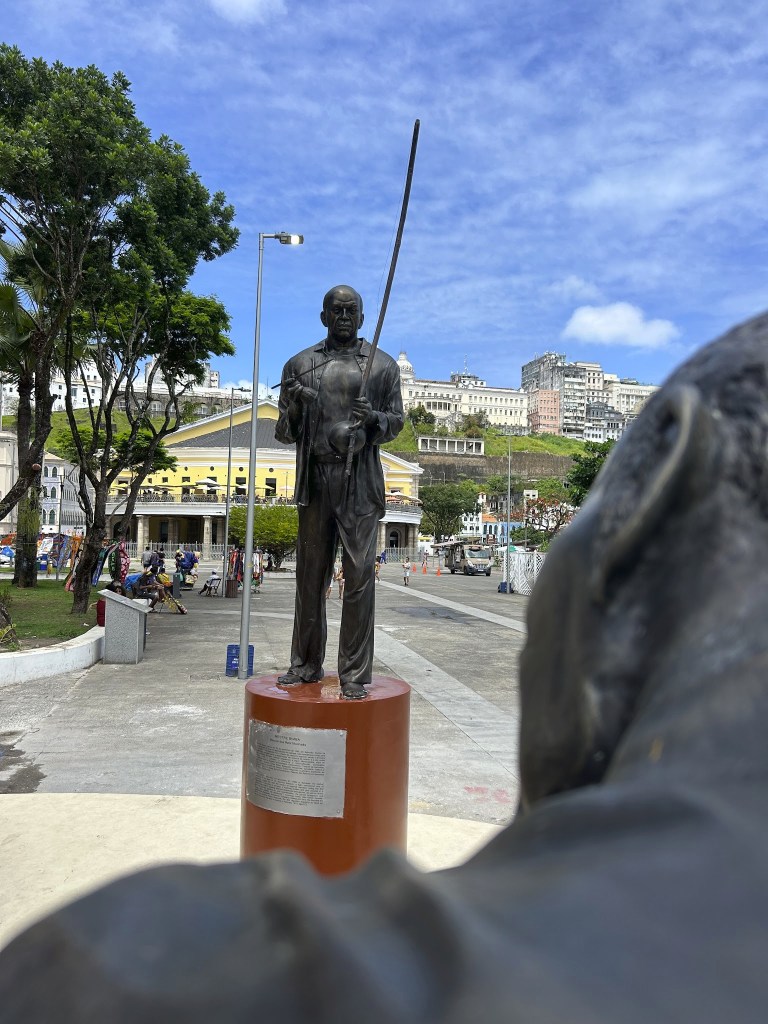
  • Evolution and Transformation of the Art: The period defined by the valentões serves as a stark reminder of Capoeira’s raw, survival-based combat roots. This dangerous legacy necessitated a profound transformation in the 20th century to ensure the art’s survival. Figures like Mestre Bimba (Manuel dos Reis Machado) in Salvador were instrumental in this shift. Bimba consciously sought to legitimize and institutionalize Capoeira, stripping away its toxic association with criminality and urban violence. He did this by creating structured academies, introducing formal rules, emphasizing its educational and physical fitness aspects, and rebranding it as a respected martial art and sport, thereby steering it away from its fearsome valentão past and securing its future as a global cultural phenomenon.

The Power of the Patuá/Amulets: Spiritual Armor of the Valentão

Within the world of Capoeira, particularly among the historical figures known as valentões (tough guys or bullies) and early practitioners in the 19th and early 20th centuries, the belief in supernatural protection was a deeply ingrained and vital cultural element. This spiritual belief system, which blended African, Indigenous, and European folk Catholicism, was essential for surviving a harsh, unforgiving existence.

The patuá was the physical manifestation of this spiritual armor. It was not merely a decorative charm but a powerful, consecrated amulet, typically a small, tightly sewn cloth bag. The power resided in its contents: a potent collection of sacred and symbolic items—such as dried herbs known for their protective or healing properties, pieces of animal bone, prayers written on scraps of paper, salt (a powerful purifying agent), coins, or sometimes even small stones. Crucially, these materials were consecrated and blessed by a spiritual specialist, such as a rezadeira (a prayer woman, skilled in folk remedies and blessings) or an African-Brazilian religious figure, often from the Candomblé or Umbanda traditions. This ritualistic blessing infused the object with axé—the living force, energy, and power that allows things to happen—rendering it genuinely potent.The Patuá‘s Essential Functions

For the valentão, who often lived a life of extreme precariousness, conflict, and frequent confrontations in the crowded, dangerous streets of cities like Rio de Janeiro and Salvador, the patuá served multiple critical and interconnected functions:

  1. Psychological Invulnerability (Confidence): Above all, the patuá provided an indispensable sense of invulnerability and psychological assurance. Knowing they carried an object blessed with spiritual power allowed the valentão to step into a fight with supreme confidence, an emotional state that was often half the battle in the highly ritualized confrontations of Capoeira. This belief alone could intimidate an opponent.
  1. Spiritual Shield (Defense): It was believed to offer a spiritual shield against physical harm. In a time when disputes were often settled with razor blades (navalhas), straight-edge razors, knives, or the powerful, deceptive kicks of rival Capoeiristas, the patuá was thought to deflect blows, cause weapons to misfire, or prevent the blade from penetrating the skin. A common belief was that a true patuá made the wearer “fechado” (closed or sealed) against all harm.
  2. Offensive Weapon (Offense): More than just defense, some patuás were thought to possess offensive capabilities. These charms were believed to subtly—or dramatically—affect the opponent’s spiritual and physical state. They could weaken an opponent’s spirit, confuse their movements, cause them to lose their footing or rhythm (malandragem), or even cause their own protective charms to fail. The true Capoeirista fought not just with their body, but with their feitiço (sorcery or charm).

The power attributed to these amulets speaks volumes about the synthesis of [This sentence fragment connects directly to the original file content and is where the elaboration concludes, transitioning back to the original text’s final point.]cultures—Indigenous, African, and European—that shaped early Capoeira. They represent the influence of Candomblé, Umbanda, and other Afro-Brazilian spiritual practices, where objects are imbued with axé (life force or spiritual power). The presence and power of a patuá could be as much a factor in a fight’s outcome as the physical skill of the Capoeirista, making the spiritual dimension an inseparable part of the fight itself. To be defeated, therefore, was not just a failure of technique, but often an indication that one’s own spiritual protection had been momentarily—or permanently—overcome.

The Spiritual Powers of the Valentões

The term valentões (roughly translating to “tough guys” or “bully-type fighters”) in the context of early Capoeira carries a depth far beyond mere physical prowess. These figures, prominent in the streets and communities of 19th and early 20th century Brazil, particularly Rio de Janeiro and Salvador, were not simply street fighters. They were often viewed—and sometimes feared—as possessing a potent connection to the spiritual world, lending their fighting ability an almost supernatural dimension.

This spiritual power was rooted in the Afro-Brazilian religious traditions, such as Candomblé and Umbanda. A valentão was often believed to be under the direct protection, or even possession, of powerful Orixás (deities) or Exus (powerful, often trickster, spirits). It was thought that their extraordinary resilience, speed, and ability to evade police or rivals stemmed not just from training, but from this spiritual guardianship. Before a conflict or a demonstration, many valentões would perform rituals, offer sacrifices, or consult a spiritual guide to ensure the favor of these entities.

The power was not just protective; it was also believed to be offensive. Stories abound of valentões who could render opponents immobile with a glance, disappear from the sight of the police, or shrug off severe wounds—all attributed to their mastery of, or alliance with, the spiritual realm. This belief system added a layer of mystique and fear to their reputation, making them formidable opponents not only in the physical fight but in the psychological battle as well. Their capoeira movements, therefore, were seen as a blend of martial art, dance, and spiritual invocation, making them key—though often marginalized and persecuted

—figures in the preservation and evolution of Capoeira.

In essence, the valentões (literally, “tough guys” or “bully-boys”) were far more than simple street fighters; they were a complex and often intimidating manifestation of the power, danger, and profound subversion inherent in Capoeira. During the late 19th and early 20th centuries, when Capoeira was frequently a prohibited and clandestine practice, it was a vital tool for survival, self-defense, and assertion for marginalized populations, particularly formerly enslaved people and the urban poor in cities like Rio de Janeiro and Salvador.

The valentões became the feared and respected icons of this era. They used their mastery of Capoeira’s acrobatic and deceptive movements not merely for sport, but as a genuine fighting system to control territory, protect their communities, and often, to engage in criminal activities or act as muscle for political figures and competing gangs. Their existence underscored the profound threat Capoeira posed to the established social order, as it represented an autonomous source of physical power and resistance among the oppressed. This period, characterized by police repression and social stigma, stands in stark contrast to the martial art’s current status as a globally recognized, respected, and often commercialized Afro-Brazilian cultural and martial art form. The valentões, therefore, embody the raw, untamed, and rebellious genesis of Capoeira—a legacy of defiance and street-smart mastery forged in the fires of social injustice.

THE WARRIOR CLASS (12/04/25)

Welcome to the WARRIOR CLASS Podcast

The WARRIOR CLASS podcast is your essential, unique resource for mastering self-protection and self-defense, designed to equip every listener with the vital skills and profound knowledge necessary for personal safety and empowerment.

What You Can Expect:

  • Engaging Discussions and Expert Interviews: Each episode dives deep into critical safety topics through lively discussions and features interviews with leading experts—from martial arts masters and self-defense instructors to security professionals and mental resilience coaches. These conversations provide a multi-faceted approach to personal security.
  • Practical Skills and Confidence Boost: We go beyond theory, offering concrete, practical tips that you can immediately incorporate into your daily life to boost your situational awareness, improve your physical preparedness, and significantly enhance your overall confidence.
  • In-Depth Martial Arts Analysis: WARRIOR CLASS meticulously analyzes various martial arts techniques, exploring their historical context, practical applications in a self-defense scenario, and philosophical underpinnings. This exploration is rooted in celebrating the rich cultural heritage of these disciplines.
  • Inspiring Stories of Resilience: Listen to powerful, first-hand accounts from guests who have not only faced adversity, threat, or trauma but have overcome it. Their inspiring journeys provide invaluable lessons on mental fortitude, recovery, and what it truly means to be resilient.
  • The Philosophy of Self-Protection: Our core belief is encapsulated in the philosophy: Self-protection with Black Power!—a commitment to empowering the Black community and all listeners with the tools for safety, strength, and collective well-being. We emphasize that true protection is about both individual readiness and community strength.

Tune In and Transform:

Don’t miss an episode! The WARRIOR CLASS podcast airs every Saturday at 1:00 PM EST. By tuning in, you take an active step to empower yourself to become the absolute strongest version of yourself—not just physically prepared, but mentally sharp and emotionally resilient.

Join us as we explore the intersection of martial arts, community resilience, and the essential role they play in navigating the challenges of everyday life.

Don’t miss out on the journey to becoming a warrior—informed, confident, and prepared for anything.

Archival Deep Dive: A Forgotten Gem

In an effort to celebrate our history and share some of the fascinating content that predates our current output, we undertook a meticulous deep dive into the show’s extensive archives today.

The quest for the “single most important” form of self-defense is a common, yet often misleading, pursuit. Is the answer found within the intricate ground game and submission expertise of Brazilian Jiu-Jitsu (BJJ)?

Nah.

Is it the brutal, no-nonsense aggression and real-world scenario training of Krav Maga?

Nah.

Does the ultimate solution lie in the comprehensive, adaptable philosophies of Jeet Kune Do (JKD), the fundamental power of Western Boxing, or the takedowns and control of competitive Wrestling?

Nah.

What about the structured, combative system developed for the armed forces, like the Marine Corps Martial Arts Program (MCMAP)?

Nah.

Is the true power of self-preservation exclusively tied to the use of a force multiplier—be it the reach and impact of a stick, the lethal potential of a knife, or the undeniable distance and finality of a gun?

Nah.
If all these highly effective and respected combat systems and tools are not the answer, what is? This highly anticipated episode of Warrior Class cuts through the misconceptions and the martial arts tribalism that often cloud our understanding of self-defense. The Instructors are finally going to pull back the curtain, revealing not just the actual most critical component of self-defense, but also the nuances and intricacies that make it truly effective. They will break it down—not just as a technique, but as a comprehensive philosophy and a versatile skillset—for you to integrate immediately into your everyday life.

This episode goes beyond mere physical maneuvers, diving into mental fortitude and situational awareness, emphasizing the importance of being prepared in any circumstance. Tune in to discover the true foundation upon which all other forms of protection must rest, fostering a deeper appreciation and understanding of the art of self-defense and how it can enhance your overall well-being.

I WANT TO BE RANDALL FUNG WHEN I GROW UP!

Randall Fung: A Lifetime of Fitness and the Legacy of Northern Shaolin

Every year, as the calendar turns to his birthday, Randall Fung shares a deeply personal video chronicling his extraordinary, decades-long commitment to fitness and vitality as he embraces older age. These annual video updates have become an inspiration to many, serving as a testament to the power of consistent dedication and the wisdom of ancient martial arts disciplines.

This year’s feature is an expansive, two-part presentation offering an intimate look at the practices that have maintained his remarkable physical condition.

The first part meticulously details his current training routine. This segment goes beyond a simple list of exercises, delving into the philosophy behind his regimen—the balance of strength, endurance, and recuperative practices tailored to his age. Viewers are guided through a typical week of training, showcasing his modern, functional fitness exercises, which include dynamic stretching, calibrated weight training for muscle maintenance, and cardiovascular work designed to ensure optimal heart health and stamina. The emphasis is placed not just on the intensity, but on the intelligence and longevity built into every session.


The second, and arguably most crucial, portion of the video documents the profound, sustaining role that Master Kuo Lien Ying’s Northern Shaolin kung fu has played in his life. Fung credits this specific, demanding lineage of martial arts for his enduring agility, flexibility, and robust health. He explains that Northern Shaolin, renowned for its wide stances, high kicks, and complex, continuous movements, demands a stringent level of physical output and full-body coordination. It is this inherent stringency, the relentless pursuit of precision and power in every form, that has acted as a perpetual, high-bar benchmark for his physical capabilities. Fung illustrates how the core requirements of Northern Shaolin—the deep knee bends, the explosive jumping techniques, and the complex sequencing of blocks and strikes—have consistently challenged and preserved his joint health, balance, and overall physical competence throughout his life, far surpassing what conventional exercise alone might achieve. This segment serves as both a demonstration of his continued mastery and a powerful tribute to the enduring principles of traditional Chinese martial arts.

GUYS… BE RANDALL FUNG.

THE MOMENT OF TRUTH FRIDAY CRIME REPORT (12/05/25)

Every Friday morning, PROFESSOR BLACK TRUTH hosts “The Friday Crime Report,” a program addressing systemic racism, economic inequality, and police brutality in the black community. The show features expert interviews, analysis, and personal narratives to raise awareness and promote advocacy for change. It encourages dialogue and community engagement, empowering listeners to understand and address these societal issues while fostering solidarity for a more equitable society.

In Today’s installment…

The disturbing pattern of racially motivated incidents in Florida found another reprehensible example this week. The latest incident involved a man at a local club whose aggressive and hateful behavior escalated to the point where law enforcement intervention was required. Witnesses reported that the individual began repeatedly and loudly using the racial slur, the n-word, targeting multiple patrons within the establishment. This unprovoked barrage of hate speech created a hostile and volatile environment, leaving the police with no choice but to physically subdue the man to bring the situation under control and ensure public safety.

However, the full extent of this individual’s prejudice became alarmingly clear upon examining his online presence. His various social media accounts reveal a deeply entrenched pattern of racist and extremist viewpoints, extending far beyond a singular incident of intoxication or poor judgment. The content discovered online adds a much more sinister layer to the event, suggesting the club outburst was not an isolated occurrence but rather a public manifestation of his underlying white supremacist ideology. The details uncovered through his digital footprint emphasize the persistent and systemic nature of such bigotry, making the entire situation considerably worse than a simple public disturbance.

For a deeper and more comprehensive understanding of this complex issue, which touches upon crucial theoretical and practical aspects, we highly recommend consulting a particularly insightful and thorough critical analysis. This valuable resource was produced by a leading professor in the field who has created an extensive video dedicated to exploring the nuances of the subject matter.

The professor’s work provides a detailed examination, offering expert commentary and presenting various perspectives that are essential for a complete grasp of the topic. We credit the professor for this exceptional contribution to the scholarly discourse.
To directly access their official YouTube channel and view this important, comprehensive video and other related works, please click HERE. This resource is invaluable for students, researchers, and anyone seeking a well-informed, critical perspective on the challenges and implications inherent in this area.

MALANDROS IN ACTION (12/03/25)

This series examines the modern malandro in urban society, emphasizing their charm, resourcefulness, and resilience amid economic disparity and social justice challenges. Through a comprehensive lens, it explores the multifaceted identities of these individuals, showcasing their ability to navigate complex social dynamics while maintaining a distinct sense of individuality. It highlights their influential role in discussions of equity and social change, inviting viewers to reconsider notions of success and morality while celebrating their contributions to urban culture. By weaving personal stories with broader societal themes, the series fosters a deeper understanding of the malandro’s impact, urging audiences to reflect on the common threads of humanity that connect us all, despite differing backgrounds and circumstances.

In Today’s installment, We follow Conor Woodman in a show named scam city, a series where he gets scammed, so we don’t have to.

Paris, the city of light and romance, will never appear quite the same after an eye-opening journey guided by writer and investigator Conor Woodman. He strips back the veneer of postcard perfection to reveal a hidden, gritty, and often fraudulent underworld thriving just beneath the elegant surface.

Woodman’s exploration delves deep into the unexpected realities of the French capital, introducing readers to the bizarre and sometimes unsettling characters and industries that operate in the shadows of its most famous landmarks.

  • The World of Pick-Up Artists: He navigates the controversial and complex community of “pick-up artists” (PUAs), examining their methods, their philosophies, and the societal implications of their efforts to master the art of seduction on the Parisian streets.
  • Artistic Forgery and Deception: The narrative exposes a fascinating network of artistic deception, specifically focusing on the mass production of “French paintings” by artists based in China. This practice raises intriguing questions about authenticity, global commerce, and the true value of art sold to unsuspecting tourists.
  • The Masters of the Street Scam: Woodman offers a chilling look at the pervasive and highly-skilled craft of the Parisian street criminal. He vividly recounts encounters with professional pick-pockets who operate with seamless efficiency in crowded areas like the Metro and popular tourist sites.
  • Sleight-of-Hand Scams and Con Artists: Perhaps most captivating are the intricate sleight-of-hand scams—the classic three-card monte or shell games—that are executed with breathtaking speed and precision by seasoned con artists. These operations are designed to fleece tourists through carefully orchestrated psychological manipulation and misdirection, turning a moment of curiosity into a costly lesson in urban vigilance.

Through Woodman’s lens, Paris transforms from a simple tourist destination into a multi-layered, intricate stage. It is a city where the polished veneer of high culture and iconic landmarks is peeled back to reveal a complex underworld of shadows and human enterprise. Culture, in this context, is not just found in the Louvre or along the Seine, but in the unspoken rules of the street. Crime is not sensationalized, but presented as a thread in the daily tapestry—a necessary evil or a byproduct of desperate existence. Commerce, too, is redefined; it moves beyond luxury boutiques to encompass the less-advertised economies that thrive in the city’s hidden corners.

Finally, cunning, in its most resourceful and sometimes ruthless form, becomes the essential currency for survival. Woodman’s perspective provides a compelling and essential guide, illuminating these less-advertised realities and equipping the reader to navigate Paris with a deeper, more informed, and ultimately more authentic understanding of its true, multifaceted character. The text acts as a vital counter-narrative to the standard travel brochure, offering insight into the machinery that truly makes the city operate.

Teacher-Student Loyalty in Martial Arts Explained

The traditional code of martial arts, often rooted in historical and cultural imperatives, places an undeniable emphasis on the loyalty of the student to the teacher, or sensei, sifu, or master. This foundational pillar of the student-teacher relationship is essential for preserving the art’s integrity, ensuring safe and disciplined practice, and maintaining the lineage of knowledge. The student, by submitting to the teacher’s guidance, demonstrates a necessary humility and commitment required for genuine mastery.

However, the question of whether this loyalty is a two-way street—should a teacher have loyalty to his students?—is a profound ethical inquiry that moves beyond mere tradition into the realm of true mentorship and responsibility. A teacher’s loyalty to their students is not manifested as simple obedience, but rather as a solemn, active commitment to their well-being, growth, and moral development. This loyalty should encompass several critical dimensions:

  1. Commitment to Truth and Quality of Instruction: The teacher owes the student loyalty by ensuring the instruction is authentic, thorough, and safe. This means teaching the techniques as they were inherited, not diluting the art for convenience, and prioritizing the student’s safety above all else, especially during sparring or high-intensity practice.
  2. Investment in Personal Growth: True loyalty means seeing the student’s potential and actively working to help them achieve it, even if it means challenging them or delivering difficult truths. It is a commitment to fostering not just a skilled fighter, but a disciplined, ethical, and productive person. This requires a teacher to invest time, personal attention, and emotional energy beyond the scheduled class time.
  3. Ethical Advocacy and Protection: A loyal teacher defends their students from injustice within the dojo/school and protects their reputation outside of it. This includes setting a strong moral example and ensuring the training environment remains respectful and free from exploitation. The teacher acts as a guardian of the student’s physical and psychological well-being.
  4. Succession and Legacy Planning: In the long term, a teacher’s loyalty is demonstrated by their willingness to pass on the complete knowledge of the art, empowering the most dedicated students to eventually become teachers themselves. This selfless act of sharing power and knowledge ensures the art’s survival and is the ultimate expression of faith in the student.

A couple of recent, deeply resonant events have inspired me to write this post about the complex and profound concept of discipleship, particularly as it manifests within the structured, often ancient, world of martial arts training. It is a relationship dynamic that transcends mere instruction, becoming a crucible for character development, moral fortitude, and the transmission of a living, breathing tradition.

Specifically, I’ve been reflecting intensely on two distinct and highly contrasting situations that unfolded this past week, both involving two of my teachers. These situations brought the nature of the student-teacher relationship, and the personal sacrifices required on both sides, into sharp, unforgettable focus.

The first instance involved one of my teachers who found himself in an ethical quandary—a situation where the institutional framework, the organizational politics, or perhaps the compromised actions of those around him ran directly contrary to his core principles and the authentic teachings he upholds. For this master, the art is not a commodity or a social club; it is a sacred trust. To maintain his integrity and to protect the purity of the art he teaches, he made the incredibly difficult and painful decision to cut himself off entirely from us, his students, and from the wider organization that housed the training. This act, I believe, was not one of abandonment but one of profound responsibility—a necessary, surgical severance to exit a systemic situation he was fundamentally not in agreement with. In his mind, to continue participating would have meant endorsing a deviation from the truth of the tradition. His retreat served as a stark and powerful lesson on the importance of moral conviction, the absolute necessity of ethical congruence, and the immense personal cost of adherence to a higher standard, proving that true martial spirit is sometimes expressed through strategic withdrawal rather than aggressive engagement.

Conversely, the second situation involved my other teacher who undertook a journey of intense self-improvement and steadfast dedication to the lineage. He traveled back to the wellspring of our specific tradition, to the original source, to learn directly from HIS teacher, his own master. This pilgrimage was not motivated by ego or simple curiosity; it was a mission purely dedicated to deepening his knowledge, mastering more advanced, perhaps esoteric techniques, and absorbing essential, often forgotten, teachings that can only be transmitted in person. His intention was not self-serving; it was a palpable commitment to the longevity of the lineage and the purity of the transmission. He went, metaphorically, to fill his cup to its brim so that he could pass on these elevated and refined teachings to us, his students, when he returned here to the U.S.A. This teacher’s action highlighted the exquisite beauty of the never-ending cycle of learning and teaching—the selfless act of bridging the gap between the ancestral source and the students on the periphery, ensuring the river of knowledge continues to flow strong and untainted.

These two events—the noble retreat for integrity and the devoted journey for knowledge—form the perfect, complete illustration of the two indispensable poles of true discipleship: knowing when to stand apart for the truth, even if it means solitude, and knowing when to immerse yourself fully to bring the truth back to your community. They underscore the critical point that the path of a martial arts student is not just about physical technique, strength, or competitive achievement but is fundamentally about moral growth, unwavering loyalty, and the continuous, often arduous, search for authentic wisdom. The lessons learned outside the dojo’s walls ultimately define the character within them.


Therefore, while student loyalty, or shitei kankei, is undoubtedly a prerequisite for absorbing and internalizing the complex lessons of the art, teacher loyalty is the non-negotiable ethical prerequisite for true mentorship. Without the master’s reciprocal commitment—a profound, non-transactional dedication to the student’s holistic well-being, growth, and moral development—the entire relationship risks becoming purely transactional, self-serving, or even exploitative. The martial arts code, at its highest level, demands not just obedience, diligence, and respect from the student, but it mandates a profound, responsible, and ethical loyalty from the master to the student. It is this reciprocal bond, forged in mutual respect and commitment to truth, that defines the authenticity and power of the martial arts lineage.

Understanding Martial Arts as a Holistic Apprenticeship

A couple of recent events have deeply inspired me to write this post about the complex and profound concept of discipleship, particularly as it manifests within the structured world of martial arts training. Discipleship, in this context, goes beyond mere instruction; it embodies a journey of transformation, where students cultivate not only physical skills and techniques but also mental resilience and emotional growth. As practitioners engage with their instructors and peers, a rich tapestry of relationships is woven, characterized by mutual respect, shared challenges, and the pursuit of mastery. This dynamic environment fosters a deep sense of commitment, encouraging individuals to delve into philosophical discussions around discipline, ethics, and the core principles that underpin their martial practice. Through this lens, discipleship emerges as a vital avenue for personal development, allowing individuals to explore their own identities while forging a meaningful connection with the martial arts community.

Specifically, I’ve been reflecting intensely on two distinct and highly contrasting situations that unfolded this past week, both involving two of my teachers. These situations brought the nature of the student-teacher relationship, and the personal sacrifices required on both sides, into sharp focus.

One teacher found himself in an ethical quandary, a situation where the institutional framework or the actions of those around him ran contrary to his core principles and the authentic teachings he upholds. To maintain his integrity and to protect the purity of the art he teaches, he made the difficult and painful decision to cut himself off entirely from us, his students, and from the wider organization. I think he felt that this act was not one of abandonment but one of profound responsibility—a necessary severance to get out of a situation he was fundamentally not in agreement with. It served as a stark lesson on the importance of moral conviction and the personal cost of adherence to a higher standard.

Conversely, my other teacher undertook a journey of self-improvement and dedication. He traveled back the wellspring of our specific tradition, to learn directly from HIS teacher, his own master. This pilgrimage was purely dedicated to deepening his knowledge, mastering more advanced techniques, and absorbing essential, perhaps forgotten, teachings. His intention was not self-serving; it was a commitment to the lineage. He went to fill his cup so that he could pass on these elevated teachings to US, his students, when he returned here to the U.S.A. This teacher’s action highlighted the beauty of the never-ending cycle of learning and teaching—the selfless act of bridging the gap between the source and the students on the periphery.

These two events—the noble retreat for integrity and the devoted journey for knowledge—form the perfect illustration of the two poles of discipleship: knowing when to stand apart for the truth, and knowing when to immerse yourself fully to bring the truth back. They underscore that the path of a martial arts student is not just about physical technique but also about moral growth, unwavering loyalty, and the continuous search for authentic wisdom.

Although the idea doesn’t seem to be popular these days, the journey through the Martial Arts can be profoundly understood as an apprenticeship—a structured, long-term educational process centered on mentorship, practical skill acquisition, and the cultivation of disciplined character. Unlike typical modern fitness classes or quick-fix courses, traditional martial arts disciplines, whether they be Karate, Kung Fu, Judo, Taekwondo, or others, necessitate a deep, personal commitment akin to learning a classical trade. This perspective elevates the practice from a mere hobby or sport to a comprehensive way of life and a method of deep personal transformation.

The Martial Arts as a Classical Apprenticeship

Viewing the study of martial arts through the lens of an apprenticeship brings into focus the crucial roles of time, repetition, and the Sensei or Master. In a traditional apprenticeship, the novice commits to years of patient, hands-on learning under the direct supervision of an expert. Similarly, the martial arts require the student to submit to a long-term curriculum that cannot be rushed. Mastery is not achieved through a series of weekend workshops, but through thousands of hours of deliberate practice.

This structure emphasizes several key elements inherent in the apprenticeship model:

  1. The Master-Student Relationship (Mentorship): The core of the apprenticeship is the deep, almost familial bond between the Master (Sensei, Sifu, Sabomnim) and the student. The Master’s role extends far beyond merely teaching techniques; they are the living embodiment of the art’s philosophy and a guide for the student’s personal conduct. This mentorship instills patience, humility, and respect—values that are often secondary in modern, commercialized settings.
  2. Practical Skill Acquisition and Repetition (The Craft): Just as a blacksmith repeatedly works the forge, the martial artist must drill forms (kata), sparring sequences (kumite), and fundamental movements hundreds of times until they become instinctive, reflexive actions. The doing is the learning. This tangible, practical focus separates the training from purely academic pursuits, rooting the knowledge in the body.
  3. The Cultivation of Disciplined Character (The Way of Life): An apprenticeship is as much about character development as it is about skill. The rigorous physical demands, the necessity of absolute focus, and the requirement to constantly confront one’s own limitations force the student to build a durable inner strength. Qualities such as perseverance (Osu), mental fortitude, integrity, and ethical conduct are implicitly woven into the fabric of the training.

By reclaiming this historical and philosophical understanding, the martial arts are recognized not just as a means of self-defense or physical fitness, but as a profound educational path—a or Tao—that shapes the individual into a more capable, disciplined, and complete human being.

This profound apprenticeship is characterized by several indispensable elements:

1. The Master-Apprentice Relationship (Sensei/Sifu and Student): The Crucible of Transmission

The relationship between the experienced instructor and the student is the foundational core of traditional martial arts, serving as the essential conduit for the art’s transmission. This is an inherently direct, often intimate, dynamic, wherein the instructor—variously known as Sensei (Japanese), Sifu (Chinese), or Sabomnim (Korean)—acts as the primary master, guiding the apprentice student. This master-apprentice paradigm is the very heart of how these ancient traditions are passed down.

The master’s role transcends simple academic teaching; they are a living repository of the art’s accumulated wisdom and history. Knowledge is not transmitted primarily through lectures or static books, but through an immediate, visceral process: direct demonstration, physical correction that fine-tunes the student’s body mechanics, subtle non-verbal cues that communicate intent and timing, and countless hours of shared, rigorous, and often grueling practice. This constant, physical proximity allows for the transfer of deep, subtle knowledge that cannot be captured in written form.

This master-apprentice relationship within the martial arts tradition is a foundational element, one that far exceeds the transactional nature of a typical modern student-teacher dynamic. The posture required of the apprentice is one defined by deep, unconditional respect, which is a philosophical and ethical cornerstone of the practice. This reverence is known as Rei in Japanese or Li in Chinese, a formal and essential acknowledgment of the master’s wisdom, profound experience, and established position within the lineage.

This reverence is not passive; it is actively manifested through diligent observation and the unwavering, disciplined application of instruction. The process necessitates a complete, though temporary and focused, submission to the master’s guidance. This submission is crucial because the master, having traversed the full path of the art, sees the student’s errors and potential more clearly than the student can themselves. The apprentice must willingly cede control over their learning process to absorb the instruction without the interference of ego or prior assumptions.

Ultimately, this dynamic is not merely about the mastery of physical instruction; it is a sacred conduit for the transmission of the art’s entire, holistic essence. The master, or Sensei (Shi-fu), is entrusted with the sacred duty of passing down the direct lineage, a responsibility that ensures the purity, integrity, and authenticity of the system remain intact across generations.

This transmission encompasses several interlocking components:

  1. Intricate Physical Techniques: The obvious element, including forms, strikes, blocks, throws, and joint locks, all requiring precise execution.
  2. The Underlying Philosophy: More profoundly, the master imparts the ethical codes (Bushidō in Japanese, Wude in Chinese), the stringent mental discipline required for true mastery, and the very way of life that the art embodies.
  3. Historical Context and Lineage: The instruction must encompass the art’s historical context, rooting the student firmly in the tradition’s past, giving their practice meaning beyond mere self-defense.
  4. The Transmission of Spirit: Crucially, the master transmits the very spirit, or vital energy—Ki in Japanese, Chi in Chinese. This is the internal focus, the spiritual or energetic power that is the wellspring of all techniques and the defining characteristic of a truly potent practitioner’s presence. Without this internal transmission, the techniques remain hollow movements.

In this surrogate familial structure, the master takes on a multifaceted role: they are a technical guide, meticulously correcting form and substance; a harsh but necessary critic, demanding continuous improvement and self-honesty; and often a surrogate elder or parent. Their responsibility extends well beyond the dojo or training hall, focusing on shaping not just the student’s physical abilities and technical proficiency but, more critically, their ethical foundation, moral compass, and character. The ultimate goal is to cultivate a complete human being—one who is disciplined, humble, capable, and prepared to carry the tradition forward.

2. Repetitive, Foundational Practice: The Forging of Muscle Memory and Mind

The initial phase of martial arts training, often characterized as an apprenticeship, is a rigorous and protracted endeavor focused overwhelmingly on the mastery of fundamental mechanics. This core curriculum encompasses essential elements such as fundamental stances (kamae), defensive movements or blocks (uke), offensive strikes (tsuki or da), various kicking techniques, and the critical skill of falling safely (ukemi). This is a crucible for the aspiring student, a demanding period that tests the limits of their discipline. It is defined by the severe, yet absolutely indispensable, exercise in cultivating patience, achieving unwavering precision, and developing profound humility, as the apprentice is mandated to drill the same core movements not just dozens, but literally hundreds or even thousands of times.

This pervasive and sometimes tedious repetition is far from a mindless exercise; it is, in fact, a deeply deliberate and sophisticated process engineered to achieve specific physiological and cognitive goals. Its primary function is the forging of indelible muscle memory, a subconscious, automatic recall of movement patterns that bypasses conscious thought. Through this constant drilling, the mechanics of each technique are systematically internalized, transforming complex physical actions into innate motor programs. Crucially, this period also develops the deep, intrinsic, and structural strength—the connective tissue and core stability—required to execute techniques with flawless power and endurance, preventing breakdown under stress.

The ultimate objective of this intensive physical conditioning is to render the body’s physical response automatic and utterly spontaneous—a true reflex rather than a deliberate, multi-step thought process. This transformation is vital because it allows for the instantaneous and highly effective application of technique in dynamic, unpredictable, and high-stakes situations. Only once the foundational movements are truly “owned” by the body—meaning they can be executed perfectly without conscious deliberation—can the apprentice move beyond mere technique and begin the true exploration of the art. This higher level of training involves delving into the subtle, advanced principles of martial timing (ma-ai), judging and controlling distance, reading an opponent’s intention, and manipulating energy (kiai or chi), which represent the true philosophical and strategic depth of the martial discipline.

3. The Progression of Belts/Ranks (The ‘Journeyman’ Path): A Codified Roadmap

The structured progression of a student through the martial arts is concretized by the belt or ranking system, which, in Japanese disciplines, is famously known as the Kyu (student) and Dan (master) grades. This system is not merely a formality; it serves as a visible, codified roadmap for the entire journey of apprenticeship, charting the student’s development from absolute beginner to seasoned instructor. Each successive rank represents a distinct, achieved stage of competence, technical proficiency, and, perhaps most fundamentally, a deepening commitment to the art.

Advancement within this structure is never arbitrary. It demands the complete and demonstrable mastery of a specific, rigorous syllabus. This curriculum typically includes a complex array of practical techniques, the precise execution of fixed forms (kata in Japanese, t’ao lu in Chinese), and a thorough assimilation of theoretical and philosophical knowledge underpinning the physical movements. Only after the instructor deems the student has met these exacting standards is the student permitted to participate in the formal testing or examination for the next level.

The transition from the kyu grades (the apprentice or novice levels, often marked by colored belts) to the dan grades (the master or “journeyman” levels, traditionally marked by the black belt) signifies a fundamental and profound shift in the practitioner’s understanding. At the kyu level, the student’s primary focus is external: learning what a technique is, and drilling how to perform the sequence of movements with correct form. It is the phase of imitation and absorption, focusing on volume and repetition to build muscle memory and basic competency.

The dan level, however, marks a true conceptual and practical transformation. The practitioner moves decisively from merely performing techniques—a reliance on rote memory and physical drilling—to truly embodying and understanding the underlying principles. This includes recognizing the physics of the movement, the efficiency of energy and movement economy, and the deep strategic application of force and timing. The black belt is not the end of learning, but rather the recognized beginning of mastery, a commitment to a lifetime of refinement. The advanced dan ranks eventually identify those highest-ranking students who are deemed capable of preserving the art’s integrity, teaching its complex lessons, and passing on the tradition to the next generation. These individuals complete the cycle of apprenticeship and assume the ultimate responsibility of the master (sensei or shifu), ensuring the art’s continued survival and evolution.

4. Character and Ethical Development: The Holistic Training of the Self

The martial arts apprenticeship is crucially and fundamentally a holistic endeavor. Its scope extends far beyond mere physical conditioning and combative technique, focusing with equal, if not greater, intensity on the moral and ethical maturation of the student. This dimension is often encapsulated by concepts such as (The Way) in Japanese and Korean systems, signifying the path of life and self-cultivation, or Li (Propriety/Ritual) in Chinese traditions, emphasizing correct conduct and social harmony.

The specific training environment—whether the Japanese Dojo (Place of the Way), the Chinese Kwoon (Training Hall), or the Korean Do Jang (Place of the Way)—functions as a unique, controlled laboratory for life itself. Within its walls, abstract virtues are rendered concrete and are drilled and tested alongside physical techniques. Lessons in humility, which must supplant ego; resilience, which demands persistence through physical pain and failure; perseverance, which solidifies commitment over years; self-control, which must master the body’s movements and the mind’s impulses; and respect, which is demonstrated through formal bows and careful observance of hierarchy and tradition, are not merely discussed. They are embodied through the rigorous demands of practice, the high-pressure environment of sparring (kumite or sanda), and the strict adherence to the formal etiquette and rituals of the training hall.

Furthermore, the master (Sensei, Sifu, or Sabomnim) serves as an explicit and essential moral and philosophical guide. Their role is to ensure that the formidable physical skills acquired are perpetually tempered by an unshakeable ethical code. They emphasize the philosophical tenets central to the art—such as the austere tenets of the Bushido code (Rectitude, Courage, Benevolence, Respect, Honesty, Honor, Loyalty) or the Five Tenets of Taekwondo (Courtesy, Integrity, Perseverance, Self-Control, Indomitable Spirit). This guidance reinforces the central, ancient idea that the formidable power learned is fundamentally meant for self-improvement, the cultivation of robust physical health, and the ethical, measured defense of self and others. It is emphatically and universally forbidden for aggression, boastfulness, or malice. The ultimate, overarching goal is not merely the creation of a capable fighter, but the creation of a refined and powerful human character, one capable of great discipline, profound wisdom, and ethical leadership in the broader world. This journey ensures that physical prowess remains subservient to moral integrity.

The philosophy of the Martial Arts, when approached through the lens of an apprenticeship, reveals a comprehensive system of personal development that extends far beyond mere physical combat training. This perspective fundamentally acknowledges the essential prerequisites for true mastery: the necessary time commitment, which demands patience and sustained effort over years, rather than seeking instantaneous results; the profound discipline, encompassing rigorous physical training, unwavering mental focus, and the consistent adherence to a demanding code of conduct both inside and outside the training hall; and the vital submission to expert guidance. This submission is not passive surrender, but a proactive trust in the knowledge and experience of the Master (Sensei or Sifu), recognizing that their wisdom shortens the path and safely guides the student through technical complexities and internal challenges.

The ultimate goal of this apprenticeship is the comprehensive personal transformation required to truly embody and master the art. This transformation is holistic, forging a deep connection between mind, body, and spirit. Through constant repetition and pressure, the practitioner confronts and overcomes personal limitations, fear, and ego. The physical techniques—the striking, blocking, throwing, and grappling—become merely the outward expression of a deeper, internal mastery.

The demanding process of martial arts training is, fundamentally, a crucible for character development. Consequently, the practitioner graduates from this apprenticeship not merely with a collection of formidable physical skills—such as the ability to execute effective defensive techniques or compete at a high level—but with a far more valuable asset: a deeply refined character. The relentless, often repetitive discipline ingrained through years of commitment in the dojo or training hall has transformative effects that extend far beyond physical competence.

This internal discipline directly translates into tangible virtues in daily life. It cultivates resilience in the face of adversity, enabling the individual to face professional setbacks or personal crises not with panic, but with a trained steadiness and an analytic mindset. It fosters unwavering integrity in professional and personal dealings, as the commitment to an ethical code of conduct is a core pillar of most martial arts philosophies. Furthermore, the reality check that comes with consistent training, understanding one’s own limits, and learning from opponents instills a profound humility in success. The accomplished martial artist knows that true mastery is a continuous journey, not a destination.
This refined character is what truly prepares the individual to be ready to navigate the complexities of life with equanimity and power. The ‘power’ derived from martial training is often misunderstood; it is less about physical domination and more about self-control, mental clarity, and the quiet confidence to act decisively and ethically. The practitioner gains the ability to remain calm under pressure, to analyze a situation dispassionately, and to choose the most constructive and morally sound course of action. Thus, the martial arts apprenticeship transcends a mere physical education; it becomes a profound, lifelong study in the art of living, shaping a capable, ethical, and self-possessed human being.