O VÍDEO DO DIA DA CAPOEIRA ANGOLA (6/10/25)

GREETINGS!!!

There are many videos of Capoeira Angola on the internet which showcase its vibrant culture through music, movement, and community, highlighting intricate footwork and acrobatics in a captivating atmosphere that draws viewers in with its rhythmic energy. They offer insights into different styles from masters, celebrating Brazilian heritage and its historical contexts of struggle and celebration, revealing how this art form evolved as a means of both self-defense and expression during colonial times. The dedication of practitioners emphasizes Capoeira Angola’s legacy, inviting appreciation for its beauty and resilience, as performances convey tales of perseverance and cultural pride that resonate deeply within the hearts of those who engage with it.

Additionally, these videos illustrate the communal aspects of Capoeira, where camaraderie and respect forge connections among diverse individuals, demonstrating the power of art and tradition to unite people in shared experiences that transcend linguistic and cultural barriers. The captivating visual storytelling in these performances not only entertains but also educates audiences about the significance of Capoeira as a living tradition, fostering a sense of belonging and inspiring future generations to carry its vibrant spirit forward.

In today’s installment…

This is not a Capoeira Angola video. However, I think this is a very interesting and important video for the readers of this website to check out, as it offers a unique perspective on the representation of capoeira in popular culture. Capoeira Mestre Amen Santo rates nine capoeira scenes in movies and TV shows for realism, drawing from his extensive experience in the art form, which spans several decades and includes numerous international performances and teachings.

Santo breaks down common capoeira strikes, kicks, and defense tactics in “Black Panther” (2018), starring Chadwick Boseman, highlighting how the film integrates the fluid movements of capoeira into its choreography. In “The Batman” (2022), with Robert Pattinson and Zoë Kravitz, he analyzes the combat scenes, emphasizing the unique acrobatic style that reflects the influence of capoeira, making it distinct from other martial arts depicted in cinema. He also critiques “Blade” (1998), starring Wesley Snipes, exploring how the filmmakers captured the essence of capoeira’s dynamic footwork and defensive maneuvers. Santo looks at the acrobatics involved in capoeira in “Ocean’s Twelve” (2004), featuring Vincent Cassel, where he appreciates the creative way capoeira is fused with heist action, providing a captivating visual spectacle. In “The Protector” (2005), with Tony Jaa and Lateef Crowder, he points out the seamless incorporation of capoeira’s fluidity into fight sequences that enhance the storytelling.

He also reviews “The Assailant” (2009) and “Get Hard” (2015), starring Will Ferrell and Kevin Hart, noting how capoeira adds a comedic yet impressive flair to otherwise conventional fight scenes. Santo elaborates on other important elements of capoeira — such as its use of music, which serves to unify the movements and encourages engagement during performance — and its origins as a cultural expression born from African traditions, in “Only the Strong” (1993), starring Mark Dacascos. Additionally, he discusses the representation of capoeira in “Bob’s Burgers” S1E4 (2011), illustrating how animated media can introduce elements of capoeira to a broader audience.

Having practiced capoeira for over 50 years, Santo’s journey began at the young age of 7, instilling in him a deep passion for the art form that has only grown with time. He has performed capoeira in films such as “Only The Strong” (1993) and “Kickboxer 4” (1994), where he not only showcased his skills but also had a hand in creating most of the fight choreography, ensuring authentic representation on screen. As the founding director of Capoeira Batuque, he plays a vital role in promoting capoeira globally, overseeing the group’s schools and enabling students from diverse backgrounds to cultivate their skills and appreciation for this vibrant cultural tradition.

You can follow Amen Santo here:

MALICIA AS A GAME OF POWER (6/10/25)

Welcome to MALICIA AS A GAME OF POWER, a blog series that explores the strategies of human interactions, including communication, conflict resolution, negotiation, and manipulation. It discusses leadership, personal branding, and online reputation management, providing practical strategies for influence and relationship-building. Through analysis and examples, the series aims to help readers navigate interpersonal relationships successfully.

In this installment, we will explore the 30th law of power in the book, the 48 laws of power by Robert Greene. You can buy a copy by clicking HERE.

LAW 30 MAKE YOUR ACCOMPLISHMENTS SEEM EFFORTLESS

Make your accomplishments seem effortless, as if they were a natural extension of your daily routine and not the result of hard work and dedication. This approach not only enhances your image but also inspires those around you to believe in their own potential and capability to achieve great things. By cultivating an air of ease in your achievements, you can create a compelling narrative that draws others in and encourages them to pursue their own goals with the same fervor and passion.

Focus on the journey and the lessons learned along the way, sharing stories that highlight your resilience and creativity, allowing your successes to shine without overshadowing the effort that brought them to fruition. Emphasize how each setback provided valuable insights, shaping your perspective and fortifying your determination. Delve into specific instances where your innovative thinking led to unexpected solutions, and reveal the depth of commitment it took to navigate challenges.

By doing so, you not only celebrate your achievements but also paint a vivid picture of the hard work and perseverance that made those victories possible. Ultimately, let your narrative inspire others to appreciate the process as much as the result, fostering a greater understanding of what it truly means to succeed.

The 30th Law of Power, often summarized as “Make your accomplishments seem effortless,” takes on a profound and multi-layered meaning when viewed through the philosophy and practice of an Angoleiro—a practitioner of Capoeira Angola.

In the roda (the circle where Capoeira is played), the Angoleiro strives for malícia—a streetwise cleverness, a deceptive slowness, and a hidden intention. This is the very embodiment of the 30th Law. The true master of Capoeira Angola does not rely on brute force or ostentatious acrobatics; instead, their movements are grounded, fluid, and appear almost lethargic. A kick or an escape that seems impossibly swift is preceded by a deceptive, casual stance (ginga) that lulls the opponent into a false sense of security.

The application of this law extends far beyond the physical exchange in the roda. For the Angoleiro, making an accomplishment seem effortless is a demonstration of mastery over fear, ego, and the need for external validation.

  1. Concealing the Labor (Trabalho Oculto): The years of solitary training, the aching muscles, the repetition of basic movements (aú, queda de quatro, negativa), and the deep study of the music and history are all hidden from view. When the Angoleiro enters the roda, the profound effort required to achieve that level of grace is completely erased. The outcome—the complex conversation of the game—looks like a natural, spontaneous expression, not the culmination of a decade of grueling effort.
  2. The Art of Deception (A Malícia): An opponent must not see the string connecting the preparation to the result. If a person sees the true effort behind a success, they may be able to replicate it or, worse, prepare a countermeasure. The Angoleiro’s greatest victories are achieved when the opponent is taken by surprise, not by a show of strength, but by a sudden shift in rhythm or a perfectly timed, seemingly simple movement that forces an opening. The true power lies in the mental advantage gained by appearing totally relaxed and uncommitted, only to strike with perfect precision.
  3. Cultivating Mystique (O Mistério): In Capoeira Angola, the historical and philosophical roots are as important as the physical game. By making their performance seem effortless, the Angoleiro elevates the act from a mere sport to an expression of cultural and spiritual depth. This aura of ease creates a mystique, leading onlookers and opponents to believe the Angoleiro possesses a natural gift, a secret knowledge, or an inner calm that is unattainable by ordinary means. This mystique is a form of power, inspiring awe and preventing others from believing they can easily defeat or replicate the master’s skill.

In essence, the Angoleiro’s interpretation of the 30th Law is: The true demonstration of power is the ability to hide the chains of effort with the silk of grace. This is the finesse of the master—to achieve the most difficult feats as if they required no more effort than breathing.

MALANDROS IN ACTION (6/9/25)

This series explores the modern malandro in urban society, highlighting their resourcefulness, charm, and adaptability while addressing issues like economic disparity and social justice. It showcases their unique experiences, resilience, and clever tactics, reflecting the complexities of city life. Through vivid storytelling and in-depth character studies, the series delves into the daily struggles faced by these individuals, shedding light on their ingenuity in navigating a world filled with challenges. Additionally, it emphasizes their role as both outliers and contributors to the vibrant tapestry of urban culture, showcasing how their cleverness and streetwise demeanor often lead to unexpected solutions and community bonding. By intertwining personal narratives with broader societal themes, the series paints a compelling picture of the malandro as not just survivors, but as influential figures in the ongoing dialogue about equity and belonging in modern cities.

In today’s installment, I came across this fascinating documentary series about a man who basically gets scammed so you don’t have to. Throughout the episodes, he immerses himself in various con artist schemes, unveiling the tricks and tactics used by scammers to prey on unsuspecting victims. With a keen eye for detail and an engaging storytelling style, the series sheds light on the importance of awareness and education in protecting oneself from fraud. By sharing his experiences and insights, the host not only entertains but also empowers viewers, ensuring they are better equipped to recognize and avoid potential scams in their own lives.

Conor Woodman investigates Jerusalem, revealing the presence of scam artists exploiting tourists, from counterfeit holy men to cunning pickpockets who thrive in the bustling crowds. In souvenir markets and antiquity shops, fake artifacts purportedly dating back to Jesus’ era are sold, with dishonest shop owners eager to profit from unsuspecting visitors.

These deceptive practices extend beyond mere trinkets, as some vendors offer dubious spiritual guidance, luring believers into paying for blessings that hold no value and prey on their deepest hopes and fears. In this unsettling marketplace of spirituality, the lines between genuine faith and commercial exploitation blur, creating an atmosphere fraught with mistrust and manipulation. It’s a cautionary environment for those of faith, where the sanctity of their beliefs can be tarnished and exploited, leaving the faithful to grapple with the dissonance between true spiritual fulfillment and the counterfeit offerings presented to them.

Tourists, in particular, may find themselves entangled in this web of deception, unaware of the potential harm to their spiritual journey that these misleading vendors present. This serves as a stark reminder that even in such a profound place, where the pursuit of enlightenment often takes center stage, trust must be exercised with vigilance, for faith can come at a high cost, overshadowed by the allure of insincere promises and false assurances.

O VÍDEO DO DIA DA CAPOEIRA ANGOLA (6/8/25)

There are a plethora of Capoeira Angola videos which showcase the vibrant culture and community aspects of this martial art, featuring intricate movements and traditional music that create a captivating atmosphere. These recordings reveal various styles and insights from masters, highlighting the historical contexts of struggle and celebration inherent in this Brazilian tradition. The dedication of practitioners emphasizes the art’s beauty and resilience, as performances convey perseverance and cultural pride, while also demonstrating the importance of camaraderie and respect that fosters connections among diverse individuals.

In today’s installment, YouTuber THE ETHNIC EXPLORER takes a day to explore the rich history and vibrant culture of Capoeira de Angola. He heads down to the historic Jackson Ward of Richmond, Virginia, a neighborhood known for its deep roots in African American heritage, to meet up with a diverse group of angoleiros who share a passion for this unique martial art and its accompanying music and dance. Joining them in the roda, he not only witnesses the incredible skill and camaraderie among the practitioners but also learns about the traditions and philosophies that underpin Capoeira de Angola.

I really like to see stories like this, as they shed light on aspects of culture that often go unnoticed in our fast-paced world. When I first encountered Capoeira, it was an eye-opening experience for me in the sense that I’ve never encountered anything quite like it before; the energy, rhythm, and sense of community were palpable, making me feel as if I had stepped into a vibrant world where history and art intertwined seamlessly. Watching this mini-documentary, I was not only happy to see this man’s experience but also deeply moved by the passion and dedication of everyone involved in this beautiful art form. It stirred in me a longing to delve deeper into the stories behind such cultural expressions.

Cheers to experiencing new things in life and continuing the spirit of exploration of many things, for it is through such journeys that we gain a deeper understanding of our shared humanity and the beauty of different cultures, embracing the lessons they impart and the connections they foster among us all, encouraging unity in diversity. As we step outside of our comfort zones and delve into the unknown, we discover not only the richness of other traditions but also reflect upon our own beliefs and values, enriching our perspectives. These experiences open our hearts and minds, allowing us to foster empathy and compassion, as we learn to appreciate the intricacies of life lived through different lenses, ultimately paving the way for a more harmonious coexistence in this wonderfully diverse world we inhabit.

SPIRITUAL PRACTICES OF AFRICA, AND THE DIASPORA (6/8/25)

This series explores the diverse indigenous beliefs and religions in Sub-Saharan Africa, focusing on ancestral worship and the profound influences of Christianity and Islam. It highlights the region’s rich cultural heritage, weaving together intricate rituals and community gatherings that celebrate identity and preserve ancient wisdom. By showcasing various ceremonies and traditions, the series delves into the symbolic meanings behind these practices, illustrating how they contribute to the social fabric and communal ties among different ethnic groups. Additionally, it examines how these practices evolve within the diaspora, adapting to new environments while maintaining core elements of spiritual significance. This dynamic evolution creates a rich tapestry of faith and cultural expression, where ancient customs intersect with contemporary beliefs, fostering a unique blend of heritage that resonates across generations. Furthermore, the series seeks to emphasize the importance of storytelling in these traditions, as oral histories serve as vital links to the past, guiding future generations in a world that is ever-changing.

Today, we’re gonna do something different. Lately, I’ve been watching a series from the SPIRIT SCIENCE YouTube channel called “Hidden Spirituality”, where they explore lessions in spirituality hidden in popular movies.

I thought it would be a good idea to explore this series and learn these lessons that often go unnoticed in our everyday lives. So, welcome to the first episode of this series, Hidden Spirituality! Join us as we delve into the hidden spiritual themes in movies, starting with an in-depth analysis of Frozen 2.

In this enchanting animated film, we will uncover layers of meaning that speak to our inner journeys, personal struggles, and the powerful connection we share with nature and one another. The vibrant world crafted by the animators serves not only as a backdrop but as a character in its own right, driving the narrative forward and reflecting the inner turmoil and triumphs of the protagonists. Prepare to discover how the characters’ quests for identity and purpose reflect profound spiritual truths, and how their experiences resonate with our own lives, reminding us that we are not alone in our search for belonging.

Themes of love, sacrifice, and self-discovery thread through the story, amplifying the emotional impact and inviting viewers to reflect on their own journeys. Together, let’s embark on this exciting adventure into the realms of film, philosophy, and the essence of what it means to be human. You’ll learn about the rich symbolism and references woven throughout the narrative that enhance your appreciation of the film, fostering a greater understanding of your own path and the universal principles that bind us all together. As we delve deeper into the film’s narrative, we will explore how the settings—each uniquely designed—mirror the emotional landscapes of the characters, serving as metaphors for growth and transformation.

Prepare to see Frozen 2 in a whole new light as we shed light on the spiritual intricacies hidden within its beautiful animation and moving music, and consider how these elements elevate the film from simple entertainment to a profound exploration of our shared human experience.

The Water Memory Experiment – https://truththeory.com/2017/01/14/ge…

THE MOMENT OF TRUTH FRIDAY CRIME REPORT (6/3/25)

Every Friday morning, PROFESSOR BLACK TRUTH hosts “The Friday Crime Report,” which addresses critical issues like systemic racism, economic inequality, and police brutality within the black community. The program raises awareness, promotes dialogue, and empowers individuals with knowledge and tools for advocacy. Through engaging narratives, it calls for policy changes to improve the lives of marginalized people and fosters community engagement for social justice and equality, ultimately aiming to inspire action toward a more equitable society.

This week, a manhunt for a triple murderer is ongoing, captivating the attention of the entire nation. The accused killer is Travis Decker, who is alleged to have brutally killed his own three daughters in a crime that has left the community in shock and mourning. Many are struggling to comprehend how a parent could commit such an unimaginable act of violence against their own children. But the only thing more sickening than this horrifying act is the white media’s predictable sympathetic coverage of the killer!

Instead of focusing on the profound loss experienced by the victims’ families, the narrative seems to shift towards humanizing Decker, as if to elicit empathy for a man who has shattered the lives of so many. This stark contrast between the perpetrator and the victims raises critical questions about the ethics of media reporting, as well as the biases that often overshadow the voices of the innocent victims. While it is essential to understand the complexities of human behavior, prioritizing the backstory of an individual who has caused such tragedy diverts attention from the grief-stricken families left to pick up the pieces of their shattered lives.

Shout out to the professor for creating and posting this insightful video.

The Professor produces engaging videos on black empowerment that tackles historical and modern issues, aiming to make them accessible to everyone. His YouTube channel HERE fosters a vibrant community centered on knowledge sharing and active participation in essential discussions about black issues. Through thought-provoking content, he explores the complexities of systemic racism, cultural heritage, and social justice, encouraging viewers to reflect on their own experiences and perspectives. By featuring interviews, expert insights, and relatable storytelling, he not only educates but also inspires individuals to engage actively with the challenges faced by black communities today. This platform serves as a vital resource for those seeking to deepen their understanding and foster meaningful change in society.

I JUST HAD THE BEST WEEKEND EVER!

Greetings!

Last Friday morning (5/30/25), I arrived in Oakland for the long-awaited 10th anniversary celebration of Grupo No balanco D’Angola, a prestigious Capoeira Angola group that has made significant contributions to the community, which I previously wrote about in detail (Click HERE). The atmosphere was charged with anticipation as friends, families, and Capoeira enthusiasts gathered to honor a decade of dedication to this unique art form. The weekend was filled with excitement and learning, featuring a series of fascinating workshops led by the renowned Mestre Moraes and his talented student Mestre Kenji, who hails from Japan. Master Moraes’s deep knowledge and passion for Capoeira Angola shone through as he expertly guided us through various drills and practices. These workshops focused on fundamental movements, intricate techniques, principles, and the essential music of Capoeira Angola, immersing participants in the rich cultural heritage of this beautiful art form. As we practiced, the energy of the group soared, fostering a spirit of camaraderie that transcended borders and backgrounds. On the last day, there was a roda and a barbecue in the host Sergio’s backyard, where laughter and celebration echoed, allowing all to connect, share stories, and reflect on their journey within the world of Capoeira. The warmth of the community and the joy of movement created lasting memories that would resonate long after the event concluded.

Hence, this blog post.

A highlight of the event was undoubtedly Mestre Moraes taking the time to share his personal insights about his transformative journey in Capoeira, including anecdotes that resonate deeply with both seasoned practitioners and novices alike. He emphasized what it truly means to be a dedicated and authentic angoleiro, offering wisdom that is both inspiring and enlightening for everyone involved. Additionally, the sense of community and camaraderie that blossomed throughout the weekend made the experience even more memorable and impactful for all who attended.

And it’s always great to see some of the Capoeira Angola fam from SoCal…

In case you’re wondering, the guy next to me is Brian Shields, a dedicated student of Capoeira Angola with Ngolo Preto Velho, based in the San Bernadino area.

You’re not gonna see pictures or videos of this event on this blog, basically because I went there to celebrate and to LEARN, not for some photo ops. However, I will show you some photos of the individuals below.

Of course, the man to the far left in this picture needs no introduction, but I’m gonna do it anyway.

MESTRE MORAES, who began training in Capoeira de Angola at age 7, founded Grupo Capoeira Angola Pelourinho (GCAP) in 1980 to preserve traditional teachings and return to capoeira’s philosophical and African roots, particularly from Angola. He aimed to create a space free from commercial influences, honoring his mentors’ legacy while preserving capoeira’s authenticity. GCAP serves as a guardian of capoeira’s history and as a platform for education and cultural exchange, promoting understanding among practitioners through workshops and community events, thereby reinforcing cultural identity in a changing world.

Yes the video is in Portuguese, but like I always say, if you’re in Capoeira and you don’t know Portuguese, then you should learn.

The man between me and Mestre Moraes is Contra Mestre Sergio Bittencort Ferreira, founder of Grupo No Balanco D’Angola and main host of the event. He grew up in Belo Horizonte, a city rich in culture and tradition, where he began practicing Capoeira Angola with GCAP at a young age. His early experiences in this vibrant environment ignited a deep passion for the art form, and he quickly became an accomplished capoeirista. Over the years, he has dedicated himself to not only mastering the techniques of Capoeira Angola but also to preserving its rich history and cultural significance. Through his teaching, he aims to inspire the next generation and ensure that the traditional elements of Capoeira Angola are transmitted and appreciated by all, thus fostering a vibrant legacy that celebrates its roots while embracing the future.

Here he is in action:

Now, the man standing next to me is Kenji Shibata, known as MESTRE KENJI.

He has dedicated over 20 years to promoting Capoeira angola in Japan through GCAP. His commitment to the art includes not only mastering its skills but also teaching and nurturing new practitioners, instilling values of discipline, respect, and community. He actively organizes workshops and cultural events that enhance understanding of Capoeira angola, bridging cultural gaps and ensuring its traditions are preserved. Kenji inspires students to embrace Capoeira as a means of personal growth, creating a supportive environment that fosters self-expression and cultural pride.

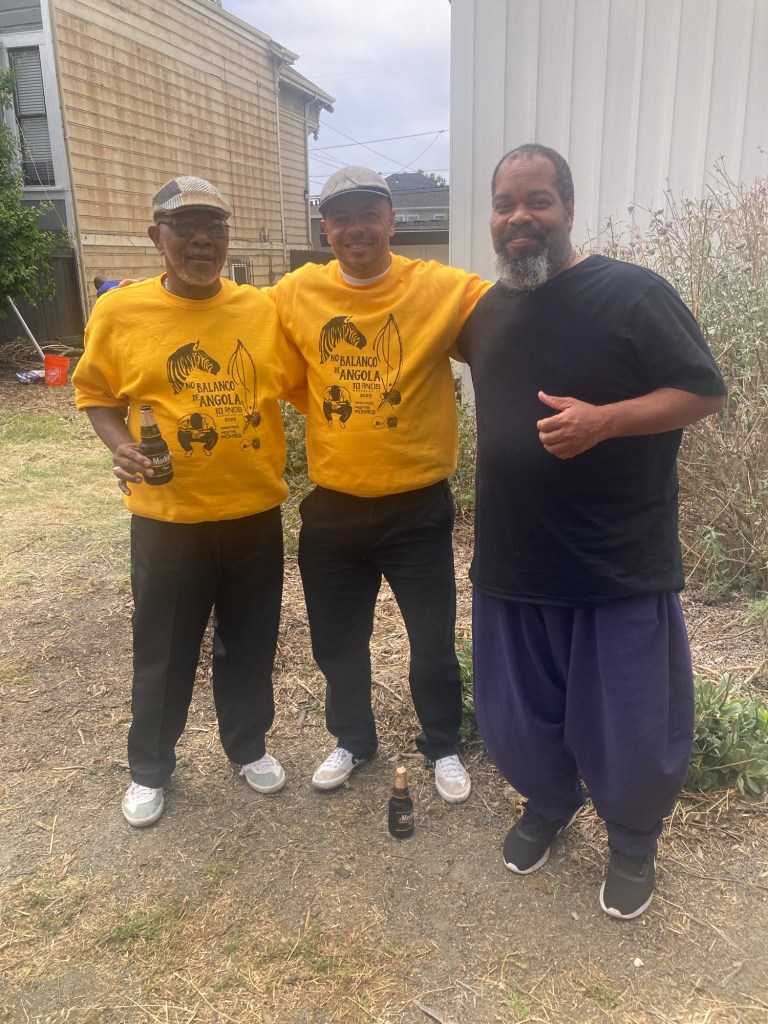
Now, my weekend cannot be complete by talking about this man here with me, Daniel Mattar, a very skilled Angoleiro, totally dedicated to Capoeira Angola, not to mention a great father and gentleman. His passion for Capoeira Angola is truly inspiring; it’s evident in the way he moves, blending agility and grace with resilience and strength.

Once again, I wish I knew more about his story in Capoeira Angola. I’m not even sure of what title he holds (I think it’s treinel, but I could be wrong). Man, I gotta learn to start interviewing people.

However, I do know that he hails from the vibrant city of Rio de Janeiro, a hub of cultural richness and diversity. Before he joined the respected Grupo No Balanco D’Angola, he was with the renowned Group Fundacao Internacional Capoeira Angola (FICA for short), where he honed his skills and embraced the deep philosophical roots of this beautiful art form. Daniel’s journey not only embodies the essence of Capoeira but also reflects his commitment to nurturing the next generation, as he often shares his knowledge and experiences with young practitioners, instilling in them the same love and respect for the traditions of Capoeira Angola that he holds dear.

Before I left Oakland to come back home, I took a moment to pay my respects to MESTRE THEMBA and the good people at Grupo Ngolo Preto Velho, who have also played significant roles in my journey and the community I cherish. Their wisdom and guidance have been invaluable, and visiting them always fills me with a sense of peace and gratitude.

What you’re seeing below is the sun rising in the early morning, casting a beautiful golden hue across the sky at Union Station in Downtown Los Angeles, an hour and a half before I made it home. The quiet of the early morning blended seamlessly with the hustle and bustle that awaited as the city began to wake, reminding me of the contrasting energies that exist in life.

Once again, I want to extend my heartfelt gratitude to Mestres Moraes and Kenji, CM Sergio, Alma (HAPPY BIRTHDAY TO THE BOTH OF YOU!!!), Daniel, Kofi, Jeff, and all of you at Grupo No Balanco D’Angola for all of the love and camaraderie you’ve shown us guests. Your warm hospitality has truly made our experience unforgettable, allowing us to feel like part of your vibrant community.

The passion you have for capoeira Angola is palpable and inspiring, igniting a shared enthusiasm that resonates deeply within all of us. It’s in the smiles we exchanged during practice, and the incredible connections we’ve made that showcase the essence of what you embody as a group. We deeply appreciate the dedication and effort you put into nurturing both your craft and your visitors, creating an atmosphere where everyone feels welcome and valued. Thank you for making our time together so enriching and memorable; we look forward to many more moments shared in the spirit of capoeira.

Axe!

Oh, and one more thing. Thank you Sergio for the beautiful event shirt:

Well it was beautiful until it took a 8 hour bus ride in my luggage. And I promise I’ll be wearing it in STYLE one day… After I lose some weight.