BASIC ELEMENTS OF CAPOEIRA: CHAPA DE COSTAS

“There are not more than five musical notes, yet the combinations of these five give rise to more melodies than can ever be heard. There are not more than five primary colours, yet in combination, they produce more hues than can ever been seen. There are not more than five cardinal tastes, yet combinations of
them yield more flavours than can ever be tasted.”
― Sun Tzu, The Art of War

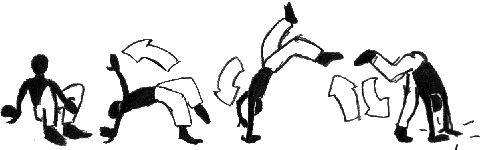
Chapa de costas (back plate) is a powerful back push kick in capoeira, and one of the few principal capoeira‘s kicks, showcasing the art’s fluidity and dynamism. It is also considered a fundamental kick in the traditional African martial art engolo, which serves as a historical forerunner to capoeira, illustrating the deep cultural roots shared between these martial arts. Specifically, Chapa de costas is a signature kick of capoeira Angola, characterized by its graceful execution and tactical application in both offensive and defensive scenarios. This “malicious” kick not only requires precision but also utilizes agility, being similar to chapa de frente, applied strategically from behind to catch the opponent off guard.

Furthermore, Engolo, an Angolan martial art, embraces a wide range of techniques involving back push kicks, which may include rotations with or without jumping to enhance unpredictability and versatility in combat scenarios. Among its notable variations is the hooking kick, executed from behind when in close proximity to the opponent, emphasizing the element of surprise in combat dynamics. This technique not only demands precision and timing but also highlights the practitioner’s ability to read their opponent’s movements, allowing for a more strategic approach to martial engagements. Engolo also draws profound inspiration from animal behaviors, particularly in the techniques that mimic the fighting styles of zebras, effectively showcasing how these majestic animals have influenced martial training. Practitioners study the grace and agility of zebras in the wild to refine their own skills, emphasizing fluidity and responsiveness in their movements. A key aspect of Engolo is the “zebra kick,” artfully performed with palms on the ground, requiring a remarkable level of balance and strength, and exemplifying the beautifully coordinated movements that define these rich martial arts traditions.

This particular kick serves as a demonstration of the intricate relationship between athleticism and artistry in Engolo, as each movement is executed with an aesthetic quality that speaks to the history and culture of the art. This integration of nature and technique not only underscores the philosophical connections between martial practices and the environment they originate from but also cultivates not just physical prowess but also a deeper understanding of one’s surroundings, fostering a holistic approach to both training and personal development. The practice of Engolo nurtures respect for the natural world, encouraging practitioners to embody the virtues observed in animals, which in turn translates into their martial discipline.

Chapa de costas usually aims at the opponent’s face or groin area. According to mestre Pastinhachapa de costas is a “treacherous strike when used against someone unfamiliar with capoeira”, as the opponent is violently struck when they believe the attacker is withdrawing. So Pastinha warns that a cautious capoeirista is “suspicious” and does not allow to be fooled by the apparent withdrawal of a potential aggressor.

BASIC ELEMENTS OF CAPOEIRA: MEIA LUA DE FRENTE

“There are not more than five musical notes, yet the combinations of these five give rise to more melodies than can ever be heard. There are not more than five primary colours, yet in combination, they produce more hues than can ever been seen. There are not more than five cardinal tastes, yet combinations of
them yield more flavours than can ever be tasted.”
― Sun Tzu, The Art of War

The meia lua de frente is a fundamental movement in capoeira, recognized for its graceful yet powerful execution. This circular kick begins from a grounded position, travels fluidly along the side of the body, and ultimately returns to the ground, showcasing both balance and agility. It is widely regarded as one of the first kicks aspiring capoeiristas are taught, as it not only serves as a foundational movement but also enhances coordination and body awareness essential for performing more complex techniques.

Similarly, the front crescent kick (okupayeka) is considered one of the essential kicks in engolo, an Angolan martial art that is often viewed as the precursor to capoeira. Engolo boasts a rich tradition with a variety of movements, including numerous variations of the crescent kick, each serving specific purposes in both offensive and defensive scenarios. These variations are not only practical but also reflect the cultural heritage imbued in these martial practices, connecting practitioners to their roots while allowing for personal expression and creativity within the art form. The significance of the meia lua de frente and its relatives in engolo illustrates the intertwined evolution of African martial arts and their impact on contemporary practices.

In engolo, the kicking leg can be extended fully or partially bent (which is considered incorrect in capoeira). According to Desch-Obi, some engolo kicks were likely developed by Bantu shamans in Angola, highlighting the rich cultural heritage of these practices. Among the Pende shamans, the most important movement was the front crescent kick, the same as in engolo, reflecting a deep connection between martial arts and spiritual beliefs. During the ritual, masked shaman kicked over sacred medicine to activate it and over the kneeling people to heal them, showcasing the intertwining of physical movement and healing powers within their customs. This practice illustrates the significance of intentionality and the power of ritual in their culture.

When doing the crescent kick in capoeira, the kicking leg is straight and the hips are pushed forward, allowing for greater force and accuracy. This kick, fundamental to the style, uses the hips to generate force and propel the leg forward, emphasizing the importance of hip movement in achieving effective strikes. The technique is similar to extending the leg over a chair, requiring balance, precision, and a deep understanding of body mechanics, and embodies the essence of capoeira as a fluid dance-like martial art that demands both athleticism and creativity.
The execution of the crescent kick is not merely about strength; it also requires a rhythmic coordination of the body, where the arms may swing to aid in balance and momentum. Depending on the opponent’s position, this kick can be delivered to various regions of the body, often from knee height to face height, making it a versatile tool in a practitioner’s arsenal. The kick should be finished when it reaches a point directly in front of the kicker, ensuring that the trajectory remains controlled and targeted. While it can be used as an attack itself, it is also often utilized as a setup for another strike, allowing the practitioner to remain unpredictable while keeping the flow of combat dynamic. Meia lua is a good kick to feel out the opponent’s style, as its application can serve as a test of readiness and positioning. Because it is usually low and frontal, it doesn’t open the player to sweeps or counterattacks, maintaining the practitioner’s defensive integrity while providing opportunities for further offensive maneuvers. This blend of strategy and artistry is what makes the crescent kick a cherished technique in capoeira, highlighting the deep connection between movement and intention in this captivating martial art.

Other uses for meia lua can be as a combination with cartwheels and other acrobatic moves, working as an escape. Defense fron this kick can be applied in various ways, usually by moving away and quickly lowering the body. From that position it is possible to deliver a rabo de arraia to the partner by swiftly rotating the body, or even use chapa de costas.The defender could also move away and, quickly descending, tried to take down the attacker with a sweep (rasteira).

BASIC ELEMENTS OF CAPOEIRA: VINGATIVA

“There are not more than five musical notes, yet the combinations of these five give rise to more melodies than can ever be heard. There are not more than five primary colours, yet in combination, they produce more hues than can ever been seen. There are not more than five cardinal tastes, yet combinations of
them yield more flavours than can ever be tasted.”
― Sun Tzu, The Art of War

Today, I want to go into a fundamental takedown that I posted about before in another PAGE, but I want to expand on it and delve into a bit more detail for clarity and depth. This technique is called THE VINGATIVA, and it plays a crucial role in understanding the intricacies of Capoeira.

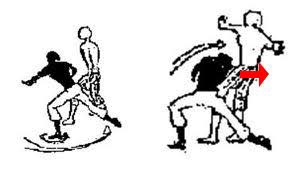
The Vingativa is a low takedown that involves stepping forward and trapping the back legs of an opponent who is in a side stance. This movement is characterized by the capoeirista also protecting their face with their elbow, demonstrating the importance of defense while executing an offensive maneuver.

Once the lead leg of the capoeirista has successfully trapped the leg of the opponent, they skillfully shift their weight in a fluid motion, pushing their hips forward and up, utilizing balance and leverage to maximize effectiveness. If the contact is maintained with the legs of the other player, they should be thrown up and away, thus executing the takedown with precision.

It’s fascinating to note that although this move originally came from batuque, it shares similarities in appearance with certain throws and sweeps found in traditional martial arts such as Baguazhang and Bajiquan, as well as the effective tai otoshi executed in various styles of karate. Other schools of thought in martial arts teach a variation of the Vingativa that resembles the sukui nage or obi otoshi techniques that are foundational in judo. You can even see this technique in Filipino Martial Arts, highlighting the interconnectedness of different martial arts traditions and the rich tapestry of techniques that practitioners can draw upon.

Understanding the nuances of the Vingativa allows martial artists not just to enhance their skillset, but also to appreciate the cultural heritage and evolution of capoeira as a dynamic and impactful form of combat art. By delving deeper into its techniques and philosophy, practitioners can cultivate not only physical prowess but also a profound respect for the history and traditions that have shaped this unique art form.

The Vingativa offers a gateway into the fusion of rhythm, movement, and strategy that defines capoeira, inviting artists to explore its rich narrative and the diverse influences that contribute to its ongoing evolution. Engaging with this practice enables martial artists to connect with a broader community, fostering a spirit of camaraderie and mutual growth as they share in the celebration of capoeira’s roots and its relevance in contemporary society.

BASIC ELEMENTS OF CAPOEIRA: ARRASTAO

“There are not more than five musical notes, yet the combinations of these five give rise to more melodies than can ever be heard. There are not more than five primary colours, yet in combination, they produce more hues than can ever been seen. There are not more than five cardinal tastes, yet combinations of
them yield more flavours than can ever be tasted.”
― Sun Tzu, The Art of War

Today, I want to talk about the Arrastao.

The term “Arrastão” in Capoeira refers to a specific takedown technique. 

Here’s a closer look:

The Capoeira move “Arrastão” is a classic leg takedown that skillfully combines agility and strategy, where the practitioner closes in on the opponent with precision, sweeping their legs or pushing them to the ground using their shoulder or head. This dynamic maneuver can manifest as both a double or single-leg takedown, showcasing the versatility of Capoeira techniques, and may also involve a lateral technique that enhances its effectiveness in various combat scenarios.

In competitive settings, it can catch opponents off guard, leading to quick transitions into follow-up moves or escapes. Counters to the “Arrastão” include a sprawl or guillotine choke, which require the opponent to be alert and responsive to avoid being taken down. This move not only reflects the athleticism inherent in Capoeira but also underscores its practicality beyond being merely a form of dance.

The term “arrastão” holds additional cultural significance; it also refers to flash robbery in Brazil and Portugal, derived from the verb “arrastar,” illustrating the term’s multifaceted nature within both martial arts and social contexts. Such connections highlight the rich tapestry of language and movement that Capoeira embodies, blending physical skill with deeper cultural narratives.

In essence, the Arrastão is a powerful and strategic takedown within the dynamic art of Capoeira.

BASIC ELEMENTS OF CAPOEIRA: QUEDA DE RINS

“There are not more than five musical notes, yet the combinations of these five give rise to more melodies than can ever be heard. There are not more than five primary colours, yet in combination, they produce more hues than can ever been seen. There are not more than five cardinal tastes, yet combinations of
them yield more flavours than can ever be tasted.”
― Sun Tzu, The Art of War

Capoeira Angola is a defensive martial art known for its intricate trap-like defenses designed to catch opponents off guard. It encompasses 8 basic defenses, each with unique unexpected attacks and counter attacks based on the opponent’s positioning. Mastery of these movements enables capoeiristas to defend against individuals carrying various weapons, including sticks, clubs, knives, and potentially even firearms with the appropriate skills.

Today, we’re going to examine a fundamental movement in Capoeira Angola, the QUEDA DE RINS.

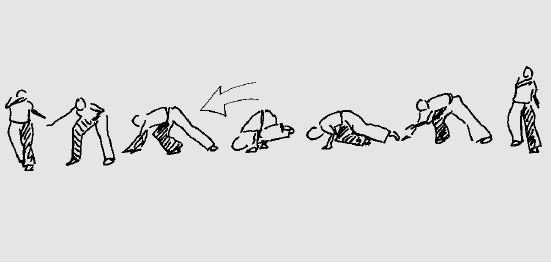
Capoeira Angola’s “Queda de Rins,” or “fall on the kidneys,” is an essential ground movement that serves multiple functions in the game, reflecting the intricate blend of martial arts, dance, and music that defines Capoeira. It involves supporting the torso with an elbow and head, forming a 45° angle with the legs, which requires a combination of strength, coordination, and control.

Yes, this tutorial is in Portuguese… If you want to know what she’s saying, you can always LEARN THE LANGUAGE.

To execute it properly, one must begin with their hands and head firmly on the floor, aligning the body to create a strong foundation, then twist their hips to rest on an elbow while ensuring that the legs remain elevated and engaged throughout the entire movement. It is essential to maintain a steady breathing pattern, as this will help in controlling the balance and flow of the exercise. Eventually, with practice and dedication, one can lift the legs entirely into the air, mastering the art of fluidity that Capoeira demands. Mastery of this movement not only contributes to strength, flexibility, and balance but also provides a solid foundation for exploring the myriad of movements inherent in Capoeira, enabling the practitioner to experience the beauty and rhythm of this dynamic martial art, all while building upper body stability and core strength.

Beginners should practice in stages, starting with proper hand and head placement and gradually increasing their skill level as they gain confidence, while advanced practitioners find the challenge in lifting their feet entirely, continuously refining their technique, adding variations, and enhancing their overall performance in the art of Capoeira, thus deepening their connection to the cultural roots and expressive nature of the discipline.

This technique can act as an esquiva, allowing the practitioner to evade an opponent’s attack gracefully while simultaneously maintaining balance and composure. Additionally, it serves as a crucial starting point for executing various techniques, making it a versatile move that can transition seamlessly into more complex maneuvers, such as flips or spins. This adaptability not only enhances the fluidity of movement but also establishes a connection between defensive and offensive actions. Alternatively, it can be transformed into an artistic flourish that showcases the practitioner’s style and creativity within the roda, creating an engaging spectacle that captivates both audiences and fellow practitioners alike. Ultimately, mastering this technique opens up a world of possibilities, enabling the individual to express their unique approach to the art while effectively navigating the dynamics of a live encounter.

Variations:

Queda de Rins has numerous variations that challenge balance and coordination further, each one designed to enhance physical stability and improve overall body awareness. These variations not only test the limits of one’s strength but also require a keen sense of timing and precision. As practitioners delve deeper into these complex movements, they discover how the interplay between gravity and motion can lead to a greater understanding of their own body’s capabilities. This exploration encourages a more mindful approach to physical activity, as individuals learn to navigate through various positions while maintaining control. Over time, mastering these variations can significantly boost confidence, providing a solid foundation for tackling more advanced challenges in the realm of physical fitness.

Queda de Rins is a versatile and essential movement in Capoeira Angola, adding both defensive and expressive elements to the game. This unique maneuver not only serves as an effective way to evade attacks from opponents but also showcases the fluidity and creativity inherent in Capoeira practice. As practitioners execute the Queda de Rins, they seamlessly transition between defense and counterattacks, demonstrating agility and strength.

Additionally, the movement embodies the rich cultural heritage of Capoeira, allowing players to express their individuality while remaining grounded in tradition. Through strong body control and rhythmic flow, the Queda de Rins encapsulates the spirit of Capoeira Angola, making it a vital component in a player’s repertoire.

MARTIAL ARTS THEATER (7/29/25)

Welcome to MARTIAL ARTS THEATER, a vibrant community for martial arts enthusiasts that offers a plethora of resources like expert interviews, instructional videos, and engaging events to enhance your skills and knowledge. Dive deep into the fascinating world of various styles such as karate, judo, taekwondo, and Brazilian jiu-jitsu in a supportive and inclusive environment that welcomes everyone. Our platform caters to both seasoned martial artists and beginners alike, providing tailored programs and workshops that encourage skill development while fostering a sense of camaraderie among participants in a warm setting. Join us to connect with others, share your experiences, and embrace the journey of self-discovery in martial arts, where each precise movement not only hones your physique but also brings you closer to your personal best, instilling discipline, respect, and resilience that can transcend beyond the dojo into everyday life. Together, let’s cultivate a passion for martial arts that inspires and empowers individuals of all ages and backgrounds to pursue their dreams and aspirations.

In today’s Installment…

Well, it seems like the chickens finally came home to roost. Shi Yong Xin, the abbot of the Shaolin Temple for the past 25 years, has recently been detained and is under investigation for a whole bunch of things that have raised eyebrows in the community and beyond. This unexpected turn of events has sent shockwaves among the followers of the temple and martial arts enthusiasts alike, making many question their beliefs about leadership and integrity within such a revered institution. Don’t get me wrong. He has done many great things to preserve Shaolin legacy and culture, and is mostly responsible for what Shaolin is today. His efforts in promoting martial arts globally and his commitment to nurturing young students have inspired countless individuals.

However, it is also essential to acknowledge that he has, allegedly, committed very criminal acts that contradict the values of discipline and honor that the Shaolin Temple stands for. I hate to use the word “Karma” for this situation, because Karma means much more than mere retribution, but hey, if the shoe fits… perhaps it’s a reminder that our actions have consequences, no matter how high we rise or how revered we become, serving as a cautionary tale about the fragility of reputation and the importance of accountability in leadership roles.

As the story unfolds, many are left wondering what the future holds for the temple and its legacy.

MARTIAL ARTS THEATER (6/20/25)

Welcome to MARTIAL ARTS THEATER, a vibrant community hub for martial arts enthusiasts offering expert interviews, instructional videos, and a variety of events tailored for all skill levels. Here, you can dive deep into a wealth of information, exploring diverse insights across disciplines such as karate, judo, taekwondo, and Brazilian jiu-jitsu in a supportive environment that not only encourages growth but also nurtures a sense of camaraderie among practitioners. We invite both seasoned practitioners and beginners alike to connect, share experiences, and embark on the transformative journey of self-discovery in the world of martial arts. By participating in our workshops, seminars, and discussion panels, you can hone your skills, learn from respected masters, and forge lasting friendships with fellow enthusiasts who share your passion and dedication to the art of combat.

In today’s installment…

The Karate Nerd“, one of YouTube’s biggest martial artists, has stirred quite the pot lately by posting several controversial videos focused on Brazilian Jiu-Jitsu (BJJ), including one particularly provocative installment where he joined a tournament to “prove it doesn’t work.” In a quest to challenge the status quo, he even traveled to Gracie University to engage with Ryron Gracie himself, attempting to disprove the effectiveness of sport jiu jitsu. This bold move caught the attention of the AMAZING YouTuber JOSH BEAM, who decided to take matters into his own hands.

Fueled by a desire to defend the honor of BJJ, he promptly booked a ticket straight to Stockholm with the intention of challenging Jesse at his dojo, Combat Academy! However, realizing that his Jiu Jitsu skills were not quite enough to take on such a formidable opponent, Josh committed himself to training in judo for an entire year, where he diligently honed his throws and ground game. After a grueling year of preparation, he returned to Stockholm, ready to reclaim his pride and seek revenge against Jesse. But what transpired next was completely unexpected and far from what he had initially anticipated.

He came for revenge but instead found himself experiencing a profound lesson in martial arts and humility, as well as an aspect of Karate that’s not often displayed or talked about. Through rigorous training and thoughtful reflection, he discovered that true strength lies not only in physical prowess but also in the cultivation of inner peace and respect for others. Each session brought new challenges that tested his resolve, pushing him to confront both his fears and preconceived notions about fighting and power.

Click HERE to watch the full Kata he learned, showcasing the incredible journey of growth and transformation that unfolded during his time training, capturing the essence of discipline and the deep connections formed with fellow practitioners on this unexpected path.

MARTIAL ARTS THEATER (5/16/25)

Welcome to MARTIAL ARTS THEATER, a vibrant community hub for martial arts enthusiasts that offers a wealth of resources including expert interviews, instructional videos, and exciting events that inspire and educate practitioners of all skill levels. Here, you can explore a broad spectrum of diverse insights across various styles like karate, judo, taekwondo, and Brazilian jiu-jitsu, all within a supportive environment that fosters growth and camaraderie. Our platform not only welcomes seasoned martial artists but also invites beginners eager to learn and develop their skills in a warm and encouraging setting. Join us to connect with like-minded individuals, share your experiences, and embrace the rewarding journey of self-discovery in martial arts, where every kick, punch, and grappling maneuver takes you one step closer to achieving your personal best.

In today’s installment, we learn that when MIKE TYSON says that someone is a Monster… BELIEVE HIM.

Naoya Inoue is pound for pound, one of the best boxers to ever step into the ring. Known for his incredible speed, powerful punches, and strategic fighting style, he has captivated fans worldwide with his performances. He has held multiple world championships in four weight classes, showcasing his versatility and skill across different divisions.

As a testament to his remarkable talent, he is one of only three male boxers in history to become the undisputed champion in two weight classes in the “four-belt era,” becoming the second of them to do so. His journey to the pinnacle of boxing is marked by hard work, dedication, and an unyielding desire to be the best, making him an inspiration to aspiring athletes and a formidable opponent for anyone who faces him in the ring. Throughout his career, he has faced some of the toughest challengers, each fight adding to his legacy and further establishing his reputation as a relentless competitor.

With every match, he has not only showcased his exceptional skill and strategic prowess but has also demonstrated the importance of mental fortitude and resilience in overcoming adversity. His ability to adapt and evolve within the sport has inspired countless fans and fellow fighters alike, proving that success in boxing, much like in life, requires a combination of talent, effort, and an indomitable spirit. Moreover, he often engages with younger generations, sharing his experiences and insights, thus encouraging them to pursue their dreams with the same passion and perseverance he exemplifies.

MARTIAL ARTS THEATER (5/9/25)

Welcome to MARTIAL ARTS THEATER, a vibrant community hub for martial arts enthusiasts featuring expert interviews, comprehensive instructional videos, and exciting events that inspire and educate practitioners of all skill levels. Here, you will explore diverse insights across various styles, including karate, judo, taekwondo, and Brazilian jiu-jitsu, all within a supportive and welcoming environment. Whether you are a beginner seeking to learn the basics or an advanced practitioner looking to refine your skills, our resources are designed to cater to your unique journey. Join us to connect with others who share your passion and embrace the rewarding journey of self-discovery in martial arts, where personal growth and discipline are just as important as physical prowess. Together, we can cultivate a deep understanding of martial arts and foster friendships that last a lifetime.

In today’s Installment…

If you don’t know about Kid Yamamota, you are about to become a huge fan. In this video, we layout exactly why he is so beloved and will continue to be long after his passing, showcasing not only his remarkable skills inside the cage but also his incredible resilience and sportsmanship.

This is the story of a true legend of Japanese MMA, who paved the way for future fighters and inspired countless fans around the world. Beyond his statistics and accolades, Kid Yamamota’s legacy is defined by his dedication to the sport, his humble nature, and the profound impact he has had on the global MMA community. His journey began in the early days of mixed martial arts, where he not only showcased unparalleled skill inside the cage but also demonstrated an unwavering commitment to training and self-improvement.

This tribute not only highlights his unforgettable matches but also emphasizes the values he represented, such as perseverance, respect, and sportsmanship, which continue to resonate with fighters and fans alike. Kid Yamamota’s story is a reminder that success in MMA is not solely measured by titles and wins, but by the respect earned and the lives touched throughout one’s career, proving that his influence will endure for generations to come.

MARTIAL ARTS THEATER (4/18/25)

Welcome to MARTIAL ARTS THEATER, a comprehensive hub for martial arts enthusiasts, where we proudly offer an array of expert interviews, detailed instructional videos, and engaging community events designed to inspire and educate. Our platform caters to practitioners of all skill levels, from beginners looking to learn the fundamentals to advanced martial artists seeking to refine their techniques.

With a wide-ranging selection of insights aimed at enhancing your skills across various styles, including karate, judo, taekwondo, and Brazilian jiu-jitsu, we are committed to fostering a supportive and inclusive environment. Join us to connect with others who share your passion, exchange knowledge, and embrace the rewarding journey of self-discovery and excellence in martial arts. Whether you’re training for competition, personal growth, or simply for the joy of movement, MARTIAL ARTS THEATER is your go-to destination for all things martial arts-related.

In today’s installment…

Sensei Seth, a man who appreciates your open-mindedness and diligence in promoting all martial arts, has recently visited the world’s first Wing Chun Museum (Ving Tsun Museum). During his visit, he was given an insightful introduction to Wing Chun’s Triad, as well as the symbolic tiger and dragon concepts from the rich Shaolin Wing Chun lineage, which provided a fascinating look into the philosophy and strategy behind this martial art.

The experience was not only educational but also deeply inspiring, reminding all practitioners of the importance of tradition in their training. As he explored the museum’s various exhibits, Sensei Seth found himself captivated by the historical artifacts and detailed displays that chronicled the evolution of Wing Chun, showcasing the efforts and sacrifices of countless masters who have contributed to its development over centuries. This visit solidified his belief in continually honoring and understanding the foundational aspects of martial arts, encouraging him to share this wisdom with his students and the wider community.

Shout out to ‪@BennyMeng-swc108‬ for graciously creating and guiding us around the Wing Chun Museum! Benny’s extensive knowledge and passion for the art made the tour particularly memorable. To learn more about his teachings and upcoming events, visit https://www.mengsmartialarts.com/. Additionally, make sure you follow the three brothers Vincent, Spencer, and Derikson Meng on IG to see their competitions and witness their remarkable growth in the world of martial arts! Their dedication to training exemplifies the spirit of perseverance that is essential for success in any discipline.