The Self-Defense Series: A Holistic Blueprint for Personal Empowerment and Survival
The Holistic Path to Personal Empowerment: Beyond Mere Technique
The prevailing, and often dangerously limited, view of self-defense—which focuses narrowly on a collection of physical techniques—is fundamentally inadequate for navigating the true complexities of real-world violence. To be genuinely prepared, resilient, and confident in the face of danger requires a profound and comprehensive transformation. True readiness demands a vital, holistic path to empowerment, one that integrates and systematically strengthens the individual across four critical, interdependent domains.
The Self-Defense Series is not merely a collection of fighting tips; it is a philosophy built upon these four pillars of personal safety: physical, mental, spiritual, and legal. Our core assertion is that effective self-defense transcends the rote memorization of martial arts moves. It requires a deep, well-rounded foundation that cultivates unwavering resilience, genuine readiness, and absolute confidence, ensuring the individual is equipped not just to survive an encounter, but to thrive in its aftermath.
Today’s Essential Insight: Spotting the Hidden Danger
3 SIGNS That Man Can DESTROY You in a Fight…
In the volatile, unpredictable environment of a confrontation, the ability to rapidly assess and categorize your opponent is not merely a desirable skill—it is an absolute, critical matter of survival. The fundamental question you must answer, often in a fraction of a second, is this: How can you discern if the person standing before you is merely an aggressively posturing individual, or a genuinely trained, potentially lethal fighter… and how can you know this before you are committed to a physical situation that is already too late to escape?
The stark, sobering reality is that the vast majority of people are completely blind to the subtle, almost imperceptible signs that betray a person’s inherent combat training, psychological conditioning, and lethal readiness. Failing to recognize and interpret these crucial pre-contact cues is a common, and often catastrophic, mistake. In a high-stakes encounter, it takes only one misstep, one moment of indecision, or one missed signal to find yourself incapacitated, critically injured, or worse.
This document serves as an urgent, tactical guide, moving far beyond generalized self-defense advice. You will be systematically introduced to the advanced principles of genuine threat detection, specifically calibrated for maximum speed and accuracy.
Through this deep-dive analysis, you will master the following essential, life-saving capabilities:
Spotting the Hidden Dangers Fast: Learn to process non-obvious environmental and physiological cues—signs of pre-meditation, target fixation, and commitment to violence that an untrained eye simply overlooks.
Reading Body Language Like a Pro: Understand the universal tells of a skilled fighter versus an emotional aggressor. This includes interpreting stance, posture, hand positioning, and the absence of wasted movement—the silent language that speaks volumes about a person’s training discipline and intent.
Instantly Understanding the Core Difference: Acquire the knowledge to know what truly separates an ordinary, blustering man from someone who is psychologically and physically equipped to destroy you in seconds. This distinction is paramount and will dictate your entire tactical response: whether to de-escalate, flee, or commit to a defensive action.
The goal is preemptive awareness, giving you the priceless advantage of time and informed action against an individual who believes they have the element of surprise. Your life may depend on your ability to see what others cannot.
[Video Resource] We extend our sincere Shoutout to the dedicated YouTube channelFIGHT SCIENCE for creating and posting this invaluable video.—–The Intellect of Combat: Elevating Your Fight IQ
Blending Criminal Psychology and Martial Arts for Superior Self Defence
Effective self-defense is a synthesis of physical capability and intellectual acuity. It demands not just muscle memory, but a sharp, analytical mind capable of preemptive threat assessment. This critical area is illuminated by Dr. Mark Phillips, a renowned Criminal Psychologist, Security Consultant, and dedicated Martial Artist. His “No Nonsense Self Defence Tips & Tricks” presentation bridges the gap between the dojo and the dangers of the street.
Topics Covered in the Fight Science Curriculum:
Behavioural Risk Management: Learning to identify pre-attack indicators and situational cues that signal imminent danger, allowing for de-escalation or strategic escape before the physical fight begins.
Criminal Behaviour: Understanding the predatory mindset, common attack patterns, and the psychological levers criminals exploit to select and control their targets.
Self Defence Techniques & Street Fighting Tips: Practical, high-percentage techniques adapted for survival in non-compliant, unpredictable street environments, prioritizing effectiveness and simplicity.
Mindset Preparation: The crucial internal work of forging mental fortitude, controlling the fear response, and maintaining functional decision-making under extreme stress.
General Tips: A broad spectrum of actionable advice on personal security, situational awareness, and the legal parameters of self-defense force.
Dr. Philipps’ approach emphasizes Simple Martial Arts training with easy to follow ideas, ensuring the lessons are immediately applicable and require minimal practice time to be effective under pressure.
Stay Connected with Dr. Philipps and the Fight Science Community:
Weekly Self Defence and Martial Arts video releases are posted every Sunday, providing a consistent source of expert instruction.
The Self-Defense Series: A Holistic Path to Empowerment
Welcome to the Self-Defense series, a comprehensive and vital program meticulously crafted to empower you by addressing the four crucial pillars of personal safety: physical, mental, spiritual, and legal. In a world with increasing complexities, true self-defense extends far beyond mere physical techniques; it demands a well-rounded foundation that promotes not just readiness, resilience, and confidence, but also a profound and actionable understanding of personal security.
This series provides an essential toolkit for protection, integrating a wide spectrum of self-defense strategies. We delve deeply into practical, reality-based techniques that are effective under duress, and pair them with an intensive focus on situational awareness—the foundational skill for threat avoidance. Complementing the physical is a strong emphasis on psychological components designed to build an ironclad mindset capable of facing potential threats with clarity, decisiveness, and minimal hesitation.
Beyond the mental and physical, we explore spiritual practices—not necessarily tied to any specific religion, but focusing on enhancing your inner strength, maintaining focus under pressure, and fostering a deep sense of peace and balance that underpins your ability to act from a place of calm control. Finally, the legal frameworks are discussed in detail. This understanding is vital for encouraging informed and justifiable actions, ensuring your rights are upheld, and empowering you to act with responsibility both for yourself and within your community. Ultimately, this series transcends simple defense training; it is a transformative journey toward personal growth and empowerment that meticulously prepares you for challenges—both on and off the training mat.
The Critical Mistake That Loses Street FightsToday’s Focus: The Fight-Losing Mindset
In today’s pivotal installment, we address a harsh truth often ignored by the overconfident. Most young men, fueled by adrenaline and fantasy, believe they are instinctively ready for a street fight. Yet, time and time again, they commit a crucial, psychological mistake that inevitably leads to them being knocked out or severely beaten. This failure is not fundamentally about brute strength, size disparity, or even a lack of technical skill—it is something far deeper. It is a fatal flaw in the fight mindset that causes both highly trained practitioners and complete novices alike to lose fights they possessed all the physical tools to win.
The Cold Reality vs. The Fantasy:
The brutal truth is that real-world violence and spontaneous confrontations do not unfold like they do in movies or in your controlled sparring sessions. The moment genuine fear, confusion, and raw, uncontrolled emotions take over, rational thought and learned technique dissolve. This cascade invariably leads to bad decisions—a flinch instead of a block, charging in wildly, turning your back, or freezing completely. In the chaotic, unforgiving environment of a street fight, just one bad decision is all it takes for the fight to be decisively lost.
The individual who recognizes and masters this psychological battleground has an unshakeable edge. The one who dismisses it—the one who believes sheer aggression and untested natural instincts are sufficient to win—is the one who is left reeling, dropped by the simple, critical mistake. This foundational error has cost countless men their fights, their dignity, their freedom, and, in tragic cases, much worse. We implore you to watch this analysis to the end so that you can arm yourself with the awareness necessary to avoid falling into this devastating trap.
A Special Acknowledgment
A heartfelt and sincere shoutout to the entire team at FIGHT SCIENCE for their unwavering commitment, tireless dedication, and exceptional skill in creating and consistently sharing this absolutely essential video content. Their work is a vital resource for anyone serious about personal safety and understanding the dynamics of real-world conflict.—–Join the FIGHT SCIENCE Community
Don’t miss out on vital knowledge. We urge you to Subscribe now to the FIGHT SCIENCE channel for continuous access to their library of content. You’ll receive more in-depth, meticulous breakdowns focused on the sobering realities of real-world violence, proven effective fighting strategy, and the critical psychological principles necessary for self-preservation and survival.—–Our Core Philosophy: Elevating Your Fight IQ
FIGHT SCIENCE stands alone as a truly unique platform, dedicated to forging the ultimate intersection of rigorous academic expertise and practical, battle-tested martial arts application. Our paramount focus is squarely on ELEVATING YOUR FIGHT IQ. We achieve this by meticulously blending the rigorous, evidence-based analysis drawn from the field of Criminal Psychology with the practical, proven methodologies of professional Martial Arts for truly effective, ethical Self-Defence. This holistic approach ensures that you are prepared not just physically, but mentally and strategically.—–Meet the Expert: Dr. Mark Phillips
Our authoritative content is expertly researched, designed, and presented by Dr. Mark Phillips. He is a highly distinguished and credentialed professional, serving as a Criminal Psychologist, an experienced Security Consultant operating at an executive level, and a committed, lifelong Martial Artist. This exceptional and rare combination of high-level academic and psychological expertise with deep, practical, real-world experience provides a truly unparalleled, non-sensationalized, and no-nonsense approach to self-defense and personal security. Dr. Phillips’ unique perspective cuts through the myths and misinformation, delivering instruction that is grounded in scientific understanding and practical effectiveness.
Topics Covered in the Series:
Behavioural Risk Management: Learning to read, understand, and avoid pre-assault indicators and dangerous situations.
Criminal Behaviour: Deep dives into the psychology of predators, their targets, and how they select victims.
Self-Defence Techniques: Simple, high-percentage techniques proven to work when stress levels are high.
Street Fighting Tips: Strategies for managing the chaos and unpredictability of real, unsanctioned conflicts.
Mindset Preparation: Developing the mental fortitude, intent, and ability to transition from “prey” to “defender” instantly.
General Safety Tips: Practical, easy-to-implement advice on how to defend yourself in various environments.
Our philosophy emphasizes Simple Martial Arts training with easy-to-follow ideas, making complex concepts accessible to everyone. Expect Weekly Self Defence and Martial Arts video releases every Sunday to keep your skills and knowledge constantly sharp.
CONNECT WITH DR.PHILIPS!!!
Stay engaged with the Fight Science community across our social platforms:
For in-depth, hands-on training with Dr. Phillips and his team, explore our dedicated martial arts academies specializing in systems perfectly suited for self-defense:
London Wing Chun Academy (LWCA) ► http://www.londonwingchun.co.uk – Mastering the art of close-quarters self-preservation and structure.ORIGIN Brazilian Jiu-Jitsu (BJJ) ► http://www.londonbjj.com – The essential grappling art for controlling a fight on the ground and neutralizing larger opponents.
Welcome to MARTIAL ARTS THEATER, a vibrant community hub for martial arts enthusiasts that focuses on personal growth, discipline, and camaraderie. Here, you can access a wealth of resources, including expert interviews that delve into the philosophies behind various martial arts, instructional videos tailored for all skill levels, and engaging events that bring people together in the spirit of collaboration. Explore a diverse array of styles such as karate, judo, taekwondo, and Brazilian jiu-jitsu in an inclusive and supportive environment designed to cultivate both skill and character. Whether you’re a seasoned practitioner with years of experience or a curious beginner taking your first steps into the world of martial arts, you will find a welcoming community that fosters meaningful connections and encourages self-discovery, resilience, and empowerment through martial arts. Join us in this journey of transformation where each kick and kata not only builds physical strength but also instills confidence and fortitude to face life’s challenges.
In today’s installment…
Michael Jai White: The Action Star Hollywood Couldn’t Handle
Before the current era of superhero blockbusters, where meticulously rendered CGI and wirework often eclipse genuine physical performance, Michael Jai White was operating on an altogether different echelon of action stardom. He was not merely an actor portraying a martial artist; he was, and remains, a legitimate, high-level master of multiple fighting disciplines. His credentials are staggering: black belts in seven different styles, including Shotokan, Taekwondo, Kobudo, Kyokushin, Wushu, Tang Soo Do, and Goju-Ryu. This depth of authentic martial arts mastery provided the foundation for his screen presence, translating into fight choreography that was leagues ahead of the often-staged, overtly telegraphed combat sequences common in Hollywood films of the time.
White’s cinematic fighting style was characterized by its blinding speed, surgical precision, and a brutal, yet elegant, authenticity. His on-screen persona was a powerful, magnetic synthesis of physical grace, an imposing physical stature, and the easy charisma that defines a true leading man. Crucially, White rarely, if ever, required a stunt double for his most complex and demanding martial arts sequences. This unparalleled self-sufficiency and dedication to his craft made him the complete package: the skill, the look, and the commanding screen presence.
The logical, almost inevitable, trajectory for an actor with such a unique and formidable skill set should have been a clear path to major A-list superstardom. He possessed the raw material for a career in the mold of an Arnold Schwarzenegger or a Sylvester Stallone, yet with a layer of authentic martial arts credibility and skill that neither of those action giants could genuinely claim. Yet, this destiny of global franchise lead status never fully materialized, leading to one of the industry’s most frustrating case studies.The Problem of Being “Too Real”
The central, and perhaps tragic, irony of Michael Jai White’s career is that the very authenticity and superior skill that set him apart from his peers became, paradoxically, his greatest professional obstacle. In a profound sense, he was “too real” for a Hollywood studio system that historically prefers control, easily marketed archetypes, and actors who are content to rely heavily on special effects, camera tricks, and dedicated stunt teams to manufacture action credibility. White was a self-contained action powerhouse, a characteristic the system seemed ill-equipped to handle.
Welcome to MARTIAL ARTS THEATER, a community hub for martial arts enthusiasts that focuses on personal growth, discipline, and camaraderie. Here, you can access expert interviews, instructional videos for all skill levels, and engaging events. Explore various styles like karate, judo, taekwondo, and Brazilian jiu-jitsu in a supportive environment. Whether you’re a seasoned practitioner or a curious beginner, you will find a welcoming community that fosters meaningful connections and encourages self-discovery, resilience, and empowerment through martial arts.
Today…
The martial arts community is facing a deep-seated crisis of conscience. While we tirelessly preach the core tenets of honor, respect, and integrity, a stark and damaging contradiction exists in the way we treat our own heroes. We routinely elevate and celebrate elite martial artists with documented dark pasts, yet we collectively refuse to hold them accountable for their egregious actions.
Consider the roster of names whose contributions to the mat are undeniable, yet whose character flaws and misconduct have been systematically ignored or minimized: Conor McGregor, Jon Jones, Lloyd Irvin, Cyborg Abreu, Leo Vieira (De La Riva), and Andre Galvao. These individuals have unquestionably moved the needle in their respective disciplines, but their skill has become an impenetrable shield against moral scrutiny. Their legends, their status, and their technical mastery are used as justification to bury or willfully ignore the damage they have caused.
This selective celebration, however, is not a victimless act of oversight; it is an active corruption of the next generation. By holding up individuals as heroes—whose brilliance in competition is inseparable from their documented moral failings—we are inadvertently teaching every aspiring martial artist a profoundly toxic lesson. We are signaling, in the clearest terms possible, that this community’s true values lie not in character, but in ability, fame, and spectacle. The message is simple: greatness excuses misconduct.
The conversation needs to shift from technical admiration to ethical accountability.Why Skill is Not Character, and Why We Confuse the Two
The martial arts community suffers from a pervasive cognitive dissonance where an individual’s elite technical skill is conflated with their moral character. We fall into the trap of thinking that the discipline required to become a champion must inherently translate into discipline in life. It doesn’t. A person can possess unparalleled mastery of a choke or a takedown while simultaneously lacking basic human decency and ethical grounding. Our admiration for their martial arts contributions should not negate the need for accountability for their crimes or abusive behavior.
The BJJ Community’s Loyalty Problem
The Brazilian Jiu-Jitsu (BJJ) community, in particular, exhibits a damaging, almost tribal loyalty that prioritizes the reputation of the academy, the lineage, and the champion over the safety and ethical well-being of its members. This culture of protectionism ensures that when allegations of misconduct surface, the immediate reaction is not to investigate and support the victim, but to circle the wagons and discredit the accuser to save the “family” name. This system protects the powerful and perpetuates an environment where victims are silenced, and toxic individuals are allowed to continue operating with impunity.
What Martial Arts Was Supposed to Teach Us
The foundational philosophy of martial arts—from the Do (meaning “way” or “path”) in Judo, Taekwondo, and Aikido, to the disciplined and rigorous traditions of Brazilian Jiu-Jitsu (BJJ) and Karate—was originally conceived as far more than mere combative training. It was intended to be a comprehensive framework for holistic self-improvement and ethical character development.
The core objective was the forging of a human being defined by an indomitable spirit, genuine humility, meticulous self-control, and unwavering respect for all others. The physical skills—the throws, strikes, submissions, and forms—were merely the tools, the means to a far greater end: mastering the self.
The training mat, or dojo, was designed to be a crucible. It was a sacred space where the abstract concepts of discipline, honor, and accountability were not just discussed, but were practiced, embodied, and tested daily under physical and mental duress. It was a laboratory for character, a place where the corrosive influence of the ego was intentionally broken down and then meticulously rebuilt, not with vanity, but with ethical purpose and a sense of responsibility.
The practice of martial arts, in its purest form, demands absolute presence and honesty. The inevitable failure, pain, and exhaustion inherent in training force the student to confront their own limitations and deficiencies. This continuous self-assessment is the essence of true growth.
Crucially, this traditional ethos stands in stark contrast to modern interpretations. The original purpose was never intended to be a launching pad for personal fame, a quest for social media followers, or pure entertainment created at the expense of one’s fundamental character and the principles of the art itself. The focus was internal mastery, not external validation. The true measure of a martial artist resides not in the medals won or the popularity achieved, but in the quality of the person they become through the rigorous pursuit of the path.
The Urgent Call to Accountability
The conflict before us transcends a mere debate over athletic superiority or a fighter’s win-loss record. It is a profound moral argument concerning the fundamental soul of our community and the ethical values we transmit to the next generation of practitioners and fans. The actions we condone or condemn define our collective character far more than any trophy or title belt.
Therefore, the time for polite suggestion, nuanced dialogue, and incremental reform is unequivocally over. This is not a request; it is a categorical demand: Hold this community accountable.
If you occupy a position of influence—be it a coach guiding the development of young athletes, a student seeking personal mastery, an avid fan whose loyalty funds the system, or a promoter who controls the platform—and you are willing to celebrate the martial legend of a person while actively ignoring, excusing, minimizing, or burying the verifiable damage they have inflicted upon others, you are not merely a passive spectator. You are a complicit enabler. You are an active participant in the systemic problem that is ruthlessly poisoning the well of our collective ethical environment, making the space unsafe for those who have been marginalized or harmed.
The martial arts mat, or the space where these arts are practiced, is a sanctuary—a sacred space—intended to be a crucible for forging and cultivating the highest aspects of human character: discipline, respect, humility, integrity, and courage. These arts were never meant to be a refuge for unchecked ego or a shield for toxic behavior.
Act like it. Uphold the standards of honor and morality that the martial arts tradition was built upon. Let integrity be the measure of a champion, not just physical prowess. The community must collectively reject the false dichotomy that separates athletic excellence from moral decency.
The practice of martial arts, often held up as a bastion of discipline, mutual respect, and community, exists within the broader tapestry of society and is, therefore, not immune to the pervasive, corrosive issues of racism, extremism, and exclusion. These are not merely academic or distant problems; they are concrete, tangible, and harmful realities that play out daily within the four walls of real-world training centers and gyms. Their presence deeply affects the psyche and physical safety of individuals, fundamentally shaping who is made to feel safe and welcome on the mats.
This particular episode of the “Fighting Matters” podcast initiates a crucial, deeply personal, and necessary conversation by deliberately shifting the focus to this critical intersection of combat sports and social justice. While using the immediate lens of Jiu-Jitsu culture as a framework, the hosts and guests seek to catalyze a discussion that is universal across all disciplines. Hosts Mike Mahaffey and Jesse Walker welcome guests Deon Thompson and Stephen Hall to candidly dissect and challenge how hate groups, racial bias, and discriminatory behavior permeate and undermine the core values of the martial arts community.
The Problem on the Mats: Visible and Subtle Exclusion
The core of the discussion revolves around the insidious, both overt and subtle, ways exclusion and racism manifest within the gym environment:
Real-World Impact: The conversation emphatically underscores a vital point: issues of racism, bigotry, and organized hate are not external forces that stop at the gym door; they are present within the community itself. They tangibly impact the daily training, personal growth, and emotional well-being of practitioners of color and those from other marginalized groups.
Safety and Welcome: The existence and tolerance of these ideologies are the direct determinants of a gym’s atmosphere. The resulting culture, whether defined by active, anti-racist inclusion or by passive, complicit tolerance, dictates who feels welcome, safe, and truly belongs enough to commit to training. This environment is not accidental; it is a direct consequence of leadership choices.
Beyond Jiu-Jitsu: The challenges and principles discussed are intentionally presented as universal. While the podcast specifically focuses on the experiences within Jiu-Jitsu, the ethical and cultural dilemmas apply to any martial art—be it the history-rich practice of Capoeira, the tradition of Karate, the dynamism of Taekwondo, or any other combat sport. The shared ethical dilemma for all coaches lies in the responsibility of teaching lethal or highly effective combat skills to individuals who harbor extremist, hate-driven views.
The Responsibility of Neutrality and the Danger of Silence
A major, confronting theme explored in the episode is the inherent fallacy and profound danger of attempting to maintain a position of “staying neutral” when confronted with undeniable prejudice and extremism:
Silence as Complicity: The guests and hosts articulate a strong, non-negotiable position: in the face of racism and hate, silence is not passive; it enables harm. A coach or gym owner who attempts to remain “apolitical” or “neutral” effectively creates a permissive environment. By refusing to take a stand, they grant tacit approval for harmful, discriminatory ideologies to fester and take root within their community, implicitly signaling that the safety and well-being of marginalized students are secondary to avoiding confrontation.
Accountability in Gym Culture: The episode stresses the absolute need for a clearly defined, accountable gym culture. It is not enough to simply not be racist; the coach or leader has an ethical responsibility to actively cultivate an anti-racist, inclusive environment and unequivocally reject any form of hate speech or behavior. This demands the setting and rigorous enforcement of clear standards of conduct that prioritize the safety, respect, and dignity of all students.
Ethical Responsibility of Coaches: When an instructor teaches a student how to fight, they are imparting a potent form of power and potential violence. The conversation raises profound and difficult questions about the ethical responsibility that accompanies this instruction. Coaches are morally obliged to consider the character, principles, and intentions of the individuals they are training. They must ensure that the formidable skills they teach are not weaponized by hate or used to reinforce extremist narratives.
Endorsements of Character: The Moral Weight of Belt Promotions
A particularly insightful and challenging point of discussion centers on the idea of belt promotions as public endorsements of character:
More Than Technical Skill: In many martial arts systems, especially Jiu-Jitsu, the symbolic act of a belt promotion signifies far more than the mere accumulation of technical proficiency. It is a profound, public recognition of a student’s dedication, discipline, positive attitude, and, critically, their character and comportment on and off the mat.
The Coach’s Statement: When a coach promotes a student to a higher rank, they are, in effect, issuing a public endorsement of that individual’s fitness to represent the art and the community. If a coach is aware that a student harbors or expresses racist, sexist, or extremist views, promoting them sends an unambiguous and deeply damaging message to the rest of the student body and the broader martial arts community. It signals that this hateful behavior is tolerated, compartmentalized, or simply ignored. The episode pushes coaches to engage in a rigorous and difficult self-assessment: Are they truly willing to endorse the whole character—including the moral and ethical foundation—of the person they are promoting?
Key Topics Driving the Discussion
The podcast episode drives home the following critical areas for honest reflection and action within the global martial arts community:
The Reality of Racism and Extremism in Gyms: Moving past denial and addressing the demonstrable, actual presence of these destructive issues.
Why This Isn’t “Just Politics”: Clearly framing the issue as one of fundamental human safety, ethical leadership, and moral responsibility, rather than merely a partisan debate.
Gym Culture and Accountability: Defining how the leadership actively shapes, enforces, and maintains a standard of conduct that is unequivocally anti-hate.
Belt Promotions as Character Endorsements: Highlighting the profound moral and ethical weight carried by the promotion process.
Representation, Safety, and Welcome: The proactive work required to create genuinely inclusive spaces where diverse practitioners not only train but truly feel they belong.
Why Silence Enables Harm: The necessity of adopting active, visible anti-racist and anti-extremist stances.
The Ethical Responsibility of Coaches: Reinforcing the moral duty of instructors who are tasked with teaching people how to utilize physical power.
A Crucial Message to Our Audience: Beyond the Mat
I want to stress to you with absolute clarity and conviction:
While the central case study and primary narrative focus of this particular podcast episode revolves around the complex issues present within the Brazilian Jiu-Jitsu (BJJ) community, it is fundamentally vital to recognize that the systemic, toxic “disease” of racism, exclusion, and institutional bias is not exclusive to a single martial art.
This deep-seated problem, which manifests as microaggressions, overt discrimination, and the creation of hostile environments, can and tragically does apply to ANY and EVERY martial art and physical discipline. The dynamics of power, tradition, lineage, and community structure in any dojo, kwoon, academy, or roda can unfortunately become breeding grounds for these negative forces if left unchallenged.
Therefore, the insights, struggles, and proposed solutions discussed here must be viewed through a universal lens. The essential lessons regarding diversity, equity, and inclusion are wholly relevant to practitioners of:
Capoeira: Where issues of colorism, regional exclusion, or misappropriation of cultural heritage may arise.
Karate: Where traditional hierarchies, or the “old guard,” might resist inclusive modernization.
Taekwondo: Where nationalistic pride or institutional politics can sometimes overshadow accessibility.
And countless others, including Muay Thai, Kung Fu, Eskrima, Judo, Western Boxing, and various internal and external systems.
This critical episode has been highlighted and shared precisely because its core message transcends the boundaries of a single style or discipline. It serves as a necessary call to action, demanding self-reflection and proactive change from every instructor, student, and governing body dedicated to the true spirit of martial arts—a spirit that should embody respect, equality, and mutual growth for all people, regardless of their background or identity. We must all work together to dismantle the barriers that prevent martial arts from being truly welcoming, equitable, and safe spaces for everyone.
—–Links and Featuring Information
For those interested in exploring the work of the featured guests and hosts, the following resources were mentioned during the episode:
Okay, before I get into this post, I need to post this.
⚠️ Disclaimer: This video is a dramatized documentary-style story inspired by real events, created for educational, informational, and entertainment purposes. Any resemblance to actual persons or events is coincidental unless explicitly stated. Viewer discretion is advised due to potentially sensitive themes. The use of public figure imagery is representational only and does not imply endorsement or affiliation. The video is for informational and commentary purposes only. The use of public figure imagery is purely representational and does not imply endorsement or affiliation.
Now, I can deeply relate to the sentiment expressed in this story, as I am personally immersed in the study of Capoeira Angola, a martial art that frequently encounters skepticism, often leading to dismissal or outright ridicule when the topic of its combat practicality arises. It’s a common misconception that its flowing, dance-like movements equate to ineffectiveness in a real confrontation. However, to truly understand Capoeira, one must appreciate its historical context as a disguised fight and resistance art developed by enslaved Africans. Its deceptive nature is its strength.
Furthermore, I am also a devoted student of FMA, the Filipino Martial Arts, which is a vast and intricate system encompassing a wide array of skills, including stick fighting (Eskrima/Arnis/Kali), blade work, empty-hand techniques, and grappling. From my personal experience and training, I can emphatically attest that to label FMA as “basic” is a profound understatement. FMA is anything but simple; it is a complex, principles-based martial system that demands deep understanding, adaptability, and high-level motor skills, often transitioning seamlessly between weapons and unarmed combat. The depth, speed, and sophistication of its techniques—especially its footwork and angles of attack—are testaments to its sophistication and combat provenience.
Anyway, enjoy the story.
The martial arts hall in Beijing fell silent, the oppressive weight of expectation settling over the gathered masters. It was September 2017, and the air was thick with palpable tension and the scent of polished wood. China’s most respected and highly decorated Kung Fu master, Liu Chen, stood opposite his challenger, his expression a mixture of amusement and arrogance. The challenger was Rafael Cortez, a Filipino martial artist who had traveled thousands of miles for this very confrontation.
Liu Chen’s laughter, sharp and dismissive, echoed in the vast space as he addressed Cortez and the assembly of esteemed martial arts experts. “Filipino martial arts?” he scoffed, waving a hand with casual disdain. “Just basic weapon techniques, not true martial arts. It’s a crude system for street brawlers, useful perhaps for farmers protecting their chickens, but hardly a sophisticated fighting discipline.” His gaze was condescending, fixed on the simple rattan sticks Cortez carried. “Kung Fu has three thousand years of history, a profound philosophy, and countless intricate forms passed down through generations of disciplined study. We have depth, tradition, and spiritual enlightenment woven into every movement. What do you have? Stick patterns. No sophistication. No inner truth.”
The insult, delivered with such open contempt for an entire cultural fighting heritage, hung heavy in the air. The other Chinese masters in the room, initially polite but skeptical of the foreign art, now nodded in agreement, their faces mirroring Liu Chen’s haughty confidence. This was a spectacle of cultural supremacy, and they expected nothing less than a quick, embarrassing defeat for the upstart Filipino.
Unfazed by the ridicule and the hostile atmosphere, Rafael Cortez remained calm, his eyes holding a quiet intensity. He stepped forward and, with unhurried precision, began to demonstrate the core principles of Filipino martial arts—specifically, the concepts of flow, economy of motion, and simultaneous attack and defense. He didn’t execute flashy forms but showcased practical applications. He used the “live hand” to check, trap, and manipulate an opponent’s body while the weapon hand delivered strikes. He demonstrated how a stick, blade, or even an empty hand worked on the same fundamental framework of angles and footwork.
What followed shocked every master in the room. Cortez didn’t just show techniques; he demonstrated principles that transcended the weapon itself. His movements were fluid, deceptively simple, yet devastatingly efficient. When he invited one of Liu Chen’s top students to engage him in a mock exchange, Cortez adapted instantly, effortlessly countering a powerful Kung Fu block with a simultaneous disarm and joint lock, transitioning from a long-range stick strike to a close-range elbow attack in the blink of an eye. The speed, practicality, and seamless integration of defense and offense—often using the opponent’s own force against them—was breathtaking. It was martial artistry stripped down to its brutal, elegant essence. The masters, witnessing a system that valued immediate combat effectiveness over stylized form, exchanged looks of bewildered respect. The silence returned, but this time, it was the respectful hush of profound revelation.
This story is a powerful tribute to the rich and sophisticated heritage of Filipino martial arts, a tradition often underappreciated on the global stage. It is a chronicle that elevates the concept of principle-based fighting systems, illustrating their profound, timeless efficacy beyond mere complex choreography or brute force. The narrative centers on a singular, pivotal demonstration—a moment where the essence of this ancient art was distilled and put on stark display.
The Lifelong Doctrine of Afro-Diasporic Martial Arts: Cultivating Unassailable Sovereignty
The lifelong, profound commitment to the practice of Afro-Diasporic martial arts—a rich category encompassing the graceful, dynamic Brazilian art of Capoeira alongside the practical, historically rich weapon systems such as Esgrima de machete y bordón, the Haitian Tire Machet, and the Trinidadian Kalinda—transcends the simplistic, often reductive notion of mere physical fitness or combat training. This rigorous pursuit is, at its deepest core, a powerful, multi-faceted, and profoundly ethical doctrine dedicated to the preservation of an individual’s personal and communal sovereignty. It crystallizes into a deep, holistic dedication to self-mastery, the active preservation of cultural heritage that has been historically suppressed, and the fundamental, unassailable right to self-determination across all essential spheres of life—spiritual, psychological, cultural, and physical.
—–Capoeira: The Embodiment of Liberated Movement and Intellectual Resilience
Capoeira, the quintessential Afro-Brazilian art form, was ingeniously forged in the crucible of colonial slavery. It is an art that seamlessly and deceptively blends elements of fight, dance, acrobatics, and music into a singular, fluid expression. Its very historical genesis, under the brutal and watchful eye of bondage, molded it into an art of necessary evasion, ingenious deception, and profound, systemic resilience. The structured yet endlessly fluid practice of Capoeira inherently and systematically instills a deep and personal sense of sovereignty through several intertwined and critical dimensions:
1. Physical Autonomy and Bodily Self-Governance:
The core, intricate, and flowing movements, particularly the foundational ginga, are far more than a simple footwork pattern. They are a philosophical and physical expression of a constant state of fluid preparedness and active non-commitment to any fixed, vulnerable position. Consistent, rigorous training develops unparalleled, reflexive control over one’s own body, enabling the practitioner to move with a signature blend of grace, power, and often baffling unpredictability. This level of physical mastery grants the practitioner the ultimate, intrinsic physical freedom: the capacity to navigate physical conflict, danger, and physically constrained spaces, thereby asserting absolute, non-negotiable command over their own physical person and boundaries. The reflexive ability to evade a strike (esquiva), which is central to the art, is not merely a technical skill; it is the physical, instantaneous declaration of one’s inherent, non-negotiable right to remain whole, untouched, and unviolated. This is a sovereignty rooted in the mastery of one’s own corporeal existence, transforming the body from a potential site of subjugation into an unassailable temple of personal will.
2. Mental, Strategic, and Psychological Fortitude:
The strategic “game” (jogo) played within the roda (the circle) demands an exceptional degree of mental agility, impeccable timing, and the unwavering ability to remain centered and calm, even when facing high-pressure maneuvers or direct, aggressive confrontation. This constant, high-stakes exercise in strategic, non-linear problem-solving, immediate spatial awareness, and deceptive feinting translates directly into a robust and internalized form of psychological sovereignty. It cultivates the unwavering ability to maintain clear, rational thought, make sound, self-directed decisions under duress, and fundamentally refuse to cede control of one’s emotional or mental state, even when directly provoked, threatened, or constrained by external, oppressive forces. The jogo serves as a dynamic, living microcosm of life’s complex and unpredictable challenges, requiring the player to always be one move ahead of the present moment—mastering the delicate art of anticipation, sophisticated response, and psychological misdirection. The Capoeirista gains an internal grounding, making them immune to the psychological manipulations of fear or inferiority.
3. Cultural, Historical, and Spiritual Reclamation:
By engaging fully with Capoeira’s complex music, its deep rituals, the historical call-and-response songs (corridos), and its foundational history of resistance, the practitioner connects to a living, visceral legacy of intellectual and physical defiance against systemic oppression. This profound, active connection reinforces a deep cultural and historical sovereignty, as the practitioner is not simply learning a fight, but actively recognizing, reclaiming, and celebrating an identity and a tradition that was violently suppressed and deemed illegal. The art itself serves as a tangible, moving, and audible testament to the sovereign power of an oppressed people to create, communicate, and effectively resist oppression under the deceptive, innocuous guise of a beautiful dance. The Capoeirista, in every fluid, powerful movement, literally carries the history and the continuing flame of liberation, fostering a deep sense of lineage that solidifies the conviction that their life and culture are inherent, sacred rights.–
—Weapon Arts: Asserting External Sovereignty and Communal Defense
The practice of martial arts originating from the African diaspora serves as a powerful, embodied philosophy for protecting one’s personal and communal sovereignty. These traditions are more than mere fighting systems; they are cultural archives, repositories of history, and methods of self-actualization born out of resistance and resilience. The weapon-based arts, in particular, provide a crucial dimension of practical, external sovereignty.
The Role of Haitian Machete (Tire Machet) in Asserting Sovereignty
The techniques associated with the Haitian Machete (often referred to in various regional styles, including Tire Machet), are direct descendants of the tools and methods used during the Haitian Revolution—the only successful slave revolt in history that led to the formation of a free republic. This remarkable uprising not only demonstrated the relentless spirit and resilience of the enslaved population but also transformed the machete into a symbol of liberation and resistance. The Haitian Machete became an essential instrument for both agricultural work and defense, embodying a powerful legacy intertwined with the cultural identity of the Haitian people.
Embodiment of Resistance: Practicing the Machete is an act of historical remembrance, connecting the practitioner to the spirit of the maroons (runaway slaves) who used their agricultural tool as a weapon of liberation. The machete, an everyday item, became a potent symbol of turning oppression’s instruments against the oppressor.
Protection of Personal Space and Dignity: The mastery of the blade’s long reach instills confidence and establishes a tangible boundary of personal space. This training translates psychologically into an unwavering defense of one’s dignity, autonomy, and rights, which is the very core of personal sovereignty.
Communal Defense: In a broader sense, the practice is a preparation for collective defense. It harkens back to the organized, strategic use of the machete by revolutionary forces, emphasizing discipline, situational awareness, and the protection of the community from external threats.
Even today, these techniques are not merely practical skills; they reflect profound historical narratives where each swing of the machete resonates with the courage and determination of those who fought tirelessly for freedom, inspiring future generations to honor and celebrate this rich heritage. Each movement is imbued with stories of struggle and resilience that have been passed down through time, serving as a poignant reminder of the sacrifices made for liberty. As individuals engage with these techniques, they connect to a lineage of bravery and defiance, reinforcing the importance of remembering and preserving these traditions. The act of wielding the machete transcends its physical utility, transforming into a powerful symbol of identity, unity, and the ongoing pursuit of justice, thus enriching the cultural tapestry of communities around the world.
Practicing Kalenda as a Way to Uphold One’s Sovereignty
Kalenda, also known by variations such as Calinda or Ladja, is a dynamic and captivating stick-fighting and movement tradition rooted deeply in the rich cultural landscape of the French Caribbean, particularly strong in places like Trinidad, Martinique, Guadeloupe, and Haiti. This vibrant practice, with its intricate techniques and rhythmic movements, not only showcases the martial skills of its practitioners but also serves as a vital means of cultural expression and community bonding. Through energetic performances often accompanied by music, the Kalenda tradition fosters a sense of identity and belonging among participants, highlighting the historical influences of African heritage blended with Caribbean creativity. As an art form, it encourages collaboration, respect, and mutual appreciation, allowing practitioners to connect with their ancestors while engaging with the contemporary cultural scene, thus ensuring the survival and evolution of this significant aspect of their heritage.
A Dance of Defense: Kalenda is often misidentified as just a dance, but this fluidity is its strength. The movements—low stances, intricate footwork, and rhythmic parries—are codified combative strategies disguised in cultural performance. This allowed practitioners to train in plain sight, maintaining their martial capability despite colonial bans.
Spiritual and Mental Sovereignty: The practice is deeply linked to cultural identity and spirituality. It requires intense focus, breath control, and rhythmic coordination, training the mind to remain centered and decisive under pressure. This mental fortitude is a critical component of sovereignty, ensuring that the individual retains control over their inner self and decisions regardless of external coercion.
Preservation of Cultural Heritage: By engaging in Kalenda, practitioners assert cultural sovereignty. They actively preserve an indigenous-diasporic tradition that colonial powers sought to erase, reinforcing the idea that their cultural practices are inherently valuable and a fundamental right to maintain. The stick (bwa) becomes a literal and metaphorical scepter of self-rule, an ongoing performance of liberty that challenges the boundaries of the possible.
Through rhythmic movements and precise techniques, Kalenda reflects the resilience and creativity of the Caribbean people, embodying their historical struggles and triumphs. It is a profound manifestation of cultural and physical sovereignty, deeply entwined with the narratives of identity, heritage, and resistance that characterize the region’s rich history. As practitioners engage in this dynamic art form, they not only preserve an essential aspect of their culture but also adapt and innovate, ensuring that Kalenda continues to thrive in contemporary society.
Esgrima de Machete y Bordón: Asserting the Right to Self-Defense and Inherited Heritage
Esgrima de machete y bordón represents a diverse and practical family of historical, weapon-based martial arts. While often collectively associated with the sophisticated folk fencing styles of the broader Caribbean, Spanish colonial, and Filipino fighting traditions, these systems focus on the defensive and offensive use of the machete (or any similar bladed tool) and the bordón (a stout walking stick, staff, or club). The practice of these potent weapon arts offers a distinct, tangible, and absolutely necessary layer of sovereign protection that addresses the stark realities of external threat:
1. Practical Self-Defense and the Right to Exist:
Training rigorously with these tools provides a potent, decisive, and practical means of self-defense. This discipline operates from the stark, ethical acknowledgement that, at times, evasion, non-violent navigation, and de-escalation are tragically insufficient, and more decisive, forceful measures are necessary to repel a direct, life-threatening attack against one’s life, family, or community. The profound proficiency gained in wielding these historically potent tools becomes a literal, uncompromising, and immediate expression of the universal, inherent right to protect one’s life, physical integrity, and liberty. It is the definitive, muscular assertion of the unyielding will to survive and prevail against existential threat, ensuring that the final say in a moment of crisis belongs to the self.
2. Historical and Communal Sovereignty through Transmission:
Historically, these fighting systems—including regional variations such as Tire Machet from Haiti or the foundational movements found in stick-fighting arts like the Trinidadian Kalinda—were often the unwritten, localized doctrines used for the intimate defense of local communities and for the active assertion of self-governance against colonial, external, or bandit forces. To practice Esgrima is to honor, maintain, and actively transmit a vital cultural and communal heritage, which in itself is a profoundly powerful act of sovereign defiance against cultural erasure and historical marginalization. The intimate, hands-on knowledge of these fighting forms is a treasure passed down not for mere sport or entertainment, but for the fundamental, enduring purpose of community preservation and security.
3. The Mastery of Tools as Self-Possession and Competence:
Learning to skillfully wield the machete (which, for millions, is an essential, multi-use tool of labor, agriculture, and daily life, as well as a potential defensive weapon) or the bordón requires deep discipline, profound respect for the lethal potential of the instrument, and intense precision. This mastery symbolizes the individual’s profound competence, self-reliance, and comprehensive preparedness to take charge of their own defense, well-being, and provisioning. By attaining this competence, the practitioner effectively rejects dependency on external, and potentially indifferent, incompetent, or even oppressive, institutional protection. The proficient hand is, therefore, an autonomous, self-governing hand, capable of ensuring its own safety and prosperity.
—–The Unified Pursuit of Sovereignty: A Comprehensive, Integrated Doctrine
When practiced with deep intention and historical awareness, Capoeira and Esgrima de machete y bordón (along with all related Afro-Diasporic martial arts) do not stand as separate disciplines but form a comprehensive, integrated, and layered doctrine of personal sovereignty that effectively addresses both internal and external threats to the self:
Internal Sovereignty (The Capoeira Paradigm): This represents the ultimate, untouchable freedom of the inner self—the mental, emotional, and spiritual domain achieved through rigorous self-control, psychological centering, and non-violent, creative navigation of conflict. It is the ability to maintain one’s essence, dignity, and calm presence in the face of constraint, challenge, or chaos, ensuring that the self remains unbroken.
External Sovereignty (The Esgrima Paradigm): This represents the ultimate right and the acquired capacity to physically enforce one’s boundaries and defend one’s life and liberty when all avenues of evasion, negotiation, and de-escalation have been ethically and practically exhausted. It is the uncompromising, tangible assertion of absolute control over one’s physical environment and destiny, ensuring the physical survival of the individual and the community.
Ultimately, consistent, dedicated engagement with these profound Afro-Diasporic martial arts is a continuous, living declaration that the individual—their body, their mind, their history, and their spirit—is the sole and final authority over their own existence. This engagement is not merely a practice of physical techniques; it is a holistic, deeply rooted philosophy of self-determination forged through centuries of resistance and cultural preservation. It is a lifelong commitment to cultivating an unbreakable, systemic resilience, a psychological and physical armor that transcends immediate threat and allows the practitioner to move through the world with grace, strength, and unwavering conviction. In securing the unassailable right to exist fully, completely, and on one’s own terms, the practitioner achieves a state of genuine, comprehensive liberty.
Greetings! I came across this intriguing video, and I thought to myself, “How would a Capoeira Angola player utilize this valuable knowledge in their practice and daily life?” This question sparked a deep reflection on the essence of Capoeira, a martial art that seamlessly blends fluid movement, rhythm, and cultural expression.
Well, this blog post is my answer, where I aim to explore the connections between the concepts presented in the video and the techniques of Capoeira. I believe that understanding these principles can enhance a player’s strategy and deepen their engagement with the art. I’ll probably make it a permanent page with even more information and resources, but for now, this will do to get the conversation started and inspire fellow Capoeiristas to think creatively about their martial art journey.
When the world shatters, and the familiar tools of civilization—firearms, blades, conventional defenses—are stripped away, a stark truth emerges: your body is your final, most reliable weapon. This is not the realm of sport, discipline, or esoteric tradition; this is the pure, brutal science of unarmed combat for survival. Forget the formalized kata, the respectful dojo, and the ancient lineages of martial arts. What remains is a ruthless application of biomechanics, physics, and primal survival instinct. The luxury of rules vanishes, replaced by the singularity of purpose: immediate, decisive cessation of the threat.
—–The Human Body as a System of Force and Fracture
The human body, when understood not as a vessel for spirit but as an engine of force and a structure of vulnerabilities, becomes a sophisticated and terrifyingly efficient system for defense and offense. Survival combat strips away all inefficiency, focusing solely on the fastest path to incapacitation. This is achieved through three core, interlocking principles:
Efficient Force Transfer (The Systemic Shockwave): The effective use of force in survival is never about isolated muscle strength. It is about converting the body’s mass and speed into focused kinetic energy. This involves generating power from the largest, most stable structures—the connection to the ground (ground reactive force), the rotational torque of the hips, and the engagement of the core—and channeling that energy linearly through the skeleton to the point of impact. A strike is not merely an arm movement; it is a full-body systemic shockwave designed to overload the opponent’s nervous system or shatter bone. This methodology, often referred to as “borrowing mass,” allows a smaller, less muscular individual to generate force exponentially greater than their static strength would suggest, effectively weaponizing their entire body weight at the point of collision. The key is structural alignment—ensuring the kinetic chain from the ground to the target remains unbroken and rigid at impact.
Targeting Non-Negotiable Vulnerabilities (The Art of the Instant Stop): True survival combat ignores armored or conditioned areas—the chest, the thick muscles of the thigh, or the forearm. These areas absorb force and allow the opponent to continue fighting. Instead, the focus shifts exclusively to the non-negotiable points of the human form, which are universal weaknesses regardless of an opponent’s training, size, or pain tolerance. These targets are intrinsically linked to pain response, neurological function, or structural integrity:
Craniofacial Complex: The eyes (for immediate blindness/shock), temples, bridge of the nose (to cause hemorrhage and tear ducts), and the mastoid process (behind the ear—a direct line to the inner ear/balance system) are high-priority targets. A focused, sharp strike here bypasses the cranial plate’s structural integrity.
The Larynx and Trachea: The throat is unprotected. A crushing impact or a sharp edge of the hand across the windpipe causes immediate distress, panic, and a collapsed airway—an immediate, fight-ending injury.
Major Joints and Ligaments: Knees, ankles, and elbows are engineered for limited, predictable ranges of motion. Aggressive manipulation (hyper-extension) or focused impact against the joint capsule or supporting ligaments can disable a limb instantly, functionally removing a weapon from the fight.
The Groin and Kidneys: These areas are unarmored and dense with nerves. Striking them induces catastrophic physiological shock, immediate incapacitation, and a profound, fight-stopping pain response.
The Base of the Skull (Cervical Spine): The atlanto-occipital joint at the base of the skull is the nexus of the central nervous system. A sharp, focused strike to this area can result in immediate unconsciousness, catastrophic neurological failure, or cervical trauma, instantly ending the confrontation.
Environmental Integration (The Chaotic Arsenal): The concept of “unarmed” does not mean “tool-less” or “weapon-less.” The environment itself is a chaotic arsenal, and recognizing its potential is the hallmark of the survivor. This principle mandates that any object—or feature—that can amplify force or obscure perception must be employed without ethical or traditional hesitation. A broken piece of pavement becomes an impact weapon, a shattered bottle an improvised blade, and a handful of dirt or sand is a perfect visual obscurant and distraction. A wall, doorway, or piece of furniture offers leveraged grappling points, a surface for a coup de grâce (e.g., slamming a head), or a barrier. The ground itself can be used to control, pin, or grind an opponent’s face or joints. This mindset dictates that everything within reach is a force multiplier to be employed immediately.
This stripped-down methodology is the foundation of raw, unadulterated survival. It is about ending the threat immediately and decisively, prioritizing life over finesse or rules.
—-The Angoleiro’s Blueprint: Concealed Combat and Rotational Power
The angoleiro, a dedicated practitioner of Capoeira Angola, understands this principle intrinsically, though their art is veiled in dance, music, and ritual. While Capoeira is often viewed globally as an athletic performance, its historical foundation is a powerful, concealed form of resistance and combat developed by enslaved Africans. The survival knowledge embedded within its movements translates directly to unarmed survival through distinct, strategic principles:
Ginga (The Perpetual Sway): The Posture of Readiness: The constant, deceptive, rocking movement of the Ginga is far more than a dance step; it is a fundamental, optimized survival posture that maintains perpetual mobility.
Evasion and Target Acquisition: The Ginga ensures the center of gravity is never fixed or predictable, making the angoleiro a perpetually moving, hard-to-hit target. A stationary fighter is a dead fighter.
Storing Potential Energy: More critically, the Ginga acts as a spring mechanism. By continually shifting weight from leg to leg, the practitioner is constantly storing and releasing potential energy, setting up the critical counter-attack from a safe, dynamic angle. It allows the practitioner to subtly read the attacker’s intent and tempo while maintaining peripheral evasion.
Low Centers and Groundwork (Fighting from the Abyss): Capoeira Angola is rooted low to the ground. This low profile minimizes the available striking surface, makes traditional wrestling takedowns difficult, and, critically, normalizes the practitioner’s ability to fight effectively from the ground—a position of extreme vulnerability for an untrained attacker.
Seamless Transitions: The angoleiro transitions seamlessly between standing attacks, sweeping motions (rasteiras designed to attack the knee/ankle joints for structural failure), and powerful, inverted strikes.
Ground Supremacy: When conventional weapons are gone, being able to engage and defend effectively from the ground—a position where most people are helpless and vulnerable—is an enormous, immediate, and often decisive advantage. It allows the fighter to neutralize the height/weight advantage of a larger opponent by attacking their legs and base.
Deceptive Power (The Physics of Torque and Momentum): Capoeira relies on harnessing momentum and rotational force rather than brute, static strength, prioritizing leverage over muscle mass. The angoleiro can deliver devastating, physics-driven kicks and strikes from seemingly impossible angles (like the meia lua de compasso or the rabo de arraia). These movements generate extraordinary torque by utilizing the spine and hips as a rotational axis, effectively using the entire body as a whip or pendulum. This ability to deliver superior, bone-breaking force without relying on superior mass or muscle is the very cornerstone of surviving without a weapon, proving that leverage, velocity, and rotational momentum always supersede brute, static strength in raw combat mechanics. The opponent is defeated not by muscle, but by the relentless application of physics.
—–Conclusion: The Doctrine of Finality
The Unarmed Axiom: Biomechanics, Brutality, and the Survival Engine
The Doctrine of Finality: A Post-Sport Philosophy
The Unarmed Axiom is not a martial art; it is a doctrine of finality—a stark philosophical rejection of the romanticized combat narrative. It is the cold, unwavering realization that true survival necessitates the complete and immediate abandonment of civilized constraints: the artificial boundaries of fair play, the ritualized choreography of sport, and the historical limitations of tradition. It is the unsparing recognition that a life-threatening encounter is a zero-sum calculation where the only acceptable outcome is the decisive, definitive cessation of the threat.
The Kinetic Scientist and the Human Machine
This doctrine compels the survivalist to undergo a cognitive metamorphosis, transforming from a mere fighter into a kinetic scientist. The opponent is no longer viewed as a combatant with rights or skills, but as a complex, vulnerable collection of targets—a biological machine with exploitable structural weaknesses. The practitioner must analyze and internalize the biomechanics of the human body with the detached precision of an engineer: identifying the most delicate joints, the unprotected nerve clusters, the vital areas of the circulatory and respiratory systems, and the structural points of failure in the skeletal frame.
Fusion of Science and Primal Principle
The Axiom is a fusion of two powerful, synergistic forces: the cold, analytical rigor of scientific analysis of the human structure, and the primal, dynamic principles distilled from centuries of concealed, deadly combat. This is a system built not on aesthetics or complexity, but on efficiency and devastation. The body is weaponized—no longer an instrument of exercise or display, but a machine meticulously designed for one singular purpose: the immediate, decisive cessation of a threat. Every movement is economized, every strike is aimed at incapacitation or systemic failure, making every engagement a matter of critical application of force, ensuring survival through overwhelming, unambiguous brutality.
The dynamic art of Capoeira, with its graceful yet powerful movements, its infectious rhythms, and its deep-seated philosophy, is most frequently appreciated solely through the established frameworks of cultural expression, historical resistance, and martial prowess. However, to truly grasp the essence of Capoeira is to look beyond its surface as a mere performance or a fighting style. A deeper, more insightful examination reveals profound, essential, and often-overlooked connections that bind Capoeira to the raw, untamed forces of Mother Nature and the fundamental, unyielding instinct for human survival.
This article posits and explores a symbiotic, almost elemental, relationship where the intrinsic adaptability and perpetual motion of the natural world, the ruthless necessity of self-preservation in the face of conflict, and the fluid, deceptive, and ground-hugging movements of Capoeira converge. It illustrates how this unique Afro-Brazilian art form is, at its core, a sophisticated distillation of natural principles—such as the sudden strike of a snake, the rooted balance of a tree in a storm, or the continuous, flowing energy of a river—meticulously applied to the human experiences of conflict, existence, and freedom. The movements, the strategies, and even the music of the roda echo the primal lessons learned from the environment, making Capoeira a living, breathing testament to survival coded in movement.
Mother Nature, Survival, And Capoeira
The philosophy and movement of Capoeira are deeply rooted in the primal wisdom of the natural world, offering more than just a fighting system—it is a codified language of survival learned from observing the intricate, relentless dance of nature. The synergy between Capoeira and the wild is evident in every movement, every strategy, and every principle, a profound connection that transcends mere physical technique.
Capoeira masters, often drawing from an ancestry that lived in close communion with the earth, codified the fluid and unpredictable motions of animals and the elements into their art. The defensive esquivas (escapes) mirror the sudden, agile dodge of a jungle cat avoiding a predator, utilizing minimal energy for maximum evasion. The powerful, sweeping rasteiras (takedowns) emulate the irresistible force of a falling tree or a sudden, unexpected flood, designed to unbalance an opponent using the ground as a leveraged ally. Even the seemingly playful yet deceptive jogo (game) of Capoeira reflects the complex survival strategies of the animal kingdom—a constant, rhythmic probing and testing of an adversary’s boundaries, always prepared to transition from peaceable movement to decisive action in a heartbeat.
This connection to the natural world imbues Capoeira with its essential characteristics: resilience, adaptability, and the fundamental wisdom of using momentum and environment to one’s advantage. It teaches its practitioners not to fight against force, but to flow with it, much like a reed bending in the wind to avoid snapping. Ultimately, Capoeira becomes a physical metaphor for navigating life’s challenges, embodying the ancient principle that true strength lies not in rigidity, but in the intelligent, harmonious interaction with the world around us.
The Natural Rhythms and Movements
Capoeira’s foundational stance, the Ginga, is far from a static readiness posture; it is a continuous, flowing rhythm—an eternal motion that mirrors the fundamental, ceaseless cycles of the natural world. It is the human embodiment of inherent energy and constant flux. Like the shifting tides that never truly rest, the swaying of trees adapting to the wind’s pressure, or the perpetual, self-cleaning motion of water in a stream, the Ginga is a testament to natural efficiency and continuous readiness. This rhythmic movement ensures that no part of the body remains a fixed target for long, distributing weight and maintaining an omnipresent potential energy ready to spring into defense or attack.
Adaptability and Flow: The Lesson of the Willow: In the wild, rigidity is a prescription for breakage. A magnificent, unbending oak is vulnerable to snapping during a violent storm, whereas the more supple willow bends deeply and survives the tempest. Similarly, Capoeira’s movements prioritize absolute fluidity. The escapes, known as Esquivas, are not merely defensive blocks but teachings in philosophical resignation—how to “go with the flow.” Practitioners learn to yield to and redirect the opponent’s force rather than resisting it head-on, much like water adapting instantaneously to the shape of any container or obstacle, eventually eroding what it cannot immediately penetrate. This principle of non-resistance conserves vital energy, turning the aggressor’s momentum into an aid for one’s own evasion or counter-attack.
Camouflage and Deception: The Art of Disguise: Nature’s most effective defense often lies not in overt power but in the subtle art of blending in, feigning weakness, or outright deceiving the aggressor. Think of the chameleon or the harmless snake that mimics a venomous one. Many of Capoeira’s lower, ground-based movements, spins, and subtle feints—the Rasteiras (sweeps) and Cadeiras (resting or defensive postures)—originated as profoundly disguised self-defense techniques. They were brilliantly hidden within what appeared to be an engaging dance, playful acrobatics, or even a moment of rest. This speaks directly to the core survival strategy of oppressed peoples: the necessity of not revealing one’s full power until the absolutely opportune moment. It is the essential tactic when faced with a morally or physically superior adversary or an oppressive, watchful force, allowing the Capoeirista to turn perceived vulnerability into devastating surprise.
The Ground Connection: Earth as Ally: The Capoeirista constantly interacts with the ground, maintaining a low center of gravity and utilizing movements that sweep, roll, and transition along the earth. This physical connection mirrors the rooted stability of nature. The ground is not just a surface but an ally—a platform for power generation, a means of safe retreat, and an endless source of leverage. This deep-seated reliance on the earth ensures stability and provides an often-overlooked dimension to the fight, contrasting sharply with standing, upright martial arts.
Rhythm and Timing: The Pulse of the Jungle: The musical accompaniment of Capoeira, driven by the Berimbau, dictates the tempo and intensity of the Roda (the circle where the game is played). This external, natural rhythm is a survival tool itself. In the jungle, survival hinges on recognizing and operating within the natural pulse of the environment—when to hunt, when to hide, and when the danger has passed. The Berimbau enforces perfect timing, teaching the Capoeirista to synchronize their attacks and defenses with the flow of the game, ensuring movements are executed with maximal impact and minimal exposure, much like a predator’s perfectly timed pounce.
Mother Nature, Survival, And Capoeira—–Capoeira as a Tool for Survival
Historically, Capoeira was developed by enslaved Africans in Brazil as a clandestine form of fighting, self-defense, and a powerful symbol of self-liberation. Forbidden by the Portuguese colonizers, its martial nature was artfully concealed within the framework of a dance, music, and ritual. Its very existence is a profound testament to the indomitable human spirit’s drive to survive, resist oppression, and ultimately thrive against seemingly overwhelming odds. The practice itself is a codified system for life preservation.
Core Survival Attributes Cultivated by Capoeira:
Physical Endurance and Resilience: The rigorous and multifaceted training demands of Capoeira—including continuous movement, acrobatics, and sustained sparring—build not just foundational strength, flexibility, and agility, but unparalleled cardiovascular and muscular endurance. This physical resilience is a universal requirement for survival in any challenging or harsh environment. The ability to maintain explosive power and continuous, fluid movement over extended periods directly correlates to the stamina needed to evade a persistent threat, execute a high-stakes escape, or simply endure a long and difficult journey. The constant need to recover quickly from demanding aú (cartwheels) or queda de rins (headstand sweeps) trains the body to rapidly metabolize energy and prepare for the next action.
Mental Fortitude (Malícia): Beyond the tangible physical skills, Capoeira’s most sophisticated and arguably most crucial survival attribute is the cultivation of Malícia. This term translates imperfectly, encompassing a sophisticated cunning, street-smart intuition, and heightened situational awareness. This mental sharpness is the ability to read a situation, anticipate threats before they fully materialize, and use psychological warfare (deception, feints, and unexpected attacks) to gain a crucial advantage over an opponent. It is the wisdom to know when to strike and, more importantly, when to yield or escape. This intuitive awareness developed in the Roda is a perfect parallel to the acute senses, predictive behavior, and calculated risk assessment required for survival in a natural, predator-prey environment. A player with Malícia doesn’t just react; they orchestrate the entire encounter, using their opponent’s momentum against them.
—–The Capoeira Roda as an Ecosystem
The Roda, or the circle where Capoeira is played, is far more than a simple arena; it serves as a contained, dynamic, and complex ecosystem. It functions as a living microcosm of nature where the fundamental principles of competition, cooperation, adaptation, and balance are on constant and immediate display. The energy and rules of the Roda mirror the necessary dynamics for a healthy, thriving natural world.
Ecosystemic Principles within the Roda:
Balance of Forces: The entire Roda contributes to the life of the game. The two players inside are the central competitors, but their interaction is governed by the music, especially the tempo set by the Berimbau (the main instrument), the narrative and emotional tone provided by the singers, and the rhythmic energy of the clapping spectators. When the game is well-played, there is a perfect, dynamic balance of attack and defense, risk and reward, push and pull. This delicate equilibrium reflects the harmony found in a healthy natural ecosystem, where no single species dominates for long. An imbalance—such as overly aggressive play without respect for the music, or a lack of engagement from the players—leads to a chaotic, sterile, or premature end to the game, much like an environmental catastrophe can disrupt a natural habitat.
Natural Selection and Adaptation: While the consequences are not literally life-or-death, the Roda is a space for the immediate, high-pressure “testing” of skills, strategy, and character. Only the techniques that are fluid, adaptable, well-timed, and appropriate for the current musical tempo are effective. The Roda, in a powerful figurative sense, encourages the “natural selection” of movement. Techniques that are clumsy, predictable, or poorly executed are instantly punished or neutralized by the partner. This process reinforces the clever, efficient, and adaptable movements, ensuring that the student’s jogo (game) is constantly evolving and becoming more finely tuned for survival and effectiveness, mirroring how species must adapt or perish within their environment.
Conclusion: The Capoeirista as an Embodiment of Natural Selection
Capoeira is far more than a complex martial art; it is a profound philosophical and physical exploration of survival drawn directly from the wellspring of Mother Nature. Its entire methodology serves as a living metaphor for the forces of natural selection, codifying the ancient, timeless strategies that have allowed life to persist, adapt, and ultimately flourish on Earth. The art’s inherent emphasis on flow, deception, adaptability, and resilience mirrors the biological imperative to endure and overcome environmental pressures.
The foundational movement of Capoeira, the Ginga, is not merely a rhythmic shuffle; it is the ultimate expression of perpetual readiness and fluid change. In nature, a stationary target is a vulnerable one. The Ginga ensures the Capoeirista is never fixed, constantly shifting their center of gravity, maintaining a dynamic instability that makes them elusive and unpredictable—a living, breathing embodiment of kinetic energy waiting for the precise moment to act. This unbroken flow is the same principle that governs a river carving a path through stone or a predator silently stalking its prey; it is the efficiency of constant, adaptive motion.
Furthermore, the concept of Malícia—the essential blend of cunning, guile, and intuitive strategy—is the psychological analogue to survival. It is the art of seeing the hidden intention, of using feint and illusion to create opportunity. A master Capoeirista employs deception as effectively as a chameleon changes its color or an orchid mimics an insect to ensure pollination. This ability to read an opponent, to manipulate their expectations, and to strike where they least anticipate, is the intellectual cornerstone of survival: not brute strength, but superior, deceptive strategy.
By meticulously learning the Ginga and deeply practicing Malícia, Capoeiristas are not just perfecting a dance or mastering the mechanics of a fight. They are internalizing and physically expressing the very laws of the natural world. They are training the body and mind to be intrinsically linked to the cycles of pressure and release, of stillness and explosive action. In doing so, they ensure that the spirit of survival—the indomitable will to endure, the wisdom to adapt instantly, and the physical capacity to ultimately overcome any challenge—is not merely studied, but is embodied and continues to thrive within a unique and enduring cultural practice.
The Valentões (bully/tough-guys) represent a crucial and often controversial aspect of Capoeira’s early history, particularly in the urban centers of 19th and early 20th century Brazil, such as Rio de Janeiro and Salvador.
Context and Role:
Originally, the term valentão referred to a specific and notorious type of individual in Brazilian society, often directly associated with the practice of Capoeira. These were not merely skilled martial artists, but figures known for their exceptional fighting prowess, striking fearlessness, and, crucially, their readiness to engage in public disorder or violent conflict. They were, in essence, the quintessential street fighters of their time.
The valentão‘s reputation was entirely predicated on their combat ability. Their deep proficiency in Capoeira was not just a hobby or a sport; it was the primary tool that established and maintained their local power, dominance, and a fearsome reputation within their community or neighborhood. This mastery of Capoeira allowed them to enforce their own will, settle disputes—often violently—and command respect, or more accurately, fear, from the surrounding population. They operated on the fringes of society’s established laws, with the agility, deception, and striking power of Capoeira making them incredibly formidable and difficult for authorities to manage.
The Valentões of Capoeira: Criminality and Combat in 19th Century Brazil
The Capoeira valentões (meaning “bullies” or “tough guys”) were central, yet controversial, figures in the urban landscape of post-abolition Brazil, particularly in major cities like Rio de Janeiro and Salvador during the late 19th century. Their existence fundamentally shaped the perception and subsequent criminalization of Capoeira.
Characteristics and Activities of the Valentões
The valentões were not benign practitioners of a cultural dance; they were highly skilled, feared, and often ruthless street fighters. Their use of Capoeira transcended mere sport or performance, placing it squarely in the domain of clandestine, effective urban combat:
Capoeira as a Weapon: For these fighters, the art was purely a combative system. They mastered the rapid, deceptive movements of Capoeira to gain the upper hand in street confrontations. Their arsenal included low, sweeping attacks like the rasteira (a leg sweep) and powerful headbutts (cabeçadas), which were devastating at close range. Crucially, they integrated weapons into their practice, often concealing small, sharp blades—knives or straight razors—which could be hidden in clothing or, famously, wedged between the toes and used during a low kick, adding a lethal dimension to the fight. This integration of blades and unarmed combat made them exceptionally dangerous adversaries.
Affiliation with Gangs (Malandragem): The power of the valentões was amplified by their organization into territorial street gangs, known as maltas. This gang structure, deeply interwoven with the culture of malandragem (a term encompassing cunning, street smarts, and often a disregard for the law), provided them with community, protection, and a source of income. Infamous examples in Rio de Janeiro included the rival Guaiamús (Crabs) and Nagôs (a term referring to Yoruba descendants), who fiercely competed for control over specific neighborhoods and illicit activities. Beyond simple street brawls and running protection rackets, these maltas became politically significant, often acting as enforcers or mercenaries for hire by political factions during the turbulent election periods of the First Brazilian Republic. Their ability to mobilize violence made them a critical, if unofficial, tool of political control.
Social Status and Marginalization: The valentões predominantly emerged from the poorer, marginalized classes, especially the newly freed Afro-Brazilian population who faced systemic racism and severe lack of economic opportunity after the abolition of slavery in 1888. In a society that offered them little official recognition or mobility, becoming a valentão offered a perverse form of social status—a reputation of fear and respect within their communities. They were simultaneous figures of awe for their strength and skill, and figures of intense scrutiny and contempt from the governing authorities.
Historical Significance and Lasting Impact
The activities of the valentões were not merely a footnote in Capoeira’s history; they were the direct cause of the art’s official suppression and near destruction:
Criminalization of Capoeira (1890 Penal Code): The state’s inability to control the powerful and disruptive maltas led to a drastic legislative response. The actions and reputation of the valentões were the primary justification for the inclusion of a specific ban on Capoeira in the new Brazilian Penal Code of 1890. The authorities consciously moved to de-legitimize the practice, viewing it not as a unique cultural expression but as a dangerous technique intrinsically linked to organized crime and political destabilization. The law stipulated severe punishments for anyone caught practicing Capoeira, including prolonged jail time, forced labor, and even internal exile, effectively treating Capoeira practice as an act of sedition or felony.
Evolution and Transformation of the Art: The period defined by the valentões serves as a stark reminder of Capoeira’s raw, survival-based combat roots. This dangerous legacy necessitated a profound transformation in the 20th century to ensure the art’s survival. Figures like Mestre Bimba (Manuel dos Reis Machado) in Salvador were instrumental in this shift. Bimba consciously sought to legitimize and institutionalize Capoeira, stripping away its toxic association with criminality and urban violence. He did this by creating structured academies, introducing formal rules, emphasizing its educational and physical fitness aspects, and rebranding it as a respected martial art and sport, thereby steering it away from its fearsome valentão past and securing its future as a global cultural phenomenon.
The Power of the Patuá/Amulets: Spiritual Armor of the Valentão
Within the world of Capoeira, particularly among the historical figures known as valentões (tough guys or bullies) and early practitioners in the 19th and early 20th centuries, the belief in supernatural protection was a deeply ingrained and vital cultural element. This spiritual belief system, which blended African, Indigenous, and European folk Catholicism, was essential for surviving a harsh, unforgiving existence.
The patuá was the physical manifestation of this spiritual armor. It was not merely a decorative charm but a powerful, consecrated amulet, typically a small, tightly sewn cloth bag. The power resided in its contents: a potent collection of sacred and symbolic items—such as dried herbs known for their protective or healing properties, pieces of animal bone, prayers written on scraps of paper, salt (a powerful purifying agent), coins, or sometimes even small stones. Crucially, these materials were consecrated and blessed by a spiritual specialist, such as a rezadeira (a prayer woman, skilled in folk remedies and blessings) or an African-Brazilian religious figure, often from the Candomblé or Umbanda traditions. This ritualistic blessing infused the object with axé—the living force, energy, and power that allows things to happen—rendering it genuinely potent.The Patuá‘s Essential Functions
For the valentão, who often lived a life of extreme precariousness, conflict, and frequent confrontations in the crowded, dangerous streets of cities like Rio de Janeiro and Salvador, the patuá served multiple critical and interconnected functions:
Psychological Invulnerability (Confidence): Above all, the patuá provided an indispensable sense of invulnerability and psychological assurance. Knowing they carried an object blessed with spiritual power allowed the valentão to step into a fight with supreme confidence, an emotional state that was often half the battle in the highly ritualized confrontations of Capoeira. This belief alone could intimidate an opponent.
Spiritual Shield (Defense): It was believed to offer a spiritual shield against physical harm. In a time when disputes were often settled with razor blades (navalhas), straight-edge razors, knives, or the powerful, deceptive kicks of rival Capoeiristas, the patuá was thought to deflect blows, cause weapons to misfire, or prevent the blade from penetrating the skin. A common belief was that a true patuá made the wearer “fechado” (closed or sealed) against all harm.
Offensive Weapon (Offense): More than just defense, some patuás were thought to possess offensive capabilities. These charms were believed to subtly—or dramatically—affect the opponent’s spiritual and physical state. They could weaken an opponent’s spirit, confuse their movements, cause them to lose their footing or rhythm (malandragem), or even cause their own protective charms to fail. The true Capoeirista fought not just with their body, but with their feitiço (sorcery or charm).
The power attributed to these amulets speaks volumes about the synthesis of [This sentence fragment connects directly to the original file content and is where the elaboration concludes, transitioning back to the original text’s final point.]cultures—Indigenous, African, and European—that shaped early Capoeira. They represent the influence of Candomblé, Umbanda, and other Afro-Brazilian spiritual practices, where objects are imbued with axé (life force or spiritual power). The presence and power of a patuá could be as much a factor in a fight’s outcome as the physical skill of the Capoeirista, making the spiritual dimension an inseparable part of the fight itself. To be defeated, therefore, was not just a failure of technique, but often an indication that one’s own spiritual protection had been momentarily—or permanently—overcome.
The Spiritual Powers of the Valentões
The term valentões (roughly translating to “tough guys” or “bully-type fighters”) in the context of early Capoeira carries a depth far beyond mere physical prowess. These figures, prominent in the streets and communities of 19th and early 20th century Brazil, particularly Rio de Janeiro and Salvador, were not simply street fighters. They were often viewed—and sometimes feared—as possessing a potent connection to the spiritual world, lending their fighting ability an almost supernatural dimension.
This spiritual power was rooted in the Afro-Brazilian religious traditions, such as Candomblé and Umbanda. A valentão was often believed to be under the direct protection, or even possession, of powerful Orixás (deities) or Exus (powerful, often trickster, spirits). It was thought that their extraordinary resilience, speed, and ability to evade police or rivals stemmed not just from training, but from this spiritual guardianship. Before a conflict or a demonstration, many valentões would perform rituals, offer sacrifices, or consult a spiritual guide to ensure the favor of these entities.
The power was not just protective; it was also believed to be offensive. Stories abound of valentões who could render opponents immobile with a glance, disappear from the sight of the police, or shrug off severe wounds—all attributed to their mastery of, or alliance with, the spiritual realm. This belief system added a layer of mystique and fear to their reputation, making them formidable opponents not only in the physical fight but in the psychological battle as well. Their capoeira movements, therefore, were seen as a blend of martial art, dance, and spiritual invocation, making them key—though often marginalized and persecuted
—figures in the preservation and evolution of Capoeira.
In essence, the valentões (literally, “tough guys” or “bully-boys”) were far more than simple street fighters; they were a complex and often intimidating manifestation of the power, danger, and profound subversion inherent in Capoeira. During the late 19th and early 20th centuries, when Capoeira was frequently a prohibited and clandestine practice, it was a vital tool for survival, self-defense, and assertion for marginalized populations, particularly formerly enslaved people and the urban poor in cities like Rio de Janeiro and Salvador.
The valentões became the feared and respected icons of this era. They used their mastery of Capoeira’s acrobatic and deceptive movements not merely for sport, but as a genuine fighting system to control territory, protect their communities, and often, to engage in criminal activities or act as muscle for political figures and competing gangs. Their existence underscored the profound threat Capoeira posed to the established social order, as it represented an autonomous source of physical power and resistance among the oppressed. This period, characterized by police repression and social stigma, stands in stark contrast to the martial art’s current status as a globally recognized, respected, and often commercialized Afro-Brazilian cultural and martial art form. The valentões, therefore, embody the raw, untamed, and rebellious genesis of Capoeira—a legacy of defiance and street-smart mastery forged in the fires of social injustice.




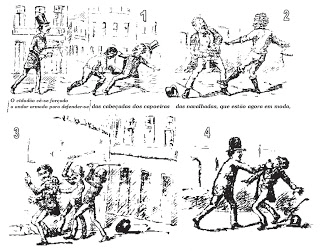

 Jogo Corpo Fechado