Welcome to MARTIAL ARTS THEATER, a vibrant community hub for martial arts enthusiasts, where we believe in the transformative power of martial arts. Here, you will find a wealth of resources, including expert interviews that delve into the philosophies behind different techniques, instructional videos that cater to all skill levels, and engaging events designed to foster a sense of belonging and enthusiasm. Explore diverse insights across various styles such as karate, judo, taekwondo, and Brazilian jiu-jitsu in a supportive environment that encourages personal growth, discipline, and camaraderie among practitioners. Our platform not only provides opportunities to learn and refine your skills but also serves as a space for meaningful connections and collaboration. Whether you’re a seasoned martial artist with years of experience or a curious beginner taking your first steps, you will find a welcoming community here. Join us and embark on a rewarding journey of self-discovery, resilience, and empowerment through the art of martial arts, as we inspire one another to reach new heights and celebrate our unique paths.
Today, we watch the SAVAGE Fight between Joe Louis and Vic Moore That Changed Karate History Forever!
Martial arts pioneers Joe Lewis and Vic Moore fought each other twice in 1968, splitting the decisions in a highly competitive series of encounters. These matches, which showcased their exceptional skills and innovative techniques, were among the earliest “professional” tournaments in karate history, taking place at a time when the sport was still in its infancy and before the establishment of modern kickboxing. Both fighters brought their unique styles to the ring, capturing the attention of martial arts enthusiasts and setting the stage for future tournaments. The intensity of their rivalry not only elevated their individual careers but also significantly contributed to the growing popularity of martial arts in the United States. Their landmark bouts laid the groundwork for what would become a dynamic and evolving sport, influencing countless practitioners and paving the way for the professional kickboxing movement that would follow in the years to come.
“There are not more than five musical notes, yet the combinations of these five give rise to more than can ever be heard. There are not more than five primary colours, yet in combination, they produce more hues than can ever been seen. There are not more than five cardinal tastes, yet combinations of them yield more flavours than can ever be tasted.” ― Sun Tzu, The Art of War“
Today, I’m going to introduce you to the MACACO.
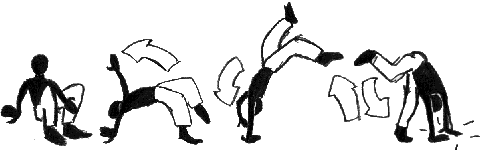
The Macaco in Capoeira is an acrobatic movement, often described as a “monkey flip,” involving a handstand and rotation, transitioning from a low crouch to a handstand and back down. In Capoeira, it’s not just a single move but a dynamic transition, often used to evade, attack, or flow into other movements, adding rhythm and creativity to the practice. Capoeira Angola and Capoeira Regional both utilize the Macaco, but the overall style and context of its use can differ significantly, showcasing the artistry and adaptability inherent in this Brazilian martial art. The macaco serves as a building block for more complex movements like the back handspring and can also be used as a launchpad for various attacks and kicks within the Capoeira game, including powerful aerial kicks that demonstrate both skill and agility. It involves an inverted motion where the capoeirista (Capoeira practitioner) places one hand on the ground behind them and swings their legs over, jumping in an arched trajectory that reflects both grace and strength. The macaco bears a strong resemblance to a back handspring but differentiates itself by typically starting from a low crouch and planting one hand behind the player, emphasizing the importance of starting low to gain momentum.
Learning the macaco, particularly the full backward version that showcases advanced skill, takes dedication and consistent practice over weeks and even months, requiring not just physical training but also mental resilience to overcome the challenges intrinsic to mastering this impressive maneuver.
In essence, the macaco is a dynamic and essential element of Capoeira, combining strength, flexibility, and coordination into a fluid and powerful acrobatic move that showcases the unique blend of martial arts and dance inherent to this Afro-Brazilian cultural expression. This acrobatic feat not only demonstrates remarkable physical prowess but also highlights the practitioner’s rhythm and timing, as they gracefully maneuver through the air, executing the move with precision and style. As a crucial component of Capoeira’s repertoire, mastering the macaco allows practitioners to enhance their overall agility and create impressive sequences that captivate audiences, transforming a simple fight into an intricate performance art.
“There are not more than five musical notes, yet the combinations of these five give rise to more than can ever be heard. There are not more than five primary colours, yet in combination, they produce more hues than can ever been seen. There are not more than five cardinal tastes, yet combinations of them yield more flavours than can ever be tasted.” ― Sun Tzu, The Art of War“
Today, I’m gonna type to you about a fundamental skill in Capoeira, the BANANEIRA.
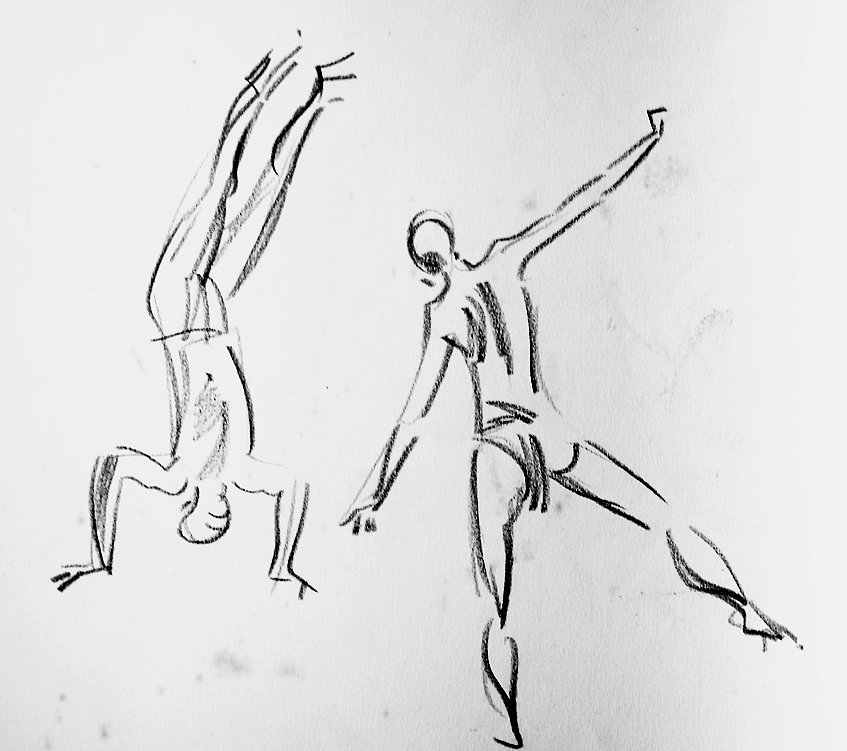
The Bananeira (pronounced “bah-na-nera”) is the term used for a handstand. It is a fundamental movement in Capoeira, serving as a building block for various acrobatic maneuvers and plays a unique role in the Capoeira roda (the circle in which Capoeira is played).
The bananeira is considered the absolute fundamental movement for all acrobatics within Capoeira, developing upper body strength and balance essential for more advanced techniques. Unlike a gymnast’s handstand, which emphasizes static control and symmetry, the bananeira in Capoeira is dynamic, mobile, and can involve shifting postures or flailing legs to prevent opponents from finding vulnerabilities. It is a versatile move that not only demonstrates physical prowess but also embodies the spirit of improvisation that defines Capoeira. The bananeira can be used strategically in the Capoeira game (jogo): it can challenge the other player to see who can hold their handstand longer and allows a Capoeirista to take a brief break and observe their opponent. During this observation, the practitioner assesses their opponent’s strengths and weaknesses, providing an opportunity to devise new tactics for the unfolding game. The bananeira can be employed to escape or initiate an attack, with the feet being used for both defense and offensive movements while inverted. This dual function adds a layer of complexity to the move, as timing and precision become crucial in ensuring successful execution. In contemporary regional Capoeira styles, the bananeira is sometimes used to showcase balance and strength as a floreio or demonstration of skill, often eliciting admiration from spectators for its aesthetic appeal.
A key distinction from other hand balancing arts is that in Capoeira, the practitioner maintains eye contact with their opponent rather than looking at the ground. This requires tucking the chin towards the chest and moving the head to track the other player during the game, emphasizing the interactive nature of Capoeira as a conversation between warriors. Achieving a stable bananeira involves “stacking” the joints, meaning keeping the shoulders over the wrists, hips over the shoulders, and ankles over the hips, all of which contributes to maintaining proper alignment and balance. Engaging the core muscles is vital to maintain a flat, board-like posture, creating a foundation of strength necessary for executing subsequent moves. Pointing the toes skyward can assist in straightening the legs, enhancing both form and function. Furthermore, the bananeira’s potential origins have been linked to the use of handstands by Nganga (Bantu healers and spiritual leaders) in their practice, symbolizing a spiritual connection to ancestors who walk on their hands in the spirit world. The linkage to spiritual practices further enriches the cultural context of the bananeira, illustrating how this move transcends mere physicality to become a bridge between the earthly and the ethereal, fortifying the sense of identity and history within the Capoeira community.
Learning the bananeira can be intimidating due to the fear of falling, which is a common barrier for many practitioners. Overcoming this fear is crucial for safe practice, as confidence plays a significant role in mastering the move.
Practicing against a wall or with a partner can help develop comfort in the inverted position; these methods provide a safety net that allows for gradual progression.
It’s important to start slowly, focusing on body awareness and control, as this foundational approach not only enhances safety but also promotes a deeper connection with your body. Begin by placing your hands shoulder-width apart, ensuring your fingers are loosely spread, with weight concentrated through the top of the palms to maintain stability while inverted. This initial setup is crucial, as it creates a solid base from which to work. As you kick your legs up one at a time, aim for your hips to be stacked directly above your shoulders and your feet to rise above your hips, which will make balancing easier and more effective. As you gain confidence, be sure to practice holding the position for longer periods, using your breath to find calmness and steadiness. Experiment with variations in leg positions and arm placements, as these can enhance your skills and deepen your understanding of this challenging pose, opening opportunities for greater strength, flexibility, and mindfulness in your practice.
“There are not more than five musical notes, yet the combinations of these five give rise to more melodies than can ever be heard. There are not more than five primary colours, yet in combination, they produce more hues than can ever been seen. There are not more than five cardinal tastes, yet combinations of them yield more flavours than can ever be tasted.” ― Sun Tzu, The Art of War“
The Corta Capim, or “Grass Cutter,” is a versatile Capoeira movement used for offense, defense, and as a transitional floreio technique that showcases the blend of martial prowess and artistic expression inherent in Capoeira. Practiced from a low crouch with proper posture, it involves sweeping one leg in a wide circle for a seamless 360-degree rotation while maintaining stability, which requires both physical strength and mental focus. Fluidity and controlled movements are essential for effective execution, and coordinating breathing helps enhance performance and relaxation, allowing practitioners to connect more deeply with their movements and the rhythm of the music.
This connection not only improves technique but also cultivates a sense of harmony with the surrounding environment, creating a deeper mind-body connection in Capoeira practice.
The Corta Capim movement holds historical significance, as it was a pivotal point in the life of MESTRE JOAO GRANDE, who is renowned for his contributions to the art form.
He encountered the movement as a child while observing Capoeira practitioners and initially believed it was a dance of the NAGOS, later realizing it was a crucial component of Capoeira. His fascination with Corta Capim inspired his journey into the art form, igniting a passion and commitment that led to countless hours of training and dedication, ultimately establishing him as a leading figure in Capoeira. Today, the movement not only embodies the spirit of resilience and creativity but also serves as a testament to the rich cultural heritage of the Afro-Brazilian community, showcasing the transformative power of Capoeira as a form of both self-defense and artistic expression.
There are various ways to perform Corta Capim, allowing for adaptation to individual styles and skill levels.
Some common progressions include practicing with your weaker leg to build balance and strength, which can significantly enhance your overall performance and contribute to a more well-rounded skill set. This focused practice not only aids in physical development but also helps cultivate mental resilience as you push through challenges. Performing the movement in the opposite direction can also help you develop ambidexterity and a deeper understanding of the techniques involved, broadening your capabilities and preparing you for diverse scenarios in your training.
Additionally, executing the sweep with only one hand for support can challenge your core stability and refine your precision, pushing you to engage your muscles in new ways while also honing your focus. Understanding and mastering Corta Capim not only enhances your physical capabilities but also deepens your appreciation for the rich history and cultural significance of Capoeira, as it connects practitioners to centuries of tradition and the vibrant community that surrounds this martial art.
The beauty of Capoeira lies not only in its technical motions but also in the stories and philosophies intertwined within its practice. By immersing yourself in these practices, you not only improve your skills but also foster a greater respect for the cultural roots and the art form’s evolution over time, learning from the generations that came before you and contributing to the ongoing narrative of this dynamic expression of culture and identity. This holistic approach encourages a sense of belonging and commitment to the endless journey of learning that Capoeira represents.
“There are not more than five musical notes, yet the combinations of these five give rise to more melodies than can ever be heard. There are not more than five primary colours, yet in combination, they produce more hues than can ever been seen. There are not more than five cardinal tastes, yet combinations of them yield more flavours than can ever be tasted.” ― Sun Tzu, The Art of War“
Today, I will Introduce you to one of Capoeira’s Trademark kicks, the AU BATIDO.
Aú batido is a traditional capoeira cartwheel kick, known under various names in breakdancing, MMA and other disciplines. This dynamic and visually striking maneuver is characterized by the graceful arc of the body, utilizing momentum and strength to execute a seamless transition from standing to upside-down and back again. The cartwheel kick originated as a combat kick, primarily used to evade attacks while simultaneously delivering a powerful blow to an opponent, showcasing the versatility and effectiveness of capoeira as both an art form and a martial discipline. Over time, it has become very popular as an acrobatic decoration, often featured in performances and demonstrations that highlight the athleticism and skill of practitioners. Beyond its practical applications, the aú batido has also gained a place in popular culture, being frequently depicted in media and competitions, making this likely the most photographed capoeira move, admired not only for its technical execution but also for the fluidity and style it conveys.
This movement is a defensive move, used when attempting to perform a cartwheel and the opponent attacks. Generally with a cabeçada, a headbutt, the aú batido takes place, attacking the opponent by surprise before the attack is executed. The aú batido is a clever and strategic technique that not only showcases the agility of the practitioner but also serves as an effective counter to incoming strikes, making it a valuable addition to any martial artist’s arsenal. This move is sometimes also used in moments of doubt, allowing the practitioner to regain control of the situation, or simply as a trick move to confuse the opponent. The versatility of the aú batido is evident as it can adapt to various combat scenarios.
Names used in different Capoeira schools may also include Beija Flor (Humming Bird, literally Flower Kiss(er)), Leque (Fan), Aú Québrado (also “broken cartwheel”), Aú Malandro (wily cartwheel), Aú Amazonas (Amazon cartwheel) or Amazonica, reflecting the diverse cultural influences and interpretations surrounding this fascinating technique. Each name carries its own unique story, adding depth to the practice and connecting practitioners with their heritage and the community. Moreover, these names often symbolize the characteristics associated with the movements, resonating with the emotions and spirit of those who perform them.
For instance, the Aú Malandro not only highlights agility but also the cleverness required to execute it gracefully, while Aú Amazonas captures the essence of strength and resilience found in the majestic Amazon rainforest. Such rich nomenclature emphasizes Capoeira’s role as a living art form, continuously evolving while remaining deeply rooted in its historical and cultural foundations, thus fostering a sense of belonging among practitioners from various backgrounds.
In addition to its defensive applications, this move is also performed in tricking, where it emphasizes style and creativity, showcasing the athlete’s ability to blend athleticism with artistic expression. Furthermore, in the world of dance, particularly for quality performances, it is frequently utilized in BREAKDANCING, where it is known as the L-kick. This dynamic movement captivates audiences not only due to its technical difficulty but also because it highlights the dancer’s unique interpretation of rhythm and flow. Its popularity in breakdancing underscores the cross-disciplinary nature of movement arts, revealing how varied techniques can be embraced and adapted across different forms of physical expression, ultimately fostering a rich tapestry of creative possibilities in both performance and personal style.
“There are not more than five musical notes, yet the combinations of these five give rise to more melodies than can ever be heard. There are not more than five primary colours, yet in combination, they produce more hues than can ever been seen. There are not more than five cardinal tastes, yet combinations of them yield more flavours than can ever be tasted.” ― Sun Tzu, The Art of War“
Today, I am showing you a basic kick that’s NOT NECESSARILY from Capoeira Angola, but is utilized by many Angoleiros.
The “Martelo” (Portuguese for “hammer”) is a dynamic and powerful roundhouse kick in Capoeira, often delivered with the instep or the lower part of the shin.
This striking technique is not only characterized by its speed and agility, but also by the fluidity and rhythm that are fundamental to Capoeira as a whole. Practitioners often utilize the Martelo to surprise their opponents, executing the kick with precision while maintaining an impressive level of balance and control. In addition to its offensive capabilities, the Martelo can also serve as a defensive maneuver, allowing the practitioner to deflect incoming attacks while simultaneously countering with their own strike. Moreover, mastering this kick requires extensive practice and strength training, as it engages multiple muscle groups and demands coordination and timing, ensuring that it remains an essential component of Capoeira training routines and sparring sessions.
The most common forms of the Martelo include:
Martelo em pé
This is the most common martelo seen in Regional and Contemporânea rodas. Its execution on the very basic level is identical to the sport version of the roundhouse kick commonly seen in Tae Kwon Do and kickboxing. Capoeira emphasizes using kicks anywhere at any time, which allows for a dynamic approach to combat. As practitioners advance, more intricate forms of the martelo em pé can emerge, often springing from feints to mislead opponents, skipping to create distance while launching the kick with the front leg, and employing evasive maneuvers like the esquiva diagonal to avoid strikes. This creative use of movement not only showcases the beauty of Capoeira but also emphasizes the strategic aspect of the art. Players must maintain their balance and awareness, continually calculating the best moments to strike while staying agile. Emphasis is placed on speed and deception rather than merely delivering a knockout blow. However, even with this precaution, knockouts still occur due to the weight and sheer force of the leg, reminding practitioners of the power behind each technique and the importance of control in practice. Such experiences contribute to a deeper understanding of the art’s physicality and underlying principles, fostering a respect for both the discipline and the unpredictability of a roda environment.
Martelo do chão
Martelo do chão or martelo de negativa is a martelo that starts from the negativa position, showcasing the elegant flow and complexity of capoeira techniques. The Martelo do chão is delivered from a lower position, usually right before a rolê, allowing for a seamless transition between movements while in esquiva baixa or downward going into a queda de rins. This kick, characterized by its deceptive angles and powerful execution, has a confusing amount of names, depending on the group, reflecting the rich cultural tapestry of capoeira where different regions and schools impart their unique terminologies and styles. The variation in names not only adds to the intricacy of the art form but also illustrates the diverse approaches practitioners may take, often blending traditional methods with innovative interpretations during their practice.
Martelo rodado
A spinning martelo, similar to a 540 kick, is a dynamic and powerful movement often seen in martial arts and acrobatics. The martelo rodado combines the techniques of the 540 or parafuso with the classic martelo. While the parafuso is characterized by a spinning motion from the outside to the inside, producing a crescent kick that adds elegance to the maneuver, the martelo rodado focuses primarily on delivering force. Unlike its counterpart, the martelo rodado strikes with the instep of the foot, allowing for a more impactful contact with the target. In this execution, control is sacrificed for sheer power, as the leg does not stop abruptly but continues through the motion, following with an impressive full rotation of the hips. This fluidity in movement not only enhances the strength of the kick but also showcases the practitioner’s athleticism and skill, making the spinning martelo a visually captivating and effective technique in various combat sports.
“There are not more than five musical notes, yet the combinations of these five give rise to more melodies than can ever be heard. There are not more than five primary colours, yet in combination, they produce more hues than can ever been seen. There are not more than five cardinal tastes, yet combinations of them yield more flavours than can ever be tasted.” ― Sun Tzu, The Art of War“
Chapa de costas (back plate) is a powerful back push kick in capoeira, and one of the few principal capoeira‘s kicks, showcasing the art’s fluidity and dynamism. It is also considered a fundamental kick in the traditional African martial art engolo, which serves as a historical forerunner to capoeira, illustrating the deep cultural roots shared between these martial arts. Specifically, Chapa de costas is a signature kick of capoeira Angola, characterized by its graceful execution and tactical application in both offensive and defensive scenarios. This “malicious” kick not only requires precision but also utilizes agility, being similar to chapa de frente, applied strategically from behind to catch the opponent off guard.
Furthermore, Engolo, an Angolan martial art, embraces a wide range of techniques involving back push kicks, which may include rotations with or without jumping to enhance unpredictability and versatility in combat scenarios. Among its notable variations is the hooking kick, executed from behind when in close proximity to the opponent, emphasizing the element of surprise in combat dynamics. This technique not only demands precision and timing but also highlights the practitioner’s ability to read their opponent’s movements, allowing for a more strategic approach to martial engagements. Engolo also draws profound inspiration from animal behaviors, particularly in the techniques that mimic the fighting styles of zebras, effectively showcasing how these majestic animals have influenced martial training. Practitioners study the grace and agility of zebras in the wild to refine their own skills, emphasizing fluidity and responsiveness in their movements. A key aspect of Engolo is the “zebra kick,” artfully performed with palms on the ground, requiring a remarkable level of balance and strength, and exemplifying the beautifully coordinated movements that define these rich martial arts traditions.
This particular kick serves as a demonstration of the intricate relationship between athleticism and artistry in Engolo, as each movement is executed with an aesthetic quality that speaks to the history and culture of the art. This integration of nature and technique not only underscores the philosophical connections between martial practices and the environment they originate from but also cultivates not just physical prowess but also a deeper understanding of one’s surroundings, fostering a holistic approach to both training and personal development. The practice of Engolo nurtures respect for the natural world, encouraging practitioners to embody the virtues observed in animals, which in turn translates into their martial discipline.
Chapa de costas usually aims at the opponent’s face or groin area. According to mestre Pastinha, chapa de costas is a “treacherous strike when used against someone unfamiliar with capoeira”, as the opponent is violently struck when they believe the attacker is withdrawing. So Pastinha warns that a cautious capoeirista is “suspicious” and does not allow to be fooled by the apparent withdrawal of a potential aggressor.
“There are not more than five musical notes, yet the combinations of these five give rise to more melodies than can ever be heard. There are not more than five primary colours, yet in combination, they produce more hues than can ever been seen. There are not more than five cardinal tastes, yet combinations of them yield more flavours than can ever be tasted.” ― Sun Tzu, The Art of War“
The meia lua de frente is a fundamental movement in capoeira, recognized for its graceful yet powerful execution. This circular kick begins from a grounded position, travels fluidly along the side of the body, and ultimately returns to the ground, showcasing both balance and agility. It is widely regarded as one of the first kicks aspiring capoeiristas are taught, as it not only serves as a foundational movement but also enhances coordination and body awareness essential for performing more complex techniques.
Similarly, the front crescent kick (okupayeka) is considered one of the essential kicks in engolo, an Angolan martial art that is often viewed as the precursor to capoeira. Engolo boasts a rich tradition with a variety of movements, including numerous variations of the crescent kick, each serving specific purposes in both offensive and defensive scenarios. These variations are not only practical but also reflect the cultural heritage imbued in these martial practices, connecting practitioners to their roots while allowing for personal expression and creativity within the art form. The significance of the meia lua de frente and its relatives in engolo illustrates the intertwined evolution of African martial arts and their impact on contemporary practices.
In engolo, the kicking leg can be extended fully or partially bent (which is considered incorrect in capoeira). According to Desch-Obi, some engolo kicks were likely developed by Bantushamans in Angola, highlighting the rich cultural heritage of these practices. Among the Pendeshamans, the most important movement was the front crescent kick, the same as in engolo, reflecting a deep connection between martial arts and spiritual beliefs. During the ritual, masked shaman kicked over sacred medicine to activate it and over the kneeling people to heal them, showcasing the intertwining of physical movement and healing powers within their customs. This practice illustrates the significance of intentionality and the power of ritual in their culture.
When doing the crescent kick in capoeira, the kicking leg is straight and the hips are pushed forward, allowing for greater force and accuracy. This kick, fundamental to the style, uses the hips to generate force and propel the leg forward, emphasizing the importance of hip movement in achieving effective strikes. The technique is similar to extending the leg over a chair, requiring balance, precision, and a deep understanding of body mechanics, and embodies the essence of capoeira as a fluid dance-like martial art that demands both athleticism and creativity. The execution of the crescent kick is not merely about strength; it also requires a rhythmic coordination of the body, where the arms may swing to aid in balance and momentum. Depending on the opponent’s position, this kick can be delivered to various regions of the body, often from knee height to face height, making it a versatile tool in a practitioner’s arsenal. The kick should be finished when it reaches a point directly in front of the kicker, ensuring that the trajectory remains controlled and targeted. While it can be used as an attack itself, it is also often utilized as a setup for another strike, allowing the practitioner to remain unpredictable while keeping the flow of combat dynamic. Meia lua is a good kick to feel out the opponent’s style, as its application can serve as a test of readiness and positioning. Because it is usually low and frontal, it doesn’t open the player to sweeps or counterattacks, maintaining the practitioner’s defensive integrity while providing opportunities for further offensive maneuvers. This blend of strategy and artistry is what makes the crescent kick a cherished technique in capoeira, highlighting the deep connection between movement and intention in this captivating martial art.
Other uses for meia lua can be as a combination with cartwheels and other acrobatic moves, working as an escape. Defense fron this kick can be applied in various ways, usually by moving away and quickly lowering the body. From that position it is possible to deliver a rabo de arraia to the partner by swiftly rotating the body, or even use chapa de costas.The defender could also move away and, quickly descending, tried to take down the attacker with a sweep (rasteira).
“There are not more than five musical notes, yet the combinations of these five give rise to more melodies than can ever be heard. There are not more than five primary colours, yet in combination, they produce more hues than can ever been seen. There are not more than five cardinal tastes, yet combinations of them yield more flavours than can ever be tasted.” ― Sun Tzu, The Art of War“
Today, I want to go into a fundamental takedown that I posted about before in another PAGE, but I want to expand on it and delve into a bit more detail for clarity and depth. This technique is called THE VINGATIVA, and it plays a crucial role in understanding the intricacies of Capoeira.
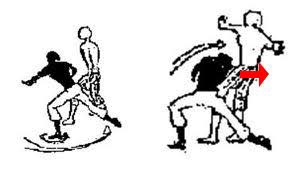
The Vingativa is a low takedown that involves stepping forward and trapping the back legs of an opponent who is in a side stance. This movement is characterized by the capoeirista also protecting their face with their elbow, demonstrating the importance of defense while executing an offensive maneuver.
Once the lead leg of the capoeirista has successfully trapped the leg of the opponent, they skillfully shift their weight in a fluid motion, pushing their hips forward and up, utilizing balance and leverage to maximize effectiveness. If the contact is maintained with the legs of the other player, they should be thrown up and away, thus executing the takedown with precision.
It’s fascinating to note that although this move originally came from batuque, it shares similarities in appearance with certain throws and sweeps found in traditional martial arts such as Baguazhang and Bajiquan, as well as the effective tai otoshi executed in various styles of karate. Other schools of thought in martial arts teach a variation of the Vingativa that resembles the sukui nage or obi otoshi techniques that are foundational in judo. You can even see this technique in Filipino Martial Arts, highlighting the interconnectedness of different martial arts traditions and the rich tapestry of techniques that practitioners can draw upon.
Understanding the nuances of the Vingativa allows martial artists not just to enhance their skillset, but also to appreciate the cultural heritage and evolution of capoeira as a dynamic and impactful form of combat art. By delving deeper into its techniques and philosophy, practitioners can cultivate not only physical prowess but also a profound respect for the history and traditions that have shaped this unique art form.
The Vingativa offers a gateway into the fusion of rhythm, movement, and strategy that defines capoeira, inviting artists to explore its rich narrative and the diverse influences that contribute to its ongoing evolution. Engaging with this practice enables martial artists to connect with a broader community, fostering a spirit of camaraderie and mutual growth as they share in the celebration of capoeira’s roots and its relevance in contemporary society.
“There are not more than five musical notes, yet the combinations of these five give rise to more melodies than can ever be heard. There are not more than five primary colours, yet in combination, they produce more hues than can ever been seen. There are not more than five cardinal tastes, yet combinations of them yield more flavours than can ever be tasted.” ― Sun Tzu, The Art of War“
Today, I want to talk about the Arrastao.
The term “Arrastão” in Capoeira refers to a specific takedown technique.
Here’s a closer look:
The Capoeira move “Arrastão” is a classic leg takedown that skillfully combines agility and strategy, where the practitioner closes in on the opponent with precision, sweeping their legs or pushing them to the ground using their shoulder or head. This dynamic maneuver can manifest as both a double or single-leg takedown, showcasing the versatility of Capoeira techniques, and may also involve a lateral technique that enhances its effectiveness in various combat scenarios.
In competitive settings, it can catch opponents off guard, leading to quick transitions into follow-up moves or escapes. Counters to the “Arrastão” include a sprawl or guillotine choke, which require the opponent to be alert and responsive to avoid being taken down. This move not only reflects the athleticism inherent in Capoeira but also underscores its practicality beyond being merely a form of dance.
The term “arrastão” holds additional cultural significance; it also refers to flash robbery in Brazil and Portugal, derived from the verb “arrastar,” illustrating the term’s multifaceted nature within both martial arts and social contexts. Such connections highlight the rich tapestry of language and movement that Capoeira embodies, blending physical skill with deeper cultural narratives.
In essence, the Arrastão is a powerful and strategic takedown within the dynamic art of Capoeira.






 Jogo Corpo Fechado