

Happy Halloween! Tomorrow, we’re having a roda for the holiday, El Día de los Muertos, Spanish for the Day of the Dead.
The Day of the Dead is a vibrant and deeply meaningful Mexican celebration, primarily observed on November 1st and 2nd. Far from being an occasion of sorrow, it is a time of profound joy and lively remembrance. Families gather to honor and remember their deceased loved ones, rooted in the beautiful belief that the souls of the departed temporarily return to the world of the living to visit their families. This ancient tradition, with its origins in Mesoamerican indigenous cultures, is a testament to the enduring bond between the living and the dead.
The celebration is characterized by its colorful altars, known as ofrendas, which are lovingly decorated with marigolds (cempasúchil), candles, photographs of the departed, and their favorite foods and drinks. Calaveras (skulls), often made of sugar or clay and playfully decorated, are iconic symbols, reminding us of the cyclical nature of life and death. Music, dancing, storytelling, and shared meals create a festive atmosphere that embraces death not as an end, but as a continuation of the spiritual journey.
How, then, would such an individual navigate the raw grief of losing a loved one or a cherished friend? The pain of loss is universal, yet a Capoeirista might approach it with a unique blend of stoicism and emotional release. The communal aspect of the roda, the shared energy and support, would likely extend to moments of mourning. They might find solace in the shared memories, the songs, and the movements that bind them together. The grief would be felt deeply, but perhaps not as an ending, but as a transformation, echoing the constant shifts within the capoeira game itself. The spirit of the departed, like a powerful movement, might be seen as continuing to influence and inspire those left behind.
And even, how would they process the passing of an adversary, acknowledging the complex dance of life and conflict? In Capoeira, the “adversary” is often also a partner, a crucial element in the learning and growth process. There is respect even in conflict, a recognition that the opposition helps one to refine their own art. Therefore, the passing of an adversary might be met with a complex mix of emotions: perhaps a sense of completion, a reflection on the lessons learned from their interactions, and even a profound respect for the role they played in one’s own journey. The “game” of life and conflict, in this sense, would have concluded, leaving behind a legacy of shared experience.
More deeply still, how would a Capoeirista cultivate a life of resilience and joy, embracing the present moment, so that when their own time comes, they could face death not with fear, but with an open heart, grace, and profound acceptance? This is where the core philosophy of Capoeira Angola truly shines. The constant improvisation, the ability to adapt to any situation, and the emphasis on “mandinga”—the cunning and wisdom inherent in the art—all contribute to a mindset of resilience. The music, the singing, and the sheer physicality of Capoeira instill a deep sense of joy and vitality. By living fully in the present, by engaging with the world with an open heart and a willingness to learn and adapt, a Capoeirista would, in essence, be preparing for their own transition not as an end, but as another movement in the eternal dance of existence. Death, in this view, would not be an enemy to be fought, but a natural progression to be met with the same grace, rhythm, and profound acceptance that defines their life within and beyond the roda.
A Capoeirista, in their pursuit of a life imbued with resilience and joy, would embark on a profound journey of self-cultivation, deeply rooted in the philosophy and practice of Capoeira. This journey would emphasize not only physical prowess but also mental fortitude, emotional intelligence, and spiritual awareness.
Embracing the Present Moment:
- Mindful Movement: The very essence of Capoeira—its fluid, improvisational movements, the call-and-response of the berimbau, and the dynamic interplay with a partner—demands complete presence. A Capoeirista learns to shed distractions and fully inhabit each ginga, each esquiva, each rabo de arraia. This constant practice of mindful movement translates into an ability to be fully present in all aspects of life, savoring each experience without dwelling on the past or fretting about the future.
- Active Listening and Observation: In the roda, a Capoeirista must be acutely aware of their surroundings, anticipating their opponent’s moves and responding instinctively. This heightened sense of observation extends beyond the roda, allowing them to truly see and hear the world around them, to appreciate small details, and to engage deeply with others.
- The Axé of Now: The concept of axé in Capoeira—a vital life force, energy, and good vibrations—is intrinsically linked to the present. A Capoeirista cultivates axé by fully engaging with the moment, pouring their energy into their practice, their community, and their daily interactions. This energetic embrace of the present fosters a deep sense of connection and vitality.
Cultivating Resilience:
- Overcoming Physical Challenges: The demanding physical training of Capoeira builds incredible strength, flexibility, and endurance. Beyond the physical, it teaches a Capoeirista to push past perceived limitations, to embrace discomfort as a path to growth, and to develop a tenacious spirit that refuses to be easily defeated.
- Navigating the Roda of Life: Capoeira, with its constant flow of attack and defense, provides a metaphorical training ground for life’s challenges. A Capoeirista learns to adapt to unexpected situations, to fall and rise again with grace, and to find creative solutions in moments of pressure. This constant negotiation within the roda builds a profound sense of adaptability and problem-solving.
- Community and Support (Comunidade): The strong sense of community within Capoeira—the mutual support, encouragement, and shared struggle—is a powerful source of resilience. Knowing they are part of a larger family, a Capoeirista finds strength in their connections, understanding that they don’t have to face life’s difficulties alone.
- Discipline and Perseverance: The journey to mastering Capoeira is long and arduous, requiring immense discipline and perseverance. This commitment to continuous improvement, to showing up even when tired or discouraged, instills a deep-seated resilience that extends to all areas of life, enabling them to weather setbacks and pursue long-term goals.
Nurturing Joy:
- The Ginga of Happiness: The foundational ginga of Capoeira, a constant, swaying movement, embodies a playful and joyful spirit. It’s a dance, a game, and a fight all rolled into one, and this inherent playfulness permeates the Capoeirista’s outlook on life. They learn to approach challenges with a light heart and to find joy in the process, not just the outcome.
- Musicality and Expression: The music of Capoeira—the rhythmic instruments, the songs, and the clapping—is an integral part of its joy. A Capoeirista learns to express themselves through music and movement, to release emotions, and to celebrate life with infectious enthusiasm. This deep connection to rhythm and self-expression becomes a wellspring of personal joy.
- Connection and Celebration: The roda itself is a celebration—of culture, of skill, of community, and of life. The shared laughter, the camaraderie, and the collective energy create an atmosphere of profound joy that strengthens bonds and uplifts spirits.
- Personal Growth and Self-Discovery: The journey of learning Capoeira is one of continuous self-discovery. As a Capoeirista gains new skills, overcomes fears, and deepens their understanding of themselves and their craft, they experience a profound sense of accomplishment and personal joy.
Facing Death with an Open Heart, Grace, and Profound Acceptance:
- Detachment from Outcome, Attachment to Process: Capoeira teaches a certain detachment from rigid outcomes, focusing instead on the beauty and flow of the process. This mindset allows a Capoeirista to release the fear of what comes next, including death, and instead to appreciate the journey of life itself.
- The Cycle of Life and Death in Nature: Drawing parallels from nature’s cycles of growth, decay, and renewal, a Capoeirista would understand death not as an end, but as a natural transition within the grand tapestry of existence. Their connection to the earth and its rhythms would foster a sense of harmony with this inevitability.
- Living a Full Life: By living a life of presence, resilience, and joy, a Capoeirista would accumulate a wealth of experiences, wisdom, and meaningful connections. This rich tapestry of a life well-lived would provide a sense of completeness, diminishing the fear of what might be missed.
- Grace in Every Movement: The grace cultivated in Capoeira extends beyond physical movement to a grace of being. This inner grace allows for a calm and composed acceptance of life’s ultimate transition, facing it with dignity and peace.
- Legacy and Continuity: A Capoeirista understands that their impact, their axé, lives on through their students, their community, and the memories they create. This awareness of their legacy, of contributing to something larger than themselves, fosters a profound acceptance of the individual’s place within the continuum of life and death.
In essence, a Capoeirista cultivates a life that mirrors the roda itself: a continuous flow of challenge and grace, effort and joy, and ultimately, an understanding that every ending is simply a prelude to a new beginning, faced with an open heart and profound acceptance.
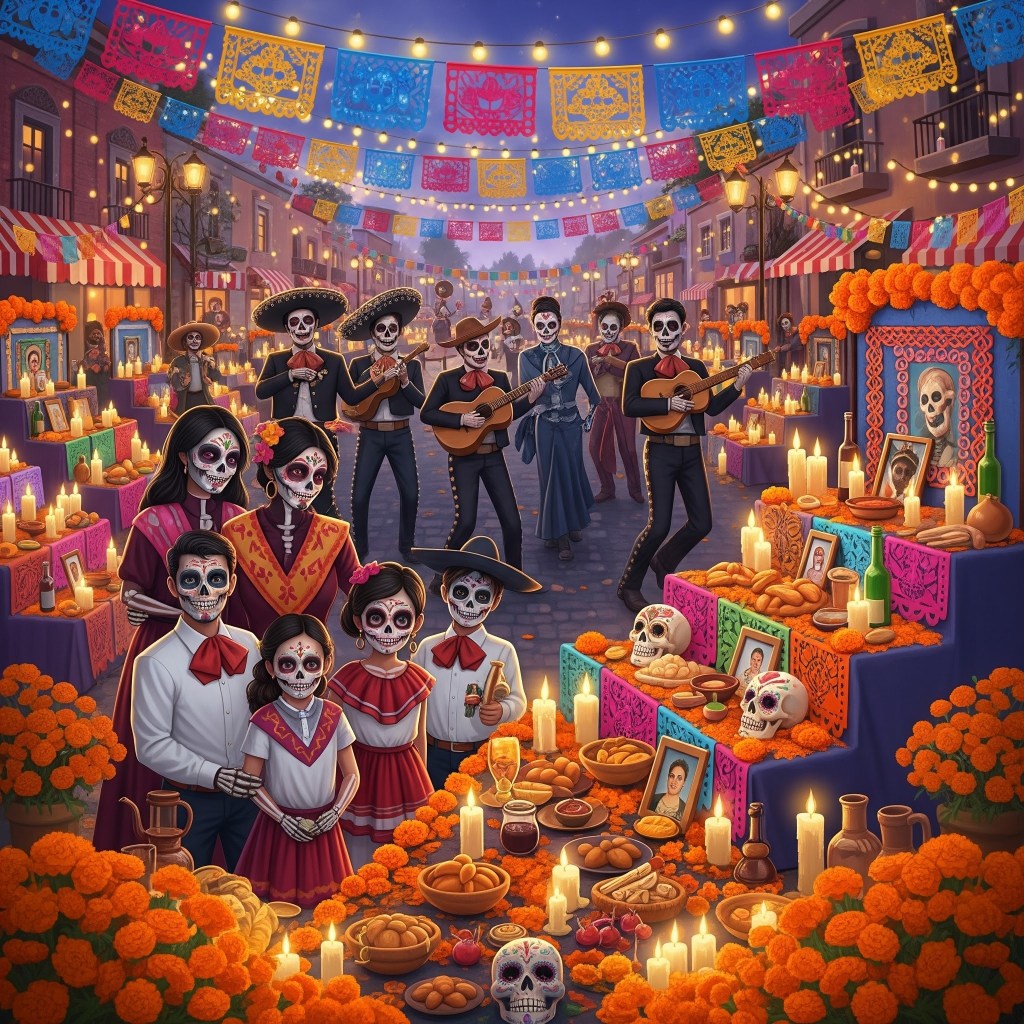
The intricate and beautiful interconnectedness of life, death, and the ancestral wisdom that underpins both Capoeira Angola and Día de los Muertos offers a remarkably rich tapestry for contemplation and understanding. These two seemingly disparate traditions, one a martial art, dance, and philosophy born from the transatlantic slave trade, and the other a vibrant Mesoamerican celebration of the departed, share a profound common ground in their recognition of the cyclical nature of existence and the enduring power of memory. They both serve as powerful cultural mechanisms for confronting mortality, honoring those who have passed, and reinforcing communal bonds across generations.
In Capoeira Angola, every movement, every song, every interaction in the roda (the circle where Capoeira is played) is a testament to the fleeting beauty of existence and the enduring spirit of those who came before. The slow, strategic, and often deceptive movements of Angola embody the struggles and resilience of enslaved Africans who used Capoeira as a means of resistance and cultural preservation. This physical expression, seemingly a dance, was a veiled form of combat training and a repository of cultural identity, ensuring that the spirit of freedom and defiance was never truly extinguished. The songs, often sung in call-and-response, narrate stories of hardship, liberation, and the wisdom of ancestors, invoking their presence and guidance in the present moment. These lyrical narratives are not merely historical recounts but active spiritual invocations, drawing the ancestors into the roda as participants and mentors. The berimbau, the central instrument of Capoeira, with its haunting melodies, acts as a conduit to the spiritual realm, connecting players to a lineage of practitioners and to the broader African diaspora. Its various tones and rhythms dictate the pace and energy of the game, guiding players through a ritualistic dance that blurs the lines between physical exertion and spiritual communion. Death in Capoeira is not just a physical end, but a transformation, a return to the ancestral realm from which new life and wisdom emerge. This perspective is deeply rooted in African cosmologies, where the line between the living and the dead is permeable, and ancestors actively participate in the lives of their descendants. The respect shown to elders and masters, both living and departed, highlights the continuous flow of knowledge and energy across generations, ensuring that the legacy of Capoeira, and the spirits that shaped it, remain vibrant and influential. The Axé, the vital life force and spiritual energy inherent in Capoeira, is passed down through these lineages, making each roda a living memorial and a dynamic continuation of ancestral practices.

Similarly, Día de los Muertos, with its vibrant altars (ofrendas), its joyful calaveras (skulls), and its heartfelt remembrances, provides a framework for honoring the departed, recognizing their continued presence in our lives, and celebrating the unbreakable bonds that transcend the veil of death. Far from a morbid observance, Día de los Muertos is a joyful and colorful celebration, a time when the veil between worlds is believed to thin, allowing the spirits of the deceased to return and commune with their families. Ofrendas are meticulously prepared with the favorite foods, drinks, and personal belongings of the departed, inviting them back to a world filled with love and warmth. The whimsical calaveras, often depicted as elegant skeletons engaged in lively activities, serve as a playful reminder of the universality of death and the importance of living life to the fullest. Through storytelling, shared meals, and the creation of beautiful artworks, families actively engage in a dialogue with their ancestors, reinforcing their identity and connection to a rich cultural heritage. This tradition emphasizes that while the physical presence may be gone, the love, influence, and memories of the departed continue to shape and enrich the lives of the living.
Both traditions, in their unique expressions, remind us that death is not an end but a transition, a part of the grand cycle of being, and an opportunity to deepen our appreciation for the precious gift of life itself. They teach us that acknowledging our mortality can lead to a more profound understanding of our humanity and a greater capacity for joy and connection. By embracing the wisdom of those who came before, and by creating spaces for remembrance and celebration, Capoeira Angola and Día de los Muertos offer powerful models for navigating the complexities of life and death, fostering a sense of continuity, community, and an enduring respect for the past that enriches the present and informs the future. They are living testaments to the universal human need to make sense of our existence, to honor our roots, and to find beauty and meaning even in the face of impermanence.
I will delve deeper into the intricate relationship between Capoeira Angola and the concept of death in a future blog post. This complex subject merits a thorough exploration, examining how the philosophy and practice of Capoeira Angola confront, symbolize, or even transcend mortality. We will explore the historical and cultural roots of Capoeira Angola, tracing its origins back to the enslaved African communities in Brazil and understanding how their struggles and beliefs shaped its worldview. This will involve analyzing specific movements, rituals, and musical elements within Capoeira Angola to uncover their hidden meanings and connections to themes of life, death, rebirth, and the ancestral realm. Furthermore, we will consider how individual practitioners experience and interpret these profound concepts through their engagement with the art form, potentially offering insights into personal resilience, confronting fear, and finding meaning in the face of impermanence. For now, however, let us set aside these profound reflections and fully embrace the spirit of the upcoming holiday, looking forward to a time of celebration and joy.

 Jogo Corpo Fechado