
MARTIAL ARTS THEATER (7/29/25)

Welcome to MARTIAL ARTS THEATER, a vibrant community hub for martial arts enthusiasts that offers a wealth of resources including expert interviews, instructional videos, and exciting events that inspire and educate practitioners of all skill levels. Here, you can explore a broad spectrum of diverse insights across various styles like karate, judo, taekwondo, and Brazilian jiu-jitsu, all within a supportive environment that fosters growth and camaraderie. Our platform not only welcomes seasoned martial artists but also invites beginners eager to learn and develop their skills in a warm and encouraging setting. Join us to connect with like-minded individuals, share your experiences, and embrace the rewarding journey of self-discovery in martial arts, where every kick, punch, and grappling maneuver takes you one step closer to achieving your personal best.

Today, we at Jogo de Corpo Fechado have a special installment for you.

Colombian fencing, also called Machete and Stick Fencing (Esgrima de Machete y Bordon), is a fascinating martial art that results from the union between the Spanish True Skill (Destreza Verdadera) and the African stick game, emphasizing agility, precision, and strategy in combat.
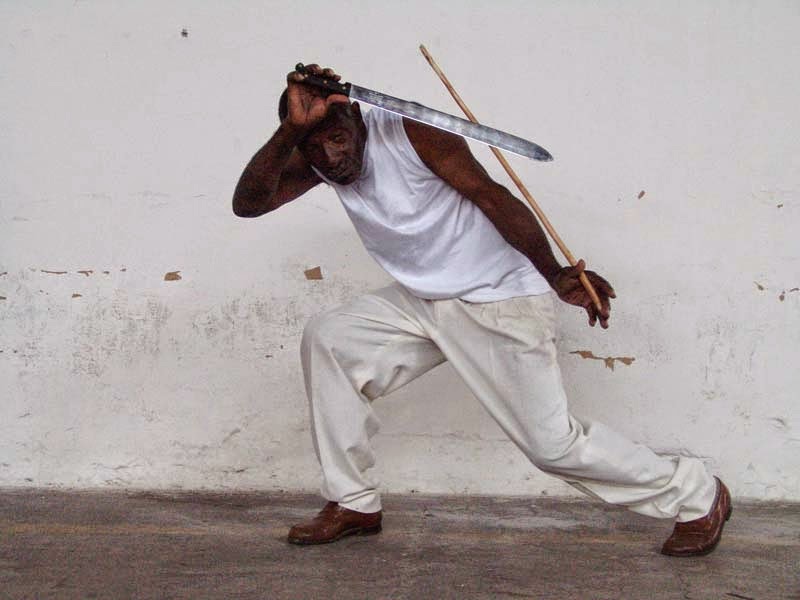
This art is very special for me. I’ve been studying this art since October of 2018, and learning it has had a profound impact on my body, my sense of awareness, and my overall approach to life. As I’ve delved deeper into the techniques and philosophies behind it, I’ve discovered not only physical strength and flexibility but also a newfound mental clarity that carries into my daily interactions. The practice has enabled me to cultivate patience and resilience, teaching me that growth often comes from persistence and dedication. Each session offers me the opportunity to reconnect with my inner self, fostering a sense of peace and balance that I cherish in a world filled with distractions. The journey has been transformative, shaping my identity and intentions in ways I never imagined possible.

All while learning to use a machete, I found myself immersed in a world that blended skill, artistry, and the raw beauty of nature. The rhythmic swing of the blade became almost meditative, each cut revealing not just a path but a deeper connection with the earth. As I honed my technique, I discovered the rich history behind this amazing art, passed down through generations. The machete is more than just a tool; it symbolizes resilience and creativity, transforming the mundane into the extraordinary.

Anyway, allow me to tell you all about this amazing art, its cultural significance, and the profound joy it brings to those who master it.

This distinctive art form was born in 1810, during a pivotal moment in Colombian history, when Afro-descendants learned European techniques to serve in the wars of independence led by Simón Bolívar. These early practitioners not only adapted the techniques they encountered but also infused their own cultural heritage, blending diverse combat styles that focused on close-quarter encounters. Over the years, Colombian fencing has evolved, incorporating various cultural influences and techniques, while maintaining its core principles of speed and tactical thinking. Today, it is not merely a means of combat; it is celebrated as a cultural expression, showcasing the rich tapestry of Colombian history and identity, often practiced in local festivals and competitions that honor its deep-rooted traditions and community spirit. This art continues to inspire new generations, fostering a sense of pride and resilience through its practice.

As they adapted these new skills, they profoundly blended their traditional practices, drawn from rich cultural heritages that span centuries, creating a unique and dynamic form of self-defense that not only reflects the historical struggles for freedom but also embodies the spirit and resilience of the Afro-Colombian community. This art form is deeply rooted in the experiences of ancestors who fought against oppression, merging techniques and philosophies to establish a system that represents their journey and cultural identity. Practitioners develop not only physical skills but also mental acuity, as they must not only anticipate their opponents’ moves but also assess their own abilities, adapt their strategies accordingly, and cultivate an awareness of the environment around them. Today, this martial art is celebrated for its vibrant cultural heritage, which includes music, dance, and storytelling, and is practiced in various forms across Colombia, showcasing the rich history, cultural diversity, and resilience of the communities that have preserved it through generations, ensuring that their legacy continues to inspire future generations.

Over the years, this martial art has evolved significantly, incorporating elements of both cultures and adapting to various contexts, ultimately becoming a powerful symbol of resilience and cultural identity for modern Colombian practitioners who honor its rich heritage. As it blends traditional techniques with contemporary influences, it not only preserves the essence of its origins but also speaks to the social and cultural dynamics of current times. This evolution has led to the development of unique styles and practices that reflect the diverse experiences of individuals and communities, showcasing the adaptability and unifying nature of the art. Practitioners continue to pass down its techniques through generations, ensuring that the teachings and philosophies behind this martial art remain alive and relevant, fostering a sense of belonging and pride among those who embrace it.

Additionally, the martial art serves as a conduit for intergenerational dialogue, allowing older practitioners to share stories and lessons learned from their predecessors, while younger generations bring fresh perspectives and innovative approaches to its practice. This ongoing exchange not only enriches the martial art itself but also strengthens community ties, building a collective identity that honors the past while looking toward an inclusive future. The gatherings and events centered around this martial art serve to celebrate its history, encourage participation, and create an environment where cultural narratives are shared, thus ensuring that both the art form and its deeper meanings endure in the fabric of society.

The Fencing Academy of Machete and Bordón de Puerto Tejada means “Memory, freedom, and resistance.”

This unique and vibrant academy is located in the picturesque town of PUERTO TEJADA, nestled in the breathtaking Cauca valley of Colombia, known for its rich cultural heritage and stunning landscapes. Here, the traditional art of Esgrima de Machete y Bordón is not only preserved but also actively propagated, ensuring that this important aspect of Colombian history and identity thrives for future generations. The academy serves as a hub for enthusiasts and practitioners who come together to learn and share techniques, stories, and the deep-rooted significance of this martial art, fostering a sense of community and pride among its members.

The Head teacher in this academy is Maestro Miguel Lourido.

Maestro Miguel Lourido, purveyor of Esgrima y Bordon, was born in July 1957 in Puerto Tejada, Colombia into a family of macheteros, where the legacy of skilled craftsmanship and martial prowess was deeply embedded in their roots. He grew up amongst Afro-Colombians of the Cauca Valley, listening to captivating stories of liberation and freedom, marveling at the art as a child, which sparked his passion and determination for the discipline. At the tender age of 15, he joined the “Macheteros de la Muerte” group led by his late master, Hector Elias Sandoval, who profoundly influenced his journey by imparting not just techniques but also the philosophical essence of the art. He later studied with many maestros, each contributing unique perspectives and skills, and explored various styles in the region, ultimately culminating with his longest maestro, Hector Sandoval, who became a father figure and mentor. Recently, he was honored with the mantle of headmaster of Academia de Esgrima de Machete in Puerto Tejada, a prestigious institution that continues to uphold the traditions and innovations of this ancient art.

Although Maestro Miguel knows several styles of Machete Y Bordon, the main style he passionately teaches us is called Español Reformado (Reformed Spanish style).

The Reformed Spanish technique (Espanol Reformado) includes a curriculum with five levels of instruction.

  1. In the first level, students learn exercises to move their bodies, practicing basic blows with empty hands.
  2. At the second level, students train using a stick in a series of eleven choreographed sequences called crosses.
  3. In the third level, fourteen choreographed sequences called parries are studied, using the machete.
  4. The fourth level encompasses a series of thirteen parries positions and choreographic sequences, this time with the stick in one hand and the machete in the other.
  5. The fifth level teaches the game of attack and defense that revises the previous levels, but teaches the student to be prepared to improvise in case of a live opponent.

During the whole process, there is a fundamental component of learning that plays a crucial role in development: the malicia, or rather, the strategic tactics employed to overcome an opponent in real matches. This learning experience is not solely about understanding techniques or movements, but also about mastering the psychological nuances of competition that can significantly influence the outcome of any encounter. Players must analyze their opponents, anticipate their moves, and develop a keen sense of timing and precision, which requires a deep understanding of both their own abilities and the tendencies of their rivals.

Additionally, learning to adapt to an opponent’s style can often mean the difference between victory and defeat; recognizing a rival’s weaknesses and exploiting them effectively is a skill that can set a player apart from the rest. Thus, cultivating this strategic malicia becomes essential, as it equips players with the tools to not only outmaneuver their rivals but also to sharpen their own skills through the trials faced in each match. This intricate dance of strategy and psychology not only enhances individual performance but also fosters an environment where players can observe, learn from, and even inspire one another, leading to growth that extends beyond the confines of a single game.

My teacher in this art, is Contra Maestro Sonny Batata.
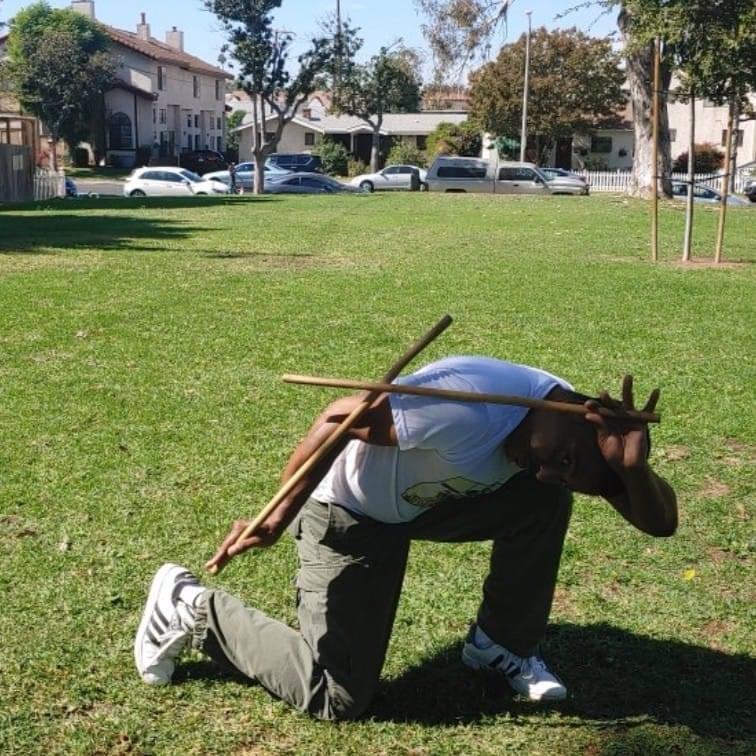
Arthur “Sonny” Batata is not only a skilled practitioner and instructor of Esgrima de Machete, but also a passionate advocate for the preservation and promotion of this traditional martial art. His dedication to sharing the art of machete fencing with the community in the Los Angeles area has been unwavering since he first began teaching in 2018. Through his collaboration with Miguel Lourido, he has successfully established a platform for cultural exchange, aiming to bridge the gap between different traditions and heritage. This endeavor has not only enriched the local community but has also provided a unique opportunity for individuals to immerse themselves in the rich history and techniques of Esgrima de Machete. Sonny’s continuous efforts and enthusiasm for cultural exchange have undoubtedly left a lasting impact, fostering a deeper appreciation for this art form among his students and the broader community alike. His classes, which attract a small yet diverse group of participants ranging from beginners to advanced practitioners, emphasize not just the physical aspects of the martial art, but also its philosophical underpinnings and historical significance. By incorporating storytelling and interactive discussions into his lessons, Sonny encourages his students to connect with the art on a deeper level, facilitating a greater understanding of its values and principles. Furthermore, he is actively involved in organizing workshops and demonstrations that showcase the beauty and skill of Esgrima de Machete, drawing attention to the need for its preservation and respect.

Currently, he teaches in the city of Pomona, where he continues to inspire and empower individuals through this dynamic and culturally rich martial art.
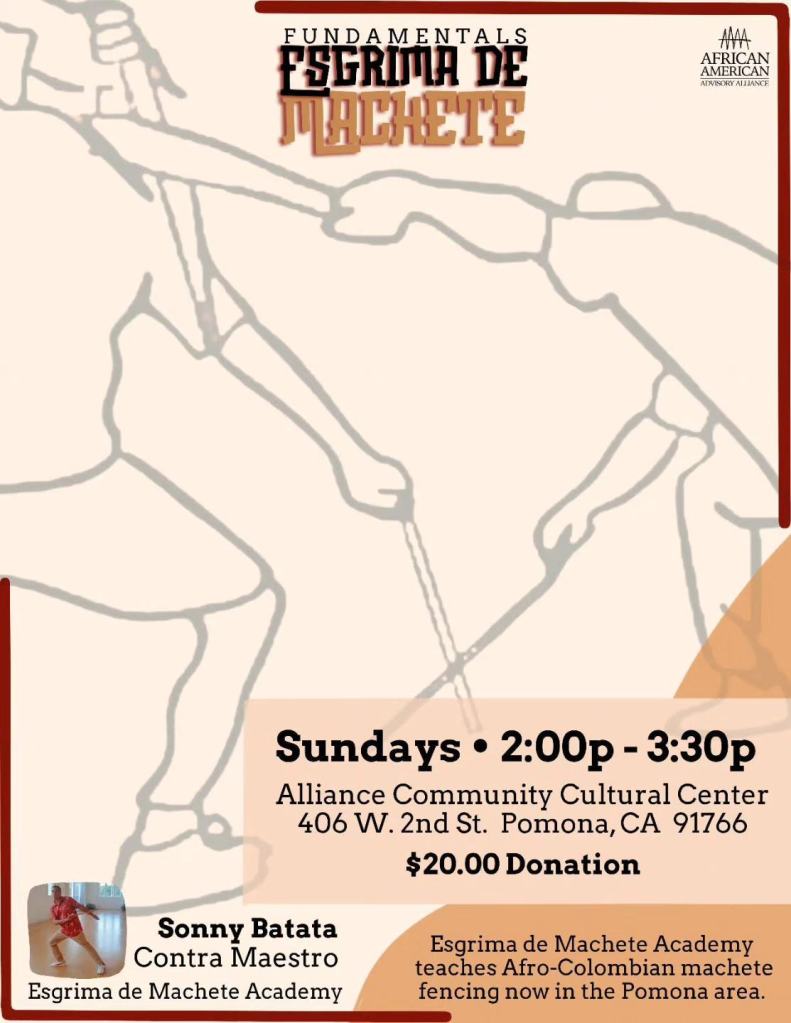
If you’re in town, come through and experience our exciting classes. Each class is unique, focusing on different aspects of training to ensure a comprehensive understanding and skill development. Not only are our sessions safe, but we also create a welcoming environment where you can learn and grow at your own pace. I promise you, you will enjoy yourself as you engage with the material and connect with fellow participants. Moreover, we use sticks in training, so there’s no fear of getting cut, allowing you to focus entirely on perfecting your techniques and building your confidence.

Join us and discover the fun and rewarding experience waiting for you!

Let’s build a better world – One Blog post at a time

I ran across this incredible video, which showcases some of the most beautiful and emotional moments when different people selflessly saved others and became real heroes! In these heartwarming clips, we witness ordinary individuals stepping up in extraordinary circumstances, displaying remarkable courage and compassion. From rescuing strangers from dangerous situations to lending a helping hand to those in need, these acts of kindness remind us that heroism exists all around us, often hidden in the everyday moments of life. It’s a powerful reminder that anyone can be a hero, making a significant impact in their community and beyond.

MARTIAL ARTS THEATER (7/29/25)

Welcome to MARTIAL ARTS THEATER, a vibrant community for martial arts enthusiasts that offers a plethora of resources like expert interviews, instructional videos, and engaging events to enhance your skills and knowledge. Dive deep into the fascinating world of various styles such as karate, judo, taekwondo, and Brazilian jiu-jitsu in a supportive and inclusive environment that welcomes everyone. Our platform caters to both seasoned martial artists and beginners alike, providing tailored programs and workshops that encourage skill development while fostering a sense of camaraderie among participants in a warm setting. Join us to connect with others, share your experiences, and embrace the journey of self-discovery in martial arts, where each precise movement not only hones your physique but also brings you closer to your personal best, instilling discipline, respect, and resilience that can transcend beyond the dojo into everyday life. Together, let’s cultivate a passion for martial arts that inspires and empowers individuals of all ages and backgrounds to pursue their dreams and aspirations.

In today’s Installment…

Well, it seems like the chickens finally came home to roost. Shi Yong Xin, the abbot of the Shaolin Temple for the past 25 years, has recently been detained and is under investigation for a whole bunch of things that have raised eyebrows in the community and beyond. This unexpected turn of events has sent shockwaves among the followers of the temple and martial arts enthusiasts alike, making many question their beliefs about leadership and integrity within such a revered institution. Don’t get me wrong. He has done many great things to preserve Shaolin legacy and culture, and is mostly responsible for what Shaolin is today. His efforts in promoting martial arts globally and his commitment to nurturing young students have inspired countless individuals.

However, it is also essential to acknowledge that he has, allegedly, committed very criminal acts that contradict the values of discipline and honor that the Shaolin Temple stands for. I hate to use the word “Karma” for this situation, because Karma means much more than mere retribution, but hey, if the shoe fits… perhaps it’s a reminder that our actions have consequences, no matter how high we rise or how revered we become, serving as a cautionary tale about the fragility of reputation and the importance of accountability in leadership roles.

As the story unfolds, many are left wondering what the future holds for the temple and its legacy.

SIGNAL!!!

While I have reservations about this signal becoming widely known, it could be life-saving in critical situations where every second counts. Its simplicity is matched by its importance, as knowing it can enable you to get help or alert others during emergencies with just a quick action. This knowledge can transform a moment of panic into an opportunity for assistance, where clear communication is vital.

It’s essential to keep this knowledge discreet yet accessible, as the right moment might arrive when this very signal could make all the difference in ensuring your safety or the safety of someone else in distress. Moreover, in a world that often moves too fast, being equipped with such critical tools empowers individuals to navigate unforeseen circumstances confidently.

Let’s build a better world — one blog post at a time, sharing insights that can equip others with the knowledge they need to stay safe and resilient.

A SELF DEFENSE MOMENT

I created this new series called “A SELF DEFENSE MOMENT”, as an addition to the Self Defense series, which aims to provide practical tips and strategies that empower individuals to protect themselves in various situations. Each of these tiny clips will focus on different aspects of self-defense, including both physical techniques and mental preparedness, ensuring that viewers not only learn how to react but also how to assess risks and avoid dangerous encounters.

Pinned against a wall with a knife attack – what do you do? Well, kevin goat here gives you a couple of options.

Shoutout to Kevin Goat for making this informative video. Self Defense with Kevin Goat – Sifu Kevin Goat brings you an invaluable opportunity to learn real-world self-defense training and techniques derived from his impressive 30+ years of martial arts experience. Whether you’re a beginner or have some experience, his personalized approach caters to all levels of proficiency. Don’t miss out on this chance to enhance your skills; check out his academy for more resources and lessons: calgarygongfu.com.

SPIRITUAL PRACTICES OF AFRICA, AND THE DIASPORA (7/27/25)

This blog series, “SPIRITUAL PRACTICES OF AFRICA, AND THE DIASPORA,” explores indigenous beliefs and religions in Sub-Saharan Africa, focusing on ancestral worship, Christianity, and Islam. It highlights the region’s cultural heritage through rituals and community gatherings that reinforce identity and facilitate cultural transmission. The series also examines how these traditions adapt within the diaspora, emphasizing storytelling in preserving oral histories and passing lessons to future generations. Ultimately, it aims to enhance understanding of faith, identity, and cultural resilience in the region.

In this installment, I’m typing about a revered figure in Haitian and American Vodou, Escena en donde Willie Brown es enviado por su amigo, Robert Johnson, a encontrarse con Legba en la Encrucijada para firmar el pacto en donde Legba le enseñará a Brown a tocar blues a cambio de su alma.

Often in popular culture, Papa Legba is confused with the devil, or satan, as illustrated in these scenes where Willie Brown is sent by his friend, Robert Johnson, to meet Legba at the Crossroads to sign the pact in which Legba will teach Brown to play blues in exchange for his soul.

However, nothing can be further from the truth; PAPA LEGBA IS NOT THE DEVIL. In fact, he serves as a guardian between the spiritual world and our own, overseeing the crossroads of fate and destiny, as you’ll read about later when you scroll down.

And he NEVER changed his name to Scratch.

This confusion likely stems from the legend of Robert Johnson’s deal at the crossroads, where some interpretations suggest he met with the Devil, a figure often depicted as a tempter of souls. However, others believe it was Papa Legba with whom Johnson actually encountered, as he is traditionally viewed as a facilitator of communication between the living and the spiritual realm. This blending of stories may lead many to wrongly associate Legba with malevolence, which is a misconception that overshadows his true role as a benevolent guide. (We’ll get into this legend another time.)

So, who is Papa Legba if he’s not the devil?

Well, in case you didn’t watch the video…

Papa Legba is a prominent spirit (or Loa) in Haitian Vodou and other West African-derived religions, revered as a crucial intermediary between the human and spirit worlds. His importance extends beyond mere symbolism, as he holds a significant role in the fabric of spiritual practices that honor ancestral lineage and community ties. He is often depicted as an old man with a wise demeanor, accompanied by his loyal dog, a smoking pipe, and a distinctive straw hat that signifies his connection to the journey between realms. Frequently seen with a crutch or cane, he embodies the wisdom that comes with age and experience. His appearance is not just a representation; it carries deep meaning and purpose in the traditions he oversees.

Papa Legba is not only the gatekeeper but also a guide, invoked at the beginning of rituals to open the way for clear communication with other spirits, allowing practitioners to seek guidance, blessings, and insights from the vast spiritual realm. His presence is considered essential for ensuring the flow of energy and establishing a sacred connection between the material and spiritual domains, and he is revered for his role in maintaining harmony and balance in the universe. At the end of the rituals, he is called upon once more to close the communication, ensuring that the gateway between the worlds remains secure until the next encounter, reflecting the deep respect that the practitioners hold for both him and the spiritual forces they engage with. This act of closure is not merely procedural; it serves to reinforce the bonds between the seen and unseen, honoring the sacredness of the rituals and the spirits viewed as central to their cultural identity. As a figure steeped in history and spirituality, Papa Legba continues to inspire devotion and reverence, representing a bridge connecting humanity to the divine.

Like I said, we’ll get into the legend of Robert Johnson, as well as the crossroads in future installments, for there is a lot of information about afro diasporic spiritual practices that intertwine with the history of blues music and its cultural significance. This exploration will delve into how these practices influenced not only the music of Johnson but also the broader context of African American folklore. We will examine how various spiritual beliefs and rituals shaped the narratives around the crossroads—a symbolic meeting point of choice, fate, and the supernatural. By uncovering the layers of this rich heritage, we aim to provide a deeper understanding of the profound impact these traditions have had on music and identity, and we’ll analyze their relevance in contemporary discussions of cultural memory.

MARTIAL ARTS THEATER (7/26/25)

Welcome to MARTIAL ARTS THEATER, a vibrant community hub for martial arts enthusiasts that offers a wealth of resources including expert interviews, instructional videos, and exciting events that inspire and educate practitioners of all skill levels. Here, you can explore a broad spectrum of diverse insights across various styles like karate, judo, taekwondo, and Brazilian jiu-jitsu, all within a supportive environment that fosters growth and camaraderie. Our platform not only welcomes seasoned martial artists but also invites beginners eager to learn and develop their skills in a warm and encouraging setting. Join us to connect with like-minded individuals, share your experiences, and embrace the rewarding journey of self-discovery in martial arts, where every kick, punch, and grappling maneuver takes you one step closer to achieving your personal best.

In today’s installment, we have a special one for you, an Interview with brother Ras Fletcher of njia uhuru kipura.

He’s a very controversial figure in the Capoeira world, basically because he has no problem telling people that 90% of what capoeiristas do has ABSOLUTELY NO VALUE in self-defense. He calls us “Cardio Capoeiristas”, meaning that what they do is great for exercise, folklore, and to get pretty girls to dance with you, but that’s all it’s good for.

He freely shares his knowledge  on his social media, he makes videos doing what he does, and he has a good understanding of history.  He doesn’t do what most capoeiristas consider to be Capoeira, which is another reason why people don’t like him.

However, others out there do like what he does, so for them, and for him, I’ve made this space for him here.

Below, I’m posting this small playlist that I made of some of his videos, specifically who he is and what he does and why he does it, so you can all see  for yourself what he’s about.

Like I said, he’s very controversial, and though he has many supporters, he also has many haters. If you want to watch some videos, or anything that his detractors may have made about him, you can look for that yourself, because personally, I’m not about all that negativity. Some people like him, some don’t. It is what it is.

Below, I’ve posted  links to all his social media here, so you can contact him yourself, and see what he is about.

Website: https://sites.google.com/view/atacxgymcapoeiraYoutube:ATACX GYM STREET WARRIOR CAPOEIRA
Facebook Group Page: NJIA UHURU KIPURA SELF DEFENSE, GUNS, KNIVES, YOGA, POLITICS
Instagram: ATACXGYMCAPOEIRA
Twitter: ATACXGYM
Blogger: CAPOEIRA THAT WORKS
Quora: RAS NJIA UHURU

Once again, anybody  can watch his videos, check out the links I just provided, and judge for themselves if he’s someone they want to learn from or not.

Remember,

O VÍDEO DO DIA DA CAPOEIRA ANGOLA (7/24/25)

GREETINGS!!!

Capoeira Angola videos online highlight its vibrant culture through music and movement, showcasing its evolution as a form of self-defense and expression. These captivating videos not only demonstrate the intricate techniques and rhythmic flow of Capoeira but also delve into the rich history that has shaped it over centuries. They emphasize community connections and the art’s ability to unite diverse individuals from various backgrounds, fostering friendships and mutual respect through shared experiences. Furthermore, these videos educate viewers about Capoeira as a living tradition that inspires future generations, illustrating its values of resilience, creativity, and cultural pride, while inviting everyone to participate in this unique blend of dance and martial arts. By capturing the essence of Capoeira, these online resources create a bridge between the past and the present, encouraging a deeper appreciation for this dynamic and transformative art form.

Today, we have a new episode of the Reflections on Capoeira podcast. In this episode, Broderick interviews Mestre Bengala, also known as Donald Coley, who has dedicated an impressive 40 years to training, performing, and teaching capoeira, imparting the rich traditions of this Brazilian martial art to countless enthusiasts.

Initially skeptical about his longevity in the art form, he found its challenges and variety compelling, each twist and turn of the practice inviting deeper exploration. Joining the second generation of capoeira students in California in 1985, he expanded his interest in Brazilian culture through various workshops and events both in the U.S. and Brazil, immersing himself in the rhythms and histories that inform capoeira.

Donald served nearly a decade on the Board of Directors of the Capoeira Institute, where he played a pivotal role in shaping the future of capoeira in the region through innovative programs and outreach initiatives designed to engage the local community. His extensive experience has allowed him to conduct workshops globally, sharing his passion and expertise in diverse settings that range from schools and cultural festivals to international sports events. He enjoys sharing capoeira with students of all levels, from eager beginners who are just discovering the art form to seasoned practitioners looking to hone their skills, fostering a sense of community and shared learning that transcends cultural barriers.

In addition to his teaching, Donald spends his free time sorting event photos for social media, capturing the dynamic energy of classes and performances, ensuring that the vibrancy of capoeira continues to reach a wider audience and inspire new generations of enthusiasts. His commitment not only preserves the rich traditions of capoeira but also adapts them to modern contexts, making this beautiful art form accessible and relevant for all.

THE MOMENT OF TRUTH FRIDAY CRIME REPORT (7/25/25)

Every Friday morning, PROFESSOR BLACK TRUTH hosts “The Friday Crime Report,” which explores critical issues impacting the black community, such as systemic racism and police brutality. The program raises awareness, encourages dialogue, and equips individuals with tools for advocacy, promoting policy changes and community engagement. Each episode features community members and experts, fostering an exchange of ideas that empowers the audience to work towards social justice and equality.

In 2023, a heinous crime took place that left the community reeling; however, the white media treated it as nothing more than a mere local L.A. story, barely scratching the surface of its true implications and the pain it inflicted on those affected. Samuel Haskell IV, the central figure in this tragic event, became a symbol of the injustices that often go unnoticed when they do not fit into the mainstream narrative. As reporters focused on sensationalizing the details, they overlooked the larger socio-political context that surrounded the crime, diminishing the voices of the victims and erasing the systemic issues that contributed to such violence.

Shout out to the professor for creating and posting this insightful video.

The Professor creates engaging videos on black empowerment that address historical and contemporary issues, fostering critical thinking and reflection among viewers. His YouTube channel HERE builds a vibrant community focused on significant black topics and diverse viewpoints, encouraging active dialogue and participation among subscribers.

HIDDEN SPIRITUALITY – From Spirit Science (7/24/25)

Welcome to HIDDEN SPIRITUALITY – From Spirit Science, where we delve into spiritual practices and philosophies from all over the world, revealing the rich tapestry of beliefs that shape our understanding of existence, hidden in some of the movies that we watch, and the games we play. Our exploration aims to uncover the profound messages embedded within cinematic narratives, illustrating how these films often serve as vehicles for transmitting spiritual wisdom. As we analyze various cultural traditions and contemporary interpretations, we invite you to join us on a journey of discovery that not only enhances our appreciation of film but also enriches our own spiritual journeys, encouraging a deeper reflection on the interconnectedness of all beings and the universe itself. Through this lens, we hope to foster a greater understanding of how these elements influence our daily lives and spiritual practices.

In today’s installment, We explore Final Fantasy 7.

As lovers and players of Final Fantasy ourselves, this episode is an homage to the precious, imaginative moments of childhood that many of us hold dear. It draws us back to a time when our dreams were filled with adventures in fantastical worlds, battling mighty foes and forging unbreakable bonds with companions. What at first seems like a regular “fantasy” experience becomes completely transformed when you understand the deeper mystical meaning behind each symbol and character; every twist and turn in the plot offers a new layer of complexity and nuance.

Final Fantasy 7 is rich with insight, exploring themes of identity, loss, and the relentless pursuit of hope, if only we choose to dig deep and uncover its many secrets. This captivating journey invites players to immerse themselves in the intricate narratives of its characters, each with their own struggles and triumphs, revealing the profound connections we share as human beings. As we navigate through the beautifully crafted landscapes and face formidable foes, we experience a rollercoaster of emotions that resonates with our own lives. The game encourages us to reflect on our choices and relationships, serving as a poignant reminder that the adventure is not just about the destination but also about the bonds we form along the way.

In our pursuit of understanding this complex world, we find joy in celebrating both the laughter and the tears that come with each new encounter in this timeless saga, ultimately reminding us of the delicate balance between light and dark that defines our existence.

Shoutout to SPIRIT SCIENCE for creating this video.

Discover the power of connection and community with Spiritverse – our online haven for the evolution of consciousness. In this vibrant space, individuals from all walks of life come together to share their experiences, insights, and journeys towards self-discovery and spiritual growth. Here, you will find a wealth of resources, interactive tools, and inspiring content designed to help you navigate the complexities of life and cultivate a deeper understanding of yourself and the universe. Join us as we embark on this transformative journey, fostering connections that uplift and inspire. Click here to gain access now: https://www.spiritverse.app/