I’m not sure if I’m going to make this a new blog series, because I don’t like to dig into this type of negativity. However, I think this video is a great analysis of how hate is learned behavior, demonstrating through various examples how societal influences and personal experiences shape our perceptions. It delves into the psychological aspects of hatred, offering insights on how individuals can unlearn these behaviors and adopt a more compassionate outlook.
The significance of fostering empathy and understanding is emphasized, reminding us that awareness of how hate is cultivated is the first step in combating it. This awareness entails a deep reflection on our own biases and the societal constructs that perpetuate division. While exploring this subject may be uncomfortable, it could open up vital conversations about compassion, change, and the importance of connection in our communities. Engaging in dialogues that challenge preconceived notions encourages individuals to step outside their comfort zones and actively participate in building a more inclusive environment. By recognizing the stories and experiences that shape our perspectives, we foster a culture of empathy that can dismantle hatred and promote a shared sense of humanity among diverse groups.
“There are not more than five musical notes, yet the combinations of these five give rise to more melodies than can ever be heard. There are not more than five primary colours, yet in combination, they produce more hues than can ever been seen. There are not more than five cardinal tastes, yet combinations of them yield more flavours than can ever be tasted.” ― Sun Tzu, The Art of War“
Chapa de costas (back plate) is a powerful back push kick in capoeira, and one of the few principal capoeira‘s kicks, showcasing the art’s fluidity and dynamism. It is also considered a fundamental kick in the traditional African martial art engolo, which serves as a historical forerunner to capoeira, illustrating the deep cultural roots shared between these martial arts. Specifically, Chapa de costas is a signature kick of capoeira Angola, characterized by its graceful execution and tactical application in both offensive and defensive scenarios. This “malicious” kick not only requires precision but also utilizes agility, being similar to chapa de frente, applied strategically from behind to catch the opponent off guard.
Furthermore, Engolo, an Angolan martial art, embraces a wide range of techniques involving back push kicks, which may include rotations with or without jumping to enhance unpredictability and versatility in combat scenarios. Among its notable variations is the hooking kick, executed from behind when in close proximity to the opponent, emphasizing the element of surprise in combat dynamics. This technique not only demands precision and timing but also highlights the practitioner’s ability to read their opponent’s movements, allowing for a more strategic approach to martial engagements. Engolo also draws profound inspiration from animal behaviors, particularly in the techniques that mimic the fighting styles of zebras, effectively showcasing how these majestic animals have influenced martial training. Practitioners study the grace and agility of zebras in the wild to refine their own skills, emphasizing fluidity and responsiveness in their movements. A key aspect of Engolo is the “zebra kick,” artfully performed with palms on the ground, requiring a remarkable level of balance and strength, and exemplifying the beautifully coordinated movements that define these rich martial arts traditions.
This particular kick serves as a demonstration of the intricate relationship between athleticism and artistry in Engolo, as each movement is executed with an aesthetic quality that speaks to the history and culture of the art. This integration of nature and technique not only underscores the philosophical connections between martial practices and the environment they originate from but also cultivates not just physical prowess but also a deeper understanding of one’s surroundings, fostering a holistic approach to both training and personal development. The practice of Engolo nurtures respect for the natural world, encouraging practitioners to embody the virtues observed in animals, which in turn translates into their martial discipline.
Chapa de costas usually aims at the opponent’s face or groin area. According to mestre Pastinha, chapa de costas is a “treacherous strike when used against someone unfamiliar with capoeira”, as the opponent is violently struck when they believe the attacker is withdrawing. So Pastinha warns that a cautious capoeirista is “suspicious” and does not allow to be fooled by the apparent withdrawal of a potential aggressor.
“There are not more than five musical notes, yet the combinations of these five give rise to more melodies than can ever be heard. There are not more than five primary colours, yet in combination, they produce more hues than can ever been seen. There are not more than five cardinal tastes, yet combinations of them yield more flavours than can ever be tasted.” ― Sun Tzu, The Art of War“
The meia lua de frente is a fundamental movement in capoeira, recognized for its graceful yet powerful execution. This circular kick begins from a grounded position, travels fluidly along the side of the body, and ultimately returns to the ground, showcasing both balance and agility. It is widely regarded as one of the first kicks aspiring capoeiristas are taught, as it not only serves as a foundational movement but also enhances coordination and body awareness essential for performing more complex techniques.
Similarly, the front crescent kick (okupayeka) is considered one of the essential kicks in engolo, an Angolan martial art that is often viewed as the precursor to capoeira. Engolo boasts a rich tradition with a variety of movements, including numerous variations of the crescent kick, each serving specific purposes in both offensive and defensive scenarios. These variations are not only practical but also reflect the cultural heritage imbued in these martial practices, connecting practitioners to their roots while allowing for personal expression and creativity within the art form. The significance of the meia lua de frente and its relatives in engolo illustrates the intertwined evolution of African martial arts and their impact on contemporary practices.
In engolo, the kicking leg can be extended fully or partially bent (which is considered incorrect in capoeira). According to Desch-Obi, some engolo kicks were likely developed by Bantushamans in Angola, highlighting the rich cultural heritage of these practices. Among the Pendeshamans, the most important movement was the front crescent kick, the same as in engolo, reflecting a deep connection between martial arts and spiritual beliefs. During the ritual, masked shaman kicked over sacred medicine to activate it and over the kneeling people to heal them, showcasing the intertwining of physical movement and healing powers within their customs. This practice illustrates the significance of intentionality and the power of ritual in their culture.
When doing the crescent kick in capoeira, the kicking leg is straight and the hips are pushed forward, allowing for greater force and accuracy. This kick, fundamental to the style, uses the hips to generate force and propel the leg forward, emphasizing the importance of hip movement in achieving effective strikes. The technique is similar to extending the leg over a chair, requiring balance, precision, and a deep understanding of body mechanics, and embodies the essence of capoeira as a fluid dance-like martial art that demands both athleticism and creativity. The execution of the crescent kick is not merely about strength; it also requires a rhythmic coordination of the body, where the arms may swing to aid in balance and momentum. Depending on the opponent’s position, this kick can be delivered to various regions of the body, often from knee height to face height, making it a versatile tool in a practitioner’s arsenal. The kick should be finished when it reaches a point directly in front of the kicker, ensuring that the trajectory remains controlled and targeted. While it can be used as an attack itself, it is also often utilized as a setup for another strike, allowing the practitioner to remain unpredictable while keeping the flow of combat dynamic. Meia lua is a good kick to feel out the opponent’s style, as its application can serve as a test of readiness and positioning. Because it is usually low and frontal, it doesn’t open the player to sweeps or counterattacks, maintaining the practitioner’s defensive integrity while providing opportunities for further offensive maneuvers. This blend of strategy and artistry is what makes the crescent kick a cherished technique in capoeira, highlighting the deep connection between movement and intention in this captivating martial art.
Other uses for meia lua can be as a combination with cartwheels and other acrobatic moves, working as an escape. Defense fron this kick can be applied in various ways, usually by moving away and quickly lowering the body. From that position it is possible to deliver a rabo de arraia to the partner by swiftly rotating the body, or even use chapa de costas.The defender could also move away and, quickly descending, tried to take down the attacker with a sweep (rasteira).
Wang Xing, a young struggling Chinese actor who was kidnapped in Thailand and then moved to a scam call center in the Golden Triangle, a notorious region known for its criminal activities and drug trafficking. This shocking incident not only highlights the dangers faced by aspiring artists in foreign lands but also sparked an international crisis as various governments scrambled to respond.
Wang’s story has drawn significant attention to the broader issue of human trafficking and exploitation, raising awareness among audiences globally about the vulnerabilities of those seeking fame and fortune. It has sparked crucial conversations regarding the dark realities faced by countless individuals who are lured in by the promises of glamorous lifestyles and lucrative opportunities, often unaware of the dangers that lurk beneath the surface.
Wang’s experiences serve as a powerful catalyst for advocacy, driving home the message that we must collectively strive to safeguard the dreams of those chasing aspirations in an often exploitative world.
In the future, I will cover these scam call centers in more detail, shedding light on the nefarious tactics they use to exploit vulnerable individuals and families. This is a form of modern slavery and must be stopped! It’s disturbing to think that in our advanced world, such practices still prevail, preying on the unsuspecting and those in desperate situations.
For you travelers and tourists, stay safe; always remain vigilant and informed about the signs of scams to protect yourselves from falling victim to these deceitful operations. It is crucial to be aware of common tactics used by scammers, such as enticing offers that seem too good to be true, unsolicited assistance, or overly friendly strangers who may have ulterior motives.
Empowering yourself with knowledge is critical in today’s world. By educating yourself about these risks and sharing this information with fellow travelers, you can create a safer environment for everyone. Additionally, fostering a habit of skepticism regarding offers or situations that appear suspicious can further safeguard your experiences, ensuring that your adventures are filled with joy rather than unwelcome surprises.
Welcome to HIDDEN SPIRITUALITY – From Spirit Science, where we explore global spiritual practices and philosophies reflected in movies and games. Our goal is to uncover the spiritual wisdom in cinematic narratives, enhancing our appreciation of film while enriching our spiritual journeys. We invite you to discover how these elements influence our lives and spiritual practices, fostering a deeper reflection on the interconnectedness of all beings and the universe.
Today, we have Interstellar. Experience the mind-bending journey of “Interstellar” like never before! This beloved film isn’t just an entertaining sci-fi adventure; it holds a deeper message about the evolution of humanity to a higher dimension of conscious evolution. In this special video, we dive deep into the hidden spiritual themes and symbolism in “Interstellar,” breaking down the movie’s most awe-inspiring moments and uncovering its profound message about our collective destiny.
From the intricate exploration of time and space to the evocative depiction of love transcending dimensions, we will explore how these elements intertwine to challenge our understanding of existence in ways that are both profound and enlightening. The narrative takes us on a journey that goes beyond mere entertainment; it invites us to reflect on the complexities of our reality and the abstract notions of love that bind us, regardless of the physical barriers that may exist.
Whether you’re a fan of the movie or just intrigued by the mysteries of the universe, this is a must-see video that will leave you inspired, awed, and questioning everything you thought you knew about humanity’s place in the cosmos, ultimately pushing the boundaries of what we perceive as truth and encouraging a deeper examination of our connections to each other and the universe at large.
Join us as we unravel the layers of meaning within this cinematic masterpiece, inviting you to reflect on the profound implications it holds for our future and the interconnectedness of all beings. Through a meticulous exploration of its themes, we will delve deeper into the complex characters and their journeys, examining how their experiences resonate with our own lives and the challenges we face as a society.
Each scene invites a thoughtful contemplation of not only the narrative arc but also the societal issues it mirrors, encouraging viewers to consider their role in shaping a more unified world. As we dissect the symbolism and artistry employed by the creators, we aim to foster a discussion that transcends the screen, probing into the ways art can inspire change and solidarity among diverse communities.
“There are not more than five musical notes, yet the combinations of these five give rise to more melodies than can ever be heard. There are not more than five primary colours, yet in combination, they produce more hues than can ever been seen. There are not more than five cardinal tastes, yet combinations of them yield more flavours than can ever be tasted.” ― Sun Tzu, The Art of War“
Today, I want to go into a fundamental takedown that I posted about before in another PAGE, but I want to expand on it and delve into a bit more detail for clarity and depth. This technique is called THE VINGATIVA, and it plays a crucial role in understanding the intricacies of Capoeira.
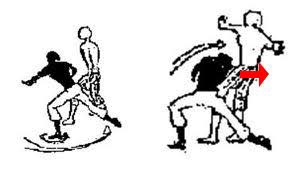
The Vingativa is a low takedown that involves stepping forward and trapping the back legs of an opponent who is in a side stance. This movement is characterized by the capoeirista also protecting their face with their elbow, demonstrating the importance of defense while executing an offensive maneuver.
Once the lead leg of the capoeirista has successfully trapped the leg of the opponent, they skillfully shift their weight in a fluid motion, pushing their hips forward and up, utilizing balance and leverage to maximize effectiveness. If the contact is maintained with the legs of the other player, they should be thrown up and away, thus executing the takedown with precision.
It’s fascinating to note that although this move originally came from batuque, it shares similarities in appearance with certain throws and sweeps found in traditional martial arts such as Baguazhang and Bajiquan, as well as the effective tai otoshi executed in various styles of karate. Other schools of thought in martial arts teach a variation of the Vingativa that resembles the sukui nage or obi otoshi techniques that are foundational in judo. You can even see this technique in Filipino Martial Arts, highlighting the interconnectedness of different martial arts traditions and the rich tapestry of techniques that practitioners can draw upon.
Understanding the nuances of the Vingativa allows martial artists not just to enhance their skillset, but also to appreciate the cultural heritage and evolution of capoeira as a dynamic and impactful form of combat art. By delving deeper into its techniques and philosophy, practitioners can cultivate not only physical prowess but also a profound respect for the history and traditions that have shaped this unique art form.
The Vingativa offers a gateway into the fusion of rhythm, movement, and strategy that defines capoeira, inviting artists to explore its rich narrative and the diverse influences that contribute to its ongoing evolution. Engaging with this practice enables martial artists to connect with a broader community, fostering a spirit of camaraderie and mutual growth as they share in the celebration of capoeira’s roots and its relevance in contemporary society.
Do you guys like reddit stories? I love them, even though they sometimes go over the top with their wild narratives and unexpected twists. But when I saw this particular story, it brought to mind many things regarding what most boys are told about “Man Up,” never backing down, and the pressure to embody traditional notions of masculinity. It made me reflect on how these messages shape young men’s identities and influence their decisions, often pushing them to suppress emotions or avoid vulnerability. This story serves as a poignant reminder of the importance of redefining what it truly means to be strong and resilient in today’s world.
I can understand wanting to toughen a kid up, to prepare them for the worst scenarios they might face in life. However, simply telling your child to get violent does not provide them with the necessary tools to navigate complex social interactions. It is crucial to first teach them effective non-verbal communication skills, such as recognizing body language and understanding emotional cues, which can foster empathy and conflict resolution. Instead of resorting to aggression, children should learn the importance of patience and understanding in their interactions, which lays the groundwork for meaningful relationships. This includes encouraging them to actively listen to others, respond thoughtfully to different viewpoints, and develop problem-solving strategies that don’t involve confrontation. By instilling these skills early on, we equip them with the ability to handle not only conflicts but also the intricacies of social dynamics throughout their lives.
Furthermore, instilling a proper mindset—one that values understanding over aggression—will not only help them manage their reactions but also make their life more meaningful and fulfilling in the long run. By fostering an environment that encourages open dialogue and empathy, individuals can learn the importance of listening to others, which deepens their relationships and broadens their perspectives. Encouraging a balance between resilience and compassion will ultimately equip them to handle challenges with greater maturity and wisdom, allowing them to approach difficulties as opportunities for growth rather than obstacles. This holistic approach empowers them to navigate their personal and professional lives more effectively, as they cultivate a deeper sense of connection with themselves and those around them, leading to a more enriched and purposeful existence.
“There are not more than five musical notes, yet the combinations of these five give rise to more melodies than can ever be heard. There are not more than five primary colours, yet in combination, they produce more hues than can ever been seen. There are not more than five cardinal tastes, yet combinations of them yield more flavours than can ever be tasted.” ― Sun Tzu, The Art of War“
Today, I want to talk about the Arrastao.
The term “Arrastão” in Capoeira refers to a specific takedown technique.
Here’s a closer look:
The Capoeira move “Arrastão” is a classic leg takedown that skillfully combines agility and strategy, where the practitioner closes in on the opponent with precision, sweeping their legs or pushing them to the ground using their shoulder or head. This dynamic maneuver can manifest as both a double or single-leg takedown, showcasing the versatility of Capoeira techniques, and may also involve a lateral technique that enhances its effectiveness in various combat scenarios.
In competitive settings, it can catch opponents off guard, leading to quick transitions into follow-up moves or escapes. Counters to the “Arrastão” include a sprawl or guillotine choke, which require the opponent to be alert and responsive to avoid being taken down. This move not only reflects the athleticism inherent in Capoeira but also underscores its practicality beyond being merely a form of dance.
The term “arrastão” holds additional cultural significance; it also refers to flash robbery in Brazil and Portugal, derived from the verb “arrastar,” illustrating the term’s multifaceted nature within both martial arts and social contexts. Such connections highlight the rich tapestry of language and movement that Capoeira embodies, blending physical skill with deeper cultural narratives.
In essence, the Arrastão is a powerful and strategic takedown within the dynamic art of Capoeira.
“There are not more than five musical notes, yet the combinations of these five give rise to more melodies than can ever be heard. There are not more than five primary colours, yet in combination, they produce more hues than can ever been seen. There are not more than five cardinal tastes, yet combinations of them yield more flavours than can ever be tasted.” ― Sun Tzu, The Art of War“
Capoeira Angola is a defensive martial art known for its intricate trap-like defenses designed to catch opponents off guard. It encompasses 8 basic defenses, each with unique unexpected attacks and counter attacks based on the opponent’s positioning. Mastery of these movements enables capoeiristas to defend against individuals carrying various weapons, including sticks, clubs, knives, and potentially even firearms with the appropriate skills.
Today, we’re going to examine a fundamental movement in Capoeira Angola, the QUEDA DE RINS.
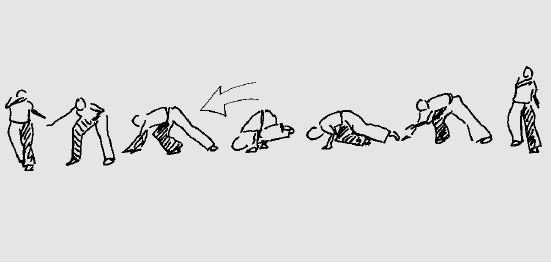
Capoeira Angola’s “Queda de Rins,” or “fall on the kidneys,” is an essential ground movement that serves multiple functions in the game, reflecting the intricate blend of martial arts, dance, and music that defines Capoeira. It involves supporting the torso with an elbow and head, forming a 45° angle with the legs, which requires a combination of strength, coordination, and control.
Yes, this tutorial is in Portuguese… If you want to know what she’s saying, you can always LEARN THE LANGUAGE.
To execute it properly, one must begin with their hands and head firmly on the floor, aligning the body to create a strong foundation, then twist their hips to rest on an elbow while ensuring that the legs remain elevated and engaged throughout the entire movement. It is essential to maintain a steady breathing pattern, as this will help in controlling the balance and flow of the exercise. Eventually, with practice and dedication, one can lift the legs entirely into the air, mastering the art of fluidity that Capoeira demands. Mastery of this movement not only contributes to strength, flexibility, and balance but also provides a solid foundation for exploring the myriad of movements inherent in Capoeira, enabling the practitioner to experience the beauty and rhythm of this dynamic martial art, all while building upper body stability and core strength.
Beginners should practice in stages, starting with proper hand and head placement and gradually increasing their skill level as they gain confidence, while advanced practitioners find the challenge in lifting their feet entirely, continuously refining their technique, adding variations, and enhancing their overall performance in the art of Capoeira, thus deepening their connection to the cultural roots and expressive nature of the discipline.
This technique can act as an esquiva, allowing the practitioner to evade an opponent’s attack gracefully while simultaneously maintaining balance and composure. Additionally, it serves as a crucial starting point for executing various techniques, making it a versatile move that can transition seamlessly into more complex maneuvers, such as flips or spins. This adaptability not only enhances the fluidity of movement but also establishes a connection between defensive and offensive actions. Alternatively, it can be transformed into an artistic flourish that showcases the practitioner’s style and creativity within the roda, creating an engaging spectacle that captivates both audiences and fellow practitioners alike. Ultimately, mastering this technique opens up a world of possibilities, enabling the individual to express their unique approach to the art while effectively navigating the dynamics of a live encounter.
Variations:
Queda de Rins has numerous variations that challenge balance and coordination further, each one designed to enhance physical stability and improve overall body awareness. These variations not only test the limits of one’s strength but also require a keen sense of timing and precision. As practitioners delve deeper into these complex movements, they discover how the interplay between gravity and motion can lead to a greater understanding of their own body’s capabilities. This exploration encourages a more mindful approach to physical activity, as individuals learn to navigate through various positions while maintaining control. Over time, mastering these variations can significantly boost confidence, providing a solid foundation for tackling more advanced challenges in the realm of physical fitness.
Queda de Rins is a versatile and essential movement in Capoeira Angola, adding both defensive and expressive elements to the game. This unique maneuver not only serves as an effective way to evade attacks from opponents but also showcases the fluidity and creativity inherent in Capoeira practice. As practitioners execute the Queda de Rins, they seamlessly transition between defense and counterattacks, demonstrating agility and strength.
Additionally, the movement embodies the rich cultural heritage of Capoeira, allowing players to express their individuality while remaining grounded in tradition. Through strong body control and rhythmic flow, the Queda de Rins encapsulates the spirit of Capoeira Angola, making it a vital component in a player’s repertoire.




 Jogo Corpo Fechado