
Why? Because although I haven’t had a busy weekend, it seems the “No Kings” protests were going on in LA, and I didn’t know.
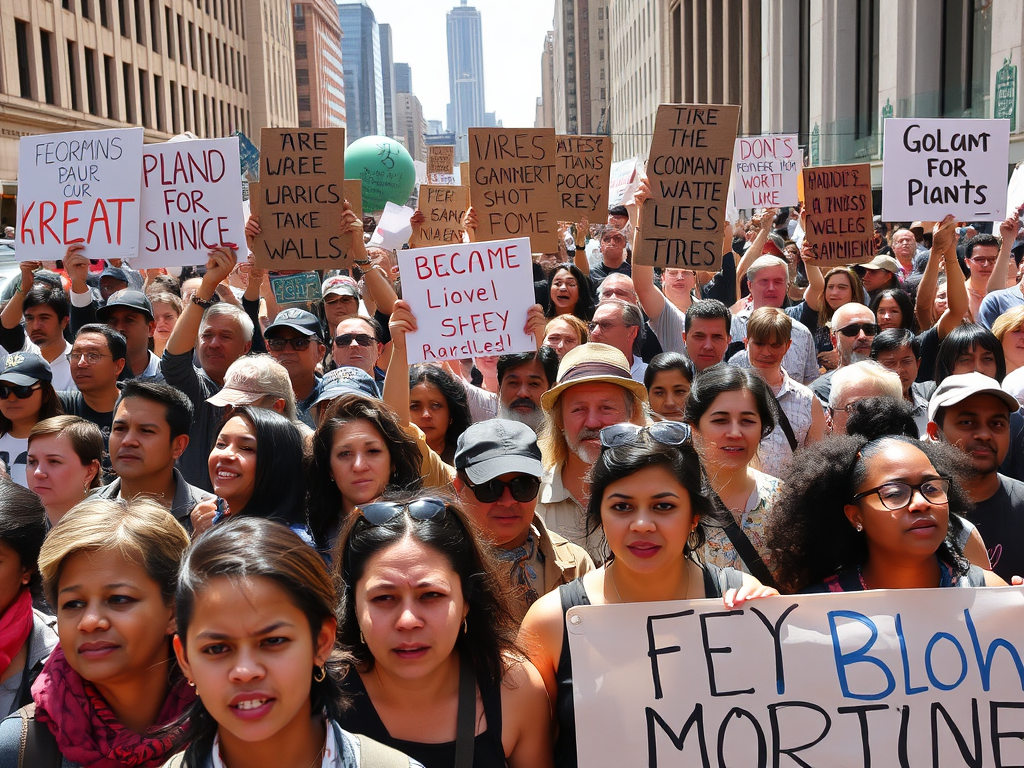
The “No Kings” protests represent a significant nationwide movement in the United States, primarily aimed at opposing the actions and policies of the Trump administration. These demonstrations fundamentally frame President Trump’s behavior as authoritarian, drawing direct comparisons to a monarchical rule and expressing deep concern over what participants perceive as a serious erosion of democratic norms and institutions within the country. The movement’s core message revolves around the belief that no single individual, regardless of their elected office, should wield power unchecked, acting as a “king” above the law or the will of the people. This sentiment taps into a historical American distrust of concentrated power and a strong commitment to republican ideals, values that date back to the founding of the nation and have shaped democratic discourse for centuries. Amidst this backdrop, many activists argue that these protests are a necessary response to a perceived threat to civil liberties and social justice, emphasizing the importance of public engagement in safeguarding democratic integrity. Will these protests do any good? Who knows.
However, as a capoeirista, I feel the need to share with you why we Capoeiristas should support these protests—not only because we value freedom and autonomy, which are intrinsic to both Capoeira and the spirit of resistance, but also because standing together against oppression enriches our community, amplifies our voices, and aligns our values of respect, camaraderie, and resilience with the broader fight for justice in society.
The Interplay with Capoeira: A Dance of Defiance and Identity
The connection between the “No Kings” protests and Capoeira might not be immediately obvious. However, the “No Kings” protest signifies a broader movement against systemic oppression and social injustice, themes that resonate deeply within the Capoeira community. Capoeiristas often find their core values and historical struggles reflected in the fight for equality and freedom exemplified by the “No Kings” protest.
This profound connection serves multiple purposes. Firstly, it unites individuals under a common cause, bridging seemingly disparate cultural and political spheres. Capoeira, born from the resistance of enslaved Africans in Brazil, inherently carries a legacy of defiance against oppressive systems and a relentless pursuit of liberation. This historical context makes it a powerful symbol for those protesting against perceived authoritarianism and injustice in contemporary society.
Secondly, this connection highlights the inherent power of cultural expressions like Capoeira as more than just performance. Capoeira embodies a “dance of defiance,” where physical prowess, strategic thinking, and rhythmic expression coalesce to challenge established power structures. It is also a vibrant “celebration of identity,” affirming the dignity and resilience of marginalized communities. Through its movements, music, and philosophy, Capoeira implicitly advocates for a world where no one is ruled by the arbitrary power of kings or oppressive systems.
The interplay between the “No Kings” movement and the spirit of Capoeira illustrates how cultural practices transcend mere entertainment or athletic display. They become living, breathing embodiments of ongoing struggles for dignity, rights, and self-determination that many individuals and communities face today across various contexts and cultures. The rich history of Capoeira, rooted in resistance against oppression, serves as a powerful reminder of how marginalized groups have historically used art as a form of empowerment and expression. The shared commitment to challenging injustice, whether through political protest or the expressive movements of Capoeira, underscores a universal human desire for freedom and respect that resonates deeply within the collective consciousness of marginalized people worldwide.
This echo of resilience can be observed in urban spaces where Capoeira is practiced, creating havens of solidarity and communal strength. Moreover, this connection highlights how the physicality of Capoeira’s movements can serve as a metaphorical language of dissent, advocating for social change and raising awareness of systemic inequities. The synergy between art and activism in this context demonstrates how they can powerfully reinforce each other in the pursuit of a more just and equitable society, inspiring new generations to carry forward the legacy of resistance and to envision a future free from tyranny and oppression.
 Jogo Corpo Fechado