
Well, my first post on this subject was so well received, that I decided to create a Part 2.
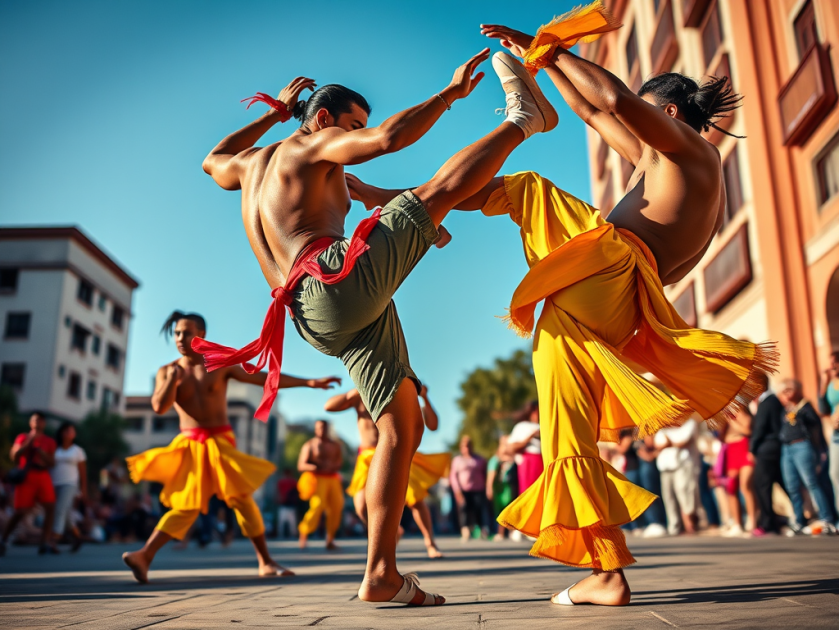
Capoeira’s journey from a tool of survival to a celebrated cultural art form encapsulates the very best of human endurance and ingenuity. It demonstrates that culture is not static; it is a dynamic, living entity that can adapt, resist, and flourish even in the most hostile environments. Its continued growth and global reach stand as an irrefutable testament to the power of cultural resilience and the universal human yearning for freedom and self-determination.
Capoeiristas have often found themselves at the crossroads of cultural expression and state repression, facing violence and discrimination throughout history. Our art, which embodies a rich tapestry of Afro-Brazilian heritage, has been a form of resistance against oppression, allowing them to reclaim their identity in the face of adversity. However, the struggles of these practitioners are not confined to historical contexts; they resonate with contemporary issues, such as the recent ice raids that have disproportionately targeted marginalized communities. The connection lies in the ongoing fight for recognition and rights, highlighting how both capoeira and the experiences related to immigration enforcement reflect a deep-seated struggle against systemic injustice. How these cultural warriors navigate the dual realities of preserving their traditions while confronting oppressive forces reveals the complexities of identity and resistance in today’s society.Capoeiristas have historically occupied a precarious position at the nexus of profound cultural expression and severe state repression. Throughout centuries, they have endured violence, discrimination, and relentless attempts to suppress their unique art, which embodies a rich and intricate tapestry of Afro-Brazilian heritage. More than just a martial art or a dance, capoeira has served as a powerful and enduring form of resistance against the systemic oppression faced by enslaved Africans and their descendants in Brazil. Through its movements, music, and philosophy, capoeira allowed them to reclaim their identity, preserve their cultural memory, and foster community in the face of profound adversity.
The struggles of capoeiristas, however, are not confined to the annals of history; they resonate powerfully with contemporary issues, demonstrating an ongoing fight for recognition, justice, and fundamental human rights that transcends time and geography. A stark and deeply troubling parallel can be drawn between the historical persecution of capoeiristas, who faced oppression from colonial powers and societal disdain, and the recent ice raids that have disproportionately targeted marginalized communities in various parts of the world, igniting debates on immigration policies and human rights violations. In both instances, the state, through its enforcement mechanisms, has been used to control, displace, and subjugate populations deemed “other,” resulting in widespread trauma and disenfranchisement. This systemic marginalization not only stifles individual and collective identities but also fuels a broader societal narrative that seeks to erase the rich cultural contributions of these groups. The legacy of capoeiristas serves as a poignant reminder of the resilience inherent in fighting against injustice, offering a beacon of hope and solidarity for contemporary advocates striving to dismantle oppressive structures and promote a more equitable society.
The connection between these seemingly disparate struggles lies in the pervasive and deeply entrenched struggle against systemic injustice that persists in multiple forms across different societies. Just as capoeira was once outlawed, seen as a threat to colonial authority, and its practitioners persecuted and marginalized, immigrant communities today face the constant threat of family separation, detention, and deportation, often without due process or adequate legal representation. These parallel narratives reveal how marginalized groups continually fight for their rights and cultural identities in the face of oppressive systems. Both capoeira, with its history of covert practice, coded movements, and resilient spirit, and the experiences related to immigration enforcement, with its harrowing impact on vulnerable families and the fragility of their dreams, reflect a profound and ongoing battle against powerful, often invisible, forces of oppression that seek to silence their voices and erase their existence. By recognizing these interconnected struggles, we can better understand the importance of solidarity in the pursuit of justice, ensuring that the legacies of resistance continue to inspire current and future generations to challenge and dismantle the structures of inequality that persist today.
The profound question that arises from this comparison is how these “cultural warriors” – whether historical capoeiristas or contemporary advocates for immigrant rights – navigate the complex dual realities of preserving their cherished traditions and cultural identities while simultaneously confronting oppressive forces. Their resilience and determination reveal the intricate complexities of identity formation, cultural survival, and resistance in today’s increasingly interconnected yet often divisive society. Understanding these parallels is crucial for recognizing the enduring legacy of struggle and the continuous need for vigilance in safeguarding human rights and cultural expression against all forms of systemic injustice.The profound question that arises from this comparison is how these “cultural warriors” – whether historical capoeiristas or contemporary advocates for immigrant rights – navigate the complex dual realities of preserving their cherished traditions and cultural identities while simultaneously confronting oppressive forces. Their resilience and determination reveal the intricate complexities of identity formation, cultural survival, and resistance in today’s increasingly interconnected yet often divisive society. This struggle is not merely a historical footnote but a continuous, evolving challenge that demands constant vigilance.
Historically, capoeiristas, often marginalized and facing severe state repression in Brazil, transformed their cultural practice into a formidable tool of resistance. The seemingly innocent dance and music masked a highly effective martial art, allowing them to maintain their cultural heritage while subtly, yet powerfully, challenging the dominant order. Their ability to adapt and innovate under duress highlights a crucial aspect of cultural survival: the capacity for transformation and reinvention. The very act of practicing capoeira became an assertion of self, a defiance against attempts to erase their identity.
In parallel, contemporary advocates for immigrant rights find themselves in a similar crucible. They champion the preservation of diverse cultural traditions, languages, and identities, often against restrictive policies, xenophobic sentiments, and systemic discrimination. Their efforts to establish cultural centers, organize community events, and advocate for inclusive policies are direct echoes of the capoeiristas’ struggle to maintain their cultural integrity. The fight for the right to speak one’s native language, practice one’s religion, or celebrate one’s heritage becomes a fundamental act of resistance against assimilationist pressures.
Understanding these parallels is crucial for recognizing the enduring legacy of struggle and the continuous need for vigilance in safeguarding human rights and cultural expression against all forms of systemic injustice. It underscores the idea that cultural expression is not a superficial aspect of human existence but a fundamental component of identity and a powerful catalyst for social change. The lessons learned from the historical resilience of capoeiristas offer invaluable insights into the strategies and spirit required for contemporary cultural warriors to navigate the challenges of a world grappling with issues of globalization, migration, and the persistent struggle for equality and recognition. The battles fought in the past, though seemingly different in context, provide a blueprint for understanding and empowering those who continue to fight for the right to exist authentically and express their cultural identities freely in the face of adversity. This ongoing dialectic between cultural preservation and resistance shapes the very fabric of diverse societies, reminding us that the defense of culture is, at its heart, the defense of human dignity.

 Jogo Corpo Fechado