
“There are not more than five musical notes, yet the combinations of these five give rise to more melodies than can ever be heard. There are not more than five primary colours, yet in combination, they produce more hues than can ever been seen. There are not more than five cardinal tastes, yet combinations of
them yield more flavours than can ever be tasted.”
― Sun Tzu, The Art of War“
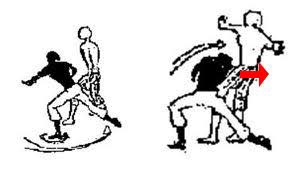
Today, I want to go into a fundamental takedown that I posted about before in another PAGE, but I want to expand on it and delve into a bit more detail for clarity and depth. This technique is called THE VINGATIVA, and it plays a crucial role in understanding the intricacies of Capoeira.
The Vingativa is a low takedown that involves stepping forward and trapping the back legs of an opponent who is in a side stance. This movement is characterized by the capoeirista also protecting their face with their elbow, demonstrating the importance of defense while executing an offensive maneuver.
Once the lead leg of the capoeirista has successfully trapped the leg of the opponent, they skillfully shift their weight in a fluid motion, pushing their hips forward and up, utilizing balance and leverage to maximize effectiveness. If the contact is maintained with the legs of the other player, they should be thrown up and away, thus executing the takedown with precision.
It’s fascinating to note that although this move originally came from batuque, it shares similarities in appearance with certain throws and sweeps found in traditional martial arts such as Baguazhang and Bajiquan, as well as the effective tai otoshi executed in various styles of karate. Other schools of thought in martial arts teach a variation of the Vingativa that resembles the sukui nage or obi otoshi techniques that are foundational in judo. You can even see this technique in Filipino Martial Arts, highlighting the interconnectedness of different martial arts traditions and the rich tapestry of techniques that practitioners can draw upon.
Understanding the nuances of the Vingativa allows martial artists not just to enhance their skillset, but also to appreciate the cultural heritage and evolution of capoeira as a dynamic and impactful form of combat art. By delving deeper into its techniques and philosophy, practitioners can cultivate not only physical prowess but also a profound respect for the history and traditions that have shaped this unique art form.
The Vingativa offers a gateway into the fusion of rhythm, movement, and strategy that defines capoeira, inviting artists to explore its rich narrative and the diverse influences that contribute to its ongoing evolution. Engaging with this practice enables martial artists to connect with a broader community, fostering a spirit of camaraderie and mutual growth as they share in the celebration of capoeira’s roots and its relevance in contemporary society.
 Jogo Corpo Fechado