
“There are not more than five musical notes, yet the combinations of these five give rise to more melodies than can ever be heard. There are not more than five primary colours, yet in combination, they produce more hues than can ever been seen. There are not more than five cardinal tastes, yet combinations of
them yield more flavours than can ever be tasted.”
― Sun Tzu, The Art of War“
Capoeira Angola is a defensive martial art known for its intricate trap-like defenses designed to catch opponents off guard. It encompasses 8 basic defenses, each with unique unexpected attacks and counter attacks based on the opponent’s positioning. Mastery of these movements enables capoeiristas to defend against individuals carrying various weapons, including sticks, clubs, knives, and potentially even firearms with the appropriate skills.
And one of those movements is the AU.
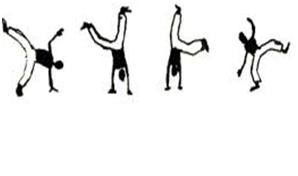
The Aú (Pronounced “a-oo”), is capoeira’s answer to the cartwheel. However, In capoeira the cartwheel is done differently than a cartwheel in gymnastics.
An aú is a fundamental movement in capoeira that is not only performed slowly with bent arms and legs to maintain a low profile but also embodies the essence of fluidity and grace inherent in this martial art. First, in capoeira, a person must be able to see their opponent at all times. So instead of looking at the ground, a capoeirista must look forward or at his/her opponent while doing au. Also, players can pause in a handstand position, which adds an element of creativity and surprise to their practice while simultaneously being acutely aware of potential attacks from their opponents.
Emphasis is placed on observing the other player closely to respond quickly to threats, honing both reflexes and strategic thinking. Although primarily for mobility and evasion, there are numerous variations of the aú that allow for unpredictable strikes and dynamic movements, showcasing agility and adaptability in the heat of action. This versatility makes the aú a vital skill for capoeiristas, serving as a bridge between defense and offense. The aú symbolizes both a tactical maneuver and artistic expression, reflecting capoeira’s dual nature as a combat sport and cultural dance, where each movement tells a story and every encounter is a dance of life, where rhythm, timing, and respect intertwine in a beautiful display of human connection and athletic prowess.
The 2 most used variations of the Au are the open Au, and the closed Au.
Open cartwheel (Aú aberto)
In this Au, the free arm arcs gracefully over the head in the direction of motion, creating a sense of fluidity in the movement. The leg extended furthest leaves the ground first, kicking off to provide essential momentum that aids in the execution of the skill. As the action unfolds, the reaching hand extends toward the far side, aiming to enhance balance and control, while bending the elbows provides necessary support for weight distribution as both legs extend over the body in a poised manner. While inverted, the body should be fully extended and streamlined to maximize stability and reduce drag. One foot touches the ground gently first, followed by the other, with the arms lifted purposefully for protection once they no longer support weight, ensuring a safe and graceful transition back to a stable position. This intricate sequence not only showcases strength and flexibility but also emphasizes the importance of timing and coordination in achieving a smooth and elegant maneuver.
Closed cartwheel (Aú fechado)
In this au, the free arm moves gracefully over the head, highlighting fluidity, while the leg furthest from the body initiates movement, providing momentum for a seamless transition across the dance floor. This movement is not merely mechanical; it embodies an artistic expression, where each motion tells a story of strength and grace. The reaching hand stabilizes the movement, enhancing balance, as bent arms support the body’s weight while the legs pass over, creating a visual synergy that captivates the audience. Meanwhile, the core engages, ensuring that the body remains closed and protected during the maneuver, with one foot touching the ground first, followed smoothly by the other. This careful choreography culminates in a display of strength and agility, leaving onlookers in awe as the performer glides effortlessly, embodying the perfect harmony between power and elegance.
Of course, there are many other variations to discover and explore, which you can read more about by clicking HERE. These variations not only enhance your understanding of the subject but also invite you to delve into different perspectives and techniques that you may not be familiar with. Each variation offers unique insights and applications that can enrich your knowledge base, making your learning experience more comprehensive and enjoyable. Whether you are a beginner or someone with more experience, understanding these alternatives will greatly benefit your journey.
 Jogo Corpo Fechado