
This is a part of my “ROOTS OF CAPOEIRA” series which I started on the Blog section of this website, where I post about certain aspects of Afro-Brazilian culture. I believe that Afro-Brazilian culture is the main roots from which Capoeira comes from.
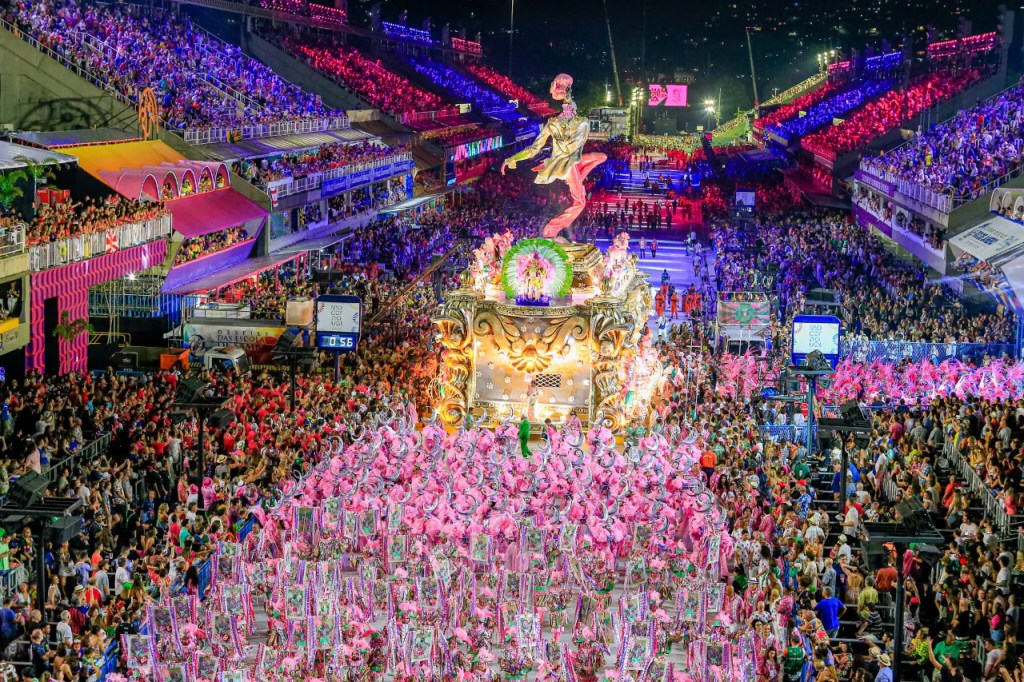
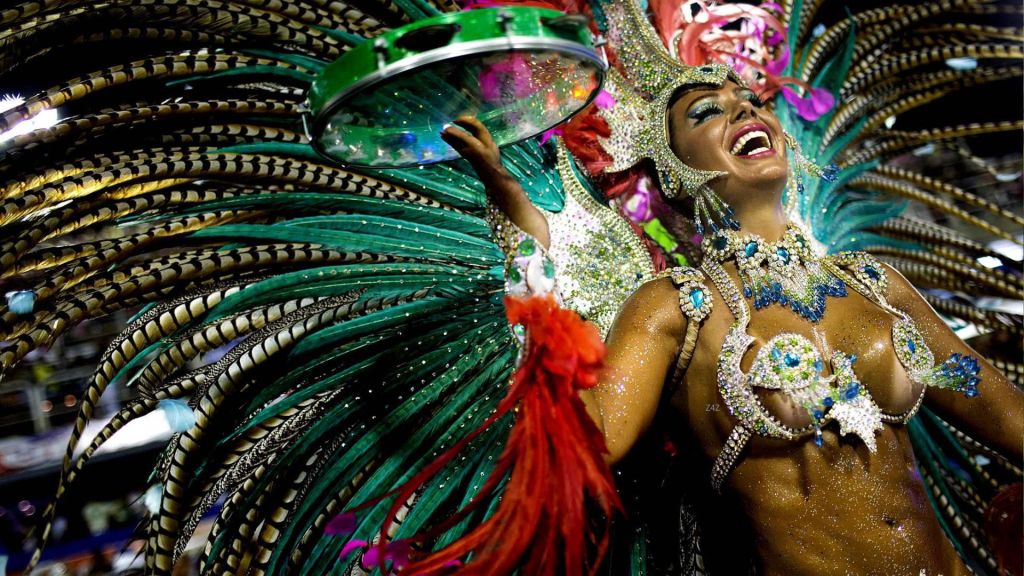
You feel the rhythm of drums and cymbals and your feet follow the beat along with 80,000 people that enjoy the Rio de Janeiro Carnival Parade at the Sambódromo Marquês de Sapucaí. The experience is exhilarating. You’re surrounded by people dancing in flashy costumes and headpieces made of ruffle boas, feathers, sequins, beads, and fringes. The vibrant colors of the costumes blend with the energy of the music, creating a mesmerizing spectacle that captures the essence of Brazilian culture. As you move along the parade route, the sounds of samba music fill the air, and the infectious energy of the crowd propels you forward. Each float that passes by is a work of art, adorned with intricate designs and vibrant embellishments that tell a story of tradition and creativity. The air is filled with the scent of exotic flowers and street food, adding another layer to the sensory experience. This celebration is a testament to the rich cultural heritage of Rio de Janeiro and the unbridled spirit of its people, making it an event that leaves an indelible mark on all who have the privilege to participate.
However, despite the distant origins of samba from the glamour of Rio de Janeiro’s Carnival, both in spirit and geography, it has become one of the most prominent symbols of Brazilian culture. The history of this vibrant music and dance reflects a people’s determination to preserve their cultural roots and artistic heritage in the face of colonization and slavery. Emerging from the fusion of African rhythms, European melodies, and indigenous beats, samba embodies the resilient spirit of the Brazilian people. The diverse influences and regional variations of samba across Brazil make it a rich tapestry of traditions and expressions. Although initially intended for a blog post on the “Roots of Capoeira” series, the vastness of the subject led to the realization that it warrants an entire website to cover adequately. Therefore, this webpage provides only a brief introduction to the way of life that is samba.
But first, I present to you, this Documentary.
In the documentary “We Are Samba” by director Avi Lev, a diverse group of Torontonians find unity and joy through the rhythm of Brazilian drums, specifically the beat of samba. The characters, hailing from various ethnic backgrounds, are brought together by their curiosity, love of music, and the need to connect and create. The film follows their journey, including a woman who left her sons in Brazil to work in Canada, and how they rediscover samba and their own dreams. The documentary, filmed in Canada and Brazil, serves as a heartwarming tribute to the power of music and the human spirit.
I love this documentary because the journey these people take to practice this art form in many ways mirrors the journey many of us here in the U.S.A. and around the world have taken to learn and play Capoeira. Our motivations are also the same.
Now like I said, This little article is a very small overview, For you scholars out there, click HERE for a much more in-depth article about samba on wikipedia.
Now, let’s get into this.
The word ‘samba’ is most likely derived from the Angolan word ‘semba’, which means ‘naval bump’ and symbolizes an invitation to invoke the favor of the gods through rhythm, song, and dance. There are at least nine styles of samba; all of them have a story to tell.
OKAY, let’s begin at the beginning: The origins of Samba
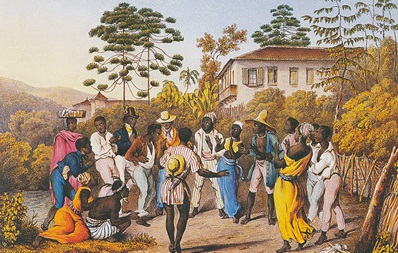
Samba is almost as old as Brazil. It was born in the engenhos or sugar cane mills in Salvador da Bahia, in the northeastern coast of the country. Founded in 1549, this settlement was the first capital of Portuguese America until 1763. The city was the country’s political center, its main seaport, and an important business hub for trading with Africa and the Far East. Since 1558, it also became the first slave market in the New World.Here, generation after generation of slaves brought by from Western Africa, mainly Portuguese Angola, worked 18 to 20 hours per day and lived in simple mud or wooden huts. Because plantation owners preferred an all-male workforce where possible, there were many more male than female African slaves. Some owners allowed marriages between slaves (formal or informal) while others actively separated couples.Plantation owners abided by religious prohibitions against working on Sundays and in certain religious holidays. The slaves were allowed to use this free time to grow food for their own sustenance in small plots and to participate in general cultural manifestations.
Moreover, the cultural and social aspects of the slave community were shaped by the combination of African traditions and the influences of the Portuguese colonial society, leading to the development of unique forms of expression, language, and music. This fusion of cultures and traditions contributed to the evolution and spread of samba, which has since become an integral part of the Brazilian cultural identity. The rhythmic beats and vibrant melodies of samba are deeply intertwined with the history and heritage of Salvador da Bahia, carrying the echoes of the past while serving as a celebration of resilience and cultural vitality.
It was during these scarce slots of free time that the slaves practiced their African traditions and rituals, hidden from their European bosses, who forbid these celebrations for considering them vulgar displays. The slaves met in religious houses founded by Bahian priestesses who led them through sessions of singing, dancing, clapping, and playing musical instruments around a circle. The first samba style – samba de roda (circle samba) – originated from these gatherings. The United Nations Educational, Scientific and Cultural Organization (UNESCO) recognized the historic quarter of Salvador da Bahia as a World Heritage site in 1985 and the samba de roda as an Intangible Cultural Heritage of Humanity in 2008 due to their historic and cultural significance.
From Bahia to Rio de Janeiro
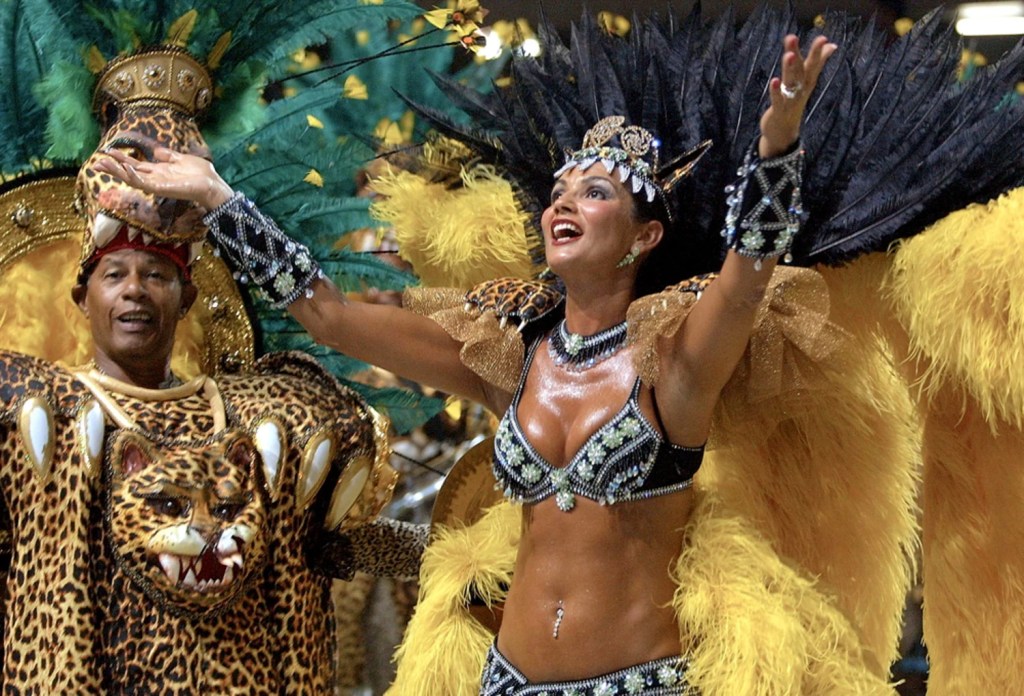
Samba may have originated in Bahia, but it flourished in Rio de Janeiro at the end of the 19th century. As the new capital of the Portuguese Empire, the city attracted people from other regions of Brazil in search for prosperity. However, the peak influx occurred after 1888, when the ban on slavery encouraged former slaves and their descendants from Bahia to move south to Rio de Janeiro. The sense of freedom spread even stronger in 1889 with the proclamation of the Republic of Brazil. In the midst of these conflictive times, Bahia saw the rise of a religious leader, Antônio Conselheiro, who established the Canudos community. The term favela is now loosely used to refer to the poor neighborhoods in the hills surrounding Rio de Janeiro.
With this increasing cultural influence from Bahia, Rio de Janeiro became the new samba hub, and samba continued to be frowned upon by the upper class and remained a private affair for many years. Until in 1917, the samba carnavalesco was finally made public by Ernesto dos Santos in the song Pelo telefone (on the telephone).
SAMBA MEETS THE WORLD
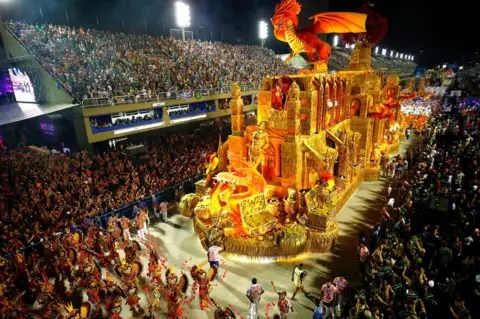
Samba experienced a boost in the 1920s, when the first few escolas de samba (samba schools) were established, and the Rio de Janeiro carnival gained momentum.
At the beginning, they would play samba that was freely created, with lyrics about samba itself or the reality of the musicians. This style was originally called samba de morro because it sprang from the morros (hills) surrounding the city.In the 1930s, the Brazilian government began offering subsidies to the escolas de samba that depicted patriotic themes in their performances. This changed the modality of the parade competition and brought about the emergence of samba de enredo (theme samba), as the preferred style for the carnival. During the parade, each samba school performs one song, which must be especially written for them and be different every year.This decade marked a milestone in the history of samba, as record labels began to reproduce the most famous songs and play them on the radio. This gave rise to renowned performers such as Ismael Silva, Mário Reis, and Carmen Miranda, who made samba popular worldwide and charmed audiences in the United States during the 1940s.
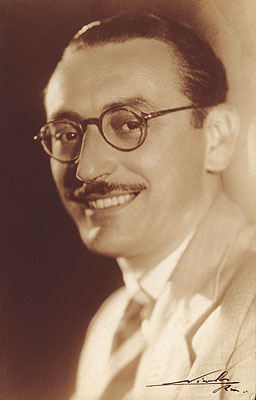
In 1939, Ary Barroso composed the famous Aquarela do Brasil (Watercolors of Brazil), highlighting different aspects of the country’s traditions and natural beauty. It was featured in the 1942 Disney film Saludos Amigos (Greetings Friends), which was commissioned by the United States Government as part of its policy to improve relations with Latin America.
Over time, this song has become an enduring anthem and remains among the 20 most recorded songs, showcasing its lasting impact and popularity. It has also played a key role in shaping the perception of samba as Brazil’s national music, establishing its cultural significance both at home and around the world.
From Samba to Bossa Nova
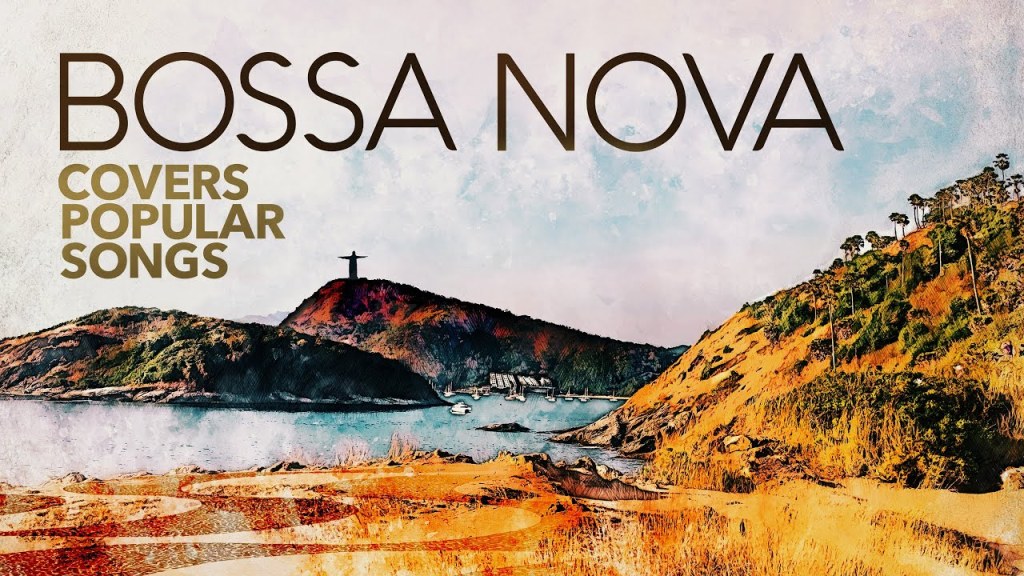
During the 1960s, the interplay of these contrasting currents within the bossa nova movement underscored the complex sociopolitical landscape of Brazil at the time, reflecting the diverse experiences and aspirations of its people. The relocation of the country’s capital to Brasília signified a shift towards modernity and progress, representing hope for a brighter future. Yet this period was also characterized by the imposition of a military regime in 1964, leading to a prolonged era of political repression and rapid economic growth, which, paradoxically, created a climate of fear amidst the promise of development. As a result, bossa nova, with its diverse currents, came to encapsulate the multifaceted nature of Brazilian society, encompassing both the romantic, upper-class appeal of the original movement, which celebrated the beauty and leisure of life, as well as the emergence of politically charged expressions advocating for freedom and change, often infused with a sense of urgency and resistance.
This rich tapestry of musical and lyrical expression within the bossa nova genre mirrored the intricacies of Brazilian society, capturing the essence of an era marked by both cultural flourishing and political turmoil, while also highlighting the struggles of the marginalized and the aspirations of a nation in search of identity and autonomy.
The juxtaposition of soothing melodies with poignant lyrics served as a powerful commentary on the emotional landscape of Brazil, making bossa nova not just a musical genre but a profound social movement that resonated deeply with the collective consciousness of the country. This rich fusion of jazz influences and traditional samba rhythms crafted an inviting yet introspective sound, allowing listeners to escape into a realm where both joy and melancholy intertwined. As the rhythms flowed like the gentle waves of the ocean, they captured the essence of Brazilian life, reflecting its beauty, struggles, and dreams. The emergence of bossa nova during a time of social and political change further amplified its significance, as artists used their craft to express the sentiments of a generation yearning for freedom and identity amidst turbulence. Thus, bossa nova transcended mere entertainment, becoming a voice for the people and a testament to the resilience of the human spirit.
So, what is samba today?
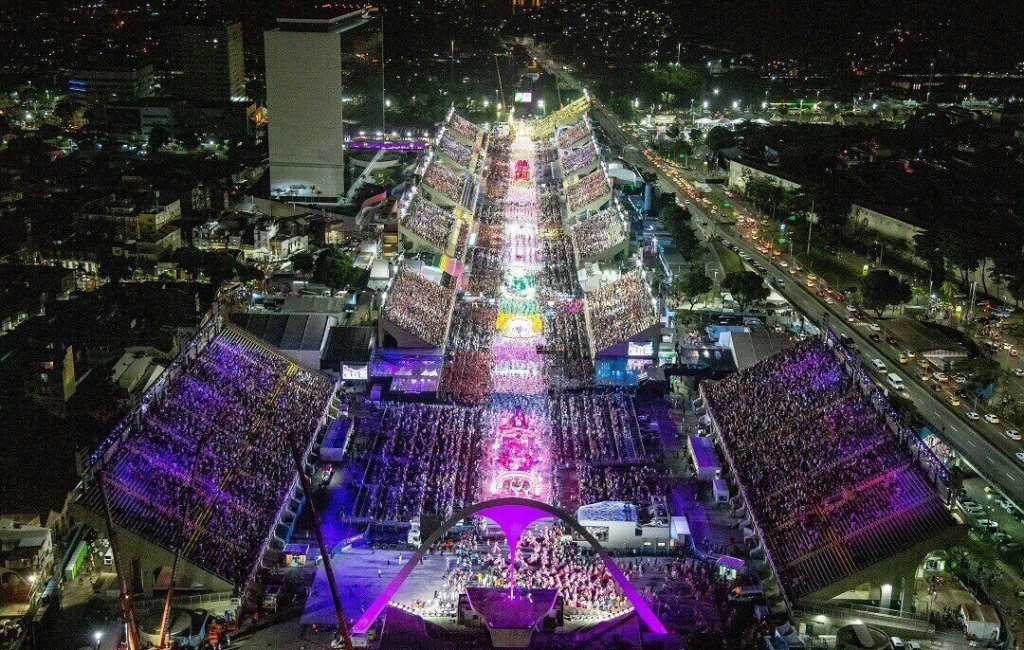
With the end of military rule in the 1980s, Brazil’s samba scene underwent significant changes. The iconic samba parades of the Rio de Janeiro Carnival were relocated to a new venue, the Sambódromo Marquês de Sapucaí, designed by architect Oscar Niemeyer.
This move aimed to enhance safety and comfort for tourists while boosting revenue through ticket sales. The new venue was inaugurated in 1984, marking the beginning of the renowned samba show with its vibrant costumes and captivating melodies. Furthermore, the popularity of samba resulted in its international adaptation, notably in ballroom dancing competitions, where it transformed from a solo dance to a dynamic style performed with a partner, influenced by elements of the waltz and tango.
Samba continues to evolve with time, reinventing itself and embracing contemporary influences that even include short breaks filled in by rap verses in the samba de breque (break samba). This innovative style not only showcases the genre’s adaptability but also reflects the vibrant cultural exchange that takes place in Brazil’s diverse music scene. Outstanding current performers include Seu Jorge, largely considered a renewer of Brazilian pop samba, and Jair Oliveira, who is known for fusing classic samba and bossa nova with soul, funk, and electronic music, creating a unique sound that resonates with both traditionalists and modern listeners alike. These artists, among others, are instrumental in keeping the heart of samba alive while introducing it to new audiences through collaborative projects and cross-genre experiments.
One thing samba will never lose is its inherent optimism and uplifting rhythm; the same that pulled former slaves through harsh times in the engenhos of Salvador da Bahia and that keeps inspiring people all over the world today. This resilience is a testament to the genre’s roots, embodying the struggle and joy of life through music and dance. Each beat pulsates with history and culture, weaving together diverse narratives that reflect both hardship and triumph. In the words of the great Martinho da Vila in his song Canta, canta minha gente: “Cantem, cantem, meus amigos; deixem a tristeza para trás; Cantem forte, cantem alto; a vida vai melhorar.” (Sing, sing, my friends; leave the sadness behind; Sing strong, sing loud; life will get better).
These powerful lyrics remind us that, regardless of the changing times, the essence of samba remains a source of joy and hope for many, serving not only as an artistic expression but also as a means of community bonding, healing, and resistance. Samba brings people together, transcending barriers and uniting them in a shared celebration of life, echoing its rich historical roots while adapting to contemporary influences. The dance floors of samba are alive with energy, where participants engage in a vibrant exchange of emotions, laughter, and stories, reaffirming that through the rhythm of samba, the human spirit can thrive against all odds.
Well, I hope you liked my very brief description of Samba. I will post more about Samba, and other expressions of Afro-Brazilian culture on the blog portion of this website. And remember, Samba’s roots, as well as capoeira’s roots are found in the Afro-Brazilian people.
 Jogo Corpo Fechado