
Greetings!
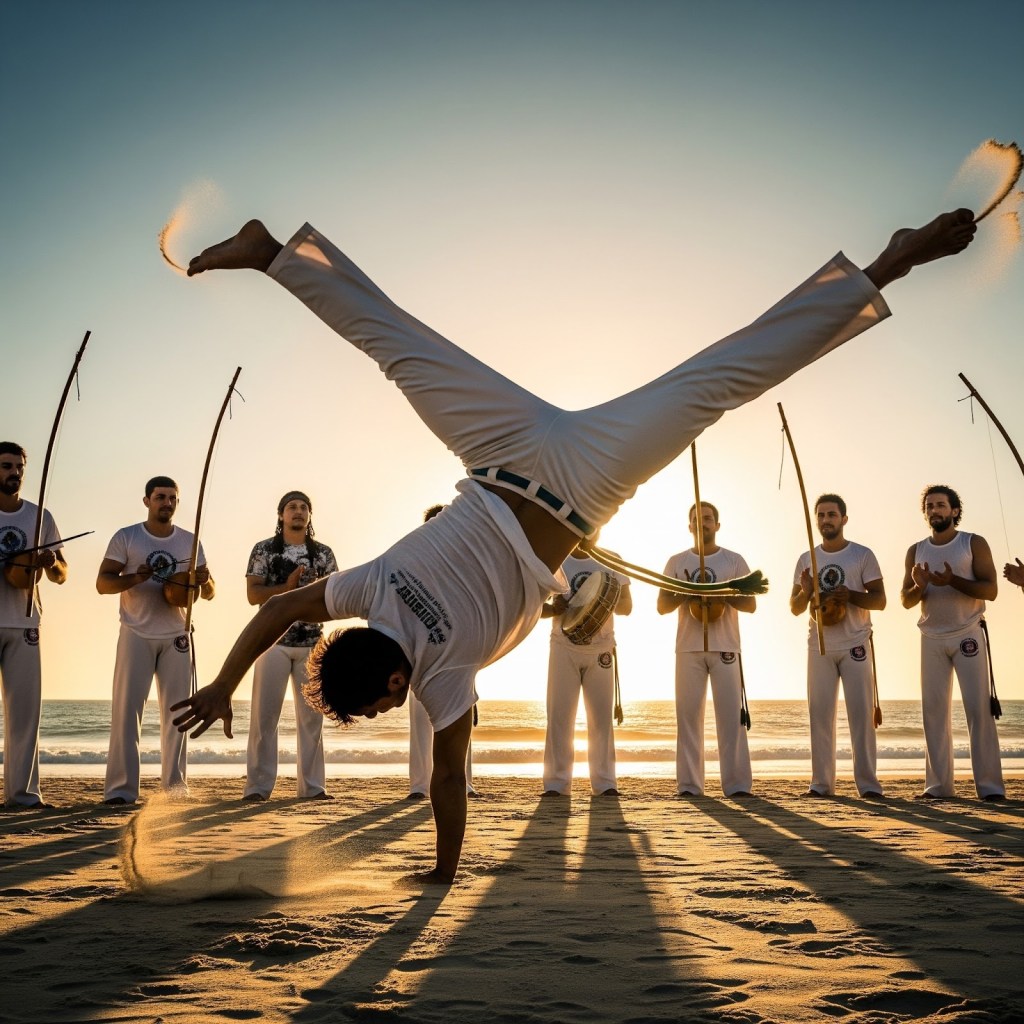
Capoeira of all styles, frequently faces criticism, sometimes even from its own practitioners, regarding the prominent role of dancing and acrobatics within its practice. Critics often perceive these elements as rendering Capoeira impractical for real-life combat, a misconception that often stems from a superficial understanding of the art form’s multifaceted nature.In fact, even I held this criticism for years. In fact, I go into it a little bit on another PAGE. However, since then, I’ve come to understand that this narrow viewpoint fails to grasp the profound interconnectedness of Capoeira’s physical, cultural, and strategic dimensions, often leading to an undervaluation of its true combat efficacy.
Capoeira is more than just a fighting technique; it’s a unique blend of physical prowess, rhythmic movement, and cultural expression. This intricate fusion creates an expressive martial dance that transcends the narrow confines of mere combat. While some may dismiss its flashy kicks, spins, and acrobatic maneuvers as ineffective in traditional fighting scenarios, they overlook the deeper benefits these movements impart. The fluidity and creativity inherent in Capoeira’s movements are not merely for show; they actively enhance agility, heighten spatial awareness, and foster strategic thinking—all crucial attributes in real-life confrontations. These seemingly ornamental elements are, in fact, sophisticated training methods that develop a practitioner’s ability to adapt, innovate, and exploit openings in dynamic and unpredictable ways. The constant shifting of body weight, the deceptive rhythm, and the unexpected changes in level are designed to keep an opponent off balance, both physically and mentally.
Ultimately, what some interpret as impracticality is, in fact, a profound reflection of Capoeira’s core ethos. It’s a vibrant celebration of life, community, and self-exploration, expressed through a dynamic physical language. The seemingly non-combative elements are integral to developing a Capoeirista’s overall physical and mental capabilities, making them more adaptable and unpredictable in any challenging situation. This holistic approach to martial arts training extends beyond the mere acquisition of fighting skills, cultivating a resilient spirit, a sharp mind, and a body capable of extraordinary feats. The emphasis on improvisation and creative expression within the jogo (game) prepares practitioners for the fluidity and uncertainty of actual conflict, encouraging them to think on their feet and react instinctively rather than relying on rigid, pre-programmed techniques.
Acrobatics, far from being a mere embellishment, are an indispensable component of many martial arts, and particularly so within the fluid and expressive framework of Capoeira. The seamless integration of flips, twists, handstands, cartwheels, and other spectacular movements serves multiple crucial purposes. Their inclusion is not accidental but a deliberate and sophisticated method for developing a well-rounded and effective martial artist.
Firstly, these movements significantly enhance performance, allowing practitioners to evade attacks, reposition themselves strategically, and launch unexpected counter-attacks. The ability to quickly shift body weight, change levels, and move in unpredictable ways provides a distinct combat advantage, making a Capoeirista a challenging opponent to anticipate and engage. For instance, an aú (cartwheel) can be used not only to escape a dangerous position but also to set up a powerful kick as the practitioner lands, transforming a defensive maneuver into an offensive one. Similarly, a quick queda de rins (bridge or headstand) can allow a Capoeirista to avoid a sweeping attack and spring back up with renewed momentum. These acrobatic transitions are vital for maintaining the offensive flow and disrupting an opponent’s rhythm, creating psychological pressure and physical openings.
Secondly, acrobatics contribute immensely to the aesthetic display and overall character of the discipline. They transform martial arts beyond simple fighting into a captivating spectacle that demands both exceptional physical prowess and artistic expression. This intricate dance of power and grace elevates Capoeira to an art form, fostering a deep connection between the practitioner, their movements, and the cultural narrative it embodies. The visual appeal also plays a role in intimidation and misdirection in a real-world scenario, creating openings that might not otherwise exist. The beauty and artistry of Capoeira draw in onlookers and potential students, ensuring the perpetuation of this rich cultural heritage. Furthermore, the performative aspect encourages a sense of pride and community among practitioners, strengthening the bonds within the Capoeira roda.
In essence, the acrobatic elements in Capoeira are not merely decorative; they are fundamental to its effectiveness, its unique identity, and its rich cultural heritage. They represent a holistic approach to martial arts training, where physical conditioning, mental acuity, and expressive artistry converge to create a truly formidable and inspiring discipline. This comprehensive training develops not just fighters, but well-rounded individuals who embody strength, agility, creativity, and a deep cultural understanding.
Fundamentally, acrobatics are instrumental in cultivating and refining an individual’s agility, balance, and flexibility—all attributes critical for the effective execution of martial arts techniques. Agility allows practitioners to move quickly and change direction efficiently, evading attacks and creating openings. This quickness of movement is crucial for both offensive and defensive strategies, enabling a martial artist to react instantly to an opponent’s movements. Balance is essential for maintaining control during complex movements, delivering powerful strikes, and recovering from deflections. A strong sense of balance provides stability, allowing for precise execution of techniques and preventing a practitioner from being easily thrown off guard. Flexibility, in turn, enables a wider range of motion, preventing injuries and allowing for the execution of high kicks and intricate maneuvers that would otherwise be impossible. This increased range of motion is not only vital for executing visually impressive techniques but also for developing a deeper and more effective arsenal of movements. Beyond these core physical attributes, the consistent practice of acrobatics also fosters mental discipline, spatial awareness, and a profound understanding of one’s own body mechanics, all of which are invaluable in the comprehensive development of a martial artist. The demanding nature of acrobatic training pushes practitioners to their physical and mental limits, building resilience and a deep connection to their own capabilities.
Beyond these core physical benefits, acrobatics in martial arts offer a psychological edge. The ability to perform impressive and unexpected movements can intimidate opponents, disrupt their rhythm, and create opportunities for attack. Moreover, the dedication and discipline required to master these complex skills foster mental fortitude, resilience, and confidence, qualities that extend beyond the training mat into daily life. The aesthetic appeal of acrobatics also plays a crucial role, transforming martial arts into a captivating spectacle that draws in audiences and inspires new practitioners. This performative aspect is particularly evident in Capoeira, where the “jogo” (game) is as much about skill and strategy as it is about expression and artistry, with acrobatic feats serving as a vibrant language of movement and interaction. The psychological impact of witnessing a skilled Capoeirista execute a complex sequence of acrobatic movements can be disorienting and demoralizing for an opponent, creating a tactical advantage that is as potent as any physical strike. The ability to express oneself creatively within the structured yet free-flowing environment of the roda builds self-assurance and a profound sense of personal achievement.
Benefits and Applications
The incorporation of acrobatics into martial arts offers a multitude of benefits, both practical and performative:
- Combat Advantage: Acrobatics provide practitioners with a tactical edge in combat scenarios. They can be employed to swiftly evade incoming attacks, strategically reposition oneself, and deliver surprise strikes from unexpected angles. For instance, a well-executed cartwheel (aú) can be used to escape a throw or a grapple, while a side breakfall (queda de rins) can be subtly integrated into joint locks or sweeps, making the practitioner unpredictable and difficult to control.
- Enhanced Physical Attributes: Consistent acrobatic training leads to a marked improvement in several key physical attributes. Agility is sharpened, allowing for rapid changes in direction and fluid movement. Flexibility is significantly increased, enabling the execution of high kicks, deep stances, and complex body contortions that would otherwise be impossible. Balance is refined, providing a stable foundation for intricate techniques and maintaining equilibrium during dynamic maneuvers. These improvements translate directly to more effective and powerful martial arts techniques.
- Performance and Display: Beyond their practical combat applications, acrobatic moves are inherently visually striking. They are frequently showcased in martial arts competitions, demonstrations, and films, adding a thrilling and performative element that captivates audiences. In performance-oriented disciplines, the artistry and precision of acrobatic sequences are paramount.
- Confidence and Control: The mastery of complex acrobatic movements, even those that may not have a direct application in combat, fosters a profound sense of body control and self-assurance. This heightened awareness and command over one’s physical capabilities translate into increased confidence and overall skill in combat, as the practitioner learns to trust their body’s ability to execute challenging movements under pressure.
Acrobatic martial arts integrate elements of gymnastics and dance, emphasizing agility, flexibility, and dynamic movements. These styles often feature spectacular jumps, flips, and spins, distinguishing them from more traditional, ground-based martial arts. While some acrobatic martial arts are primarily performance-oriented, others effectively incorporate these elements into combat applications, enhancing evasion, striking power, and unpredictability.
Several martial arts exemplify the integration of acrobatic elements:
- Wushu: This contemporary Chinese martial art is renowned for its inclusion of challenging acrobatic movements, collectively known as Nandu. These encompass a wide array of jumps, flips, and rolls that demand exceptional athleticism, coordination, and body control. Wushu practitioners often combine these acrobatic feats with elegant and powerful martial arts forms, creating a captivating spectacle that is both visually stunning and technically demanding. Beyond competition, these movements also serve to develop incredible strength, flexibility, and focus, which are transferable to various physical disciplines.
- Tricking: A modern discipline that has emerged as a distinct art form, Tricking fluidly blends martial arts kicks, gymnastics, and breakdancing. Its primary focus is on creating aesthetically pleasing and intricate sequences of moves, emphasizing aerial maneuvers, multiple spins, and unique combinations of techniques. Tricking is predominantly a performance-based discipline rather than a traditional combat art, celebrated for its creativity, innovation, and visual impact. Practitioners constantly push the boundaries of human movement, developing new and increasingly complex ‘tricks’ that require immense dedication and physical prowess.
- Tae Kwon Do: While a traditional Korean martial art, competitive forms of Tae Kwon Do frequently feature high-flying kicks and other acrobatic maneuvers. Particularly in sparring and forms (kata) competitions, practitioners utilize impressive leaps, spins, and aerial techniques to score points, evade opponents, and demonstrate their skill and agility. The emphasis on powerful, dynamic kicks, often delivered in mid-air or following a spin, showcases the martial art’s unique blend of strength, speed, and acrobatic precision. This acrobatic flair not only makes Tae Kwon Do visually exciting but also provides practical advantages in combat by increasing reach, generating power, and creating unexpected attack angles.
Acrobatics in Capoeira
Capoeira’s distinctive and highly engaging character is undeniably shaped by its rich and diverse repertoire of acrobatic movements. This vibrant tradition is a testament to a unique fusion of martial arts, dance, and music, deeply rooted in its Afro-Brazilian origins and embodying the ingenuity and resilience of its creators. These acrobatic elements are far more than mere embellishments; they serve a multifaceted role within the practice, profoundly enhancing both its aesthetic appeal and its practical effectiveness.
Primarily, acrobatics elevate Capoeira beyond a simple combat form, transforming it into a captivating and immersive performance. The graceful flips, dynamic spins, and fluid evasive maneuvers showcase the practitioners’ exceptional skill, artistic expression, and profound body control, captivating both audiences and participants alike. This performative aspect is absolutely integral to Capoeira’s identity as a ‘game’ (jogo), where the intricate interaction between players is as much about theatrical spectacle and rhythmic dialogue as it is about strategic engagement.
Furthermore, acrobatics are absolutely crucial for both defensive and offensive tactics within the Capoeira roda. They empower practitioners to evade incoming attacks with fluid, often unpredictable movements, thereby creating opportune openings for counter-attacks. The agility and flexibility demonstrated through these movements are not merely visually impressive; they are utterly essential for navigating the dynamic and ever-changing space of the roda (the circular formation where Capoeira is played). Techniques like aú (cartwheel), macaco (monkey jump), and queda de rins (fall on the kidneys) allow players to rapidly change positions, maintain impeccable balance, and surprise opponents, rendering them significantly harder to predict and strike. These movements enable a constant flow, preventing any single player from dominating and encouraging a continuous, improvisational exchange.
Beyond their inherent aesthetic and critical tactical value, these acrobatic movements are instrumental in developing a comprehensive range of physical attributes that are vital for overall athleticism and well-being. Regular practice of Capoeira’s acrobatic elements significantly enhances physical strength, particularly in the core, legs, and arms—muscle groups that are crucial for explosive power, sustained effort, and injury prevention. Coordination is meticulously honed through the intricate sequencing of movements, demanding precise timing, spatial awareness, and exquisite body control. Endurance is progressively built as practitioners sustain high-intensity movements over prolonged periods, reflecting the energetic and demanding nature of a Capoeira jogo. These physical benefits extend far beyond the specific practice of Capoeira, contributing to improved overall fitness, bodily awareness, and functional strength in daily life.
IThe intrinsic connection between acrobatics and Capoeira is undeniably profound and multifaceted. At its core, the seamless incorporation of acrobatic movements is absolutely fundamental to the dynamic, fluid, and inherently improvisational nature of Capoeira. These movements are not merely decorative; they are integral to the game’s essence, creating a unique and captivating spectacle.
Acrobatics in Capoeira fosters a unique space for both individuality and expression. Each practitioner is empowered to develop a distinctive personal style, characterized by their unique flair, preferred movements, and innovative sequences. This individual expression flourishes within the communal and supportive context of the roda, the circle where Capoeira is played. The roda provides an encouraging environment where practitioners can push their boundaries, experiment with new techniques, and showcase their evolving skills.
The freedom to improvise, adapt, and invent new acrobatic movements is a cornerstone of Capoeira’s enduring appeal. This constant innovation not only enriches the game and keeps it perpetually fresh and engaging but also profoundly reinforces the historical and cultural significance of Capoeira. It serves as a living art form that continuously evolves, embracing contemporary influences and adapting to new challenges, all while steadfastly honoring and preserving its rich ancestral legacy and deep cultural roots.
Furthermore, acrobatics contributes significantly to the physical and mental development of Capoeira practitioners. The demanding nature of these movements builds strength, flexibility, balance, and coordination. The need for quick reflexes and strategic thinking during the game hones mental agility and problem-solving skills. Beyond the physical, the art of learning and mastering challenging acrobatic movements instills discipline, perseverance, and a deep sense of accomplishment.
The aesthetic beauty of Capoeira is undeniably enhanced by its acrobatic elements. These dynamic movements—graceful flips, powerful kicks, and intricate evasions—weave a visual tapestry of motion that is both mesmerizing and profoundly inspiring. Far from being mere physical feats, these acrobatics imbue Capoeira with an artistic dimension that transcends the boundaries of a traditional martial art. They elevate it into a captivating performance art, where every movement tells a story, conveying narratives of struggle, resistance, and freedom. This blend of athletic prowess and artistic expression is what gives Capoeira its unique and compelling allure, drawing spectators into a rich cultural experience.
Acrobatics in Capoeira are far more than mere embellishments; they are the very soul and driving force behind this Afro-Brazilian art form. They are an intrinsic and indispensable component that fundamentally defines its character, setting it apart as a dynamic and expressive martial art, dance, and game. These dynamic movements are the engine that fuels Capoeira’s ongoing evolution, constantly pushing the boundaries of physical expression, creative movement, and individual potential. Through their constant innovation and challenging nature, acrobatics ensure Capoeira’s continued relevance as a powerful and multifaceted expression of culture, art, and personal mastery.
The acrobatic vocabulary of Capoeira is a rich tapestry woven with history and cultural significance. Each spectacular, gravity-defying movement—from the agile aú (cartwheel) to the explosive macaco (monkey jump), the graceful negativa (escape), and the powerful rabo de arraia (stingray tail kick)—communicates a narrative. These movements celebrate Capoeira’s heritage, reflecting the resourcefulness, resilience, and artistry of its originators. They serve as a physical language that transcends spoken words, narrating stories of resistance, freedom, and the enduring spirit of a people.
Furthermore, acrobatics empower individuals to achieve a profound connection between body, mind, and spirit. The demanding nature of these movements requires immense physical strength, flexibility, and coordination, fostering a deep understanding of one’s own physical capabilities. Simultaneously, the need for strategic thinking, quick reflexes, and an intuitive understanding of the roda (the circle in which Capoeira is played) cultivates mental agility and presence. The successful execution of a complex acrobatic sequence brings a sense of accomplishment and self-mastery, reinforcing the spiritual aspect of Capoeira—a journey of self-discovery and personal growth. It is within these breathtaking, seemingly impossible movements that the true essence and enduring legacy of Capoeira are most vividly brought to life, demonstrating its beauty, power, and profound cultural depth.

 Jogo Corpo Fechado