
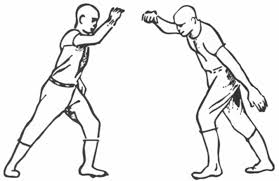
The ginga (pronounced jeen-gah) is not merely a movement but the soul and central organizing principle of Capoeira Angola. It is the fundamental, continuous, and swaying motion that serves as the basic stance, the core footwork, and the philosophical axis of the art form. Far more than a mere physical technique or an introductory exercise to warm the body, the Angolan ginga is the embodiment of its cultural legacy, a strategic imperative, and the philosophical anchor that wholly defines the practice. It is the perpetual heartbeat and the kinetic rhythm of the jogo (the game or the ritualized combat).
Unlike the often faster, wider, and more overtly martial ginga commonly practiced in the Regional styles of Capoeira, the Angola ginga is characteristically slower, deliberately lower to the ground, more subtle, and intensely fluid. This low posture is not arbitrary; it maintains a closer proximity to the earth, or chão, from which all power, explosive attacks, and critical evasive movements (esquivas) are drawn. This closeness to the ground symbolizes humility and connection to the ancestral energy.
The ginga is a continuous, rhythmic, and unpredictable dialogue between the capoeirista and the space around them, as well as their opponent. It is the perfect vehicle for embodying the critical elements of mandinga—the trickery, cunning, and deceptive intent that is central to the game. It allows the practitioner to disguise aggressive intentions, presenting an appearance of relaxed vulnerability while maintaining perpetual readiness for both effective defense and explosive attack. Every step, every shoulder rotation, and every hip shift within the ginga is a data point, an invitation, or a feint.
Moreover, the ginga provides the core rhythm that informs every subsequent movement, ensuring that the practitioner is never static, never a fixed or easy target, and is always capable of instantly initiating a complex maneuver or countering an opponent’s move with minimal telegraphing. It is the wellspring from which the entire lexicon of Capoeira Angola movements—kicks, sweeps, hand movements, and acrobatics—are launched and to which they always return. A capoeirista who stops their ginga is considered “dead” in the game, forfeiting the strategic advantage of constant motion and fluidity that defines the essence of Capoeira Angola.
Core Principles Governing the Ginga of Capoeira Angola
The ginga, the fundamental and ceaseless rocking movement of Capoeira Angola, is far more than mere footwork; it is a complex, strategic stance, a physical representation of the art’s philosophy, and a continuous dialogue with the music and the opponent. Its execution is meticulously guided by a set of core principles that transform it from asimple physical action into a highly sophisticated martial art strategy and deep cultural expression.
1. Malandragem (Cunning, Mischief, and Deceptive Relaxation)
Malandragem stands as the most critical and defining characteristic of the Angolan ginga. It embodies the concept of “street smarts” and deceptive cleverness. The rhythmic, almost casual sway and fluid rocking motion are not aimless; they are deliberately employed to create a “dance of deceptive relaxation.”
- Concealment of Intent: The continuous movement serves as a sophisticated mask, concealing the capoeirista’s true intentions and the preparation for attack. The opponent is constantly searching for a ‘tell’—a momentary pause or shift in tension—that signals an impending move. The master of malandragem ensures that this signal is never given until the explosive moment of execution.
- The Illusion of Ease: The player appears entirely at ease, perhaps even playfully lackadaisical, yet remains coiled and acutely ready for combat. This apparent lack of concern lulls the opponent into a false sense of security, making the sudden launch of a powerful kick, the initiation of a swift escape, or the execution of a surprise headbutt or takedown all the more effective.
- Strategic Ambiguity: The malandragem in the ginga is the ability to maintain perfect preparedness for combat while projecting an aura of complete, almost bored, relaxation. It is a psychological game played through physical movement, dictating the tempo and emotional tenor of the jogo (game).
2. Continuidade (Continuity and Unbroken Flow)
The principle of continuidade mandates that the ginga must be ceaseless and unbroken. This non-stop motion is not merely an aesthetic requirement but a vital strategic necessity.
- The Strategic Imperative: In Capoeira Angola, to stop the ginga is to instantly surrender one’s strategic advantage and become critically vulnerable. The momentary cessation of movement fixes the player in a predictable space, making them an easy target for a focused attack.
- The Flow of Energy: This continuous, unbroken flow of movement represents the essential, dynamic flow of energy within the roda (the circle of players). It is a physical manifestation of the art’s philosophy, symbolizing the ceaseless, dynamic nature of the jogo.
- Metaphor for Life: On a deeper level, continuidade is often interpreted as a metaphor for life itself, where constant adaptation, fluid response, and relentless movement are necessary for survival, learning, and growth. The capoeirista who loses their flow has lost their ability to adapt.
3. Low Center of Gravity (Stability, Power, and Groundwork)
Maintaining a consistently low stance is an indispensable requirement for the Angolan ginga. This posture is the foundation of the player’s stability and access to explosive power.
- Perfect Balance and Stability: The low posture naturally keeps the body perfectly balanced. This equilibrium is crucial for absorbing impact, executing demanding evasive maneuvers, and preventing the opponent from easily compromising the player’s base.
- Potential for Explosive Movement: The crouched position acts like a compressed spring, allowing for maximum potential energy to be converted into explosive movements, rapid changes in direction, and the quick initiation of powerful strikes or dodges.
- Commitment to Groundwork (Movimentos de Chão): The low ginga is a commitment to the foundational aspect of Capoeira Angola: the groundwork. This posture provides far greater stability and accessibility for executing escapes, sweeps, rolls, and other movements performed close to the ground, which are central to the style. The low ginga is a commitment to both balance and power.
4. Rhythm, Music, and the Berimbau (Physical Embodiment of Sound)
The ginga is inextricably linked to the music of the roda; it is, in essence, a physical manifestation of the sounds being played. The tempo, rhythm, and character of the movement are not self-determined but are dictated by the musical director—the berimbau.
- Auditory Command: The speed, size, intensity, and overall character of the ginga are entirely governed by the rhythm, tempo, and style commanded by the berimbau and the supporting instrumental ensemble. A fast São Bento Grande will demand a quick, small ginga, while a slower, heavier Angola rhythm will call for a deeper, more deliberate, and expansive motion.
- A Physical Extension of the Music: The capoeirista’s body literally becomes a physical extension of the music, translating the auditory rhythm and the spiritual call of the instruments into physical motion. The music dictates the flow of the jogo, and the ginga is the player’s constant confirmation that they are listening and adhering to the law of the roda.
5. Adaptability and Responsiveness (Live-Action Strategy)
Finally, the ginga is not a fixed, monotonous routine. Its true mastery lies in its dynamic Adaptability and Responsiveness to the ever-changing environment of the roda.
- Environmental Calibration: The movement must constantly and seamlessly adjust to the opponent’s individual style and movements, the immediate size and physical constraints of the roda (e.g., a tight space versus an open area), and the evolving energy and intensity of the specific game being played.
- The Strategic Response: The ginga is a live-action, strategic response to the immediate, unfolding environment. It is the player’s primary tool for creating openings, managing distance, confusing the opponent, and ensuring continuous readiness. The ginga is the heart of the Capoeirista’s presence, demanding continuous awareness and strategic intelligence.
Why Mastering the Ginga is Non-Negotiable: The Foundation of Capoeira Angola
Mastering the ginga is not merely an optional step or a recommended practice; it is the absolute, foundational, and non-negotiable prerequisite for any individual serious about becoming a proficient Capoeira Angola practitioner. Its significance permeates every aspect of the art, from the execution of physical techniques to the strategic mental game and the cultural expression of the fight-dance.
The Technical Imperative: Nexus of Momentum, Power, and Flow
The ginga serves as the vital engine room and continuous anchor for all physical movements within the jogo (game).
- The Launchpad for Techniques: Every single offensive and defensive technique—the sweeping rasteiras, the powerful martelos, the graceful esquivas (escapes), and the dynamic acrobatics—are fundamentally launched from and immediately return to the rhythm and structured motion of the ginga. It is the transitional state that links one move to the next.
- Source of Rotational Energy and Kinetic Power: The continuous, oscillating movement is not passive; it actively generates the rotational energy and kinetic power necessary to execute strikes and sweeps with devastating speed and force. Without the ginga‘s subtle weight shifts and hip rotation, techniques become flat, predictable, and weak.
- Maintaining Base Balance and Recovery: By keeping the body in perpetual, fluid motion, the ginga ensures an instantly accessible base balance. If a technique misses, or a player is forced into an awkward defensive position, the immediate return to the ginga allows for swift recovery, preventing the momentary stillness that an opponent can exploit.
The Strategic Dimension: Buffer, Range Control, and Opportunity
Beyond its technical function, the ginga is a crucial strategic tool that dictates the flow and safety of the game.
- The Dynamic, Strategic Buffer: The constant shifting and triangulation of the body automatically maintains the optimal distance (or range) between the two players. This perpetual motion creates a subtle yet effective defensive barrier, making it difficult for an opponent to lock onto a target or predict the exact point of attack. A still target is an easy target; the ginga ensures the target is never still.
- Control Over Engagement and Disengagement: The rhythm and depth of the ginga allow the capoeirista to fluidly control the range. A shallow ginga keeps the players close, encouraging intricate, low-to-the-ground exchanges. A deeper, more expansive ginga creates space, facilitating aerial attacks or strategic repositioning.
- Creating Advantageous Angles: By constantly moving and shifting the body’s center line, the ginga continually opens fluid pathways and advantageous angles for a sudden, decisive attack. It allows the practitioner to “hide” their intentions and exploit momentary weaknesses in the opponent’s defensive posture.
The Cultural and Communicative Core: The Art’s Language
The execution of the ginga is a direct measure of a practitioner’s mastery, respect, and commitment to the cultural heritage of Capoeira Angola.
- Signaling Skill and Respect: A smoothly, powerfully, and well-executed ginga is the primary non-verbal communication within the jogo. It signals deep respect for the tradition, a high level of technical skill, and profound commitment to the art form. It is the practitioner’s signature, visible to the mestre, the musicians, and the opponent.
- Revealing Inexperience: Conversely, a hesitant, clumsy, or frequently interrupted ginga immediately reveals inexperience, a fundamental lack of focus, and poor foundational training. The inability to maintain the rhythm breaks the dialogue of the jogo and signals a lack of comfort in the environment.
A Deep Practice in Presence and Focus
Ultimately, the ginga is as much a mental discipline as it is a physical movement.
- Meditative and Rhythmic Discipline: The repetitive, continuous, and rhythmic nature of the movement acts as a deep meditative discipline. It forces the capoeirista to move beyond conscious thought and enter a state of flow, becoming profoundly present in the moment.
- Holistic Awareness: This constant movement demands and cultivates a complete and fully integrated awareness—awareness of one’s own body’s mechanics, an acute sensitivity to the toque (music) and the berimbau‘s rhythm, and a meticulous, continuous read of every subtle action and intention of their opponent. The ginga ties the mind, body, and music into a single, cohesive unit.
The Ginga as a Pathway to Holistic Health and Elite Physical Conditioning
The consistent and dedicated practice of the ginga—the fundamental, rhythmic, and evasive movement of Capoeira—offers a suite of profound physiological and psychological benefits that far exceed its martial utility, serving as a powerful, sustained regimen for total-body health and peak physical conditioning.
Elite Physiological Benefits and Physical Conditioning
Exceptional Cardiovascular Stamina and Endurance
The ginga is not merely a warm-up; it is a continuous, low-level, full-body movement that constitutes a superior form of sustained, dynamic cardiovascular exercise. Unlike static or purely linear workouts, the non-stop, fluid shifts of weight and changes in level compel the cardiovascular system to work efficiently and consistently.
- Heart Health and Respiratory Efficiency: This practice dramatically enhances myocardial function, strengthening the heart muscle and improving stroke volume. Concurrently, it optimizes respiratory eThe profound benefits derived from the consistent practice of the ginga—the fundamental, rhythmic, and evasive stepping motion of Capoeira Angola—transcend mere physical conditioning, establishing a holistic foundation for peak physical and mental performance.
Cardiopulmonary Efficiency and Unyielding Muscular Endurance
The nature of the ginga as a perpetual, low-level aerobic activity serves as a highly effective form of cardiovascular training. This continuous movement, shifting the body’s center of gravity and weight from one foot to the other in a controlled, fluid manner, significantly strengthens the heart and lungs.
- Aerobic Capacity and Oxygen Utilization: Regular engagement with the ginga dramatically improves the cardiorespiratory system’s efficiency, resulting in an increased $\text{VO}_2\text{ max}$ (the maximum rate of oxygen consumption). This superior oxygen processing capability allows the capoeirista—and the individual in daily life—to sustain effort for extended durations with reduced fatigue.
- Deep Muscular Endurance: The rhythmic and prolonged requirement to maintain a dynamic, low stance directly targets and builds deep muscular endurance across the entire kinetic chain—from the calves and hamstrings to the deep core. Unlike strength training that targets superficial muscle bulk, the ginga develops the intrinsic, slow-twitch muscle fibers crucial for stamina. This resilience enables the capoeirista to maintain a high level of intensity, agility, explosive power, and precise control over extended periods without succumbing to the debilitating effects of anaerobic fatigue and lactic acid buildup.
Deep Core Strength, Stability, and Postural Mastery
The characteristic low, dynamic, and perpetually balanced posture inherent in the ginga is not a static position but a continuous, subtle state of controlled fall and recovery. This demands the constant, synergistic engagement of the entire functional core musculature, encompassing the deep transverse abdominals, obliques, the rectus abdominis, and the multifaceted muscles of the lower back and pelvis.
- Total Core and Hip Integration: This sustained, low-intensity engagement develops deep, functional core strength that is highly transferable to all forms of athleticism and daily activities, prioritizing stability and power transfer over superficial hypertrophy. Crucially, the focus on controlled hip rotation, mobility, and stability through the foundational steps of the ginga powerfully strengthens the gluteal muscles and the complex network of hip flexors and rotators, creating a robust, shock-absorbing base for the entire body.
- Injury Resilience and Enhanced Proprioception: The resulting increases in trunk stability—the ability of the core to resist unwanted movement and torsion—are coupled with a profound enhancement of proprioception. This heightened body awareness, the intrinsic sense of the body’s position and movement in space, directly leads to dramatically enhanced dynamic and static posture. This intrinsic stability acts as a potent internal defense mechanism, significantly mitigating stress and sheer forces on the most critical and often-stressed joints: the lumbar and thoracic spine, the knees, and the ankles.
Joint Flexibility, Mobility, and Functional Range of Motion
The complex, circular, and often low-to-the-ground nature of the ginga‘s footwork, combined with the frequent transitions into deep, controlled squatting positions (often termed the Aú or Cadeira), systematically forces the joints to articulate through their full, functional range of motion. This practice prioritizes usable, functional flexibility—mobility—over passive stretching.
- Targeted Joint Health and Longevity: This emphasis on fluidity, depth, and constant, controlled movement is particularly beneficial for the crucial weight-bearing joints—specifically the hips, knees, and ankles. The continuous, cyclical motion promotes the production and circulation of synovial fluid, improving joint lubrication and nourishing the cartilage. Furthermore, the controlled stresses applied to the ligaments and tendons increase their elasticity and strength, fundamentally enhancing overall mobility, agility, and responsiveness. This persistent engagement actively and powerfully combats the debilitating stiffness, connective tissue atrophy, and limited range of motion commonly associated with the aging process and prolonged sedentary lifestyles. The ginga essentially recalibrates the body to move with the ease and range of a younger system.
Coordinating Body and Breath: The Ginga and Respiração
The deliberate and conscious synchronization of breath (respiração) with the physical demands of the ginga is not merely a supportive action but a vital, sophisticated element of Capoeira practice. It is the key to energy management, sustained endurance, and achieving mental acuity within the jogo (the game). Deep, rhythmic, and highly controlled breathing must seamlessly accompany the continuous, undulating sway of the movement.
A fundamental pattern involves a controlled, deep inhalation during the defensive retreat, the low, grounded movements, or when preparing for an action. This is often followed by a sharp, focused exhalation (sometimes a Kiai-like sound) accompanying an explosive attack, a powerful evasion, or the launch into an acrobatics move.
Strategic Energy Management and Fatigue Prevention
- Sustained Endurance and Conservation: Proper, controlled breathing prevents the capoeirista from holding their breath or relying on shallow, panicked chest breathing, which rapidly leads to muscle tension and the premature accumulation of lactic acid and exhaustion. This disciplined respiração ensures a steady, efficient supply of oxygen, enabling the practitioner to maintain the intensity, precision, and strategic complexity of the ginga and the jogo for significantly extended periods.
Maintaining Composure, Focus, and Strategic Clarity
- Calming the Nervous System: The practice of deep, rhythmic breathing acts as an immediate and powerful anchor, effectively overriding and calming the sympathetic nervous system’s “fight-or-flight” response, which is naturally triggered in the rapid, high-pressure environment of the roda (the Capoeira circle).
- Enhanced Mental Acuity: With a calm mind and a steady breath, the practitioner is enabled to think with pristine clarity. This allows them to accurately read and interpret the opponent’s subtle intentions, analyze the tactical situation in real-time, and execute highly complex, multi-stage moves with precision, coordination, and timing, even while operating under intense physical and psychological pressure.
The Ginga as Moving Meditation: Cultivating Presence and Flow
Beyond its evident physical and technical benefits as the fundamental transitional movement in Capoeira, the ginga serves a profound and often understated function: it is a potent form of moving meditation. This rhythmic, pendulum-like motion is not merely a means to an end—a way to maintain distance or set up an attack—but an end in itself, a sustained practice in mindfulness.
The Mechanism of Flow and Focus
The key to the ginga‘s meditative quality lies in its repetitive, rhythmic, and continuous nature. This unbroken flow of motion, when intentionally coupled with focused, controlled breathing—deep inhalations and deliberate exhalations synchronized with the body’s shifting weight—activates a state widely recognized in psychology as “flow.” The mind becomes entirely absorbed in the immediate, moment-to-moment demands of the body. The constant, subtle shifts in balance, the dynamic interplay of defense and preparation, require such complete attention that the mental space typically cluttered with extraneous thoughts, worries about the future, or regrets about the past, is effectively cleared.Fostering Deep Presence and Internal Rhythm
This intense absorption fosters a deep and unwavering sense of presence. The practitioner exists purely in the ‘now,’ anchored by the sustained rhythm of their body and breath. Over time, the movement transitions from a deliberate, conscious effort to a subconscious, intuitive pattern—a second nature. This consistency connects the practitioner to a sustained, internal rhythm, a personal metronome that underlies the more external rhythms of the roda (the Capoeira circle) and the accompanying music. This internal synchronization is vital; it grounds the individual, creating a feeling of internal harmony and stability, regardless of the unpredictable movements of an opponent or the intensity of the environment.Psychological and Emotional Well-being
The practice of ginga as meditation offers significant benefits for psychological and emotional well-being. By demanding full mental presence, it serves as an effective mechanism for stress reduction. The rhythmic movement acts as a physical release for pent-up tension, while the focused breathing calms the nervous system. Furthermore, achieving the state of flow, even for short periods, contributes to a greater sense of competence and intrinsic reward, boosting self-efficacy and emotional resilience. In the chaos and speed of the roda, the ginga remains the calm center, a physical mantra that connects the practitioner to their own enduring strength and stability, making it an essential component of the art’s holistic philosophy.
The Ginga: Foundation, Strategy, and the State of Total Alert (Estado de Alerta) in Capoeira Angola
The ginga is not merely a dance step or a static preparation; it is the absolute, foundational, and most indispensable movement in Capoeira Angola. It represents a continuous, dynamic state of being, embodying the art form’s fundamental principles of circular motion, deception, and constant preparedness. Far from a simple ready stance, the ginga is the ultimate, integrated system for layered, dynamic defense, strategic manipulation of space and timing, and effective psychological deception against the opponent. Its continuous, flowing, and unpredictable nature is precisely what gives Capoeira its unique and mesmerizing blend of martial prowess, graceful choreography, and deceptive aesthetic. It is the movement through which all other movements—attacks, defenses, and escapes—are generated and concealed.
The Ginga and Heightened Awareness (Estado de Alerta)
The rhythmic, oscillating, and seemingly repetitive nature of the ginga actively serves a crucial function in training the capoeirista’s mind and body to enter and sustain a profound, almost hyper-vigilant state of consciousness known as estado de alerta (a state of total alert). This is not just a passive form of attention, but an active, dynamic, and demanding form of mental engagement that significantly elevates all sensory input and processing speed.
The constant, lateral, and rotational motion of the ginga becomes a sophisticated mechanism for training the capoeirista’s brain to process the immense and rapid flow of information required for survival, success, and expressive engagement within the enclosed, unpredictable space of the roda (the circle where Capoeira is played). It acts as a biofeedback loop, keeping the body mobile so the mind remains fluid and receptive.
This rigorous physical and mental training, driven by the ginga, refines the practitioner’s peripheral vision, auditory acuity, proprioception, and overall sensory-motor integration to achieve several critical objectives:
- Anticipation and Evasion: To detect the slightest shift in the opponent’s weight, gaze, or posture, allowing for pre-emptive evasion or counter-attack before the full initiation of a movement.
- Controlling the Space and Tempo (Tempo): To continuously adjust the distance (distância) between the self and the opponent, thereby controlling the rhythm, speed, and timing (tempo) of the interaction. A faster ginga can pressure the opponent; a slower ginga can invite an attack or conserve energy.
- Psychological Deception (Malandragem): To utilize the constant motion to obscure one’s intentions. The ginga ensures the body is never fixed, making it nearly impossible for the opponent to accurately read the trajectory of the next attack or the weakness of the next defense. It is the physical manifestation of malandragem (cunning, trickery).
- Generating Power: The lateral shifts and rotations inherent in the ginga allow the capoeirista to coil and uncoil the body, generating kinetic energy and momentum that adds formidable power to kicks and takedowns launched from its fluid base.
In essence, the ginga ensures that the capoeirista is perpetually balanced, non-committal, and ready to launch an attack, execute an escape (esquiva), or seamlessly flow into an acrobatic defensive maneuver. It is the tireless heartbeat of Capoeira Angola, sustaining the jogo (the game) and making the martial art a truly integrated practice of mind, body, and strategy.
1. Comprehensive Monitoring of the Opponent’s Structure: The Art of Anticipation
The capoeirista’s gaze in Capoeira Angola is a tool of sophisticated, non-linear information gathering, moving far beyond a simple focus on the opponent’s face or known points of attack. Instead, the eyes are trained to sweep, integrate, and synthesize the opponent’s entire physical structure. This involves a rapid, continuous assessment from the foundational placement of the feet—noting subtle transfers of weight or the angle of the stance—up through the kinetic chain. The rotation and inclination of the hips, the subtle shifting of the torso’s axis, and the tension or relaxation in the shoulders are all simultaneously processed. Finally, the angle of the head and the direction of the gaze complete the holistic picture.
This panoramic visual processing allows the capoeirista to move beyond mere reactivity and into the realm of anticipation. By observing the whole system, they are reading the complete “body language” of the fight—an internal dialogue the opponent might not even realize they are broadcasting. The goal is not simply to wait for a committed attack (a kick, a sweep, or a takedown) but to actively recognize the subtle, involuntary preparatory cues that precede it.
These micro-adjustments are the true indicators of intent: the slight shift of weight to the forward foot, the barely perceptible tightening of a hamstring, the micro-adjustments in muscle tension, or the hip rotation that loads power before a true, committed attack or a deceptive feint (engano). This ability to perceive and interpret the pre-movement—the intent before the action is launched—is the signature of an advanced player. It allows the capoeirista to initiate their defense, counter-attack, or evasion before the opponent’s technique has fully materialized, effectively allowing them to manipulate the rhythm and tempo of the jogo (game) and differentiate themselves from a merely reactive player. This depth of monitoring transforms vision from a passive sense into an active, predictive strategic advantage.
2. Maximization of Spatial and Environmental Awareness: The Ginga as a Navigational Tool
The ginga is far more than a simple footwork pattern; it is the fundamental engine of spatial and environmental intelligence for the capoeirista. It necessitates a continuous, multi-layered tracking of the player’s precise position and orientation within the roda—the dynamic circle where Capoeira is performed. This awareness is inherently multidimensional.
Firstly, the player must maintain an acute perception of their distance from the opponent. This distance dictates the timing and efficacy of every attack, defense, or counter-movement. The rhythmic shifting of the ginga allows the capoeirista to constantly adjust this gap, moving from a position of relative safety to an aggressive striking range in an instant, or vice-versa.
Secondly, and just as critically, is the awareness of the proximity to the perimeter of the roda. The circle’s edge is a tactical boundary. To back blindly into it is a critical, and often exploited, tactical error, as it limits movement, makes evasion impossible, and signals a momentary loss of control. The ginga keeps the body mobile and centered, acting as a preventative measure against this confinement. By constantly moving laterally and forward/backward in a controlled rhythm, the player effectively “scans” the available space behind them, ensuring they never allow their movement to be compressed or predicted against the edge.
Thirdly, the ginga requires tracking the location of the musicians (bateria) and the surrounding players. The bateria, positioned at the head of the roda, sets the rhythm and energy, and often defines the “safe” or “primary” axis of the game. The surrounding players can influence the space by subtly shifting or even intervening if the game becomes too aggressive (a rare but possible occurrence in traditional Capoeira Angola). The player uses the ginga as a tool to navigate this entire complex spatial field safely and effectively.
In essence, the ginga is the engine of spatial control. It ensures the player can always access the space needed for immediate evasive maneuvers (esquivas), for the full rotational power of a counter-attack, or for strategically inviting the opponent to close the distance. By maintaining this fluid, perpetual motion, the capoeirista prevents their movement from being static, confined, or easily predictable, transforming the ginga from a warm-up drill into the player’s constant, active declaration of their control over the geometry of the game.
3. The Cultivation of Anticipation and Intuition: The Malícia of the Ginga
The mastery of the ginga transcends mere footwork; it is a foundational psycho-physical exercise that prepares the capoeirista for the complex, fluid demands of the jogo (the game). By fully integrating the continuous, hypnotic rhythm of the ginga with intense mental focus and strategic processing, the player begins to develop a profound, almost sixth-sense ability to anticipate the opponent’s actions. This is not simple guesswork or luck, but a higher-order cognitive function born from the synthesis of countless hours of sensory and motor training.
As the body sways and flows, the mind processes a constant stream of non-verbal cues: the subtle shifts in the opponent’s weight, the tension in their shoulders, the direction of their gaze, and the minute hesitation before a movement is launched. This continuous, low-level scanning allows the capoeirista to build a predictive model of the opponent’s intentions. This intuition allows the player to recognize and initiate a defense, an escape, or a counter-movement a critical fraction of a second before the opponent’s action is fully executed or becomes irreversible.
This level of foresight—the ability to act proactively rather than merely reactively—is the hallmark of a true master. In Capoeira, this mental dexterity is encapsulated by the concept of malícia (cunning, street smarts, or artful malice). Malícia is the intellectual engine of the ginga, transforming the rhythmic evasion into a strategic weapon. It is the ability to read the opponent’s “openings” not just physically, but psychologically, setting subtle traps, feigning weakness, or luring the adversary into a disadvantageous position. The ultimate goal of the ginga, therefore, is not simply movement, but the creation of malícia, transforming the constant rhythm from a defensive necessity into a proactive, intuitive strategy that dictates the flow and outcome of the game.
Defense, Deception, and the Strategic Depth of the Ginga
The ginga serves as the central hub of Capoeira Angola’s defensive and offensive strategy.
- Dynamic Defense: The ginga ensures the player is never static, which is the most vulnerable state in Capoeira. By constantly shifting weight and changing angles, the ginga minimizes the target profile and maximizes the distance and angle needed for effective dodging (esquiva). It is the preparatory motion for every defensive technique.
- Layered Deception: The continuous, often exaggerated movement of the ginga is used deliberately to mask intentions. It makes the distinction between a true attack, a feint, or a simple transition movement ambiguous to the opponent. The unpredictable pauses, sudden accelerations, and directional changes inherent in a well-executed ginga are key tools for psychological warfare, forcing the opponent to hesitate and creating openings for the capoeirista.
- Maintaining Flow (A Mão): The ginga is the key to maintaining a mão (the flow or rhythm of the game), ensuring the transition between defense, movement, and attack is seamless. It allows the capoeirista to inject their own rhythm into the roda, influencing the pace and mood of the game, and ultimately controlling the interaction with their opponent.
Inherent Evasion and Dynamic Defense
The core motion of the ginga—a continuous, rhythmic sway—serves as the primary defensive shield. It is an active, not passive, defense:
- Continuous Targeting Denial: The constant, subtle shifting of the body’s midline and center of mass makes it exceptionally difficult for an opponent to effectively target vital areas with precision. The ginga denies a stable, static point of attack.
- A Springboard for Evasion: The rhythmic motion is not merely a lateral shift but a dynamic state of readiness. A minimal, subtle adjustment in the rhythm or direction of the ginga can instantaneously transform a basic stance into a lightning-quick defensive maneuver:
- Esquiva (Escape or Dodge): A simple drop, lean, or corkscrew twist initiated from the ginga‘s momentum is all that is required to evade a strike, often positioning the player to counter-attack from a new angle.
- Queda (Ground-level Escape or Takedown): The ginga allows for a seamless transition into quedas—sudden, controlled ground movements that act as low-level escapes, evasions, or defensive sweeps to take an opponent off balance. This fluidity ensures that the player is never truly ‘stuck’ or flat-footed.
Masterful Disguising and Psychological Deception
The true beauty and strategic genius of the Angolan ginga lie in its unparalleled ability to seamlessly hide offensive maneuvers, making it the supreme tool of deception:
- The Unbroken Line of Continuity: The ginga maintains an unbroken, continuous, and circular motion that visually masks the transition from defense to offense. A powerful, forceful kick can be launched so smoothly and naturally from the rhythm of the sway that the attack appears merely to be a continuation of the dance, not a sudden, aggressive strike.
- The Absence of a “Tell”: In most martial arts, an attack is preceded by a ‘tell’—a momentary tensing, a preparatory wind-up, or a break in motion that signals the impending strike. The ginga eliminates this critical warning sign. Because the body is already in motion, the transition into a major offensive strike, such as a rabo de arraia (stingray tail kick) or a sweeping rasteira (low sweep), becomes virtually invisible until the strike has already been committed.
- Rhythm and Psychological Control: The rhythm of the ginga is often adjusted to lull the opponent into a false sense of security or to disrupt their concentration. The player can slow the rhythm to draw the opponent in, only to explode out with a sudden, devastating counter, or use quick, unpredictable shifts in tempo to overwhelm the opponent’s ability to anticipate the next move. This makes the ginga not just a physical movement, but a form of psychological warfare within the roda.
The Ginga: A Legacy of Armed and Unarmed Survival
The ginga, the foundational rocking step of Capoeira Angola, transcends its modern role as a mere rhythm or preparatory movement in an unarmed martial art. It is a profound, living historical artifact that encapsulates the art’s origins in a hostile and survival-driven environment, fundamentally shaped by the ever-present threat of armed combat.
Philosophical and Tactical Connections to Weaponry
While contemporary Capoeira Angola focuses on body-to-body combat, the ginga‘s core mechanics are steeped in the strategies required to confront an opponent armed with lethal tools—be it a faca (knife), a razor, a cassetete (club), or even a firearm. The entire philosophical underpinning of the ginga is predicated on evasion and deception, tactics vital for the outnumbered and outgunned.
- Evasion and Deception: The characteristic low stance, the constant oscillation, and the unpredictable, looping trajectory of the movement are not simply for maintaining rhythm. They are a highly effective system for presenting a constantly shifting and elusive target. This dynamic movement makes it exceptionally difficult for an armed assailant to commit to a decisive, lethal thrust or swing. The swift, low-level changes were specifically designed to slip underneath the wide arcs of a club or the straight lines of a knife attack.
- Strategic Body Mechanics: Within the flow of the ginga, practitioners train the body to maintain balance and mobility at low levels. The rapid retreats (aú, queda de rins) and sudden, explosive changes in direction (cabeçadas, rasteiras) are the strategic body mechanics of someone perpetually anticipating a weapon. The low, sweeping movements mimic the necessary footwork to simultaneously avoid a weapon-bearing hand or foot and to position oneself for a disarming or disabling counter-attack. The goal is not merely to block the attack, but to move the entire body out of the weapon’s line of fire, making the body an impossibly moving target.
A Reflection of a Hostile Environment
The genesis of Capoeira in the harsh realities of colonial Brazil—whether on slave plantations or in the impoverished, violence-ridden urban centers—mandated that the martial art be ruthlessly efficient for survival. The low-to-the-ground posture of the ginga directly reflects this need. It allows the practitioner to:
- Avoid Wide Swings: Most improvised weapons (clubs, machetes, etc.) involve wide, circular movements. The low ginga positions the body below the most dangerous line of attack.
- Maintain Peripheral Vision: By constantly shifting the center of gravity and utilizing a semi-crouched position, the capoeirista can maintain a wider field of peripheral vision, crucial for observing multiple opponents and detecting subtle shifts in an armed adversary’s attack preparation.
- Launch Surprise Attacks: The low stance is also a springboard. It allows the practitioner to launch sudden, unexpected kicks or takedowns from a position of apparent defense, turning evasion into a pre-emptive strike.
In essence, the ginga is not just movement; it is a mnemonic device for survival. It is the physical manifestation of historical necessity, a constant reminder that the movements developed in the roda were once the difference between life and death against a well-armed, superior force.
The Ginga in Performance and Aesthetic Expression
Ultimately, while the ginga is deeply rooted in martial strategy, defense, and the survival heritage of Capoeira Angola, it is absolutely inseparable from the aesthetic, cultural, and performance aspect of the art form. It functions as the central heartbeat that connects the physical fight to the cultural expression.
Aesthetic and Cultural Expression: The Dance of Deception
The Ginga: More Than a Movement
The ginga is the foundational, continuous movement of Capoeira, yet its significance vastly exceeds its purely mechanical function as a preparatory and defensive stance. It is the visible soul of the art, a rhythmic, hypnotic fluidity that binds the capoeirista not just to the earth, but to the music and the surrounding roda (circle). This intrinsic grace transcends mere utility, transforming what is a highly functional, defensive, and preparatory movement into a beautiful, compelling dance, an endless conversation between the body and the beat.
The rhythmic sway, the perpetual, yet unpredictable, shifting of weight from foot to foot, and the low, grounded stance embody not just kinetic energy but also a rich tapestry of cultural expression, history, and the profound spiritual legacy inherited from its African and Brazilian roots. The capoeirista in ginga is never truly still; they are in a constant state of poised motion, ready to attack, defend, or evade. This constant flux is the key to deceiving an opponent, making the capoeirista a difficult, moving target.
The ginga of a Mestre (master) is often mesmerizing to watch, as it demonstrates not only profound martial skill, conditioning, and a deep understanding of leverage and momentum, but also an almost effortless mastery over the art’s inherent paradox: it is simultaneously combat and celebration, preparation and performance. This intricate dance of movements creates a powerful narrative that unfolds in real-time, captivating the audience and inviting them into the world of Capoeira. It is the living expression of malandragem (cunning, street smarts, and the art of deception), where apparent playfulness hides lethal potential, making each encounter within the roda a delightful mix of tension and exhilaration.
The elegance of the movement itself is a testament to the Capoeirista’s ability to navigate conflict with intelligence and style, embodying the essence of Capoeira itself—a harmonious blend of struggle and art. Each swift transition and fluid turn echoes the deep cultural roots of this Afro-Brazilian martial art, as practitioners draw from a rich heritage of rhythm and play to articulate their stories. Furthermore, the pace and character of the ginga dynamically respond to the instruments in the bateria, particularly the berimbau, ensuring that the movement is always a manifestation of the song and the energy of the roda. With every strike and dodge, the Capoeirista not only engages with their opponent but also communicates with their peers, fostering a sense of community and shared experience that is central to the Capoeira tradition.
Non-Verbal Communication: The Essential Language of the Jogo
Beyond its visual appeal, the ginga is the foundational medium for non-verbal communication within the jogo (the game played between two capoeiristas). Through subtle, instantaneous variations in its execution, the capoeirista communicates a complex stream of information to their partner and to the surrounding roda.
- Strategic Intent: A wider, slower, and more deliberate ginga might communicate patience, a desire to draw the opponent in, or a deceptive sense of ease. Conversely, a tight, fast, and low ginga signals heightened aggression, a readiness to launch an immediate, powerful attack, or a shift into a more intense tactical mode.
- Personal Energy and Axé: The unique swagger or malandragem embedded in a player’s ginga is a direct expression of their personal energy, their confidence, and their axé (life force or positive energy). This individual style makes the ginga a signature, allowing onlookers and the opponent to gauge the player’s temperament and experience.
- Respect and Challenge: The manner in which a capoeirista uses their ginga—whether they maintain steady eye contact, move playfully or aggressively, or respond immediately to the musical cues—demonstrates their respect for their partner and for the roda‘s established energy. It is the non-verbal conversation, the essential language that ultimately dictates the quality, the intensity, and the overall narrative and direction of the jogo. A successful jogo is a conversation carried out primarily through the rhythm and variation of the ginga.
In Conclusion:
The ginga, often described as the foundational, rhythmic, and constant swaying movement in Capoeira Angola, is far more than a mere dance step or warm-up exercise. It is the very essence, the “soul,” and the strategic heartbeat of the game.
The rhythmic nature of the ginga is intrinsically tied to the music, dictated by the berimbau and the other instruments in the bateria. This connection creates a continuous, almost trance-like state of flow, maintaining the energy and momentum of the roda (the circle in which Capoeira is played). This constant motion ensures that the player is never static, which is critical for defense and evasion.
Strategically, the ginga serves multiple, interconnected purposes:
- Evasion and Defense: The constant shifting from side to side and forward and back makes the player a moving target, hindering the opponent’s ability to lock onto a precise position for an attack. The movement allows for quick transitions into evasive maneuvers like esquivas (escapes) and negativas (low defenses).
- Maintaining Distance and Space: The ginga is used to control the distance between players, drawing the opponent in or creating space to set up a counter-attack or combination of movements.
- Feinting and Misdirection: The subtle changes in rhythm, direction, or level within the ginga can be used to mask intentions, disguise an incoming attack, or lure the opponent into a vulnerable position.
- Energy and Timing: It is the primary method for conserving energy while staying engaged. The ginga allows the player to “breathe” within the fight, ready to explode into action when the opportunity arises. It also helps the player synchronize their movements with the music, ensuring their timing is precise.
In Capoeira Angola, the ginga is characterized by its low, fluid, and often deceptive quality. It is played close to the ground, emphasizing cunning, malicia (malice/trickery), and slow, deliberate movements that can suddenly accelerate into powerful kicks or sweeps. Mastery of the ginga is, therefore, paramount; it is the continuous state of preparedness from which all other techniques, both defensive and offensive, emerge. Without a well-executed ginga, a Capoeirista is merely executing isolated techniques, failing to embody the continuous, flowing dialogue that defines the art.
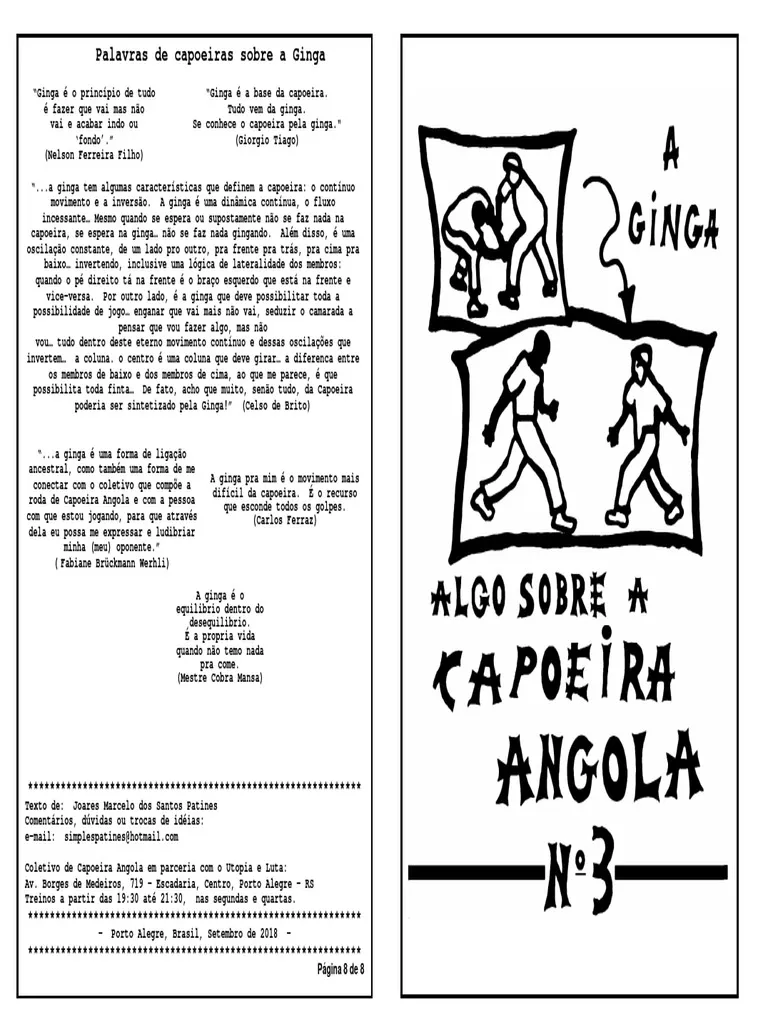
 Jogo Corpo Fechado