
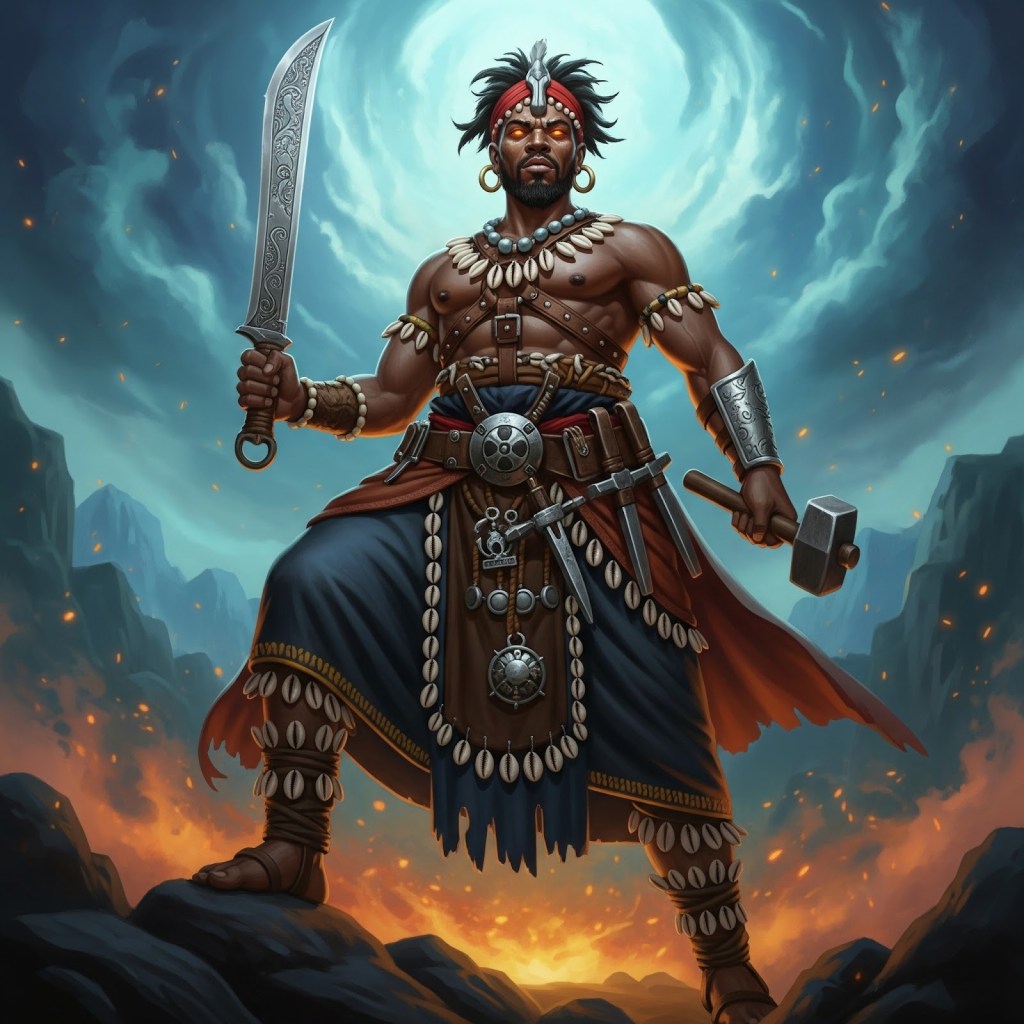
Disclaimer and Philosophical Foundation:
This text is not a casual read. It is a deep, philosophical, and technical exploration of martial application, a necessary but often unspoken facet of Capoeira Angola. It is critical to reiterate the art’s foundational ethos: Capoeira Angola is a complete system that emphasizes respect (respeito), community (comunidade), and peace (paz). Its combative elements are not for aggression or sport, but are strictly reserved for self-defense and the preservation of life. The Capoeirista understands the natural world, where the cycle of predator and prey exists. However, humanity is gifted with the consciousness to choose its role—not merely to be a victim, but to defend one’s self and others against the predator. This guide is dedicated to equipping the Capoeirista with the knowledge to make that vital choice for survival.

Capoeira, in its presentation, is universally admired for its beautiful blend of dance, music, history, and acrobatics. It is often celebrated purely as an art form, a collaborative jogo (game), or a profound cultural expression. Yet, to ignore its origins is to misunderstand its power. At its very core, Capoeira Angola remains a potent, battlefield-tested martial art—one born out of slavery, oppression, and the desperate struggle for survival. This document delves into the less-discussed, dark side of Capoeira: its pragmatic, efficient, and devastating application as a system for self-defense against the real and brutal violence of the modern world.

This exploration demands a serious mindset. It is not for the casual student seeking exercise or a hobby. It is a critical examination for those who understand that the real world harbors significant, often inescapable threats, and that the unique philosophy and kinetic techniques of Capoeira Angola offer an effective, ethical, and surprisingly elusive response to them.
The Spectrum of Threats Addressed by Capoeira Angola:
This guide focuses on preparing the practitioner to deal with the most severe and complex threats one might encounter. Capoeira Angola offers a layered defensive strategy for each:
- Muggers and Street Criminals (The Opportunistic Threat):
- Strategy: Utilizing evasion (esquiva), misdirection (malandragem), and sudden, explosive power to neutralize quick, opportunistic attacks common in urban environments. The goal is rapid disengagement and maintaining personal safety without escalating the confrontation unnecessarily. The Capoeirista is taught to avoid the “X” (the point of attack) and turn the assailant’s predictability against them.
- Gangsters and Organized Threats (The Multiple/Overwhelming Threat):
- Strategy: This necessitates a mastery of situational awareness and the dynamics of multiple opponents. Capoeira’s constant movement makes it difficult for a group to coordinate their attack. The core necessity here is the strategic retreat (saída or fuga) when facing overwhelming odds. Defense focuses on targeted, non-lethal, but disruptive attacks against the most immediate threat, opening an escape vector. The Capoeirista must be capable of dynamic movement combined with a deep understanding of de-escalation and controlled defense against escalation.
- Robbers and Home Invasion Scenarios (The Threat of Theft with Force):
- Strategy: Applying the principles of malícia (cunning) and ginga (the perpetual movement) to create opportunities. When faced with armed or unarmed assailants focused on theft, the goal shifts from confrontation to exploitation of the attacker’s focus. The ginga is used to mask the transition from compliance to decisive counter-attack or, ideally, escape. The movements close to the ground (rasteiras, bandas) are devastatingly effective in disrupting the balance of a static attacker who assumes a superior position.
- Rapists and Sexual Predators (The Personal/Close-Quarters Threat):
- Strategy: This application focuses on techniques that target vulnerable points, creating immediate and decisive separation. The Capoeira system allows the practitioner to utilize the full power and leverage of the body from extremely close quarters. The emphasis is on immediate, forceful resistance when necessary, employing movements like the cabeçada (headbutt) or targeted kicks (chute) that utilize hip rotation to maximize impact, followed by immediate escape and seeking help. De-escalation remains the primary goal, but if a confrontation is unavoidable, the response must be swift and absolute.
- Trained Killers and Highly Violent Individuals (The Skilled Threat):
- Strategy: For the worst-case scenario against someone with military or intensive martial arts training, the Capoeirista must maintain an intelligent, unpredictable defense. Capoeira Angola’s foundation in the ground game (queda de rins, aú, macaco) is its greatest advantage, disrupting the trained fighter who relies on standing, linear combat theory. By constantly changing levels and utilizing the floor-based movements (rasteiras, tesouras), the practitioner turns the attacker’s momentum and superior technique against them, fighting from angles and positions they are not accustomed to.
- Just Plain, Evil, Violent People (The Unpredictable Threat):
- Strategy: This deals with individuals motivated purely by malice, severe mental instability, or extreme violence, where conventional self-defense rules may not apply. Survival in this scenario relies solely on adaptability, acute awareness, and the core fighting spirit (axé) of Capoeira. The rules of engagement are discarded; the only objective is survival. Techniques must be applied without hesitation, relying on the instinctive, reflexive power developed through rigorous jogo.
The Core Principle: Survival Through Malícia, Cunning, and Spirit

Capoeira Angola’s profound effectiveness in the context of real-world violence and conflict stems not merely from its outwardly beautiful, kinetic, and highly deceptive movements, but fundamentally from a deeply ingrained trio of psychological and strategic elements that empower the practitioner to control the engagement and survive the encounter.
1. Ginga as a Shield and Deception: The Continuous State of Readiness
The ginga—the characteristic, constant, flowing, and seemingly casual base movement of Capoeira—is far more than an aesthetic component or a rhythmic “dance.” It is, in fact, a meticulously engineered and highly dynamic defensive structure.
- Defensive Elusiveness: The perpetual movement and shifting weight make the Capoeirista an extraordinarily difficult target to accurately hit, read, or predict. By constantly moving off the center line and changing elevation, the ginga denies the aggressor a stationary target and frustrates conventional striking and grappling attempts.
- Controlling the Narrative: It is the primary means of controlling distance (distância)—keeping the threat at bay or drawing it in—and managing the opponent’s rhythm and timing. The ginga dictates the pace of the encounter, preventing the aggressor from establishing their preferred speed or attack pattern.
- The Living Shield: The movement is a state of perpetual readiness, a dynamic shield that actively frustrates and tires the attacker. It patiently creates the window of opportunity, waiting for the perfect, decisive moment to transition from evasion and defense into a devastatingly precise and committed counter-attack. The ginga ensures the Capoeirista is always initiating the movement and never merely reacting.
2. Malícia (Cunning and Deception): The Psychological Edge
Malícia is arguably the soul of Capoeira combat and represents the art’s most devastating, non-physical weapon. It transcends simple trickery, operating as a sophisticated, integrated philosophy of engagement.
- Strategic Deception: Malícia is the critical ability to thoroughly deceive the attacker, to cleverly hide one’s true, often lethal, intention, and to strategically lure the opponent into a predictable, exploitable, and inescapable position.
- The Psychological Game: This involves a deep-level psychological game—a calculated act of feigning weakness, presenting an open target that is actually a well-laid trap, and intently reading the attacker’s body language and emotional state to strike precisely at their moment of maximum commitment and least defense.
- Neutralizing the Threat: In a violent confrontation, malícia is the defining element that differentiates between an unpredictable, disadvantageous “fair fight” (which the attacker desires) and a quick, effective, unexpected, and utterly ruthless neutralization of the threat. It ensures the Capoeirista fights smart, not just hard.
3. Axé (The Fighting Spirit and Will to Survive): The Unwavering Core
Axé is the spiritual, mental, and emotional toughness—the unwavering will to survive and persevere—that is intensely cultivated through the demanding, high-pressure environment of the roda.
- Inner Resource: True Capoeira defense demands the practitioner to tap into a primal, inner resource of controlled aggression, absolute focus, and profound resilience. This mental fortitude allows the Capoeirista to move past debilitating fear and crippling hesitation to execute the powerful, complex movements necessary for self-preservation.
- Refusal to be a Victim: It is the absolute refusal to succumb to intimidation or injury; it is the ancestral fighting spirit that fuels the Capoeirista to withstand immense pressure and fight with every physical and mental fiber of their being until safety is decisively secured. Axé is the intangible, yet indispensable, force that separates the mere dancer from the proven, battle-ready warrior.
Capoeira and Streetfighting: A Detailed Analysis
Capoeira, though frequently celebrated for its fluid acrobatics, rich musical heritage, and strong communal spirit, harbors a profound, often intentionally obscured, dimension deeply rooted in its original, formidable function as a pragmatic fighting art. This Detailed Analysis will meticulously delve into the stark, uncompromising reality of Capoeira’s practical applications for streetfighting and, more broadly, for the essential, primal act of self-preservation in any environment. Our exploration extends its purview to encompass the broader, universal principles of survival—examining both the tactical requirements for navigating the unpredictable modern urban jungle and the inherent necessities for enduring a confrontation in untamed nature.
Historical Context and the Birth of Malícia
Capoeira, which is often romanticized and viewed merely as a dance, a cultural performance, or a playful game, possesses an undeniable and historically proven efficacy in real-world, high-stakes, no-rules violent encounters.
- A Crucible of Necessity: The art’s historical roots are not in leisure or sport, but in absolute necessity: it was developed as a clandestine, pragmatic, and highly effective fighting system by enslaved people in Brazil. These early practitioners needed a system that could be disguised as a harmless cultural expression but was devastatingly effective enough to be used successfully against their heavily armed, often mounted, and ruthless oppressors.
- The Legacy of Survival: This crucible of forced survival instilled in Capoeira a deep, unflinching, and immediate practicality for defense, evasion, and counter-offense. The entire system is built upon the premise that the Capoeirista will always be disadvantaged (outnumbered, unarmed, or targeted by surprise) and must therefore rely on cunning.
- A Unique Tactical Suite: When translated to a modern street encounter, Capoeira offers a unique suite of tactical and psychological advantages that fundamentally differentiate it from more conventional, rule-based martial arts. The deceptive, fluid nature of the Ginga and the art’s characteristic low stance not only train the body for explosive power and unconventional angle attacks but also deliberately cultivate the paramount concept of Malícia. This blend of guile, street smarts, and the deceptive ability to mask one’s true, immediate intent until the precise, non-negotiable moment of attack or defense is Capoeira’s most potent psychological weapon for survival.
The Physical Edge: Distinct Advantages in Close Combat
Capoeira’s methodology grants its practitioner inherent advantages when an encounter transitions into close-quarters combat.
1. Dynamic Evasion and Movement (Ginga and Positional Control)
The cornerstone of Capoeira is the ginga, a continuous, rhythmic, triangular movement that is a sophisticated method of simultaneous defense and offense.
- Evasive Difficulty: The continuous flow and the art’s inherent low stances make the Capoeirista an exceptionally difficult target to hit with predictable, standard linear strikes (jabs, crosses, hooks) or to effectively grab, lock, and grapple. The perpetual, controlled shifting of weight and angle prevents the opponent from ever establishing a static, solid line of attack or a strong grappling grip.
- Distance and Angle Management: This fluid, three-dimensional movement allows the practitioner to precisely manage the critical factors of distance (distância) and angle (ângulo). By constantly pivoting and retreating on a diagonal rather than a straight line, the Capoeirista controls the entire engagement, actively preventing an unpredictable fight from devolving into a static, disadvantageous slugfest based on brute strength. This control is vital for neutralizing superior reach, mass, or brute strength.
2. Unpredictable Attacking Angles (The Element of Surprise)
Capoeira’s striking arsenal is explicitly designed to exploit the natural blind spots and the conventional, ingrained defenses of an aggressor. Its attacks rarely follow the predictable vertical or horizontal planes common to boxing or many karate styles, making them difficult to block effectively.
- Foreign Mechanics: The power strikes come primarily from unconventional, low, and rotational planes: sweeping leg attacks (rasteiras) and ankle sweeps designed for immediate destabilization; powerful low kicks specifically aimed at the sensitive knees and shins; spinning rotational kicks (armada, martelo de chão) that generate immense centrifugal force; and highly disruptive headbutts (cabeçada) used to bridge distance and create devastating impact.
- Reactionary Defense: Since these techniques are largely foreign to the muscle memory of traditional martial arts practitioners or typical street assailants, any defense against them becomes purely reactionary and often delayed. This lack of drilled defense leads to missed blocks, delayed reactions, and successful openings for immediate and punishing follow-up attacks.
3. Use of Environment and Ground Tactics (Survival and Offense)
Unlike most traditional martial arts that treat the ground as a position of last resort or a specific grappling domain, Capoeira seamlessly integrates the ground as a natural and active part of its offensive strategy, transforming a potential weakness into a significant strength.
- Ground as a Weapon: Advanced Capoeiristas are extensively trained in using the ground as an extension of their fighting strategy. This includes low-level sweeps and takedowns that unbalance an opponent, forcing them into an immediately disadvantageous, compromised position for follow-up strikes.
- Acrobatic Escape and Maneuverability: Acrobatic escapes and movements (aús – cartwheels, macacos – ground springs, queda de rins – bridge maneuvers) are not merely for show; they are rapid, highly mobile transitions that utilize the environment to create space, instantly recover from a stumble, or execute a devastatingly surprise counterattack from an unexpected vector.
- Environmental Leverage: Walls, obstacles, and uneven terrain are actively utilized to enhance leverage, block an opponent’s movement, or gain an elevation advantage, essentially turning a perceived disadvantage (being near or on the ground) into a potent, highly aggressive offensive maneuver.
Psychological Warfare: The Mental Disadvantage
The rhythm, the deliberate feints, and the sudden, explosive power strikes inherent in Capoeira are highly effective at inducing a high degree of cognitive confusion and intense psychological pressure on an aggressor who expects a straightforward fight.
- Creating Hesitation: The constant, non-committal movement of the ginga, combined with the sudden, almost terrifying eruption of a spinning, full-power attack or a low sweep, is mentally taxing and disorienting. This disorientation often causes critical hesitation in the aggressor—a moment of doubt or a processing delay—which the Capoeirista, utilizing malícia, immediately capitalizes on.
- Forcing Overcommitment: The deceptive, fluid nature of Capoeira expertly encourages the opponent to misjudge distance and angle, subtly prompting them to overcommit to a strike or grapple attempt. Once an aggressor has overcommitted their balance and momentum, they become temporally unbalanced and highly vulnerable to the swift, leveraged, and devastating counter-attacks that define the Capoeira fighting style. The aggressor is led to defeat themselves.
Weapons Use, and Defense Against Weapons: The Incorporation of Weapons in Capoeira Angola
The history and enduring practice of Capoeira, particularly the traditionalist school of Capoeira Angola, are intrinsically and indelibly linked to the use of and defense against various forms of weaponry. Originating not as a mere dance or sport, but as a fight for physical survival and ultimate freedom among enslaved Africans in Brazil, the art necessarily evolved to address the brutal, often lethal realities of armed conflict.
While the jogo (the game or formal interaction) itself often emphasizes fluid, unarmed combat—utilizing the body as the primary, most accessible tool for attack, evasion, and defense—the profound practical and historical context demands that a true capoeirista possess a comprehensive, albeit highly specialized, understanding of weapons. This knowledge is crucial not for offensive use within the roda, but for a complete mastery of self-defense.The Historical Context of Weapons in Capoeira
In the colonial and post-abolition eras, capoeiristas were often viewed as a threat to the established order and routinely faced heavily armed opposition. This included the brutal slave masters (feitores), overseers (capitães do mato), and the subsequently established, often merciless, colonial and municipal police forces. These adversaries wielded an array of weaponry, including early firearms, cutlasses, long knives, and heavy clubs or cudgels.
The early development of Capoeira was, therefore, not simply about perfecting elegant, low-to-the-ground movements and evasions. It was fundamentally about developing the agility, explosive power, flawless timing, and specialized close-quarters combat skills necessary to disarm, neutralize, or escape an armed attacker using only their hands, feet, and intellect. This core defensive necessity is not an accessory; it is woven into the very DNA of the most fundamental Capoeira movements, such as the esquiva (escape), queda (fall), and rolê (roll). Every movement must be efficient enough to deflect or avoid a blade or a bullet.
Weapons of the Capoeirista: Tools of Necessity and Skill

While Capoeira remains a predominantly unarmed martial art—its deception and versatility being its primary weapons—certain tools have historically been, and continue to be, incorporated into advanced training, cultural demonstrations, and specific Afro-Brazilian martial rituals. These tools often represent the weapons of necessity that were available to the original practitioners, transforming common instruments into instruments of self-preservation:
- The Navalha (Razor or Knife): Historically a signature and highly dangerous weapon in street confrontations across Brazil, often wielded with great speed. Training against a simulated knife attack—in modern practice, often utilizing dull metal or carefully crafted wooden replicas—is essential for developing the sophisticated footwork, lightning-fast reflexes, and low-to-the-ground evasions that are the hallmark of Capoeira Angola. The objective is never to meet the blade head-on, but to manage the distance with masterful positional control and find a fleeting, precise window to disarm or incapacitate the attacker without suffering a serious, career-ending cut. This defensive discipline trains the mind to remain calm under extreme threat.
- The Cachanga or Bambú (Stick/Staff): The practice of wielding and defending against a staff or stout stick, although associated with the highly structured, yet related, Maculelê stick-fighting dance which shares deep roots with Capoeira, introduces a critical dimension of range and impact. The mastery of a striking weapon trains the practitioner in precision, the management of long-range engagement, and the technique of rapid-fire blocking and counter-striking. These skills directly and immediately transfer to the unarmed defensive strategy, improving the capoeirista’s ability to judge distance and leverage their own limbs as powerful shields and percussive weapons.
- The Facão (Machete): A ubiquitous tool of agriculture in the Brazilian countryside, the facão could instantly become a fearsome weapon of self-defense or offense. Practicing defense against the wide, powerful, sweeping cuts of a machete is a layer of truly advanced Capoeira defense. It demands extreme agility, perfect timing, and an absolute commitment to complex, full-body evasive movements like the queda de rins (fall of the kidneys) or the most complex evasive rolês, often requiring the practitioner to appear as if they are melting into the ground beneath the arc of the blade.
The Role of Weapons Training in Capoeira Angola
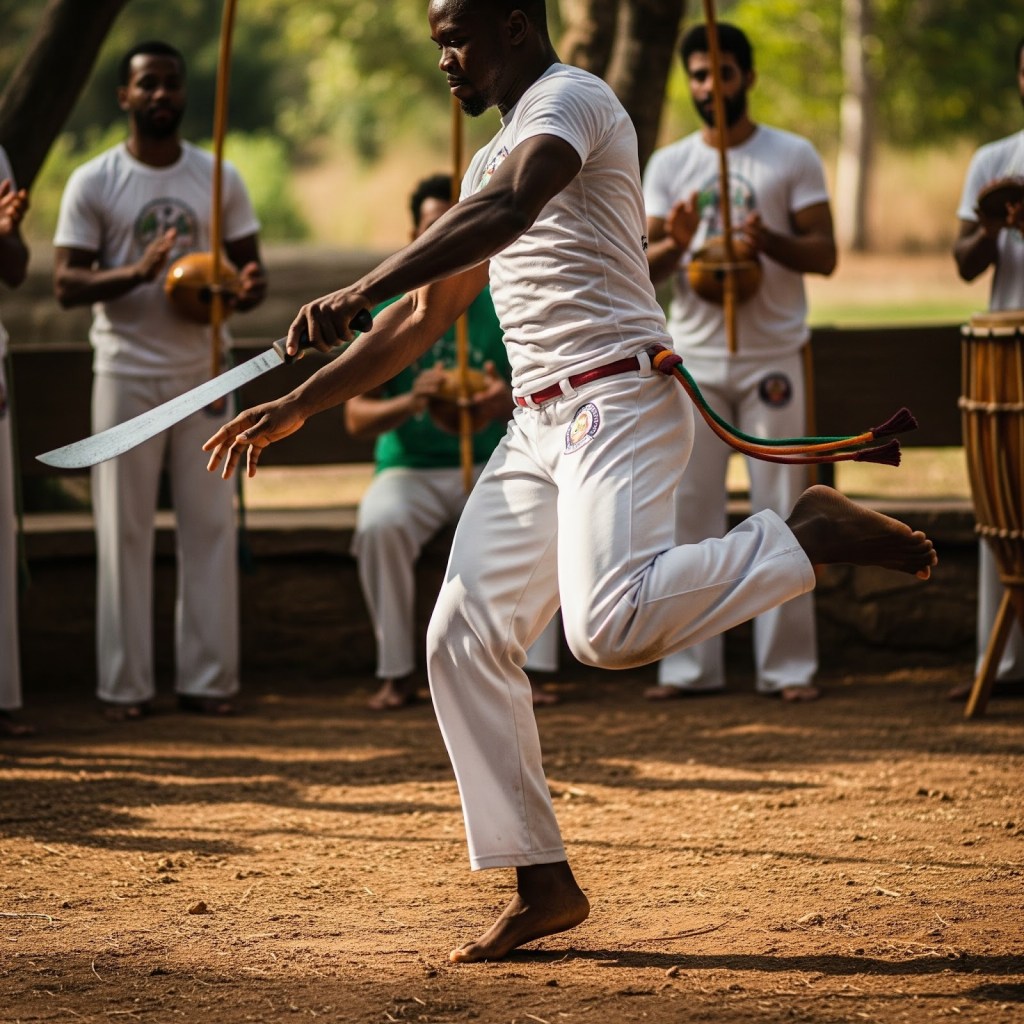
In the true lineage of Capoeira Angola, the comprehensive study and practice involving weapons hold a critical, albeit often unseen and unadvertised, position. Far from being a primary focus for offensive application within the celebratory, deceptively playful, and communal environment of the roda, this training is fundamentally rooted in three core pillars: defensive mastery, strategic awareness, and historical preservation of the art’s complete martial identity.
The comprehensive integration of weapons education—whether through the physical training with replicas or through the intellectual study of the movements and historical tactics—ensures that Capoeira remains a complete and viable system of self-defense, a true martial art forged in necessity, and not merely an aesthetic performance or a sophisticated cultural game.
Why a capoeirista should incorporate this knowledge into their training, even if most modern Capoeira schools marginalize it, is simple and profound: Since I believe that Capoeira is a manifestation of the highest efficiency of nature, the principle holds. In nature, animals are equipped with specialized, integrated tools—claws, teeth, hooves, antlers, etc.—to fight, defend themselves, and ultimately survive. The fully realized capoeirista must likewise be prepared to use all available tools—be they their own body, a found object, or the understanding of an opponent’s armed intent—to achieve the primary goal: survival and freedom. The inclusion of weapons training closes the loop, confirming Capoeira’s identity as a complete martial philosophy.
The curriculum for weapons training serves several profound educational purposes for the developing Capoeirista:
1. Enhancing Defensive Evasion and Body Mechanics
A. Sharpening Unarmed Defense: Training against a simulated weapon—be it a faca (knife), cajado (staff), or other historical tools—drastically refines the student’s unarmed defense. The inherent threat of a weaponized attack forces a level of precision and commitment in evasive maneuvers that is unmatched in unarmed-only sparring.
B. Precision in Movement: The student must learn to read the opponent’s intentions and the weapon’s reach with split-second accuracy. Evasive motions must become tighter, lower, and executed with exacting, precise timing. This cultivation of minimal, efficient movement is a cornerstone of advanced Capoeira technique. The training hones the ability to enter and exit the danger zone with near-perfect control, a skill that translates directly to evading unarmed attacks with greater economy of motion.2. Mastering Distance Management (Controle de Distância)
A. The Critical Margin: The presence of a weapon reduces the margin for error to virtually zero. A misstep, a moment of hesitation, or a slight miscalculation of distance can have lethal consequences. This unforgiving reality compels students to master Controle de Distância—the critical art of managing the space between oneself and the adversary.
B. Strategic Positioning: The objective is twofold: to remain consistently outside the weapon’s effective striking range while simultaneously positioning the body in the sweet spot—the exact distance and angle required for a swift counter-attack, a disruptive movement, or the initiation of a disarming technique. This spatial intelligence is crucial for survival in any confrontational scenario.3. Fostering Respect, Discipline, and Caution
A. Respect for Lethality: By training extensively with and against replicas or training weapons, the student gains a visceral, embodied understanding of the lethality of real-world violence. This is not intellectual knowledge; it is a profound, physical respect for the danger inherent in true combat situations.
B. Cultivating Discipline and Caution: This deep respect organically fosters the discipline and caution necessary for truly effective self-defense. A Capoeirista trained in this manner understands when to engage, how to disengage, and, most importantly, the imperative to avoid conflict whenever possible. The weapon training teaches that combat is a serious, final recourse, instilling a sober approach to conflict resolution.4. Cultural and Historical Preservation
A. Connecting to Origins: The incorporation of defense strategies against historical weapons—which were part of the reality faced by the enslaved people who created Capoeira—ensures that the art remains fundamentally connected to its origins as a complete system of defense and survival.
B. A Complete Martial Art: This element prevents the art from devolving into a sanitized game, a mere performance, or a sport focused solely on acrobatics. It preserves the integrity of Capoeira as a comprehensive and pragmatic martial art, a legacy of resistance that was born in a context of mortal threat.
Ultimately, while the public face of the roda is defined by playful cunning, musicality, and unarmed dexterity, the understanding of weapons defense serves as the essential key to the “dark side” of Capoeira—the practical, lethal martial art of survival. This comprehensive approach to violence, which includes the strategic incorporation of and effective defense against armed threats, is what solidifies Capoeira as an enduring and complete fighting system.
The Philosophy of Survival: Beyond the Ring
The mindset required for Capoeira is fundamentally a survival mindset. The principles honed in the roda (the Capoeira circle) translate directly to broader survival scenarios:
- Adaptability and Resourcefulness: Capoeira teaches adaptation on the fly. Just as a Capoeirista adapts to a change in the music or the opponent’s movements, the principles of quick, inventive responses are vital for dealing with unexpected threats, be they an ambush in an alley or a sudden shift in weather in the wilderness.
- The Economy of Movement: Effective Capoeira conserves energy for explosive, decisive action. This mirrors the essential tenet of survival, where the conservation of resources—physical, mental, and material—is paramount to long-term endurance.
- Reading the Environment (Danger Awareness): The intense focus required to play Capoeira—reading the opponent’s intentions, their weight shifts, and the space around them—is the ultimate training for developing acute situational awareness. This ability to “read the room” or “read the terrain” is the most critical survival skill, enabling the anticipation and avoidance of threats before physical conflict becomes necessary.

The so-called “dark side” of Capoeira is a fundamental misnomer if it implies an inherent evil; it is, more accurately, the unvarnished recognition of the art’s most potent, combative application. This aspect represents the historical, existential purpose for which Capoeira was initially conceived and refined: a tool for liberation and survival against overwhelming force.
Capoeira is far more than a mere sequence of acrobatic movements or a stylized dance. It is a complete martial system, a complex and dynamic manifestation of natural law that integrates four core pillars of mastery:
- Physical Prowess: The development of power, speed, agility, and endurance, allowing the practitioner to execute the art’s fluid and deceptive movements.
- Deceptive Intelligence (Malícia): This is the psychological warfare inherent in the game—the cunning, the street smarts, and the calculated ability to mislead an opponent, making the seemingly playful a prelude to decisive action. It is the wisdom to know when to strike and, crucially, when not to.
- Profound Environmental Awareness: Known as mandinga in its deepest sense, this is an acute, almost instinctive sensitivity to the immediate surroundings, the emotional atmosphere of the roda, and the opponent’s intentions. It involves assessing angles, escape routes, potential weapons, and the mental state of all participants.
- Emotional and Spiritual Discipline: The ability to remain calm and centered under duress, mastering fear and aggression to maintain strategic superiority.
This holistic amalgamation transforms Capoeira into a comprehensive training ground—a living curriculum for consequential action. It is not merely about possessing a repertoire of techniques required for winning a physical confrontation; it is about cultivating a deeper, more profound form of mastery. This mastery centers on the foundational, universal principles of survival and success that transcend the boundaries of the roda. It instills the ability to adapt instantly to shifting dynamics, to employ strategic deception and feints to gain an advantage, to rigorously analyze an opponent or situation under duress, and, most critically, to act decisively and without hesitation in any unpredictable and high-stakes environment.
Whether the challenge manifests as a physical threat on the street, a complex negotiation in a professional setting, or a deeply personal conflict requiring resilience and cunning, the core skills remain identical. Capoeira hones not just the body, but the mind and spirit, forging an integrated being capable of navigating the grey areas of human interaction where power, intention, and vulnerability intersect. Consequently, the true mastery of Capoeira is, in its most essential form, the mastery of conflict itself—understanding its nature, controlling its rhythm, and ultimately shaping its outcome.

 Jogo Corpo Fechado