
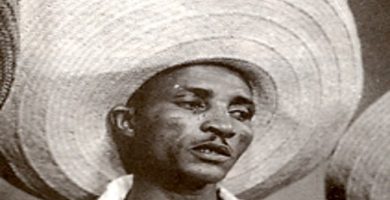
João Ramos do Nascimento, also known as Mestre Traira, is a figure shrouded in mystery and yet esteemed in the world of Capoeira. His legacy, though not widely documented, is one of great significance, resonating through the songs and memories of those familiar with his prowess. Reputed for his swift and adaptable playing style, reminiscent of none other than Mestre Pastinha, Mestre Traira carved out his own unique place in the history of Capoeira.
The extraordinary legacy of Mestre Traira is deeply rooted in the rich tapestry of capoeira history. Born in Cachoeira, Bahia, Mestre Traira’s journey in capoeira began with encounters in the rodas of Mestre Juvêncio in São Felix and learning from Mestre Waldemar. His dedication to mastering this art led him to expand his knowledge under the guidance of Severo do Pelourinho.
Mestre Traira’s influence on the art of capoeira, especially in the realm of Rasteiras and Cabeçadas, is undeniable. His distinct style and techniques left an indelible mark, shaping the evolution of capoeira. One of the most remarkable testaments to his lasting impact is the phonographic record “Capoeira,” produced by Editora Xauã. This cherished rarity not only preserves the essence of Mestre Traira’s presence but also captivates all who listen, providing a glimpse into the depth of his artistry and skill.
The resonance of Mestre Traira’s contribution to capoeira extends far beyond his physical presence, echoing through the movements and traditions of practitioners today. His enduring influence continues to inspire and enrich the capoeira community, ensuring that his legacy remains woven into the vibrant fabric of this iconic Brazilian martial art and dance form.
Mestre Traira’s 1963 album continues to inspire musicians and music enthusiasts around the world. Its enduring relevance is a testament to the timeless quality of Mestre Traira’s artistry and the impact of Brazilian music on the global stage.
Even the renowned author Jorge Amado, in awe of Mestre Traira’s game, likened him to a dancer, praising the beauty and perilous skill inherent in his movements. The comparison to Mestre Pastinha, a revered figure in the world of Capoeira, speaks volumes about the mastery and artistry embodied by Mestre Traira.
Not confined to the confines of memory or music, Mestre Traira’s influence extended to the silver screen, as he played a pivotal role in the 1954 film “Vadiação” by Alexandre Robatto Filho. In this cinematic endeavor, Mestre Traira stood alongside other luminaries of Bahian Capoeira, including Curió, Nagé, Bimba, Waldemar, Caiçara, and Crispim, leaving an indelible mark on the cultural tapestry of Capoeira.
Mestre Traira’s impact on the world of Capoeira extended far beyond his physical presence at the Waldemar School and the Sete Molas School in Liberdade. His influence on the art form and its practitioners reverberates through time, contributing to the rich and vibrant history of Capoeira.
Notably, Mestre Traira’s legacy is intertwined with the very essence of Capoeira itself. His unique playing style, characterized by intricate movements and deep musicality, served as a source of inspiration for countless individuals who sought to understand and master the art form. Additionally, his involvement in significant cinematic works further solidified his position as a revered figure in the Capoeira community, leaving an indelible mark on the cultural landscape.
One pivotal moment in Mestre Traira’s journey was the year 1970/71, when Mestre Barba Branca commenced his tutelage under him. This period marked a significant chapter in the history of Capoeira, as the exchange of knowledge and expertise between these two esteemed figures enriched the tradition and perpetuated its legacy for future generations.
Furthermore, Mestre Traira’s profound impact has transcended geographical and historical boundaries, as evidenced by his mention in the book “Capoeira Angola: ensaio sócio-etnográfico” by W. Rego. This documentation of his involvement in the Capoeira community serves as a testament to his enduring significance and contribution to the art form.
Tragically, Mestre Traira’s life was cut short in 1975 due to cirrhosis, yet his spirit and influence continue to resonate within the Capoeira community. His immense contributions have inspired scholars and enthusiasts, ensuring that his legacy remains an integral part of the captivating narrative of Capoeira.

 Jogo Corpo Fechado