
Greetings Everyone,
I have a couple of things I want to get off my chest.
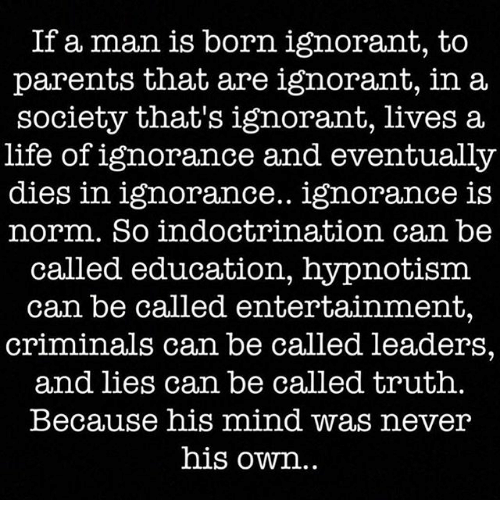
This is for my brothers and sisters of the African Diaspora, those of us living in these United States of Amerikkka in particular.
Lately, all over the news, and on my Facebook News-feed (as of this writing in June, 2020), I’ve been seeing memes like this:
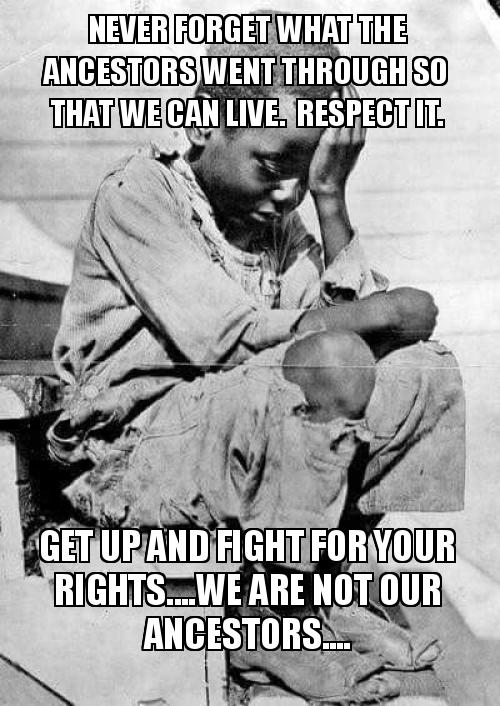
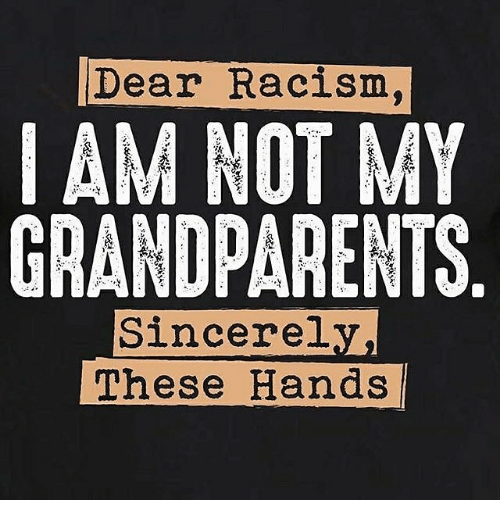

Well, I have a problem with these memes.
These days, there seems to be a need for many black people to tell the world they are NOT their ancestors.
I’m guessing that when they say this, it means that they will not tolerate the conditions our ancestors were subjected to.
Many of us look at the past, and immediately begin to think about what we would have done differently. It is very easy to look back and act like that no white man would have called you boy, or named you TOBY…
In fact, we tend to imagine ourselves doing something like this…
Believe me, I know I have.
So, it’s understandable why these memes caught on so quickly.
These last few years (June 2020, as of this writing) have inspired a new generation of activists and organizers, and unfortunately, it seems that many of them are unfamiliar with the history of the movement for racial justice and with the philosophies of the Black nationalists who came before us.
Many of us only know the movement as depicted in history textbooks, videos, etc. and as articulated by his-story teachers in our high schools.
Many of us only know the portrait of docile negroes, of “turning the other cheek” and of the “BLACK SAMBO”.
We have been stripped of our culture, true history, and spiritual systems,
And have instead been fed white mental enslaving lies that that serves the interests of white societies.
Therefore, the Black slaves of the 21st century are those who cannot unlearn the many mentally enslaving lies they’ve been taught by his-story teachers.
On the LAST PAGE, I touched upon how this was done with the media.
Now, I’m gonna show you 2 other ways this was done, with RELIGION and EDUCATION.

In case you haven’t figured it out yet, the early white christian conversion of Africans to their faith had absolutely nothing to do with saving the souls of Africans – so that Africans may join them in heaven in the afterlife. There was another self serving reason (Not to mention more sinister) why these racist en-slavers put their time, and energy into teaching Christianity to a people they otherwise treated so brutally.
Think about it:
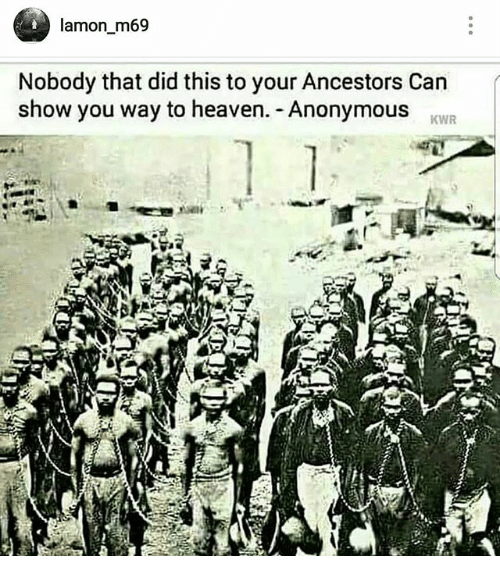 Ninguém que fez isso com seus ancestrais pode mostrar-lhe o caminho para o céu – Anônimo
The true reason for the conversion was to indoctrinate the belief of a white god into the minds of the enslaved Africans.
For example…
The historical context of the early African encounter with a depiction of a white God is indeed a complex and significant aspect of cultural and psychological influence. The perpetuation of this representation through religious and colonial dynamics has contributed to the development of a deep-seated admiration for whiteness among many individuals within African communities. This subconscious admiration often goes unnoticed, yet its impact on perceptions of race and identity is profound.
The legacy of this deep admiration for whiteness has had lasting effects, transcending generations and shaping attitudes and behaviors. The transfer of this subconscious admiration toward the entire white race has undoubtedly influenced relations between African individuals and their white colonizers and enslavers. The resulting dynamics of subservience and power differentials have been deeply ingrained in the collective psyche of communities impacted by these historical forces.
The enduring effects of this historical influence have indeed been left uncorrected and unaddressed for generations, contributing to ongoing challenges and complexities in social, cultural, and identity dynamics. Recognizing and understanding the long-reaching impact of such historical narratives is a crucial step toward addressing and dismantling the pervasive effects of this legacy. It is through open dialogue, education, and a commitment to challenging ingrained beliefs and systems that progress towards healing and reconciliation can begin.
Furthermore, through this form of brainwashing (I’m not gonna call it Christianity) millions of Black people have been made to believe that all of the wrongs that whites have done to them throughout history, have been washed cleaned by the blood of a fictional white Jesus.
The main reason I won’t call it Christianity, is because in most cases, the blacks were deliberately taught a false version of the actual religion.
For example,
During slavery, its proponents often justified it with the Bible; specifically, a verse that tells servants to obey their masters. There were also a lot of verses that abolitionists could and did use to argue against slavery. But you wouldn’t find those in the heavily-redacted “Slave Bible.”
The use of religious texts to justify or oppose slavery is a complex and deeply significant aspect of historical and ethical discourse. Throughout history, individuals and groups have interpreted religious scriptures in various ways to either support or condemn the practice of slavery, leading to profound moral and ideological debates.
The Bible, as one of the most widely recognized and influential religious texts, has been at the center of such discussions. Proponents of slavery often pointed to passages in the Bible that appeared to condone or regulate the institution of servitude, while abolitionists drew upon other verses to advocate for freedom and human rights.
One such example is the selectively edited “Slave Bible,” which was used during the 19th century to promote the subservience of enslaved individuals by omitting key passages that emphasized equality and liberation. This demonstrates the deliberate manipulation of religious texts to enforce control and perpetuate unjust systems.
Most of the Old Testament is missing, and only about half of the New Testament remains. The reason? So that the enslaved Africans in the Americas couldn’t read or be read anything that might incite them to rebel.
In case you don’t believe me, here’s a video of a story NBC made about this “Bible”:
The historical context of using the Bible to either uphold or challenge slavery reflects the intricate intersections of religion, power, and social justice. It underscores the importance of critically examining the interpretation and application of religious teachings in shaping societal norms and values. Ultimately, this ongoing conversation continues to influence perspectives on individual freedom and equality in contemporary society.
It is important to acknowledge the historical context in which the doctrine of Christianity was used to exert control over Black people, particularly in the United States. The forced conversion of Black individuals to Christianity aimed not only to dictate their religious beliefs but also to enforce a system of subservience and obedience. The demand for forgiveness towards their oppressors, who often identified as Christians themselves, was a tool used to maintain the status quo and suppress any rightful resistance to the injustices faced by the Black community. This challenging history sheds light on the complex intersection of religion, power, and racial oppression, and it underscores the enduring strength and resilience of those who have faced such adversity.
Note: White society, as a whole, never actually repented for their evil deeds committed against Black people. They merely insisted that Black people, as good Christians, forgive them as their doctrine teaches.
For example…
Now please understand, I’m NOT trying to discredit or disrespect Christianity here. Christianity is, in fact, a very beautiful religion, the one in which nominally, I was brought up in. I have tremendous respect for its traditions, teachings, and the positive impact it has had on countless lives throughout history. The rich tapestry of Christian beliefs, the diversity of its denominations, and the enduring power of its message of love and redemption continue to inspire people around the world. As someone who was raised in the Christian faith, I cherish the values of compassion, forgiveness, and hope that it has instilled in me. While my spiritual journey may have taken me in different directions, I carry with me the deep appreciation for the core principles and the sense of community that Christianity fosters. It’s important to acknowledge the beauty and significance of all faiths, and Christianity certainly holds a special place in the hearts of many, including mine.
And don’t think I am not aware of the history of Coptic Christianity in Egypt and Ethiopia, or of Catholicism in the Congo…
I am only showing you, the reader, how certain aspects of Christianity has been proven to be one of history’s most successful propaganda tools used for controlling our people, throughout the diaspora.
Certainly, the role of Christianity in history is a complex and multifaceted topic that has generated extensive debate and analysis. It is important to acknowledge that the impact of Christianity has been far-reaching, influencing not only religious beliefs but also shaping cultural, social, and political dynamics.
Throughout history, Christianity has played a pivotal role in shaping not only individual beliefs and values, but also in influencing the course of nations and civilizations. From the spread of Christianity through missionary work to its adoption as the state religion of various empires, the influence of Christianity has been significant and enduring.
It is crucial to recognize that the intersection of religion and power has been a source of both tremendous good and great harm throughout history. While Christianity has been a source of inspiration, comfort, and community for countless individuals, it has also been wielded as a tool for control and domination. The intertwining of religious doctrine with political authority has at times led to exploitation, oppression, and conflict.
As we consider the impact of Christianity, it is essential to approach the topic with sensitivity and an open mind, acknowledging both its positive contributions and the complex historical realities. By examining the multifaceted nature of Christianity’s influence, we can gain a more nuanced understanding of its role in shaping the world as we know it today.
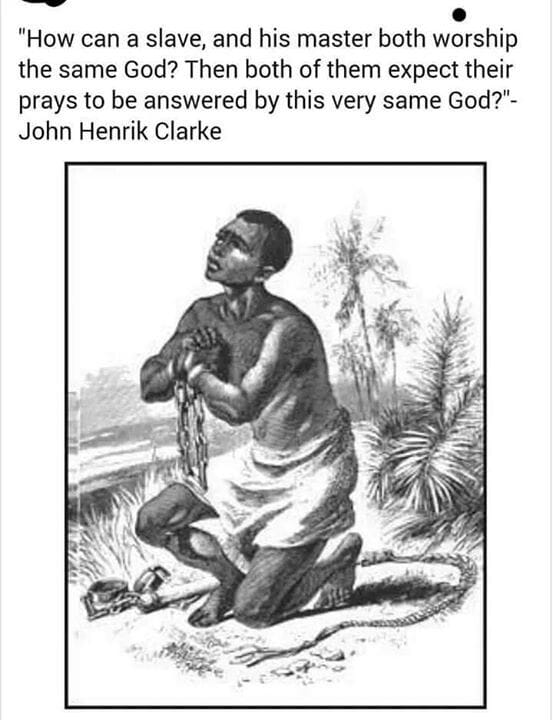
Now, one of the biggest problems I have with the “I am not my ancestors” meme is that we don’t seem to look at what our ancestors had the strength to accomplish. Somehow we lost sight of the fact that had it not been for the tenacity of our ancestors there is a chance we wouldn’t be here, or we wouldn’t have what the rights we enjoy.
It’s important to acknowledge the resilience and determination of our ancestors in facing and overcoming significant challenges. Their struggles paved the way for the freedoms and rights we have today. The “I am not my ancestors” meme often overlooks the hardships our ancestors endured and the progress they made under difficult circumstances. By recognizing and appreciating their efforts, we can gain a deeper understanding of our history and the privileges we now have. This broader perspective allows us to honor their legacy while acknowledging that their actions continue to shape the world we live in.
In essence, the meme’s message can be reframed to emphasize the strength and resilience of our ancestors, highlighting their enduring legacy and the ongoing impact of their achievements. This serves as a powerful reminder of the sacrifices and contributions that have brought us to where we are today, encouraging a sense of gratitude and responsibility toward our heritage.
Though, as a people, we have come a long way, there are areas by which we have digressed…
Our ancestors seemed to have worked for freedom, as best they could, on all fronts. Can we say the same?
And this is all due to the fact that most blacks in the present day are given their education from people who historically have had every reason to keep blacks uneducated.
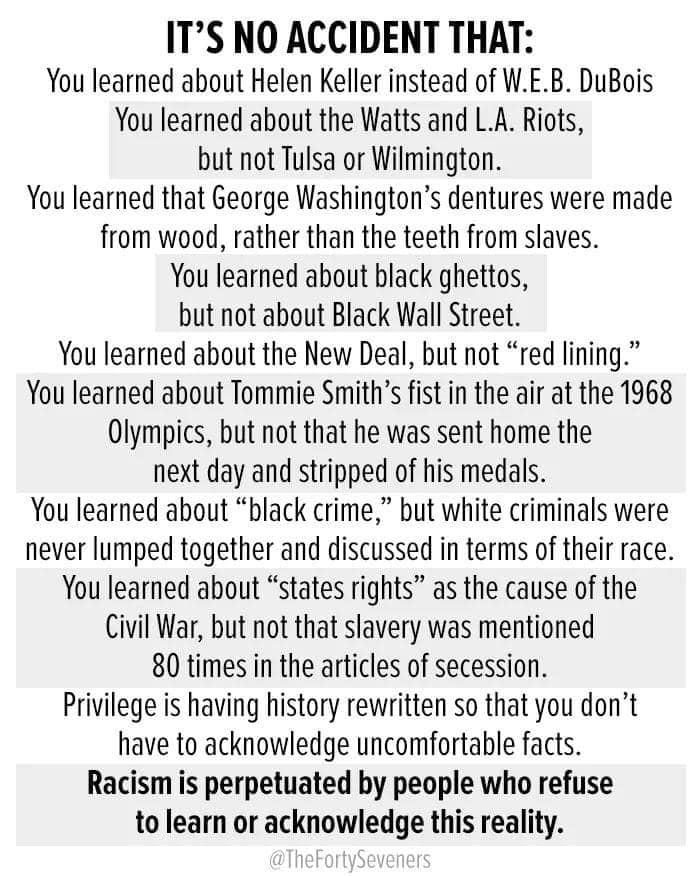
White-governed schools do not provide a racially affirming curriculum to Black students, as it does for white students. They instead intentionally give Black students a marginalized version of their history. It’s a marginalized version designed to instill the myth of white superiority into their subconscious minds. It is a classroom setting wherein the majority of the achievements and contributions made by Black people throughout history are systematically withheld from their educational development. Black students are taught from curriculum that primarily exalts the history and achievements of whites only, while marginalizing their own. For many Black people, their schools are, in fact, the places where they first experienced the implications that there is something lesser about being Black. The impact of this systemic discrimination is profound, affecting not only academic performance but also the self-worth and identity formation of Black students. The absence of a comprehensive, inclusive education perpetuates a cycle of injustice and reinforces racial inequality, hindering the possibilities of true equality and societal progress.
This deeply ingrained bias in educational systems demands a reevaluation of the entire curriculum, requiring a fundamental shift towards inclusivity, representation, and equity. It is imperative to empower educators and students to engage with diverse perspectives, histories, and cultures. By doing so, the education system can act as a catalyst for social change, fostering understanding, empathy, and unity among all members of society. Through the recognition and elevation of the richness of Black history, accomplishments, and contributions, educational institutions can help dismantle the pervasive structures of white dominance and promote a more just and equitable future for all individuals, regardless of their racial or cultural background.“`
This Black racially devaluing educational curriculum is being pumped into the impressionable young minds of generations of Black students –without being counterbalance by an equal amount of positive Black racially affirming information. Consequently, Black students must constantly resist the negative perceptions of being Black implicit in an educational curriculum almost exclusively dedicated to white ideologies, achievements, contributions and history. Furthermore, Black students are subjected to this demoralizing miseducation for seven hours a day from the age of five through eighteen. Clearly, considerable damage can be done to the self esteem of many Black students within such a large time frame. During the educational development of Black students, they are literally being subconsciously conditioned to believe lesser of themselves and more favorably of whites. Black students are actually being socially engineered, during their educational developmental period, to adhere to white dominance over their lives. While white students are being mis educated to believe that they’re inherently superior and are therefore suppose to rule over Black people.
It’s essential to recognize the profound impact that education has on shaping beliefs, values, and perceptions. The absence of diverse and inclusive perspectives within the educational curriculum can perpetuate harmful stereotypes and influence the self-worth of students. Therefore, it is crucial to advocate for a balanced and comprehensive educational approach that acknowledges and celebrates the richness of diverse cultures, histories, and contributions. By promoting equitable representation and fostering a supportive learning environment, we can empower all students to embrace their identities and appreciate the diverse tapestry of humanity. Education plays a pivotal role in shaping a more inclusive and equitable society, and it is imperative to prioritize the advancement of educational frameworks that uplift and affirm the experiences of all individuals.
And what happens when we try to do anything, ANYTHING to try to correct this problem? Well…
White social engineering scientist describes this immoral practice as merely instilling a value system into the collective mind’s of the oppressed that adheres to the infrastructure of the dominant society. Schools are tools of the government design to mold students’ character accordingly. Although white governments professes equality for all of their citizens, in reality they are unrelentingly committed towards the preservation of their nation’s white dominance. This unrelenting commitment necessitates that Black students be socially engineered during their educational development to accept their subordinate status within a white dominant society.
For example…
And in the present day, white moderates (and conservatives) have twisted the legacy of Dr. Martin Luther King in opposition to Dr. King’s own political agenda. Don’t believe me? Well, just click HERE to find out.
This webpage, indeed this ENTIRE website is dedicated, TO OUR ANCESTORS.
Our ancestors, who ran to freedom, and who led and participated in slave rebellions all over the Americas.
Our ancestors, who not only defended their own countries, refused to allow Europeans to scramble for Africa, and volunteered to fight for their african brothers and sisters overseas…
Our ancestors, who wrote the texts, created the music, and told the stories that would teach their children and their children’s children WHO WE ARE.
OUR ANCESTORS, who’ve made many contributions to our western society, despite having to go through OBSTACLE after OBSTACLE placed before them…
The great continent of Africa, with all its vastness and diversity, has faced and continues to grapple with its fair share of challenges, much like any other region of the world. However, it is important to recognize and celebrate the remarkable contributions of numerous ancient civilizations that originated from Africa. These illustrious civilizations, which flourished in their time and continue to captivate our imagination, have left an indelible mark on the annals of human history. Their achievements, innovations, and cultural heritage stand as a testament to the splendor and greatness that emanated from the heart of Africa, rivaling any other civilization that graced the earth. And yes, We of the African diaspora have our CRIMINALS among us, we also have DOCTORS, INVENTORS, and SCIENTISTS among us, great men and women who’ve made many CONTRIBUTIONS to the societies in which they lived. It’s inspiring to delve into the rich tapestry of Africa’s history and uncover the legacies of ancient empires such as the Egyptian, Nubian, and Aksumite civilizations. These societies demonstrated remarkable advancements in various fields including architecture, medicine, and governance, contributing to the collective wisdom of humanity. The kingdoms of Ghana, Mali, and Songhai showcased sophisticated systems of trade, education, and administration, leaving a lasting influence on subsequent generations. Furthermore, the artistic and cultural expression of ancient African civilizations continues to inspire the world, with timeless creations in sculpture, music, and literature. The enduring legacy of these civilizations serves as a source of pride and admiration, reminding us of the intellectual and creative prowess that thrived in Africa throughout history. As we reflect on the tapestry of human achievement, it becomes evident that the contributions of individuals of African heritage are woven deeply into the fabric of societies globally. From the pivotal discoveries and advancements in science and technology to the profound impact on the arts and literature, individuals of African descent have played a pivotal role in shaping the world as we know it. Their resilience, knowledge, and ingenuity have enriched the human experience and continue to be celebrated and embraced across continents. It is through acknowledging and honoring these CONTRIBUTIONS that we gain a deeper appreciation for the diversity and harmony that defines our shared human story, embracing the valuable lessons and inspirations from every corner of the globe. The journey of exploration and understanding of Africa’s heritage and enduring legacy is essential in fostering unity, respect, and appreciation for the multifaceted narratives that enrich our collective history. As we continue to learn from the past and celebrate the present, the tapestry of African civilizations and the remarkable CONTRIBUTIONS of individuals across generations stand as a testament to the enduring spirit of innovation, creativity, and resilience that transcends time and empowers the human journey.
And for all you PIMPS, HOES, and THUGS out there, Whenever I see one of you, this is what I think…
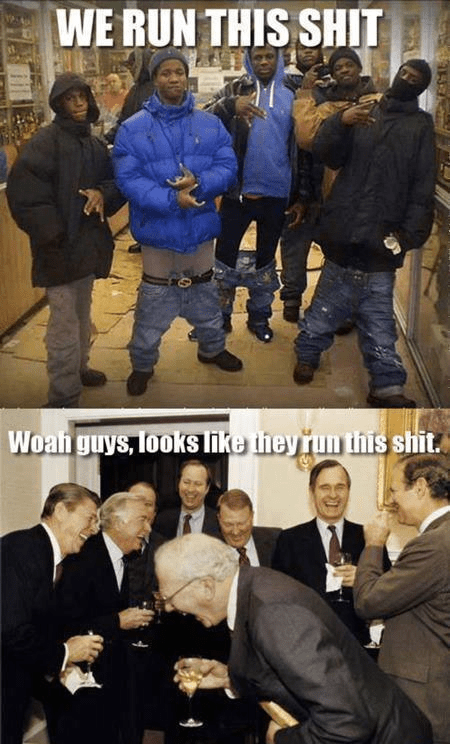
I’m not gonna get into WHY. Well, not too much…
But I wanT all you THUGS out there, to ask yourselves…
WHY do certain people think it’s important to paint you as a thug… WHY?
Oh, and here’s another thing I wanna talk about…
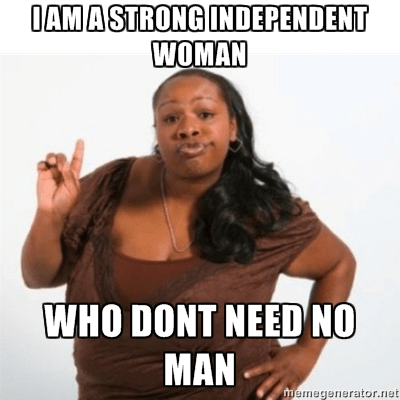
That’s right, people.
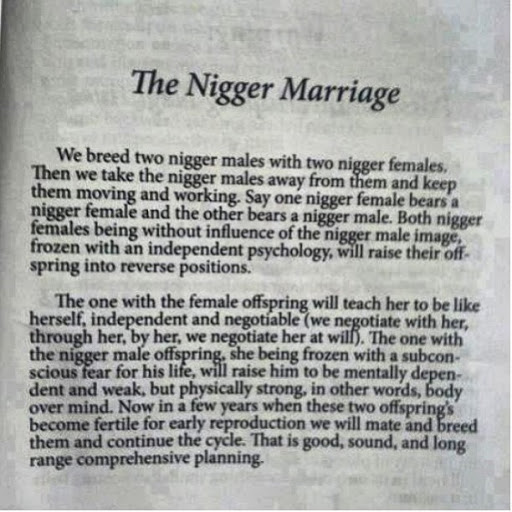
The “STRONG BLACK WOMAN” trope.
The “STRONG BLACK WOMAN” trope has been a recurring theme in various forms of media, serving as a complex portrayal that both celebrates resilience and inadvertently simplifies the multifaceted experiences of Black women. This stereotype often depicts Black women as unwavering pillars of strength, capable of enduring immense hardships without faltering, which can overshadow their vulnerabilities and individuality. While the trope aims to highlight the power and determination of Black women in the face of adversity, it risks reinforcing narrow perceptions and can perpetuate the idea that they must constantly carry the burden of resilience. It is crucial to explore the diverse narratives that exist beyond this archetype, recognizing the rich tapestry of stories that encompass joy, struggle, love, and everything in between. By doing so, we can foster a deeper understanding of the complexity of Black women’s lives and challenge the limitations imposed by stereotypes.
If there’s ANYBODY out there reading this who “DON’T NEED NO MAN” and wear the “strong black independent woman” like a badge, FEMALE OR MALE,
I would like you to read what is below.
JUST. READ. IT.
And don’t EVEN get me started on the “ABSENT BLACK FATHER” myth…
It’s crucial to address and challenge stereotypes and myths that perpetuate harmful narratives. The “Absent Black Father” myth has been debunked countless times, yet it continues to persist in societal discussions, often overshadowing the true contributions of Black fathers. It’s important to recognize the damaging effects of such falsehoods, which not only misrepresent individual fathers but also adversely impact the perception of Black families as a whole. Actively working towards dispelling these myths requires a concerted effort to share authentic stories and experiences that reflect the realities of Black fatherhood.
Research and evidence consistently show that Black fathers are involved and present in their children’s lives at rates that defy the stereotypes propagated by this pervasive myth, engaging in daily activities such as caregiving, nurturing, and educational involvement. By highlighting positive and diverse representations of fatherhood, we can contribute to a more inclusive and accurate societal narrative that honors the dedication and love that fathers from all backgrounds demonstrate. Additionally, recognizing the value of involved fatherhood across all communities is essential for fostering understanding and unity, ultimately leading to a healthier society where every family’s narrative is acknowledged and respected. It is imperative that we challenge these stereotypes not only for the benefit of Black families but for the enrichment of our collective societal fabric.
Okay, I don’t know for certain if all this started with slavery or not. But don’t think that what happened to our ancestors during that time doesn’t affect us today. Think about it. The history of African enslavement in the Americas is indeed a harrowing tale of unimaginable suffering. The traumatic experiences endured by the enslaved Africans and their descendants during this period are well-documented. The brutal and inhumane treatment they faced undoubtedly resulted in severe trauma, affecting generations of individuals and communities.
The repercussions of this dark chapter in history continue to reverberate through modern society. The legacy of systemic inequality, oppression, and discrimination stemming from centuries of enslavement has woven its way into the fabric of the present-day social, economic, and political landscape. It is evident in disparities in wealth, education, healthcare, and opportunities that persist across racial lines.
Furthermore, the psychological impact of such a deeply rooted historical trauma cannot be understated. The emotional and mental scars carried by the descendants of the enslaved continue to shape their experiences and interactions. Addressing this inherited trauma is vital for fostering healing and understanding, as well as striving towards a more equitable and just future for all.
The legacy of such horrific abuse did not end with the abolition of slavery. The traumatic effects reverberated through generations, leaving a lasting impact on the mental, emotional, and psychological well-being of those affected. The systemic and institutionalized nature of the trauma ensured that its effects persisted long after legal emancipation. The psychological and emotional scars left by the legacy of slavery continue to influence social and cultural dynamics in many societies.
It is essential to recognize the ongoing repercussions of this traumatic history and work towards healing and reconciliation. The need for understanding, empathy, and acknowledgment of the enduring trauma faced by the enslaved and their descendants remains crucial in addressing the long-term effects of such pervasive and sustained abuse. By confronting this painful history with sensitivity and compassion, we can strive to create a more inclusive and supportive environment for all individuals impacted by the legacy of slavery.
In the U.S. alone, Emancipation was followed by one hundred more years of institutionalized subjugation through the enactment of Black Codes and Jim Crow laws, peonage, convict leasing, domestic terrorism, and lynching. Even today, violations continue, and when combined with the crimes of the past, they result in yet unmeasured injury. What do repeated traumas, endured generation after generation by a people produce? What impact have these ordeals had on African descendants today?
The intergenerational transmission of trauma has significant implications for the descendants of those who endured centuries of enslavement and oppression. The impact of such historical and ongoing traumas can manifest in various ways, including challenges related to mental health, social well-being, and economic opportunity. These ordeals have contributed to complex and deeply rooted issues that continue to affect African descendants in numerous aspects of their lives.
Furthermore, the persistence of systemic barriers and societal disparities underscores the far-reaching consequences of historical injustices. It is imperative to consider the cumulative effects of prolonged trauma and systemic oppression on individuals and communities. By acknowledging and addressing these profound impacts, we can work towards fostering genuine healing, understanding, and equitable opportunities for all individuals affected by the enduring legacy of slavery and its aftermath.
The fact is psychologically, capoeira, as well as other related art forms, was developed in part as a RESPONSE to this trauma.
But I’ll touch upon that on another PAGE.
Now I said before that this particular webpage was for my Black brothers and sisters of the African Diaspora, but If you’re not black, I hope you read this page too, and gained a bit of understanding of our true history, rather than what WE ALL were taught.
However, if there is ONE THING that I hope everybody can get out of reading this webpage, it’s that the next time you see something like THIS, wherever that may be…

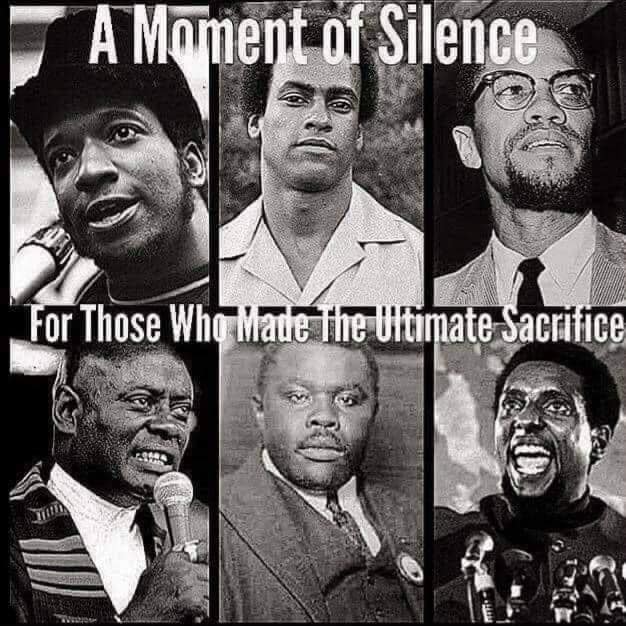
I want you all to remind EVERYBODY out there, wherever that may be, that WE ARE OUR ANCESTORS.
Arturo A. Schomburg Frances Thompson, Ida B. Wells, and W.E.B. Dubois . Fred Hampton, Assata Shakur, Marcus Garvey and Barbara Smith. Gaspar Yanga, Zumbi Dos Palmares, and Harriet Tubman. Sojourner Truth, Frederick Douglass, and John Horse. Francois Makandal, Dutty Boukman, Toussaint Louverture, and Jean-Jacques Dessalines . Marsha P. Johnson, Booker T. Washington, George Washington Carver, etc., etc., etc.,
The list goes on and on, but I think you get the point.
These ancestors, among countless others, refused to accept the conditions they were given, and fought for ALL OF US to have better lives, all over the diaspora. Their resilience and determination in the face of adversity paved the way for the freedoms and opportunities we enjoy today. It’s important to remember and honor their legacies, for they inspire us to persevere and strive for a better future. Their contributions, sacrifices, and unwavering spirit continue to echo through the generations, reminding us of the strength found in unity and the power of standing up for what is right.
Let us carry their stories with us, recognizing the significance of their journeys and the impact they have had on shaping the world we live in. Their bravery and perseverance resonate through time, shaping our shared history and influencing the path ahead. As we reflect on their courage and resilience, may we also find within ourselves the same determination to create a world that upholds justice, equality, and compassion for all.
SO TO ALL YOU RACISTS OUT THERE,
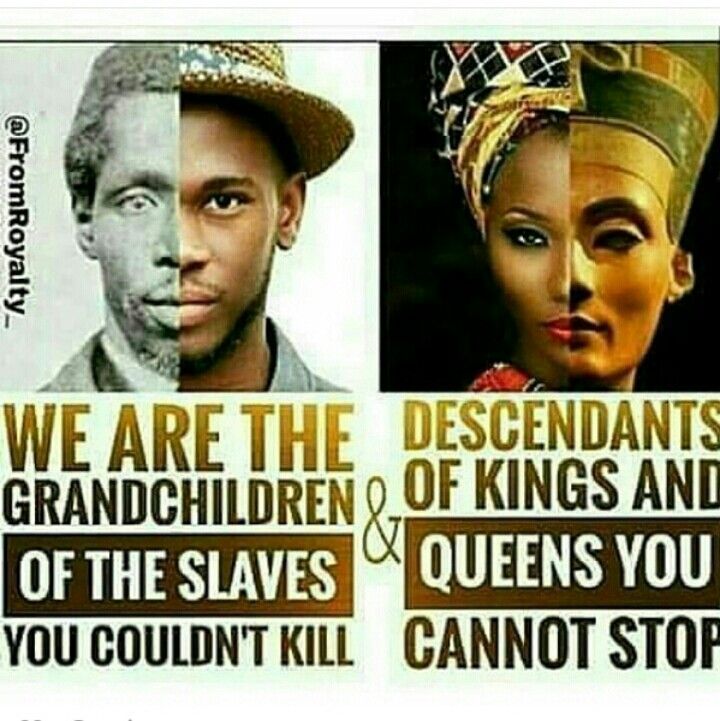
We are literally, YOUR CREATION.
AND WE WILL F*^K YOU UP!!!
Onward.
I saw this video a while back, and it really made me think. Now, I share it with you, and I truly hope that whoever watches this video, pay attention to what the Great Griot is saying here.
BLACK MAN, BLACK WOMAN,
Doing nothing and fantasizing about better conditions are not sane life strategies. Rise, focus, and then choose to act to “Do For Self” and “walk off the plantation”, so that we can mentally engage, embrace, restore, embody, and persistently manifest our global history, heritage, African culture, consciousness, traditions, and values as a purposeful, collective, necessary, urgent, prioritized, and self-validating way of life!
WE ARE OUR OWN CULTURAL LIBERATORS!
O.K., for those of you who read this far, if you liked what I typed and resonate with this message, THANK YOU.
This was just something that I had to get off my chest.
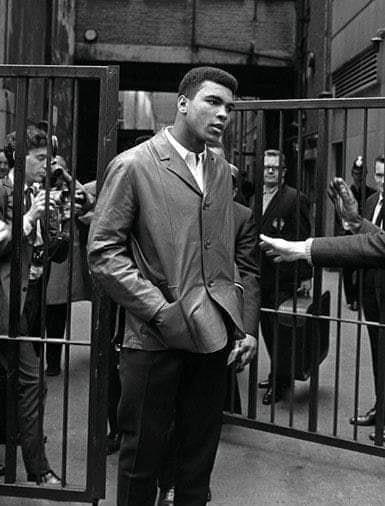
I’ll end this page with this. When one of our ancestors was drafted to fight during the Vietnam war, this was his answer.
“I ain’t draft dodging. I ain’t burning no flag. I ain’t running to Canada. I’m staying right here. You want to send me to jail? Fine, you go right ahead. I’ve been in jail for 400 years. I could be there for 4 or 5 more, but I ain’t going no 10,000 miles to help murder and kill other poor people.
If I want to die, I’ll die right here, right now, fightin’ you, if I want to die. You my enemy, not no Chinese, no Vietcong, no Japanese. You my opposer when I want freedom. You my opposer when I want justice. You my opposer when I want equality. Want me to go somewhere and fight for you? You won’t even stand up for me right here in America, for my rights and my religious beliefs. You won’t even stand up for me right here at home. “
 Jogo Corpo Fechado