
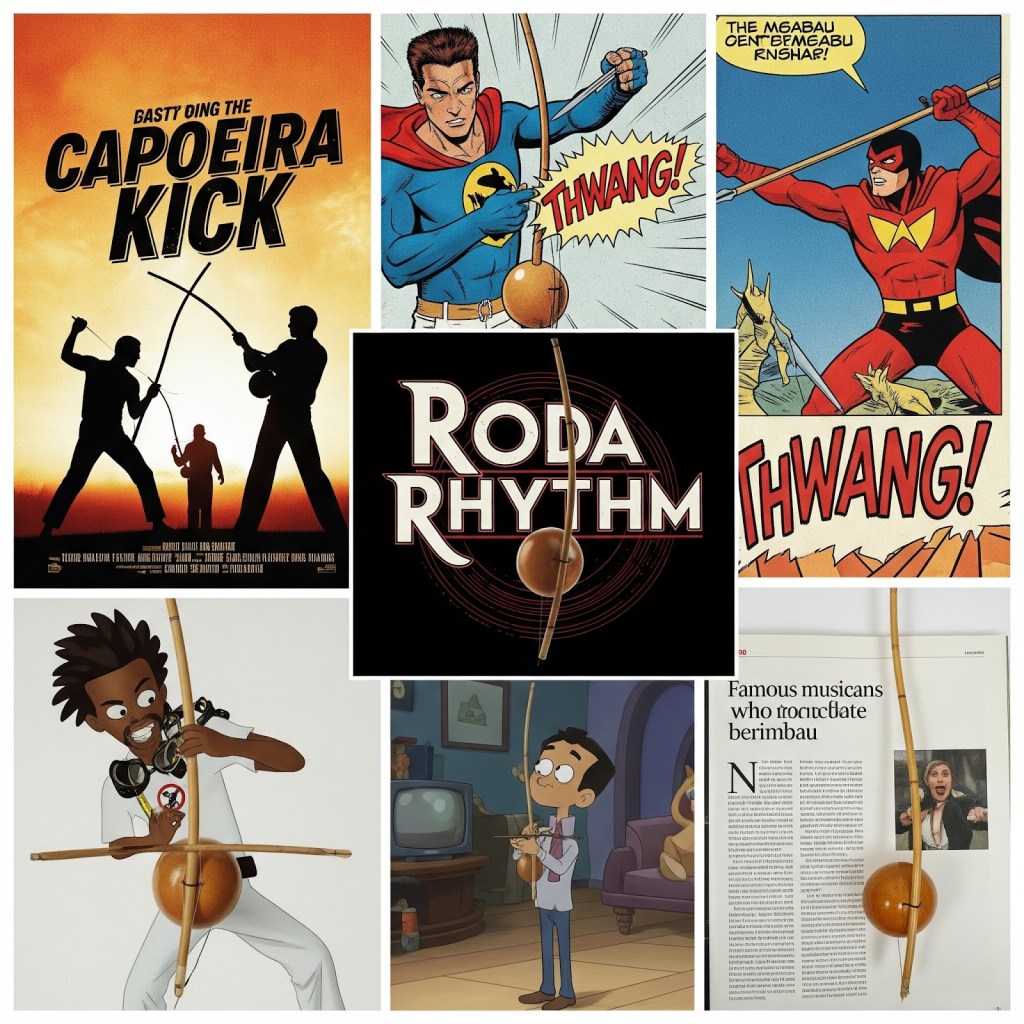
The Berimbau, an Afro-Brazilian musical bow, transcends its traditional origins to hold a deeply significant place in popular culture. While intrinsically linked to Capoeira, its captivating “wah-wah” sound has allowed it to permeate diverse musical genres, from the intricate improvisations of jazz to the raw energy of metal and the infectious rhythms of funk. This unique instrument not only enriches the auditory landscape but also deepens the emotional resonance of the compositions it graces, empowering artists to push the boundaries of musical expression. Beyond its sonic appeal, the Berimbau’s striking visual presence is frequently utilized to evoke Brazilian or Afro-Brazilian themes across various visual media, including video games and films. Its distinctive silhouette and vibrant colors powerfully symbolize cultural identity, often representing resilience and creativity within the community. As contemporary artists increasingly experiment with its sound, Berimbau’s influence continues to expand, fostering a greater appreciation for Afro-Brazilian heritage and inspiring a new generation of musicians to integrate traditional elements into their work.
The Berimbau in Music: A global resonator

The Berimbau, an instrument deeply embedded in the rich tapestry of Brazilian musical traditions, has transcended its origins in Capoeira, Samba, and Bossa Nova to achieve remarkable global integration. Its profound roots in these genres have provided a fertile ground for its expansion, allowing it to captivate musicians and audiences worldwide. The unique combination of its distinctive sound and rhythmic versatility has been a key factor in its widespread appeal, enabling it to bridge cultural divides and inspire a diverse spectrum of musical expressions.
Within Brazil, the Berimbau is not merely an instrument but a cultural icon. In Capoeira, it is the conductor of the roda, dictating the pace, energy, and flow of the movements. Its rhythmic patterns—like Sao Bento Grande or Angola are instantly recognizable and deeply intertwined with the martial art’s philosophy and heritage. In Samba, while perhaps less central than in Capoeira, its percussive presence adds a layer of depth and exoticism, particularly in more traditional or regional variations. In Bossa Nova, its subtle, often understated, rhythmic contributions can be heard, providing a delicate pulse that complements the genre’s sophisticated harmonies and melodies.
Internationally, the Berimbau’s journey has been one of fascinating exploration and adaptation. It has found a welcoming home in an array of sophisticated jazz ensembles, where its percussive nuances and melodic potential are explored by improvisational artists. Its ability to produce both percussive strikes and a resonating, almost vocal, drone allows it to blend seamlessly with horns, pianos, and bass, adding an exotic and earthy texture to modern jazz compositions.
Beyond jazz, the Berimbau has become a prominent feature in the vibrant contemporary world music scene. Musicians from diverse cultural backgrounds, drawn to its unique timbre and dynamic range, have incorporated it into their fusion projects. From African-inspired grooves to electronic music soundscapes, the Berimbau’s adaptability has allowed it to enrich a multitude of genres, contributing its distinctive voice to global collaborations. Its presence in these new contexts not only introduces the instrument to new audiences but also showcases its inherent versatility, proving it to be far more than just a traditional folk instrument.
As artists continue to delve into the expressive capabilities of the Berimbau, they are engaging in a crucial act of both preservation and innovation. By exploring and reinterpreting this historically significant instrument, they are not only honoring its deep cultural heritage and the traditions from which it emerged, but also actively contributing to its ongoing evolution. This continuous process of artistic discovery ensures that the legacy of the Berimbau remains not only vibrant and relevant in today’s ever-changing global music scene but also continues to inspire new generations of musicians and listeners. Its journey from the streets of Brazil to the international stage is a testament to its enduring power and universal appeal.
- Brazilian Popular Music (MPB): The instrument’s melodic potential, often overshadowed by its percussive role, was beautifully showcased in the classic Bossa Nova song “Berimbau.” Composed by the legendary Baden Powell with evocative lyrics by Vinicius de Moraes, this piece demonstrated the Berimbau’s capacity to carry a tune and convey profound emotion, establishing its artistic credibility within Brazil’s rich musical landscape. This particular track brought the instrument to a wider, more mainstream audience within Brazil, highlighting its versatility beyond its Capoeira context and cementing its place in the pantheon of Brazilian musical innovation.
- Jazz and Experimental Music: The Berimbau has found a particularly fertile ground in jazz and experimental music, where its unique sonic textures and versatility have been embraced by trailblazing artists.
- Naná Vasconcelos, a celebrated percussionist, was instrumental in popularizing the Berimbau in modern jazz and world music. His innovative approach showcased the instrument’s wide range of sounds, from subtle whispers and delicate percussive accents to driving rhythms and rich harmonic overtones, introducing its unique sonic palette to a global audience and cementing its place as a legitimate improvisational tool. Vasconcelos’s virtuosity and adventurous spirit opened new doors for the Berimbau, demonstrating its capacity for complex musical dialogue within a jazz framework.
- Airto Moreira, another highly influential Brazilian percussionist, masterfully incorporated the Berimbau into his groundbreaking collaborations with jazz giants like Miles Davis and Chick Corea. His contributions added an exotic, rhythmic, and textural dimension to their compositions, enriching the soundscapes of their iconic works and pushing the boundaries of jazz. Moreira’s ability to seamlessly blend the Berimbau’s distinct voice with the sophisticated harmonies and improvisations of jazz created a new sonic language that resonated deeply with listeners.
- Mickey Hart, the iconic percussionist for the Grateful Dead, introduced the Berimbau to the world of psychedelic rock. He featured the instrument on the band’s song “Throwing Stones” and prominently highlighted it in his solo recordings, bringing its trance-inducing rhythms and unique timbre to the forefront of a genre known for its expansive and experimental sound. Hart’s exploration of global rhythms made the Berimbau a fascinating addition to the improvisational and exploratory nature of the Grateful Dead’s music, exposing it to an entirely new demographic of listeners.
- Miles Davis’s electric jazz work, particularly on the On the Corner sessions and the intense track “Ali – Take 10,” also featured the distinctive sound of the Berimbau. Its unique timbre contributed significantly to the experimental and groundbreaking nature of this period in Davis’s career, adding an otherworldly and percussive layer to his avant-garde fusion. The Berimbau’s raw, earthy sound provided a striking contrast to the electric instruments, enhancing the album’s innovative and often controversial sound.
- Rock and Metal: The Berimbau’s capacity to evoke raw, primal energy has surprisingly made it a powerful addition to the heavier genres of rock and metal, where its percussive intensity finds a natural home.
- Max Cavalera, renowned for his work with Sepultura and Soulfly, has powerfully integrated the Berimbau into several songs, most notably Sepultura’s “Attitude.” Its inclusion adds a tribal, visceral quality to his heavy music, demonstrating its ability to enhance the intensity and cultural depth of the genre. Cavalera’s use of the Berimbau often symbolizes a connection to ancestral roots and a powerful, almost ritualistic energy that resonates with the themes of his music.
- The Minnesota metal band GRYZOR has also innovatively incorporated a version of the instrument into their live shows, showcasing its adaptability and the creative ways contemporary bands are pushing the boundaries of traditional metal instrumentation. This demonstrates the Berimbau’s surprising versatility and its potential to add unexpected sonic textures to genres that might not initially seem like a natural fit.
- Funk and Hip-Hop: The infectious rhythmic appeal of the Berimbau has also found a home in contemporary dance music, including funk and hip-hop, where its unique percussive qualities can drive the beat.
- Brazilian funk artist MC Levin strategically used the instrument in his hit “Ela Me Falou Que Quer Rave,” highlighting its infectious rhythmic qualities and its ability to contribute to the driving beats of modern electronic dance music. The Berimbau’s distinct groove brought an authentic Brazilian flavor to the track, making it instantly recognizable and enhancing its danceability.
- Cut Chemist, a celebrated DJ and producer, featured the Berimbau on his single “The Garden.” His innovative use of the instrument brought its unique sound and cultural resonance to the world of hip-hop and electronic music, demonstrating its versatility as both a sampleable and live percussive element. Cut Chemist’s ability to seamlessly integrate the Berimbau into his intricate productions showcased its potential for creating complex and evocative sonic landscapes.
- Broadway: The Berimbau’s growing recognition in the performing arts culminated in its inclusion in David Byrne’s critically acclaimed American Utopia on Broadway. Percussionists played the instrument, illustrating its ability to contribute to diverse theatrical soundscapes and its increasing acceptance and appreciation within a wide array of musical contexts. Its presence on such a prestigious stage further solidifies its position as a globally recognized and respected musical instrument.
Berimbau in Film and Video Games: A Cultural Marker
The Berimbau’s strong association with Capoeira has naturally led to its prominent inclusion in various visual media, where it often serves to establish cultural context, enhance action sequences, or provide symbolic depth. This traditional instrument, characterized by its unique sound and rhythmic patterns, plays a crucial role in the Capoeira experience, acting as a bridge between the performers and the audience. Its presence in films, documentaries, and television shows not only showcases the artistry and athleticism of Capoeira but also invites viewers to appreciate its historical significance and cultural heritage. As the Berimbau resonates through dynamic movements, it encapsulates the spirit of resilience and community within the Afro-Brazilian culture, highlighting the importance of music in shaping narratives and emotional responses across various storytelling mediums. Furthermore, directors often use the Berimbau to symbolize a connection to ancestral roots, infusing scenes with a sense of authenticity that enriches the overall cinematic experience.
- In Tekken 8, the Brazilian Capoeira fighter Eddy Gordo plays a Berimbau during his pre-fight animation. This subtle yet effective nod to his cultural background and fighting style deepens the character’s authenticity and provides a powerful visual cue to his martial art’s origins. This inclusion not only pays homage to the instrument but also educates a global audience about its connection to Capoeira.
- In Final Fantasy XIV, a Bard’s weapon is named “Berimbau,” demonstrating its recognition in fantasy narratives not just as a musical instrument, but as a symbolic item that conveys a sense of unique power or cultural significance within the game’s lore. This reflects the instrument’s growing cultural cachet, even in fictional worlds.
- Films explicitly centered on Capoeira, such as Besouro, prominently feature the Berimbau. In these narratives, it is not merely a musical instrument but a central narrative element that drives the story, establishes the rhythm of the film, and underscores the historical and cultural significance of Capoeira itself. Its presence in such films is integral to conveying the essence of the art form and its deep cultural roots.
- Hollywood movies incorporating Capoeira-inspired fight scenes—like The Protector and Ocean’s Twelve—also feature the instrument and its accompanying music. Its distinctive sound is skillfully used to heighten the authenticity, intensity, and excitement of the action sequences, immersing the audience further into the world of Capoeira. The Berimbau’s ability to create a sense of urgency and cultural specificity makes it an invaluable tool for filmmakers seeking to enhance the impact of such scenes.
Berimbau as a Cultural Symbol: Heartbeat of Resilience
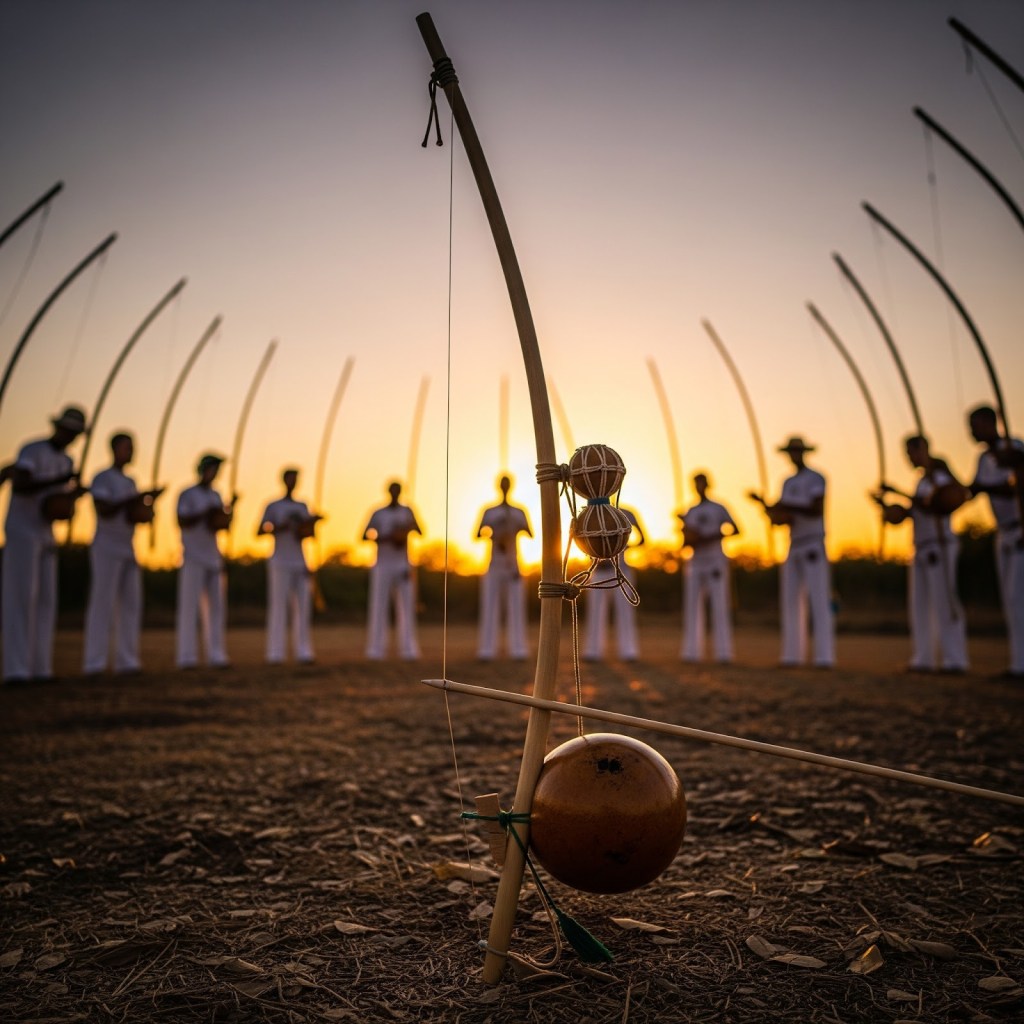
Beyond its musical and visual appearances, the Berimbau represents a deeper cultural significance, embodying a rich history of resilience, ingenuity, and community spirit. It serves as a powerful symbol of African heritage in Brazil, reflecting the struggles and triumphs of those who brought their traditions to a new land. The Berimbau is not merely an instrument; it is a vital link to the past, uniting generations through the sounds that resonate in Capoeira circles. Each note played carries with it stories of both hardship and celebration, echoing the collective memory of a people who have fought to preserve their identity in the face of challenges. As a result, the Berimbau stands as a testament to the enduring nature of culture, evolving while still honoring its origins and continuing to inspire communities around the world.
- Afro-Brazilian Heritage and Resistance: The instrument played a crucial role in the survival of Capoeira during the era of slavery and its aftermath. It was ingeniously used to disguise Capoeira as a musical dance, allowing practitioners to covertly train and maintain their martial art under the guise of cultural expression, thus circumventing oppression. This clever act of cultural resistance underscores the profound significance of the Berimbau as a tool for survival and self-preservation. Today, the Berimbau remains a powerful symbol of this history of resilience, ingenuity, and the enduring spirit of Afro-Brazilian culture, a testament to the power of art in the face of adversity. Its very existence speaks to the tenacity and creativity of a people determined to maintain their heritage.
The Heartbeat of Capoeira

The Berimbau is universally recognized as the rhythmic and spiritual center of a Capoeira circle (roda). It is the primary instrument that sets the tempo and mood for the entire roda, its single string resonating with the energy of the participants and creating an atmosphere that is both electrifying and meditative. The distinctive sound of the Berimbau, which can range from deep, resonant tones to high, sharp notes, serves not only as a musical backdrop but also as a call to action for the players. It is the voice that guides the movements, inspires the players, and connects them to the rich history and traditions of Capoeira, truly making it the “heartbeat” of the art form. Each note played by the Berimbau carries with it a sense of urgency and purpose, guiding the players as they engage in their graceful exchanges, adding layers of meaning to their interactions. Its presence dictates the flow of the game, influencing the speed, intensity, and style of the movements, making it an indispensable element of Capoeira’s cultural and performative identity. Moreover, the Berimbau’s role extends beyond mere entertainment; it embodies the essence of community, resilience, and celebration, as the players, united in rhythm, create a powerful synergy that reverberates throughout the roda, ensuring that the spirit of Capoeira thrives. It is the instrument that orchestrates the intricate dance between fight and play, a living symbol of a vibrant and enduring cultural legacy.
 Jogo Corpo Fechado