

WARNING! I posted some things on this page which might seem… offensive to some people.
READER DISCRETION IS ADVISED.
Hello Everyone,
Okay, I admit it: I named the title of this page what I did so you would click on it.
Anyway, this is part 2 to the “WHAT DOES CAPOEIRA HAVE TO DO WITH SELF-DEFENSE?” page.
I’ve decided to make a Part 2 to that page because, Self-Defense is such a vast subject, that I couldn’t type in everything I wanted to share with you on one page.
so, I decided to post some things here that I didn’t get to share in Part 1.

On the last page, I gave you some strategic tips on how a capoeirista is supposed to fight. So on this page, I’m gonna show you some basic physical strategies a capoerista would use to deal with violence.
NOW, we step into the realm of… THE DARK SIDE.
But first, I want you to click HERE, and read this article.
And watch THIS.
Did you watch them?
Well, there’s a very important reason I wanted you to watch, and really think on what is said in those videos.
Because, that is the subject of this section.
You see, what I’m about to post here are ways to do VIOLENT things to people, things that if properly applied, WILL cause injury, or DEATH.
And quite frankly, I don’t think that many of you out there are ready to read this information.
Some of you may think you are. I mean, you may go to “Martial Arts class ” a couple of times a week, between work and turning yourself into a couch potato, and probably do no actual training, or any other type of exercise except for that class, and still think of yourself as some kind of “Martial Art Warrior”.
BUT HERE’S THE THING…

Click HERE if you want to see the movie where the above picture came from.
And, most people out there who call themselves “warriors” are just not prepared to “GO THERE” when the time comes when they may have to do some “Warrior Shit” to someone.
Or, to keep someone from doing it to them.
Remember,
“You can’t truly call yourself “peaceful” unless you’re capable of great violence, if you’re not capable of violence you’re not peaceful, you’re harmless”
IF YOU’RE NOT CAPABLE OF VIOLENCE, YOU ARE NOT PEACEFUL. meaning that people can do whatever they want to you, and everyone you care about.
Because it takes a lot of hard work and effort to be dangerous, many people will pretend that they are too ethical to be dangerous. They will say things like I’m against violence, so I would never get into a fight.
It is cowardice disguised behind morality.
You see, the coward is more pro-violence than the warrior, because the coward will never try to stop violence if it comes his way. If you are truly against violence, then you understand how important it is to be strong and dangerous.
Remember, a WARRIOR prays for peace, but prepares for war.
Like I posted on another PAGE, there are a lot of delusional “Warriors” out there who think that they know, when in actuality, they don’t know jack s@*t about real violence, or how to deal with it.
In fact, if they actually see an actual violent incident occurring, they’ll most likely run like little BITCHES back home to mommy.
It’s not that they’re cowards (Because most of them are NOT), it’s just that they haven’t learned to use their martial skills in what I like to call,“THE FACE OF FEAR”.
So, what do I mean when I say, “Face of Fear”?
The contrast between utilizing your abilities in a controlled setting, such as a roda with a fellow Capoeirista and supportive peers, and the harsh reality of a street fight cannot be overstated. In a controlled setting, both participants aim to showcase their skills without causing harm, with the support of onlookers.
However, in a street fight, the stakes are much higher, and the opponents may have no qualms about inflicting serious harm. It’s crucial to recognize that these scenarios differ greatly in terms of intention, risk, and potential consequences.
To try to illustrate what I mean, I present this video playlist containing scenes from “Demolition Man”, and “The Last Samurai”.
Like I typed above, none of those police officers or soldiers in those clips were “cowards”. They weren’t trained to use their skills in the “face of fear”, and as a result, they just couldn’t handle the situations they found themselves in.
I hate to say it, but most people, including trained Martial Artists, have this problem.
In the realm of capoeira, navigating the intricacies of self-defense and protection is a fundamental aspect that demands exploration. While on the a different PAGE, we delved into the artistic essence of capoeira, the upcoming discussion will center on the raw and unyielding nature of this traditional practice. Within this context, the capoeiristas’ approach towards handling violence and the methods employed for self-preservation emerge as compelling subjects that warrant comprehensive contemplation.
In essence, delving into the realm of capoeira’s savagery, or as eloquently termed by some, its untamed essence, unveils a profound dimension of the art form. This portrayal seeks to unveil the unbridled spirit that embodies the art, shedding light on the complexities inherent in the practices utilized for protection and survival.
As we navigate this exploration, nuances of strategy, agility, and the fusion of martial prowess with cultural heritage will form the crux of our discourse. It is through the unwavering dedication to mastering these elements that capoeiristas find themselves equipped to confront the unforgiving nature of violence, standing resolute in their endeavor to safeguard both tradition and self.
Amidst the relentless pursuit of fortitude, the artistry of capoeira remains inherent, enshrined within each movement and gesture as a testament to the rich historical tapestry from which it originates. This confluence of savagery and artistry encapsulates the spirit of capoeira, portraying a multifaceted narrative that transcends conventional definitions, offering a unique glimpse into a world where tradition converges with resilience, and where the dance of survival unfolds with profound grace.
Of course, this isn’t limited to capoeira. EVERY Martial art, even a martial art like AIKIDO, has it’s “DARK SIDE.”
Article “Balance from Destruction: Secret Teachings of O-sensei”: https://tampaaikido.com/articles/bala…
For more information about Spirit Aikido Online: http://spiritaikido.com/spiritaikidoo…
It is important to recognize that while martial arts can provide physical and mental discipline, they can also be used for negative purposes. The misuse of martial arts techniques for aggression, violence, or coercion reflects this darker aspect. It is essential for practitioners to understand the ethical and moral implications of their training and to use their skills responsibly. By acknowledging the potential for misuse, individuals can strive to cultivate a positive and respectful approach to martial arts, promoting harmony and personal development.
In fact, because violence and Self-Defense are such large subjects to cover, this page is not totally gonna be about Capoeira Angola, or any other Capoeira style per se.
Although I believe that Capoeira can be very effective for self-defense, on this page, I’m going way beyond Capoeira… Even though everything I’m about to type does fit within the context of Capoeira.
So, What is Violence?
Well, for the purpose of this page, I define violence as “the intentional use of physical force or power, threatened or actual, against oneself, another person, or against a group or community, that either results in or has a high likelihood of resulting in injury, death, psychological harm, underdevelopment, or deprivation.”
Violence is brutal, and more to the point, it’s TRAUMATIZING. In most responsible martial art schools, in a situation when a thug pulls a weapon on you and tries to rob you, the teacher will more often than not, tell you to just give him your wallet, etc. even though they’ll teach you how to defend yourself in such a scenario. WHY?
Because they know that it’s not worth their students losing their lives over a few dollars…
…Nor is it worth their students living with the reality of one of them perhaps having to have taken another person’s life over a few dollars…
IT’S JUST NOT WORTH IT.
Oh, and for you SUPER HEROES out there… I would like you to watch these 2 videos.
Here’s a quote I sorta stole from a self-defense expert named TIM LARKIN…
Violence is rarely the answer, but when it is… it is the only answer.
Very wise words indeed.
But before I get into this, I want to give you a little… review, so to speak.
I posted about these subjects on the 1st self-defense PAGE, but when it comes to self-preservation, you can’t stress this enough. So, I’m posting about it again.
“The capoeirista walks thinking in evil, not because he is a bully. It is a question of self defense because a person can be assaulted at any moment. Life is difficult for those who work, while for a scoundrel it is easy. When the scoundrel encounters a sucker, he comes out well; but when he encounters a capoeirista, he gets a razor across his face… it is for this reason and not because he is a ruffian. All capoeiristas are workers and not vagabonds. (Coutinho 1993:42)
SITUATIONAL AWARENESS, in the context of emergency preparedness, is an invaluable skill that enables individuals to effectively identify, process, and comprehend vital information to ensure their safety in unforeseen circumstances. This heightened cognitive state empowers individuals to evaluate their surroundings, interpret potential risks, and make informed decisions to navigate through challenging scenarios. Essentially, situational awareness is about being attuned to one’s environment, understanding the dynamics at play, and actively monitoring for any changes or threats that may arise. Developing this skill is crucial for individuals to proactively anticipate and respond to emergencies, safeguarding themselves and others. Cultivating situational awareness involves honing one’s observation, analysis, and decision-making abilities, equipping individuals with the tools to navigate emergencies with confidence and resilience.
Understanding the principles and techniques of de-escalation can lead to improved communication, conflict resolution, and overall well-being. It involves active listening, maintaining composure, and demonstrating empathy towards others. By acknowledging the emotions of the individuals involved and striving to find common ground, de-escalation not only resolves immediate issues but also fosters positive relationships and prevents further escalation.
Furthermore, learning de-escalation skills can contribute to the creation of safer communities and environments. In situations involving potential volatility or aggression, the application of de-escalation techniques can mitigate the risk of harm and lead to peaceful resolutions. Whether it’s within law enforcement, healthcare, or everyday interactions, these skills are instrumental in promoting safety and de-escalating potentially contentious situations.
Promoting the importance of learning de-escalation skills can have far-reaching benefits for society as a whole. It empowers individuals to navigate and address conflicts in a constructive manner, ultimately fostering understanding, cooperation, and peaceful coexistence.
O.K., before we go any further, there’s ONE LAST THING that I want to stress to you.
It is crucial to recognize the potential consequences of pursuing such activities. Engaging in behaviors with the potential to be harmful and dangerous requires a sober assessment of the risks involved.
The things that I’m about to talk about is potentially deadly and, if you become good at it, this will make you a dangerous person. However, if this idea makes your heart beat faster, gets you “excited” or whatever…
I want you to click HERE, and watch this clip over and over.
Oh, and click HERE too.
There is NOTHING glorious or glamorous about life-and-death combat. It is messy, desperate and the absolutely last thing you would want to be involved in.
O.K., NOW LET’S DO THIS.
CAPOEIRA, AND HOW TO STAY ALIVE WITH IT 101
Anyone who has studied Capoeira for a good amount of time knows that there are a plethora of strategies he or she can use to physically dominate an attacker. Have you ever witnessed the fluid, acrobatic movements of a seasoned Capoeira practitioner? It’s simply mesmerizing!
The blend of martial arts, dance, and music creates a unique and powerful form of self-expression and self-defense. The agility and grace with which practitioners move seamlessly between attacking and defending techniques is awe-inspiring.
But hey, don’t take my word for it…
O.K., I wouldn’t say that it’s perfect, but Capoeira is a very practical Martial Art, Although it doesn’t look like it at first.
I found this article called, “Is Capoeira the Best Martial Art for Self-Defense?” By lapinha , which gives some pretty good reasons why the author thinks that Capoeira is actually the best option when it comes to self defense, some of which I addressed on this webpage. Click HERE to check it out.
Now, although Capoeira does have a combative element, and members of the Brazilian POLICE and military DO practice it, and have done so since at least the late 18th century, Capoeira, in my humble opinion, is NOT A COMBAT ART.
To those who may wonder why I typed that, please allow me to clarify what I mean.
THIS is what I call a COMBAT ART:
A combat art has two main objectives, “STAY ALIVE“, and “KILL YOUR ENEMY“. If you are in the military, engaged in a battle or a melee, or find yourself in a situation where someone is actively trying to harm you for any reason, you will require a set of skills that is specifically tailored to focus on these essential objectives in order to safely return home.
In such high-stakes scenarios, the ability to preserve one’s own life and eliminate the threat posed by an adversary becomes paramount. The training and mastery of combat techniques are not only about physical prowess but also strategic thinking, adaptability, and mental resilience. Every move and action is geared towards fulfilling the crucial goals of self-preservation and neutralizing the enemy.
But Capoeira, though in the past was used on the battlefield (I go into that a little bit on the history pages 1 and 2),
And at some times, it can get really VIOLENT…
I define capoeira as a civilian martial art which to me is about keeping your enemies from hurting YOU, and in an ideal scenario, making them your friends..
Capoeira is a unique art form that encompasses elements of dance, acrobatics, and music alongside its martial techniques.
The philosophy behind capoeira resonates with the idea of self-defense and non-lethal conflict resolution. The emphasis is not on defeating or causing harm to an opponent, but rather on protecting oneself and avoiding confrontation whenever possible. The fluid, rhythmic movements of capoeira are designed to evade attacks and neutralize threats without inflicting serious harm.
One of the key principles of capoeira is the concept of “malícia,” which encompasses cunning, deception, and evasiveness. Practitioners are taught to outsmart their opponents and protect themselves without resorting to violence unless absolutely necessary. This approach reflects a deep sense of respect for life and a commitment to peaceful conflict resolution.
So, how would a capoeirista defend him/herself in a real fight?
People think it might go something like this…
And it COULD happen like that… Anything’s possible, I guess.
Now as you know, that’s a fight scene which have little to do with reality, and all due respect to the guys in that scene, I bet even THEY would tell you that if you ask them.
Oh, and by the way, for those of you who want awesome kicks, spectacular acrobatics, and BACK-FLIPS, well, here:
ARE YOU HAPPY NOW?
O.K., no disrespect intended to anyone in these videos, or anyone else who has taken the time and put in the hard work required to learn and perform this side of Capoeira.
Heck, I’m learning to do this stuff myself, despite being nearly 50 years old. (Actually, I became 50 in 2024).
Charles, my 1st capoeira teacher, tells this story all the time how when he started capoeira, all he wanted to do was learn how to do a back-flip. For about a year, he’d ask his teacher, a man named OMULU, to show him how. And all throughout this time, his teacher would say, “O.K.”, and would then ignore him. However, after that year, Charles came to realize, what I bet even the people in the above videos would tell you.All the fancy kicks, flying through the air, and stuff like that isn’t really gonna help you a damn bit when the s@&t hits the fan, so to speak.
But AWARENESS, avoidance, de-escalation skills, the ability to deceive your attacker, and striking when he/she least expects it, will.
When beginning to learn capoeira, there’s always an initial “ALLURE” of learning impressive, acrobatic moves.
However, through his experience and guidance from his teacher, he gained a deeper understanding of the core principles of effective self-defense. As he delved further into his training, he discovered the significance of mental and emotional preparation alongside physical techniques. This holistic approach emphasized the interconnectedness of mind and body, recognizing the need for mental fortitude and emotional resilience in addition to physical prowess. Moreover, he realized the importance of adaptability in self-defense situations, learning to apply practical skills that went beyond the flashy techniques often associated with martial arts. This comprehensive understanding enabled him to not only enhance his own abilities but also to effectively guide and mentor others in their self-defense journey.
This anecdote highlights the transformative realization that combat effectiveness extends far beyond physical abilities. It underscores the significance of awareness, strategic thinking, and adaptability in confrontational scenarios. Charles figured out that practical self-defense relies on a combination of awareness, evasion tactics, the capacity to outwit an adversary, and the precision of striking when the opponent least anticipates it. These insights underscore the essential nature of a comprehensive and multifaceted approach to personal safety and self-defense.
In essence, my teacher’s journey embodies the valuable philosophy that true mastery in martial arts, including capoeira, encompasses not only physical prowess, but also the cultivation of cognitive and tactical skills essential for real-life situations. This narrative serves as a reminder that the most impactful lessons often lie beyond the surface, waiting to be discovered through dedication and perseverance.
So… how WOULD a capoeirista defend him or herself in a real fight?
Well, probably like this…
In Capoeira, the essence lies in embracing a strategic approach where one doesn’t confront an attack directly, but rather employs the art of evasion. This unique martial art emphasizes the concept of disarming an opponent’s mind before engaging with their physical self. It encourages practitioners to carefully choose the timing of their attacks, waiting for the perfect opportunity to execute precise and definitive moves.
This could involve employing feints, subtle movements, or even psychological disruptions to create openings for striking with accuracy and impact, such as delivering a direct kick to crucial areas like the head or face, or executing a powerful takedown. This intricate dance of combat highlights the importance of patience, precision, and the mastery of psychological tactics alongside physical prowess.
Some people like to think that training Martial Arts makes them some kind of one-man army or whatever…
But in Capoeira Angola, you don’t read too many stories of the old masters doing stuff like that. But you WILL hear and read a plethora of stories where the old-school capoeirista out-smarted his attackers. In the world of Capoeira Angola, the tales of the revered old masters hold a place of deep significance. These narratives brim with the wisdom and ingenuity of the seasoned capoeiristas, illustrating their remarkable ability to outsmart their adversaries. As one delves into the rich history of this art form, one encounters an array of captivating anecdotes that highlight the mastery and resourcefulness of these esteemed figures. Whether through cunning strategies or astute improvisation, the old-school capoeiristas showcased their prowess in overcoming challenges, leaving behind a legacy that continues to inspire practitioners today.
For instance, in the book Learning Capoeira: Lessons in Cunning from an Afro-Brazilian Art by Greg Downey (Click HERE to purchase a copy), there’s a story about when the great Capoeirista BESOURO was almost cornered by a patrol of 4 police officers in an alleyway.
He started thrashing on the ground, crying, and begging the officers not to hurt him. Of course this confused the officers, because they knew his reputation, and expected a hard fight. But after a minute of besouro crying like a little baby right in front of them, they decided that maybe his reputation was a bit… exaggerated, and they lowered their guard.
And the second they did that, besouro suddenly jumped up over their heads, and took off down another alleyway, leaving the guards wondering what the hell just happened.
There’s also a story in that book about a capoeirista named Bentinho, who was at an outdoor party, when he saw an enemy sneaking up on him with a machete in his hand.
As soon as the guy got close enough to cut him, Bentinho fell to the ground and started screaming like he was gravely injured. Then he pointed at his enemy and yelled out, “It was him! He hit me!!!”, while he was writhing on the ground. Then the crowd, seeing bentinho on the ground, and his enemy with a machete in his hand, pounced on the would be assailant, disarming and beating the hell out of him, while Bentinho escaped in the confusion.
It’s essential to highlight that physical confrontation should always be a last resort. Verbal de-escalation and nonviolent strategies are often the most effective ways to resolve conflicts. Techniques such as active listening, assertiveness, and empathy can be powerful tools in diffusing tense situations. Additionally, understanding one’s surroundings and being mindful of potential exit routes can contribute to personal safety.
In the event that physical action becomes unavoidable, it’s crucial to prioritize self-defense and utilize techniques that match the level of threat. This may involve utilizing one’s environment to create distance or using physical force to neutralize the threat. It’s important to note that self-defense should only be used to ensure personal safety and should be proportionate to the threat at hand. Seeking help from authorities and law enforcement whenever possible is also advisable in such situations.

O.K., now that we’re done theorizing, let’s start with the “NITTY-GRITTY”.
Let’s start with the Ginga, shown and taught here by my good friend and training partner, Cheyenne Amen.
Now, although this website is dedicated to Capoeira Angola, I’m going beyond Capoeira Angola on this particular page, and so, here’s a video of the ginga for self-defense from the perspective of a practitioner of Capoeira Regional/Contemporaneo, to give you all a bit of a more “rounded” view, so to speak.
It’s important to provide a diverse perspective on Capoeira, and incorporating elements from Capoeira Regional/Contemporaneo can definitely enrich the understanding of this art form. By showcasing the ginga for self-defense from this perspective, you can gain valuable insights into the broader applications of Capoeira techniques, offering a more holistic and comprehensive portrayal of this martial art. This approach fosters a deeper appreciation for the various manifestations of Capoeira, ultimately contributing to a more enriched and informed experience for the audience.
Now, I find this clip very interesting.
This is video clip of a conversation between Tuhon Jared Wihongi of Pekiti Tirsia Kali, and a student of his who’s also a capoeirista, comparing the ginga and the hirada footwork of FMA.
I hope that you watched these videos, because I’m not gonna add to much to what was said in those videos.
I’m just gonna remind you that the ginga is the ALPHA and the OMEGA of capoeira. Not only does EVERY other movement of capoeira come from the ginga, I will go far as to say that every other movement in capoeira is a PART of the ginga.
Indeed, the ginga holds a central and foundational position in the practice of capoeira. It embodies the essence and spirit of this Afro-Brazilian martial art, encompassing the fluidity, rhythm, and improvisation that characterize the art form. As the pulsating heart of capoeira, the ginga shapes the ways in which practitioners engage with the dance-like movements, acrobatics, and strategic elements that define the art.
The distinctive sway of the ginga weaves together offense and defense, evoking the rich history of resistance and resilience from which capoeira emerged. Its dynamic nature reflects the ethos of adaptability and creativity, as capoeiristas seamlessly transition between various sequences and sequences, all stemming from the foundational ginga. From this perspective, the ginga not only serves as the origin of movements but as the wellspring from which the entire repertoire of capoeira emerges, uniting all the elements of this expressive and diverse art form.
In essence, the ginga stands as the embodiment of the past, present, and future of capoeira, linking its deep historical roots with its contemporary dynamism and potential for evolution. With each step and sway, the capoeirista embraces the legacy and innovation encapsulated within the ginga, making it an integral and inseparable element of their practice.
So if you want to be a capoeirista, then watch the videos, study the movement, practice it, MAKE IT A PART OF YOU, and EVERYTHING else you learn will fall into place.
Especially, after you FIND A SCHOOL.
And speaking of techniques…
QUESTION: How many martial artists does it take to screw in a light bulb?
ANSWER: 100. One to screw it in, and the rest to argue endlessly about how THEY could have done it much better.
Once every year, in the warehouse that I work at, we have a safety drill where everybody learns what to do in case of earthquake, or fire.
However, since we practiced this drill only once per year, no matter what safety measures we have in place, if (god forbid) an actual emergency DOES takes place, we all know there’s gonna be a measure of panic and confusion taking place, and what people will do if an emergency actually happens will be NOTHING like we drilled or PLANNED…
Well, It’s the same with Capoeira Angola, and any other martial art.
It’s frustrating how traditional self-defense training often revolves around predictable attack sequences and rehearsed responses, which can be inadequate in dynamic real-life situations. In the heat of the moment, there’s no script to follow, and the unexpected often becomes the norm. This is why some modern self-defense approaches emphasize principles over techniques, promoting adaptability and quick thinking for any situation. By focusing on fundamental concepts and understanding the underlying principles of attacks, individuals can better prepare themselves for the unanticipated and be more equipped to respond effectively, irrespective of the specific nature of the threat they encounter. This shift in approach acknowledges the complexity and unpredictability of real-world encounters, encouraging practitioners to develop a versatile skill set that can be applied across various scenarios, including those they have not explicitly trained for.
That means, you’re not gonna see any techniqal sequences here.
When discussing technical skills, it’s important to recognize that each individual brings their own unique set of abilities to the table. These skill sets are often shaped by a combination of personal experiences, physical attributes, and individual traits. Every fighter has their own arsenal of techniques and strategies that they have honed over time, drawing from their distinct background and approach to combat. This diversity in skill sets not only adds richness to the world of fighting, but also highlights the multifaceted nature of martial arts. In the clip provided, we can observe how these distinct skills manifest in practice, showcasing the dynamic and varied nature of combat techniques.
For example…
This was made by Cheyenne, back when we were students together, during a couple of classes. However, Charles, the dashingly handsome short guy (Yes ladies, he’s single) teaching in that clip, didn’t really like that video.
The reason is that those applications Cheyenne was doing in that video is not something that Charles teaches or does, and he feared that somebody watching that video would go to his class thinking they were gonna learn those particular techniques, and Charles doesn’t do that.
Those techniques are part of CHEYENNE’S UNIQUE BAG OF TRICKS . Charles has HIS OWN little bag of tricks to pull out, based on his own experiences, size and body type, and knowledge of the fundamentals.
Now to further stress my point, here’s three amazing video clips I found on YouTube:
The first 2 video clips were posted by Righteous Science Martial Arts. below, is the You Tube description from both videos:
“Here are some clips from Forrest Park College in St. Louis Mo. We were invited to conduct a workshop and lecture on Capoeira Angola, and give an introduction to some of our principals on how to apply Capoeira Angola in a street, or self defense situation. The material covered here is just an entry and is not intended to serve as a comprehensive or complete outline of the Adigun Sipho system for street defense.”
The guys in those 2 videos were sharing some of what’s in THEIR bag of tricks. And here’s a small clip of their teacher, Mestre Terry Baruti, showing a tiny bit from HIS bag of tricks…
You see, there is no such thing as a “cookie cutter” , or “One Size fits all”, technique in Capoeira Angola, or any other martial art for that matter.
ANYONE who teaches or says ANYTHING differently is selling something.
Although the principles of Capoeira Angola are the same, Every individual practitioner is going to perform the moves and techniques in their own special way, based on his/her own experiences, body type, and on his/her knowledge of the FUNDAMENTALS.
In essence, the beauty of Capoeira Angola lies in the individual expression and interpretation of its core principles. As a dynamic and fluid art form, it grants practitioners the freedom to infuse their movements with personal experiences, physical attributes, and deep understanding of the foundational elements. This unique blend of personal touch and adherence to fundamental principles creates an incredibly diverse tapestry of styles within the Capoeira Angola community. Thus, each participant contributes to the tapestry of this mystical art form, weaving together the threads of tradition, personal interpretation, and cultural influence to create a rich and vibrant heritage for future generations to embrace and continue to evolve.
Now once again, although this website is dedicated to Capoeira Angola, I also posted a video of self-defense skills from the perspective of a practitioner of Capoeira Regional, and a practitioner of Capoeira Contemporaneo, to show you all a small bit of an overall view of capoeira.
When sharing content related to Capoeira, it’s important to showcase the diverse perspectives and styles within this dynamic martial art form. By featuring a video highlighting self-defense skills from a Capoeira Regional practitioner and one from a Capoeira Contemporaneo practitioner, I aim to make a holistic representation of Capoeira’s multifaceted nature to all of you.
This approach offers a nuanced understanding of the art, allowing you to explore the unique techniques and philosophies associated with different Capoeira styles. Embracing this breadth of expression enriches the community’s experience and fosters an environment of learning and appreciation for the rich heritage of Capoeira.
Besides, many of these techniques are also found in Capoeira Angola, just executed in a slightly different manner.
OKAY…
I found this video on YouTube and posted it because for me, it’s very nostalgic.
It’s from this video series made by Panther Productions, that I first learned capoeira movements… and it brings back a lot of great memories…
Now, about this technique…
I’ve seen this kick in several YouTube videos billed “The world’s most powerful kick”, or something like that. Apparently it was scientifically proven on a NAT GEO SHOW, so I’m not gonna argue about it. However, it does make me think about something I read some years ago:
“Your best technique done at the WRONG time will never work; Your worst technique done at the RIGHT time, will always work.
Now before I go on, I want to say something about WOMEN’S SELF-DEFENSE. I haven’t touched on this subject until now, because ALL of the capoeira strategies that I touched on above work equally well for both men and women, in my opinion.
In fact, I’ll go as far to say that some of capoeira’s fighting strategies are better for women than for men.
However, as I posted on another PAGE, the things that a woman needs for Self-Defense is different than for a man, for obvious reasons.
Hopefully, this video from “Armchair Violence” will explain it to you better than I can…
Now, this next video is a little… CONTROVERSIAL. However, I absolutely believe that every woman out there has to watch it.
My purpose for posting this page is to help ALL of you out there find resources to keep you safe, and I’m not gonna let any sociopolitical movement or ideology keep me from being real about it.
It is crucial to emphasize the importance of prioritizing safety and accessibility for everyone, regardless of any sociopolitical movements or ideologies. Ensuring that resources are available and easily accessible is a fundamental step towards creating a safer environment for everyone involved. It’s essential to stay focused on the goal of providing valuable and practical resources, and not letting external factors hinder this crucial mission. By maintaining this focus, we can contribute to empowering and supporting individuals in their pursuit of safety and well-being.
Those of you who come to this website deserve that.
WEAPONIZING YOUR SKILLS
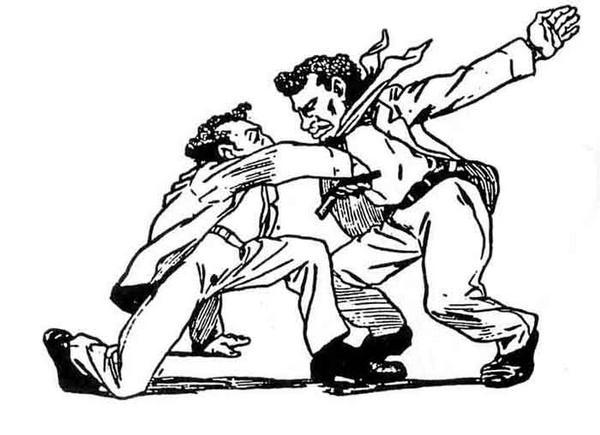
Now, I want to talk about weapons. But before I type this, I want to be PERFECTLY CLEAR.
IF YOU DON’T NEED TO USE A WEAPON IN AN ALTERCATION, DON’T USE IT!!!
Once again, If you’re the type of person who likes to walk around, with your “TACTICAL” knife in your pocket, fighting cane in your hand, ready for throw down at the drop of a hat,
kinda like this guy…

…And you’re a civilian in a nice suburban setting, then once again, I want you to click HERE, and watch this clip over and over, and then click HERE, because frankly,
YOU NEED IT.
You’ll thank me one day.
OKAY. NOW LET’S DO THIS.
O.K., most M.A. websites tend to separate empty hands and weapons use for whatever systems they’re representing.
I did that here as well, for simplicity.
However, when we’re talking about survival, I believe that this kind of separation is a bit… flawed, and it’s not what I think of when it comes to weapons use.
I think the best way I can show you why I believe this is so, is to show you this video featuring self defense expert and awesome FMA Guro, Doug Marcaida.
One of the 1st things Guro Doug says in this video is something I think that most people tend to overlook or outright forget when it comes to fighting. Your weapons are not limited to what you can put in your hand. your hands, your elbows, knees, head, etc. are ALSO WEAPONS.
Yes, we all know that’s OBVIOUS, but many times, when people have that weapon in their hand, they tend to overlook the fact that they still have their other hand, elbows, knees, etc.,
And, the fact that they can be deadly with them.
Click HERE if you wanna explore that a bit more.
Now, let’s explore where these uh, “special tools”, fit into capoeira.
Throughout most of its history in Brazil, capoeira commonly featured weapons and weapon training. Capoeiristas were said to carry at least 2 knives with them, one of metal and the other of wood, which was usually carried to be able to defend oneself against those who might have had made their bodies impervious to metal weapons (You may laugh at that, but that was the belief at that time and besides, a wooden knife can be a VERY effective weapon). And the berimbau could be used to conceal those inside, or even to turn itself into a weapon by attaching a special spear-like blade to its tip with a ring. Capoeiristas were also said to place razors on their feet, thus hiding the fact that they had a weapon on them, and with one well placed kick, they could easily cut the throat of an unsuspecting opponent. The knife or straight-razor was used in street rodas and/or against openly hostile opponents, and would be drawn quickly to stab or slash. Other hiding places for the weapons included hats and umbrellas, both of which could also be used as weapons.
Now, although some groups still practice the use of razors for ceremonial usage… As you’ll se in the video playlist I put above, this kind of weapons training is almost completely absent in current capoeira teachings (at least in public).
So, I strongly suggest that you learn a weapon – based martial art to develop your weapons skills.
While there are a few that I personally prefer, I’m not going to make any recommendations here.
Why? Well, once again…
QUESTION: How many martial artists does it take to screw in a light bulb?
ANSWER: 100. One to screw it in, and the rest to argue endlessly about how THEY could have done it much better.
Everybody has their own opinion about what art is good or great or not. YouTube is full of videos like this.
You don’t think so? click HERE…
Now personally, I believe that EVERY martial art out there has the potential to be totally USEFUL, or totally USELESS. It all depends on how much knowledge you have about a number of different factors which affect how you are able to use your martial art effectively.
And now, I want to share with you my most important rule…
WEAPONIZE EVERYTHING!
Remember, most of the weapons used historically in capoeira, i.e. straight razors, machetes, walking sticks, etc. were more or less improvised weapons, or as what we call them nowadays, EDC (Every Day Carry). Remember this phrase:
Innovation through desperation, or restriction.
This is important for all of you to keep this in mind, especially when governments start banning certain items or specialist tools used for self preservation.
You don’t really want to spend lots of money on a really nice knife or assault tech, only for the authorities to restrict its public carry or use within a self defense parameter.
They did it with the “Butterfly knife“, among others…
Learn from criminals, gangsters, etc. and how they create on-the-go weapons and tools out of ANYTHING to get the job done. Nothing fancy or expensive. Just quick, disposable gear that will get the job done.

And now, a few words from Cheyenne, and a few others, on EDC.
Now, I want to talk about 3 forms of weapons training that are very common, very basic, and mastery of which can translate into the use of many other weapons as well.
NOW, LET ME BE CLEAR. NONE OF THIS IS FORMALLY TAUGHT IN CAPOEIRA!!!
WE’RE GOING BEYOND CAPOEIRA.
Now, let’s continue.
The first 2 forms are Stick-fighting, and Knife/Blade-fighting.
STICK-FIGHTING
Stick fighting is a general term for martial arts which utilizes simple, long, slender, blunt, hand-held, usually wooden sticks such as a cane, staff, baton, walking stick or similar for fighting. Some methods can as well be utilized with a sword in a scabbard or a sturdy umbrella. Stick fighting techniques vary widely, with different cultures and regions having their own distinct styles and traditions. For example, Filipino martial arts are renowned for their stick fighting techniques, known as eskrima or arnis. These ancient techniques have been passed down through generations, embodying a rich history of combat and self-defense. Across the globe, stick fighting serves as an important aspect of traditional martial arts, promoting discipline, agility, and strategic thinking. Whether practiced for cultural preservation, self-defense, or sport, stick fighting continues to captivate enthusiasts with its blend of skill, heritage, and physical prowess.
though numerous systems are defensive combat methods planned for use whenever attacked while lightly armed, others like GATKA and KENDO were enhanced as safe training techniques for unsafe weapons. Whatever the history, numerous stick-fighting methods adapt themselves to being considered as sports.
The use of sticks as a means of combat may at first glance appear as a primitive and ancient form of engagement, however, its relevance in contemporary times holds significant importance. When wielded with skill and precision, a simple stick can prove to be a highly effective tool for self-defense. Its potential to inflict severe blunt-force trauma injuries through striking cannot be understated, making it a formidable weapon when utilized appropriately. Furthermore, the widespread availability of sticks ensures their practicality in a variety of self-defense scenarios, thus solidifying their status as a versatile and accessible resource for personal protection.
There is always the possibility that you can be attacked by a stick wielding criminal. Stick combat actually teaches you about the weapon’s strengths, weaknesses and limitations, which is vital if you are going to effectively defend against the weapon.
To end this little section, I’m adding a playlist of stick fighting styles from all over the world. The first few are styles from The african diaspora, styles that the africans who developed Capoeira would have used, in particular Jogo de Pau, a stick-fighting art which originated in Portugal, and was widely used in brazil, where it most likely mixed with west African stick fighting forms as well.
Shout out to Da’mon Stith of Austin Warrior Arts, and creator and President of Historical African Martial Arts Association (HAMA for short) for creating these videos and putting them on YouTube.
KNIFE/BLADE-FIGHTING
A knife fight is a violent physical confrontation between two or more combatants in which one or more participants is armed with a knife. A knife fight is defined by the presence of a knife as a weapon and the violent intent of the combatants to kill or incapacitate each other; the participants may be completely untrained, self-taught, or trained in one or more formal or informal systems of knife fighting. Knife fights may involve the use of any type of knife, though certain knives, termed fighting knives, are purposely designed for such confrontations – the dagger being just one example. In different cultures and historical contexts, knife fighting has been a significant part of martial traditions and personal defense practices. Across various regions, distinct techniques and weapon designs have emerged, reflecting the diversity of approaches to combat with bladed instruments. The psychology and strategy behind knife fighting have fascinated scholars and practitioners alike, leading to in-depth studies and analyses of the dynamics involved in these perilous confrontations. Understanding the cultural, historical, and practical aspects of knife fighting enriches our comprehension of human conflict, defense mechanisms, and the evolving nature of combat.
Now, before I type anything about blades and fighting with them, I need to show you this video, which I believe is one of the best, if not THE BEST video for civilians about using blades in a fight.
Now I posted these video clips below because they have great info on using and defending yourself against a knife, and also because i know that any capoeirista out there reading this page would find these clips very interesting.
This first clip is an instructional called, “Winning A Street knife Fight” by Marc “The Animal” Macyoung. I’ll “type” more about him at the bottom of this page.
These next clips are a video playlist primarily by a self defense expert named Kevin Goat. He has a self defense course called, “SELF DEFENSE WITH KEVIN GOAT”, and you can get it here: https://budobrothers.tv/pages/self-defense
And, here’s his YouTube Channel: @Self Defense with Kevin Goat There’s a lot of great tips on what to do if you’re being attacked, and I’ll definitely be posting more of his clips on this website’s blog.
Now, even though those were great videos, I do have a couple of things to say about this subject, so now, I want to share with you a few things I’ve picked up in my study of fighting with blades.
Oh, and although I’m using the terms “knife” and “knife-fighting”, In this section, I’m also talking about swords, machetes, bolos, etc… Basically ANY edged weapon.
First and FOREMOST,
Drawing a knife and then using it on someone is against the law, unless you’re a soldier.
In most places, if you pull a knife on someone, you’re already committing a crime. Wherever you may be from, a court of law will determine whether your actions were in self defense and not your super-duper knife-fighting guru.
Let that sink in while you polish your fancy $200.00 “tactical fighting knife” you got from COLD STEEL or EMERSON KNIVES.
YES. JUST LET THAT SINK IN.
Knife fights ARE NOT fights. They’re ambushes. Once a knife is drawn, expect to die. Forget words such as honor, integrity, and fair play. This IS NOT a duel.
Well, except for the times when it is a KNIFE DUEL…
Once a knife makes contact with human flesh, THAT HUMAN FLESH WILL BLEED.
This isn’t like a fist fight, where you can trade blow for blow. As you bleed out, from any wound, YOU ARE DYING…. unless you receive medical attention.
Crime is where knives are most used against humanity. Not war.
Now, as for actually USING a knife…
Knives are mostly used by criminals in a civil society. There aren’t any knife fighting tournaments where one can sign up to compete (Although I did see one EXCEPTION on the Travel Channel, many years ago).
Targets… Go for the vital targets first. Heart, lungs, kidneys, eyes, arteries.
These may not always drop him but will definitely affect resistance performance and health.
Stay away from the arms, if you can. Any cut or slashes found there will be interpreted as defensive wounds by a Court of Law.
Now, in case you don’t know what a Defensive Wound is…
Defensive Wounds
FROM ENCYCLOPEDIA.COM: Defensive wounds are any type of injuries that result from an attempt, or repeated attempts, to defend against an assailant using such sharp edged weapons as knives or blunted instruments such as fists and clubs. Such wounds are usually deeply indented stab wounds, but can be either blunt or sharp in nature. Violent crimes involving defensive wounds can include criminal homicides, rapes, and robberies. Although defensive wounds can appear anywhere on the victim’s body, they are generally found on the upper extremities of the human body including the back of the hands, the inside of the palms, and the inner side of the forearms. The different positioning and angles of the wounds indicate to the forensic examiner the exact way that the victim was trying to ward off and protect themselves against the attack.
Ironically, many Filipino and Indonesian weapon styles have the hands and arms as the primary targets in their curriculum, so they’re teaching their practitioners to attack a opponent the exact same way a deranged psychopath would attack their victims.
Besides, if you go for his/her arms, besides the chances of disabling the arm, the rest of him will still be able to sue you.
Now, I want to end this section with a playlist I made of knives and other blades used all over the world. Once again, none of the videos on this playlist is meant to be instructional, even though you can learn some thing here. It’s just showing how different cultures used various blades.
As we delve into the rich tapestry of cultures and traditions around the world, it’s fascinating to explore the diverse uses of knives and blades. From the graceful movements of a Japanese artisan crafting a katana to the intricate designs of a tribal dagger in Africa, the spectrum of techniques and purposes is truly captivating. Each blade carries with it a story of history, craftsmanship, and the unique customs of its origin. Through this playlist, we embark on a visual journey that celebrates the artistry and cultural significance of blades, offering a window into the varied and remarkable ways in which different societies have incorporated these tools into their daily lives. Whether it’s the symbolism of a ceremonial sword or the precision of a traditional kitchen knife, the playlist provides a glimpse into the intricate relationship between people and blades, allowing us to appreciate the beauty and complexity of these ancient implements.
And ONCE AGAIN, Shout out to Da’mon Stith of Austin Warrior Arts, and creator and President of Historical African Martial Arts Association (HAMA for short) for creating these first videos of how historically, blades may have been used in Capoeira Angola, and putting them on YouTube.
Now, I wanna type about a subject that many of you might find controversial, since this is a website about Capoeira Angola. However, this webpage is about self-preservation, and I believe that when it comes to SELF-PRESERVATION, this knowledge is VITAL, I’m gonna post it here.
Self-preservation is an essential aspect of Capoeira Angola. It is crucial to recognize that controversial topics can be part of this discussion. Within the Capoeira community, the concept of self-preservation is multidimensional and deserves careful consideration. By addressing controversial subjects, we can expand our understanding of the art and its cultural significance. This approach fosters an environment where all viewpoints are respected and valued, contributing to a more comprehensive exploration of Capoeira Angola.
And besides, I DID say that I’m going BEYOND capoeira on this particular webpage.
GUNS AND GUN FIGHTING
What do guns and gun fighting have in common with Capoeira, or any Martial art for that matter?
Not only are they both forms of protection, but they’re also martial arts.
I know what you’re thinking…
But I haven’t gone off the deep end. When most people think of “martial arts” they think of Karate, or Brazilian jujitsu, Muay Thai, or MMA.
And of course, Capoeira.
The use of traditional martial arts as a comprehensive system of combat and self-defense has a rich history that spans across different cultures and time periods. From ancient civilizations to modern societies, the incorporation of weaponry into martial arts training has been a defining aspect of many disciplines. It’s fascinating to observe how various martial arts traditions have evolved to include specialized training with specific weapons, showcasing the diverse strategies and techniques developed by different cultures.
JUKENDO, a traditional Japanese martial art that utilizes bayonets, exemplifies the intricate relationship between martial arts and weaponry. The dedication to mastering the use of bayonets in Jukendo reflects the disciplined and precise nature of Japanese martial arts, emphasizing not only physical skill but also mental focus and concentration. The fusion of combat techniques with the use of this specialized weapon adds a unique dimension to the martial arts landscape, highlighting the depth of traditional practices.
Moreover, in the contemporary context, there has been a paradigm shift in the perception of martial arts, with modern disciplines such as tactical shooting and gun fighting being considered as forms of martial arts. These disciplines incorporate strategic thinking, physical coordination, and mental preparedness, similar to the fundamental principles found in traditional martial arts. The evolution of martial arts to encompass skills relevant to modern-day combat reflects the adaptability and enduring relevance of martial arts principles across different contexts and time periods.
The integration of weaponry and specialized combat techniques within traditional and modern martial arts traditions serves as a testament to the enduring legacy of martial arts as a multifaceted and dynamic discipline, constantly evolving to meet the challenges of different eras.
In this extensive video playlist, you will delve into the critical aspects of gun safety, equipping yourself with the knowledge and skills necessary to handle firearms responsibly and prevent accidents. Additionally, you will explore advanced gun fighting tactics, honing your ability to react effectively in high-pressure situations and enhancing your overall proficiency in using firearms for defense.
Whether you are a novice seeking to establish a strong foundation in firearm safety or a seasoned individual looking to refine your tactical expertise, this playlist offers valuable insights and practical guidance to support your journey.
Okay, we’ve covered Sick fighting, Knife/Blade fighting, and Gun fighting. Of course there’s MUCH MORE to these subjects than what I posted here, but this is just one webpage. I encourage you, the reader, to go out, research these subjects yourself, and find what works for you, and what doesn’t.
Oh, and 3 more things…
IF YOU’RE IN A SITUATION WHERE YOU HAVE TO USE A WEAPON ON SOMEONE, THEN YOU’RE IN A SITUATION WHERE YOU HAVE TO KILL THEM!
YOU SHOULD NEVER DRAW A WEAPON TO THREATEN, OR TRY TO SCARE SOMEONE!!
ONCE YOUR WEAPON IS DRAWN, BE WILLING TO TAKE A LIFE, OR PUT IT DOWN!!!
Thank you for taking this trip with me down “KILLER LANE”. Now, I have a few more things to say about self-defense, and martial arts.
Now, I want to stress to you this 1 thing: you DO NOT need to learn 1000 special techniques, Armed or Unarmed. Just a few BASICS, learned, PROPERLY TRAINED, and practiced until you can do them in your sleep, is all you need.
Mastering the foundational aspects is key in any discipline, especially in combat or self-defense. These fundamental principles lay the groundwork for advanced techniques and tactics. By honing these basics, you build a solid foundation that will allow you to adapt and respond effectively in various situations. It’s not about the quantity of techniques, but the quality and proficiency in executing them that truly matters.
The emphasis should be on attaining a deep understanding of the core principles and movements rather than overwhelming oneself with an extensive array of techniques. As the saying goes, “fear the man who has practiced one kick 10,000 times, not the one who has practiced 10,000 kicks once.” This encapsulates the essence of prioritizing mastery over variety. By mastering the few crucial techniques, you can enhance your muscle memory and reflexes, enabling you to execute them effortlessly even under high pressure scenarios.
The significance of proper training cannot be overstated, as it is the cornerstone of skill development. Seeking guidance from experienced mentors and instructors, and dedicating ample time to meticulously practice and refine your skills, is indispensable. This commitment to continuous improvement ensures that you internalize the techniques and can execute them proficiently. Consistent and focused training is what transforms a mere sequence of movements into a potent and instinctual response.
Ultimately, the journey towards mastery revolves around the conscientious repetition and refinement of these fundamental skills. Persistence, discipline, and a passion for learning are the driving forces behind achieving proficiency. Remember, it’s not about the quantity of techniques, but rather the depth of understanding and proficiency in the essentials that leads to true mastery. So, focus on the fundamentals, train diligently, and strive for excellence.
Of course, PROPERLY TRAINED are the operative words here. Because just like any other martial art system, if you do not train PROPERLY, in whatever system you’re learning, well, you’ll end up like this…
Training is a crucial aspect of mastering any martial art form. It is not just about going through the motions, but about understanding the subtleties and intricacies of the techniques. Proper training is not just about physical exertion; it also involves mental focus and discipline. Without proper training, even the most effective martial art system can become ineffective.
When we talk about being properly trained, it encompasses various elements. It includes having the right mentor or instructor who can guide you through the learning process. Their expertise and experience can make a significant difference in how well you grasp the techniques and principles of the martial art. Moreover, a supportive and conducive training environment can also play a crucial role in the learning process.
Consistency in training is another vital factor. In martial arts, skill development is a continuous process. Without consistent and dedicated practice, it is challenging to progress and refine one’s abilities. Properly trained martial artists understand the importance of regular practice and adhere to a structured training regimen.
Furthermore, a comprehensive understanding of the theoretical aspects, such as the history and philosophy behind the martial art, is integral to being properly trained. It adds depth to the practice and helps cultivate a holistic approach to the discipline. Through learning about the cultural and historical context, practitioners gain a profound appreciation for the art form.
In essence, being properly trained in any martial art system is a multifaceted endeavor that goes beyond mere physical training. It requires dedication, guidance, consistency, and a deep understanding of the art’s roots. Only through proper training can one truly harness the potential of the martial art and avoid the pitfalls of inadequate preparation.
And if you DO train properly, then when something happens, everything you’ve trained will all come together. It’s crucial to stay committed to consistent and effective training, as it ensures that in moments of need, your skills and knowledge will seamlessly converge to support the desired outcome.
The dedication you put into your practice not only enhances your expertise but also builds resilience and confidence, enabling you to respond calmly and effectively in high-pressure situations. Each training session contributes to a greater understanding and mastery of your abilities, creating muscle memory and mental clarity. As you refine your techniques and strategies, you’ll find that your reactions become instinctive, allowing you to navigate challenges with greater ease and proficiency. By prioritizing this disciplined approach, you pave the way for success, ensuring that when faced with adversity, you can rely on the foundation you’ve meticulously constructed through hard work and perseverance.
By investing time and effort into training, you lay a strong foundation to draw upon when faced with challenges or opportunities. Through dedicated preparation and honing of your abilities, you can cultivate the confidence and competence needed to handle various situations with poise and precision. Keep focusing on your training, as it forms the building blocks for success in diverse endeavors.
Of course, life is not a movie like these clips, and No one comes out unscathed in a fighting situation. NO ONE.
However, with proper training, you’re chances of survival will increase TREMENDOUSLY.
That is, WITH PROPER TRAINING.
And how do you get that proper training, especially when it comes to Capoeira Angola? Well…
YOU START BY FINDING A CLASS!!!
Look, it would be VERY IRRESPONSIBLE for me to post this information, and then try to imply or tell you, the reader, that you can now defend yourself just because you read it, or watched it. This is just a bit of information on a web page. It’s up to YOU to continue to research, to FIND A SCHOOL, to practice, and I mean PRACTICE, what you’re taught there. Study up on the subjects I typed about on this website, try them out, and learn to APPLY IT, so you can FIND OUT IF THEY WORK FOR YOU.
Let me tell you a story.
I was in a Silat class, learning from the late, great ERNIE PUGA, of Pukulan Pentjak Silat SIKAP BARU, and I would take notes on everything my teacher said. In fact, sometimes he would teach me something, then say, “It’s in your notebook!” Then one class, he got really frustrated when I couldn’t perform a certain exercise, and he picked up my notebook, and tapping it, he said to me, “You wrote a lot of BULLSHIT here in this notebook.”
Considering that what I wrote in that notebook were HIS words, almost VERBATIM, You can probably guess what I was thinking.
Then he went on to say,”But you’re not APPLYING your bullshit! It’s not bullshit for me because I can do it, I can demonstrate it, and I can APPLY IT. But for you, John…”
UNTIL YOU CAN DO THE SAME, EVERYTHING YOU EVER WROTE IN THAT NOTEBOOK OF YOURS IS A BIG FAT LOAD OF BULLSHIT!
It’s the same for you, and whoever else is gonna read this website. Until you take this stuff, GO FIND CLASSES on these subjects and learn more about them, and make it all work for you, then everything you’re reading here, is BULLSHIT!!!!
Until YOU can apply it.
Another thing…
It is essential to emphasize the importance of personal accountability and responsibility when it comes to learning and applying self-defense techniques. In today’s society, it has become all too common for individuals to deflect accountability and ownership for their actions, instead resorting to pointing fingers and shirking responsibility. However, in the context of self-defense, it is crucial to recognize the impact of one’s actions and to understand the necessity of abiding by legal parameters.
By taking ownership of our actions and decisions, we empower ourselves to make informed and responsible choices. This also entails acknowledging the potential consequences of our actions and ensuring that they align with the legal framework of self-defense in our respective countries. While it is important to be prepared and capable of protecting oneself, it is equally vital to exercise this preparedness within the bounds of legal and ethical considerations.
Ultimately, self-defense is not solely about physical readiness, but also about emotional and cognitive preparedness. It encompasses a holistic approach to personal safety that incorporates legal understanding and ethical responsibility. Therefore, embracing accountability and legality in the practice of self-defense is fundamental to fostering a safe and just society.
Now for those of you who want to think that I’m trying to say that capoeira is the ULTIMATE MARTIAL ART…
To those people I say this: There is no such thing as the ultimate martial art. If there was, EVERYBODY would be studying it, and developing counters to it.
Remember, the Gracie family of GRACIE JIUJUTSU was undefeated in challenge matches for over 70 years, until other people studied their methods and found ways to counter them.
And while I’m at it, I wanna talk about this idea of PURITY in the martial arts for a minute.
As far as I’m concerned, THERE’S NOTHING MORE “PURE” THAN “PURE FIST” ON “PURE FACE, “”PURE STICK” ON “PURE BONE” OR “PURE BLADE” ON “PURE FLESH!”
This page is dedicated to one thing: SELF-DEFENSE. And in self-defense, styles, purity, etc. none of that matters.
I realize that I wrote this on another PAGE, but I’m gonna post it again here.
You don’t have to believe me, or anything I wrote here. I’m not a self-defense expert. I’m just a capoeirista, sharing MY thoughts on this very complex subject. Now having said that, I hope you liked this pretty long webpage, and I also hope that it inspired you, if NOTHING ELSE, to take your well-being seriously.
Now for the last, but certainly not least, I want to share with you these websites from a few men who teach self-defense for a living. If you don’t listen to anything on this webpage, I hope you listen to what THEY have to say.
Marc “Animal” MacYoung (born in Los Angeles, California) is an American author, lecturer and martial artist. Initially known best for his street-violence survival books, he later went on to write personal safety / self-defense books and make instructional videos. MacYoung is considered to be one of the pioneers of reality-based self-defense.
If you want to know more about him, please check out his websites at marcmacyoung.com, and nononsenseselfdefense.com.
RICHARD DIMITRI – Richard Dimitri is considered one of the top 5 self protection & defense tactics experts in the world available internationally for privates & workshops…
CHIRON – On this website, you’ll find some very good information on dealing with violence, and teaching other people to deal with violence. This is the website of Rory Miller. He’s a former Corrections Officer, CERT leader, contractor in Iraq, author of several books on how to deal with violence.
LOREN CHRISTENSEN – FROM HIS WEBSITE: As a professional writer since 1978, Mr. Christensen has penned 50 published books with five publishers, dozens of magazine articles, and edited a police newspaper for nearly eight years. He has written on the martial arts, missing children, street gangs, school shootings, workplace violence, riots, police-involved shootings, nutrition, exercise, prostitution, and various street subcultures. Of late, he has been writing a police and martial arts thriller fiction series called Dukkha. Four have been published and one more is in production.
RVFK Self-Protection – This YouTube channel is dedicated to helping people to recognize where various dangers could be and respond to it appropriately. They do this by analyzing real videos of crime and defense situations of all kinds, so that we can learn from them and implement them in our own self-defense preparation.
I just posted some info about a few world-renowned self-defense experts. There are quite a few more out there. I recommend that you find them yourself.
Because ultimately, it is not my job to be responsible for your safety, it is YOURS. You should be the person who cares the most about YOU and YOUR FAMILY keeping from being victimized. If not YOU, who else?

Well, we’re at the end of this page. We covered a bit here on what a capoeirista can do against a physical assault. However, on the next PAGE, I’m gonna talk about a more dangerous and constant danger that we capoeiristas (and anyone else) need to defend against.

 Jogo Corpo Fechado