
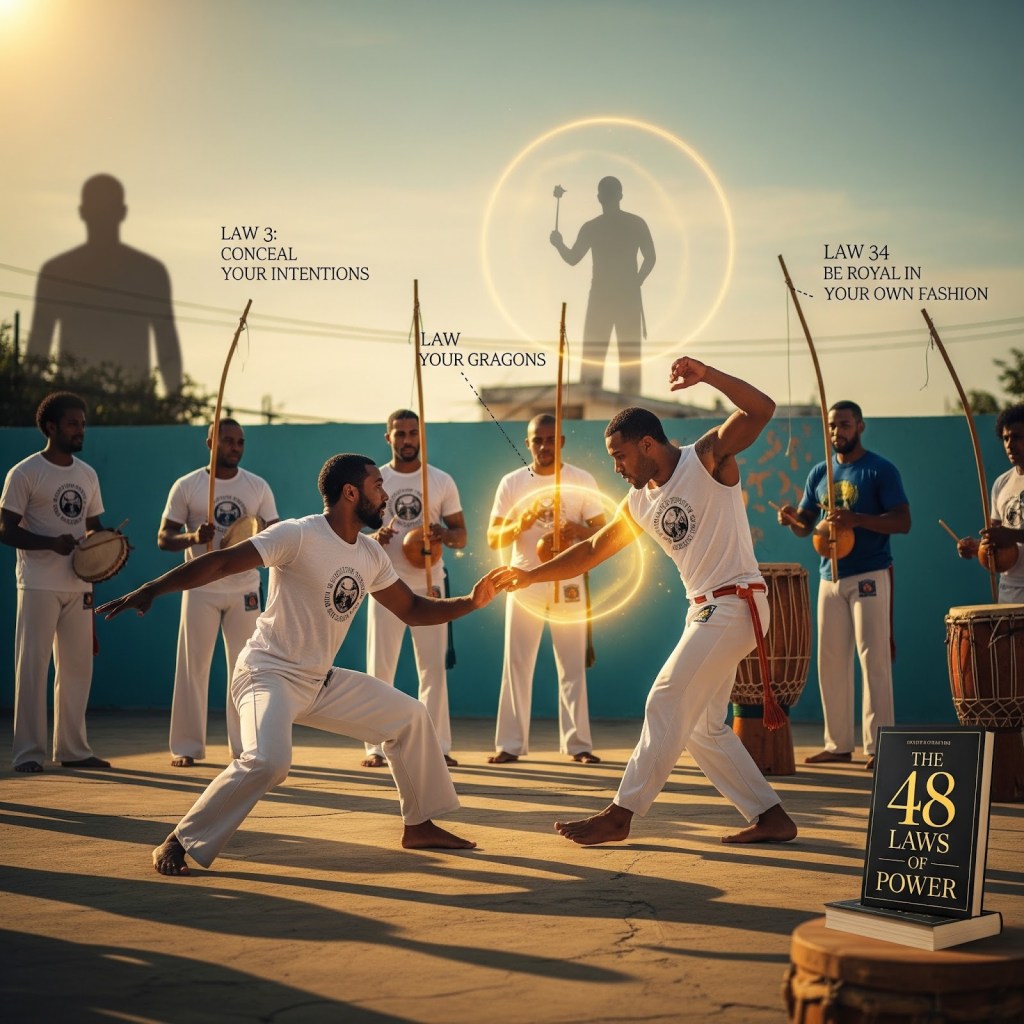
Capoeira Angola: A Multifaceted Heritage of Resistance and Development
Capoeira Angola transcends the conventional definition of a physical discipline; it is a profound and intricate art form, a vibrant legacy born from the arduous struggles and indomitable resilience of enslaved Africans in Brazil. This rich tapestry weaves together martial arts, dance, music, and a deep philosophical core, providing a fertile ground for comprehensive personal growth that addresses the mind, body, and spirit in equal measure. Its influence extends far beyond mere physical prowess, fostering mental agility, emotional intelligence, and spiritual awareness through its demanding and multifaceted practice.
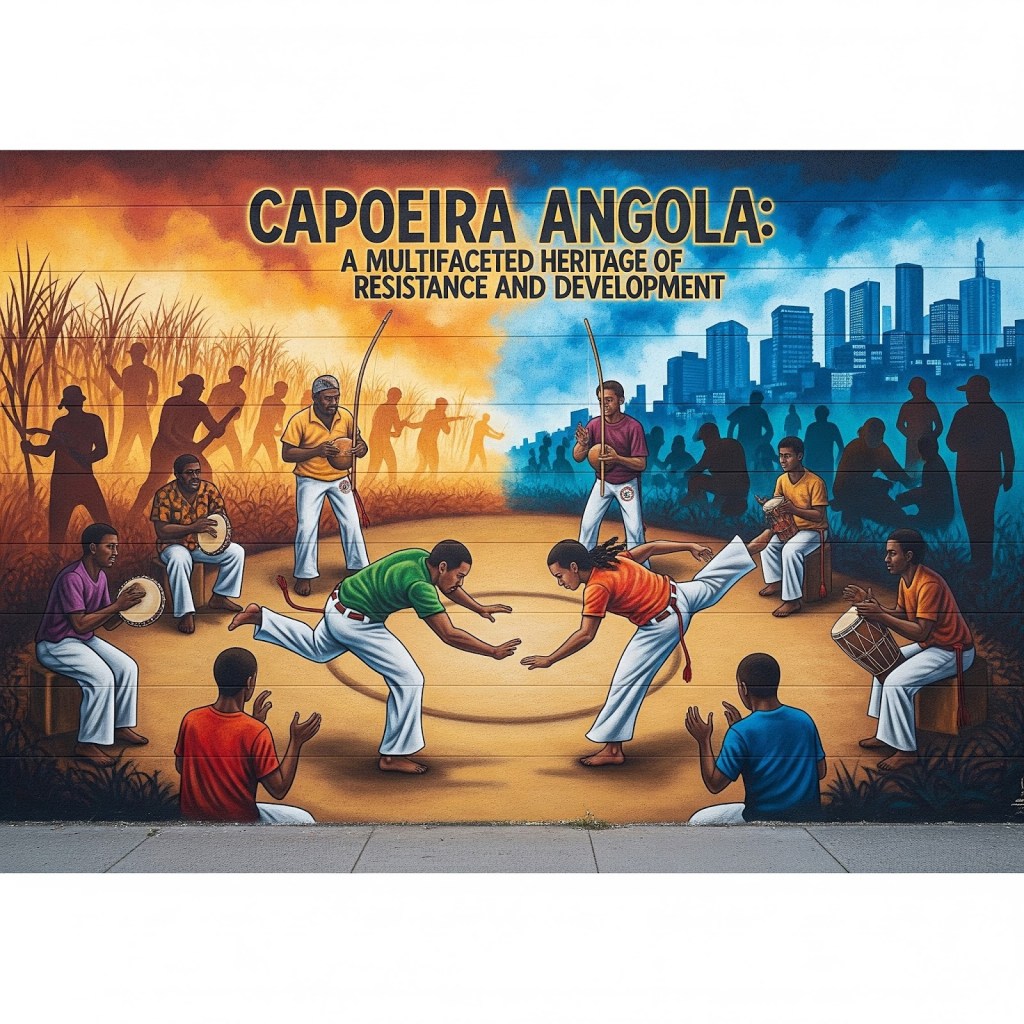
The historical genesis of Capoeira Angola is critical to understanding its essence. Forged in the crucible of oppression, it was a covert practice, skillfully disguised from the slave masters. The fluid, deceptive movements of the jogo (the game) were a brilliant synthesis of fighting techniques and ritualistic, celebratory dance, allowing practitioners to hone their combat skills in plain sight. This necessity for disguise imprinted the art form with a strategic depth—a reliance on cunning, misdirection, and an acute ability to read one’s opponent. This historical context imbues Capoeira Angola with its core principles of adaptation, subtlety, and strategic resistance.
As a holistic discipline, Capoeira Angola is a symphony of integrated components. The martial element encompasses a repertoire of powerful kicks, sweeps, headbutts, and evasive maneuvers, emphasizing ground control and a low stance. Yet, these techniques are never executed with pure aggression; they are delivered with the rhythm and grace of dance. The musicality is the heartbeat of the roda (the circle where Capoeira is played). The berimbau, a single-string percussion instrument, acts as the conductor, dictating the tempo, style, and energy of the game, while the atabaque (drum), pandeiro (tambourine), and agôgô (bell) provide a complex, driving rhythm. The songs (quadras and corridos) are repositories of history, philosophy, and practical lessons, telling stories of survival, legendary mestres (masters), and the African experience in the diaspora.
Capoeira Angola embodies cultural preservation and acts as a subtle yet potent form of resistance. The very act of playing is a re-affirmation of cultural identity and freedom. The movements, fluid and often deceptive, demand keen situational awareness and mental sharpness, encouraging players to think several moves ahead—a direct parallel to the strategic maneuvering required for survival under oppressive systems. The deep philosophical core emphasizes respect, community, humility, and the concept of malícia (a street-smart shrewdness or cunning intelligence).
Each movement, each song, each beat of the drum tells a story of survival, adaptation, and the enduring human spirit. The art form is a living testament to the ingenuity and strength of a people who, despite immense oppression, forged a unique cultural expression that continues to thrive and inspire, offering profound lessons in resilience, strategy, and the power of cultural memory to transcend physical chains.
The 48 Laws of Power in Capoeira Angola: A Strategic Framework for Cultivating Wisdom and Influence

When viewed through the strategic lens of Robert Greene’s “The 48 Laws of Power,” Capoeira Angola reveals profound layers of understanding and strategic engagement. While Greene’s framework often suggests a more cutthroat and Machiavellian approach to power dynamics, its principles can be constructively reinterpreted and applied within Capoeira’s unique ecosystem. For a capoeirista, these laws are not tools for manipulation or dominance in a negative sense, but rather instruments for cultivating wisdom, influence, and positive impact. This reinterpretation serves to enhance their individual journey within the art and, crucially, to strengthen the wider Capoeira community. This integration of strategic thought fosters a heightened awareness of social dynamics, an improved ability to navigate challenges with grace and foresight, and a deeper understanding of oneself and others—all within the dynamic circle of the roda, the sacred space where capoeira is played.
This isn’t about adopting a manipulative mindset; instead, it’s about cultivating heightened awareness and intentionality in one’s actions and interactions. By understanding and judiciously applying these principles, a capoeirista develops a more profound, nuanced, and ultimately more effective approach to the art. The strategic depth offered by Greene’s laws, when recontextualized within Capoeira Angola, empowers practitioners to not only master the physical aspects but also to navigate the intricate social and psychological dimensions of the art form with greater skill and insight, contributing to a richer and more meaningful engagement with this powerful cultural heritage.
Through the specific and rich lens of Capoeira Angola, these laws transform into foundational principles for a richer, more effective, and ethically grounded approach to both the game and life. They offer a framework for internalizing subtle dynamics, anticipating movements, understanding an opponent’s (or partner’s) psychology, and mastering presence and adaptability. This moves beyond rote memorization of techniques, embracing a strategic mindset that considers timing, leverage, perception, and the overall flow of the roda.
By integrating these laws, the capoeirista gains a comprehensive understanding of human interaction and underlying power dynamics, within and outside the roda. This leads to a more mindful, strategic, and fulfilling journey in Capoeira Angola, transcending physical aspects to embrace its philosophical and psychological dimensions.Reinterpreting Key Laws within the Roda:
Let’s explore how some of Greene’s laws can be recontextualized for the Capoeira Angola practitioner:
- Law 3: Conceal Your Intentions: In a Machiavellian context, this law aims to deceive for personal gain. Within Capoeira Angola, it is reinterpreted as a means to maintain an element of surprise and creativity in the roda. By mastering misdirection, feigning one movement to set up another, or maintaining a “poker face” to prevent anticipation, a capoeirista keeps their opponent guessing, allowing for more fluid and unpredictable movements. This isn’t about malice, but about artistic expression and strategic advantage within the game, keeping the flow dynamic and engaging.
- Law 4: Always Say Less Than Necessary: This law, often used to create an aura of mystery or to avoid giving away too much information, translates beautifully into the economy of movement within Capoeira Angola. It encourages choosing precise, impactful actions over superfluous displays. In the roda, actions speak louder than words. A capoeirista who embodies this law executes movements with clarity, intention, and efficiency, allowing their physical prowess and strategic choices to communicate their skill and presence, rather than relying on excessive or showy displays.
- Law 6: Court Attention at All Costs: While Greene’s original intent might suggest seeking fame through disruptive or unethical means, in Capoeira Angola, this law is about developing a captivating and magnetic presence within the roda. It inspires a capoeirista to cultivate skillful execution and a unique style that naturally draws admiration and respect from the community. This isn’t about grandstanding, but about the genuine mastery of the art form, a captivating flow, and an energetic presence that enhances the overall experience for everyone involved. A capoeirista who courts attention in this way contributes positively to the energy and excitement of the roda, becoming a focal point of artistic expression and skill.
- Law 11: Learn to Keep People Dependent on You: Rather than fostering unhealthy reliance, this law can be seen as cultivating essential skills and knowledge that are invaluable to the community. A capoeirista who embodies this law might become a master of a particular instrument, an exceptional singer of ladainhas, or a highly skilled teacher, making their presence and contributions indispensable to the overall functioning and enrichment of the group. This dependence is not about control, but about mutual benefit and the essential role each individual plays in strengthening the collective.
- Law 15: Crush Your Enemy Totally: This law, in its original context, is about absolute victory. In Capoeira Angola, “crushing” an opponent is not about physical harm or humiliation. Instead, it can be reinterpreted as a complete and decisive outmaneuvering or outwitting of your partner within the game, demonstrating superior strategy, timing, and skill. It’s about achieving a clear strategic victory within the confines of the roda, prompting your partner to learn, adapt, and refine their own game. This fosters growth and a deeper understanding of the art for both players.
- Law 25: Re-create Yourself. Capoeira Angola is a lifelong journey of continuous learning, adaptation, and evolution. This law reminds a capoeirista to constantly shed old habits, explore new movements, refine their understanding of the philosophy, and even reinvent their entire “game” to keep it fresh, challenging, and engaging. This proactive approach prevents stagnation, fosters ongoing growth, and ensures a dynamic, exciting, and perpetually evolving presence within the roda, preventing predictability or complacency. The capoeirista who embraces this law is never static; they are always experimenting, learning from every interaction, and integrating new insights to evolve their personal style. This constant self-reinvention is key to maintaining vitality and relevance, surprising opponents and inspiring fellow practitioners with adaptability and growth.
- Law 28: Enter Action with Boldness: This law is particularly relevant to the dynamic and often unpredictable nature of the roda. It encourages capoeiristas to overcome hesitation and to engage fully and confidently. Boldness in movement, in initiating a challenging sequence, or in responding to an opponent’s attack with confidence and conviction can dramatically shift the energy and flow of the game. It’s about taking calculated risks and demonstrating courage, which are highly valued qualities in Capoeira.
- Law 32: Play to People’s Fantasies. Capoeira Angola’s enduring allure is rooted in its mystique, historical origins, and the idealized image of a powerful, graceful, and wise practitioner. A capoeirista can skillfully leverage this appeal by authentically embodying Capoeira’s spirit—sharing compelling stories, legends, and inspiring others with unwavering dedication, refined skill, and passion. By doing so, they draw new individuals deeper into the art, cultivating wonder and fostering a strong connection to its rich legacy. This is more than technique; it’s about connecting with deeper cultural and historical narratives, evoking magic and inspiration that transcends physical movements. It’s about being a storyteller through movement and presence, drawing others into the rich tapestry of capoeira’s past, present, and future.Helping Others: Elevating the Capoeira Community
- Law 33: Discover Each Man’s Thumbscrew: This is not about exploiting weaknesses, but about understanding the psychological tendencies and habitual movements of your partner. By observing and understanding their “thumbscrews” – their preferred attacks, defensive patterns, or emotional responses – a capoeirista can better anticipate their actions and develop more effective counter-strategies. This insight leads to a more sophisticated and responsive game, allowing for deeper engagement and a more nuanced understanding of human interaction.
By applying these reinterpreted laws, capoeiristas gain a more holistic and strategic understanding of their art form. They move beyond mere physical execution to embrace the profound philosophical and psychological dimensions of Capoeira Angola, enhancing their individual journey and strengthening the vibrant community that defines this powerful cultural heritage.

Beyond individual advancement, the principles of power can be thoughtfully applied to cultivate a stronger, more vibrant, and profoundly supportive capoeira community. This outward application focuses on leadership, mentorship, and the collective well-being of the group, ensuring the art form thrives for generations to come.
Capoeira, with its rich history, intricate movements, and deeply rooted philosophy, is more than just a martial art or dance; it is a living, breathing community. To ensure its enduring legacy and continued growth, the strategic application of “power”—understood not as dominance, but as influence, wisdom, and the ability to inspire—becomes paramount.
Leadership: Effective leadership is the cornerstone of any thriving community. In capoeira, this means cultivating leaders who embody the art’s core values: respect, discipline, humility, and a commitment to continuous learning. These leaders, often experienced mestres and professores, set the tone, uphold traditions, and guide the community’s evolution. They must be astute observers, understanding roda dynamics and beyond, and capable of prioritizing the collective good. Their “power” lies in their ability to unite, motivate, and provide a clear vision, ensuring newcomers and seasoned practitioners feel valued and engaged.
Mentorship: The transmission of knowledge and skill from one generation to the next is vital for capoeira’s survival. Mentorship is a crucial avenue for applying principles of power, fostering a culture where experienced practitioners actively guide and support less advanced members. It’s more than teaching movements; it’s imparting philosophy, history, and the unspoken etiquette of the roda. Mentors empower protégés to excel technically and develop as well-rounded individuals within the community. This intergenerational exchange strengthens bonds, preserves integrity, and ensures capoeira’s flame continues to burn brightly.
Collective Well-being: Ultimately, the application of power within a capoeira community must serve the collective well-being. This encompasses creating an inclusive, safe, and nurturing environment. It means addressing conflicts constructively, promoting mutual respect, and fostering a sense of belonging. The “power” here is distributed, residing in each member’s collective responsibility to contribute positively to the roda‘s atmosphere and beyond. When every individual feels supported, heard, and valued, the community flourishes, becoming a powerful force for personal growth, cultural preservation, and social connection. By focusing on these outward applications—leadership, mentorship, and collective well-being—the capoeira community transcends individual aspirations, ensuring the art form not only survives but thrives for generations, enriching all who partake in its beauty and spirit.
Here’s how several of Robert Greene’s “48 Laws of Power” can be reinterpreted and applied to foster a flourishing Capoeira Angola community:
- Law 4: Always Say Less Than Necessary. In a capoeira community, a wise teacher or leader understands the profound power of measured words. Instead of overwhelming students with excess information, detailed instructions, or constant verbal corrections, they offer concise, impactful guidance—a precisely demonstrated movement, a brief proverb, or a pointed question that sparks introspection. This approach allows students the crucial space to discover and internalize lessons through practice, contemplation, and nuanced feedback from their own bodies. It empowers individual learning, critical thinking, and fosters a deeper, more personal understanding of the art, encouraging students to “feel” the movement rather than just intellectually process it. By holding back the full extent of their knowledge, leaders also cultivate a sense of mystery and inspire students to seek their own answers, thereby deepening their commitment.
- Law 15: Crush Your Enemy Totally. In a metaphorical and constructive sense, this law can be reinterpreted as addressing internal “enemies” that hinder individual and collective progress. These are not external adversaries, but insidious obstacles like complacency, fear of failure, self-doubt, lack of discipline, or internal rivalries that detract from harmony. A strong, inspiring leader or advanced capoeirista, through their example and challenges, can motivate others to confront and overcome these internal obstacles. This is achieved through rigorous yet supportive training, unwavering encouragement, and a culture that celebrates effort and perseverance. The “crushing” here is about eliminating limiting beliefs and habits, pushing practitioners to realize their full potential and achieve higher skill and self-mastery. This isn’t about actual conflict, but fostering resilience, mental fortitude, and a relentless pursuit of excellence that elevates every member.
- Law 27: Play on People’s Need to Believe. Capoeira, especially Capoeira Angola with its deep historical and cultural roots, thrives on a shared belief in its core values, time-honored traditions, and the transformative power of the art. A dedicated leader strengthens this collective belief by consistently upholding the art’s integrity, enthusiastically sharing its rich history, founder narratives, and philosophical underpinnings of movements and music. They foster a profound sense of shared purpose and identity, reminding practitioners of the legacy they are part of and the unique community they belong to. This involves organizing cultural events, traditional rodas, and discussions that deepen understanding. By tapping into this fundamental human need for belonging and purpose, leaders create a cohesive, deeply committed community, united by common passion and a collective vision for Capoeira Angola’s future.
- Law 33: Discover Each Man’s Thumbscrew. In a teaching and mentorship context, this law translates to a deep, empathetic understanding of individual motivations, inherent fears, and unique learning styles. A perceptive teacher doesn’t apply a one-size-fits-all approach. Instead, they meticulously identify what truly drives a student—perhaps a desire for self-expression, physical prowess, cultural connection, or stress relief. Conversely, they also discern what genuinely hinders progress—be it fear of looking foolish, a physical limitation, or a particular mental block. By understanding these individual “levers,” a teacher can tailor their approach, providing precise support and challenge for that individual to excel. This ensures personalized, effective instruction that resonates deeply, making students feel seen, understood, and truly supported on their journey, thereby maximizing their potential and commitment.
- Law 41: Avoid Stepping into a Great Man’s Shoes. This law is crucial for fostering new leadership and preventing stagnation when a group becomes overly reliant on a single dominant figure. A wise leader in Capoeira Angola actively empowers and mentors emerging talents, deliberately creating space for them to develop their own distinctive leadership styles, contribute uniquely, and ultimately guide the next generation. This involves delegating responsibilities, encouraging individual teaching styles, providing leadership opportunities within the roda or class, and publicly acknowledging others’ contributions. By fostering an environment where new leaders can naturally emerge and flourish, the wise leader ensures the longevity, dynamic evolution, and continued vibrancy of the capoeira lineage, preventing a leadership vacuum and allowing the art to adapt and thrive through diverse perspectives.
Capoeira Angola, a rich and multifaceted art form, demands a profound understanding of strategy and influence, much like the principles outlined in “The 48 Laws of Power.” By thoughtfully applying these timeless tenets, a capoeirista can not only skillfully navigate the inherent complexities of their art but also elevate their personal practice and contribute significantly to the vibrant community.Mastering the Art of Capoeira Angola through Strategic Principles:
- Observation and Perception: A capoeirista, much like a student of power, must cultivate acute observation skills. This involves not only watching an opponent’s movements in the roda but also discerning their intentions, energy levels, and potential weaknesses. Law 10, “Infection: Avoid the Unhappy and Unlucky,” can be reinterpreted to mean avoiding negative influences or energy within the roda that could disrupt focus or flow. Conversely, aligning with positive, skillful players can elevate one’s own game.
- Calculated Movement and Deception: Capoeira Angola is a dance of feints, dodges, and unexpected attacks. This aligns with Law 3, “Conceal Your Intentions,” and Law 5, “So Much Depends on Reputation—Guard It with Your Life.” A capoeirista’s movements should be fluid and unpredictable, never revealing their true objective too early. Their reputation for skill, cunning, and respect is paramount.
- Patience and Timing: The roda is not merely a physical contest; it’s a mental one. Law 8, “Make Other People Come to You—Use Bait if Necessary,” speaks to drawing an opponent into a vulnerable position. This requires immense patience and an acute sense of timing, waiting for the opportune moment to strike or counter.
- Adaptability and Fluidity: Capoeira Angola is constantly evolving within each roda. Law 21, “Play a Sucker to Catch a Sucker—Seem Dumber Than Your Mark,” while perhaps an aggressive interpretation, highlights the need for adaptability. A capoeirista must be able to change their strategy mid-game, adapting to their opponent’s movements and the flow of the roda.
- Building Alliances and Influence: Beyond individual skill, the longevity and strength of Capoeira Angola lie in its community. Law 18, “Do Not Build Fortresses to Protect Yourself—Isolation is Dangerous,” underscores the importance of fostering strong relationships within the roda and beyond. Mutual respect, shared knowledge, and collaborative learning are essential for growth. Law 42, “Strike the Shepherd and the Sheep will Scatter,” emphasizes the importance of understanding the dynamics of leadership and influence within the community.
Beyond Personal Gain: Cultivating a Thriving Environment:

This mastery extends beyond personal gain; it contributes to cultivating a thriving, dynamic environment where individuals are not only empowered to grow and learn but also encouraged to contribute meaningfully to the enduring legacy of Capoeira Angola. By understanding and subtly applying these principles, capoeiristas can foster an atmosphere of:
- Respect and Camaraderie: Strategic understanding, when applied ethically, can lead to deeper respect for opponents and fellow practitioners. Understanding their motivations and strengths allows for more engaging and meaningful interactions.
- Innovation and Evolution: A dynamic environment encourages experimentation and the development of new techniques and styles within the traditional framework. The “game” of Capoeira, both within the exhilarating confines of the roda and in its broader community, thus transforms into a profound and dynamic interplay of strategy, mutual respect, and a shared, unifying purpose, all illuminated by these timeless principles of influence and power.
- Mentorship and Legacy: Experienced capoeiristas, through their strategic understanding, can effectively guide newer practitioners, passing on not only the physical techniques but also the deeper philosophical and strategic underpinnings of the art form. This ensures the continuous enrichment and perpetuation of Capoeira Angola for generations to come.
In essence, the “game” of Capoeira Angola, when viewed through the lens of strategic principles, transcends a mere physical performance. It becomes a sophisticated dance of intellect, intuition, and influence, where every movement, every pause, and every interaction contributes to a richer, more profound experience for all involved. This intricate interplay extends beyond the immediate physical exchange, delving into the psychological and emotional dimensions of human interaction.
Every roda transforms into a microcosm of life itself, a dynamic arena where participants test not only their physical prowess but also their capacity for foresight, adaptability, and persuasive communication. The ginga, the foundational swaying movement, is not just a way to maintain balance; it’s a constant recalibration, a preparation for the unexpected, and a subtle invitation to an exchange of energy and intention.
The strategic principles at play are manifold. There’s the art of deception, where feints and misdirections are used to open up opportunities. There’s the mastery of timing, knowing precisely when to attack, defend, or retreat. There’s the subtle manipulation of space, drawing an opponent in or creating distance when needed. Beyond the overt actions, there’s the reading of subtle cues—a shift in weight, a momentary glance, a change in breathing—all of which inform the next strategic move.
Capoeira Angola, at its core, is a profound embodiment of the collective experience. While each individual within the roda—the circle where the game unfolds—engages in their unique “game” or personal expression, their actions are inextricably linked to and contribute to the overarching energy, flow, and narrative of the collective. This intricate interplay between individual agency and collective consciousness is a defining characteristic of Capoeira Angola.
The rhythmic heartbeat of the roda is provided by the musicians, whose berimbaus, pandeiros, atabaques, and other instruments weave a tapestry of sound that dictates the pace, intensity, and emotional tenor of the game. Their songs, often rich with history, metaphor, and a call-and-response dynamic, guide the movements, intentions, and spirit of the players. The other participants forming the circle are not mere spectators; they are active contributors, lending their voices to the chorus, clapping in unison, and projecting their energy into the center. This creates a palpable atmosphere of shared intensity, support, and mutual creation. Consequently, individual success within the roda is rarely a solitary achievement; it is profoundly intertwined with one’s ability to harmonize with, influence, and respond to the collective energy and intentions of all present.
The experience of Capoeira Angola extends far beyond the active participants, profoundly influencing everyone within the roda and its periphery. Spectators are not mere passive onlookers; they are transformed into active observers, embarking on a continuous and immersive learning process. Through keen observation, they learn to decipher the subtle and complex nuances of the game—the deceptive feints, the artful dodges, the anticipatory movements that hint at future actions, and the intricate strategic dialogue unfolding non-verbally before them.
This deep engagement cultivates a profound appreciation for the rich and intricate communication, both verbal and non-verbal, that permeates every interaction within the roda. It becomes a dynamic, living laboratory, offering invaluable insights into fundamental human dynamics: the ebb and flow of power, the art of negotiation, and the sophisticated dance of engagement. All these layers of meaning are seamlessly interwoven into the captivating beauty, rich cultural heritage, and deep spiritual essence of Capoeira Angola.
This immersive experience is a crucible for holistic development, fostering not only remarkable physical prowess—agility, strength, and coordination—but also sharp mental agility, requiring quick thinking, adaptability, and strategic foresight. It enhances emotional intelligence, as participants and observers learn to read and respond to the emotions and intentions of others. Crucially, it cultivates a profound understanding of community, interdependence, and the interconnectedness of all individuals within the collective experience, embodying a philosophy where individual expression flourishes within a supportive and dynamic communal framework.
Capoeira Angola and the 48 Laws of Power: A Guide to Defensive Understanding
How to Recognize When These Laws Are Being Used Against You, and What to Do About It
It is a common misconception that the primary purpose of studying “The 48 Laws of Power” is to actively employ every single law to manipulate circumstances and people for personal gain. On the contrary, the true, more vital, and arguably more ethical point of engaging with these principles is to cultivate a deep, defensive awareness. You don’t need to put them into practice as much as you need to develop the keen ability to understand and recognize when other people may be applying said principles, either deliberately or subconsciously, against YOU.
This recognition is the cornerstone of better self-defense—not in a physical sense, but in the realm of social and professional interaction. By understanding the mechanisms of power dynamics and influence, you equip yourself with an invaluable shield against manipulation, deceit, and exploitation.
While the primary focus should be on defense, it must be acknowledged that certain laws will inherently prove useful when put into practice, as they simply codify sound strategic thinking and social intelligence. A prime example is Law 19: Know Who You’re Dealing With—Do Not Offend the Wrong Person. This law underscores the fundamental necessity of carefully discerning the true character, capabilities, and intentions of the people around you. Mastering this discernment—the ability to read a room, assess hidden agendas, and gauge the sincerity of a compliment—is a prerequisite for navigating any complex social landscape, be it in a business meeting, a friendship circle, or even the roda of Capoeira Angola.
After all, the vast majority of these 48 Laws have to deal with our intricate, often fraught, interactions with each other and the broader social fabric (much like Law 43: Work on the Hearts and Minds of Others). They are essentially a psycho-social map of human nature, charting its weaknesses, vanities, and predictable patterns of reaction.
Therefore, the responsibility falls squarely upon us to absorb this knowledge and commit to a principled application—or, more accurately, a principled defense. Our aim should be to not use these powerful principles for devious, petty, or cruel ulterior motives. This commitment is a moral imperative; the knowledge itself is amoral, like any tool, but its use is determined by the user’s character.
Of course, maintaining this ethical high ground may not always be a straightforward option. In environments saturated with aggressive ambition or outright hostility, strict adherence to a purely defensive stance can sometimes lead to vulnerability. There may be times when a measured, strategic response—a temporary application of a principle—is necessary for survival or to safeguard what is right. This nuance is crucial.
Ultimately, the body of knowledge contained within these Laws is not a prescriptive rulebook for tyranny, but a descriptive text on the realities of power. It is information that you, the reader, will ultimately decide how you want to use—or, more importantly, how you will use it to protect your own integrity and agency. The goal is wisdom, not domination.
Exploring the Intersections: Capoeira Angola and the 48 Laws of Power
Within the blog section of this very website, I’ve undertaken a fascinating exploration into the relationship between two seemingly disparate subjects: Capoeira Angola and the timeless principles outlined in Robert Greene’s The 48 Laws of Power.
This series of posts delves into how the strategic, often subtle, and psychologically deep lessons embedded within the 48 laws can be applied, observed, and understood within the context of the Capoeira Angola roda (the circle), the training academia (academy), and even the broader philosophy of the art form.
As I understand it, Capoeira Angola is far more than just a physical game; it is a complex social environment, a spiritual practice, and a constant negotiation of power dynamics, timing, and perception. Each of the 48 laws—from “Conceal your intentions” and “Always say less than necessary” to “Crush your enemy totally”—offers a unique lens through which to analyze the interactions between two capoeiristas, the strategies employed, and the often-unspoken hierarchy within a group.
These blog posts are not merely a summary of the laws but an interpretive application, demonstrating how these concepts manifest in the graceful movements, the strategic pauses, the musical commands, and the historical context of Capoeira Angola. I invite you to check them out for a deeper understanding of the sophisticated layers of strategy and psychology that permeate this beautiful and profound martial art.
 Jogo Corpo Fechado