

Capoeira Angola: A Holistic Path to Connection and Self-Discovery
Capoeira Angola, a captivating Afro-Brazilian martial art, transcends the realm of mere physical discipline, offering a profound and multifaceted pathway for individuals to connect with Mother Nature. It is a holistic journey of self-discovery and empowerment, where the harmonious blend of dance, music, and acrobatics not only cultivates a deep bond with the natural world but also invites practitioners to explore the rich cultural heritage of Brazil through its intricate histories and enduring traditions.
At its core, Capoeira Angola is a profound art form that intricately weaves together rhythm, fluid movement, and the indispensable value of community. It fosters an inclusive and deeply supportive environment, nurturing a powerful sense of belonging and mutual encouragement among all who participate.
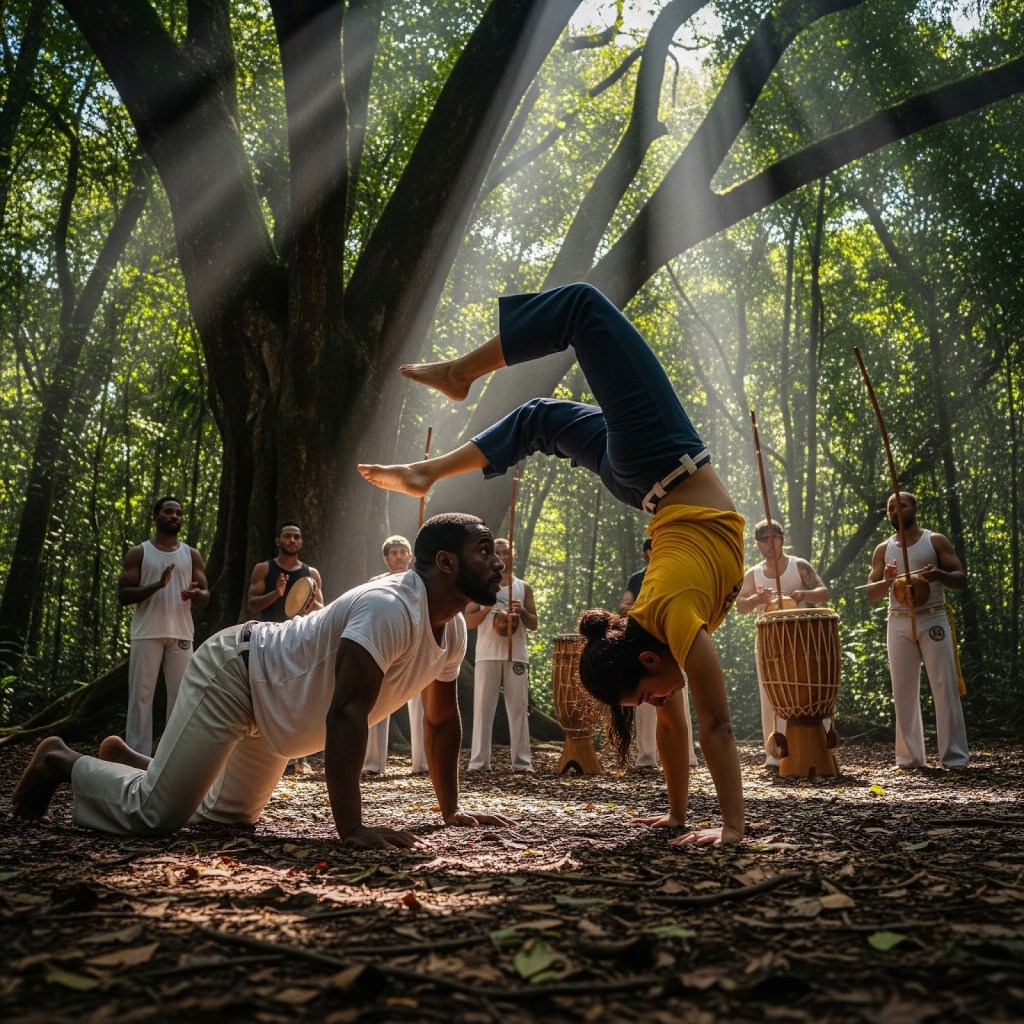
A fundamental tenet of Capoeira Angola is the conscious decision to train within natural environments. Whether it’s the tranquil expanse of a local park, the boundless embrace of a sun-drenched beach, or the unconfined freedom of an open field, this deliberate engagement with nature is paramount. This practice is not merely about physical exercise; it’s a transformative experience that profoundly deepens one’s connection with the earth.
As practitioners engage in the dynamic movements of Capoeira Angola, they become acutely aware of the grounding sensation of the earth beneath their bare feet, a visceral reminder of their connection to the planet. They feel the gentle caress of the breeze against their skin, a subtle yet powerful link to the natural world’s breath. The warmth of the sun shining down upon them bathes them in energy, reinforcing the life-giving force of nature. In these moments, every movement, every rhythm, every interaction is imbued with an inherent harmony, mirroring the intrinsic balance and flow found within the natural world itself. This deeply spiritual connection to the environment elevates Capoeira Angola from a mere physical discipline to a holistic practice that nurtures the body, mind, and spirit in unison with the rhythms of Mother Nature.
Capoeira Angola as a manifestation of Nature
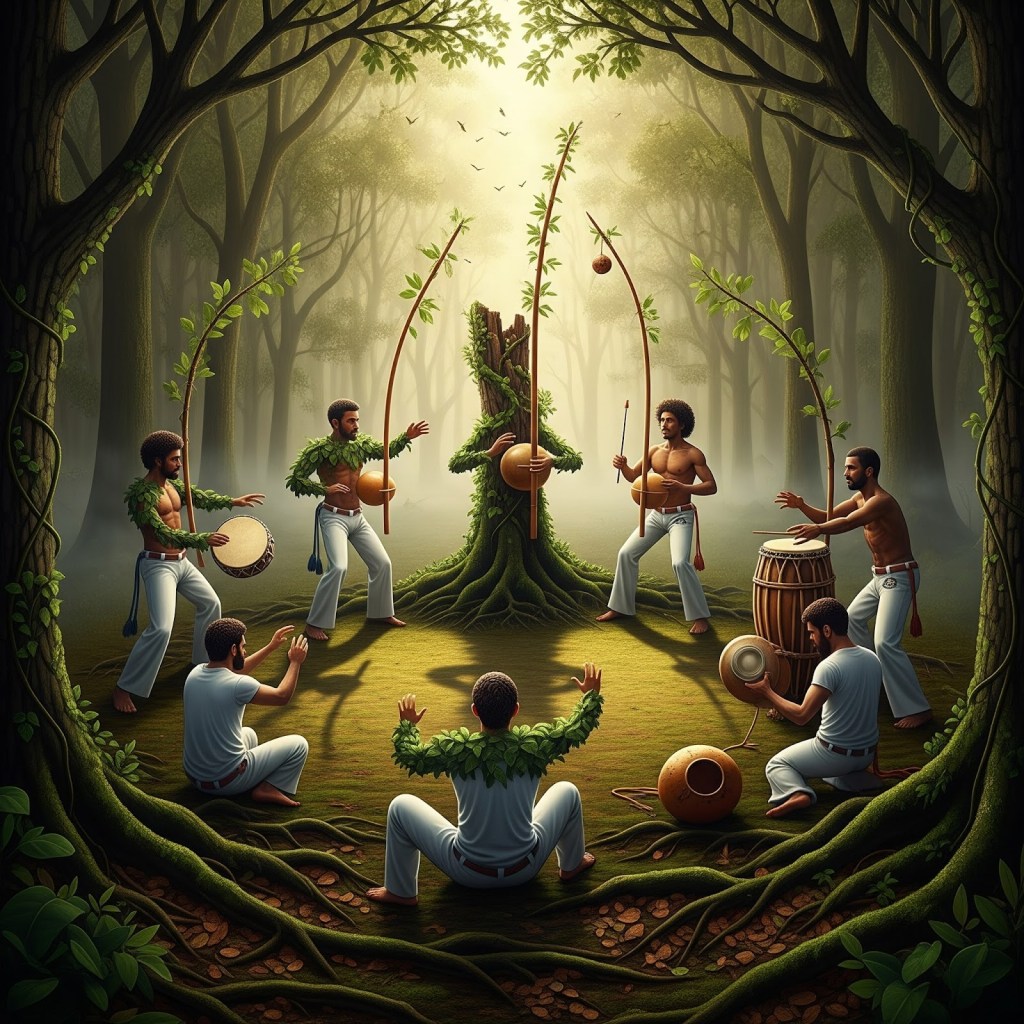
Capoeira Angola, an artistic martial art form, stands as a profound manifestation of Mother Nature, beautifully illustrating the intricate interplay between deeply rooted tradition and the surrounding environment. It embodies the very essence of both dynamic physical movement and profound spiritual connection, offering a holistic understanding of human existence within the natural world. This ancient practice, originating from Afro-Brazilian cultural expressions, draws heavily from the observation of natural phenomena, emulating the fluid movements of animals, the swaying of trees, and the rhythm of ocean waves.
The movements in Capoeira Angola are not merely physical exercises; they are a living dialogue with the earth and its elements. The low, grounded stances and sweeping leg movements mirror the stability and power of the earth, while the agile dodges and escapes reflect the adaptability of creatures in their natural habitats. The continuous flow of the game, known as “jogo,” symbolizes the unending cycles of nature—birth, growth, decay, and renewal. Practitioners learn to anticipate, react, and flow with their partners, much like a river navigates its course, adapting to obstacles and ever-changing landscapes.
Beyond the physical, Capoeira Angola cultivates a deep spiritual connection to the natural world. The “roda,” the circle in which Capoeira is played, represents the cosmic circle of life, a sacred space where individuals connect with a collective energy. The songs sung during the roda often invoke spirits of nature, ancestors, and deities from African spiritual traditions, further intertwining the practice with a reverence for the environment. This spiritual dimension fosters a sense of humility and interconnectedness, reminding practitioners that they are part of a larger ecosystem, not separate from it.
Furthermore, the instruments used in Capoeira Angola, such as the berimbau, atabaque, and pandeiro, are often crafted from natural materials, creating a direct link to the earth. The sounds they produce evoke the rhythms of the natural world, from the buzzing of insects to the booming of thunder, deepening the immersive experience. Through Capoeira Angola, individuals learn to move with intention, listen with their bodies, and connect with their inner spirit, all while honoring the wisdom and power of Mother Nature that inspires every step, every song, and every moment of this beautiful and profound art form.
Capoeira Angola, deeply rooted in its rich African heritage, is far more than a martial art; it is a profound reflection of the earth’s inherent rhythms and fundamental elements. Its movements transcend mere physical exercise, transforming into fluid, organic expressions that beautifully mimic the natural world.
Consider the graceful, undulating sway of trees in a gentle breeze, their branches extending and retracting with a silent, inherent wisdom. This mimicry is evident in the ginga, the continuous, swaying base movement of Capoeira Angola, which allows practitioners to maintain a fluid readiness, much like a tree swaying to absorb and adapt to external forces.
Or visualize the powerful, rhythmic crash of waves against the shore, each surge and retreat a testament to an unstoppable, primal force. This powerful ebb and flow is echoed in the attacks and defenses of Capoeira Angola, where movements like the rasteira (a low sweep) or the armada (a spinning kick) can be sudden and forceful, yet always part of a larger, continuous flow, much like the relentless rhythm of the ocean. The ocean’s depths also inspire the deep, grounded stances and movements that connect the practitioner firmly to the earth.
Beyond the visible movements, the elements are deeply intertwined with the philosophy of Capoeira Angola. The earth, solid and grounding, represents stability and the foundation upon which all movements are built. The wind, intangible yet powerful, embodies the freedom and unpredictability of movement, allowing for evasions and surprises. Water, fluid and adaptable, symbolizes the continuous flow and the ability to adapt to any situation, much like a capoeirista must adapt to their opponent’s movements. Fire, representing passion and intensity, ignites the spirit of the game, bringing energy and dynamism to every interaction.
These profound natural inspirations are intricately woven into the very fabric of Capoeira Angola, making it a living, breathing art form that connects its practitioners not only to their heritage but also to the fundamental forces of the natural world. It is a dance, a fight, a game, and a spiritual journey, all harmonized by the wisdom of Mother Nature.
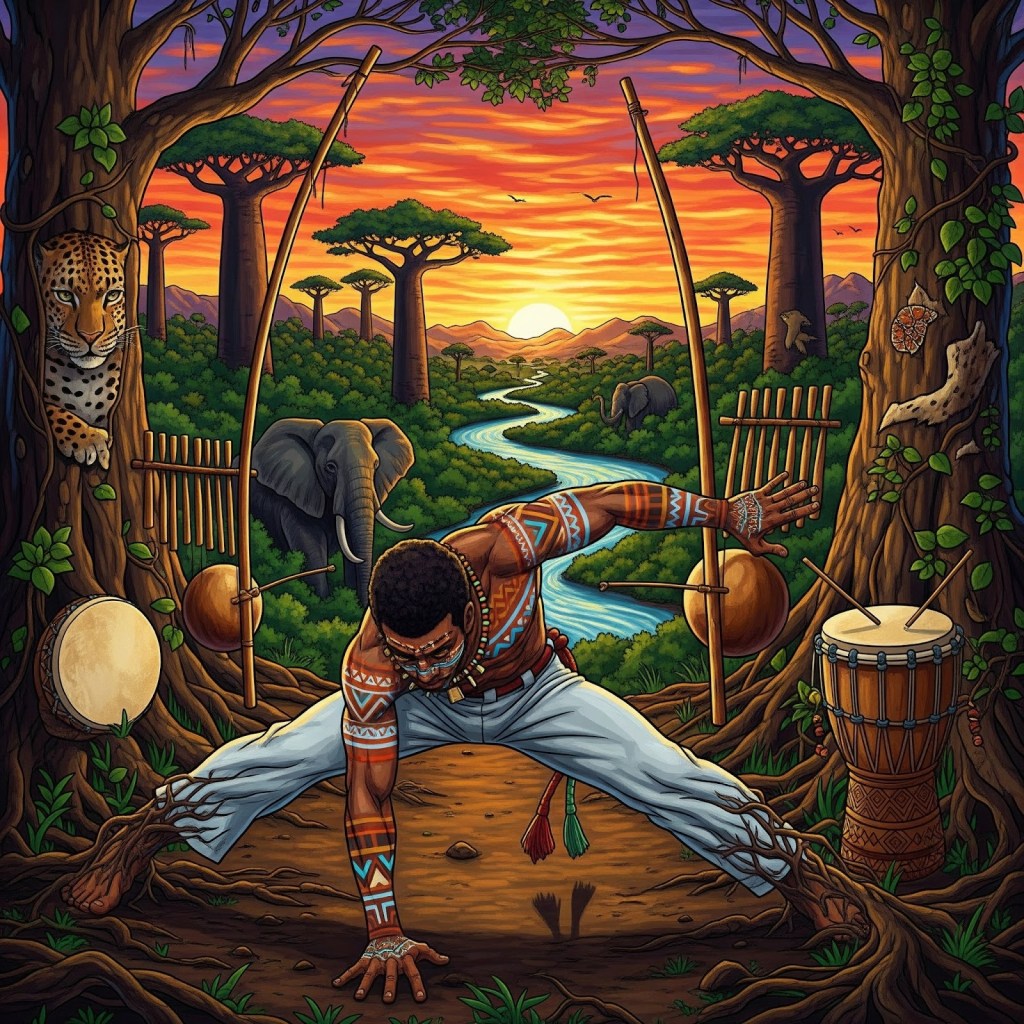
Practitioners of Capoeira Angola engage in a continuous and dynamic dialogue with their surroundings, their movements not only informed by but also deeply imbued with a vibrant cultural heritage. This heritage extends far beyond the confines of mere technique or rote physical sequences, embracing instead the raw, organic essence of nature itself. Every step, every dodge, every sweep, and every counter-movement within the roda (the circle where Capoeira is played) embodies a connection to the earth beneath their feet, the air they breathe, and the life force that flows through all living things. It is a living art form, constantly evolving yet forever tethered to its ancestral roots and the timeless wisdom of the natural world.
Every capoeira game, or “roda,” transcends a simple display of physical skill. It is a vibrant celebration of the interconnectedness of all life, a living testament to the harmony that can exist between humanity and its environment. The energy exchanged between participants in a roda mirrors the vibrant energy of the lush landscapes from which this art form first emerged. This energetic exchange creates a symbiotic relationship, where the human spirit resonates with the natural world, fostering a sense of unity and belonging.
Therefore, Capoeira Angola is far more than a physical practice; it is a profound and vibrant expression of humanity’s intrinsic relationship with the earth. It powerfully emphasizes the critical importance of balance, both within oneself and in one’s interaction with the environment. It instills a deep sense of respect for the natural world and underscores the fundamental importance of nurturing and preserving our natural environment, reminding us that we are an inseparable part of a larger, living ecosystem. Through its movements, music, and philosophy, Capoeira Angola invites practitioners and observers alike to reconnect with the earth, fostering a deeper appreciation for its beauty, power, and the delicate balance that sustains all life.
This direct and sensory contact with the elements fosters not only a heightened sense of awareness but also a deep appreciation for the natural world, transforming mere physical activity into a holistic experience. It inspires a mindfulness that gracefully transcends the physical practice itself, seamlessly integrating into daily life. Through Capoeira, individuals learn to celebrate the fundamental rhythm of life, recognizing the intricate interplay between their own movements and the complex rhythms of the environment around them. This deep connection to nature extends far beyond mere physical exercise; it evolves into a spiritual journey that awakens a profound respect for the planet and all its diverse inhabitants.
Practitioners often engage with the earth directly, feeling its texture beneath their bare feet, grounding them in the present moment. The sun’s warmth on their skin, the breeze rustling through leaves, and the sounds of nature – whether the chirping of birds or the distant roar of the ocean – all become integral parts of the training environment. This constant interaction with natural phenomena sharpens their senses, encouraging a more acute perception of their surroundings. This heightened awareness, in turn, cultivates a profound sense of gratitude for the beauty and resilience of the planet.
The movements of Capoeira, fluid and dynamic, often mimic the ebb and flow of natural forces, such as the swaying of trees in the wind or the crashing of waves. This physical embodiment of nature’s patterns fosters a deeper understanding of ecological principles and the interconnectedness of all living things. As individuals move and interact within the roda (the Capoeira circle), they learn to adapt, respond, and harmonize with both their fellow practitioners and the natural world, much like elements within an ecosystem. This practice of observation and adaptation translates into a more mindful approach to daily challenges, promoting resilience and a sense of belonging.
Ultimately, Capoeira becomes a conduit for a spiritual awakening, where the body, mind, and spirit are harmonized with the rhythms of the earth. It is a philosophy that encourages a respectful stewardship of the environment, inspiring individuals to become advocates for ecological preservation and mindful living. The practice instills a deep-seated reverence for all forms of life, from the smallest insect to the grandest mountain range, fostering a sense of responsibility towards the well-being of the planet and its diverse ecosystems.
Capoeira: A Dynamic Dialogue and Physical Expression
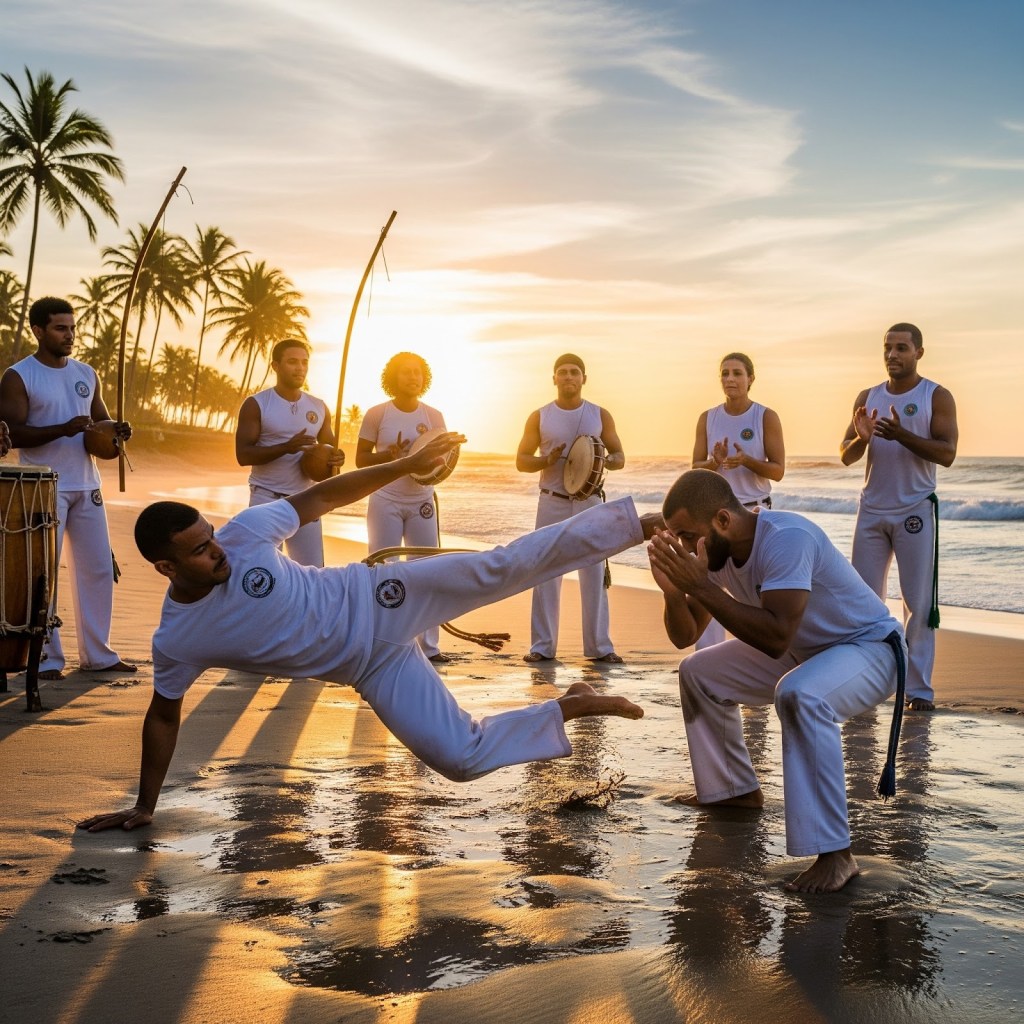
Originating from Brazil, Capoeira is far more than just a martial art – it is a multifaceted practice that can be aptly likened to a dynamic and engaging game. This inherent characteristic allows for an expansive range of experiences, from lighthearted and cooperative exchanges to intense and competitive confrontations, or anything nuanced in between. Consider Capoeira as a dynamic conversation, encompassing the entire spectrum from an amiable, flowing dialogue to a passionate, energetic debate.
At the very core of Capoeira lies interaction; much like a dialogue, it absolutely requires active and engaged participation from all involved. In the Capoeira game, participants engage in a physical exchange of “questions” and “answers.” The player who poses a “question” – a movement, an attack, or a strategy – that their partner cannot effectively “counter” or respond to, is considered to have ‘won’ that particular exchange. This intricate and captivating interplay of movement, strategy, and improvisation makes Capoeira a compelling blend of physicality and mental agility, fostering a truly unique and expressive form of human interaction. The constant demand for quick thinking, adaptability, and creative responses sharpens both the mind and the body, transforming each encounter into a living, breathing chess match.
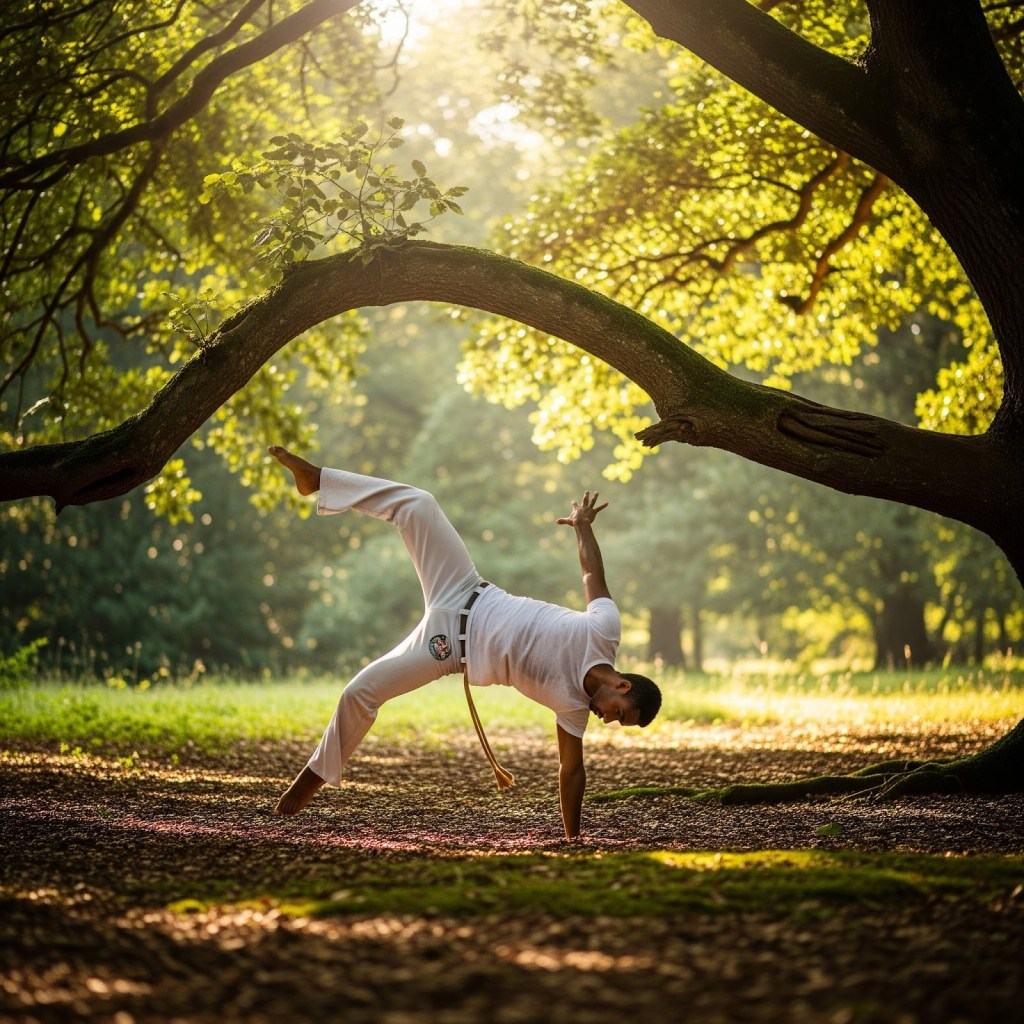
The fluid and often improvisational movements characteristic of Capoeira Angola, with its intricate footwork, graceful dodges, and dynamic sweeps, inherently mirror the organic patterns found throughout nature. The mesmerizing ebb and flow of ocean waves, the rhythmic swaying of trees in the wind, or the agile, instinctive movements of wild animals all find profound echoes in the practitioners’ motions. This creates a powerful, non-verbal dialogue between the human body and the elements surrounding it.
This inherent mirroring allows participants to cultivate a profound sense of harmony and balance, not just within their physical selves but also in relation to their external environment, as they learn to respond intuitively and instinctively to the world around them. The continuous interplay between attack and defense, the constant search for equilibrium amidst dynamic movement, and the inherent adaptability required to respond to a partner’s changing movements all contribute to a heightened sense of embodied connection with the natural world’s powerful and ever-changing forces.
As practitioners engage in this dance-like combat, they become acutely aware of their surroundings, experiencing the rhythm of life that intricately ties them to both their immediate community and the vast, living earth. This immersive experience fosters not only physical agility, strength, and endurance but also mental resilience, emotional tranquility, and a deep sense of presence. It allows individuals to transcend the boundaries of mere sport and connect with a deeper sense of purpose and identity. The movements themselves teach invaluable lessons: patience in observation, keen attentiveness to subtle cues, and the crucial skill of adaptability, echoing the honed survival strategies employed by creatures in the wild. Through Capoeira Angola, individuals don’t just move; they embody the very essence of nature’s wisdom and resilience.
Understanding Malícia in Capoeira: More Than Just Deception
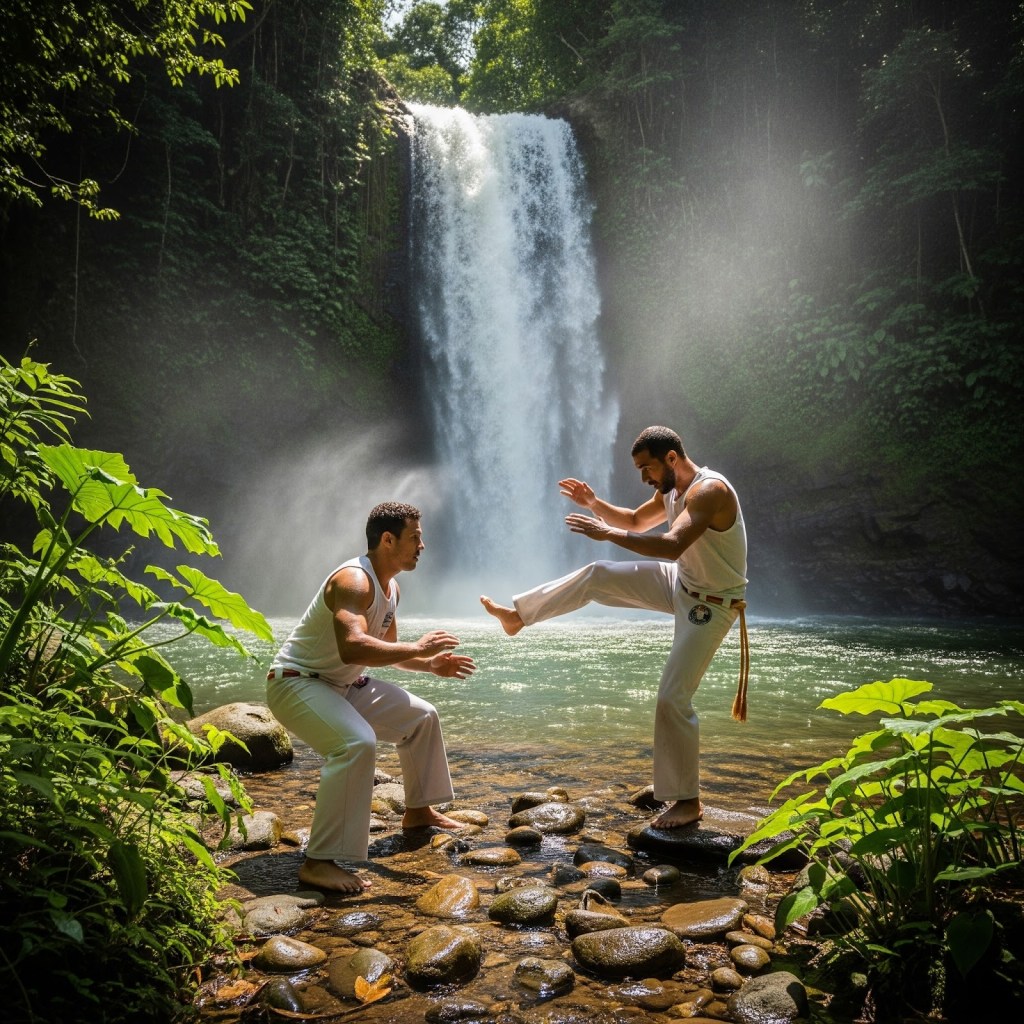
In the vibrant and complex world of Capoeira, the term “malícia” holds a profound significance that extends far beyond its English translation of “malice.” It embodies a sophisticated capacity to understand and anticipate an opponent’s intentions, a crucial element for success within the roda. This intricate concept is deeply embedded in the art form, emphasizing not brute force, but rather a sharp intellect and a keen sense of observation.
The Art of Strategic Deception
At its core, malícia in Capoeira is about the courage to deceive, to trick, and to employ clever strategies that prioritize mental agility over physical strength. A truly proficient capoeirista is a master of misdirection, capable of leading their counterpart astray through a variety of cunning tactics. This might involve feigned actions, such as faking a kick only to execute a different, unexpected move, or even the audacious act of pretending to be injured to lower an opponent’s guard.
Beyond direct feints, the incorporation of elaborate movements, known as “floreios,” plays a vital role in enhancing a capoeirista’s ability to deceive. These graceful, often acrobatic maneuvers can create an illusion of vulnerability, drawing an opponent in while simultaneously maintaining a prepared defense and offense. Furthermore, the possibilities for employing guile are virtually boundless, with players utilizing various tactics, including subtle diversionary actions like gesturing toward external elements during the roda, subtly shifting their opponent’s focus.
Malandragem: A Philosophy of Wit and Resilience
The philosophy of malandragem, closely intertwined with malícia, is deeply ingrained in the Capoeira tradition, often articulated through popular proverbs that guide practitioners in their approach to life and the game. These sayings encapsulate wisdom, caution, and a unique perspective on human nature:
- “Quem não pode com mandinga não carrega patuá” (He who can’t handle mandinga doesn’t wear a patuá). This proverb underscores the importance of self-awareness and acknowledging one’s limitations. It’s a reminder that one should not take on challenges they are not prepared to face, emphasizing prudence and a realistic assessment of one’s capabilities. “Mandinga” refers to a magical or spiritual force, implying that one should not dabble in things they don’t understand or can’t control.
- “Urubu para cantar demora” (A vulture takes a long time to sing), or its alternative version: “Bater papo com otário é jogar conversa fora” (Talking to a fool is a waste of words). Both versions highlight the futility of engaging in unproductive conversations or arguments. The image of a vulture, often associated with patience and observation, suggests that genuine insight or a significant outcome takes time and cannot be rushed by superficial interactions. The latter version directly advises against wasting energy on those who are unreceptive or unintelligent.
- “Valente não existe” (There’s no such thing as a tough guy). This powerful proverb encourages capoeiristas to look beyond superficial appearances of strength and bravado. It acknowledges that everyone, regardless of their outward demeanor, experiences fear and insecurity to varying degrees. Practitioners are urged to see the person beneath the physical strength façade, whether in themselves or others, fostering empathy and a deeper understanding of human vulnerability. This perspective helps in not being misled by false confidence and in recognizing that true strength lies not in the absence of fear, but in how one confronts it.
Malícia Beyond Combat: A Holistic Understanding
In the broader context of Capoeira, malícia transcends mere physical techniques and combat strategies, encompassing a multifaceted concept that permeates every aspect of the art form. It encapsulates a profound understanding of timing, rhythm, and improvisation, serving as a guiding principle in the development and execution of movements. A capoeirista with malícia doesn’t just react; they anticipate, flow, and adapt with an intuitive grace that reflects a deep connection to the game.
While it may initially appear to revolve solely around combat maneuvers, the essence of malícia permeates various facets of Capoeira, including its rich cultural heritage, vibrant musical traditions, and intricate social dynamics. The integration of malícia in Capoeira reflects its inherent complexity and depth, interweaving elements of strategy, intuition, and adaptability. As practitioners delve deeper into the art form, they uncover the intricate layers of malícia, realizing its nuanced applications in diverse facets of life, transcending beyond the roda and permeating everyday experiences. It becomes a way of seeing the world, of navigating social interactions, and of understanding the subtle interplay of power and influence in various situations, making it a truly holistic and transformative concept within Capoeira.
Capoeira Angola, at its core, is far more than a martial art; it is a profound journey of self-discovery and an intimate connection with the world around us. This ancient practice inherently nurtures a deep sense of mindfulness, a state of heightened awareness that transcends the physical realm and permeates every aspect of existence.
What is Mandinga in the context of capoeira?
The term “mandinga” is a multifaceted concept deeply embedded in the world of capoeira, particularly in Capoeira Angola. It represents a confluence of magic, strategy, and artistry, embodying the cunning and skill of a “mandingueiro” – a fighter adept at outsmarting opponents through guile and ingenuity. This inherent essence of “mandinga” imbues the capoeira game with intrigue and theatricality.
Historically, the origins of “mandingueiro” trace back to a belief in individuals possessing magical abilities, offering protection through the influence of spirits. In Capoeira Angola, masters were known to harness these mystical beliefs through the use of “patuas” (charms), thought to confer supernatural powers upon the wearer. These powers included invisibility, shapeshifting, and “corpo-fechado” – a body impervious to harm. The rich tapestry of meanings and associations woven into “mandinga” thus reflects a convergence of martial prowess, spirituality, and folklore within capoeira, elevating it beyond mere physical activity into a realm of symbolism and mystique.The Role of Martial Magic Across Cultures
The concept of “mandinga” within capoeira is not an isolated phenomenon but rather reflects a broader historical and cross-cultural understanding of “martial magic.” Throughout the ages and in diverse cultures, advanced forms of martial art have often incorporated a magical aspect.
- Taoist practitioners are deeply involved with magic.
- Shinto has its sophisticated magical aspect, as does Islam.
- Animists practice ritual magical martial arts.
- Hindu and Buddhist cultures have practices and traditions of martial magic.
- All European arts have long ties to magical practice, both pre- and post-Christian era.
This universal embrace of magic highlights a shared human understanding that combat extends beyond mere physical capabilities.The Warrior’s Personal Magic and Spiritual Preparation
The individual warrior, regardless of cultural background, often cultivates a personal magic. This may involve:
- Quests for visions or dreams: Seeking spiritual guidance or premonitions.
- Sacrifice and personal rituals: Engaging in practices to invoke favor or power.
- Talismans of power: Carrying objects believed to possess protective or enhancing qualities.
- Appeals to personal guardians, familiars, or ancestors: Seeking spiritual assistance.
This private practice of the warrior is considered a pure form of preparation for confronting the divine, underscoring the profound spiritual dimension inherent in combat. The spiritual study of the warrior is often deemed more important than the physical, as combat pushes individuals beyond their physical limits into states of exhaustion, deafness, pain, and privation. The cultivation of “indomitable intention” is often achieved through a posture of “effecting magic,” such as “calling the tiger,” metaphorically consuming the heart of an enemy or bear, or collecting the heads or artifacts of defeated foes to subjugate their spirit. Warriors also pursue ritual combat in times of peace—gaming, expeditions, hunting, arts, and letters—imbuing these activities with the same gravity as direct combat experience.Magical Projections and Psychological Warfare
Beyond personal empowerment, warriors also sought to weaken their enemies through magical projections and rituals. This involved:
- Understanding and confusing enemy intention: Disrupting their focus and strategy.
- Breaking timing and focus: Creating disarray and uncertainty.
- Controlling weather and environment: Seeking to manipulate external factors to their advantage.
- Causing sickness, fouling supplies, and sabotage: Indirectly debilitating the enemy.
- Dominating the enemy with a cloud of despair: Employing psychological warfare through magical means.
The Enduring Mystery of Martial Magic
The effectiveness of martial magic—how much was pointless versus how much was a manipulation of power not yet understood by science—remains a subject of heated conjecture among practitioners and skeptics alike. However, what is not conjecture is the profound, and potentially life-saving, value embedded in this field of study. Garnered over millennia by people whose very lives depended on the efficacy of their techniques, this vast body of knowledge should not be dismissed as mere superstition. To approach conflict or even human potential with only the lens of modern science is to willfully ignore a colossal, time-tested repository of empirical data and experiential wisdom.
The risk of waiting for science to catch up to phenomena mastered by ancient arts is a long and potentially fatal delay. Concepts and practices such as the fluid, internal power generated through Taiji Quan, the spiraling, evasive footwork of Pa Qua (Bagua Zhang), the physiological and psychological effects of deep trance states on perceived body weight and agility, or the rapid, instinctual firing of synapses that defines a “mushin mind” (mind of no-mind) are still on the distant horizon of scientific explanation. Martial magic often offers practical, functional answers to questions science hasn’t even had the foresight to formulate. More than that, it provides a complete, interwoven framework for understanding esoteric phenomena and harnessing subtle energies that current, often reductionist, scientific paradigms may not yet possess the tools or the vocabulary to encompass. The true power lies in acknowledging that the rigorous, life-or-death laboratory of the martial artist has already yielded profound truths that modern research is only beginning to glimpse.
Patuas and the Legacy of Mandinga in Capoeira Angola
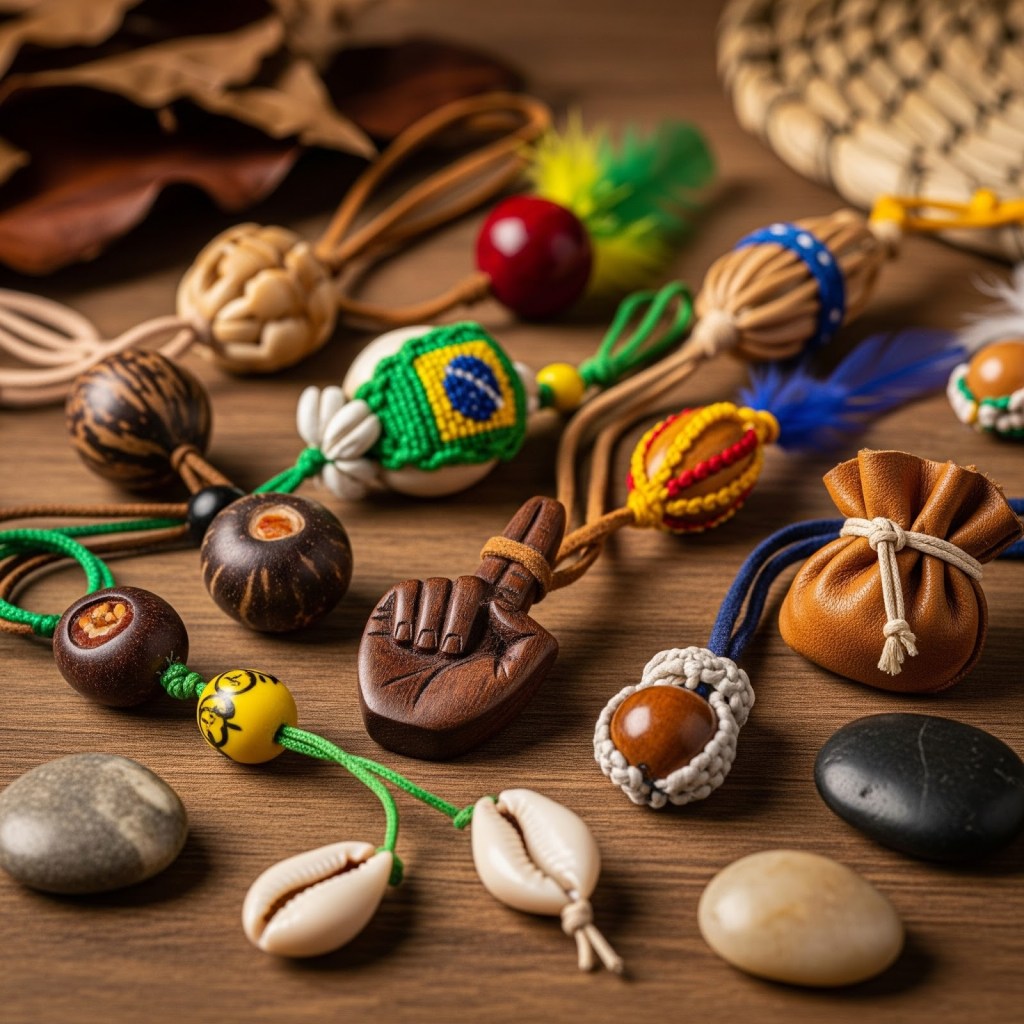
In the intricate world of Capoeira Angola, the concept of “mandinga”—a potent blend of spiritual power, cunning, and ritualistic protection—plays a foundational role, embodying a dimension far beyond mere physical combat. Central to this spiritual armor are “patuás,” tangible charms and amulets meticulously crafted to imbue their wearers with mystical resilience and ward off malevolent forces. These “patuás” are not simply decorative items; they are powerful talismans, often blessed or enchanted through ritual incantations and practices by specialized spiritual practitioners.
These spiritual protectors and creators of “patuás” were known as “feiticeiros”—sorcerers, mystics, and often, profound masters of Capoeira Angola themselves. Their deep understanding of both the physical and spiritual realms allowed them to weave intricate spells and blessings into these charms, making them indispensable for the “mandingueiros”—Capoeira Angola fighters who actively cultivated and relied upon their spiritual protection. The “feiticeiros” were respected figures within their communities, possessing knowledge passed down through generations, often incorporating elements of African animism, indigenous beliefs, and even aspects of Catholicism, reflecting the syncretic nature of Brazilian culture.
The enduring significance of “mandinga” and “patuá” within Capoeira Angola is not merely historical; it is actively celebrated and preserved in the art form’s rich oral tradition, particularly through its songs. A popular and deeply resonant Capoeira Angola song lyric succinctly encapsulates this philosophy: “Quem não pode com mandinga, não carrega patuá” (Who cannot contend with incantations doesn’t carry a patuá). This proverb speaks to the symbiotic relationship between spiritual preparedness and physical action. It implies that the “patuá” is not a substitute for inner strength or the ability to navigate the spiritual currents of the world. Instead, it serves as an amplifier and a symbol of a fighter’s connection to the mystical energies that underpin their art. To carry a “patuá” without understanding or embodying the spirit of “mandinga” would render the charm inert, highlighting that true power comes from within, augmented by these sacred objects.
This emphasis on spiritual protection and ritual incantations underscores Capoeira Angola’s unique identity as more than just a martial art or dance. It is a holistic practice that integrates physical prowess with spiritual fortitude, cultural heritage, and a profound respect for the unseen forces that shape human experience. The “patuás” and the practice of “mandinga” serve as powerful reminders of the deep spiritual roots of Capoeira Angola, connecting its practitioners to a rich tapestry of history, belief, and the enduring power of the human spirit.
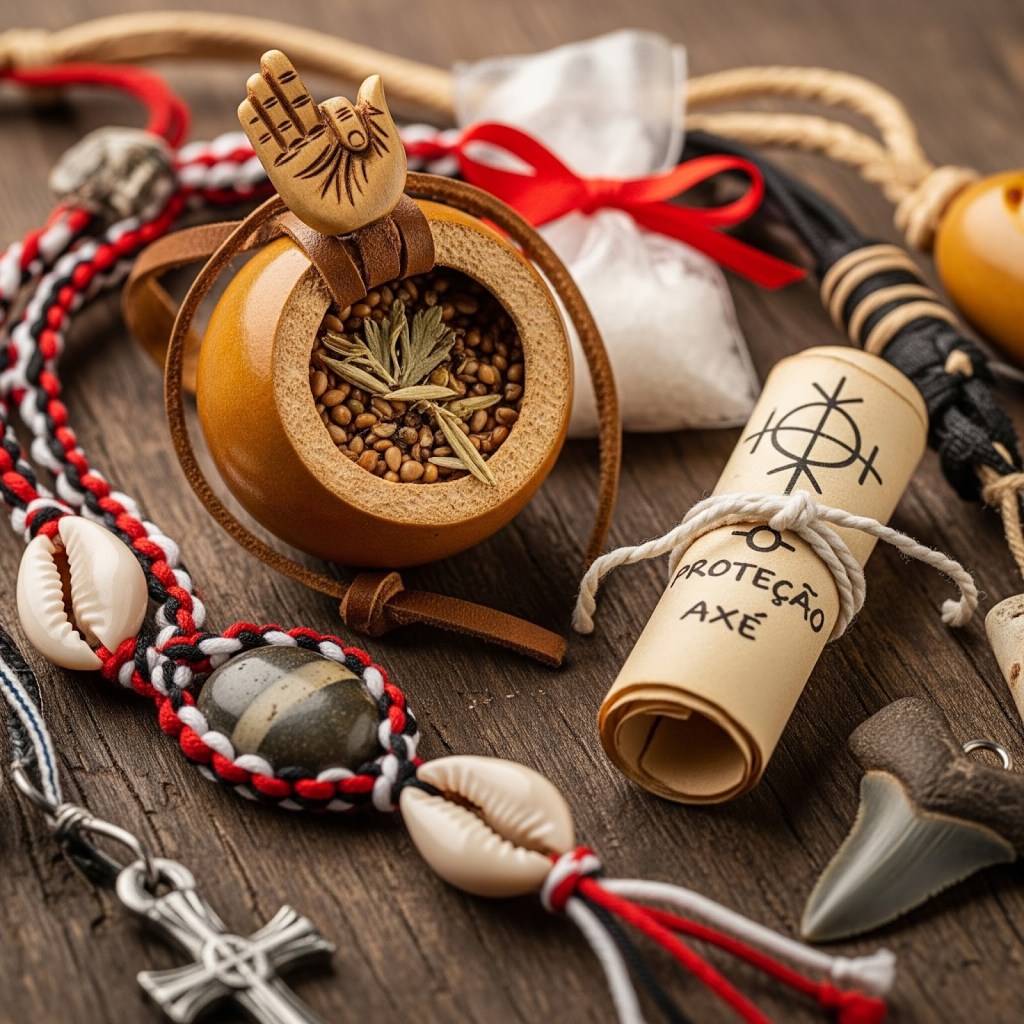
The significance of charms and conjure in capoeira is strikingly exemplified by Besouro Manganga, a legendary capoeira fighter from Santa Amaro. Elevated to almost mythic status, he is widely regarded as the greatest capoeira adept of all time. His moniker, “Besouro Manganga,” stems from the popular belief that he was unbeatable due to his powerful charms. “Manganga” itself signifies a powerful medicine man, likely deriving from “nganga,” the Kongo-Angolan term for a ritual specialist. It was believed that Besouro’s mystical powers allowed him to overcome all his adversaries, including other capoeira fighters and armed policemen. His eventual demise by a knife made of “ticum” wood, specially treated with rituals to counteract his charms, further solidified his legendary status and the profound belief in his magical protections. His story is an incredible narrative intertwining Orishas, various forms of magic, and messages confronting systems of oppression, highlighting the deep cultural and spiritual roots of “mandinga” in Capoeira Angola.
Mindfulness in Motion: The Roda as a Microcosm of Life
The heart of Capoeira Angola lies within the roda, the dynamic circle where the game unfolds. Here, an intense and unwavering focus is not merely encouraged but demanded. Participants are drawn into a state of complete presence, their minds fully immersed in the intricate rhythms, the subtle movements of their partners, and the ebb and flow of energy that permeates the space. This isn’t just about reacting to an opponent; it’s about anticipating, flowing, and becoming one with the unfolding narrative of the game.
This cultivated mindfulness extends far beyond the immediate boundaries of the roda. Practitioners learn to transfer this heightened awareness to their everyday lives, observing the intricate beauty that often goes unnoticed in the hustle and bustle of modern existence. From the delicate, fractal patterns on a single leaf to the boundless, ever-changing expanse of the sky, they develop a profound appreciation for the natural world. This practice fosters an understanding of the profound interconnectedness of all beings, recognizing humanity’s integral place within the vast ecological tapestry. It instills a deep sense of responsibility towards nature, inspiring a conscious effort to protect and preserve it.
The shared space, energy, and rhythm within the roda serve as a powerful metaphor for the interdependent relationships found in healthy ecosystems. Each participant, with their unique contributions, enriches the collective experience, mirroring the symbiotic interactions that sustain life on Earth. Through these interactions, players develop a profound awareness of their actions and their impact on others, understanding that every movement, every decision, ripples through the collective. This creates a shared narrative that transcends individual experience, fostering a powerful sense of unity and collective purpose. This holistic approach not only nurtures personal growth, strengthening the individual’s inner landscape, but also reinforces the bonds that tie us to one another and to our environment, inspiring a more harmonious and sustainable existence. The meditative quality of the roda acts as a sanctuary, allowing participants to shed the accumulated stresses and distractions of daily life, focusing entirely on the present moment and the intricate dance unfolding before them.
The Earth’s Song: Music as a Spiritual Bridge
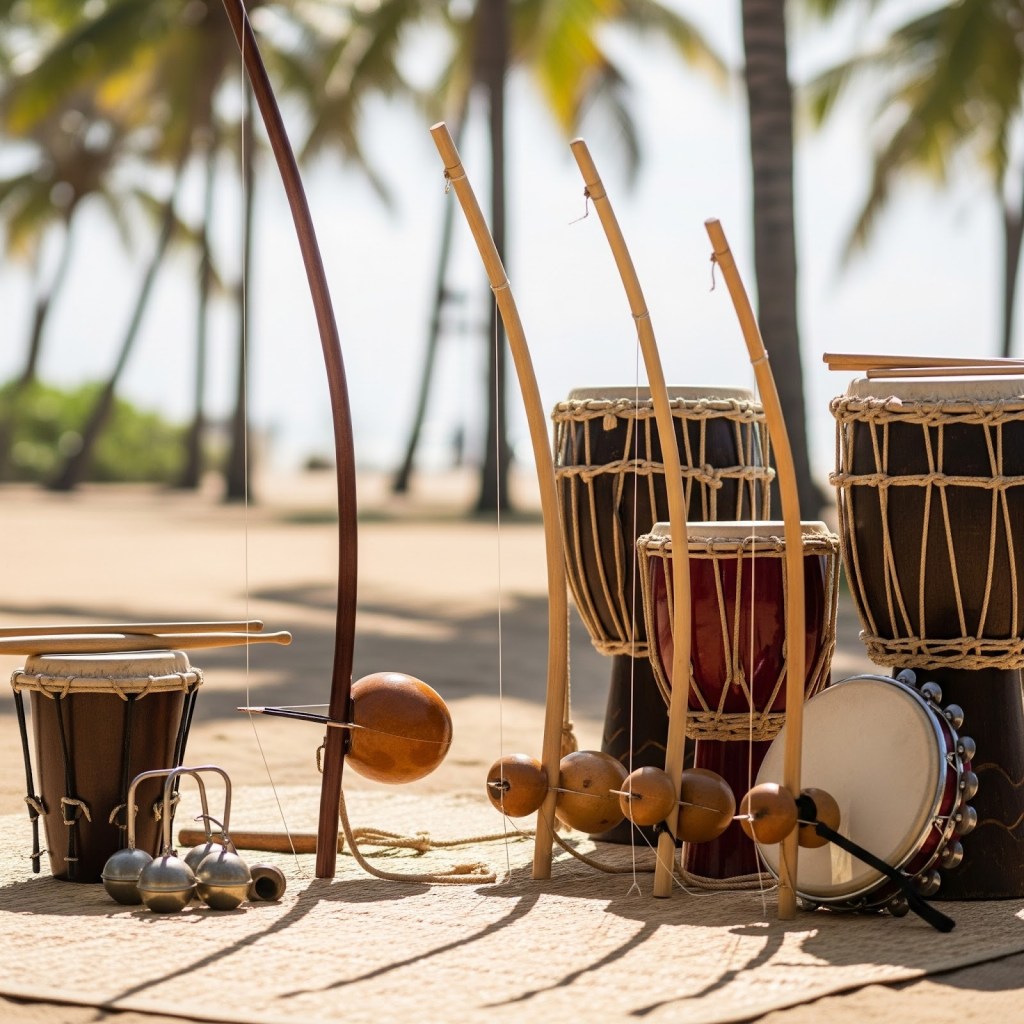
Music, within the vibrant and deeply spiritual tradition of Capoeira Angola, transcends its conventional role as mere entertainment; it functions as a profound spiritual bridge, a sacred conduit that intimately connects practitioners to the very essence of the earth. This intricate connection is meticulously woven into the fundamental fabric of the art form, beginning with the instruments themselves. The traditional tools of sound, each imbued with a unique and resonant voice, are often meticulously crafted from natural materials. This deliberate and conscious choice fosters an inherent, almost primal, resonance with the planet and its myriad natural elements, creating an unbreakable bond between the musician, the instrument, and the natural world.
Consider the soulful berimbau, a musical bow whose singular, ancient twang evokes echoes from time immemorial, a sound that seems to carry whispers from forgotten ages. Its vibrations resonate deep within the listener, conjuring images of ancestral wisdom and timeless landscapes. The resonant atabaque, a drum whose deep, percussive thrum mimics the very heartbeat of the earth, grounds the rhythms in a primordial pulse, a visceral connection to the planet’s life force. Its rhythmic insistence is both grounding and invigorating, creating a powerful foundation for the unfolding movements. And the lively pandeiro, a tambourine that adds intricate layers of percussive texture, contributes to the rich and complex tapestry of sound. Together, these instruments, through their natural origins and the skillful hands of the Capoeiristas, are not merely played; they are coaxed to “sing” the song of the land, to articulate the spirit of the natural world in a language understood intuitively by the soul. They become living extensions of the earth, channeling its energy and wisdom into audible form.
The mesmerizing rhythms and melodic chants that emanate from these carefully crafted instruments are far more than just sequences of notes; they are living repositories of ancestral wisdom and primal energy, meticulously passed down through generations. These sonic traditions are a powerful and unifying force, uniting participants with the fundamental rhythms and sounds of nature, creating a collective experience that transcends individual boundaries. The roda, the sacred circle where Capoeira Angola unfolds, is thus transformed into a vibrant celebration of life itself, a dynamic and energetic space where the human spirit communes directly with the universal pulse of existence. This profound musical communion deepens the bond not only with the immediate environment—the soil beneath their feet, the air they breathe—but also with the broader cosmos, fostering a profound sense of belonging and spiritual unity with everything within it. It is a microcosm of the universe, where every participant plays a vital role in the harmonious whole.
The engaging call-and-response dynamic, a hallmark and essential characteristic of Capoeira Angola, orchestrates a collective expression between the skilled musicians and the agile players. This interactive and vibrant dialogue invites everyone present to be an active participant in the shared experience, transcending the conventional and often rigid roles of performer and passive audience. Through this holistic and profoundly immersive approach, Capoeira Angola gracefully transcends the confines of a mere martial art. It blossoms into a profound spiritual practice, guiding individuals to be deeply grounded in the wisdom and inherent beauty of the natural world. It actively encourages deep introspection and self-reflection, fostering a greater understanding of one’s intricate and vital place within the vast, interconnected web of existence. This deep connection, profoundly rooted in the symbiotic interplay of music and movement, inspires a profound appreciation for cultural heritage—the ancestral knowledge meticulously embedded in every rhythm and gesture—and underscores the undeniable interconnectedness of all living beings. The percussive beats mimic the very heartbeat of the earth, a primal rhythm that resonates deep within our souls, while the melodic lines carry ancestral wisdom, transforming the roda into a sacred space where the human spirit harmonizes with the universal pulse of life. It is in this dynamic and breathtaking fusion of sound, movement, and spirit that Capoeira Angola truly reveals its transformative power, inviting practitioners to experience a profound sense of unity with themselves, their community, and the boundless, ever-present rhythms of the natural world.
—–The Berimbau: A Conductor of Peace and Self-Discovery
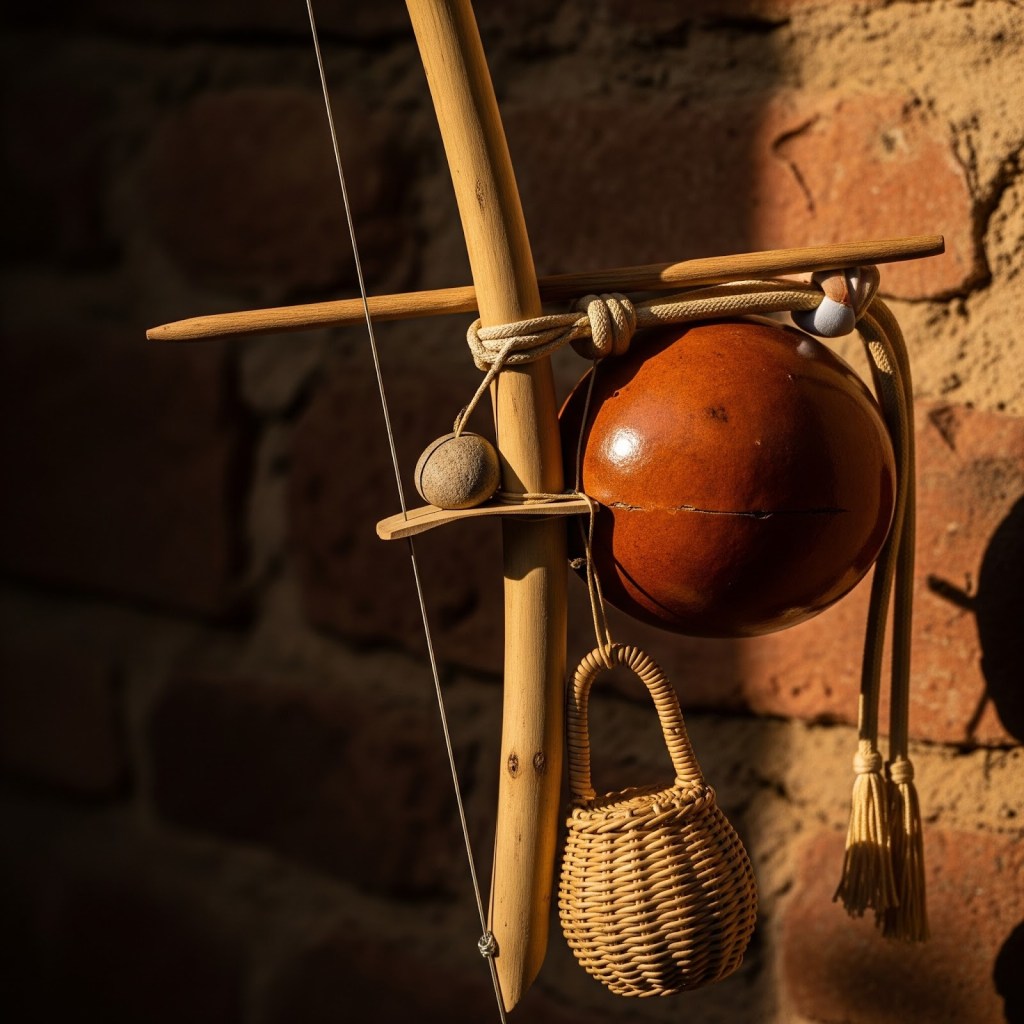
The Berimbau, an instrument of profound Afro-Brazilian heritage, transcends its physical form to offer an unparalleled and deeply immersive auditory experience. Its singularly tranquil sound acts as a potent and remarkable catalyst for environments conducive to deep introspection, focused academic pursuits, and serene meditative practices. The instrument’s distinctive, often subtle, yet deeply penetrating tones do not merely resonate superficially; they ripple through the air, meticulously weaving a tapestry of profound calm that gently, yet powerfully, encourages profound self-reflection and unparalleled mental clarity. This ancient, single-stringed percussion instrument, despite its inherent simplicity in design, possesses a remarkable and almost paradoxical ability to generate complex, yet deeply comforting, rhythmic patterns. These intricate rhythms, far from serving as distractions, actively enhance concentration and soothe the nervous system, firmly establishing the Berimbau as an invaluable companion for individuals dedicated to nurturing their creative faculties or engaging in a diverse array of mindful practices, from yoga to deep contemplation.
The ethereal and often hypnotic melodies emanating from the Berimbau possess an inherent, almost magical, power to effortlessly transport the listener to a state of profound peace and unwavering tranquility. In a contemporary world frequently characterized by relentless demands, an incessant barrage of information, and overwhelming sensory input, the soothing and grounding vibrations of the Berimbau provide a much-needed and deeply cherished sanctuary. It facilitates a graceful and effortless escape from the tumultuous chaos and incessant demands of daily life, inviting one to immerse themselves fully in a realm of quiet contemplation and exquisite inner harmony. This journey is not merely a momentary respite from the external world but a profound and transformative shift in consciousness, allowing for a deeper and more authentic connection with one’s inner landscape and true self.
Beyond its immediate and undeniably potent calming effects, the mesmerizing sound of this instrument serves as a profound catalyst for self-discovery and personal growth. It functions as a powerful sonic bridge, facilitating a deeper, more authentic connection with one’s inner self and actively encouraging a journey of profound personal exploration. Through its resonant and captivating voice, the Berimbau inspires a newfound sense of clarity, diligently shedding light on previously uncharted inner landscapes and fostering a profound and enduring sense of well-being that permeates every aspect of mind, body, and spirit. Its rich cultural heritage, inextricably combined with its potent therapeutic qualities, elevates the Berimbau beyond the simple definition of a musical instrument; it transforms into a gateway to inner peace and a truly profound tool for holistic personal growth and spiritual enlightenment.
The unique and ingenious construction of the Berimbau, typically categorized as a single-string percussion instrument, contributes significantly and distinctively to its signature and instantly recognizable sound. Composed of three fundamental and interdependent elements—a flexible wooden bow (verga), a taut steel string (arame), and a hollowed gourd (cabaça) that ingeniously acts as a resonator—its simple yet brilliant design allows for a remarkable and extensive range of timbres and rhythmic variations. The skilled player, utilizing a small wooden stick (baqueta), a Caxixi (a woven rattle filled with seeds that adds a percussive layer, enriching the sonic texture), and a Dobrão (a coin or stone pressed against the arame), expertly manipulates the string and the opening of the gourd. This intricate interplay of these seemingly simple elements creates a sonic tapestry that is both primal in its resonance and sophisticated in its execution, drawing listeners irresistibly into its captivating and deeply enriching embrace, a testament to the ingenuity of its creators.
Historically, the Berimbau is profoundly and inextricably rooted in Afro-Brazilian culture, holding a particularly central and revered position within the dynamic and expressive martial art of Capoeira. It serves as the undisputed lead instrument in the roda (the sacred circle where Capoeira is played), dictating with absolute authority the rhythm, the tempo, the speed, and the overall style of the game. The Berimbau’s commanding and evocative voice guides the precise and fluid movements of the Capoeiristas, its melodies inspiring both breathtaking graceful agility and powerful, impactful strikes. This inextricable and symbiotic link to Capoeira highlights its role not merely as a musical instrument, but as a living cultural artifact that embodies the rich tapestry of history, the enduring spirit of resistance, and the profound power of community. Its rhythms evoke poignant stories of resilience, the preservation of tradition, and the enduring spirit of a people, adding yet another profound layer of depth and meaning to its already powerful and compelling presence.
The therapeutic qualities inherent in the Berimbau extend far beyond mere superficial relaxation. The sustained, resonant tones it produces possess the remarkable ability to actively induce a deep meditative state, effectively promoting enhanced mental clarity and facilitating profound emotional release. For many individuals, the act of listening to or actively playing the Berimbau can transform into a profound form of active meditation, allowing for a focused and heightened awareness that effortlessly transcends the ordinary confines of daily experience. This deep and immersive engagement can significantly help to reduce accumulated stress, effectively alleviate anxiety, and profoundly promote a pervasive sense of emotional balance and inner equilibrium. Furthermore, the inherently rhythmic nature of the music produced by the Berimbau resonates deeply with the body’s natural physiological rhythms, fostering a powerful sense of alignment, grounding, and holistic well-being.
In essence, the Berimbau’s enduring power and profound significance lie in its remarkable ability to transcend its purely physical form. It is not merely a collection of wood, wire, and gourd; it is a vibrant conduit for spiritual connection, a profound storyteller of cultural heritage, and a gentle, yet unwavering, guide on the arduous path to inner harmony and self-realization. Its enduring appeal, which resonates deeply across diverse cultures and throughout the annals of time, stands as a powerful testament to its universal language of peace and its innate capacity to evoke a profound sense of well-being. It graciously invites all who listen to embark on a deeply transformative and enriching journey within themselves, a journey of discovery and profound personal growth, ultimately leading to a deeper understanding of one’s place in the intricate dance of life.
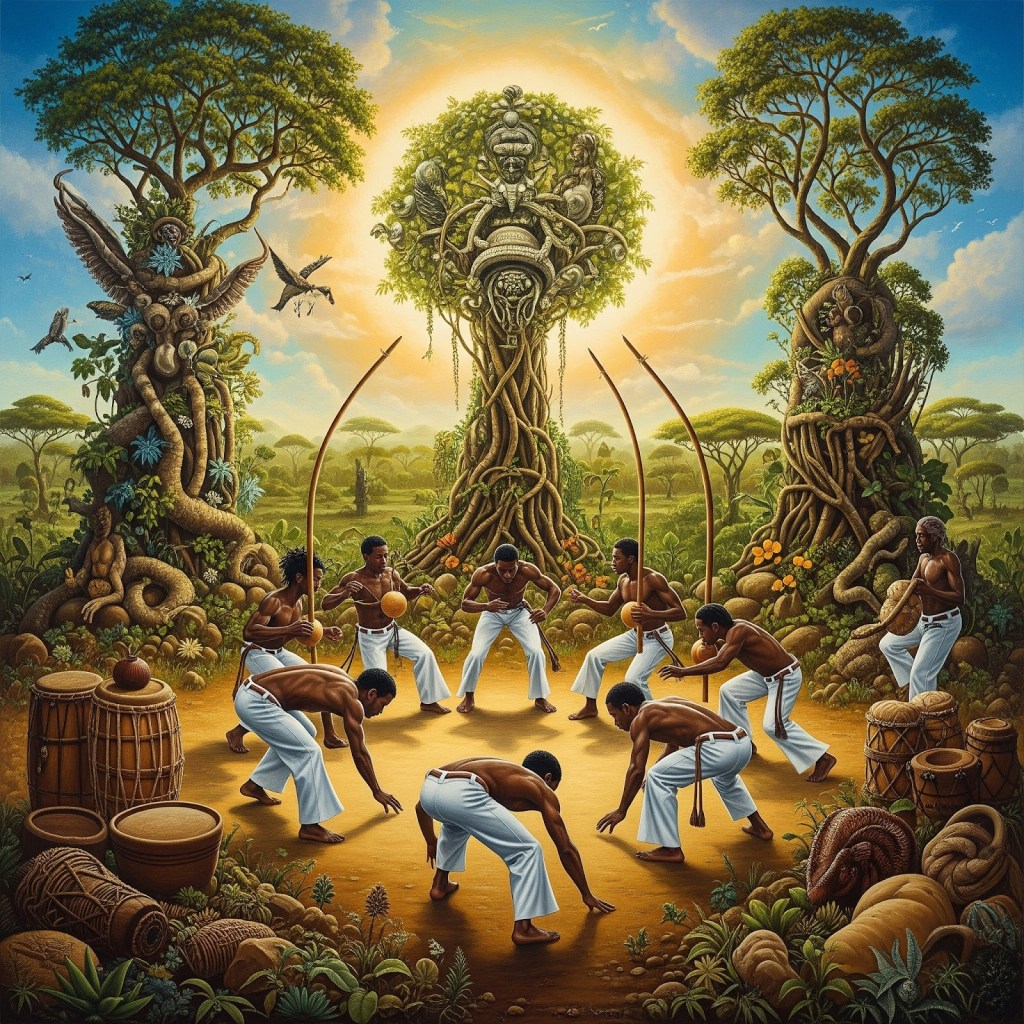
“Mandinga is to find magic in life”
This beautiful game, has many subtle gestures and movements that enhance the connection and helps to tell a story.
Capoeira Angola, a captivating Afro-Brazilian martial art, transcends the realm of mere physical discipline, offering a profound and multifaceted pathway for individuals to connect with Mother Nature. It is a holistic journey of self-discovery and empowerment, where the harmonious blend of dance, music, and acrobatics not only cultivates a deep bond with the natural world but also invites practitioners to explore the rich cultural heritage of Brazil through its intricate histories and enduring traditions.
At its core, Capoeira Angola is a profound art form that intricately weaves together rhythm, fluid movement, and the indispensable value of community. It fosters an inclusive and deeply supportive environment, nurturing a powerful sense of belonging and mutual encouragement among all who participate.
A fundamental tenet of Capoeira Angola is the conscious decision to train within natural environments. Whether it’s the tranquil expanse of a local park, the boundless embrace of a sun-drenched beach, or the unconfined freedom of an open field, this deliberate engagement with nature is paramount. This practice is not merely about physical exercise; it’s a transformative experience that profoundly deepens one’s connection with the earth.
As practitioners engage in the dynamic movements of Capoeira Angola, they become acutely aware of the grounding sensation of the earth beneath their bare feet, a visceral reminder of their connection to the planet. They feel the gentle caress of the breeze against their skin, a subtle yet powerful link to the natural world’s breath. The warmth of the sun shining down upon them bathes them in energy, reinforcing the life-giving force of nature. In these moments, every movement, every rhythm, every interaction is imbued with an inherent harmony, mirroring the intrinsic balance and flow found within the natural world itself. This deeply spiritual connection to the environment elevates Capoeira Angola from a mere physical discipline to a holistic practice that nurtures the body, mind, and spirit in unison with the rhythms of Mother Nature.
Capoeira Angola as a manifestation of Nature
Capoeira Angola, an artistic martial art form, stands as a profound manifestation of Mother Nature, beautifully illustrating the intricate interplay between deeply rooted tradition and the surrounding environment. It embodies the very essence of both dynamic physical movement and profound spiritual connection, offering a holistic understanding of human existence within the natural world. This ancient practice, originating from Afro-Brazilian cultural expressions, draws heavily from the observation of natural phenomena, emulating the fluid movements of animals, the swaying of trees, and the rhythm of ocean waves.
The movements in Capoeira Angola are not merely physical exercises; they are a living dialogue with the earth and its elements. The low, grounded stances and sweeping leg movements mirror the stability and power of the earth, while the agile dodges and escapes reflect the adaptability of creatures in their natural habitats. The continuous flow of the game, known as “jogo,” symbolizes the unending cycles of nature—birth, growth, decay, and renewal. Practitioners learn to anticipate, react, and flow with their partners, much like a river navigates its course, adapting to obstacles and ever-changing landscapes.
Beyond the physical, Capoeira Angola cultivates a deep spiritual connection to the natural world. The “roda,” the circle in which Capoeira is played, represents the cosmic circle of life, a sacred space where individuals connect with a collective energy. The songs sung during the roda often invoke spirits of nature, ancestors, and deities from African spiritual traditions, further intertwining the practice with a reverence for the environment. This spiritual dimension fosters a sense of humility and interconnectedness, reminding practitioners that they are part of a larger ecosystem, not separate from it.
Furthermore, the instruments used in Capoeira Angola, such as the berimbau, atabaque, and pandeiro, are often crafted from natural materials, creating a direct link to the earth. The sounds they produce evoke the rhythms of the natural world, from the buzzing of insects to the booming of thunder, deepening the immersive experience. Through Capoeira Angola, individuals learn to move with intention, listen with their bodies, and connect with their inner spirit, all while honoring the wisdom and power of Mother Nature that inspires every step, every song, and every moment of this beautiful and profound art form.
Capoeira Angola, deeply rooted in its rich African heritage, is far more than a martial art; it is a profound reflection of the earth’s inherent rhythms and fundamental elements. Its movements transcend mere physical exercise, transforming into fluid, organic expressions that beautifully mimic the natural world.
Consider the graceful, undulating sway of trees in a gentle breeze, their branches extending and retracting with a silent, inherent wisdom. This mimicry is evident in the ginga, the continuous, swaying base movement of Capoeira Angola, which allows practitioners to maintain a fluid readiness, much like a tree swaying to absorb and adapt to external forces.
Or visualize the powerful, rhythmic crash of waves against the shore, each surge and retreat a testament to an unstoppable, primal force. This powerful ebb and flow is echoed in the attacks and defenses of Capoeira Angola, where movements like the rasteira (a low sweep) or the armada (a spinning kick) can be sudden and forceful, yet always part of a larger, continuous flow, much like the relentless rhythm of the ocean. The ocean’s depths also inspire the deep, grounded stances and movements that connect the practitioner firmly to the earth.
Beyond the visible movements, the elements are deeply intertwined with the philosophy of Capoeira Angola. The earth, solid and grounding, represents stability and the foundation upon which all movements are built. The wind, intangible yet powerful, embodies the freedom and unpredictability of movement, allowing for evasions and surprises. Water, fluid and adaptable, symbolizes the continuous flow and the ability to adapt to any situation, much like a capoeirista must adapt to their opponent’s movements. Fire, representing passion and intensity, ignites the spirit of the game, bringing energy and dynamism to every interaction.
These profound natural inspirations are intricately woven into the very fabric of Capoeira Angola, making it a living, breathing art form that connects its practitioners not only to their heritage but also to the fundamental forces of the natural world. It is a dance, a fight, a game, and a spiritual journey, all harmonized by the wisdom of Mother Nature.
Practitioners of Capoeira Angola engage in a continuous and dynamic dialogue with their surroundings, their movements not only informed by but also deeply imbued with a vibrant cultural heritage. This heritage extends far beyond the confines of mere technique or rote physical sequences, embracing instead the raw, organic essence of nature itself. Every step, every dodge, every sweep, and every counter-movement within the roda (the circle where Capoeira is played) embodies a connection to the earth beneath their feet, the air they breathe, and the life force that flows through all living things. It is a living art form, constantly evolving yet forever tethered to its ancestral roots and the timeless wisdom of the natural world.
Every capoeira game, or “roda,” transcends a simple display of physical skill. It is a vibrant celebration of the interconnectedness of all life, a living testament to the harmony that can exist between humanity and its environment. The energy exchanged between participants in a roda mirrors the vibrant energy of the lush landscapes from which this art form first emerged. This energetic exchange creates a symbiotic relationship, where the human spirit resonates with the natural world, fostering a sense of unity and belonging.
Therefore, Capoeira Angola is far more than a physical practice; it is a profound and vibrant expression of humanity’s intrinsic relationship with the earth. It powerfully emphasizes the critical importance of balance, both within oneself and in one’s interaction with the environment. It instills a deep sense of respect for the natural world and underscores the fundamental importance of nurturing and preserving our natural environment, reminding us that we are an inseparable part of a larger, living ecosystem. Through its movements, music, and philosophy, Capoeira Angola invites practitioners and observers alike to reconnect with the earth, fostering a deeper appreciation for its beauty, power, and the delicate balance that sustains all life.
This direct and sensory contact with the elements fosters not only a heightened sense of awareness but also a deep appreciation for the natural world, transforming mere physical activity into a holistic experience. It inspires a mindfulness that gracefully transcends the physical practice itself, seamlessly integrating into daily life. Through Capoeira, individuals learn to celebrate the fundamental rhythm of life, recognizing the intricate interplay between their own movements and the complex rhythms of the environment around them. This deep connection to nature extends far beyond mere physical exercise; it evolves into a spiritual journey that awakens a profound respect for the planet and all its diverse inhabitants.
Practitioners often engage with the earth directly, feeling its texture beneath their bare feet, grounding them in the present moment. The sun’s warmth on their skin, the breeze rustling through leaves, and the sounds of nature – whether the chirping of birds or the distant roar of the ocean – all become integral parts of the training environment. This constant interaction with natural phenomena sharpens their senses, encouraging a more acute perception of their surroundings. This heightened awareness, in turn, cultivates a profound sense of gratitude for the beauty and resilience of the planet.
The movements of Capoeira, fluid and dynamic, often mimic the ebb and flow of natural forces, such as the swaying of trees in the wind or the crashing of waves. This physical embodiment of nature’s patterns fosters a deeper understanding of ecological principles and the interconnectedness of all living things. As individuals move and interact within the roda (the Capoeira circle), they learn to adapt, respond, and harmonize with both their fellow practitioners and the natural world, much like elements within an ecosystem. This practice of observation and adaptation translates into a more mindful approach to daily challenges, promoting resilience and a sense of belonging.
Ultimately, Capoeira becomes a conduit for a spiritual awakening, where the body, mind, and spirit are harmonized with the rhythms of the earth. It is a philosophy that encourages a respectful stewardship of the environment, inspiring individuals to become advocates for ecological preservation and mindful living. The practice instills a deep-seated reverence for all forms of life, from the smallest insect to the grandest mountain range, fostering a sense of responsibility towards the well-being of the planet and its diverse ecosystems.
Capoeira: A Dynamic Dialogue and Physical Expression
Originating from Brazil, Capoeira is far more than just a martial art – it is a multifaceted practice that can be aptly likened to a dynamic and engaging game. This inherent characteristic allows for an expansive range of experiences, from lighthearted and cooperative exchanges to intense and competitive confrontations, or anything nuanced in between. Consider Capoeira as a dynamic conversation, encompassing the entire spectrum from an amiable, flowing dialogue to a passionate, energetic debate.
At the very core of Capoeira lies interaction; much like a dialogue, it absolutely requires active and engaged participation from all involved. In the Capoeira game, participants engage in a physical exchange of “questions” and “answers.” The player who poses a “question” – a movement, an attack, or a strategy – that their partner cannot effectively “counter” or respond to, is considered to have ‘won’ that particular exchange. This intricate and captivating interplay of movement, strategy, and improvisation makes Capoeira a compelling blend of physicality and mental agility, fostering a truly unique and expressive form of human interaction. The constant demand for quick thinking, adaptability, and creative responses sharpens both the mind and the body, transforming each encounter into a living, breathing chess match.
Mirroring Nature’s Grace: The Fluidity of Capoeira Angola
The fluid and often improvisational movements characteristic of Capoeira Angola, with its intricate footwork, graceful dodges, and dynamic sweeps, inherently mirror the organic patterns found throughout nature. The mesmerizing ebb and flow of ocean waves, the rhythmic swaying of trees in the wind, or the agile, instinctive movements of wild animals all find profound echoes in the practitioners’ motions. This creates a powerful, non-verbal dialogue between the human body and the elements surrounding it.
This inherent mirroring allows participants to cultivate a profound sense of harmony and balance, not just within their physical selves but also in relation to their external environment, as they learn to respond intuitively and instinctively to the world around them. The continuous interplay between attack and defense, the constant search for equilibrium amidst dynamic movement, and the inherent adaptability required to respond to a partner’s changing movements all contribute to a heightened sense of embodied connection with the natural world’s powerful and ever-changing forces.
As practitioners engage in this dance-like combat, they become acutely aware of their surroundings, experiencing the rhythm of life that intricately ties them to both their immediate community and the vast, living earth. This immersive experience fosters not only physical agility, strength, and endurance but also mental resilience, emotional tranquility, and a deep sense of presence. It allows individuals to transcend the boundaries of mere sport and connect with a deeper sense of purpose and identity. The movements themselves teach invaluable lessons: patience in observation, keen attentiveness to subtle cues, and the crucial skill of adaptability, echoing the honed survival strategies employed by creatures in the wild. Through Capoeira Angola, individuals don’t just move; they embody the very essence of nature’s wisdom and resilience.
Understanding Malícia in Capoeira: More Than Just Deception
In the vibrant and complex world of Capoeira, the term “malícia” holds a profound significance that extends far beyond its English translation of “malice.” It embodies a sophisticated capacity to understand and anticipate an opponent’s intentions, a crucial element for success within the roda. This intricate concept is deeply embedded in the art form, emphasizing not brute force, but rather a sharp intellect and a keen sense of observation.
The Art of Strategic Deception
At its core, malícia in Capoeira is about the courage to deceive, to trick, and to employ clever strategies that prioritize mental agility over physical strength. A truly proficient capoeirista is a master of misdirection, capable of leading their counterpart astray through a variety of cunning tactics. This might involve feigned actions, such as faking a kick only to execute a different, unexpected move, or even the audacious act of pretending to be injured to lower an opponent’s guard.
Beyond direct feints, the incorporation of elaborate movements, known as “floreios,” plays a vital role in enhancing a capoeirista’s ability to deceive. These graceful, often acrobatic maneuvers can create an illusion of vulnerability, drawing an opponent in while simultaneously maintaining a prepared defense and offense. Furthermore, the possibilities for employing guile are virtually boundless, with players utilizing various tactics, including subtle diversionary actions like gesturing toward external elements during the roda, subtly shifting their opponent’s focus.
Malandragem: A Philosophy of Wit and Resilience
The philosophy of malandragem, closely intertwined with malícia, is deeply ingrained in the Capoeira tradition, often articulated through popular proverbs that guide practitioners in their approach to life and the game. These sayings encapsulate wisdom, caution, and a unique perspective on human nature:
- “Quem não pode com mandinga não carrega patuá” (He who can’t handle mandinga doesn’t wear a patuá). This proverb underscores the importance of self-awareness and acknowledging one’s limitations. It’s a reminder that one should not take on challenges they are not prepared to face, emphasizing prudence and a realistic assessment of one’s capabilities. “Mandinga” refers to a magical or spiritual force, implying that one should not dabble in things they don’t understand or can’t control.
- “Urubu para cantar demora” (A vulture takes a long time to sing), or its alternative version: “Bater papo com otário é jogar conversa fora” (Talking to a fool is a waste of words). Both versions highlight the futility of engaging in unproductive conversations or arguments. The image of a vulture, often associated with patience and observation, suggests that genuine insight or a significant outcome takes time and cannot be rushed by superficial interactions. The latter version directly advises against wasting energy on those who are unreceptive or unintelligent.
- “Valente não existe” (There’s no such thing as a tough guy). This powerful proverb encourages capoeiristas to look beyond superficial appearances of strength and bravado. It acknowledges that everyone, regardless of their outward demeanor, experiences fear and insecurity to varying degrees. Practitioners are urged to see the person beneath the physical strength façade, whether in themselves or others, fostering empathy and a deeper understanding of human vulnerability. This perspective helps in not being misled by false confidence and in recognizing that true strength lies not in the absence of fear, but in how one confronts it.
Malícia Beyond Combat: A Holistic Understanding
In the broader context of Capoeira, malícia transcends mere physical techniques and combat strategies, encompassing a multifaceted concept that permeates every aspect of the art form. It encapsulates a profound understanding of timing, rhythm, and improvisation, serving as a guiding principle in the development and execution of movements. A capoeirista with malícia doesn’t just react; they anticipate, flow, and adapt with an intuitive grace that reflects a deep connection to the game.
While it may initially appear to revolve solely around combat maneuvers, the essence of malícia permeates various facets of Capoeira, including its rich cultural heritage, vibrant musical traditions, and intricate social dynamics. The integration of malícia in Capoeira reflects its inherent complexity and depth, interweaving elements of strategy, intuition, and adaptability. As practitioners delve deeper into the art form, they uncover the intricate layers of malícia, realizing its nuanced applications in diverse facets of life, transcending beyond the roda and permeating everyday experiences. It becomes a way of seeing the world, of navigating social interactions, and of understanding the subtle interplay of power and influence in various situations, making it a truly holistic and transformative concept within Capoeira.
Capoeira Angola, at its core, is far more than a martial art; it is a profound journey of self-discovery and an intimate connection with the world around us. This ancient practice inherently nurtures a deep sense of mindfulness, a state of heightened awareness that transcends the physical realm and permeates every aspect of existence.
What is Mandinga in the context of capoeira?
The term “mandinga” is a multifaceted concept deeply embedded in the world of capoeira, particularly in Capoeira Angola. It represents a confluence of magic, strategy, and artistry, embodying the cunning and skill of a “mandingueiro” – a fighter adept at outsmarting opponents through guile and ingenuity. This inherent essence of “mandinga” imbues the capoeira game with intrigue and theatricality.
Historically, the origins of “mandingueiro” trace back to a belief in individuals possessing magical abilities, offering protection through the influence of spirits. In Capoeira Angola, masters were known to harness these mystical beliefs through the use of “patuas” (charms), thought to confer supernatural powers upon the wearer. These powers included invisibility, shapeshifting, and “corpo-fechado” – a body impervious to harm. The rich tapestry of meanings and associations woven into “mandinga” thus reflects a convergence of martial prowess, spirituality, and folklore within capoeira, elevating it beyond mere physical activity into a realm of symbolism and mystique.The Role of Martial Magic Across Cultures
The concept of “mandinga” within capoeira is not an isolated phenomenon but rather reflects a broader historical and cross-cultural understanding of “martial magic.” Throughout the ages and in diverse cultures, advanced forms of martial art have often incorporated a magical aspect.
- Taoist practitioners are deeply involved with magic.
- Shinto has its sophisticated magical aspect, as does Islam.
- Animists practice ritual magical martial arts.
- Hindu and Buddhist cultures have practices and traditions of martial magic.
- All European arts have long ties to magical practice, both pre- and post-Christian era.
This universal embrace of magic highlights a shared human understanding that combat extends beyond mere physical capabilities.The Warrior’s Personal Magic and Spiritual Preparation
The individual warrior, regardless of cultural background, often cultivates a personal magic. This may involve:
- Quests for visions or dreams: Seeking spiritual guidance or premonitions.
- Sacrifice and personal rituals: Engaging in practices to invoke favor or power.
- Talismans of power: Carrying objects believed to possess protective or enhancing qualities.
- Appeals to personal guardians, familiars, or ancestors: Seeking spiritual assistance.
This private practice of the warrior is considered a pure form of preparation for confronting the divine, underscoring the profound spiritual dimension inherent in combat. The spiritual study of the warrior is often deemed more important than the physical, as combat pushes individuals beyond their physical limits into states of exhaustion, deafness, pain, and privation. The cultivation of “indomitable intention” is often achieved through a posture of “effecting magic,” such as “calling the tiger,” metaphorically consuming the heart of an enemy or bear, or collecting the heads or artifacts of defeated foes to subjugate their spirit. Warriors also pursue ritual combat in times of peace—gaming, expeditions, hunting, arts, and letters—imbuing these activities with the same gravity as direct combat experience.Magical Projections and Psychological Warfare
Beyond personal empowerment, warriors also sought to weaken their enemies through magical projections and rituals. This involved:
- Understanding and confusing enemy intention: Disrupting their focus and strategy.
- Breaking timing and focus: Creating disarray and uncertainty.
- Controlling weather and environment: Seeking to manipulate external factors to their advantage.
- Causing sickness, fouling supplies, and sabotage: Indirectly debilitating the enemy.
- Dominating the enemy with a cloud of despair: Employing psychological warfare through magical means.
The Enduring Mystery of Martial Magic
The effectiveness of martial magic—how much was pointless versus how much was a manipulation of power not yet understood by science—remains a subject of heated conjecture among practitioners and skeptics alike. However, what is not conjecture is the profound, and potentially life-saving, value embedded in this field of study. Garnered over millennia by people whose very lives depended on the efficacy of their techniques, this vast body of knowledge should not be dismissed as mere superstition. To approach conflict or even human potential with only the lens of modern science is to willfully ignore a colossal, time-tested repository of empirical data and experiential wisdom.
The risk of waiting for science to catch up to phenomena mastered by ancient arts is a long and potentially fatal delay. Concepts and practices such as the fluid, internal power generated through Taiji Quan, the spiraling, evasive footwork of Pa Qua (Bagua Zhang), the physiological and psychological effects of deep trance states on perceived body weight and agility, or the rapid, instinctual firing of synapses that defines a “mushin mind” (mind of no-mind) are still on the distant horizon of scientific explanation. Martial magic often offers practical, functional answers to questions science hasn’t even had the foresight to formulate. More than that, it provides a complete, interwoven framework for understanding esoteric phenomena and harnessing subtle energies that current, often reductionist, scientific paradigms may not yet possess the tools or the vocabulary to encompass. The true power lies in acknowledging that the rigorous, life-or-death laboratory of the martial artist has already yielded profound truths that modern research is only beginning to glimpse.
Patuas and the Legacy of Mandinga in Capoeira Angola
In the intricate world of Capoeira Angola, the concept of “mandinga”—a potent blend of spiritual power, cunning, and ritualistic protection—plays a foundational role, embodying a dimension far beyond mere physical combat. Central to this spiritual armor are “patuás,” tangible charms and amulets meticulously crafted to imbue their wearers with mystical resilience and ward off malevolent forces. These “patuás” are not simply decorative items; they are powerful talismans, often blessed or enchanted through ritual incantations and practices by specialized spiritual practitioners.
These spiritual protectors and creators of “patuás” were known as “feiticeiros”—sorcerers, mystics, and often, profound masters of Capoeira Angola themselves. Their deep understanding of both the physical and spiritual realms allowed them to weave intricate spells and blessings into these charms, making them indispensable for the “mandingueiros”—Capoeira Angola fighters who actively cultivated and relied upon their spiritual protection. The “feiticeiros” were respected figures within their communities, possessing knowledge passed down through generations, often incorporating elements of African animism, indigenous beliefs, and even aspects of Catholicism, reflecting the syncretic nature of Brazilian culture.
The enduring significance of “mandinga” and “patuá” within Capoeira Angola is not merely historical; it is actively celebrated and preserved in the art form’s rich oral tradition, particularly through its songs. A popular and deeply resonant Capoeira Angola song lyric succinctly encapsulates this philosophy: “Quem não pode com mandinga, não carrega patuá” (Who cannot contend with incantations doesn’t carry a patuá). This proverb speaks to the symbiotic relationship between spiritual preparedness and physical action. It implies that the “patuá” is not a substitute for inner strength or the ability to navigate the spiritual currents of the world. Instead, it serves as an amplifier and a symbol of a fighter’s connection to the mystical energies that underpin their art. To carry a “patuá” without understanding or embodying the spirit of “mandinga” would render the charm inert, highlighting that true power comes from within, augmented by these sacred objects.
This emphasis on spiritual protection and ritual incantations underscores Capoeira Angola’s unique identity as more than just a martial art or dance. It is a holistic practice that integrates physical prowess with spiritual fortitude, cultural heritage, and a profound respect for the unseen forces that shape human experience. The “patuás” and the practice of “mandinga” serve as powerful reminders of the deep spiritual roots of Capoeira Angola, connecting its practitioners to a rich tapestry of history, belief, and the enduring power of the human spirit.
The significance of charms and conjure in capoeira is strikingly exemplified by Besouro Manganga, a legendary capoeira fighter from Santa Amaro. Elevated to almost mythic status, he is widely regarded as the greatest capoeira adept of all time. His moniker, “Besouro Manganga,” stems from the popular belief that he was unbeatable due to his powerful charms. “Manganga” itself signifies a powerful medicine man, likely deriving from “nganga,” the Kongo-Angolan term for a ritual specialist. It was believed that Besouro’s mystical powers allowed him to overcome all his adversaries, including other capoeira fighters and armed policemen. His eventual demise by a knife made of “ticum” wood, specially treated with rituals to counteract his charms, further solidified his legendary status and the profound belief in his magical protections. His story is an incredible narrative intertwining Orishas, various forms of magic, and messages confronting systems of oppression, highlighting the deep cultural and spiritual roots of “mandinga” in Capoeira Angola.
Mindfulness in Motion: The Roda as a Microcosm of Life
The heart of Capoeira Angola lies within the roda, the dynamic circle where the game unfolds. Here, an intense and unwavering focus is not merely encouraged but demanded. Participants are drawn into a state of complete presence, their minds fully immersed in the intricate rhythms, the subtle movements of their partners, and the ebb and flow of energy that permeates the space. This isn’t just about reacting to an opponent; it’s about anticipating, flowing, and becoming one with the unfolding narrative of the game.
This cultivated mindfulness extends far beyond the immediate boundaries of the roda. Practitioners learn to transfer this heightened awareness to their everyday lives, observing the intricate beauty that often goes unnoticed in the hustle and bustle of modern existence. From the delicate, fractal patterns on a single leaf to the boundless, ever-changing expanse of the sky, they develop a profound appreciation for the natural world. This practice fosters an understanding of the profound interconnectedness of all beings, recognizing humanity’s integral place within the vast ecological tapestry. It instills a deep sense of responsibility towards nature, inspiring a conscious effort to protect and preserve it.
The shared space, energy, and rhythm within the roda serve as a powerful metaphor for the interdependent relationships found in healthy ecosystems. Each participant, with their unique contributions, enriches the collective experience, mirroring the symbiotic interactions that sustain life on Earth. Through these interactions, players develop a profound awareness of their actions and their impact on others, understanding that every movement, every decision, ripples through the collective. This creates a shared narrative that transcends individual experience, fostering a powerful sense of unity and collective purpose. This holistic approach not only nurtures personal growth, strengthening the individual’s inner landscape, but also reinforces the bonds that tie us to one another and to our environment, inspiring a more harmonious and sustainable existence. The meditative quality of the roda acts as a sanctuary, allowing participants to shed the accumulated stresses and distractions of daily life, focusing entirely on the present moment and the intricate dance unfolding before them.
The Earth’s Song: Music as a Spiritual Bridge
Music, within the vibrant and deeply spiritual tradition of Capoeira Angola, transcends its conventional role as mere entertainment; it functions as a profound spiritual bridge, a sacred conduit that intimately connects practitioners to the very essence of the earth. This intricate connection is meticulously woven into the fundamental fabric of the art form, beginning with the instruments themselves. The traditional tools of sound, each imbued with a unique and resonant voice, are often meticulously crafted from natural materials. This deliberate and conscious choice fosters an inherent, almost primal, resonance with the planet and its myriad natural elements, creating an unbreakable bond between the musician, the instrument, and the natural world.
Consider the soulful berimbau, a musical bow whose singular, ancient twang evokes echoes from time immemorial, a sound that seems to carry whispers from forgotten ages. Its vibrations resonate deep within the listener, conjuring images of ancestral wisdom and timeless landscapes. The resonant atabaque, a drum whose deep, percussive thrum mimics the very heartbeat of the earth, grounds the rhythms in a primordial pulse, a visceral connection to the planet’s life force. Its rhythmic insistence is both grounding and invigorating, creating a powerful foundation for the unfolding movements. And the lively pandeiro, a tambourine that adds intricate layers of percussive texture, contributes to the rich and complex tapestry of sound. Together, these instruments, through their natural origins and the skillful hands of the Capoeiristas, are not merely played; they are coaxed to “sing” the song of the land, to articulate the spirit of the natural world in a language understood intuitively by the soul. They become living extensions of the earth, channeling its energy and wisdom into audible form.
The mesmerizing rhythms and melodic chants that emanate from these carefully crafted instruments are far more than just sequences of notes; they are living repositories of ancestral wisdom and primal energy, meticulously passed down through generations. These sonic traditions are a powerful and unifying force, uniting participants with the fundamental rhythms and sounds of nature, creating a collective experience that transcends individual boundaries. The roda, the sacred circle where Capoeira Angola unfolds, is thus transformed into a vibrant celebration of life itself, a dynamic and energetic space where the human spirit communes directly with the universal pulse of existence. This profound musical communion deepens the bond not only with the immediate environment—the soil beneath their feet, the air they breathe—but also with the broader cosmos, fostering a profound sense of belonging and spiritual unity with everything within it. It is a microcosm of the universe, where every participant plays a vital role in the harmonious whole.
The engaging call-and-response dynamic, a hallmark and essential characteristic of Capoeira Angola, orchestrates a collective expression between the skilled musicians and the agile players. This interactive and vibrant dialogue invites everyone present to be an active participant in the shared experience, transcending the conventional and often rigid roles of performer and passive audience. Through this holistic and profoundly immersive approach, Capoeira Angola gracefully transcends the confines of a mere martial art. It blossoms into a profound spiritual practice, guiding individuals to be deeply grounded in the wisdom and inherent beauty of the natural world. It actively encourages deep introspection and self-reflection, fostering a greater understanding of one’s intricate and vital place within the vast, interconnected web of existence. This deep connection, profoundly rooted in the symbiotic interplay of music and movement, inspires a profound appreciation for cultural heritage—the ancestral knowledge meticulously embedded in every rhythm and gesture—and underscores the undeniable interconnectedness of all living beings. The percussive beats mimic the very heartbeat of the earth, a primal rhythm that resonates deep within our souls, while the melodic lines carry ancestral wisdom, transforming the roda into a sacred space where the human spirit harmonizes with the universal pulse of life. It is in this dynamic and breathtaking fusion of sound, movement, and spirit that Capoeira Angola truly reveals its transformative power, inviting practitioners to experience a profound sense of unity with themselves, their community, and the boundless, ever-present rhythms of the natural world.
—–The Berimbau: A Conductor of Peace and Self-Discovery
The Berimbau, an instrument of profound Afro-Brazilian heritage, transcends its physical form to offer an unparalleled and deeply immersive auditory experience. Its singularly tranquil sound acts as a potent and remarkable catalyst for environments conducive to deep introspection, focused academic pursuits, and serene meditative practices. The instrument’s distinctive, often subtle, yet deeply penetrating tones do not merely resonate superficially; they ripple through the air, meticulously weaving a tapestry of profound calm that gently, yet powerfully, encourages profound self-reflection and unparalleled mental clarity. This ancient, single-stringed percussion instrument, despite its inherent simplicity in design, possesses a remarkable and almost paradoxical ability to generate complex, yet deeply comforting, rhythmic patterns. These intricate rhythms, far from serving as distractions, actively enhance concentration and soothe the nervous system, firmly establishing the Berimbau as an invaluable companion for individuals dedicated to nurturing their creative faculties or engaging in a diverse array of mindful practices, from yoga to deep contemplation.
The ethereal and often hypnotic melodies emanating from the Berimbau possess an inherent, almost magical, power to effortlessly transport the listener to a state of profound peace and unwavering tranquility. In a contemporary world frequently characterized by relentless demands, an incessant barrage of information, and overwhelming sensory input, the soothing and grounding vibrations of the Berimbau provide a much-needed and deeply cherished sanctuary. It facilitates a graceful and effortless escape from the tumultuous chaos and incessant demands of daily life, inviting one to immerse themselves fully in a realm of quiet contemplation and exquisite inner harmony. This journey is not merely a momentary respite from the external world but a profound and transformative shift in consciousness, allowing for a deeper and more authentic connection with one’s inner landscape and true self.
Beyond its immediate and undeniably potent calming effects, the mesmerizing sound of this instrument serves as a profound catalyst for self-discovery and personal growth. It functions as a powerful sonic bridge, facilitating a deeper, more authentic connection with one’s inner self and actively encouraging a journey of profound personal exploration. Through its resonant and captivating voice, the Berimbau inspires a newfound sense of clarity, diligently shedding light on previously uncharted inner landscapes and fostering a profound and enduring sense of well-being that permeates every aspect of mind, body, and spirit. Its rich cultural heritage, inextricably combined with its potent therapeutic qualities, elevates the Berimbau beyond the simple definition of a musical instrument; it transforms into a gateway to inner peace and a truly profound tool for holistic personal growth and spiritual enlightenment.
The unique and ingenious construction of the Berimbau, typically categorized as a single-string percussion instrument, contributes significantly and distinctively to its signature and instantly recognizable sound. Composed of three fundamental and interdependent elements—a flexible wooden bow (verga), a taut steel string (arame), and a hollowed gourd (cabaça) that ingeniously acts as a resonator—its simple yet brilliant design allows for a remarkable and extensive range of timbres and rhythmic variations. The skilled player, utilizing a small wooden stick (baqueta), a Caxixi (a woven rattle filled with seeds that adds a percussive layer, enriching the sonic texture), and a Dobrão (a coin or stone pressed against the arame), expertly manipulates the string and the opening of the gourd. This intricate interplay of these seemingly simple elements creates a sonic tapestry that is both primal in its resonance and sophisticated in its execution, drawing listeners irresistibly into its captivating and deeply enriching embrace, a testament to the ingenuity of its creators.
Historically, the Berimbau is profoundly and inextricably rooted in Afro-Brazilian culture, holding a particularly central and revered position within the dynamic and expressive martial art of Capoeira. It serves as the undisputed lead instrument in the roda (the sacred circle where Capoeira is played), dictating with absolute authority the rhythm, the tempo, the speed, and the overall style of the game. The Berimbau’s commanding and evocative voice guides the precise and fluid movements of the Capoeiristas, its melodies inspiring both breathtaking graceful agility and powerful, impactful strikes. This inextricable and symbiotic link to Capoeira highlights its role not merely as a musical instrument, but as a living cultural artifact that embodies the rich tapestry of history, the enduring spirit of resistance, and the profound power of community. Its rhythms evoke poignant stories of resilience, the preservation of tradition, and the enduring spirit of a people, adding yet another profound layer of depth and meaning to its already powerful and compelling presence.
The therapeutic qualities inherent in the Berimbau extend far beyond mere superficial relaxation. The sustained, resonant tones it produces possess the remarkable ability to actively induce a deep meditative state, effectively promoting enhanced mental clarity and facilitating profound emotional release. For many individuals, the act of listening to or actively playing the Berimbau can transform into a profound form of active meditation, allowing for a focused and heightened awareness that effortlessly transcends the ordinary confines of daily experience. This deep and immersive engagement can significantly help to reduce accumulated stress, effectively alleviate anxiety, and profoundly promote a pervasive sense of emotional balance and inner equilibrium. Furthermore, the inherently rhythmic nature of the music produced by the Berimbau resonates deeply with the body’s natural physiological rhythms, fostering a powerful sense of alignment, grounding, and holistic well-being.
In essence, the Berimbau’s enduring power and profound significance lie in its remarkable ability to transcend its purely physical form. It is not merely a collection of wood, wire, and gourd; it is a vibrant conduit for spiritual connection, a profound storyteller of cultural heritage, and a gentle, yet unwavering, guide on the arduous path to inner harmony and self-realization. Its enduring appeal, which resonates deeply across diverse cultures and throughout the annals of time, stands as a powerful testament to its universal language of peace and its innate capacity to evoke a profound sense of well-being. It graciously invites all who listen to embark on a deeply transformative and enriching journey within themselves, a journey of discovery and profound personal growth, ultimately leading to a deeper understanding of one’s place in the intricate dance of life.
“Mandinga is to find magic in life”
This beautiful game, has many subtle gestures and movements that enhance the connection and helps to tell a story.
 Jogo Corpo Fechado