“There are not more than five musical notes, yet the combinations of these five give rise to more melodies than can ever be heard. There are not more than five primary colours, yet in combination, they produce more hues than can ever been seen. There are not more than five cardinal tastes, yet combinations of them yield more flavours than can ever be tasted.” ― Sun Tzu, The Art of War“
Capoeira Angola is a defensive martial art known for its intricate trap-like defenses designed to catch opponents off guard. It encompasses 8 basic defenses, each with unique unexpected attacks and counter attacks based on the opponent’s positioning. Mastery of these movements enables capoeiristas to defend against individuals carrying various weapons, including sticks, clubs, knives, and potentially even firearms with the appropriate skills.
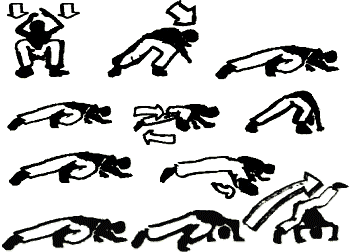
In this installment, we’re actually going over 2 basic movements, the RESITENCIA, and the COCORINHA.
RESITENCIA
Resistência, also known as ‘Passo a Frente’, is a fundamental dodging movement in the mesmerizing art of Capoeira. It is a skillful technique where the practitioner masterfully evades attacks without the need to shift their feet or retreat, thus maintaining a strong and assertive stance. This maneuver requires the utmost precision and agility, allowing the capoeirista to remain in control of the encounter while gracefully avoiding the opponent’s strikes.
(However, when I was learning the resistencia, my teacher called it the negativa, albeit another variation)
The fluidity and grace of the Resistência embody the essence of Capoeira, blending defensive maneuvers with the mesmerizing rhythms and movements that characterize this captivating martial art form.
COCORINHA
Cocorinha is one of the most straightforward esquivas (defense) in Capoeira. This movement is not only effective for evading attacks directed at your sides or head, but it also allows for quick and seamless transitions to counterattacks. When executing the cocorinha, practitioners have the opportunity to maintain a low center of gravity and swiftly return to an upright position to launch a response, catching their opponent off guard.
Beyond its defensive capabilities, the cocorinha embodies the graceful and rhythmic nature of Capoeira, showcasing the fluidity and agility inherent in this traditional art form. By incorporating this movement into their repertoire, practitioners can enhance their overall Capoeira experience, honing their defensive skills and adding an element of finesse to their performance.
Welcome to TODAY IN BLACK MEDIA, the go-to source for news, cultural events, and thought-provoking discussions from an African perspective. Our platform is dedicated to shedding light on the rich tapestry of black experiences, amplifying diverse voices, and celebrating the achievements of the black community worldwide. Join us as we explore the latest developments, delve into thought-provoking analyses, and showcase the vibrant cultural manifestations that shape our collective identity. Whether you’re passionate about current affairs, arts and entertainment, or social justice issues, you’ll find compelling content that resonates with you.
In this installment…
This year, a global effort to subvert and subsume black people was put on full display, as well as an Only Fans model who moonlights as a pole vaulter and decided to “twerk” at the Olympics as a way to promote herself. The incident sparked a passionate debate about the intersection of sports, social media, and personal expression. Many argued that the act detracted from the athletic achievements of the participants, while others defended the individual’s right to self-promotion. In the age of social media, where personal branding and viral moments can overshadow traditional measures of success, such incidents serve as a reflection of the evolving landscape of sports and entertainment. It raises questions about the boundaries between professional identity and personal endeavors, and the impact of social media on the perception of athletes and public figures. The episode at the Olympics also highlighted the influence and reach of platforms like OnlyFans in shaping the public image and narratives of individuals, blurring the lines between different facets of their lives. As society continues to grapple with the intersection of technology, personal expression, and public platforms, these debates are likely to become increasingly common, shaping the way we perceive and engage with both sports and entertainment.
This controversy highlighted the evolving landscape of modern media and the blurred lines between entertainment, activism, and sports. Despite the conflicting opinions, it shed light on the power dynamics within the sports industry and the influence of social media on athletes’ public personas. The widespread discussion sparked by this event underscored the interconnected nature of media, politics, and social movements, prompting a reevaluation of the traditional boundaries that once separated these spheres. Furthermore, it brought attention to the challenges faced by athletes in navigating their roles as public figures, balancing personal expression with the expectations of their fans, sponsors, and the broader public. As the digital age continues to shape the way information is disseminated and consumed, instances like this serve as significant indicators of the shifts occurring in the realm of sports, media, and societal discourse.
Shout out to the Professor for creating this video. Please checck out his YouTube channel @ PROF. BLACK TRUTH.
This is the 1st installment of a new series I like to call, BASIC ELEMENTS OF CAPOEIRA go over the basic movements of Capoeira Angola.
“There are not more than five musical notes, yet the combinations of these five give rise to more melodies than can ever be heard. There are not more than five primary colours, yet in combination, they produce more hues than can ever been seen. There are not more than five cardinal tastes, yet combinations of them yield more flavours than can ever be tasted.” ― Sun Tzu, The Art of War“
Capoeira Angola, is a defensive Martial Art Par Excellence in which each defense is a sprig trap laid out for the unsuspecting opponent to trigger. There are 8 basic defenses (more or less), ad each has it’s own unexpected attacks and counter attacks depending on the position of the opponent. When these movements are mastered, they are more than sufficient for the capoeirista to defend his/her self from persons armed with sticks, clubs, knives, or (with the proper mandinga) even firearms.
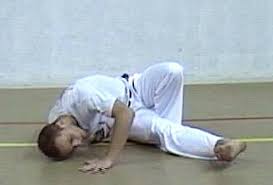
What you see below is the Negativa, One of the most Fundamental movements in capoeira angola. Although the word “negativa” is portuguese for the english word, “negative”, My teacher Charles Williams describes this movement as the most POSITIVE thing you can do in Capoeira Angola.
Negativa, also known as negaça, is a fundamental element in the practice of capoeira, the Afro-Brazilian martial art. It represents a key defensive move, allowing the practitioner to effectively counter and nullify incoming attacks by swiftly maneuvering low to the ground. With its roots deeply intertwined with the cultural and historical context of Brazil, the negativa embodies the grace and agility of capoeira, serving as a testament to the art’s rich heritage. It is an intricate form of movement that requires dexterity and finesse, enhancing the fluidity and dynamism of capoeira as a martial art form.
It’s easy to quickly descend into the negativa, a graceful and evasive movement that is deeply rooted in the art of capoeira. The player who employs the negativa skillfully can effortlessly evade their opponent’s attacks, swiftly shifting their weight to dodge incoming strikes with fluid agility. Furthermore, they consistently deliver their kicks with precision and finesse, always targeting the intended part of the opponent’s body, showcasing impeccable timing and remarkable control of the art form.
Negativa angola, also known as negativa lateral, is low version of negativa, for evading low kicks. This movement is easily achieved by bending one knee, extending the opposite leg, and leaning at the waist while lowering yourself as much as possible. being an angoleiro myself, it’s the 1st negativa I’ve ever learned.
Below, we have mestre Bola Sete teaching his class this negativa, along with some variations.
Negativa Regional is also a fundamental movement in capoeira, often used as a defensive position. To perform this position, capoeiristas squat on one leg and extend the other leg in front of them, creating a stable base while remaining agile and ready for quick movements. Their supporting hand is placed on the ground on the same side as their extended leg, providing additional balance and support. Meanwhile, their free hand is held up in a guarding position to protect their face and upper body. It is worth noting that although Negativa Regional is also taught in Capoeira Angola, it is more commonly and prominently used in the Regional and Contemporâneo styles of capoeira.
Going to the ground is a common tactic in capoeira, and it can be used to both deceive and attack an opponent. An experienced capoeirista can use their ground skills to lure an opponent into a trap, making themselves appear vulnerable when, in reality, they are about to attack. There are many kicks and takedowns specifically designed to be used from the ground. This aspect of capoeira requires a deep understanding of body positioning and leverage, allowing the practitioner to seamlessly transition between standing and grounded techniques. Being proficient in ground tactics also gives the capoeirista the ability to control the pace of the encounter, creating opportunities to dictate the flow of the game and respond with swift, calculated movements. Furthermore, mastering the art of ground-based attacks enhances the capoeirista’s overall strategy, providing a comprehensive approach to combat that encompasses a wide range of techniques and scenarios.
I’ll post one of these kicks here, because it was billed as “The most powerful kick”.
You saw it on Fight Science, Martelo de Negativa. Lateef Crowder went up against 3 other martial artists and put the science to the test. Although there was one more powerful technique showcased, the martelo de negativa stood out as the most efficient and graceful. With its roots in the art of Capoeira, the martelo de negativa demonstrated how ancient fighting techniques continue to influence and shape modern martial arts, serving as a testament to the enduring legacy of these time-honored practices.
And here, you can see how Negativa can be used as a takedown.
Also from the negativa, a capoeirista can seamlessly transition into maneuvers like amêixia or queda de rins, showcasing a wide range of techniques that enhance the fluidity and deceptive nature of the art. This ability to move with grace and agility while remaining prepared for both offensive and defensive actions illustrates the strategic and dynamic essence of capoeira. The seamless integration of ground movements, acrobatics, and elements of dance makes capoeira a truly unique and captivating martial art, where every gesture and stance has a rich cultural and historical significance.
So, Yesterday was my 11th anniversary in the world of capoeira angola. It’s been a remarkable journey filled with challenges and triumphs, and I feel grateful for the growth and experiences that capoeira has brought into my life. In all my years of training Capoeira Angola, there have been a few fundamental movements that I haven’t mastered yet. These movements require precision, strength, and agility, and I see them as gateways to a deeper understanding of this beautiful art form. So, I’ve made a conscious decision to focus my efforts on mastering these movements, knowing that doing so will elevate my skill set and take my game to new heights. The commitment and discipline required for this endeavor excites me, and I am eager to see the progress and refinement that will come from this dedicated focus.
The Macaco, which is a cool basic move for gymnastics, martial arts acrobatics, and tricking, is a dynamic and impressive technique that requires strength, flexibility, and agility. It involves a rapid transition from a squatting position to a handstand, often performed in a fluid motion. This move is not only visually striking but also serves as a foundational skill for more advanced acrobatic maneuvers.
There are a lot of tutorials out there on how to learn a macaco, but I like this one from the KAHPU Training Method. Be sure to click HERE and check out his Youtube channel, where you’ll find a lot of other useful tips, for those of you capoeiristas out there who want to better understand your game..
I’ve included part of the video description below the video.
This is YOUR BEST prep and training to LEARN MACACO. 7 EASY steps:
1. Prep your shoulder
2. Prep your back and abs
3. Small macaco side jumps
4. Medium macaco jumps
5. High macaco – straight over-
6. Apply that stuff: 3 sequencia’s
7. 4 Week macaco training schedule
Additionally, the Macaco is not only a physical exercise but also an expression of creativity and artistry. As practitioners delve into the intricacies of this movement, they can discover new ways to flow and transition, further enhancing their fluidity and grace. The Macaco is a versatile skill that can be adapted to various disciplines, from dance to martial arts, amplifying its potential benefits for individuals across different domains.
Whether it’s the flexibility and strength required to execute a perfect Macaco, or the discipline and dedication necessary to refine such a complex movement in a training studio, this skill is a beautiful demonstration of the human body’s adaptability and the endless possibilities of movement. From the rhythmic steps leading up to the launch, to the graceful arc of the body in mid-air, every aspect of the Macaco showcases the incredible potential of the human form.
Welcome to MALICIA AS A GAME OF POWER. This blog series aims to delve deep into the realm of Strategy. Throughout the series, we will explore various aspects of dealing with certain people, offering insights on effective communication, conflict resolution, and building meaningful connections. Additionally, we will provide valuable tips on avoiding scammers, protecting oneself from online fraud, and maintaining a secure online presence.
Navigating this world that we live in can be challenging, and in this series, we will share practical guidance on making informed decisions, embracing opportunities, and overcoming obstacles on the path to success. Whether it’s understanding the nuances of negotiation, learning to identify manipulation, or honing your leadership skills, this series will equip you with the knowledge and tools to thrive in the complex landscape of interpersonal dynamics and strategic decision-making. We will also delve into the intricacies of personal branding, self-presentation, and managing one’s online reputation, empowering you to craft a compelling personal and professional image in today’s interconnected digital world. Join us on this insightful journey as we unravel the complexities of power dynamics and strategic maneuvering, arming you with the expertise to navigate the intricate web of relationships and opportunities, and emerge victorious in your pursuits.
In this installment, We will explore the 8th law of power in the book, the 48 laws of power by Robert Greene. You can but a copy by clicking HERE.
The eighth law (law 8) of the 48 Laws of Power is: Let others come to you, use bait if necessary.
Let others come to you, use bait if necessary. It’s important to balance the idea of attracting people towards you with the ethical principle of offering genuine value. One way to achieve this is by becoming known for providing helpful solutions to common problems. By consistently offering valuable assistance, you can establish a reputation as a reliable source of support. In addition, actively participating in relevant communities and sharing your expertise can also contribute to building your presence and attracting others to engage with you. Furthermore, developing a strong online presence through insightful content and engaging with your audience through various channels can significantly enhance your ability to draw others towards you. Remember, the key is to offer authentic value and build meaningful connections rather than simply seeking attention for the sake of it.
Over time, as you establish yourself as a valuable resource within your network, this can lead to others seeking you out for guidance, creating opportunities for collaboration and delegation of tasks. As you become known for your expertise and helpful nature, more and more individuals may turn to you for advice, support, and input on various matters. This, in turn, can open the door to new connections and potential partnerships, enriching both your professional and personal growth. Remember, genuine connections are built on trust, respect, and mutual benefit, so always strive to offer value without expecting anything in return, fostering a culture of generosity and support within your professional circles.
The 8th Law of Power: Make Other People Come to You—Use Bait If Necessary, Through the Eyes of an Angoleiro
The philosophy encapsulated in the 8th Law of Power—”Make Other People Come to You—Use Bait If Necessary”—finds a profound and nuanced resonance within the discipline of Capoeira Angola, particularly as interpreted by a seasoned angoleiro. The angoleiro, a practitioner and master of this older, more strategic form of Capoeira, understands that true power in the roda and in life is not about aggressive pursuit, but about strategic attraction and positioning.
In the roda of Capoeira Angola, the angoleiro does not chase the game. Instead, they establish a presence—a gravitational center—that subtly compels their partner (o jogador) to move toward them, both physically and rhythmically. This is achieved through a masterful command of the fundamentals:
Strategic Positioning and Patience (A Espera): The angoleiro starts with a low, grounded stance, often in cocorinha (a low squat) or queda de rins (a position of defense and rest). This stillness is the bait. It projects calm, confidence, and a deceptive vulnerability. The opponent, seeking to exploit this seeming inertia, is drawn in, thus ceding the initiative and the high ground.
The Allure of the Ginga: The ginga is the Capoeira walk, but for the angoleiro, it is a hypnotic dance of feints and withdrawals. It’s not merely a preparatory movement; it’s a living, rhythmic question posed to the opponent. The beauty and unpredictability of the ginga act as a compelling lure, tempting the partner to engage, to solve the puzzle of the movement, and thus, to move into the angoleiro’s zone of control.
The Power of the Empty Space (O Vazio): A key element of the bait is creating and offering o vazio—the empty space. By swiftly withdrawing a leg, ducking low, or sidestepping, the angoleiro leaves an opening, a perceived weakness. This intentional exposure is the trap. When the opponent commits to filling that space with an attack (the bait is taken), they sacrifice their own balance and control, making them vulnerable to a sudden, decisive counter-movement like an rasteira (sweep) or cabeçada (headbutt).
Psychological Control through Rhythm: The angoleiro uses the music and the berimbau to establish the emotional and temporal landscape of the game. By subtly speeding up or slowing down the movements, or by playing close to the floor in a low, mesmerizing flow, the angoleiro dictates the pace and atmosphere. The opponent, wanting to participate in the established rhythm, is psychologically drawn in and constrained by the rhythm set by the master.
The angoleiro understands that when you force a confrontation, you are reacting to the other person’s agenda. When you successfully use “bait,” you ensure that the jogo (game) unfolds on your terms, within your chosen space, and at your preferred moment. This principle extends beyond the roda into the jogo da vida (game of life), teaching that influence and power are best achieved not through aggression, but through strategic attraction, patience, and the masterful creation of an irresistible scenario. The goal is to make the partner (or competitor) expend their energy by coming to you, leaving you fresh, positioned, and ready to conclude the encounter decisively.
I’d like to send a big shoutout to Shayan Wahedi for creating the video. Please click HERE and check out his YouTube channel.
Today, we will be taking a closer look at some cases when corrupt police officers got caught in the act, shedding light on the impact of their actions and the measures taken to address such misconduct. It’s a topic that brings to the forefront the complexities of law enforcement and the ripple effects of unethical behavior within a system designed to uphold justice. By delving into specific instances, we can gain a deeper understanding of the challenges faced by law enforcement agencies, the ramifications for affected communities, and the steps necessary to restore trust and accountability. These cases also serve as a reminder of the essential role of transparency and accountability in maintaining public confidence and upholding the principles of justice and fairness.
The majority of police in the world are good men and women who serve their communities with honor and dignity. Unfortunately, there are bad police officers who abuse the law and hurt their communities. Multiple factors contribute to the differences among law enforcement officers, and it is crucial to address those factors to ensure the safety and well-being of all individuals within society.
These cases serve as a reminder of the importance of accountability within law enforcement and the ongoing efforts to uphold justice and integrity in our communities. We will explore the implications of these incidents and examine the role of the justice system in holding those responsible accountable for their actions.
Welcome to TODAY IN BLACK MEDIA, the go-to source for news, cultural events, and thought-provoking discussions from an African perspective. Our platform is dedicated to shedding light on the rich tapestry of black experiences, amplifying diverse voices, and celebrating the achievements of the black community worldwide. Join us as we explore the latest developments, delve into thought-provoking analyses, and showcase the vibrant cultural manifestations that shape our collective identity. Whether you’re passionate about current affairs, arts and entertainment, or social justice issues, you’ll find compelling content that resonates with you. Together, let’s embark on a journey of enlightenment, empowerment, and inspiration through the lens of black media.
In this installment…
+
Socialite Dayane Alcântara, known for her lavish lifestyle and social media presence, has been a prominent figure in both Brazilian and American high society, frequently attending exclusive events and gatherings. Her recent sentencing to nearly nine years in prison by a federal judge in Rio de Janeiro has sent shockwaves through the social circles she once frequented, with many expressing disbelief and concern for her well-being. The case has not only captured the attention of the public but has also reignited discussions about racial discrimination and hate speech in Brazil, sparking widespread outrage and calls for justice. The ramifications of this high-profile case are likely to reverberate beyond the confines of the courtroom, influencing social dynamics and conversations on a national scale.
The incident involving the 4-year-old daughter of a popular Brazilian couple has sparked significant controversy and prompted heated debates on social media platforms across the nation. This highly publicized event has drawn attention to the prevalence of racial slurs and discrimination in Brazilian society, shedding light on the deep-seated issues that continue to affect individuals on a daily basis. As the story gained international attention, it also shed light on the complexities of identity, privilege, and accountability in the context of a globalized world. It sparked discussions on the intersection of race, class, and power dynamics, emphasizing the need for greater understanding and empathy. The sentencing of Dayane Alcântara, the perpetrator of the racial slur, serves as a stark reminder of the urgent need for ongoing efforts to address and combat racial prejudice, both within Brazil and beyond. This case has sparked calls for systemic change and a reevaluation of societal attitudes towards race and ethnicity, highlighting the crucial importance of education and advocacy in fostering a more inclusive and equitable society.
Welcome to MALICIA AS A GAME OF POWER. This blog series aims to delve deep into the realm of Strategy. Throughout the series, we will explore various aspects of dealing with certain people, offering insights on effective communication, conflict resolution, and building meaningful connections. Additionally, we will provide valuable tips on avoiding scammers, protecting oneself from online fraud, and maintaining a secure online presence.
Navigating this world that we live in can be challenging, and in this series, we will share practical guidance on making informed decisions, embracing opportunities, and overcoming obstacles on the path to success. Whether it’s understanding the nuances of negotiation, learning to identify manipulation, or honing your leadership skills, this series will equip you with the knowledge and tools to thrive in the complex landscape of interpersonal dynamics and strategic decision-making. We will also delve into the intricacies of personal branding, self-presentation, and managing one’s online reputation, empowering you to craft a compelling personal and professional image in today’s interconnected digital world. Join us on this insightful journey as we unravel the complexities of power dynamics and strategic maneuvering, arming you with the expertise to navigate the intricate web of relationships and opportunities, and emerge victorious in your pursuits.
In this installment, We will explore the 7th law of power in the book, the 48 laws of power by Robert Greene. You can but a copy by clicking HERE.
The seventh law (law 7) of the 48 Laws of Power is: Let others do the work for you, but always take credit.
Ethical variant of the law: Empower people to do work that helps both of you, and you will never need to take the credit
Let others do the work for you, but always take credit. Empower people to do work that helps both of you, and you will never need to take the credit. But should you really never take credit then if it is so wrong? What if other people do that to you? Expanding on this, it’s important to recognize that giving credit where it’s due fosters a culture of appreciation and collaboration. When individuals are acknowledged for their contributions, it motivates them to continue to excel and contribute positively to the team. Moreover, when credit is given appropriately, it builds trust and respect within the group, leading to enhanced camaraderie and a more productive working environment. By openly acknowledging the efforts and achievements of others, a positive cycle of recognition and collaboration is created, ultimately benefiting the entire team. Therefore, encourage a culture of giving credit and appreciation to cultivate a more supportive and harmonious work environment for everyone involved.
By acknowledging the contributions of others, you not only show respect for their efforts but also inspire a sense of ownership and motivation within the team. Recognizing and appreciating the diverse skills and expertise of team members can foster a collaborative environment where everyone feels valued and empowered. However, it’s also crucial to assert your own achievements when the situation calls for it, especially in professional contexts. Communicating your own successes can help others understand your capabilities and strengths, contributing to a more well-rounded and effective team dynamic. Balancing the recognition of others with the acknowledgment of your own contributions is a skill that can lead to a harmonious and productive work environment, promoting a culture of mutual support and growth.
This law advocates for a strategic approach to efficiency and reputation building. The core principle is to conserve one’s own energy and resources by skillfully leveraging the talents, labor, and intellect of others. By doing so, an individual can amplify their output and maintain a public image of effortless competence and prodigious capability. The ultimate goal is to stand at the pinnacle of achievement, having orchestrated success through the efforts of subordinates, partners, or even rivals, while ensuring all public recognition and reward accrue solely to oneself. This not only builds a powerful legacy but also positions the individual as indispensable and uniquely brilliant.
—–Through the Eyes of an Angoleiro
For an Angoleiro—a practitioner of Capoeira Angola, the traditional, more ritualistic form of the Afro-Brazilian martial art—this law takes on a nuanced, though still intensely strategic, interpretation, transforming the concept of “taking credit” into one of mastery through synthesis and delegation within the roda (the circle where Capoeira is played).
1. The Mastery of Synthesis, Not Plagiarism
In the Capoeira Angola roda, the “work” is the cumulative knowledge and skill passed down through generations: the toques (rhythms) of the berimbau, the cantigas (songs), the philosophy, and the complex jogo (game) itself.
The Angoleiro’s “Work”: The true master Angoleiro does not plagiarize the movements of their peers or forebears but synthesizes them. They absorb the entire history of the art—the cunning of Mestre Pastinha, the agility of Mestre Bimba, the deceptive malice of a fellow player in the moment—and distill it into a personal, unique style.
Taking the “Credit”: The “credit” the Angoleiro takes is not for a single, copied rasteira (sweep), but for the unpredictable brilliance of their game. When an opponent is skillfully countered, the credit goes not to the source of the original movement, but to the Angoleiro’s intelligence in choosing, timing, and executing the perfect response, making the opponent’s previous effort look like a setup for the current counter. The roda recognizes the ingenuity of the synthesis, not the origin of the components.
2. Delegating the Energy: The Role of the Bateria
In a Capoeira Angola roda, the instruments (bateria) and the singers are essential “workers” who create the environment for the game, effectively doing the “work” of setting the pace and mood.
Delegating the Rhythm and Spirit: The lead berimbau player, often a high-ranking student or a Mestre, sets the toque that dictates the speed, mood, and danger level of the jogo. By expertly setting a hypnotic, low, and deceptive rhythm (like Angola or São Bento Pequeno), the lead player “gets the others to do the work.” The players are forced to adapt their game to the established tempo; the tension, the flow, and the philosophy are all “worked” into the circle by the instruments.
The Mestre Taking the Credit (The Control): The Mestre or the lead instrumentalist, though physically seated, controls the entire energy output of the circle. When the roda achieves a state of profound engagement (axé), the recognition for that powerful, cohesive energy belongs to the individual who controlled the central rhythm and song. They successfully delegated the emotional and physical intensity to the entire collective while remaining the conductor of the experience.
3. Exploiting the Opponent’s Momentum (The Ultimate Delegation)
In the actual jogo, the Angoleiro can literally get the opponent to do the work.
Using Force Against Force: A smaller, wiser Angoleiro will allow a larger, stronger opponent to commit to a powerful, high-energy attack (the “work”). Instead of meeting force with equal force, the master uses minimal effort, relying on timing and leverage (mandiga), to redirect the opponent’s already committed momentum into a devastating sweep or takedown.
The Angoleiro’s Triumph: The opponent expended 90% of the energy; the Angoleiro expended 10%. The applause and respect (the “credit”) are not for the brute force of the attack, but for the economy of motion and the brilliance of the counter that turned the opponent’s strength into their own downfall. In this moment, the opponent did the “work” of setting up the Angoleiro’s final, credit-claiming move.
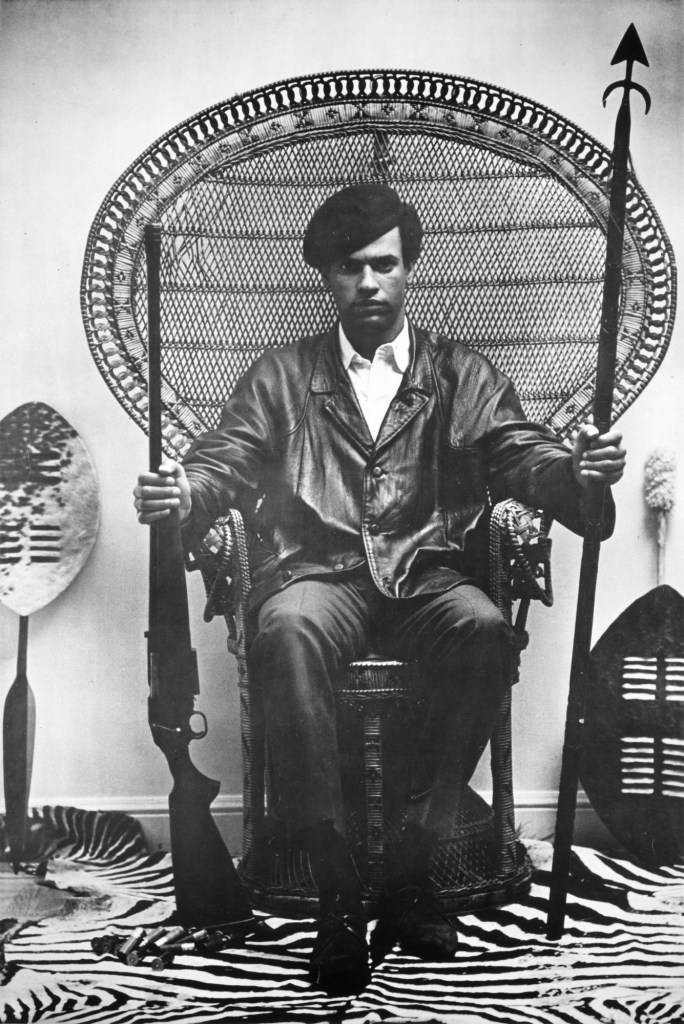
Huey Percy Newton (February 17, 1942 – August 22, 1989) was an African American revolutionary and political activist who founded the Black Panther Party. He ran the party as its first leader and crafted its ten-point manifesto with Bobby Seale in 1966. Under Newton’s leadership, the Black Panther Party founded over 60 community support programs (renamed survival programs in 1971) including food banks, medical clinics, sickle cell anemia tests, prison busing for families of inmates, legal advice seminars, clothing banks, housing cooperatives, and their own ambulance service. The most famous of these programs was the Free Breakfast for Children program which fed thousands of impoverished children daily during the early 1970s. Newton also co-founded the Black Panther newspaper service, which became one of America’s most widely distributed African-American newspapers. In 1967, he was involved in a shootout which led to the death of police officer John Frey and injuries to himself and another police officer. In 1968, he was convicted of voluntary manslaughter for Frey’s death and sentenced to 2 to 15 years in prison. In May 1970, the conviction was reversed and after two subsequent trials ended in hung juries, the charges were dropped. Later in life, he was also accused of murdering Kathleen Smith and Betty Van Patter, although he was never convicted for either death.
Newton’s deep engagement with Plato’s Republic during his formative years not only honed his reading skills but also sowed the seeds for his future philosophical outlook. This seminal work by Plato instilled in Newton a profound sense of social responsibility and a commitment to effecting positive change in the world. Building upon these early influences, Newton pursued a doctoral degree in social philosophy at the University of California, Santa Cruz, graduating from the esteemed History of Consciousness program in 1980. This rigorous academic journey further shaped his perspective on activism and social transformation, laying a solid foundation for his future endeavors in the field.
In 1989, he was murdered in Oakland, California by Tyrone Robinson, a member of the Black Guerrilla Family. His last words were,
“You can kill my body, and you can take my life, but you can never kill my soul. My soul will live forever!”
Newton’s advocacy for the right of self-defense was a fundamental aspect of his leadership within the Black Panther Party. His commitment to empowering marginalized communities through self-protection and social justice resonated with many, shaping the party’s mission and outreach. Moreover, his efforts to welcome and involve women in the party’s activities marked a pivotal shift in the narrative of gender equality within the civil rights movement. Newton recognized the invaluable contributions of women and actively promoted their involvement in various initiatives, paving the way for a more inclusive and diverse movement.



 Jogo Corpo Fechado