
Today, we pause to honor the birthday of one of the greatest Capoeira Mestres who ever lived, a man whose dedication ensured the survival of Capoeira’s most traditional form.
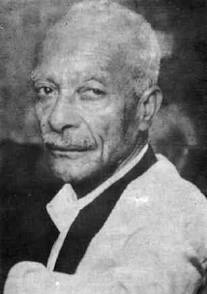
Mestre Pastinha (Vicente Ferreira Pastinha) was born on April 5, 1889, in the historic city of Salvador, Bahia, Brazil. More than just a practitioner, he is universally celebrated as the legendary guardian and codifier of Capoeira Angola, the foundational and traditional style of the Afro-Brazilian martial art, dance, and game. His life’s mission was to preserve the art’s cultural, philosophical, and ritualistic integrity in the face of modernizing pressures.Life, Training, and the Academy
Pastinha’s journey into capoeira began young and was rooted in self-defense and the social dynamics of his neighborhood.
- Early Training: At the tender age of eight, he began learning capoeira from an African man named Benedito. This initial tutelage was given as a means to defend himself against a persistent and older neighborhood bully, teaching him not just how to fight, but how to move with strategy and grace. Benedito’s lessons instilled in him a deep respect for the art’s origins and its philosophy of malícia (playful deception).
- A Lifelong Devotion: Though he had to pause his intensive training at various points to work—including jobs as a cobbler, gold-enamel painter, and construction watchman—Pastinha never abandoned capoeira. He dedicated decades to its study before formalizing his commitment.
- The Centro Esportivo de Capoeira Angola (CECA): In 1941, Pastinha founded the Centro Esportivo de Capoeira Angola (CECA) at the iconic Largo do Pelourinho in Salvador. This academy was not merely a gym; it became the premier cultural center for preserving the art’s traditional roots. Under his guidance, CECA standardized the jogo (game), the music, the uniform (adopting the symbolic black and yellow colors), and the formal rules of Capoeira Angola, ensuring the continuity of its heritage.
The Philosopher of Capoeira
Mestre Pastinha was renowned not only for his skill in the roda but also for his profound wisdom. He articulated the philosophy of Capoeira Angola, elevating it from a simple street fight to a holistic discipline.
- Defining the Art: He famously described capoeira as “everything the mouth eats,” emphasizing that it was a total way of life—a blend of martial art, sport, culture, music, philosophy, and tradition—rather than just a physical fight. For Pastinha, the art required cunning, intellect, and heart as much as physical strength.
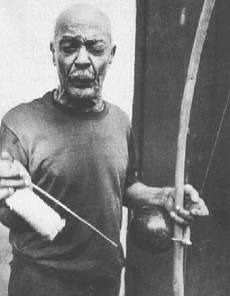
- Angola’s Core: While other styles, most notably Capoeira Regional founded by Mestre Bimba, were gaining popularity by emphasizing a more structured, acrobatic, and combative approach, Pastinha focused resolutely on maintaining the essential elements of the original Angola style: the slower, low-to-the-ground movements, the ritualistic music of the berimbau, and the core concept of malícia—the cunning and playful deception that defines the game.
Lasting Impact and Final Years
Despite his immeasurable contributions to Brazilian culture, Pastinha’s final years were marked by hardship. In the early 1970s, the state government of Bahia forced him out of his academy space in Pelourinho, ostensibly for renovations, but the space was ultimately turned into a restaurant. Stripped of his academy and his source of income, Mestre Pastinha fell into poverty and suffered from blindness.
He passed away on November 13, 1981, at the age of 92, but his influence continues to resonate globally. His students, known as the capoeiristas de Angola, carried his torch, spreading the authentic style across the world. Detailed accounts of his influential life and foundational teachings can be found on sites dedicated to his memory and the history of the art. Mestre Pastinha remains an immortal figure, a symbol of resistance, cultural preservation, and the enduring spirit of Capoeira Angola.
 Jogo Corpo Fechado