

Racism isn’t about feelings. It’s about power.
What does racism and white supremacy actually mean in the modern era? Why do so many people still misunderstand, misdefine, and misdiagnose them?
The simple truth, often deliberately obscured or minimized by those who benefit from the status quo, is that this isn’t primarily about individual prejudice, personal dislike, or someone’s inability to “get over it.” It’s about systems, structures, and control—the mechanisms that allocate resources, opportunities, and power across society. Modern racial inequality is, therefore, a matter of political and economic architecture, not simply poor interpersonal manners.
Beyond Individual Prejudice: The Systemic Architecture
If you reduce the concept of racism to a personal failing—a nasty thought, an isolated bigoted statement, or a solitary bad action—you fundamentally miss the forest for a single diseased tree. This individual-centric view allows the true, systemic architects of racial inequality to remain unchallenged, suggesting the solution is merely “being nicer,” “educating individuals,” or requiring sensitivity training. This approach is not only ineffective but is also a purposeful misdirection.
Systemic racism is manifest in the enduring legal, economic, and social frameworks that privilege one group (historically and currently, white people) while simultaneously disadvantaging and marginalizing others. White supremacy, in this context, is not merely the ideology of neo-Nazis, but the active, default, and largely invisible societal arrangement that maintains and reproduces this hierarchy, centering whiteness as the norm against which all else is measured.
The Mechanisms of Control
The allocation of resources and opportunities is governed by these systems in profound ways:
- Housing and Wealth: Practices like redlining, discriminatory mortgage lending, and restrictive covenants have intentionally blocked communities of color from accessing the primary engine of intergenerational wealth creation: homeownership. This is not a matter of individual bias but of structured, institutional policy that has resulted in massive and persistent racial wealth gaps.
- Education: School district funding models tied to local property taxes ensure that economically disadvantaged—and disproportionately non-white—communities have fewer resources, less experienced teachers, and substandard facilities. The system guarantees unequal access to quality education, thereby limiting economic mobility before an individual even enters the job market.
- Criminal Justice and Policing: The disparate application of laws, from stop-and-frisk policies to sentencing guidelines for comparable offenses, demonstrates how the justice system operates as a system of racial control. It manages and polices populations rather than ensuring equal protection under the law, resulting in mass incarceration that destabilizes minority communities and removes voting and economic power.
- Healthcare: Racial disparities in access to quality care, higher rates of medical misdiagnosis, and differential treatment are embedded in the structure of the healthcare industry and the economic barriers to entry.
To genuinely address racism and white supremacy, the focus must shift from policing individual hearts and minds to dismantling the concrete, structural mechanisms that control and restrict life chances based on racial identity. The solution lies in policy changes that reallocate resources and rewrite the rules of the system itself.
Modern racism, however, is not a bug in the social programming; it is an intricate, self-perpetuating, and highly efficient machine. It is the baked-in advantage and corresponding disadvantage that operates relentlessly across all sectors of life, regardless of the intentions or sentiments of any single person. A system can be racist even if every individual within it claims to be personally non-prejudiced. This is the difference between de jure racism (codified by law) and de facto racism (entrenched in practice and outcome).
The Historical and Economic Foundation
In this exploration, we trace the concept of racism not to individual moral defects or psychological hang-ups, but back to its brutal, profitable, and enduring historical and economic roots. The foundation of modern racial hierarchy lies in the era of European colonization, global expansion, and the ruthless consolidation of power fueled by the transatlantic slave trade and the theft of land and resources from indigenous populations worldwide.
This history isn’t ancient dust; it is the concrete foundation upon which contemporary society is built. The systems devised to rationalize and maintain this exploitation—chattel slavery, segregation, discriminatory housing policies, and colonial rule—didn’t simply vanish with their legal abolition. They evolved. They left a vast, intergenerational transfer of wealth, land, and institutional access to one group, while simultaneously creating structural barriers to safety, capital, and opportunity for others.
Systemic Manifestations Today
To truly grasp systemic racism is to understand the operating manual for the modern world. Its power is not found in slurs, but in statistics:
- Economics: It dictates who has access to generational wealth, leading to massive racial disparities in homeownership, business capital, and loan approvals.
- Politics: It shapes everything from gerrymandered districts that dilute minority voting power to racially skewed incarceration rates that impact citizenship rights and community stability.
- Education: It manifests in unequal school funding based on property taxes, the tracking of students into different academic paths, and the cultural bias of standardized testing.
- Culture: It is embedded in media representations, professional gatekeeping, and the normalization of cultural standards that privilege one group while marginalizing others.
- Justice: It is most visible in policing, court systems, and prison industrial complexes, where racial profiling and sentencing disparities ensure a consistent, punitive enforcement of racial hierarchy.
Systemic racism is the operating force that ensures the initial, historically established advantage is preserved and perpetuated across generations, maintaining the political and economic control established centuries ago. To dismantle it requires not just a change of heart, but a fundamental restructuring of the systems themselves.
The Invisible Default: Unpacking White Supremacy
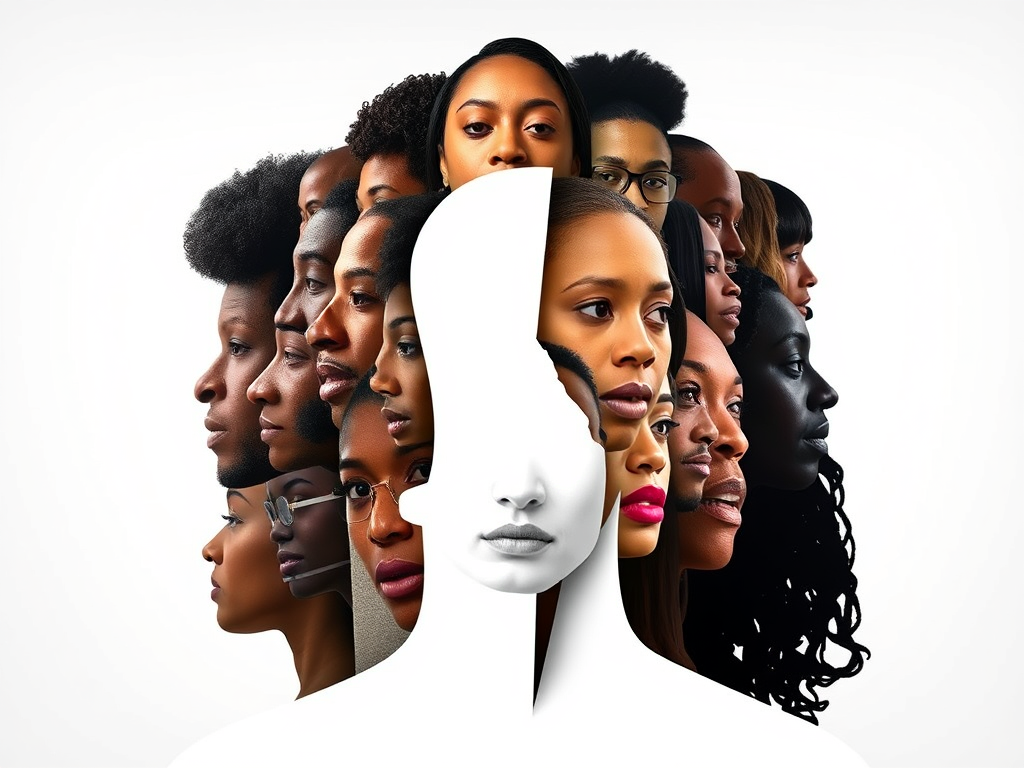
The companion concept, white supremacy, is far more complex and pervasive than the overtly hateful, robed caricature often depicted in historical narratives or period pieces. In its most effective and insidious modern form, it is not a visible threat but the invisible default setting of our institutions and culture. It is the normalized structure and unconscious framework where “whiteness” inherently holds the institutional, cultural, and political advantage.
The Mechanism of Systemic Advantage
This system operates as a silent, self-perpetuating agreement. It is the unspoken assumption that privileges—such as generational wealth, access to quality education, less scrutiny by law enforcement, and positive media representation—are natural, deserved, and, critically, unearned. These are simply the “perks” of the default setting.
Conversely, the system redirects any inquiry into systemic failure. When disparities in wealth, health outcomes, educational attainment, or incarceration rates are observed, the structure of white supremacy ensures that the fault is placed squarely upon the marginalized groups. The narrative shifts to one of individual failing, cultural deficit, or lack of personal responsibility, thereby shielding the institutional structure itself from scrutiny or necessary reform.
Interrogating the System

This brings us to the core questions of understanding how this entrenched system maintains its dominance:
- How does this system work? It functions through policies, practices, and cultural norms that were designed—intentionally or not—around the white experience, making all other experiences an “exception” or a “deviation.” This includes everything from housing covenants and banking practices to curriculum design and corporate hiring algorithms.
- Who benefits? While individuals may not consciously endorse the tenets of racial hatred, anyone categorized as “white” benefits from the preferential flow of resources and opportunities inherent in the default setting. It is a structural dividend, not a personal achievement.
- Why does it persist? It persists because it is self-justifying and self-correcting. Any attempt to disrupt the default setting is met with resistance, often framed as a “reverse discrimination” or an attack on “meritocracy,” thereby preserving the unearned advantage as the status quo.
Therefore, to truly dismantle this structure, we must move beyond the easy targets of overt hatred and begin to dismantle the normalized, invisible advantage. We’re going to put the ‘fun’ back in fundamental institutional inequity by dissecting its core components.

 Jogo Corpo Fechado