
Greetings!
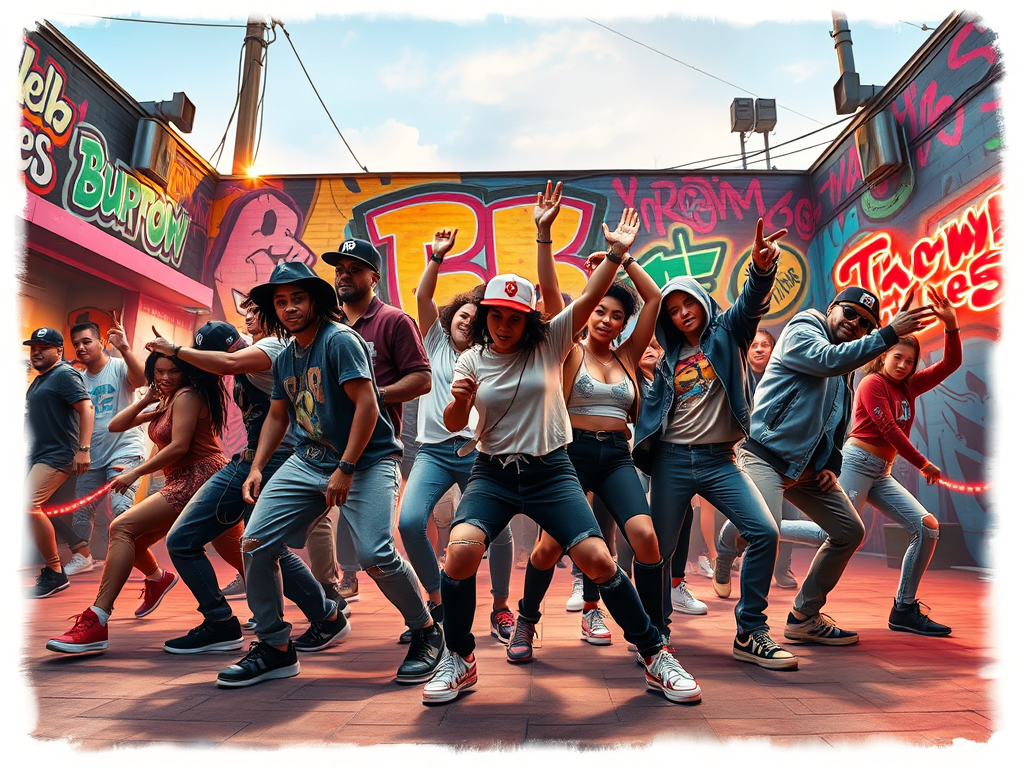
This post springs from a truly inspiring conversation I had recently. It unfolded between myself, a fellow student named Tre, and our exceptional ESGRIMA DE MACHETE Y BORDON teacher, Sonny Batata, after a class. We found ourselves discussing certain fundamental aspects of African American culture, diving deep into its rich complexities and historical context. During this insightful discussion, Sonny shared a thought-provoking video with us that focused on the systemic factors explaining how and why Black America has been historically held back.
Here at Jogo Corpo e Fechado, our core mission is to honor, study, and celebrate all aspects of African and African diasporic cultures, recognizing their profound global impact and resilience. In keeping with that commitment, today I want to dedicate this post to elaborating on a specific, vibrant, and transformative aspect of Afro-American culture: Hip Hop. This cultural movement, which began over five decades ago, has not only defined generations but has irrevocably taken the world by storm, influencing music, fashion, language, art, and social commentary across every continent. Its fifty-plus years of existence mark it as one of the most significant cultural exports in modern history.
Rap, R&B, and Hip Hop Culture:
Emerging from the urban centers of the late 20th century, particularly the Bronx, New York, Hip-Hop culture is a potent, multifaceted global phenomenon that has profoundly reshaped modern music, fashion, language, and art. Born out of marginalized communities, it served as a creative and expressive response to socio-economic challenges and a lack of resources, giving a voice to the voiceless.
The culture is fundamentally defined by its four core elements, often referred to as the “four pillars”:
- MCing (Rapping): This is the rhythmic, rhyming, and often poetic delivery of lyrical narratives over a beat. It serves as a powerful and unfiltered medium for storytelling, political commentary, social critique, philosophy, and linguistic innovation. The MC is the orator, channeling personal and communal struggles, triumphs, and observations into complex verse structures.
- DJing: The original foundation of the sound, DJing involves the manipulation of music using turntables and a mixer. Pioneers developed innovative techniques like scratching, beat-juggling, and looping breaks (the most rhythmic, instrumental parts of records) to create continuous, danceable music, laying the sonic groundwork for both Hip-Hop and Rap.
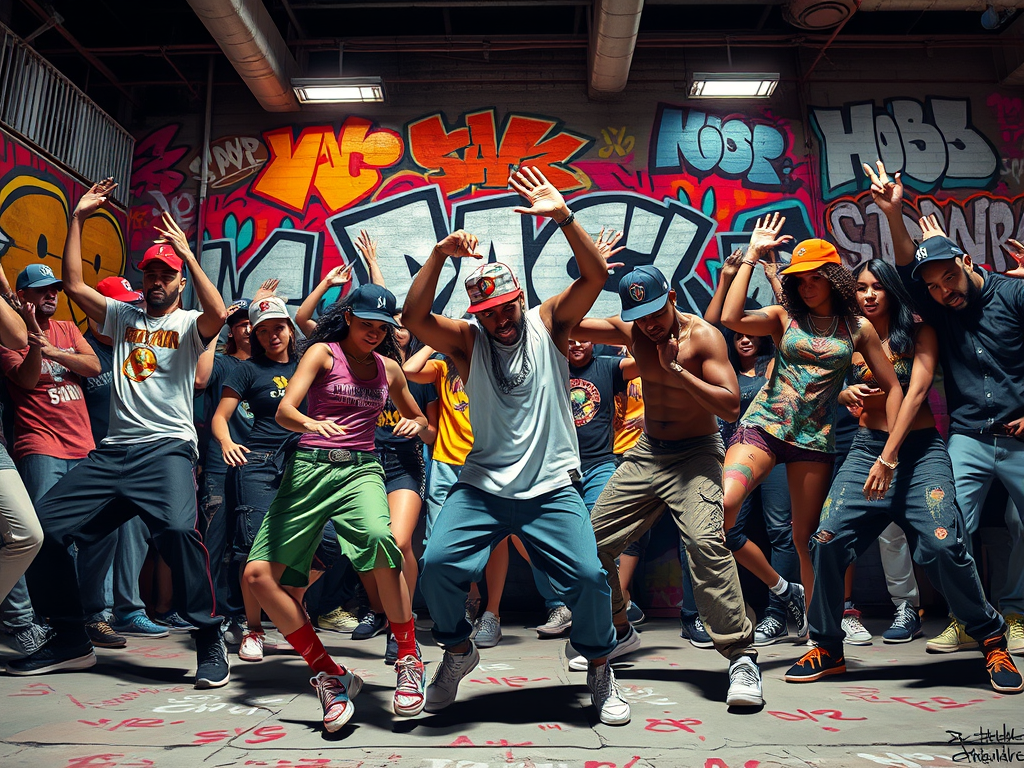
- B-Boying/B-Girling (Breakdancing): This dynamic, athletic form of street dance emerged as a visual component of the culture. Characterized by intricate footwork, power moves (such as headspins and windmills), freezes, and stylistic flair, B-Boying is a form of competitive physical artistry and self-expression.
- Graffiti Art (Writing): As a visual language, graffiti art involves stylized, often large-scale murals and tags executed in public spaces. It functions as a declaration of identity and territory, a form of artistic reclamation, and a vibrant, if sometimes controversial, commentary on the urban landscape.
Rap, R&B, and Hip Hop Culture: A Global Phenomenon
Beyond the foundational and celebrated “four elements”—MCing (rapping), DJing (turntablism and beat production), breakdancing (B-boying/B-girling), and graffiti art (aerosol art)—Hip-Hop has organically grown into a sprawling, multi-faceted cultural ecosystem. This powerful influence now seamlessly encompasses global fashion trends, specialized linguistic innovation and slang, a strong spirit of entrepreneurship, and a complex philosophy. From its raw genesis in community parks, Hip-Hop has consistently and aggressively redefined the global popular music landscape, demonstrating an unmatched capacity for artistic and commercial evolution. It has transformed dramatically from its initial community-driven block party roots—born out of necessity and serving as a creative, non-violent response to social and economic neglect—into the single most commercially dominant and culturally influential music genre worldwide. Despite this massive commercial success, Hip-Hop has remarkably maintained its foundational ethos as a potent, authentic platform for critical social commentary, storytelling, and a powerful catalyst for profound social change and youth empowerment.
History: The Birth of a Movement
Hip-Hop, a global cultural phenomenon, was not born in a boardroom or a recording studio but emerged organically from the neglected and economically challenged streets of the South Bronx, New York, in the early 1970s. This revolutionary movement was pioneered by resourceful Black and Puerto Rican youth who ingeniously fused their disparate cultural heritages and musical interests into a potent new form of expression and community building.
The bedrock of this cultural edifice was built by key visionary figures, each contributing an indispensable element to what would become the four pillars of Hip-Hop: DJing, MCing, B-boying/B-girling (breakdancing), and Graffiti Art.
- DJ Kool Herc (Clive Campbell): Widely regarded as the founding father, this Jamaican-born pioneer introduced the rhythmic and organizational principles of Jamaican sound system culture to the Bronx. His most significant innovation was the “Merry-Go-Round” technique—the isolation and continuous looping of the most rhythmic, percussive sections of records, known as the “breakbeats.” By using two turntables, Herc could extend these instrumental “breaks” indefinitely, providing a sustained, energetic platform for dancers (B-boys and B-girls) to showcase their most intricate moves.
- Grandmaster Flash (Joseph Saddler): A technical virtuoso, Flash refined and elevated the art of DJing to an unprecedented level. He innovated advanced, essential techniques such as scratching (creating rhythmic sounds by moving the record back and forth under the needle), punch-phrasing (manipulating records to create new rhythmic patterns), and cutting (seamlessly transitioning between two records). His mastery transformed the DJ from a simple selector of music into a creative, instrumental performer.
- Afrika Bambaataa (Lance Taylor): Often called the “Godfather” of Hip-Hop Culture, Bambaataa was instrumental in articulating the culture’s foundational philosophical principles and promoting a positive, unifying message. As the founder of the Zulu Nation, he championed the culture as a conscious alternative to the destructive cycle of gang violence that plagued the borough. Bambaataa blended the electronic rhythmic foundations of Kraftwerk with the funk and soul of classic records, emphasizing cultural awareness, artistic mastery, and non-violent, competitive expression.
These visionary artists seamlessly blended the rhythmic intensity of funk and soul records, the repetitive, propulsive four-on-the-floor beat of disco, and the structural creativity of the sound system aesthetic. This foundational period laid the essential groundwork for an entire global culture, prioritizing community expression, artistic mastery, and non-violent competition as a powerful social mechanism for self-determination and empowerment. The extended instrumental break sections they created soon became the ultimate stage for the MCs (Masters of Ceremony) to develop their vocal skills, evolving from mere hype men into the lyrical storytellers of the emerging genre.
Philosophy: Peace, Authenticity, and the Challenge to the Status Quo
The foundational philosophical framework of Hip-Hop, initially articulated and widely promulgated by Afrika Bambaataa and the Universal Zulu Nation, is centered on the core tenets of “Peace, Love, Unity, and Having Fun.” This original maxim provided a positive, unifying structure intended to divert inner-city youth away from gang violence and destructive behaviors toward creative expression and community building.
However, the culture simultaneously embodies a far more complex and nuanced set of internal ideas that directly reflect its origin as an expressive voice for the marginalized, the dispossessed, and the systematically oppressed. Central to this lived philosophy is the concept of “Keepin’ It Real”—a powerful, non-negotiable demand for unvarnished authenticity, genuine self-representation, and fidelity to one’s own lived experience and communal history. This value rejects artifice and performative posturing, insisting on truth in lyrics, attitude, and lifestyle.
Masterful storytelling is not merely an artistic preference but a critical tool for survival and social documentation. Through vivid narrative and lyrical dexterity, Hip-Hop artists chronicle the realities of urban life, systemic inequalities, personal triumphs, and internal struggles, thereby giving form and weight to narratives often ignored or misrepresented by mainstream institutions.
Furthermore, the culture carries a perpetual, inherent dedication to challenging the status quo and relentlessly questioning authority. Born from a context of socio-economic disparity and political neglect, Hip-Hop acts as an active form of counter-culture, criticizing governmental policies, exposing hypocrisy, and advocating for social justice. It is inherently a voice for the voiceless, prioritizing the distinct, highly individualized narrative and agency within the broader context of collective empowerment.
Finally, Hip-Hop places an extremely high value on artistic mastery, linguistic innovation, and technical skill (known as “flow” and “mic control”). These attributes are not sought for aesthetic reasons alone; they are viewed as essential, powerful tools for achieving social mobility, economic independence, and establishing intellectual authority. Superior skill is recognized as a legitimate pathway to transcend prescribed social and economic boundaries.
Culture: A Dynamic, Entrepreneurial Aesthetic – The Global Impact of Hip-Hop
Hip-Hop culture is not merely a genre of music; it is a profound, globally-adopted aesthetic and a self-referential cultural phenomenon characterized by its restless dynamism and ever-evolving field of creative expression. Its influence has transcended artistic boundaries, establishing itself as a dominant force in popular culture and commerce worldwide.
The foundational pillars of Hip-Hop—often cited as DJing, MCing, breakdancing, and graffiti art—created a complex, active interplay of sound, visual art, movement, and a unique vernacular. This vernacular constantly injects new vocabulary, slang, and idiomatic expressions into the mainstream lexicon, demonstrating the culture’s power to shape communication globally.
Furthermore, Hip-Hop has been an unparalleled engine for fashion and style. This influence has spanned decades, starting with the early adoption of oversized silhouettes, brand-driven sportswear, and gold jewelry in the 1980s and 90s, which signaled both identity and status. Today, this sartorial legacy has matured into a sophisticated, multi-billion-dollar market, evidenced by the ubiquitous presence of luxury streetwear. Major artists now routinely engage in high-end collaborations, securing creative director roles at esteemed fashion houses, thereby validating Hip-Hop’s place at the pinnacle of global style and design.
Crucially, the success of Hip-Hop is underpinned by a robust and aggressive entrepreneurial spirit. Driven by artists and creators who recognized the immense commercial power of their aesthetic and voice, the culture fostered a powerful DIY (Do-It-Yourself) ethos. This self-determination has led to the creation of hugely successful, independent record labels (such as Def Jam, Bad Boy, and Roc-A-Fella in their early days), global clothing lines, innovative marketing agencies, and diversified media empires. This vertical integration of creativity and commerce, often bypassing traditional industry gatekeepers, has solidified Hip-Hop’s standing not just as an artistic movement, but as a significant, enduring global economic force that empowers its participants to own and control their creative output and commercial destiny.
Intertwining with R&B: The Symbiotic Sonic Bedrock
Rhythm and Blues (R&B), while a venerable and distinct genre with its own long and foundational history rooted in gospel, blues, and jazz traditions, is profoundly and inextricably intertwined with Hip-Hop. The relationship is fundamentally symbiotic and mutually beneficial. R&B often provides the soulful samples, sophisticated chord progressions, and lush melodic structures that serve as the harmonic and emotional bedrock for countless Hip-Hop tracks, injecting a necessary element of warmth and musical complexity. Furthermore, the genres frequently and successfully collaborate on vocal performances, with R&B artists lending their smooth, often intricate hooks and complex harmonies that significantly enrich and diversify the overall soundscape of modern urban and popular music. This collaborative history is not merely incidental; it is absolutely essential to understanding the sonic richness, commercial versatility, and mainstream dominance of contemporary Hip-Hop and R&B music.
So… What does rap and Hip Hop have to do with Capoeira Angola?
This connection, while not always immediately apparent, is deeply rooted in the shared history, cultural aesthetics, and political consciousness of the African diaspora. Both are powerful, multi-faceted cultural expressions that emerged from marginalized communities and serve as vehicles for communication, resistance, and self-expression.
Capoeira Angola, with its origins in enslaved Africans in Brazil, is a complex blend of martial art, dance, and music. It was a tool for both physical defense and cultural preservation, disguised as a dance to evade colonial authorities. The roda (the circle in which Capoeira is played) is a space for communal storytelling, history, and improvisation, powered by the rhythmic instruments like the berimbau and the call-and-response songs.
Similarly, Hip Hop—encompassing rap, DJing, breaking (breakdancing), and graffiti—arose from the economically disenfranchised, predominantly Black and Latino communities of the Bronx in the 1970s. It was a creative response to urban decay, social inequality, and police violence. Rap music, in particular, became the lyrical voice of the movement, using complex rhythm and rhyme schemes to articulate social commentary, personal narratives, and cultural pride.
The essential ties lie in several key areas:
- Improvisation and Flow: Both demand high levels of physical and verbal improvisation. In Capoeira, the jogo (the game) is a constant, spontaneous dialogue between the two players. In rap, “flow” is the rapper’s ability to manipulate rhythm and meter, creating a spontaneous, dynamic, and unique lyrical style.
- Rhythm and Call-and-Response: The musical backbone of both is based on African rhythmic traditions. Capoeira Angola is entirely dictated by the beat of the berimbau. Hip Hop’s foundation is the breakbeat, often looped and manipulated by a DJ, and the vocal style frequently employs the African-derived call-and-response pattern that fosters community participation.
- The Cypher/Roda as Sacred Space: The roda in Capoeira and the cypher (the circle formed by B-boys/B-girls, rappers, or beatboxers) in Hip Hop are structurally and functionally similar. They are defined, enclosed spaces where participants engage in a competitive yet supportive display of skill, respect, and cultural knowledge. They are stages for performative identity and mastery.
- Aesthetics of Resistance and Subversion: Both forms embody a spirit of resistance. Capoeira hid martial skill in dance. Hip Hop culture, especially through graffiti and lyrical content, often subverts mainstream narratives and challenges the status quo, transforming overlooked, marginalized spaces and voices into platforms of power.
- Physicality and Acrobatics: The dynamic, often floor-based acrobatics of Capoeira Angola find a clear echo in the power moves and footwork of breaking. Both emphasize a mastery of body control, balance, and gravity-defying maneuvers that are central to the performance.
The deep connection between rap, Hip Hop culture, and Capoeira Angola is ultimately revealed by recognizing them as parallel and profound movements of cultural survival and creative ingenuity born from the global African diaspora. These cultural forms are not merely entertainment; they are dynamic, living archives of shared history, enduring resistance, and vibrant community, expressed through a powerful synthesis of movement, music, and voice.
Rap and Hip Hop, emerging from the socio-economic crucible of the Bronx in the 1970s, provided a voice for disenfranchised youth, transforming urban blight into a space for artistic expression. The four core elements—rapping (MCing), DJing, B-boying/B-girling (breakdancing), and graffiti art—each represent a unique form of cultural literacy and historical reclamation. The rhythmic complexity of the music and the verbal dexterity of the MCs echo the call-and-response traditions and the griot storytelling heritage of West Africa. B-boying, with its intricate footwork, freezes, and power moves, draws a kinetic parallel to the circular dance and strategic play of Capoeira.
Capoeira Angola, conversely, is an Afro-Brazilian martial art and a dance, created by enslaved Africans as a means of physical self-defense, community bonding, and resistance against colonial oppression. Its structure—the roda (the circle), the berimbau (the lead instrument), the songs, and the fluid, low-to-the-ground movements—is a meticulously preserved system of coded communication and historical memory. The mandinga (the trickery, cunning, and soul of the game) is the philosophical core that ties strategy to rhythm.
The shared essence lies in their functionality as tools for empowerment. Both Capoeira Angola and Hip Hop culture provided a non-violent, yet intensely powerful, means for marginalized populations to establish identity, assert dignity, and create a self-determined space outside of the dominant culture’s control. They utilize the body as an instrument of cultural preservation and the circle (the roda or the cypher) as a sacred, democratic space where skill, respect, and dialogue are paramount. The improvisational nature of both forms—the freestyle rap, the breakdance battle, the Capoeira game—underscores a shared commitment to spontaneity, personal narrative, and an ongoing, competitive yet collaborative, dialogue with history and the present moment.
 Jogo Corpo Fechado