
Welcome to TODAY IN BLACK MEDIA, the go-to source for news, cultural events, and thought-provoking discussions from an African perspective. Our platform is dedicated to shedding light on the rich tapestry of black experiences, amplifying diverse voices, and celebrating the achievements of the black community worldwide. Join us as we explore the latest developments, delve into thought-provoking analyses, and showcase the vibrant cultural manifestations that shape our collective identity. Whether you’re passionate about current affairs, arts and entertainment, or social justice issues, you’ll find compelling content that resonates with you. Together, let’s embark on a journey of enlightenment, empowerment, and inspiration through the lens of black media.
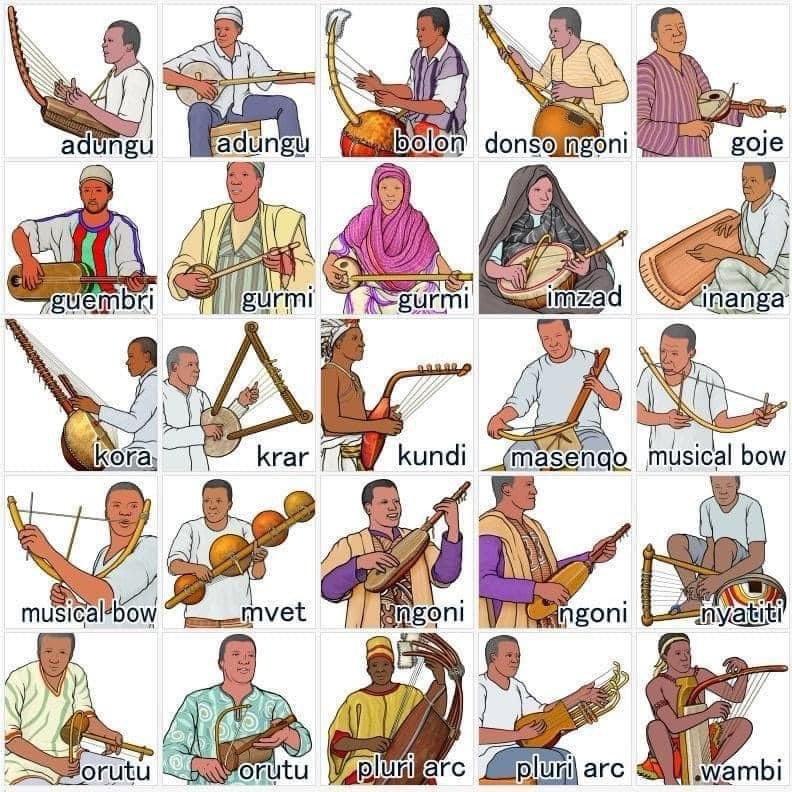
In this installment, we talk about African stringed instruments, exploring the rich and diverse tradition of musical craftsmanship across the African continent. From the mesmerizing sounds of the kora in West Africa to the rhythmic melodies of the oud in North Africa, these stringed instruments carry with them centuries of cultural heritage and musical innovation. Each instrument tells a unique story, reflecting the artistry and creativity of the people who have crafted and played them for generations. Join us as we delve deeper into the fascinating world of African stringed instruments, uncovering the traditions, techniques, and significance behind these remarkable musical treasures.
The richness of African musical styles is matched only by the continent’s enormous variety of musical instruments. While most instruments in Africa serve roles that go beyond simple entertainment, stringed instruments in particular have long played a role in maintaining oral traditions, preserving genealogies, and accompanying religious and ritual ceremonies. The intricate craftsmanship of these stringed instruments reflects the diverse cultures and traditions found across the continent, with each instrument often embodying specific spiritual or symbolic significance within its respective community. In addition to their cultural and ceremonial significance, stringed instruments have also been pivotal in storytelling and the transmission of historical narratives, serving as tangible links to the past and carrying the collective memory of African societies. Through the melodies and rhythms produced by these instruments, ancient legends, heroic tales, and societal values are intricately woven into the fabric of African music, creating a rich tapestry of artistic expression and cultural heritage. Although there are hundreds of different types of stringed instruments across the continent, they can broadly be divided into bowed (fiddles), plucked (harps, lutes, zithers, harp-lutes, harp-zithers) and beaten (musical bows, earth-bows) types, each with its own distinct characteristics and historical significance within the diverse musical landscape of Africa.
The kora, with its mesmerizing sound and intricate design, has captivated audiences around the world, earning a special place in the hearts of music enthusiasts. Its historic significance within the Mandinka culture enriches its allure, as the instrument serves as a conduit for storytelling, rituals, and communal gatherings. Similarly, the orutu, among the plethora of bowed string instruments cherished in Africa, carries its own distinctive charm. The enchanting melodies produced by the goje, often referred to as the “Hausa Violin,” evoke a sense of timelessness and cultural resonance, rooted in the Sahel and Sudanese traditions. Furthermore, the diverse array of lutes distributed across Africa showcases the region’s rich musical heritage, each with a unique timbre and cultural significance. Notably, the lyres prevalent in northeastern Africa, embodying traditional and contemporary variations, contribute to the melodic tapestry of the region. The enduring presence of instruments like the krar, with its evocative tones resonating through generations, reinforces the deep-rooted connection between music and storytelling in African communities, upholding cherished traditions and narratives.
Zithers are another instrument with plucked strings but, unlike the lute, they have no neck. Different types of zither can be found in various parts of Africa, but are by far most common in Madagascar, where the valiha tube zither, constructed with 21 and 24 strings made by unwound bicycle brake cable tied through nails, running the length of a long bamboo pole, is considered a national instrument. The valiha is an integral part of Malagasy culture and is often played during traditional ceremonies and celebrations, adding a melodic and rhythmic touch to the festivities. In addition to the valiha, the mbira dza vadzimu, also known as the “thumb piano,” is a popular type of zither that originates from the Shona people of Zimbabwe. The mbira consists of metal tines attached to a wooden board and is played by plucking the tines with the thumbs. It is deeply intertwined with the spiritual and social fabric of the Shona people, often used in ancestral worship and community gatherings. The diversity of zithers across Africa reflects the rich musical heritage of the continent, each instrument carrying its own unique significance and history.
Many stringed instruments across Africa play specific social roles: some serve ritual or religious purposes, while others can only be played by people of a certain age, sex, or status. In the Luo community from Western Kenya, for example, only men are traditionally allowed to play the orutu, while among Moorish griots of Mauritania the ardine is only played by women. This deep connection between musical practice and social structure showcases the significance of music in African societies. However, the dynamic nature of music means that traditions are not static; they are constantly evolving and adapting. In recent times, there has been a notable revival of interest in traditional African instruments, with contemporary musicians like Labdi Ommes in Kenya breathing new life into ancient instruments by combining them with electronic music and jazz. This fusion not only rejuvenates the traditional sounds but also introduces them to a whole new generation of music enthusiasts. Moreover, as younger generations express interest in their heritage, ancient string instruments that were once at risk of being forgotten are now being “rediscovered” and reimagined, finding places in modern music genres and contributing to the rich tapestry of African musical expression.
 Jogo Corpo Fechado