
Hello everyone,
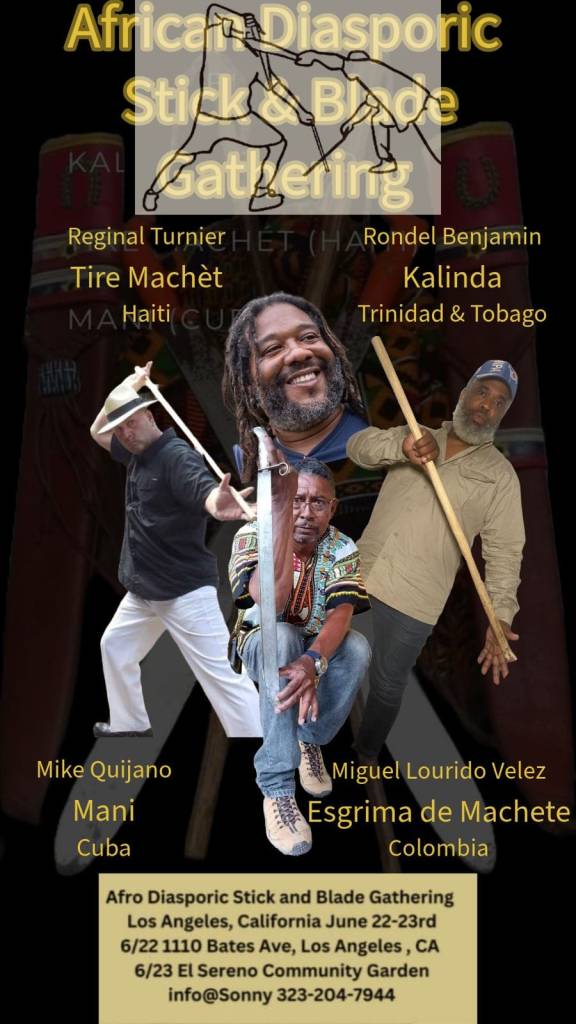
Well, in case you didn’t read the flyer, this weekend in Los Angeles, there will be a gathering of amazing Martial artists who will teach a series of workshops in 4 rare Martial Arts created by the afro diaspora from the Caribbean and South America. The event will provide a unique opportunity for enthusiasts to deepen their understanding of these distinctive martial arts and their cultural significance, while also fostering a sense of community and collaboration among participants. Teachers will share their expertise, offering valuable insights into the historical, spiritual, and practical aspects of these art forms. From Kalenda to Esgrima de Machete Y Bordon, attendees can look forward to immersing themselves in a rich tapestry of traditions and techniques, gaining a holistic appreciation for the diverse influences and legacies of these martial disciplines. So, mark your calendars and join us for a weekend of cultural celebration and incredible learning experiences!
This amazing event will be hosted by my teacher, Sonny Batata.

Arthur “Sonny” Batata is not only a skilled practitioner and instructor of Esgrima de Machete, but also a passionate advocate for the preservation and promotion of this traditional martial art. His dedication to sharing the art of machete fencing with the community in the Los Angeles area has been unwavering since he first began teaching in 2018. Through his collaboration with Miguel Lourido, he has successfully established a platform for cultural exchange, aiming to bridge the gap between different traditions and heritage. This endeavor has not only enriched the local community but has also provided a unique opportunity for individuals to immerse themselves in the rich history and techniques of Esgrima de Machete. Sonny’s continuous efforts and enthusiasm for cultural exchange have undoubtedly left a lasting impact, fostering a deeper appreciation for this art form among his students and the broader community alike.
.
Okay, now I’m gonna give you a quick rundown of what will be taught at this event, as well as who the instructors are.
MACHETE Y BORDON
La Esgrima de Machete Y Bordon, or Colombian grima is a martial art deeply rooted in the cultural heritage of Afro-Colombian communities. Developed during the colonial era, it uses the machete as its primary weapon. This art embodies more than physical combat, serving as a link to the cultural identity and history of the Afro-Colombian community. The machete’s use reflects the community’s resourcefulness, seamlessly integrated into the techniques. The Colombian Grima encompasses diverse variations throughout the country, showcasing a captivating array of styles. As it continues to be practiced, it serves as an embodiment of cultural resilience, strength, and unity, adding to the cultural tapestry of Colombia and beyond.
This workshop will be taught by Maestro Miguel Lourido.

Maestro Miguel Lourido, purveyor of Esgrima y Bordon, was born in July 1957 in Puerto Tejada, Colombia into a family of macheteros. He grew up amongst Afro-Colombians of the Cauca Valley, listening to stories of liberation and freedom, marveling at the art as a child. At 15, he joined the “Macheteros de la Muerte” group led by his late master, Hector Elias Sandoval. He later studied with many maestros and styles in the region, culminating with his longest maestro Hector Sandoval. Recently, he was passed the mantle of head master of Academia de Esgrima de Machete in Puerto Tejada.
Although Maetro Miguel knows several styles of Machete Y Bordon, the main style he teaches us is called, Espanol Reformado (Reformed spanish style).
The Reformed Spanish technique includes a curriculum with five levels of instruction. In the first level, students learn exercises to move their bodies, practicing basic blows with empty hands. At the second level, students train using a stick in a series of eleven choreographed sequences called crosses. In the third level, fourteen choreographed sequences called parries are studied, using the machete. The fourth level encompasses a series of thirteen parries positions and choreographic sequences, this time with the stick in one hand and the machete in the other. The fifth level teaches the game of attack and defense that revises the previous levels, but teaches the student to be prepared to improvise in case of a live opponent. During the whole process there is a fundamental component of learning, the malice, or strategies to overcome an opponent in real matches.
KALENDA
Kalenda (or Kalinda) is a cultural practice with a rich history that dates back to around 1860. It originated when freed slaves formed competing bands and organized performances that included singing, dancing, and stick fights. Men, women, and children would gather to be entertained by the fierce and skilled stick fighters. The objective of each stick fighter was to deliver a forceful blow to their opponent’s body, aiming above the waist to try to bring them to the ground. Head blows were common, resulting in frequent damage to the skull during these intense duels. The rules of kalenda were minimal. Striking below the belt or attacking a fallen or kneeling player was considered a violation. If a player’s skull was cut, they were required to retire from the match and drain the blood into a designated “blood hole,” a hollow specifically created for this purpose at the center of the fighting ring. The sticks used in kalenda were typically three to four feet in length and about seven-eighths of an inch in diameter, crafted from materials such as cogwood, the wood of the yellow poui tree, or even the sour guava. This traditional practice offers a glimpse into the historical and cultural significance of kalenda, showcasing the physical and symbolic elements that shaped this unique form of entertainment and competition.
This workshop will be taught by Rondel Benjamin.

Born in Trinidad, Rondel Benjamin is a skilled martial artist in many styles including Brazilian Jiu-Jitsu and Capoeira. Rondel is a life-long disciple of martial arts, having started his journey at a young age under the guidance of his mother, who was brought up in the barrack yard traditions of Trinidad, where survival and martial skills are part of life. After traveling for 10 years to pursue his martial studies, immersing himself in various cultures and training with renowned masters, Rondel returned to Trinidad with a profound understanding of the diverse martial arts traditions around the world. This led him to delve into the roots of the Kalinda, the stick fighting tradition of Trinidad, where he uncovered the fascinating history and significance of this art form within the local community. Recognizing the need to preserve and revitalize this cultural heritage, Rondel became a respected teacher and player of Kalinda, dedicating himself to not only mastering the art but also to sharing its profound teachings with future generations.
It was this passion and commitment that inspired him to establish “Bois Academy,” a renowned school dedicated to the preservation and dissemination of the Kalinda tradition. Through his academy, Rondel continues to honor the legacy of this centuries-old practice, fostering a community of passionate learners and preserving the essence of Kalinda for years to come.
-Tire Machet
Tire Machet is a Haitian martial art; a form of fencing with machetes.The practice of Tire machèt has its roots in the tumultuous events of the Haitian Revolution, a pivotal moment in history that unfolded between 1791 and 1804. During this period, rebel slaves, waging a courageous and determined resistance armed with little more than the machetes originally used to cut sugarcane, successfully overcame the formidable French colonial army. This remarkable feat of triumph against oppression laid the foundation for Tire machèt, a martial art that blends traditional African combat techniques with influences from historical European fencing.The rich and complex heritage of Tire machèt is further defined by its tradition of clandestine practice, reflecting the necessity for secrecy during times of social upheaval. This secrecy helped preserve the art, allowing it to endure and thrive through generations, serving as a symbol of resilience and cultural preservation.
This workshop will be taught by Tire Machet fencing instructor, Reginald Turnier
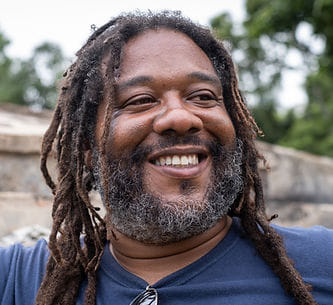
Reginald is a fascinating individual with a deep connection to his family’s ancestral lands in southeast Haiti. As the steward, he takes great pride in preserving the traditions and heritage passed down through generations. In addition to his role as a steward, he is also the proprietor of the vibrant nightclub Vatican in Jacmel, adding a touch of modernity to his deep-rooted connection to the land. His extensive network of family, friends, and associates not only enriches his own life but also ensures the well-being and security of those in his care while in-country. Growing up with influences from both Haiti and the U.S., Reginald embodies a unique blend of cultural experiences, allowing him to navigate different worlds with ease. His decision to primarily reside in Haiti since 2001 reflects his strong commitment to the country and its people. Moreover, his dedication to mastering Alfred Avril’s machete fencing technique since 2004 demonstrates his passion for preserving and honing traditional Haitian skills. This commitment is further evidenced by his involvement as a consultant for the film Papa Machete, where he shared his expertise and contributed to the portrayal of an important aspect of Haitian culture on the big screen.
-JUEGO DE MANI
Juego de maní, a dance-fighting martial art much like Capoeira, was spread in 19th century among slaves of sugar plantations in Cuba. Only the men take part in it. The dancer in the circle does movements simulating fight, and chooses a protagonist among the others men of the circle. Then the elected “adversary” comes in the circle, and, in harmony with the other dancer, executes a choreography of movements, between fight and danceMani’s roots can be traced back to the African slaves brought to Cuba during the 19th century. It was practiced clandestinely, as the slave masters forbade the slaves from practicing any form of combat training. The dance-like movements of Mani served as a clever disguise for the slaves to train martial arts and defense techniques while appearing to engage in harmless dancing.The unique blend of martial arts and dance in Mani reflects the resilience and creativity of the marginalized communities, as they turned a form of oppression into a means of empowerment. Today, Mani continues to thrive as a cultural practice, embodying the spirit of resistance and perseverance of the Cuban people.
This workshop will be taught by Miguel “Mike” Quijano (Puerto Rico).
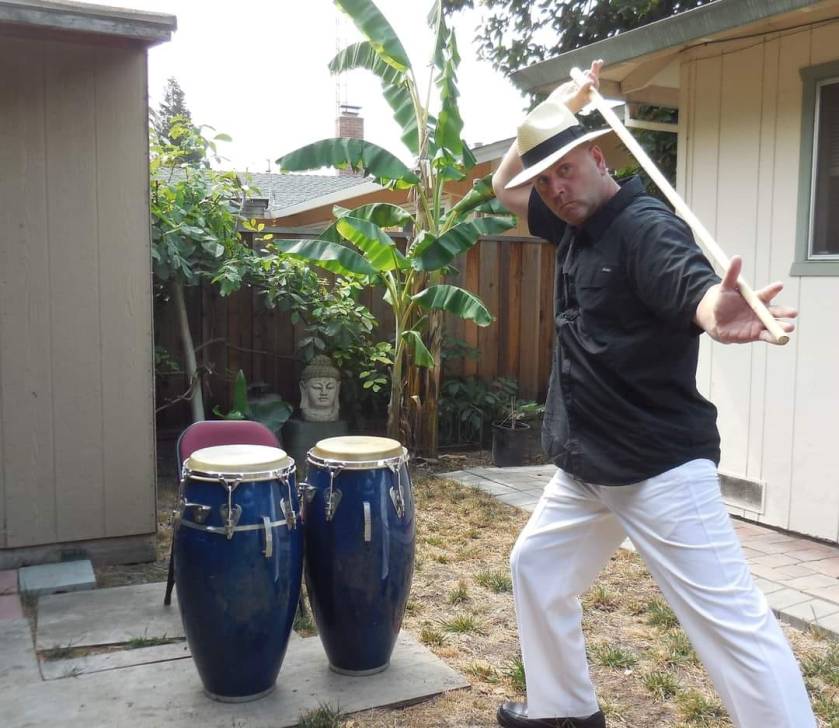
Maestro Miguel’s journey into the rich tapestry of cultural traditions began in his formative years in the Bronx, NY, where he was immersed in the vibrant heritage of Puerto Rico under the guidance of his father. With a deep-rooted connection to his Puerto Rican roots, Maestro Miguel honed his expertise under the tutelage of Juan de Dios Ramos Morejon, a luminary in the realm of Cuban Folkloric arts. His training under the esteemed Ramos Morejon, a driving force behind the renowned Conjunto Nacional de Cuba and the visionary founder and director of Raices Profundas, instilled in him a profound understanding and reverence for the essence of Cuban cultural expressions. Notably, Maestro Miguel stands as the sole certified instructor of “Mani,” a revered martial system encompassing armed (stick and machete) and unarmed combat techniques. This storied art form, reminiscent of the fluid and intricate movements of Capoeira in Brazil and Ladja in Martinique, holds a significant place in the cultural heritage of Kongo/Angolan descendants in Cuba.
Additionally, his authority extends to the stick game of Kokobale /Calinda, traditionally played in Puerto Rico. His initiation into this captivating game traces back to his father Julio Quijano, and further mentors including Jose Reyes, Joey Ramos, Jesus Diaz, and Chico Estevey.
Through dedicated learning and mentorship, Maestro Miguel continues to preserve and enrich the legacy of these dynamic cultural traditions, ensuring their enduring resonance in the fabric of heritage.
Coming up this week, you can purchase tickets on Eventbrite.
$75 per day or $125 for the weekend. LiveStream $50.

This is a unique opportunity to participate and witness the timeless fighting arts of the Afro Diaspora. Experience the rich and diverse traditions of martial arts deeply rooted in the history and culture of the Afro Diaspora. Immerse yourself in the captivating techniques, rituals, and philosophies that have been passed down through generations, each reflecting a unique blend of strength, grace, and resilience.
Whether you are an enthusiast, a practitioner, or simply curious, delve into the compelling world of martial arts that have made an indelible mark on the heritage of the Afro Diaspora.
And, in case you’re wondering how and why these Martial Science were created iin the first place…
 Jogo Corpo Fechado